×

South Sudan🇸🇸 | townsNzaraCotton ruins, Zande farmland, Congo-border hills | things to do and best time to go

Explore GogrialExplore Raga

Backpacking in Nzara
👍 Recommendedtown ranked #12
By Johan Kruseman 🇳🇱 | Updated October 22, 2026

Nzara is the home of the Nzara Agricultural Complex, a cotton and textile enterprise founded in the colonial era, and its rusting factory buildings still stand at the edge of town. The town sits in Western Equatoria in the far south of South Sudan, near the Congolese border, a few hours by road from Yambio. Don’t come for sights; there are few, and tourism infrastructure is almost absent. Come for green, hilly country and farming life. Roads are rough and rains cut them, so travel with local contacts and a flexible schedule rather than a fixed plan. Lodging is basic, and other backpackers are rare. Best for patient, self-sufficient travelers; skip it if you need comfort.

Discover everything you want to know in the 📖 South Sudan Travel Guide.
Safety warning

The current risk level for South Sudan is high. Check the advice before going.


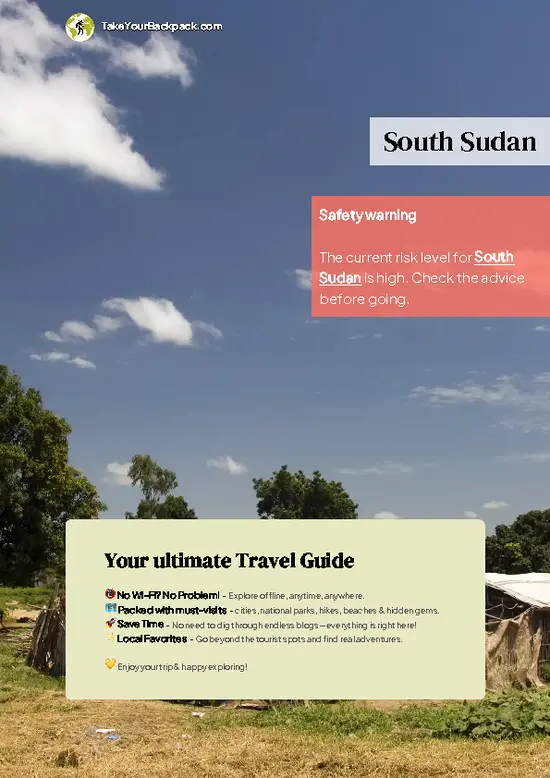
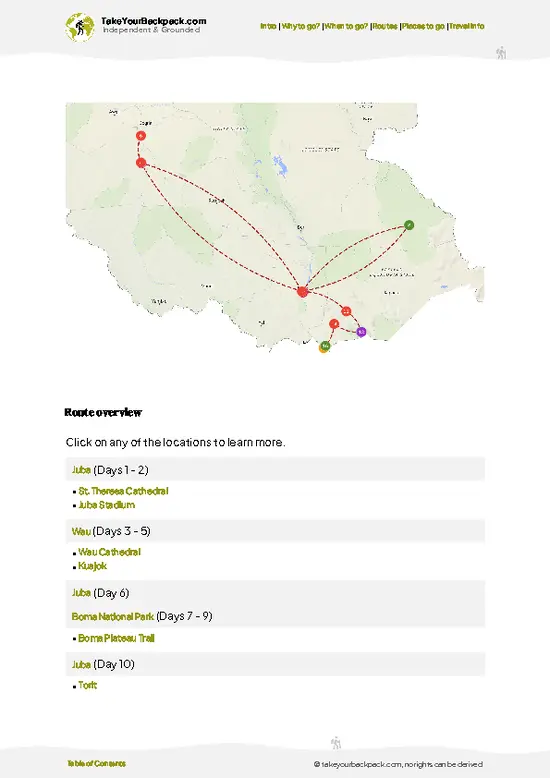
example page 0 from our offline Travel Guide for South Sudan
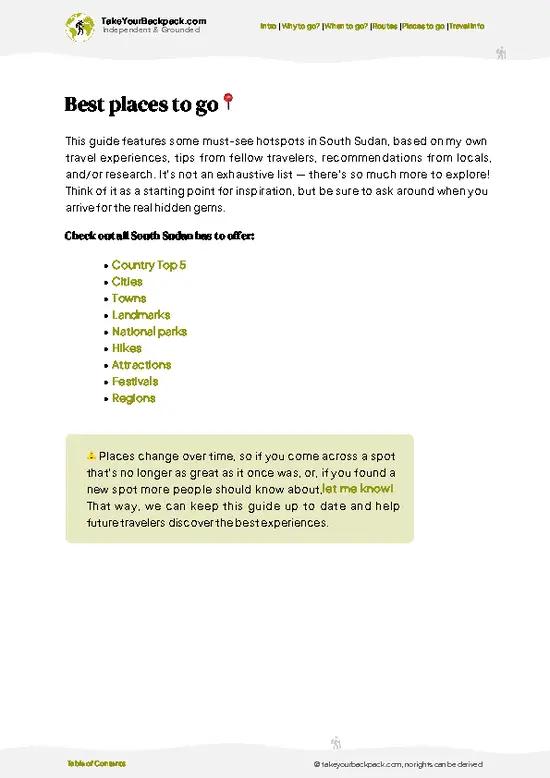
example page 1 from our offline Travel Guide for South Sudan
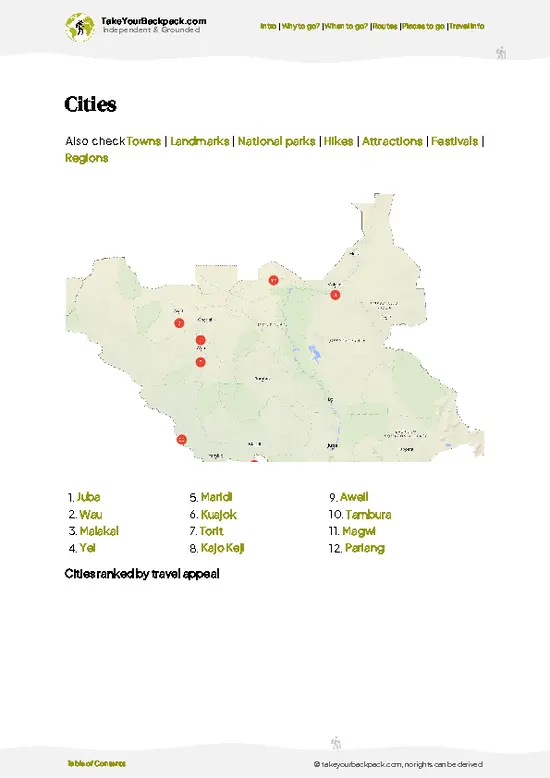
example page 2 from our offline Travel Guide for South Sudan
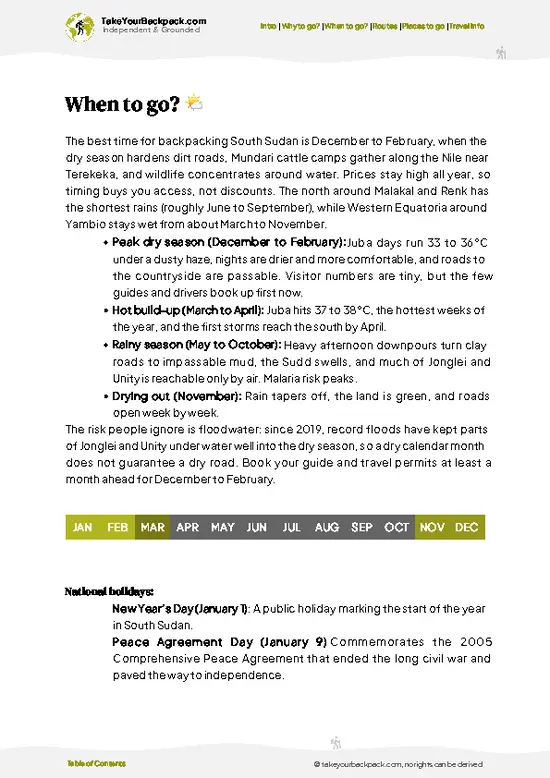
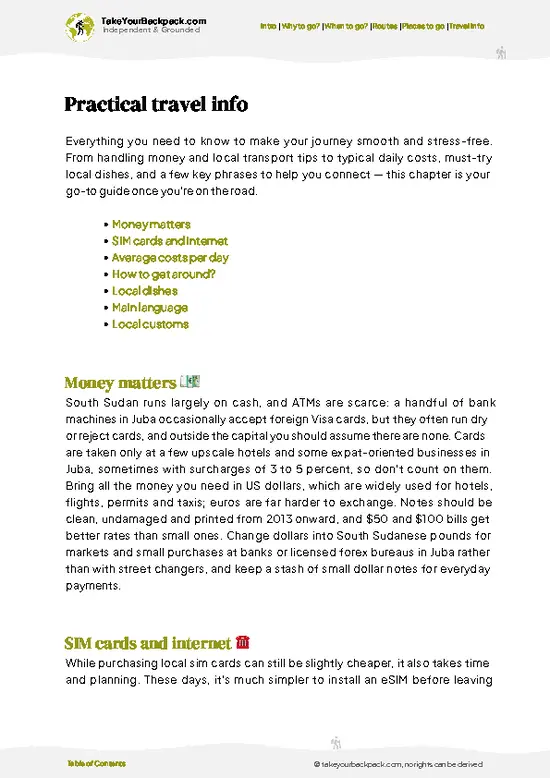
example page 3 from our offline Travel Guide for South Sudan
example page 4 from our offline Travel Guide for South Sudan
example page 5 from our offline Travel Guide for South Sudan
example page 6 from our offline Travel Guide for South Sudan
example page 7 from our offline Travel Guide for South Sudan
Loading the map 🌍
CLICK TO FILTER
cities
towns
landmarks
national parks
hikes
attractions
festivals
regions
SHOW COUNTRY’S BESTSHOW ALL

✨ Why go?
Ranked #12 town in South Sudan
What sets this place apart

Nzara earns a place on a route only for travelers who want the deep south of South Sudan rather than Juba. The draw is the Western Equatoria landscape: forest, mango trees and farmland on the way toward the Congo border, with the old Nzara Agricultural Complex as a rare glimpse of industrial history. Stays are short, usually a night or two, because lodging is limited and movement depends on road conditions. It is quiet and not social, so it suits solo travelers, researchers and aid-minded slow travelers comfortable with uncertainty. Expect curious locals, simple meals and long conversations rather than organized activities. If you need hostels, cafés or a traveler scene, base yourself elsewhere.

💡 HighlightsMust-see experiences and standout moments

  1. Nzara Agricultural Complex: the old cotton and textile works, the reason the town exists. Walk the site and see the weathered halls and machinery. Ask permission locally first. Free or a small informal fee, about 1 hour, morning for the best light.
  2. Nzara Central Market: the best place to see local trade in cassava, groundnuts, fruit and vegetables. Prices are low, and you may pick up fresh mangoes in season. Go in the morning, 30 to 60 minutes, free entry.
  3. Town Center and Main Road: a simple stroll past shops, tea stalls and motorbike taxis shows daily life. Greet people and ask before taking photos. Free, about 45 minutes, late afternoon is cooler.
  4. Local Churches: Sunday services here are lively, with choir singing and a warm welcome for visitors. Dress modestly. Free, 1 to 2 hours, morning.
… read more 👉
  1. Nzara Agricultural Complex: the old cotton and textile works, the reason the town exists. Walk the site and see the weathered halls and machinery. Ask permission locally first. Free or a small informal fee, about 1 hour, morning for the best light.
  2. Nzara Central Market: the best place to see local trade in cassava, groundnuts, fruit and vegetables. Prices are low, and you may pick up fresh mangoes in season. Go in the morning, 30 to 60 minutes, free entry.
  3. Town Center and Main Road: a simple stroll past shops, tea stalls and motorbike taxis shows daily life. Greet people and ask before taking photos. Free, about 45 minutes, late afternoon is cooler.
  4. Local Churches: Sunday services here are lively, with choir singing and a warm welcome for visitors. Dress modestly. Free, 1 to 2 hours, morning.
  5. Surrounding Farmland Walks: paths out of town cross fields and small villages with views over the green hills. Take a local guide. Around US$5 to 10 for a guide, 2 to 3 hours, early morning.
From Nzara, Yambio and the forests along the Congo border are the natural excursions. Together, everything in town fits comfortably into one day.
Spotted a mistake or missing something? Contact us.

🏘️ NeighborhoodsWhere things are and how it's laid out

Nzara is small enough that you can sort it into a few areas by foot in an afternoon, and most of them are worth only a short look.
  • Main market and roadside: This is where the town works. Stalls sell cassava, groundnuts, tomatoes, fish and phone credit, and you eat here because it is cheap and the cooking is simple. Go in the morning, when stock is freshest. Skip it at midday heat.
  • Old agricultural scheme area: Nzara grew around a textile and agricultural scheme, so wide, run-down compounds and old factory buildings sit near the center. They are interesting for history, but there is little to see inside, and photographing official buildings invites trouble. Ask permission and a local to walk with you.
  • Residential outskirts: Quiet lanes, churches, mango trees and farm plots. Nightlife is a few
… read more 👉
Nzara is small enough that you can sort it into a few areas by foot in an afternoon, and most of them are worth only a short look.
  • Main market and roadside: This is where the town works. Stalls sell cassava, groundnuts, tomatoes, fish and phone credit, and you eat here because it is cheap and the cooking is simple. Go in the morning, when stock is freshest. Skip it at midday heat.
  • Old agricultural scheme area: Nzara grew around a textile and agricultural scheme, so wide, run-down compounds and old factory buildings sit near the center. They are interesting for history, but there is little to see inside, and photographing official buildings invites trouble. Ask permission and a local to walk with you.
  • Residential outskirts: Quiet lanes, churches, mango trees and farm plots. Nightlife is a few tea and beer spots, closing early. Walk by day; at night you will not find much open, and power is patchy, so carry a torch.

⌛️ 1 day1-day itinerary for Nzara

Plan to walk everything, since the town is small, and rest in shade through the hottest hours after lunch; motorbike taxis help for longer hops.
8:00 AM, Tea and Main Road: Start with sweet tea and bread at a roadside stall and watch the town wake up. Walk toward the market.
9:00 AM, Central Market: Browse produce, ask what is in season and buy fruit for later. Take your time, since vendors enjoy conversation.
11:00 AM, Nzara Agricultural Complex: Ask permission, then walk the old factory grounds and think about the cotton years. Go on foot or by short motorbike ride.
1:00 PM, Lunch and rest: Eat a simple meal of beans, cassava or fish, then rest out of the heat.
3:30 PM, Farmland path: Head off the usual route with a local guide along field tracks and small villages beyond town, a part few outsiders … read more 👉
Plan to walk everything, since the town is small, and rest in shade through the hottest hours after lunch; motorbike taxis help for longer hops.
8:00 AM, Tea and Main Road: Start with sweet tea and bread at a roadside stall and watch the town wake up. Walk toward the market.
9:00 AM, Central Market: Browse produce, ask what is in season and buy fruit for later. Take your time, since vendors enjoy conversation.
11:00 AM, Nzara Agricultural Complex: Ask permission, then walk the old factory grounds and think about the cotton years. Go on foot or by short motorbike ride.
1:00 PM, Lunch and rest: Eat a simple meal of beans, cassava or fish, then rest out of the heat.
3:30 PM, Farmland path: Head off the usual route with a local guide along field tracks and small villages beyond town, a part few outsiders see.
6:00 PM, Evening at a church or tea stall: Finish with quiet conversation as the town settles.

🌤️ When to go?Best time to visit Nzara

Nzara has a long wet season and a shorter dry one, so timing mostly decides whether roads are passable.
  • Dry Season (December to February): Days run 30 to 35°C (86 to 95°F), dusty and hot. Roads are firmest and travel is easiest, though transport prices creep up.
  • Early Rains (March to May): Humid, 27 to 32°C (81 to 90°F), with storms that start turning tracks to mud.
  • Peak Rains (June to October): Frequent downpours, 24 to 30°C (75 to 86°F), flooded stretches and delays. Crowds are not an issue anywhere.
Aim for January if you need to travel by road.

source: climatestotravel.comJANJanuary: highly recommended for travelingFEBFebruary: excellent for travelingMARMarch: excellent for travelingAPRApril: fair for travelingMAYMay: fair for travelingJUNJune: fair for travelingJULJuly: fair for travelingAUGAugust: fair for travelingSEPSeptember: fair for travelingOCTOctober: fair for travelingNOVNovember: highly recommended for travelingDECDecember: highly recommended for traveling
when-to-go

✈️ The backpacker research shortcutSouth Sudan Travel Guide

An offline-friendly backpacking guide with optimized travel routes, ranked highlights, transport advice, and the best areas to stay.
example page 0 from our offline Travel Guide for South Sudan
example page 1 from our offline Travel Guide for South Sudan
example page 2 from our offline Travel Guide for South Sudan
example page 3 from our offline Travel Guide for South Sudan
example page 4 from our offline Travel Guide for South Sudan
example page 5 from our offline Travel Guide for South Sudan
example page 6 from our offline Travel Guide for South Sudan
example page 7 from our offline Travel Guide for South Sudan
The digital guide (242 pages) contains:
✅ 57 highlights, ranked by travel appeal
✅ Optimized 5, 10 & 15-day travel routes
✅ Cities, national parks, landmarks, beaches
✅ How to get around
✅ Offline-friendly for travel without Wi-Fi
👉 Click to see all 30+ guide features

📅 Plan smarter in minutes, not weeks
✅ Month by month travel advice
✅ Festivals & national holidays
✅ Budget expectations

🗺️ Go to the right places, skip the overrated ones
✅ Honest pros & cons of destinations
✅ Top hikes, parks & viewpoints
✅ Lesser-known places most travelers miss
✅ Clear “worth it vs skip it” guidance

🛏️ Travel smoothly without rookie mistakes
✅ Best areas to stay
✅ Transport systems explained simply
✅ Common scams & safety advice
✅ SIM cards, money & practical tips

🌍 Understand the country, not just visit it
✅ Culture & traditions
✅ 52 Essential phrases & customs
✅ Festivals worth planning around
✅ Traveler-friendly historical context
✅ Insights that make places more meaningful

📱 Built for real travel conditions
✅ Fully downloadable PDF
✅ Works completely offline
✅ Optimized for phone use
✅ Useful in remote areas & buses
✅ Everything in one place
Stop searching, start planning
Get instant access to your full guide. 30‑day money-back guarantee.
+ Add another guide for just

By proceeding you agree to our terms.
Sent to your inbox immediately after payment • 100% Secure Checkout
Best Backpacking Travel Advisor 2025 tourism awardBest Backpacking
Travel Advisor
2025
What others say about Take Your Backpack Guides:
⭐⭐⭐⭐⭐
Fantastic, amazing amount of information!
⭐⭐⭐⭐⭐
My goodness this is amazing, it's what I've been looking for hats off too you!
⭐⭐⭐⭐⭐
I think this is absolutely BRILLIANT
⭐⭐⭐⭐
Very complete and informative. It's still missing places, but I gotta to commend you
⭐⭐⭐⭐⭐
This is truly amazing, thank you, can't wait to explore it with my kids!
⭐⭐⭐⭐⭐
Awesome resource, thank you!
⭐⭐⭐⭐⭐
This is amazing! Can't wait to explore the ones I haven't seen
⭐⭐⭐⭐
I love this! Well done, great idea.
⭐⭐⭐⭐⭐
Thanks for taking the time to make this gem!
⭐⭐⭐⭐⭐
This might be the best website I've ever seen.
⭐⭐⭐⭐⭐
Congratulations, and thank you so much for your work; it's incredibly valuable.
⭐⭐⭐⭐
In all seriousness I think you did a great job pointing out the important spots
⭐⭐⭐⭐⭐
10/10 very good
⭐⭐⭐⭐⭐
As someone who's only just starting to visit regularly this is awesome, thank you.
⭐⭐⭐⭐
Thank you very much! I'm going to visit my dad, it's going to be very useful!
⭐⭐⭐⭐⭐
This is really cool! We'll be travelling for the first time and this definitely come in handy.
⭐⭐⭐⭐⭐
You are now our minister of culture, congratulations 👨‍💼
⭐⭐⭐⭐⭐
Just wanted to tell you that this is a pearl! Going to follow your recommendations.
⭐⭐⭐⭐⭐
This is so cool. I'll definitely be using the resource for my travels soon.
⭐⭐⭐⭐⭐
This is very impressive! Good work.
⭐⭐⭐⭐⭐
This is an amazing and informative site. Very well done!

🛏️ Where to stay?Best areas and accommodation options

The best budget option in Nzara is somewhere near the main road and market, where basic guesthouses and rooms cluster and boda-bodas pass all day. Dorm hostels do not exist here, so expect simple private rooms, often with a fan, a bucket shower and unreliable power, at roughly US$10 to 30 a night. Being near the center means you can walk to food and transport in daylight, and you hear the road, the market and the generators early in the morning. Earplugs help.

Yambio, a short ride away, has a wider choice of guesthouses and compounds with better security and generator power. If you want a more … read more 👉
The best budget option in Nzara is somewhere near the main road and market, where basic guesthouses and rooms cluster and boda-bodas pass all day. Dorm hostels do not exist here, so expect simple private rooms, often with a fan, a bucket shower and unreliable power, at roughly US$10 to 30 a night. Being near the center means you can walk to food and transport in daylight, and you hear the road, the market and the generators early in the morning. Earplugs help.

Yambio, a short ride away, has a wider choice of guesthouses and compounds with better security and generator power. If you want a more reliable night's sleep and more options, base yourself there and visit Nzara in the day. Choose places with a walled compound and a guard, and bring your own mosquito net.

🚌 Getting aroundHow to get from A to B

Nzara is easiest on foot, because the town is compact and everything useful sits within a 20 to 30 minute walk. Traffic is light, and public transport is informal, with no timetables, so plan around vehicles filling up rather than leaving on time.
  • Walking: Free and the best way to see the market and the center. Do it in the morning, since the midday sun is punishing and shade is limited.
  • Motorcycle taxis (boda-bodas): The default for anything beyond walking distance. Short rides cost about US$0.50 to 2, and longer ones to outlying villages US$3 to 8. Agree the price first, because there are no meters, and wear the helmet if one is offered.
  • Shared minibuses and pickups: These link Nzara with Yambio and nearby towns. Expect roughly 1 to 2 hours to Yambio for about US$3 to 8, and more in the rains
… read more 👉
Nzara is easiest on foot, because the town is compact and everything useful sits within a 20 to 30 minute walk. Traffic is light, and public transport is informal, with no timetables, so plan around vehicles filling up rather than leaving on time.
  • Walking: Free and the best way to see the market and the center. Do it in the morning, since the midday sun is punishing and shade is limited.
  • Motorcycle taxis (boda-bodas): The default for anything beyond walking distance. Short rides cost about US$0.50 to 2, and longer ones to outlying villages US$3 to 8. Agree the price first, because there are no meters, and wear the helmet if one is offered.
  • Shared minibuses and pickups: These link Nzara with Yambio and nearby towns. Expect roughly 1 to 2 hours to Yambio for about US$3 to 8, and more in the rains when roads turn to mud. They leave when full, usually in the morning, and few run after mid-afternoon. Arrive early, and do not count on a seat later in the day.
  • Hired vehicle with driver: Worth it for remote villages or park areas where nothing runs regularly. Expect US$80 to 150 a day including fuel, and split it with other travelers. Ask locally for drivers rather than approaching strangers at the roadside.
Roads outside town are unpaved and conditions change fast, so ask drivers about the route that morning. Skip any long trip late in the day.

👛 Costs (as of 22 October 2026)How expensive it really is

Nzara costs about US$45 to 85 a day for a backpacker, mostly because accommodation is limited and basic.
CategoryBudget RangeLocal Reality
Dorm accommodationUS$10 to 30No dorms; simple private rooms in guesthouses, usually with a fan and shared bathroom.
MealsUS$5 to 15Market and roadside plates of cassava, beans, fish or stew are cheapest; imported items cost more.
Local transportUS$2 to 10Boda-bodas for short hops; shared vehicles to Yambio cost more.
Basic activities/entry feesUS$5 to 15Few formal attractions; guides and village visits are the main costs.
Miscellaneous expensesUS$5 to 15Water, phone credit, permits and small tips.
Total Daily BudgetUS$45 to 85Per person, per day, in high season.
Buy food from market stalls rather than restaurants, and carry small US dollar notes in good condition, as torn bills are often refused.
⚠️ Prices can change and everyone travels differently, so take this as a rough guide. Hope it helps you plan your adventure!

🚌 Day tripsBest day trips from Nzara

Nzara works as a base for short rural outings, though everything is by road and logistics are basic.
Yambio:
The state capital is the obvious outing: a bigger market, more food options, banks and money changers, and the most reliable connections onward. Allow 1 to 2 hours each way by shared vehicle for US$3 to 8. Go early, and avoid returning after mid-afternoon, when transport thins out.
👉 Explore Yambio
Source Yubu:
A rural area of farms and forest reached by dirt tracks. It is worthwhile for seeing how local farming works, with cassava, coffee and fruit growing around homesteads. Go in the dry season, as the rains make it a slog. Hire a motorcycle for about US$10 to 20 for the day, and bring water.

Nzara Forest Edges:
Short walks along forest margins near the town give you birds, butterflies … read more 👉
Nzara works as a base for short rural outings, though everything is by road and logistics are basic.
Yambio:
The state capital is the obvious outing: a bigger market, more food options, banks and money changers, and the most reliable connections onward. Allow 1 to 2 hours each way by shared vehicle for US$3 to 8. Go early, and avoid returning after mid-afternoon, when transport thins out.
👉 Explore Yambio
Source Yubu:
A rural area of farms and forest reached by dirt tracks. It is worthwhile for seeing how local farming works, with cassava, coffee and fruit growing around homesteads. Go in the dry season, as the rains make it a slog. Hire a motorcycle for about US$10 to 20 for the day, and bring water.

Nzara Forest Edges:
Short walks along forest margins near the town give you birds, butterflies and fruit trees. Go with a local guide for about US$5 to 10, and set out in the morning. First-timers often wander off alone and get lost on paths that fork often.

🛡️ SafetyTraveler Safety Guide

Nzara is calmer than much of South Sudan, but conditions in the region can change, so check recent local news before traveling and ask your host about the current situation. Carry copies of your passport and travel permits, because checkpoints are common and officials expect paperwork. Be polite, patient and never photograph soldiers, government buildings or checkpoints without permission. Solo travelers should be back indoors by dusk, since power is irregular and streets are dark. Petty theft is uncommon, but keep your phone and cash out of sight in the market. Agree boda-boda fares before you set off. Drink only treated water and take malaria precautions seriously.

FAQFrequently asked questions about Nzara

Nzara is worth visiting only if you are already in the Western Equatoria area and want a look at rural life in the green south. It has no major sights, but you can see the old agricultural scheme, the market and forest edges in a day. Yambio, about 1 to 2 hours by road, has far better services.
One to two days is enough for Nzara. A full day covers the market, the town center and a short guided walk by the forest edges, while a second day lets you add a trip toward Source Yubu. Allow extra time in the rainy months, when roads can delay your onward travel.
Yes, Nzara can be done as a day trip from Yambio, roughly 1 to 2 hours each way by shared vehicle for about US$3 to 8. Leave in the morning and return before mid-afternoon, since transport thins out later. Dry season travel is far more predictable than rainy season.
⚠️ Things can change over time, so always validate details locally before you go.

Other South Sudanese towns near Nzara

Explore more nearby:

  • Yambio—Azande culture, laterite lanes, forest-edge market| 16 km away
  • Mundri—Green hills, cassava plots, roadside tea talk| 228 km away
  • Tonj—Dinka cattle, mango-shaded lanes, river washing| 296 km away

💡 Not sure where to go next?
Create a personalized itinerary for South Sudan including Nzara and the places that fit your trip.

Generate my itinerary

👉 Discover all towns

Or checkout all South Sudan has to offer (think cities, towns, villages, national parks, hikes, beaches, festivals)
Country photo of South Sudan

We 💚 feedbackWhat to keep in mind

Nzara’s real story lives in its fields and former factory, not in any attraction, so spend your time talking to farmers and former workers. Bring small notes, snacks and a charged phone, and I would always get local permission before photographing anything official.

✍️ Help improve this page!
The information on this page is based on in-depth research, insights shared by experienced travelers, and feedback from the local travel community in South Sudan. While every effort is made to keep the information accurate and current, conditions can change — so if you spot anything incorrect or outdated, please get in touch.


🙋‍♂️ Give feedback

👋 Meet the founderWho’s Behind Take Your Backpack?

Johan, backpacker and founder of TakeYourBackpackHi, I’m Johan (Netherlands 🇳🇱), the creator of TakeYourBackpack. Over the past 3 decades, I’ve backpacked through 90+ countries across six continents, gaining extensive experience with independent travel, long-term trips, and overland routes.

This site is built on a combination of firsthand travel experience and carefully curated insights from other backpackers. Many guides are based on places I’ve personally visited, while others bring together tips, observations, and practical advice shared by trusted travelers I’ve met along the way.

The goal is to provide realistic, experience-driven guidance — not generic itineraries — so you can explore destinations with better context, clearer expectations, and more confidence.