×

South Sudan🇸🇸 | festivalsRumbek Cultural FestivalDinka heritage, cattle parades, storytelling | things to do and best time to go

Explore Nimule Cultural FestivalExplore Malakal Cultural Festival

Backpacking in Rumbek Cultural
🌟 Highlightfestival ranked #3
By Johan Kruseman 🇳🇱 | Updated May 22, 2026

If you crave air-conditioned VIP lounges, seamless Wi-Fi, or a festival lineup stacked with international headliners, the Rumbek Cultural Festival will chew up your expectations and spit them out onto the red dust. But if you’re the kind of backpacker who thrives on raw, kinetic energy—where the rhythm of Dinka drums and the swirl of traditional dancers are the main event—this is your arena. Rumbek, deep in the heart of South Sudan’s Lakes State, hosts this annual gathering that’s less about polished production and more about the pulse of community. Expect a crowd that’s mostly local, with a handful of intrepid travelers, all drawn by the promise of cattle camp chants, wrestling matches, and the kind of storytelling that doesn’t need translation. The festival runs for several days, usually at the edge of town, and it’s as much a living history lesson as a party. You’ll sweat, you’ll be challenged, but you’ll walk away with a story that’s yours alone.

Discover everything you want to know in the 📖 South Sudan Travel Guide.
Safety warning

The current risk level for South Sudan is high. Check the advice before going.


Get your South Sudan guide
69 ranked highlights, routes & tips, works offline (273 pages)
Loading the map 🌍
CLICK TO FILTER
cities
towns
landmarks
national parks
hikes
attractions
festivals
regions
SHOW COUNTRY’S BESTSHOW ALL

✨ Why go?
Ranked #3 festival in South Sudan
The unique appeal for travelers

Backpackers flock to the Rumbek Cultural Festival in South Sudan for a reason. It’s not just a festival; it’s a social energy explosion. Picture this: vibrant dances, rhythmic drumming, and a temporary community that feels like family. You’re not just a spectator; you’re part of something alive and pulsating.

This festival offers a deep cultural immersion that few events can match. You’ll engage with local traditions, taste authentic dishes, and witness ceremonies that tell stories of resilience and joy. It’s a chance to connect with people who share their heritage, making your journey richer.

Affordability is another draw. Compared to similar events worldwide, Rumbek is a steal. You can experience this cultural feast without breaking the bank, leaving more room in your budget for other … read more 👉
Backpackers flock to the Rumbek Cultural Festival in South Sudan for a reason. It’s not just a festival; it’s a social energy explosion. Picture this: vibrant dances, rhythmic drumming, and a temporary community that feels like family. You’re not just a spectator; you’re part of something alive and pulsating.

This festival offers a deep cultural immersion that few events can match. You’ll engage with local traditions, taste authentic dishes, and witness ceremonies that tell stories of resilience and joy. It’s a chance to connect with people who share their heritage, making your journey richer.

Affordability is another draw. Compared to similar events worldwide, Rumbek is a steal. You can experience this cultural feast without breaking the bank, leaving more room in your budget for other adventures.

Planning your route around the festival means you’re not just ticking boxes; you’re weaving a narrative. It fits seamlessly into longer travel plans, allowing you to explore the stunning landscapes of South Sudan while soaking in the spirit of its people. This is where the journey becomes as rewarding as the destination.
Want to include Rumbek Cultural Festival in your South Sudan route?
Create a personalized South Sudan itinerary that includes Rumbek Cultural Festival and the places that fit your trip — based on your travel style, budget, and available time. Get your route in seconds.

Generate my trip

💡 HighlightsWhat this place is best known for

  • Explosive traditional dances and drumming — Massive, hypnotic group dances driven by deep drum rhythms and call-and-response singing. The moves, the tempo changes, and the layered voices make it a visceral, communal experience you feel in your chest more than you hear.
  • Cattle ceremonies and livestock parades — In Lakes State, cattle aren’t just animals; they’re identity and status. Expect elaborately decorated herds, careful ritual handling, and parades that show how central cattle are to local life and social ties.
  • Body painting, traditional dress, and adornments — Ochre, beads, braided hair and striking paint patterns are everywhere. Seeing elders and youth wear centuries-old styles side by side gives you a direct line into living traditions and personal storytelling without needing
read more 👉
  • Explosive traditional dances and drumming — Massive, hypnotic group dances driven by deep drum rhythms and call-and-response singing. The moves, the tempo changes, and the layered voices make it a visceral, communal experience you feel in your chest more than you hear.
  • Cattle ceremonies and livestock parades — In Lakes State, cattle aren’t just animals; they’re identity and status. Expect elaborately decorated herds, careful ritual handling, and parades that show how central cattle are to local life and social ties.
  • Body painting, traditional dress, and adornments — Ochre, beads, braided hair and striking paint patterns are everywhere. Seeing elders and youth wear centuries-old styles side by side gives you a direct line into living traditions and personal storytelling without needing words.
  • Handcrafted markets and living crafts — Artisans sell carved wood, woven goods, beadwork and other locally made items while demonstrating techniques. It’s the best place to pick up a genuine souvenir and watch skills that have been passed down generation to generation.
  • Storytelling, oral history and late-night gatherings — Elders, poets and singers hold court after sunset with myths, histories and jokes that explain much of the festival’s meaning. Those quiet, communal moments—more than the stage shows—often stick with you longest.
Spotted a mistake or missing something? Contact us.

🌤️ When to go?When is the celebration of Rumbek Cultural Festival?


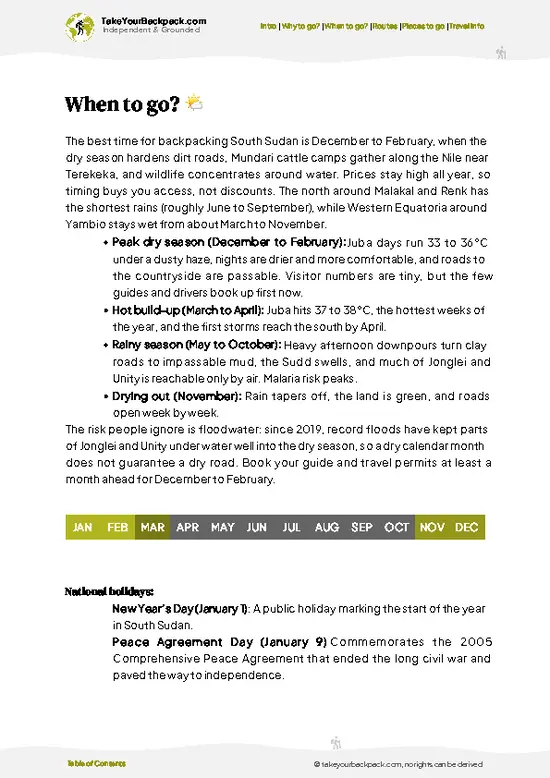
  • Topic: Weather – The festival thrives in the dry season, roughly December to February. Expect clear skies and minimal rain, which means your gear stays dry and trails stay passable. Avoid the wet season (May to October), when heavy rains turn roads to mud traps and dampen the vibe.

  • Topic: Temperature – Daytime highs hover around 30-35°C (86-95°F), which is hot but manageable with early starts and shade breaks. Nights cool down to 15-20°C (59-68°F), so pack a light jacket. Timing your visit in the cooler dry months keeps you from overheating during the festival’s energetic dances and ceremonies.

  • Topic: Daylight Hours – Near the equator, daylight stays steady at about 12 hours year-round. This consistency lets you plan your days without worrying about early sunsets cutting your exploration
read more 👉

  • Topic: Weather – The festival thrives in the dry season, roughly December to February. Expect clear skies and minimal rain, which means your gear stays dry and trails stay passable. Avoid the wet season (May to October), when heavy rains turn roads to mud traps and dampen the vibe.

  • Topic: Temperature – Daytime highs hover around 30-35°C (86-95°F), which is hot but manageable with early starts and shade breaks. Nights cool down to 15-20°C (59-68°F), so pack a light jacket. Timing your visit in the cooler dry months keeps you from overheating during the festival’s energetic dances and ceremonies.

  • Topic: Daylight Hours – Near the equator, daylight stays steady at about 12 hours year-round. This consistency lets you plan your days without worrying about early sunsets cutting your exploration short.

  • Topic: Crowds – The festival draws local communities and curious travelers alike, but it’s never overwhelming. Visiting during the peak dry season means you’ll catch the full cultural display without the crush of mass tourism, preserving the authenticity and your personal space.

  • Topic: Seasonal Activities – The dry season aligns with harvest celebrations and traditional ceremonies, so your timing syncs with the richest cultural expressions. Off-season visits miss these vibrant moments, turning the trip into a quieter, less immersive experience.

  • Topic: Price Fluctuations – Expect higher prices for lodging and transport during the dry season when demand peaks. Booking early can lock in better rates, but the premium is worth it for smooth logistics and festival access. Off-season travel saves money but risks weather disruptions and fewer activities.


Pro-tip: Lock in your trip for the dry season’s heart—December through February—to dodge mud, soak in full festival energy, and keep your backpack light and your spirits high.


source: climatestotravel.comJANJanuary: excellent for travelingFEBFebruary: excellent for travelingMARMarch: not recommended for travelingAPRApril: not recommended for travelingMAYMay: not recommended for travelingJUNJune: not recommended for travelingJULJuly: not recommended for travelingAUGAugust: not recommended for travelingSEPSeptember: not recommended for travelingOCTOctober: not recommended for travelingNOVNovember: not recommended for travelingDECDecember: excellent for traveling

✈️ The backpacker research shortcutSouth Sudan Travel Guide

An offline-friendly backpacking guide with optimized travel routes, ranked highlights, transport advice, and the best areas to stay.
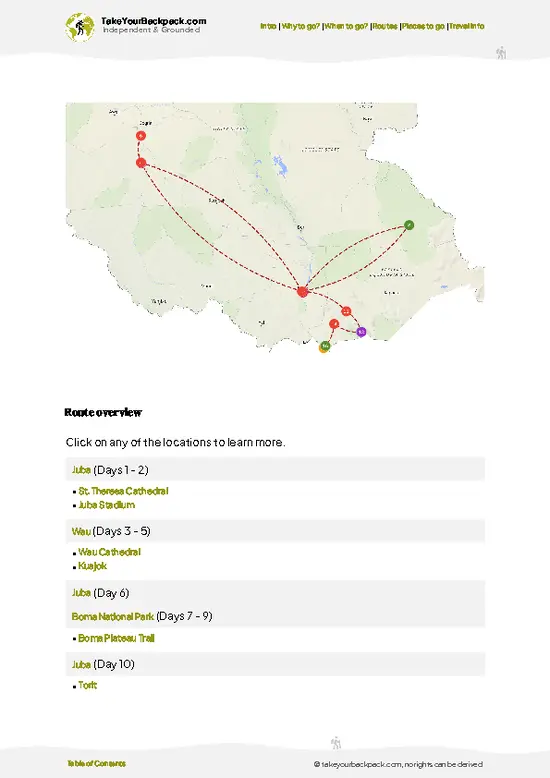
example page 0 from our offline Travel Guide for South Sudan
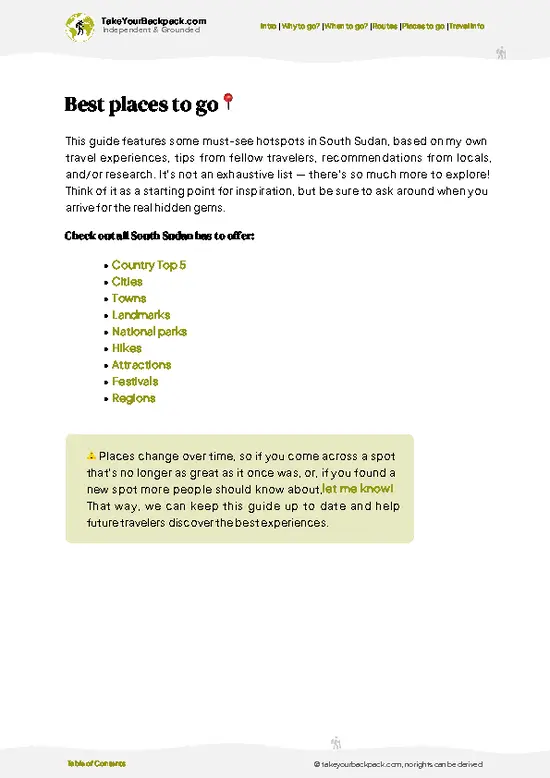
example page 1 from our offline Travel Guide for South Sudan
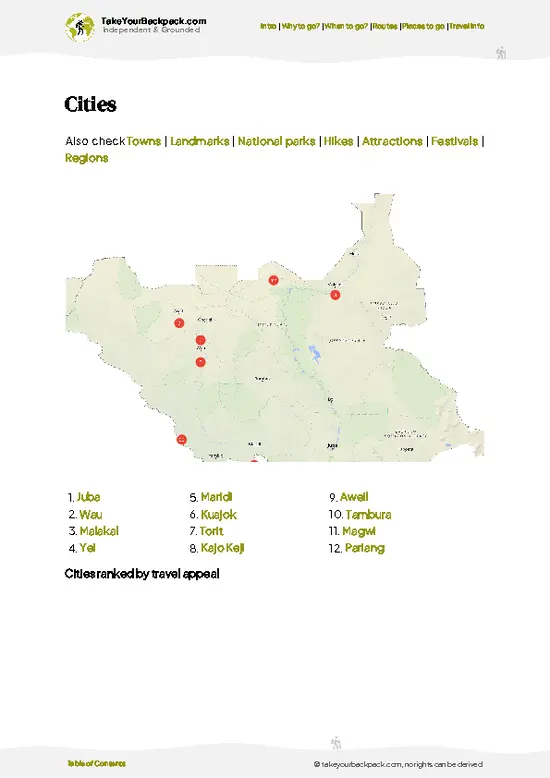
example page 2 from our offline Travel Guide for South Sudan
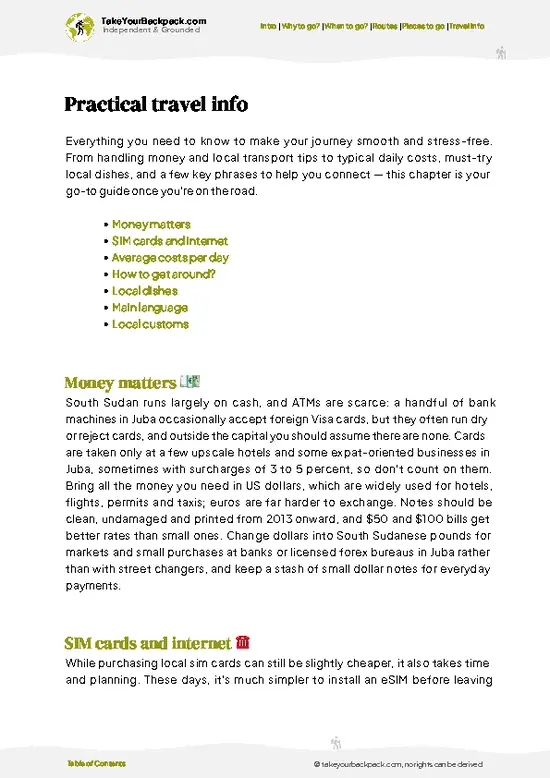
example page 3 from our offline Travel Guide for South Sudan
example page 4 from our offline Travel Guide for South Sudan
example page 5 from our offline Travel Guide for South Sudan
example page 6 from our offline Travel Guide for South Sudan
example page 7 from our offline Travel Guide for South Sudan
The digital guide (273 pages) contains:
69 highlights, ranked by travel appeal
Optimized 5, 10 & 15-day travel routes
Cities, national parks, landmarks, beaches
How to get around
Offline-friendly for travel without Wi-Fi
👉 Click to see all 30+ guide features

📅 Plan smarter in minutes, not weeks
Month by month travel advice
Festivals & national holidays
Budget expectations

🗺️ Go to the right places, skip the overrated ones
Honest pros & cons of destinations
Top hikes, parks & viewpoints
Lesser-known places most travelers miss
Clear “worth it vs skip it” guidance

🛏️ Travel smoothly without rookie mistakes
Best areas to stay
Transport systems explained simply
Common scams & safety advice
SIM cards, money & practical tips

🌍 Understand the country, not just visit it
Culture & traditions
52 Essential phrases & customs
Festivals worth planning around
Traveler-friendly historical context
Insights that make places more meaningful

📱 Built for real travel conditions
Fully downloadable PDF
Works completely offline
Optimized for phone use
Useful in remote areas & buses
Everything in one place
Save weeks of stressful planning
Get instant access to your full guide. 30‑day money-back guarantee.


By proceeding you agree to our terms.
Sent to your inbox immediately after payment • 100% Secure Checkout
Best Backpacking Travel Advisor 2025 tourism awardBest Backpacking
Travel Advisor
2025
What others say about Take Your Backpack Guides:
⭐⭐⭐⭐⭐
Fantastic, amazing amount of information!
⭐⭐⭐⭐⭐
My goodness this is amazing, it's what I've been looking for hats off too you!
⭐⭐⭐⭐⭐
I think this is absolutely BRILLIANT
⭐⭐⭐⭐
Very complete and informative. It's still missing places, but I gotta to commend you
⭐⭐⭐⭐⭐
This is truly amazing, thank you, can't wait to explore it with my kids!
⭐⭐⭐⭐⭐
Awesome resource, thank you!
⭐⭐⭐⭐⭐
This is amazing! Can't wait to explore the ones I haven't seen
⭐⭐⭐⭐
I love this! Well done, great idea.
⭐⭐⭐⭐⭐
Thanks for taking the time to make this gem!
⭐⭐⭐⭐⭐
This might be the best website I've ever seen.
⭐⭐⭐⭐⭐
Congratulations, and thank you so much for your work; it's incredibly valuable.
⭐⭐⭐⭐
In all seriousness I think you did a great job pointing out the important spots
⭐⭐⭐⭐⭐
10/10 very good
⭐⭐⭐⭐⭐
As someone who's only just starting to visit regularly this is awesome, thank you.
⭐⭐⭐⭐
Thank you very much! I'm going to visit my dad, it's going to be very useful!
⭐⭐⭐⭐⭐
This is really cool! We'll be travelling for the first time and this definitely come in handy.
⭐⭐⭐⭐⭐
You are now our minister of culture, congratulations 👨‍💼
⭐⭐⭐⭐⭐
Just wanted to tell you that this is a pearl! Going to follow your recommendations.
⭐⭐⭐⭐⭐
This is so cool. I'll definitely be using the resource for my travels soon.
⭐⭐⭐⭐⭐
This is very impressive! Good work.
⭐⭐⭐⭐⭐
This is an amazing and informative site. Very well done!

🛏️ Where to stay?Best areas and accommodation options

When you’re gearing up for the Rumbek Cultural Festival, your choice of where to stay can make or break your experience. Look for accommodations in the heart of Rumbek itself. This area buzzes with energy, making it easy to connect with fellow travelers and locals. You’ll find a mix of budget-friendly options that cater to backpackers and solo adventurers.

Safety is key, so stick to spots near the festival grounds. This not only keeps you close to the action but also minimizes late-night wandering. The atmosphere here is vibrant, filled with the sounds of laughter and music, perfect for soaking … read more 👉
When you’re gearing up for the Rumbek Cultural Festival, your choice of where to stay can make or break your experience. Look for accommodations in the heart of Rumbek itself. This area buzzes with energy, making it easy to connect with fellow travelers and locals. You’ll find a mix of budget-friendly options that cater to backpackers and solo adventurers.

Safety is key, so stick to spots near the festival grounds. This not only keeps you close to the action but also minimizes late-night wandering. The atmosphere here is vibrant, filled with the sounds of laughter and music, perfect for soaking in the festival spirit.

Consider areas where community gatherings happen. These spots often have informal guesthouses or shared lodgings, fostering a social vibe. You’ll meet people from all walks of life, sharing stories and tips.

Be mindful of the local customs and etiquette; this will enhance your experience and help you forge genuine connections. Keep an eye out for any hidden costs—like unexpected fees for amenities—so you can save your cash for the festival itself. Embrace the challenge of navigating a new place, and let the journey fuel your adventure!

👛 Costs (as of 29 January 2025)How expensive it really is

The Rumbek Cultural Festival in South Sudan is an exhilarating experience, but it’s essential to navigate the costs wisely to keep your energy and budget intact. Here’s a breakdown of what to expect:
  • Festival Tickets: Entry to the festival typically ranges from $10 to $30. Prices can vary based on the day and events you want to attend. Secure your tickets early to avoid last-minute price hikes.
  • Accommodation: Options are limited but available. Budget hotels and guesthouses can cost between $20 and $50 per night. For a more comfortable stay, expect to pay $60 to $100. Book ahead, especially during the festival, to avoid scrambling for a place to rest.
  • Local Transport: Getting around Rumbek can be done via shared taxis or motorbike taxis. Budget around $5 to $15 per ride, depending on the distance.
read more 👉
The Rumbek Cultural Festival in South Sudan is an exhilarating experience, but it’s essential to navigate the costs wisely to keep your energy and budget intact. Here’s a breakdown of what to expect:
  • Festival Tickets: Entry to the festival typically ranges from $10 to $30. Prices can vary based on the day and events you want to attend. Secure your tickets early to avoid last-minute price hikes.
  • Accommodation: Options are limited but available. Budget hotels and guesthouses can cost between $20 and $50 per night. For a more comfortable stay, expect to pay $60 to $100. Book ahead, especially during the festival, to avoid scrambling for a place to rest.
  • Local Transport: Getting around Rumbek can be done via shared taxis or motorbike taxis. Budget around $5 to $15 per ride, depending on the distance. If you’re planning to explore nearby areas, consider budgeting $30 to $50 for a full day of transport.
  • Food & Drinks: Local eateries offer meals for as low as $3 to $10. If you’re craving something more substantial or international, expect to pay $15 to $25. Don’t forget to factor in drinks; local beers and soft drinks are generally affordable, around $1 to $3 each.
  • Miscellaneous Expenses: This includes souvenirs, tips, and any unexpected costs. Set aside $20 to $50 for these extras. It’s always good to have a buffer for spontaneous experiences that pop up during your adventure.

Planning ahead will help you enjoy the festival without financial stress. Keep these costs in mind, and you’ll be ready to dive into the vibrant culture and energy of Rumbek.
⚠️ Prices can change and everyone travels differently, so take this as a rough guide. Hope it helps you plan your adventure!

🍲 FoodLocal Cuisine & Drinks

At the Rumbek Cultural Festival, food and drink are as vibrant as the celebrations themselves. You’ll find local specialties like sorghum porridge and nyama choma (grilled meat), sizzling on open fires. Vendors line the paths, their stalls bursting with the aroma of spices and smoke. Don’t miss the chance to try malwa, a traditional fermented drink made from sorghum. It’s a staple here, and sipping it while mingling with locals is a rite of passage.

For authenticity, dive into the community spirit. Sharing is key; locals often invite you to taste their dishes. This isn’t just about food; it’s about connection. Expect to see long lines at popular stalls, but don’t rush. Embrace the wait; it’s part of the experience. Cash is king here, so leave your cards behind.

Serving sizes can be generous, … read more 👉
At the Rumbek Cultural Festival, food and drink are as vibrant as the celebrations themselves. You’ll find local specialties like sorghum porridge and nyama choma (grilled meat), sizzling on open fires. Vendors line the paths, their stalls bursting with the aroma of spices and smoke. Don’t miss the chance to try malwa, a traditional fermented drink made from sorghum. It’s a staple here, and sipping it while mingling with locals is a rite of passage.

For authenticity, dive into the community spirit. Sharing is key; locals often invite you to taste their dishes. This isn’t just about food; it’s about connection. Expect to see long lines at popular stalls, but don’t rush. Embrace the wait; it’s part of the experience. Cash is king here, so leave your cards behind.

Serving sizes can be generous, so pace yourself. If you’re unsure, ask for a smaller portion to start. The festival is a feast for the senses, where every bite tells a story. Let the flavors guide you through the culture, and remember, it’s not just about what’s on your plate, but who you share it with.

Other South Sudanese festivals near Rumbek Cultural

Explore more nearby:


💡 Not sure where to go next?
Create a personalized itinerary for South Sudan including Rumbek Cultural and the places that fit your trip.

Generate my itinerary

👉 Discover all festivals

Or checkout all South Sudan has to offer (think cities, towns, villages, national parks, hikes, beaches, festivals)
Country photo of South Sudan

We 💚 feedbackWhat to keep in mind

The Rumbek Cultural Festival is a whirlwind of energy and tradition. You’ll feel the pulse of South Sudan in every drumbeat and dance. The best surprise? The warmth of the locals; they’ll welcome you like family. But watch out for the heat—stay hydrated and pace yourself. This isn’t just a festival; it’s a vibrant tapestry of life. Embrace the chaos, and let it fuel your spirit. You’ll leave with stories that linger long after the last dance.

✍️ Help improve this page!
The information on this page is based on in-depth research, insights shared by experienced travelers, and feedback from the local travel community in South Sudan. While every effort is made to keep the information accurate and current, conditions can change — so if you spot anything incorrect or outdated, please get in touch.


🙋‍♂️ Give feedback

👋 Meet the founderWho’s Behind Take Your Backpack?

Johan, backpacker and founder of TakeYourBackpackHi, I’m Johan (Netherlands 🇳🇱), the creator of TakeYourBackpack. Over the past decade, I’ve backpacked through 80+ countries across six continents, gaining extensive experience with independent travel, long-term trips, and overland routes.

This site is built on a combination of firsthand travel experience and carefully curated insights from other backpackers. Many guides are based on places I’ve personally visited, while others bring together tips, observations, and practical advice shared by trusted travelers I’ve met along the way.

The goal is to provide realistic, experience-driven guidance — not generic itineraries — so you can explore destinations with better context, clearer expectations, and more confidence.

Get full country guide •
Instant download • 69 highlights • Full Offline guide