×

South Sudan🇸🇸 | festivalsNimule Cultural Festivalborderland traditions, dance performances, ethnic attire | things to do and best time to go

Explore Yei Agricultural ShowExplore Rumbek Cultural Festival

Backpacking in Nimule Cultural
By Johan Kruseman 🇳🇱 | Updated October 13, 2026

Forget the travel-blog myth: the Nimule Cultural Festival isn’t some sanitized, Instagram-ready parade of “local color.” It’s raw, loud, and alive—an all-senses-on-deck celebration that throws you into the deep end of South Sudanese culture. You’ll find it in Nimule, a border town pressed against Uganda’s northern edge, where the White Nile churns and the bushland hums with possibility. The festival is a kinetic collision of traditional music—think pounding drums, ululating singers, and hypnotic rhythms that pull even the shyest traveler into the dance. Locals, returnees, and a handful of intrepid outsiders gather for days of storytelling, wrestling matches, and communal feasts. The crowd is mostly South Sudanese, fiercely proud and welcoming if you show respect. The vibe? Unfiltered joy, but with an undercurrent of resilience—this is a region that’s survived real hardship. If you want a festival that tests your stamina and rewards your curiosity, Nimule delivers. Just don’t expect comfort or predictability.

Discover everything you want to know in the 📖 South Sudan Travel Guide.
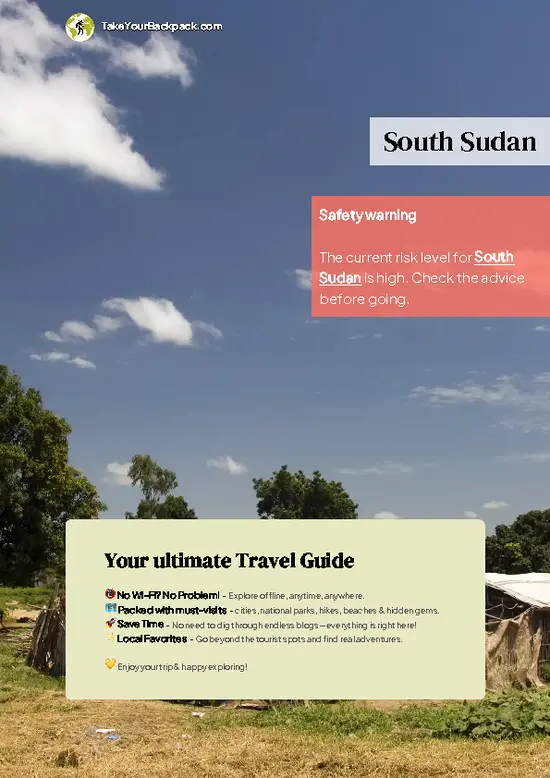
Safety warning

The current risk level for South Sudan is high. Check the advice before going.


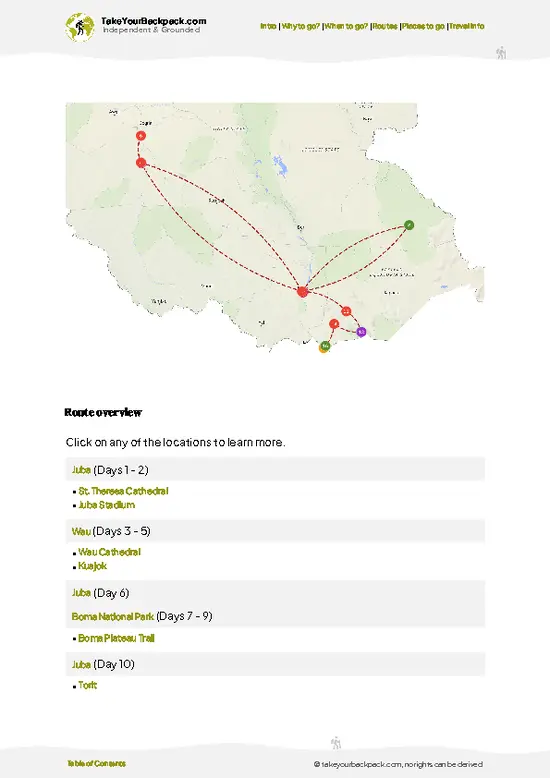
example page 0 from our offline Travel Guide for South Sudan
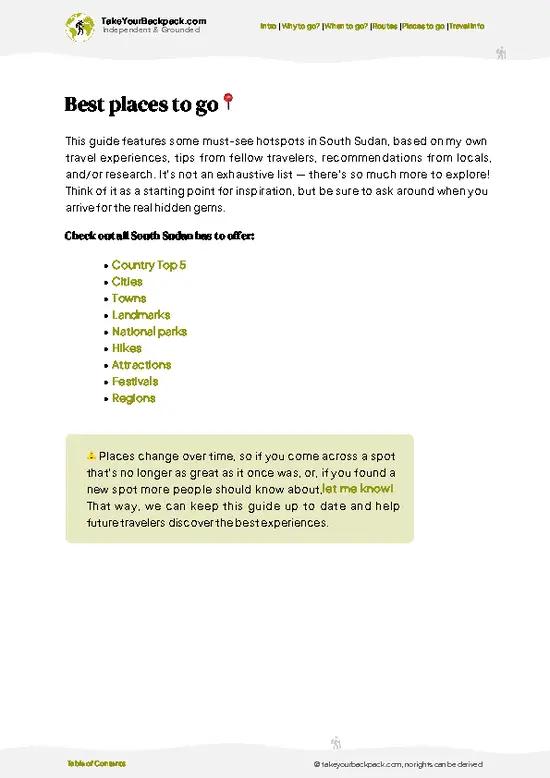
example page 1 from our offline Travel Guide for South Sudan
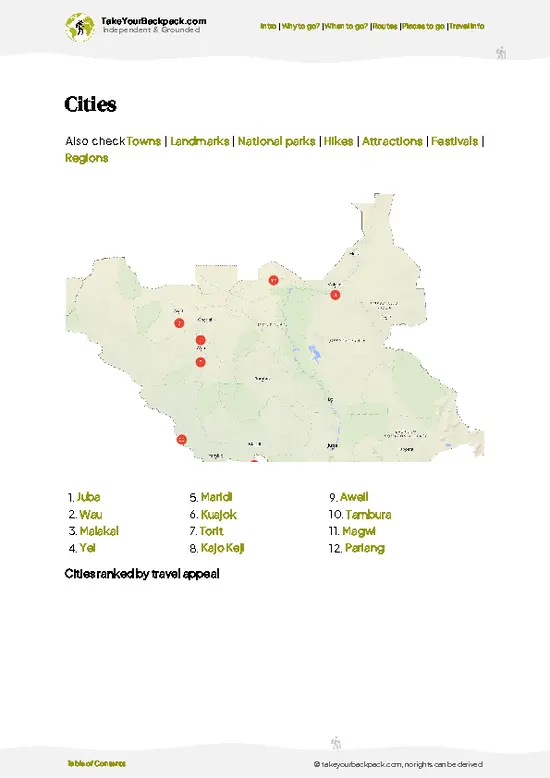
example page 2 from our offline Travel Guide for South Sudan
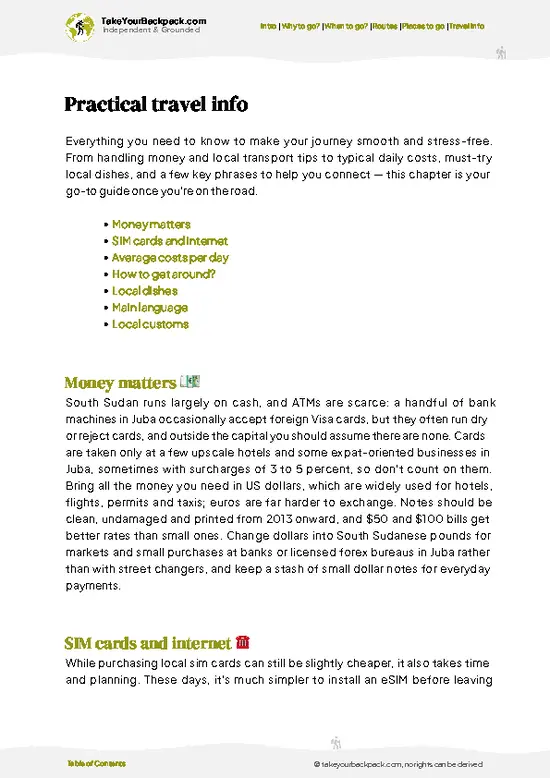
example page 3 from our offline Travel Guide for South Sudan
example page 4 from our offline Travel Guide for South Sudan
example page 5 from our offline Travel Guide for South Sudan
example page 6 from our offline Travel Guide for South Sudan
example page 7 from our offline Travel Guide for South Sudan
Loading the map 🌍
CLICK TO FILTER
cities
towns
landmarks
national parks
hikes
attractions
festivals
regions
SHOW COUNTRY’S BESTSHOW ALL

✨ Why go?
Ranked #99 festival in South Sudan
What makes this festival worth celebrating

Backpackers flock to the Nimule Cultural Festival in South Sudan for a reason. This isn’t just another event; it’s a social energy powerhouse. Imagine the buzz of drums, the swirl of vibrant attire, and the laughter of a temporary community coming together. You’re not just an observer; you’re part of something alive and dynamic.

Planning your route around this festival means diving deep into cultural immersion. You’ll experience traditional dances, local cuisine, and the stories that shape the community. It’s a chance to connect with locals in a way that transcends the typical tourist experience.

Affordability is another draw. Compared to similar events worldwide, the Nimule festival offers incredible value. You can enjoy rich experiences without breaking the bank, leaving you with more … read more 👉
Backpackers flock to the Nimule Cultural Festival in South Sudan for a reason. This isn’t just another event; it’s a social energy powerhouse. Imagine the buzz of drums, the swirl of vibrant attire, and the laughter of a temporary community coming together. You’re not just an observer; you’re part of something alive and dynamic.

Planning your route around this festival means diving deep into cultural immersion. You’ll experience traditional dances, local cuisine, and the stories that shape the community. It’s a chance to connect with locals in a way that transcends the typical tourist experience.

Affordability is another draw. Compared to similar events worldwide, the Nimule festival offers incredible value. You can enjoy rich experiences without breaking the bank, leaving you with more resources for the adventures that lie ahead.

Incorporating the festival into your longer travel plans is a savvy move. It serves as a vibrant anchor point, allowing you to explore the surrounding beauty of South Sudan while recharging your spirit. Don’t miss this opportunity to blend exploration with celebration; it’s where the journey truly comes alive.

💡 HighlightsWhat this place is best known for

  • Raw, live traditional music and dance — One of the festival’s heartbeats: loud drums, call-and-response singing and high-energy dances from local communities. It’s not a polished stage show — it’s participatory, improvisational and deeply rhythmic, so you’ll often be pulled into a circle rather than just watching from afar.
  • Riverside setting and Nile atmosphere — Nimule sits by the river, so much of the action spills onto the banks: people, vendors, and informal boat activity at sunset. The combination of music and water makes the whole thing feel relaxed and cinematic in a way city festivals rarely match.
  • Busy craft markets and living workshops — Artisans sell beadwork, woven items, carved pieces and more, and many are making things on the spot. It’s an easy place to see how objects are
… read more 👉
  • Raw, live traditional music and dance — One of the festival’s heartbeats: loud drums, call-and-response singing and high-energy dances from local communities. It’s not a polished stage show — it’s participatory, improvisational and deeply rhythmic, so you’ll often be pulled into a circle rather than just watching from afar.
  • Riverside setting and Nile atmosphere — Nimule sits by the river, so much of the action spills onto the banks: people, vendors, and informal boat activity at sunset. The combination of music and water makes the whole thing feel relaxed and cinematic in a way city festivals rarely match.
  • Busy craft markets and living workshops — Artisans sell beadwork, woven items, carved pieces and more, and many are making things on the spot. It’s an easy place to see how objects are made, haggle directly with makers, and take home something truly local instead of mass-produced souvenirs.
  • Local food stalls and communal eating — Expect fresh river fish, grilled meats and hearty local staples served in open-air stalls and communal plates. Eating here is a social experience: flavors are simple but honest, and sharing a meal is one of the fastest ways to connect with people at the festival.
  • Cultural exchange and living traditions — Nimule draws communities from across the region, so the festival becomes a crossroads of languages, dress and oral storytelling. You’ll see elders perform history, young people remix tradition, and informal games or contests that reveal how culture is alive and evolving — not stuck in a museum.
Spotted a mistake or missing something? Contact us.

🌤️ When to go?When is the celebration of Nimule Cultural Festival?

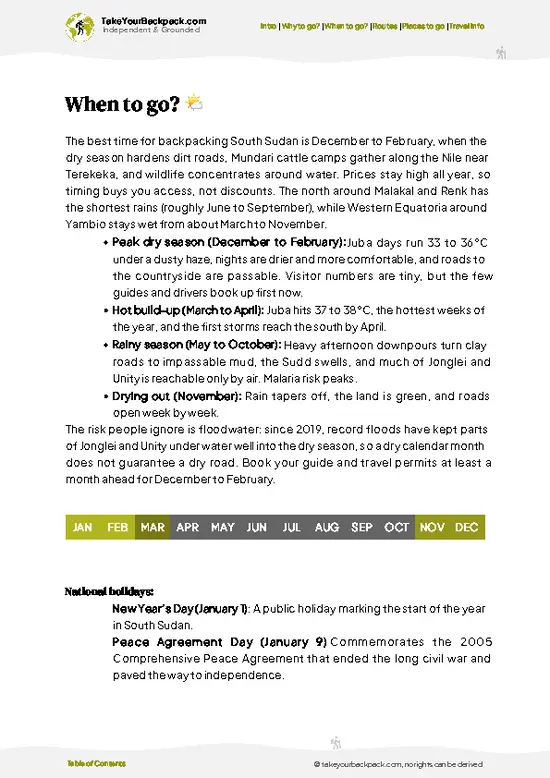
  • Topic: Weather - The Nimule Cultural Festival thrives in the dry season, roughly from November to February. Rain is scarce, so trails stay firm and rivers calm, making every step outside a pleasure rather than a slog through mud.
  • Topic: Temperature - Expect daytime highs around 30-35°C (86-95°F), which cool down to a comfortable 18-22°C (64-72°F) at night. Early mornings and evenings can feel crisp, so pack layers to stay agile and comfortable.
  • Topic: Daylight Hours - With roughly 11 to 12 hours of daylight, you get ample time to dive into festival activities without rushing. The sun rises around 6:00 AM and sets close to 6:30 PM, giving you a solid window to explore and absorb local culture.
  • Topic: Crowds - The festival draws a lively but manageable crowd during peak months. Arriving
… read more 👉
  • Topic: Weather - The Nimule Cultural Festival thrives in the dry season, roughly from November to February. Rain is scarce, so trails stay firm and rivers calm, making every step outside a pleasure rather than a slog through mud.
  • Topic: Temperature - Expect daytime highs around 30-35°C (86-95°F), which cool down to a comfortable 18-22°C (64-72°F) at night. Early mornings and evenings can feel crisp, so pack layers to stay agile and comfortable.
  • Topic: Daylight Hours - With roughly 11 to 12 hours of daylight, you get ample time to dive into festival activities without rushing. The sun rises around 6:00 AM and sets close to 6:30 PM, giving you a solid window to explore and absorb local culture.
  • Topic: Crowds - The festival draws a lively but manageable crowd during peak months. Arriving early in the dry season means you’ll dodge the thickest clusters of tourists and snag better spots for performances and markets.
  • Topic: Seasonal Activities - Dry season aligns with the festival’s full slate of dances, crafts, and ceremonies. Avoid the rainy months when many outdoor events either scale back or vanish, limiting your cultural immersion.
  • Topic: Price Fluctuations - Prices for lodging and local transport spike during the festival’s peak dry months. Booking ahead can lock in better rates, but traveling just before or after the main festival window can save you cash without sacrificing the experience.
Pro-tip: Aim for late November or early December to catch the festival in full swing, with solid weather and fewer crowds—perfect for stretching your legs and your budget.


source: climatestotravel.comJANJanuary: not recommended for travelingFEBFebruary: not recommended for travelingMARMarch: not recommended for travelingAPRApril: not recommended for travelingMAYMay: not recommended for travelingJUNJune: not recommended for travelingJULJuly: not recommended for travelingAUGAugust: not recommended for travelingSEPSeptember: not recommended for travelingOCTOctober: not recommended for travelingNOVNovember: excellent for travelingDECDecember: not recommended for traveling

✈️ The backpacker research shortcutSouth Sudan Travel Guide

An offline-friendly backpacking guide with optimized travel routes, ranked highlights, transport advice, and the best areas to stay.
example page 0 from our offline Travel Guide for South Sudan
example page 1 from our offline Travel Guide for South Sudan
example page 2 from our offline Travel Guide for South Sudan
example page 3 from our offline Travel Guide for South Sudan
example page 4 from our offline Travel Guide for South Sudan
example page 5 from our offline Travel Guide for South Sudan
example page 6 from our offline Travel Guide for South Sudan
example page 7 from our offline Travel Guide for South Sudan
The digital guide (242 pages) contains:
✅ 57 highlights, ranked by travel appeal
✅ Optimized 5, 10 & 15-day travel routes
✅ Cities, national parks, landmarks, beaches
✅ How to get around
✅ Offline-friendly for travel without Wi-Fi
👉 Click to see all 30+ guide features

📅 Plan smarter in minutes, not weeks
✅ Month by month travel advice
✅ Festivals & national holidays
✅ Budget expectations

🗺️ Go to the right places, skip the overrated ones
✅ Honest pros & cons of destinations
✅ Top hikes, parks & viewpoints
✅ Lesser-known places most travelers miss
✅ Clear “worth it vs skip it” guidance

🛏️ Travel smoothly without rookie mistakes
✅ Best areas to stay
✅ Transport systems explained simply
✅ Common scams & safety advice
✅ SIM cards, money & practical tips

🌍 Understand the country, not just visit it
✅ Culture & traditions
✅ 52 Essential phrases & customs
✅ Festivals worth planning around
✅ Traveler-friendly historical context
✅ Insights that make places more meaningful

📱 Built for real travel conditions
✅ Fully downloadable PDF
✅ Works completely offline
✅ Optimized for phone use
✅ Useful in remote areas & buses
✅ Everything in one place
Stop searching, start planning
Get instant access to your full guide. 30‑day money-back guarantee.
+ Add another guide for just

By proceeding you agree to our terms.
Sent to your inbox immediately after payment • 100% Secure Checkout
Best Backpacking Travel Advisor 2025 tourism awardBest Backpacking
Travel Advisor
2025
What others say about Take Your Backpack Guides:
⭐⭐⭐⭐⭐
Fantastic, amazing amount of information!
⭐⭐⭐⭐⭐
My goodness this is amazing, it's what I've been looking for hats off too you!
⭐⭐⭐⭐⭐
I think this is absolutely BRILLIANT
⭐⭐⭐⭐
Very complete and informative. It's still missing places, but I gotta to commend you
⭐⭐⭐⭐⭐
This is truly amazing, thank you, can't wait to explore it with my kids!
⭐⭐⭐⭐⭐
Awesome resource, thank you!
⭐⭐⭐⭐⭐
This is amazing! Can't wait to explore the ones I haven't seen
⭐⭐⭐⭐
I love this! Well done, great idea.
⭐⭐⭐⭐⭐
Thanks for taking the time to make this gem!
⭐⭐⭐⭐⭐
This might be the best website I've ever seen.
⭐⭐⭐⭐⭐
Congratulations, and thank you so much for your work; it's incredibly valuable.
⭐⭐⭐⭐
In all seriousness I think you did a great job pointing out the important spots
⭐⭐⭐⭐⭐
10/10 very good
⭐⭐⭐⭐⭐
As someone who's only just starting to visit regularly this is awesome, thank you.
⭐⭐⭐⭐
Thank you very much! I'm going to visit my dad, it's going to be very useful!
⭐⭐⭐⭐⭐
This is really cool! We'll be travelling for the first time and this definitely come in handy.
⭐⭐⭐⭐⭐
You are now our minister of culture, congratulations 👨‍💼
⭐⭐⭐⭐⭐
Just wanted to tell you that this is a pearl! Going to follow your recommendations.
⭐⭐⭐⭐⭐
This is so cool. I'll definitely be using the resource for my travels soon.
⭐⭐⭐⭐⭐
This is very impressive! Good work.
⭐⭐⭐⭐⭐
This is an amazing and informative site. Very well done!

🛏️ Where to stay?Choosing the right base

When you’re gearing up for the Nimule Cultural Festival in South Sudan, your choice of where to stay can make or break your experience. Focus on the Nimule town center. It’s buzzing with energy, and you’ll find a mix of locals and fellow travelers. This area is your best bet for safety and social interaction.

Look for spots near the festival grounds. Being close means you can dive into the festivities without wasting time on transport. Plus, you’ll soak up the atmosphere as the celebrations unfold right outside your door.

The riverside areas are also worth considering. They offer a more laid-back … read more 👉
When you’re gearing up for the Nimule Cultural Festival in South Sudan, your choice of where to stay can make or break your experience. Focus on the Nimule town center. It’s buzzing with energy, and you’ll find a mix of locals and fellow travelers. This area is your best bet for safety and social interaction.

Look for spots near the festival grounds. Being close means you can dive into the festivities without wasting time on transport. Plus, you’ll soak up the atmosphere as the celebrations unfold right outside your door.

The riverside areas are also worth considering. They offer a more laid-back vibe, perfect for unwinding after a day of cultural immersion. You might even find some local eateries serving up authentic dishes, giving you a taste of the region’s culinary delights.

Stay alert to the local scene. Engage with other backpackers; they often have the best tips on where to go and what to avoid. This camaraderie can lead to shared adventures, making your experience richer.

Avoid the tourist traps that can drain your budget. Instead, invest in experiences that connect you to the heart of South Sudan. Your energy and funds will be preserved for the moments that truly matter.

👛 Costs (as of 13 October 2026)Money, prices, and spending tips

The Nimule Cultural Festival in South Sudan is an exhilarating experience, but it’s essential to navigate the costs wisely to keep your energy and budget intact. Here’s a breakdown of what you can expect:
  • Festival Tickets: Entry to the festival typically ranges from $10 to $20. This fee grants you access to a vibrant showcase of local culture, music, and dance. It’s a small price for a deep dive into the heart of South Sudanese traditions.
  • Accommodation: Options vary widely. Budget travelers can find dormitory-style hostels for around $10 to $15 per night. If you prefer more privacy, guesthouses range from $25 to $50. Booking in advance is wise, especially during the festival.
  • Local Transport: Expect to spend about $5 to $15 for local transport. Boda-bodas (motorcycle taxis) are common and affordable.
… read more 👉
The Nimule Cultural Festival in South Sudan is an exhilarating experience, but it’s essential to navigate the costs wisely to keep your energy and budget intact. Here’s a breakdown of what you can expect:
  • Festival Tickets: Entry to the festival typically ranges from $10 to $20. This fee grants you access to a vibrant showcase of local culture, music, and dance. It’s a small price for a deep dive into the heart of South Sudanese traditions.
  • Accommodation: Options vary widely. Budget travelers can find dormitory-style hostels for around $10 to $15 per night. If you prefer more privacy, guesthouses range from $25 to $50. Booking in advance is wise, especially during the festival.
  • Local Transport: Expect to spend about $5 to $15 for local transport. Boda-bodas (motorcycle taxis) are common and affordable. Just remember to negotiate the fare before hopping on to avoid surprises.
  • Food & Drinks: Street food is your best friend here. Meals can cost between $2 and $5. Local restaurants might charge $5 to $10 for a more substantial meal. Don’t forget to try traditional dishes; they’re a highlight of the experience.
  • Miscellaneous Expenses: Budget around $10 to $30 for souvenirs, tips, or unexpected costs. It’s always good to have a little extra for those spontaneous moments that make travel memorable.

Planning ahead and keeping these costs in mind will help you focus on the festival’s vibrant atmosphere rather than financial stress. Enjoy the journey!
⚠️ Prices can change and everyone travels differently, so take this as a rough guide. Hope it helps you plan your adventure!

🍲 FoodLocal Flavors for Backpackers

At the Nimule Cultural Festival, food and drink are not just sustenance; they’re a vibrant part of the experience. You’ll find stalls brimming with local specialties like kisra, a flatbread made from sorghum, and ful medames, a hearty fava bean dish that warms the soul. Don’t miss out on nyama choma, grilled meat that’s smoky and tender, often served with a spicy sauce that packs a punch.

For drinks, malwa, a traditional fermented beverage, is a must-try. It’s slightly tangy and refreshing, perfect for cooling off in the heat. You might also stumble upon vendors selling sugarcane juice, a sweet, energizing treat that’s as fun to sip as it is to watch being made.

When diving into the festival’s food scene, embrace the etiquette of sharing. It’s common to see groups gathered around communal … read more 👉
At the Nimule Cultural Festival, food and drink are not just sustenance; they’re a vibrant part of the experience. You’ll find stalls brimming with local specialties like kisra, a flatbread made from sorghum, and ful medames, a hearty fava bean dish that warms the soul. Don’t miss out on nyama choma, grilled meat that’s smoky and tender, often served with a spicy sauce that packs a punch.

For drinks, malwa, a traditional fermented beverage, is a must-try. It’s slightly tangy and refreshing, perfect for cooling off in the heat. You might also stumble upon vendors selling sugarcane juice, a sweet, energizing treat that’s as fun to sip as it is to watch being made.

When diving into the festival’s food scene, embrace the etiquette of sharing. It’s common to see groups gathered around communal plates, so don’t hesitate to join in. Lines can get long, but the wait is part of the adventure. Bring cash; many vendors don’t accept cards, and you’ll want to be ready to snag those delicious bites as they come. Serving sizes can vary, so don’t be shy about asking for recommendations. This festival is about connection, flavor, and the joy of discovery—so dig in and savor every moment!

FAQFrequently asked questions about Nimule Cultural

Nimule Cultural Festival typically takes place annually in December, lasting for about 3 days. The exact dates can vary slightly each year, so planning for early to mid-December is advisable. The festival aligns with the end-of-year celebrations in the region.
Attendance to Nimule Cultural Festival is generally free of charge for most events, as it is a community-focused cultural celebration. However, some special performances or activities may have a small fee, usually under $10. Budgeting a modest amount for food, transport, and optional activities is recommended.
No, you do not need to purchase tickets in advance for Nimule Cultural Festival. The event is open to the public and designed to encourage local and international visitors without the barrier of ticketing. Arriving early is beneficial to secure good spots for popular performances.
⚠️ Things can change over time, so always validate details locally before you go.

Other South Sudanese festivals near Nimule Cultural

Explore more nearby:


💡 Not sure where to go next?
Create a personalized itinerary for South Sudan including Nimule Cultural and the places that fit your trip.

Generate my itinerary

👉 Discover all festivals

Or checkout all South Sudan has to offer (think cities, towns, villages, national parks, hikes, beaches, festivals)
Country photo of South Sudan

We 💚 feedbackSumming up the experience

The Nimule Cultural Festival is a whirlwind of energy and connection. You’ll feel the pulse of community as dancers whirl and drums thump. The best surprise? The warmth of the locals; they’ll pull you into their celebrations like an old friend. Just a heads-up: be ready for the heat and bring plenty of water. It’s easy to get swept up and forget to hydrate. But trust me, every drop of sweat is worth it for the stories you’ll collect and the bonds you’ll forge.

✍️ Help improve this page!
The information on this page is based on in-depth research, insights shared by experienced travelers, and feedback from the local travel community in South Sudan. While every effort is made to keep the information accurate and current, conditions can change — so if you spot anything incorrect or outdated, please get in touch.


🙋‍♂️ Give feedback

👋 Meet the founderWho’s Behind Take Your Backpack?

Johan, backpacker and founder of TakeYourBackpackHi, I’m Johan (Netherlands 🇳🇱), the creator of TakeYourBackpack. Over the past 3 decades, I’ve backpacked through 90+ countries across six continents, gaining extensive experience with independent travel, long-term trips, and overland routes.

This site is built on a combination of firsthand travel experience and carefully curated insights from other backpackers. Many guides are based on places I’ve personally visited, while others bring together tips, observations, and practical advice shared by trusted travelers I’ve met along the way.

The goal is to provide realistic, experience-driven guidance — not generic itineraries — so you can explore destinations with better context, clearer expectations, and more confidence.