v2.webp)
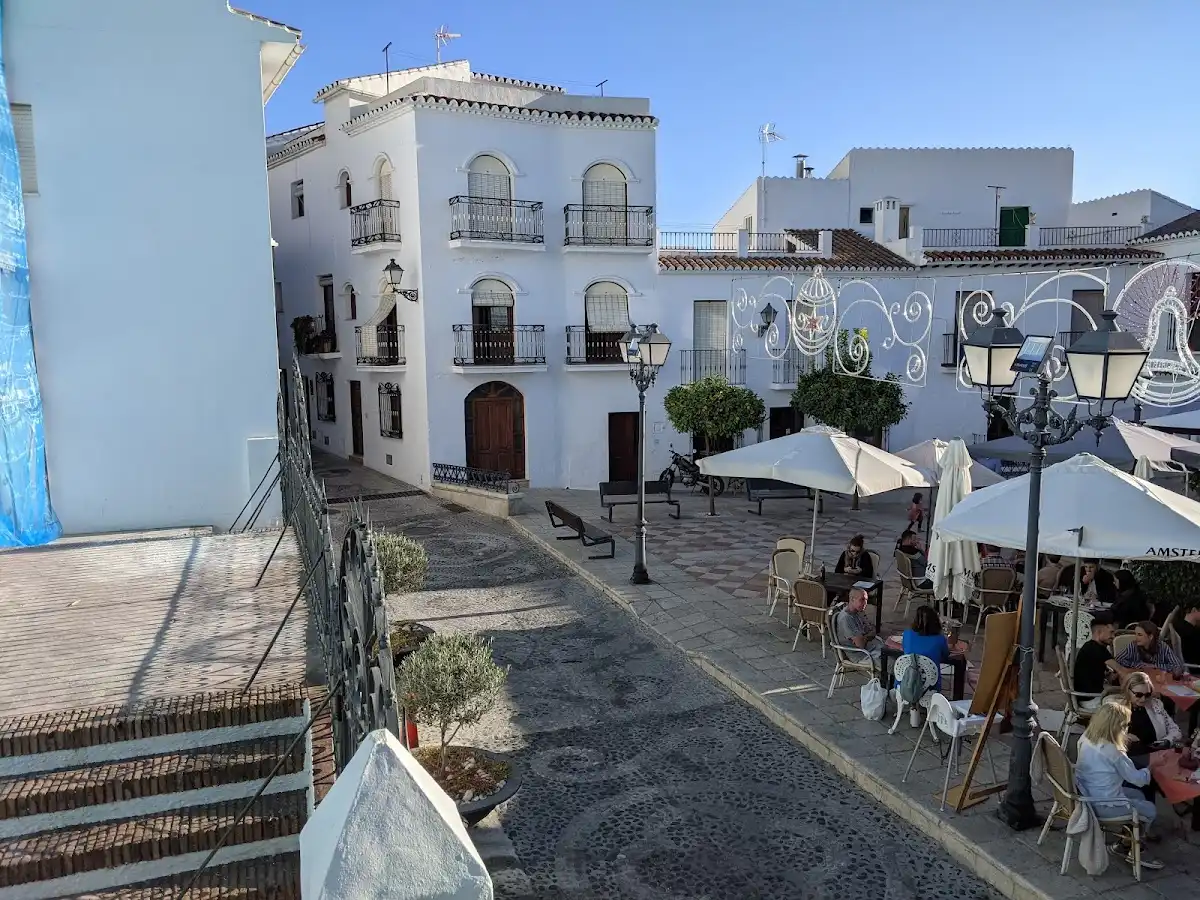
- Calle Real — The town’s main cobbled artery, full of whitewashed houses, ceramic plaques and tiny cafés; wandering it is the best way to feel Frigiliana’s rhythm and spot local details you don’t get from photos.
- Barribarto, the Moorish Quarter — A maze of narrow lanes and stepped alleys tucked on the north slope, showing the old Arabic street pattern and offering a quieter, atmospheric side of the village.
- El Ingenio (Old Sugar Mill & Museum) — Ruins and a small museum that tell the story of the region’s sugar cane industry and the people who worked it; it’s a tangible link to Frigiliana’s economic past.
- Plaza de las Tres Culturas — A compact square celebrating the area’s Christian, Muslim and Jewish influences; it’s a social hub and often the place for local events and the town’s famous
- Calle Real — The town’s main cobbled artery, full of whitewashed houses, ceramic plaques and tiny cafés; wandering it is the best way to feel Frigiliana’s rhythm and spot local details you don’t get from photos.
- Barribarto, the Moorish Quarter — A maze of narrow lanes and stepped alleys tucked on the north slope, showing the old Arabic street pattern and offering a quieter, atmospheric side of the village.
- El Ingenio (Old Sugar Mill & Museum) — Ruins and a small museum that tell the story of the region’s sugar cane industry and the people who worked it; it’s a tangible link to Frigiliana’s economic past.
- Plaza de las Tres Culturas — A compact square celebrating the area’s Christian, Muslim and Jewish influences; it’s a social hub and often the place for local events and the town’s famous festival.
- Iglesia de San Antonio — The parish church that sits near the top of the old town; visit for the interior artwork, the sense of place and the views from the church steps over the village.
- Casa del Apero / Casa de la Cultura — The municipal cultural center where you’ll find rotating local exhibitions, small concerts and artisan shows, a good spot to catch how locals express their culture today.
- Museo Arqueológico (municipal archaeology displays) — Small but informative exhibits that pull together finds from nearby sites; useful if you want the historical backstory beyond the street-level charm.
- Public fountains and old lavaderos — Scattered historic fountains and former communal wash areas that reveal daily life from earlier centuries and make for pleasant, photo-ready stops on a walk.
- Scattered miradores (viewpoints) — Several short climbs from the centro lead to terraces and belvederes with sweeping views of the Mediterranean and the Sierras; they’re simple but rewarding, especially at golden hour.
- Local artisan and ceramic workshops — Small shops and studios tucked into alleys where you can watch pottery being made, buy locally designed tiles or pick up honest souvenirs while supporting craftspeople.
Spotted a mistake or missing something? Contact us.


 Best Backpacking
.jpg) Hi, I’m Johan (Netherlands 🇳🇱), the creator of TakeYourBackpack. Over the past 3 decades, I’ve backpacked through 90+ countries across six continents, gaining extensive experience with independent travel, long-term trips, and overland routes.
Hi, I’m Johan (Netherlands 🇳🇱), the creator of TakeYourBackpack. Over the past 3 decades, I’ve backpacked through 90+ countries across six continents, gaining extensive experience with independent travel, long-term trips, and overland routes.