×

Spain🇪🇸 | regionsFuerteventuraDune fields, windsurfing spots, arid plains | things to do and best time to go

Explore TenerifeExplore La Palma

Backpacking in Fuerteventura
👍 Recommendedregion ranked #8
By Johan Kruseman 🇳🇱 | Updated October 15, 2026

Everyone lands on Fuerteventura chasing the “best beaches in the Canaries”—but let’s be honest, if you’re only here for the sand, you’re missing the real story. Fuerteventura sits in the Atlantic, just off the coast of Morocco, but it’s Spanish through and through—part of the Canary Islands, yet with a wild, wind-battered soul that feels a world apart from mainland Spain. For backpackers, it’s a place of trade-offs: yes, the beaches are broad and raw, but the island’s real currency is its sense of space and freedom. You’ll find volcanic moonscapes, goat herders, and surf towns like Corralejo that still feel more local than package-tourist. Buses connect the main towns, but don’t expect seamless transport—miss one, and you’ll be waiting. Prices are lower than Tenerife or Gran Canaria, but you sacrifice nightlife and urban buzz. Fuerteventura is for those who’d rather swap crowds for wind, and glossy resorts for a sunburn and a story.

Discover everything you want to know in the 📖 Spain Travel Guide.


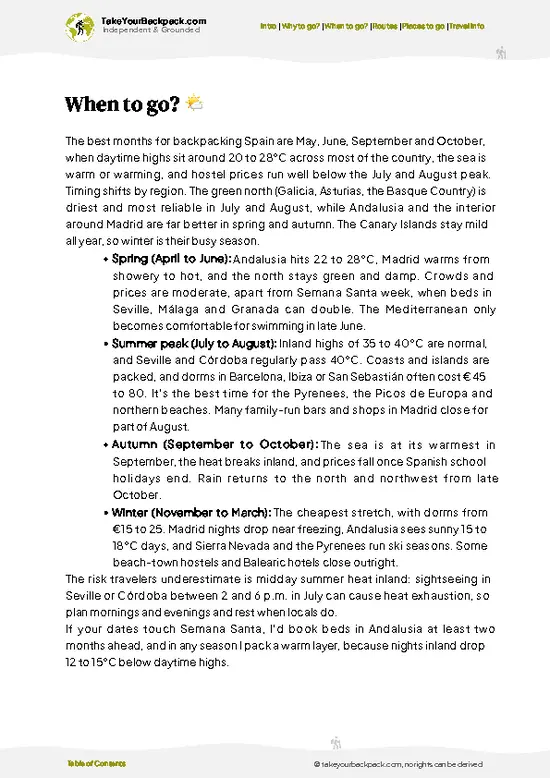
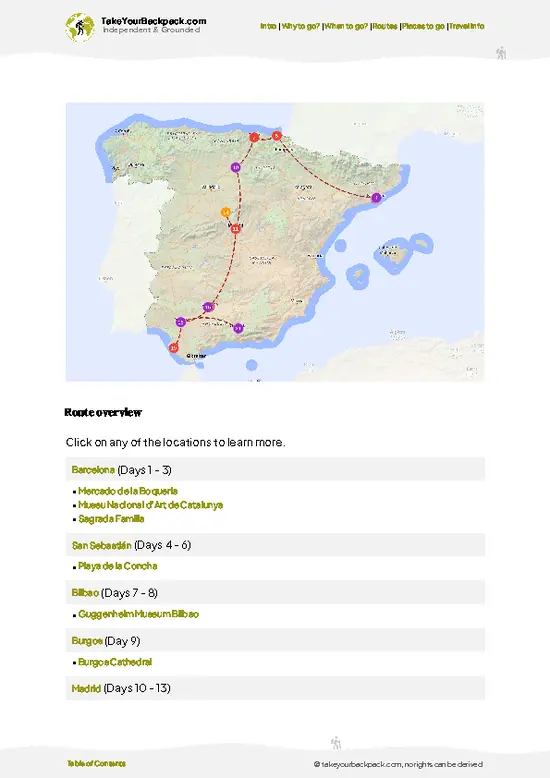
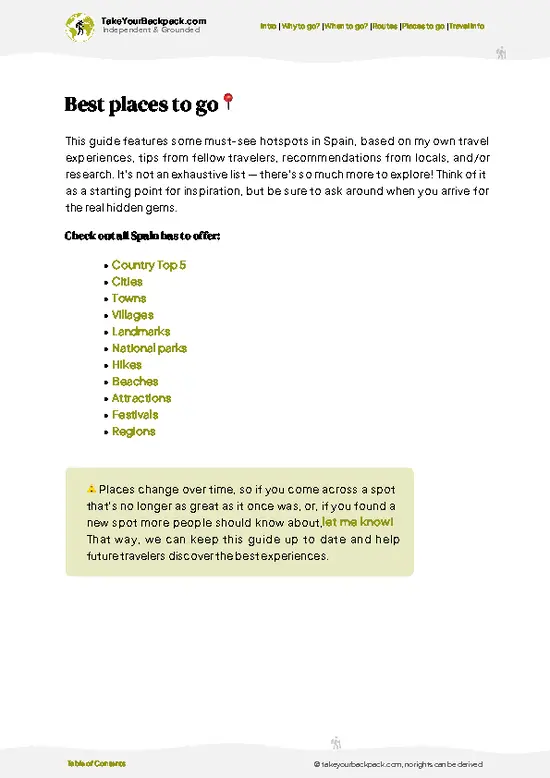
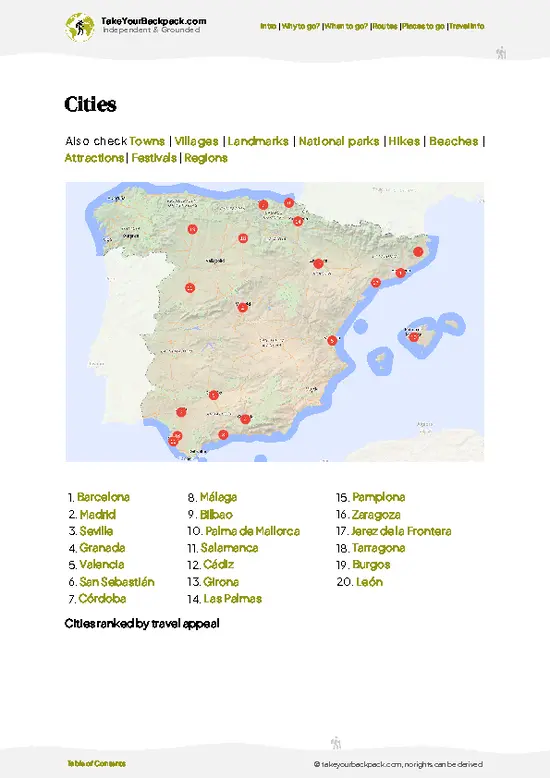
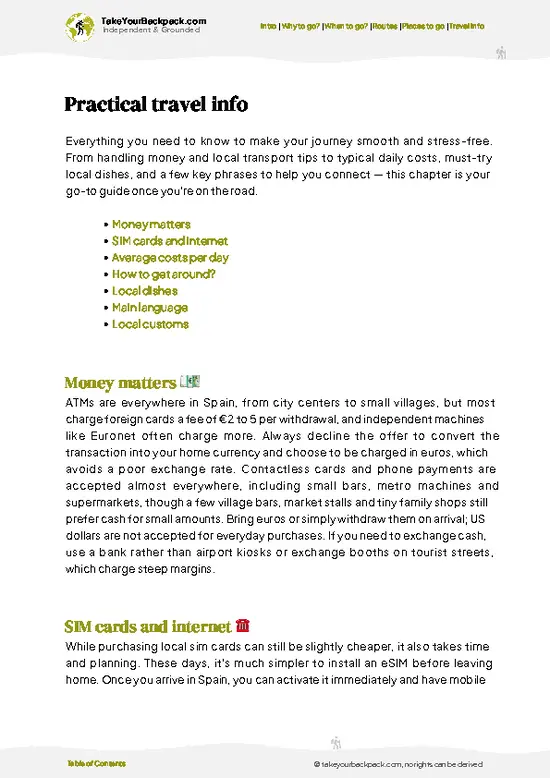
example page 0 from our offline Travel Guide for Spain
example page 1 from our offline Travel Guide for Spain
example page 2 from our offline Travel Guide for Spain
example page 3 from our offline Travel Guide for Spain
example page 4 from our offline Travel Guide for Spain
example page 5 from our offline Travel Guide for Spain
example page 6 from our offline Travel Guide for Spain
example page 7 from our offline Travel Guide for Spain
Loading the map 🌍
CLICK TO FILTER
cities
towns
villages
landmarks
national parks
hikes
beaches
attractions
festivals
regions
SHOW COUNTRY’S BESTSHOW ALL

✨ Why go?
Ranked #8 region in Spain
What makes this region worth visiting

Fuerteventura isn’t just another Canary Island stop—it’s a playground where you get serious bang for your buck in time, money, and comfort. First off, the landscape variety here is wild: you can wake up to endless sandy dunes, spend your afternoon hiking volcanic ridges, and catch a sunset by rugged cliffs—all without hopping on a plane or a long bus ride. That means less time packing and more time soaking in the moment.

Transport? It’s surprisingly flexible. Renting a car or scooter is straightforward and affordable, letting you carve your own path without the hassle of rigid tours or expensive taxis. This freedom means you can slow down, linger where you want, and skip the tourist rush.

What really seals the deal is how Fuerteventura blends nature and culture effortlessly. You’re not … read more 👉
Fuerteventura isn’t just another Canary Island stop—it’s a playground where you get serious bang for your buck in time, money, and comfort. First off, the landscape variety here is wild: you can wake up to endless sandy dunes, spend your afternoon hiking volcanic ridges, and catch a sunset by rugged cliffs—all without hopping on a plane or a long bus ride. That means less time packing and more time soaking in the moment.

Transport? It’s surprisingly flexible. Renting a car or scooter is straightforward and affordable, letting you carve your own path without the hassle of rigid tours or expensive taxis. This freedom means you can slow down, linger where you want, and skip the tourist rush.

What really seals the deal is how Fuerteventura blends nature and culture effortlessly. You’re not just chasing waves or desert vibes; you can explore quaint villages, sample local cuisine, and catch traditional festivals without losing the wild edge. This mix lets you craft a trip that’s both immersive and easygoing—perfect for backpackers who want to stretch their days without stretching their budget or patience.

In short, Fuerteventura hands you the keys to a trip that’s rich in experience but light on stress. That’s the kind of trade-off savvy travelers crave.

💡 HighlightsMust-see experiences and standout moments

Cofete Beach
If you want to feel like you’ve landed on another planet, Cofete is your ticket. Miles of wild Atlantic surf, golden sand, and not a sunbed in sight. The road in is a bumpy, slow crawl—so you trade comfort and time for a slice of raw, cinematic solitude. Bring water, snacks, and a sense of adventure.

Betancuria
The island’s original capital is a pocket-sized time machine. Cobbled lanes, whitewashed chapels, and a pace that makes siesta feel like a sprint. Skip the midday rush and come early for coffee with locals. The payoff: a taste of Fuerteventura’s soul, not just its scenery.

Ajuy Caves
Black sand, volcanic cliffs, and sea caves that look like pirate hideouts. The short cliffside hike is breezy, but the real reward is scrambling down to the caves themselves. Go at low … read more 👉
Cofete Beach
If you want to feel like you’ve landed on another planet, Cofete is your ticket. Miles of wild Atlantic surf, golden sand, and not a sunbed in sight. The road in is a bumpy, slow crawl—so you trade comfort and time for a slice of raw, cinematic solitude. Bring water, snacks, and a sense of adventure.

Betancuria
The island’s original capital is a pocket-sized time machine. Cobbled lanes, whitewashed chapels, and a pace that makes siesta feel like a sprint. Skip the midday rush and come early for coffee with locals. The payoff: a taste of Fuerteventura’s soul, not just its scenery.

Ajuy Caves
Black sand, volcanic cliffs, and sea caves that look like pirate hideouts. The short cliffside hike is breezy, but the real reward is scrambling down to the caves themselves. Go at low tide for safe exploring. It’s a geology lesson with a side of adrenaline.

La Pared
A surfer’s secret and a sunset magnet. The waves here are wild, and the crowd is mostly locals. If you want to watch the Atlantic put on a show, this is the front-row seat. Bring a jacket—the wind is relentless.

Isla de Lobos
Technically a ferry ride away, but absolutely Fuerteventura in spirit. Think lunar landscapes, turquoise lagoons, and zero cars. Hike the volcanic cone or just float in the shallows. Permits are limited, so book ahead—scarcity is part of the charm.

Mirador de Morro Velosa
César Manrique designed this lookout, and it’s the best place to get your bearings. The view sweeps across ochre hills and distant dunes. Sunrise is magic, and you’ll likely have it to yourself.

Gran Tarajal
A working town with real Canarian flavor. No resorts, just a palm-lined promenade, local tapas bars, and a black-sand beach where fishermen still mend their nets. My personal favorite for a lazy afternoon and people-watching.

Playa del Viejo Rey
Hidden gem alert. This beach is a favorite for local surfers and artists. The cliffs glow at golden hour, and the vibe is pure, unfiltered Fuerteventura. No crowds, no frills—just you and the Atlantic.

La Oliva’s Sunday Market
Skip the touristy stalls elsewhere. Here, you’ll find island cheese, handmade crafts, and gossip in rapid-fire Spanish. Go early for the best pickings and a real slice of local life.

Ermita de la Peña
A pilgrimage site tucked into the cliffs, rarely visited by outsiders. The annual fiesta is a riot of music and color, but even off-season, the silence here feels sacred. If you want to see the island’s spiritual heart, this is it.
Spotted a mistake or missing something? Contact us.

Things to do around Fuerteventura

Ratings based on Tripadvisor reviews. When you book through this link, you support our work at no extra cost to you.

⌛️ 5 daysSeeing the highlights in 5 days

Day 1: Puerto del Rosario: Start your Fuerteventura journey in the capital, Puerto del Rosario. It’s the transport hub, the spine of the island’s bus network, and where you’ll get your bearings. The buses here are infrequent but reliable enough if you plan around their schedules. Use this day to settle in, grab a local coffee, and explore the town’s street art scene. It’s low-key but sets the tone—no rush, just soaking in the island’s vibe. The key here is to sync your internal clock with the bus timetable because everything else hinges on this rhythm.

Day 2: Corralejo: Next, head north to Corralejo, the island’s main tourist hotspot and gateway to the dunes. The bus ride takes about 40 minutes, so it’s a manageable chunk of time without sacrificing comfort. Corralejo is where you’ll feel … read more 👉
Day 1: Puerto del Rosario: Start your Fuerteventura journey in the capital, Puerto del Rosario. It’s the transport hub, the spine of the island’s bus network, and where you’ll get your bearings. The buses here are infrequent but reliable enough if you plan around their schedules. Use this day to settle in, grab a local coffee, and explore the town’s street art scene. It’s low-key but sets the tone—no rush, just soaking in the island’s vibe. The key here is to sync your internal clock with the bus timetable because everything else hinges on this rhythm.

Day 2: Corralejo: Next, head north to Corralejo, the island’s main tourist hotspot and gateway to the dunes. The bus ride takes about 40 minutes, so it’s a manageable chunk of time without sacrificing comfort. Corralejo is where you’ll feel the island’s energy shift—more tourists, more surf shops, more buzz. Spend your afternoon on the beaches or rent a board. The buses back to Puerto del Rosario are limited, so consider staying overnight. This phase is about balancing the island’s wild side with practical timing.

Day 3: Betancuria: Midway through, make your way to Betancuria, the old capital tucked inland. This is where the wiring of Fuerteventura’s transport gets tricky—buses here are sparse, so plan for a full day. The payoff is worth it: cobbled streets, quiet plazas, and a glimpse of authentic island life away from the coast. The off-path reward? Stop at Pájara on the way back for a quick visit to the Church of Nuestra Señora de Regla, a peaceful spot that’s often overlooked but rich in history and local color.

Day 4: El Cotillo: Shift gears and head to El Cotillo on the northwest coast. It’s a bit off the main bus routes, so timing is everything. The beaches here are less crowded, and the sunsets are something else. This day is about comfort and slowing down—less hustle, more hammock time. If you’re savvy, catch the late afternoon bus back to Corralejo to keep your options open for the next day.

Day 5: Corralejo to Puerto del Rosario: Wrap up your trip by returning to Puerto del Rosario. This last leg is short but crucial. Use it to pick up any last-minute souvenirs or revisit a favorite café. The must-do day that justifies the whole trip? Day 3 in Betancuria. It’s the perfect blend of challenge and reward, where the island’s true character reveals itself beyond the beaches and bus schedules. Master that day, and you’ve cracked Fuerteventura’s code.

🌤️ When to go?Choosing the right time of year

  • Weather: Fuerteventura enjoys mild, dry weather year-round, but the sweet spot is from March to June and September to November. During these months, you dodge the peak summer heat and the winter winds that can whip up from December to February.
  • Temperature: Expect highs around 22-26°C (72-79°F) in spring and fall, perfect for hiking and beach time without melting. Summer (July-August) can push 28-30°C (82-86°F), which is fine if you like it hot but less comfy for long treks.
  • Daylight Hours: Long days from May through August give you up to 14 hours of light—prime for squeezing in extra adventures. Winter months drop to about 10 hours, so plan accordingly if you want to maximize daylight.
  • Crowds: Peak summer (July-August) and Christmas holidays bring the most tourists, especially on popular
… read more 👉
  • Weather: Fuerteventura enjoys mild, dry weather year-round, but the sweet spot is from March to June and September to November. During these months, you dodge the peak summer heat and the winter winds that can whip up from December to February.
  • Temperature: Expect highs around 22-26°C (72-79°F) in spring and fall, perfect for hiking and beach time without melting. Summer (July-August) can push 28-30°C (82-86°F), which is fine if you like it hot but less comfy for long treks.
  • Daylight Hours: Long days from May through August give you up to 14 hours of light—prime for squeezing in extra adventures. Winter months drop to about 10 hours, so plan accordingly if you want to maximize daylight.
  • Crowds: Peak summer (July-August) and Christmas holidays bring the most tourists, especially on popular beaches and trails. Shoulder seasons (spring and fall) offer a quieter vibe, letting you feel like you’ve got the island mostly to yourself.
  • Seasonal Activities: Windsurfing and kiteboarding peak from November to March when the trade winds are strongest. If that’s your jam, winter is your playground. For hiking and exploring, spring and fall are your best bets.
  • Price Fluctuations: Accommodation and flights spike in summer and around Christmas. Booking in shoulder seasons (April-June, September-November) can save you a solid chunk of cash without sacrificing much on experience.
Pro-tip: Arrive late April or early October—weather’s perfect, crowds are thin, and prices dip. You’ll feel like you cracked the island’s secret code.


source: climatestotravel.comJANJanuary: good for travelingFEBFebruary: good for travelingMARMarch: highly recommended for travelingAPRApril: excellent for travelingMAYMay: excellent for travelingJUNJune: excellent for travelingJULJuly: good for travelingAUGAugust: good for travelingSEPSeptember: excellent for travelingOCTOctober: excellent for travelingNOVNovember: highly recommended for travelingDECDecember: good for traveling
when-to-go

✈️ The backpacker research shortcutSpain Travel Guide

An offline-friendly backpacking guide with optimized travel routes, ranked highlights, transport advice, and the best areas to stay.
example page 0 from our offline Travel Guide for Spain
example page 1 from our offline Travel Guide for Spain
example page 2 from our offline Travel Guide for Spain
example page 3 from our offline Travel Guide for Spain
example page 4 from our offline Travel Guide for Spain
example page 5 from our offline Travel Guide for Spain
example page 6 from our offline Travel Guide for Spain
example page 7 from our offline Travel Guide for Spain
The digital guide (543 pages) contains:
✅ 147 highlights, ranked by travel appeal
✅ Optimized 7, 14 & 21-day travel routes
✅ Cities, national parks, landmarks, beaches
✅ How to get around
✅ Offline-friendly for travel without Wi-Fi
👉 Click to see all 30+ guide features

📅 Plan smarter in minutes, not weeks
✅ Month by month travel advice
✅ Festivals & national holidays
✅ Budget expectations

🗺️ Go to the right places, skip the overrated ones
✅ Honest pros & cons of destinations
✅ Top hikes, parks & viewpoints
✅ Lesser-known places most travelers miss
✅ Clear “worth it vs skip it” guidance

🛏️ Travel smoothly without rookie mistakes
✅ Best areas to stay
✅ Transport systems explained simply
✅ Common scams & safety advice
✅ SIM cards, money & practical tips

🌍 Understand the country, not just visit it
✅ Culture & traditions
✅ 52 Essential phrases & customs
✅ Festivals worth planning around
✅ Traveler-friendly historical context
✅ Insights that make places more meaningful

📱 Built for real travel conditions
✅ Fully downloadable PDF
✅ Works completely offline
✅ Optimized for phone use
✅ Useful in remote areas & buses
✅ Everything in one place
Stop searching, start planning
Get instant access to your full guide. 30‑day money-back guarantee.
+ Add another guide for just

By proceeding you agree to our terms.
Sent to your inbox immediately after payment • 100% Secure Checkout
Best Backpacking Travel Advisor 2025 tourism awardBest Backpacking
Travel Advisor
2025
What others say about Take Your Backpack Guides:
⭐⭐⭐⭐⭐
Fantastic, amazing amount of information!
⭐⭐⭐⭐⭐
My goodness this is amazing, it's what I've been looking for hats off too you!
⭐⭐⭐⭐⭐
I think this is absolutely BRILLIANT
⭐⭐⭐⭐
Very complete and informative. It's still missing places, but I gotta to commend you
⭐⭐⭐⭐⭐
This is truly amazing, thank you, can't wait to explore it with my kids!
⭐⭐⭐⭐⭐
Awesome resource, thank you!
⭐⭐⭐⭐⭐
This is amazing! Can't wait to explore the ones I haven't seen
⭐⭐⭐⭐
I love this! Well done, great idea.
⭐⭐⭐⭐⭐
Thanks for taking the time to make this gem!
⭐⭐⭐⭐⭐
This might be the best website I've ever seen.
⭐⭐⭐⭐⭐
Congratulations, and thank you so much for your work; it's incredibly valuable.
⭐⭐⭐⭐
In all seriousness I think you did a great job pointing out the important spots
⭐⭐⭐⭐⭐
10/10 very good
⭐⭐⭐⭐⭐
As someone who's only just starting to visit regularly this is awesome, thank you.
⭐⭐⭐⭐
Thank you very much! I'm going to visit my dad, it's going to be very useful!
⭐⭐⭐⭐⭐
This is really cool! We'll be travelling for the first time and this definitely come in handy.
⭐⭐⭐⭐⭐
You are now our minister of culture, congratulations 👨‍💼
⭐⭐⭐⭐⭐
Just wanted to tell you that this is a pearl! Going to follow your recommendations.
⭐⭐⭐⭐⭐
This is so cool. I'll definitely be using the resource for my travels soon.
⭐⭐⭐⭐⭐
This is very impressive! Good work.
⭐⭐⭐⭐⭐
This is an amazing and informative site. Very well done!

🛏️ Where to stay?Best areas to stay in Spain

Corralejo is the undeniable hub for backpackers on Fuerteventura. It’s where the island’s pulse beats strongest—safe, lively, and packed with fellow travelers. The town’s beaches are perfect for catching waves or just soaking up the sun, but the real draw is the social scene. Bars and cafés spill into the streets, making it effortless to meet people. Plus, it’s budget-friendly if you know where to look, especially outside peak season. Staying here means you’re never far from transport links to the island’s other highlights, so it’s a smart base for exploring without wasting time or cash on taxis. … read more 👉
Corralejo is the undeniable hub for backpackers on Fuerteventura. It’s where the island’s pulse beats strongest—safe, lively, and packed with fellow travelers. The town’s beaches are perfect for catching waves or just soaking up the sun, but the real draw is the social scene. Bars and cafés spill into the streets, making it effortless to meet people. Plus, it’s budget-friendly if you know where to look, especially outside peak season. Staying here means you’re never far from transport links to the island’s other highlights, so it’s a smart base for exploring without wasting time or cash on taxis.

El Cotillo offers a quieter vibe but still pulls in a steady crowd of solo travelers and budget backpackers who want to escape the party scene without losing the social buzz entirely. It’s safer and more laid-back, with stunning beaches that feel like your own secret spot once the day-trippers leave. The trade-off here is comfort over convenience—you’ll spend more time chilling and less time rushing around, which is a win if you want to recharge.

Caleta de Fuste is the practical choice. It’s a bit more polished, with a calm marina and reliable amenities. Not as buzzing as Corralejo, but it’s a solid pick if you want safety and comfort without blowing your budget. It’s especially good for those who prefer a quieter evening but still want to connect with other travelers during the day.

Pick your spot based on what you’re willing to trade: Corralejo for social energy and budget ease, El Cotillo for chill and charm, or Caleta de Fuste for a safe, steady stay with fewer surprises.

🚌 Getting aroundHow to get around Fuerteventura

Fuerteventura moves at its own pace—part laid-back island charm, part practical necessity. You won’t find a frantic rush here, but don’t mistake that for chaos. The island’s transport rhythm is a blend of predictable bus schedules and the kind of local intuition that turns a shared taxi into a social event. It’s not about squeezing every minute out of your day with precision; it’s about knowing when to lean into the slow flow and when to hustle smart. The trick is spotting the sweet spots where time, money, and comfort align without forcing you into a tourist trap or a long wait.
  • Intercity Bus (Tiadhe): Runs between major towns like Puerto del Rosario, Corralejo, and Morro Jable. First buses start around 7:00 AM, last ones wrap up by 9:00 PM. Tickets hover around €3-€7 depending on distance.
… read more 👉
Fuerteventura moves at its own pace—part laid-back island charm, part practical necessity. You won’t find a frantic rush here, but don’t mistake that for chaos. The island’s transport rhythm is a blend of predictable bus schedules and the kind of local intuition that turns a shared taxi into a social event. It’s not about squeezing every minute out of your day with precision; it’s about knowing when to lean into the slow flow and when to hustle smart. The trick is spotting the sweet spots where time, money, and comfort align without forcing you into a tourist trap or a long wait.
  • Intercity Bus (Tiadhe): Runs between major towns like Puerto del Rosario, Corralejo, and Morro Jable. First buses start around 7:00 AM, last ones wrap up by 9:00 PM. Tickets hover around €3-€7 depending on distance. It’s slow but reliable, with air conditioning and decent seating—perfect for budget travelers who don’t mind a little extra travel time.
  • Shared Taxis (Colectivos): These are the island’s secret weapon for cutting down travel time without breaking the bank. They run frequently along main routes, especially between Corralejo and Puerto del Rosario. Expect to pay about €5-€10. They leave when full, so timing can be a bit flexible but usually quicker than the bus. Comfort is basic but the ride is direct.
  • Car Rentals: If you want freedom and speed, renting a car is your best bet. Prices start around €20-€30 per day for a basic model. It’s the only way to hit remote beaches and hidden spots on your own schedule. Factor in fuel costs and parking, but the comfort and time saved are worth it if you’re planning to explore beyond the main towns.
  • Bicycle Rentals: For the truly adventurous and budget-conscious, bikes offer a unique way to experience the island’s rugged landscape. Rentals cost about €10-€15 per day. Not ideal for long distances or the midday heat, but unbeatable for short trips and discovering local vibes at your own pace.
  • Airport Shuttle: If you’re flying in or out, the official airport shuttle connects Fuerteventura Airport with major towns. It runs roughly every hour from early morning until late evening, costing around €5. It’s straightforward, no-frills, and beats the taxi price without the wait.

Here’s the insider move: combine the shared taxi for the long haul between Corralejo and Morro Jable with a rented bike or local bus for short hops around towns. This mix slashes your travel time without blowing your budget or sacrificing comfort. You’ll dodge the rigid bus schedules when you need to move fast but still tap into the island’s easygoing vibe. Trust me, mastering this blend turns Fuerteventura from a place you visit into a place you live for a few days.

🍲 FoodLocal Flavors for Backpackers

Fuerteventura’s food scene is a low-key treasure chest, where the ocean’s salt tang meets volcanic earth in every bite. Start with majorero cheese, a creamy, slightly tangy goat cheese that locals treat like gold—perfect paired with a drizzle of local honey or a glass of crisp Canarian white wine. The island’s papas arrugadas—wrinkled, salty potatoes boiled in seawater—are a must. They come with mojo sauce, a punchy blend of garlic, paprika, and chili that wakes up your taste buds like a shot of espresso.

Forget fancy dining. Your best bets are the casual beachside chiringuitos and bustling local markets where fishermen unload the day’s catch. Here, grilled fresh gofio-crusted fish or a simple plate of pulpo (octopus) feels like a celebration. The aroma of smoky grill mingles with salty sea … read more 👉
Fuerteventura’s food scene is a low-key treasure chest, where the ocean’s salt tang meets volcanic earth in every bite. Start with majorero cheese, a creamy, slightly tangy goat cheese that locals treat like gold—perfect paired with a drizzle of local honey or a glass of crisp Canarian white wine. The island’s papas arrugadas—wrinkled, salty potatoes boiled in seawater—are a must. They come with mojo sauce, a punchy blend of garlic, paprika, and chili that wakes up your taste buds like a shot of espresso.

Forget fancy dining. Your best bets are the casual beachside chiringuitos and bustling local markets where fishermen unload the day’s catch. Here, grilled fresh gofio-crusted fish or a simple plate of pulpo (octopus) feels like a celebration. The aroma of smoky grill mingles with salty sea air, and the vibe is relaxed—no rush, just good food and chatter.

Locals eat late, so don’t expect dinner before 9 pm. Sharing plates is the norm, so order a few dishes and dig in together. And here’s a tip: if you want to blend in, skip the fork and use your fingers for those papas arrugadas. It’s casual, it’s real, and it’s how you taste Fuerteventura’s soul.

FAQTraveler FAQ

5 to 7 days are ideal to explore Fuerteventura thoroughly, covering its beaches, natural parks, and towns. This allows time for activities like hiking in the Corralejo Dunes and visiting the island's capital, Puerto del Rosario.
You can get around Fuerteventura without a car using the island's bus network, which connects major towns and tourist spots. Taxis and bike rentals are also available, but buses are the most economical option, with fares typically around 3 to 5 euros per trip.
Fuerteventura is known for its extensive white sandy beaches and strong winds, making it a top destination for windsurfing and kitesurfing. It also features unique volcanic landscapes and the Corralejo Natural Park.
⚠️ Things can change over time, so always validate details locally before you go.

Other Spanish regions near Fuerteventura

Explore more nearby:

  • Lanzarote—Lava fields, white villages, César Manrique art| 89 km away
  • Gran Canaria—Central highlands, colonial towns, diverse microclimates| 157 km away
  • Risco Caído—Archaeological sites, cave dwellings, sacred peaks| 161 km away

💡 Not sure where to go next?
Create a personalized itinerary for Spain including Fuerteventura and the places that fit your trip.

Generate my itinerary

👉 Discover all regions

Or checkout all Spain has to offer (think cities, towns, villages, national parks, hikes, beaches, festivals)
Country photo of Spain

We 💚 feedbackKey takeaways before you go

Fuerteventura nails it if you’re chasing raw, wind-sculpted beaches and a vibe that’s more laid-back surfer than crowded resort. The trade-off? You’ll sacrifice some nightlife buzz and cultural hustle found on other Canary Islands. But here’s the insider tip: catch the early morning light on Playa de Sotavento—fewer people, perfect waves, and a moment that feels like you’ve got the island all to yourself. That’s the kind of memory worth the trade.

✈️ When did I visit Spain?
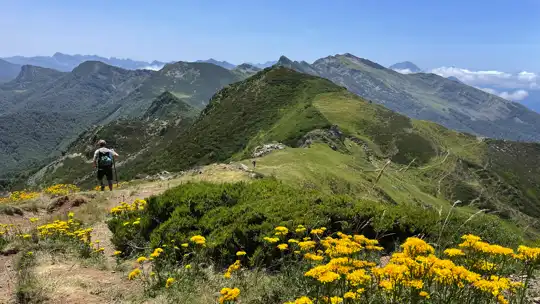
With Spain having so much to offer, I have visited it many times. Best trip was a hiking tour in the Picos de Europa in the North of Spain in July 2023.

✍️ Help improve this page!
The information on this page is based on my own backpacking experience in Spain, supplemented with up-to-date research and feedback from other travelers. Travel details can change, so if you notice anything outdated or incomplete, feel free to let me know.


🙋‍♂️ Give feedback

👋 Meet the founderWho’s Behind Take Your Backpack?

Johan, backpacker and founder of TakeYourBackpackHi, I’m Johan (Netherlands 🇳🇱), the creator of TakeYourBackpack. Over the past 3 decades, I’ve backpacked through 90+ countries across six continents, gaining extensive experience with independent travel, long-term trips, and overland routes.

This site is built on a combination of firsthand travel experience and carefully curated insights from other backpackers. Many guides are based on places I’ve personally visited, while others bring together tips, observations, and practical advice shared by trusted travelers I’ve met along the way.

The goal is to provide realistic, experience-driven guidance — not generic itineraries — so you can explore destinations with better context, clearer expectations, and more confidence.