
×

Spain🇪🇸 | regionsLa GomeraLaurisilva forests, terraced hillsides, deep ravines | things to do and best time to go

Explore La PalmaExplore Baeza

Backpacking in La Gomera
👀 For curious travelersregion ranked #14
By Johan Kruseman 🇳🇱 | Updated October 15, 2026

Here’s the trick nobody tells you until you’re already on the ferry: La Gomera’s best hikes, viewpoints, and beaches are almost never crowded—if you time your bus or footpath right, you’ll have entire valleys to yourself. That’s the real jackpot. La Gomera sits in the Canary Islands, just a short hop west of Tenerife, but it feels like a different universe. For backpackers, it’s a rare blend: wild laurel forests, volcanic cliffs, and villages where you’ll hear locals whistling “Silbo Gomero” across ravines. It’s not dirt-cheap, but you can stretch your euros with local guachinche meals and simple pensions. Getting between towns is a puzzle—buses are infrequent, hitchhiking is common, and the roads twist like a snake with vertigo. But that’s the price of authenticity: no mega-resorts, no party strips, just Garajonay National Park’s misty trails and San Sebastián’s slow, sun-baked afternoons. Compared to Tenerife or Gran Canaria, La Gomera is the introvert’s jackpot—less noise, more soul, and a pace that rewards patience.

Discover everything you want to know in the 📖 Spain Travel Guide.


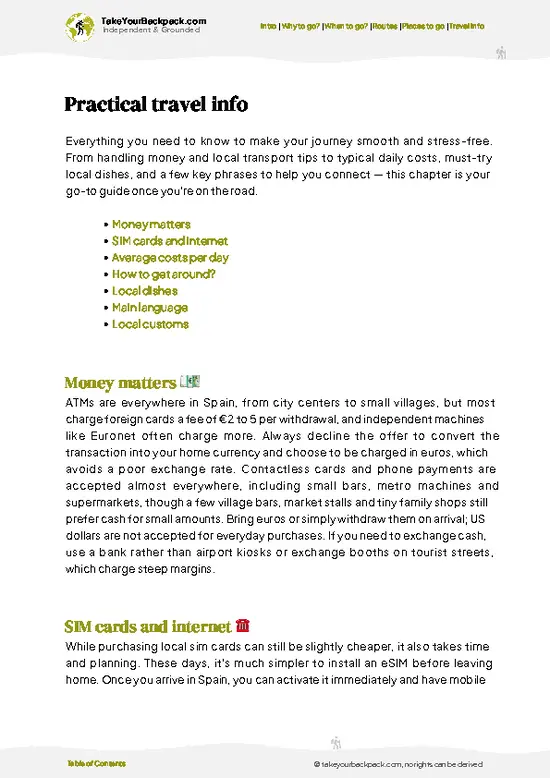
example page 0 from our offline Travel Guide for Spain
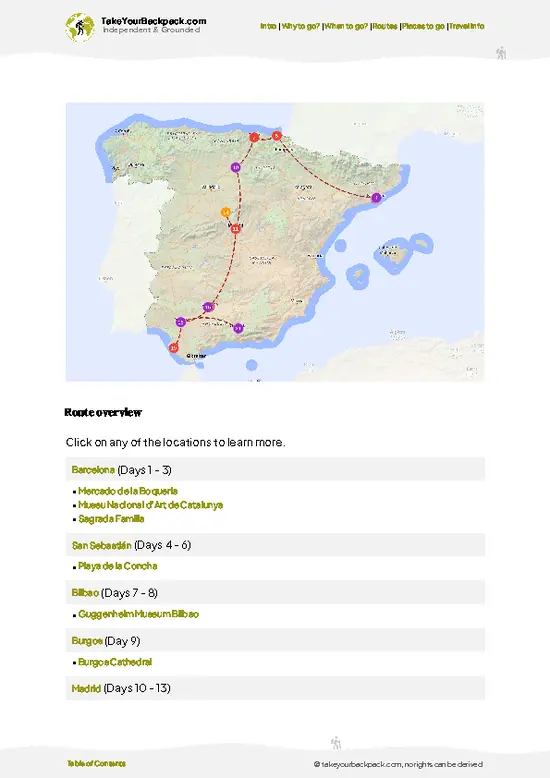
example page 1 from our offline Travel Guide for Spain
example page 2 from our offline Travel Guide for Spain
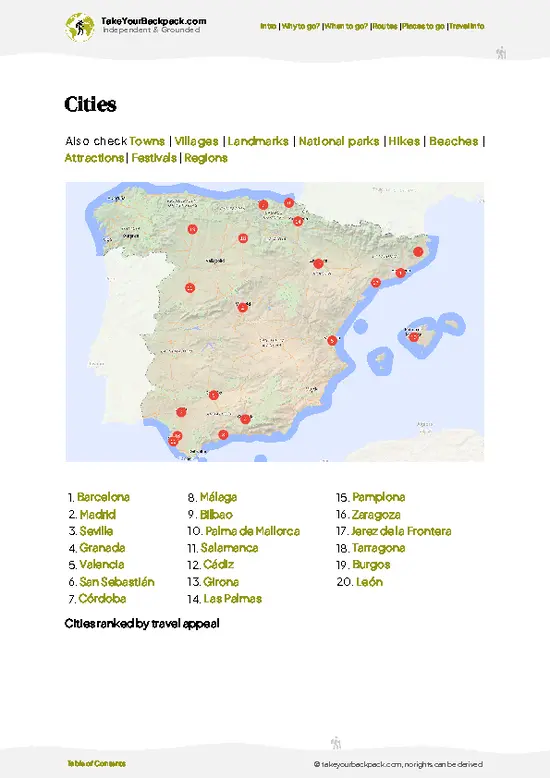
example page 3 from our offline Travel Guide for Spain
example page 4 from our offline Travel Guide for Spain
example page 5 from our offline Travel Guide for Spain
example page 6 from our offline Travel Guide for Spain
example page 7 from our offline Travel Guide for Spain
Loading the map 🌍
CLICK TO FILTER
cities
towns
villages
landmarks
national parks
hikes
beaches
attractions
festivals
regions
SHOW COUNTRY’S BESTSHOW ALL

✨ Why go?
Ranked #14 region in Spain
What makes it a must-see region

La Gomera is a rare find for backpackers who want to squeeze the most out of their time without burning through cash or energy. The island’s compact size means you’re never stuck in one place, yet you don’t waste hours relocating. You can wake up in a lush laurel forest, hike through volcanic landscapes by midday, and spend the evening in a village where the local culture feels alive and unfiltered. That variety—mountains, coast, forests, and traditional villages—is a jackpot for anyone who craves diversity without the hassle of constant travel.

Transport here is a quiet secret weapon. Buses run reliably between key spots, and ferries connect you easily to Tenerife or the mainland, so you can plan your moves with flexibility, not stress. This means you can slow down and savor each experience … read more 👉
La Gomera is a rare find for backpackers who want to squeeze the most out of their time without burning through cash or energy. The island’s compact size means you’re never stuck in one place, yet you don’t waste hours relocating. You can wake up in a lush laurel forest, hike through volcanic landscapes by midday, and spend the evening in a village where the local culture feels alive and unfiltered. That variety—mountains, coast, forests, and traditional villages—is a jackpot for anyone who craves diversity without the hassle of constant travel.

Transport here is a quiet secret weapon. Buses run reliably between key spots, and ferries connect you easily to Tenerife or the mainland, so you can plan your moves with flexibility, not stress. This means you can slow down and savor each experience instead of rushing through a checklist. The island’s pace invites you to mix nature and culture effortlessly—imagine learning the ancient whistling language, Silbo Gomero, after a morning trek.

In short, La Gomera lets you trade off time, money, and comfort in a way that feels smart, not sacrificial. It’s a place where slow travel isn’t just a trend—it’s the best way to unlock the island’s layered charm.

💡 HighlightsEssential experiences to have while visiting La Gomera

Garajonay National Park
This is the island’s wild heart—primeval laurel forest, misty and ancient, where you half-expect a dinosaur to lumber past. The trails here are soft underfoot, the air is cool even in summer, and the silence is deep. If you want to feel like you’ve slipped into another epoch, this is the place.

Mirador de Abrante
A glass-floored viewpoint that juts out over Agulo’s cliffs. It’s a local flex to stroll out and look straight down at the banana terraces and the Atlantic. The attached café is a bonus—grab a barraquito (local coffee) and watch the clouds roll in.

San Sebastián de La Gomera
The island’s capital is more than a ferry port. Wander the old quarter: Columbus’s House (Casa de Colón) is here, but the real magic is in the shaded plazas, pastel facades, and the … read more 👉
Garajonay National Park
This is the island’s wild heart—primeval laurel forest, misty and ancient, where you half-expect a dinosaur to lumber past. The trails here are soft underfoot, the air is cool even in summer, and the silence is deep. If you want to feel like you’ve slipped into another epoch, this is the place.

Mirador de Abrante
A glass-floored viewpoint that juts out over Agulo’s cliffs. It’s a local flex to stroll out and look straight down at the banana terraces and the Atlantic. The attached café is a bonus—grab a barraquito (local coffee) and watch the clouds roll in.

San Sebastián de La Gomera
The island’s capital is more than a ferry port. Wander the old quarter: Columbus’s House (Casa de Colón) is here, but the real magic is in the shaded plazas, pastel facades, and the slow, social rhythm of local life.

Valle Gran Rey
A valley that feels like a secret, even though it’s the island’s most popular beach spot. Black sand coves, terraced hillsides, and sunset drum circles. If you want to swim, eat fresh fish, and watch the sun melt into the ocean, this is your move.

Hermigua
This lush valley is banana country, but the real draw is the natural pool at the old davit (El Pescante). Swim with locals, surrounded by cliffs and the open Atlantic. It’s a classic “if you know, you know” spot.

La Fortaleza
A flat-topped mountain with panoramic views and deep Guanche (indigenous) history. The hike up is short but steep, and the summit feels sacred—locals still leave offerings here.

Playa de la Caleta (Hidden Gem)
A pebbly cove near Hermigua, rarely busy. The water is clear, the vibe is laid-back, and the chiringuito (beach bar) serves up grilled sardines and cold beer. My personal favorite—come for a lazy afternoon and you’ll see why.

Chipude Village (Hidden Gem)
Tiny, authentic, and often skipped. The bar here does a mean almogrote (spicy cheese spread), and the streets are lined with old stone houses. It’s the kind of place where time slows down.

Los Órganos
A cathedral of basalt columns rising straight from the sea—accessible only by boat. It’s geology showing off, and the boat ride itself is half the fun.

El Cedro Forest & Waterfall (Hidden Gem)
A mossy, fern-filled forest with a real, tumbling waterfall at the end of the hike. Locals picnic here on weekends. If you want to feel like you’ve found the island’s secret garden, this is it.
Spotted a mistake or missing something? Contact us.

Things to do around La Gomera

Ratings based on Tripadvisor reviews. When you book through this link, you support our work at no extra cost to you.

⌛️ 5 daysWhat you can realistically do in a week

Day 1: San Sebastián: Start here because this is your gateway to La Gomera. The ferry docks in San Sebastián, and the town’s compact size means you can settle in without wasting time on transport. Use this day to get your bearings, grab local maps, and soak in the island’s vibe. The bus schedules are sparse, so syncing your arrival with the ferry’s timing is crucial. The town’s charm is in its laid-back streets and fresh seafood—perfect for easing into island time.

Day 2: Valle Gran Rey: Moving west to Valle Gran Rey is your first real stretch. The bus ride takes about 90 minutes, winding through the island’s spine. This is where the transport system dictates your pace: buses run infrequently, so plan your departure carefully to avoid long waits. Valle Gran Rey’s terraced farms and ocean … read more 👉
Day 1: San Sebastián: Start here because this is your gateway to La Gomera. The ferry docks in San Sebastián, and the town’s compact size means you can settle in without wasting time on transport. Use this day to get your bearings, grab local maps, and soak in the island’s vibe. The bus schedules are sparse, so syncing your arrival with the ferry’s timing is crucial. The town’s charm is in its laid-back streets and fresh seafood—perfect for easing into island time.

Day 2: Valle Gran Rey: Moving west to Valle Gran Rey is your first real stretch. The bus ride takes about 90 minutes, winding through the island’s spine. This is where the transport system dictates your pace: buses run infrequently, so plan your departure carefully to avoid long waits. Valle Gran Rey’s terraced farms and ocean views reward the journey, but the real win is the hiking trails that start here. You’re trading speed for immersion—this is where the island’s soul shows up.

Day 3: Off-Path Reward - Agulo Detour: On your way back east, carve out time for Agulo. It’s a tiny village that feels like a secret handshake among locals. The bus stop is on the main route, so it’s a quick hop off and back on. Agulo’s cobbled streets and panoramic views over the Atlantic are a quiet contrast to the busier Valle Gran Rey. This detour adds texture without wrecking your schedule—pure value for minimal sacrifice.

Day 4: Garajonay National Park: Dedicate this day to the island’s green heart. The park’s trails are accessible by bus from San Sebastián, but again, timing is everything. Early departure means you avoid the midday heat and get the best light for photos. The transport system here is your leash; miss the last bus, and you’re in for a long walk or an expensive taxi. The payoff is the laurel forest’s otherworldly atmosphere—worth every logistical challenge.

Day 5: Return to San Sebastián: Wrap up where you started. This day is about pacing yourself for the ferry back. Use the morning to revisit a favorite spot or grab last-minute souvenirs. The bus connections back to the port are limited, so don’t push your luck. This final phase is about closing the loop smoothly, respecting the island’s rhythm.

Must-Do Day: Day 4 in Garajonay National Park. It’s the one day that justifies the whole trip—where the island’s unique ecosystem and the challenge of getting there converge into an experience you can’t replicate anywhere else. The transport quirks? They’re part of the story, not a hurdle.

🌤️ When to go?When to go for the best experience

  • Weather: La Gomera enjoys mild weather year-round, but the sweet spot is from March to May and September to November. Expect daytime highs around 20-24°C (68-75°F) with cool evenings. Winter months (December to February) bring more rain and cloud cover, while summer (June to August) can get hotter and more humid, especially inland.
  • Temperature: Spring and autumn offer the most comfortable temperatures for hiking—think 18-22°C (64-72°F) during the day, perfect for sweating it out without overheating. Summer spikes to 25-30°C (77-86°F), which can sap your energy on the trails.
  • Daylight Hours: From late March to early October, you get long days with up to 11-12 hours of daylight, giving you plenty of time to explore. Winter days shrink to about 9-10 hours, so plan your hikes accordingly.
… read more 👉
  • Weather: La Gomera enjoys mild weather year-round, but the sweet spot is from March to May and September to November. Expect daytime highs around 20-24°C (68-75°F) with cool evenings. Winter months (December to February) bring more rain and cloud cover, while summer (June to August) can get hotter and more humid, especially inland.
  • Temperature: Spring and autumn offer the most comfortable temperatures for hiking—think 18-22°C (64-72°F) during the day, perfect for sweating it out without overheating. Summer spikes to 25-30°C (77-86°F), which can sap your energy on the trails.
  • Daylight Hours: From late March to early October, you get long days with up to 11-12 hours of daylight, giving you plenty of time to explore. Winter days shrink to about 9-10 hours, so plan your hikes accordingly.
  • Crowds: Peak tourist season hits in July and August, when ferries and trails get busier. Spring and autumn are quieter, letting you enjoy the island’s silence and solitude without the hassle of crowds.
  • Seasonal Activities: Spring is prime for wildflower spotting and birdwatching, while autumn brings grape harvest festivals and local markets. Winter’s off-season vibe means fewer events but better deals.
  • Price Fluctuations: Accommodation and ferry prices spike in summer, especially August. Booking in shoulder seasons (April-May, September-October) scores you better rates and more flexible options.
Pro-tip: Arrive just before or after peak season—late May or early October—and you’ll snag near-perfect weather, empty trails, and wallet-friendly prices. Trust me, that’s the insider sweet spot.


source: climatestotravel.comJANJanuary: fair for travelingFEBFebruary: fair for travelingMARMarch: highly recommended for travelingAPRApril: excellent for travelingMAYMay: excellent for travelingJUNJune: good for travelingJULJuly: fair for travelingAUGAugust: fair for travelingSEPSeptember: highly recommended for travelingOCTOctober: excellent for travelingNOVNovember: highly recommended for travelingDECDecember: fair for traveling
when-to-go

✈️ The backpacker research shortcutSpain Travel Guide

An offline-friendly backpacking guide with optimized travel routes, ranked highlights, transport advice, and the best areas to stay.
example page 0 from our offline Travel Guide for Spain
example page 1 from our offline Travel Guide for Spain
example page 2 from our offline Travel Guide for Spain
example page 3 from our offline Travel Guide for Spain
example page 4 from our offline Travel Guide for Spain
example page 5 from our offline Travel Guide for Spain
example page 6 from our offline Travel Guide for Spain
example page 7 from our offline Travel Guide for Spain
The digital guide (543 pages) contains:
✅ 147 highlights, ranked by travel appeal
✅ Optimized 7, 14 & 21-day travel routes
✅ Cities, national parks, landmarks, beaches
✅ How to get around
✅ Offline-friendly for travel without Wi-Fi
👉 Click to see all 30+ guide features

📅 Plan smarter in minutes, not weeks
✅ Month by month travel advice
✅ Festivals & national holidays
✅ Budget expectations

🗺️ Go to the right places, skip the overrated ones
✅ Honest pros & cons of destinations
✅ Top hikes, parks & viewpoints
✅ Lesser-known places most travelers miss
✅ Clear “worth it vs skip it” guidance

🛏️ Travel smoothly without rookie mistakes
✅ Best areas to stay
✅ Transport systems explained simply
✅ Common scams & safety advice
✅ SIM cards, money & practical tips

🌍 Understand the country, not just visit it
✅ Culture & traditions
✅ 52 Essential phrases & customs
✅ Festivals worth planning around
✅ Traveler-friendly historical context
✅ Insights that make places more meaningful

📱 Built for real travel conditions
✅ Fully downloadable PDF
✅ Works completely offline
✅ Optimized for phone use
✅ Useful in remote areas & buses
✅ Everything in one place
Stop searching, start planning
Get instant access to your full guide. 30‑day money-back guarantee.
+ Add another guide for just

By proceeding you agree to our terms.
Sent to your inbox immediately after payment • 100% Secure Checkout
Best Backpacking Travel Advisor 2025 tourism awardBest Backpacking
Travel Advisor
2025
What others say about Take Your Backpack Guides:
⭐⭐⭐⭐⭐
Fantastic, amazing amount of information!
⭐⭐⭐⭐⭐
My goodness this is amazing, it's what I've been looking for hats off too you!
⭐⭐⭐⭐⭐
I think this is absolutely BRILLIANT
⭐⭐⭐⭐
Very complete and informative. It's still missing places, but I gotta to commend you
⭐⭐⭐⭐⭐
This is truly amazing, thank you, can't wait to explore it with my kids!
⭐⭐⭐⭐⭐
Awesome resource, thank you!
⭐⭐⭐⭐⭐
This is amazing! Can't wait to explore the ones I haven't seen
⭐⭐⭐⭐
I love this! Well done, great idea.
⭐⭐⭐⭐⭐
Thanks for taking the time to make this gem!
⭐⭐⭐⭐⭐
This might be the best website I've ever seen.
⭐⭐⭐⭐⭐
Congratulations, and thank you so much for your work; it's incredibly valuable.
⭐⭐⭐⭐
In all seriousness I think you did a great job pointing out the important spots
⭐⭐⭐⭐⭐
10/10 very good
⭐⭐⭐⭐⭐
As someone who's only just starting to visit regularly this is awesome, thank you.
⭐⭐⭐⭐
Thank you very much! I'm going to visit my dad, it's going to be very useful!
⭐⭐⭐⭐⭐
This is really cool! We'll be travelling for the first time and this definitely come in handy.
⭐⭐⭐⭐⭐
You are now our minister of culture, congratulations 👨‍💼
⭐⭐⭐⭐⭐
Just wanted to tell you that this is a pearl! Going to follow your recommendations.
⭐⭐⭐⭐⭐
This is so cool. I'll definitely be using the resource for my travels soon.
⭐⭐⭐⭐⭐
This is very impressive! Good work.
⭐⭐⭐⭐⭐
This is an amazing and informative site. Very well done!

🛏️ Where to stay?Choosing the right base

San Sebastián de La Gomera is your go-to base if you want to blend safety, social buzz, and budget-friendly vibes. It’s the island’s capital, so you get the perks of a small town with enough bars, cafes, and markets to keep your evenings lively without feeling like a tourist trap. The harbor area is where locals and backpackers cross paths, making it easy to strike up conversations or join impromptu hikes. Plus, it’s the main transport hub, so you’re never stuck waiting forever for a bus or ferry.

If you want to dial down the crowd but keep the social angle, Valle Gran Rey is your secret weapon. … read more 👉
San Sebastián de La Gomera is your go-to base if you want to blend safety, social buzz, and budget-friendly vibes. It’s the island’s capital, so you get the perks of a small town with enough bars, cafes, and markets to keep your evenings lively without feeling like a tourist trap. The harbor area is where locals and backpackers cross paths, making it easy to strike up conversations or join impromptu hikes. Plus, it’s the main transport hub, so you’re never stuck waiting forever for a bus or ferry.

If you want to dial down the crowd but keep the social angle, Valle Gran Rey is your secret weapon. It’s a bit more laid-back, with a bohemian streak that attracts solo travelers and budget backpackers who want to chill but still meet like-minded folks. The vibe here is relaxed, with plenty of communal spaces and small eateries where you can swap stories over a cheap meal. It’s also a great spot for sunset views that don’t cost a dime but feel like a splurge.

For those who want a quieter, more authentic slice of island life without sacrificing safety or access, Agulo is a smart pick. It’s a picturesque village perched on the cliffs, offering a peaceful retreat after a day of trekking. It’s less about nightlife and more about connecting with nature and locals who appreciate a slower pace. Staying here means you’re trading off some social buzz for tranquility, but it’s a trade many seasoned backpackers swear by.

🚌 Getting aroundGetting around like a local

La Gomera moves at its own pace—less about rigid timetables and more about reading the rhythm of the island. It’s a place where the clock bends to the landscape, and your best bet is to blend into the flow rather than fight it. Public transport here isn’t a slick metro system; it’s a patchwork of buses, ferries, and shared rides that demand a bit of patience and a good sense of timing. You’ll find that comfort often takes a backseat to authenticity and budget, but that’s where the charm lives. The island’s roads twist through lush valleys and steep cliffs, so expect slow but scenic journeys. If you want to move smartly, you’ll need to pick your moments and modes carefully.
  • Intercity Bus (Guagua): The backbone of La Gomera’s public transport, these buses connect main towns like San Sebastián,
… read more 👉
La Gomera moves at its own pace—less about rigid timetables and more about reading the rhythm of the island. It’s a place where the clock bends to the landscape, and your best bet is to blend into the flow rather than fight it. Public transport here isn’t a slick metro system; it’s a patchwork of buses, ferries, and shared rides that demand a bit of patience and a good sense of timing. You’ll find that comfort often takes a backseat to authenticity and budget, but that’s where the charm lives. The island’s roads twist through lush valleys and steep cliffs, so expect slow but scenic journeys. If you want to move smartly, you’ll need to pick your moments and modes carefully.
  • Intercity Bus (Guagua): The backbone of La Gomera’s public transport, these buses connect main towns like San Sebastián, Valle Gran Rey, and Hermigua. They run roughly from 7:00 AM to 8:00 PM, with tickets costing around €2-€4 depending on distance. Not fast—expect winding roads and frequent stops—but reliable and budget-friendly. Comfort is basic; think plastic seats and occasional crowds during peak hours.
  • Local Minibuses and Shared Taxis: These operate more on intuition than schedules, especially in smaller villages. They’re a bit of a wild card—no fixed timetable, so you flag them down or wait at known stops. Prices hover around €1-€3. They’re cramped but perfect for short hops and catching the local vibe. If you’re flexible and patient, this is a cheap way to get off the beaten path.
  • Ferry to Tenerife: The main gateway off the island, ferries run between San Sebastián de La Gomera and Los Cristianos in Tenerife. They start early, around 7:00 AM, with the last ferry back around 9:00 PM. Tickets cost about €20 one-way. It’s the fastest way to connect to the Canaries’ broader transport network but less about island hopping and more about strategic exits or entries.
  • Bicycle Rentals: For the adventurous and budget-conscious, renting a bike is a way to control your schedule and soak in the landscape at your own pace. Prices start at about €10 per day. The terrain is challenging—steep climbs and narrow roads—so it’s not for the faint-hearted but unbeatable for freedom and immersion.
  • Car Rentals: If you’re willing to spend a bit more, renting a car gives you unmatched freedom to explore remote corners on your own timetable. Expect to pay around €30-€50 per day. Roads can be narrow and winding, so driving requires focus, but it’s the quickest way to cover ground without waiting for buses or taxis.

Insider Tip: Catch the first intercity bus out of San Sebastián right at 7:00 AM. It’s when the roads are quiet, the bus is emptier, and you’ll beat the afternoon crush. Pair this with a bike rental at your destination for last-mile freedom—this combo saves time, money, and the headache of waiting around. Trust me, mastering this rhythm turns La Gomera from a slow crawl into a smooth, memorable ride.

🍲 FoodWhat to Eat & Drink

La Gomera’s food scene is a quiet rebellion against the flashy tourist menus you’ll find elsewhere in the Canaries. Here, the real deal is all about simple, earthy flavors that hit your senses with the island’s volcanic soul. Start with a plate of almogrote, a punchy cheese spread made from aged goat cheese, garlic, and spicy peppers—slather it on crusty bread and you’re tasting La Gomera’s heart. Then there’s potaje gomero, a thick, hearty stew brimming with local beans, pumpkin, and greens, slow-cooked until every bite feels like a warm hug.

For drinks, forget the usual sangria. Instead, sip on Gomeran honey rum, a local spirit with a sweet, smoky edge that pairs perfectly with the island’s laid-back vibe. Or try the barraquito, a layered coffee drink with condensed milk and a hint of cinnamon—perfect … read more 👉
La Gomera’s food scene is a quiet rebellion against the flashy tourist menus you’ll find elsewhere in the Canaries. Here, the real deal is all about simple, earthy flavors that hit your senses with the island’s volcanic soul. Start with a plate of almogrote, a punchy cheese spread made from aged goat cheese, garlic, and spicy peppers—slather it on crusty bread and you’re tasting La Gomera’s heart. Then there’s potaje gomero, a thick, hearty stew brimming with local beans, pumpkin, and greens, slow-cooked until every bite feels like a warm hug.

For drinks, forget the usual sangria. Instead, sip on Gomeran honey rum, a local spirit with a sweet, smoky edge that pairs perfectly with the island’s laid-back vibe. Or try the barraquito, a layered coffee drink with condensed milk and a hint of cinnamon—perfect for a mid-afternoon pick-me-up at a café.

Backpackers will want to hit the markets and small village cafés, where locals gather and the food smells like home. These spots are casual, no-frills, and packed with character—think wooden tables, the chatter of old-timers, and plates passed around like family secrets. Dining here means embracing a slower pace; meals are social, often shared, and rarely rushed. Don’t expect formalities—just good food, good company, and the occasional curious glance from a local who’s sizing you up as one of their own.

FAQTraveler FAQ

3 to 4 days are sufficient to explore La Gomera's main attractions, including Garajonay National Park and the island's traditional villages. This allows time for hiking, visiting viewpoints, and experiencing local culture without rushing.
You can get around La Gomera using the island's public bus system, which connects major towns and tourist spots. Taxis are available but more expensive; renting a scooter or bicycle is also a popular option for flexible travel.
La Gomera is known for its unique whistling language called Silbo Gomero, used historically for communication across the island's deep ravines. It is also famous for its lush laurel forests in Garajonay National Park, a UNESCO World Heritage site.
⚠️ Things can change over time, so always validate details locally before you go.

Other Spanish regions near La Gomera

Explore more nearby:

  • Canary Islands—Volcanic terrain, black sand beaches, subtropical flora| 62 km away
  • Tenerife—Teide volcano, laurel woods, black sand coves| 62 km away
  • La Palma—Volcanic craters, star observatories, laurel forests| 82 km away

💡 Not sure where to go next?
Create a personalized itinerary for Spain including La Gomera and the places that fit your trip.

Generate my itinerary

👉 Discover all regions

Or checkout all Spain has to offer (think cities, towns, villages, national parks, hikes, beaches, festivals)
Country photo of Spain

We 💚 feedbackWhat to keep in mind

La Gomera’s real charm is how it slows you down—no flashy distractions, just raw nature and that ancient whistling language echoing through the valleys. It’s a rare place where you actually want to unplug. But heads up: the island’s pace means transport options are limited and schedules can feel like a puzzle. If you’re not cool with waiting or planning every move, it might test your patience more than your hiking boots.

✈️ When did I visit Spain?
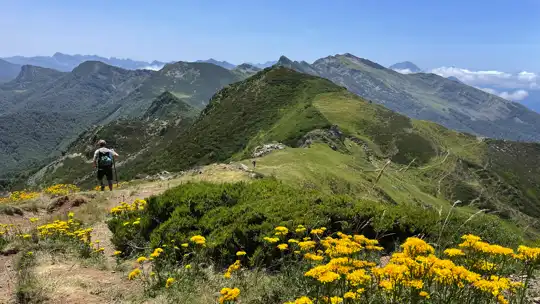
With Spain having so much to offer, I have visited it many times. Best trip was a hiking tour in the Picos de Europa in the North of Spain in July 2023.

✍️ Help improve this page!
The information on this page is based on my own backpacking experience in Spain, supplemented with up-to-date research and feedback from other travelers. Travel details can change, so if you notice anything outdated or incomplete, feel free to let me know.


🙋‍♂️ Give feedback

👋 Meet the founderWho’s Behind Take Your Backpack?

Johan, backpacker and founder of TakeYourBackpackHi, I’m Johan (Netherlands 🇳🇱), the creator of TakeYourBackpack. Over the past 3 decades, I’ve backpacked through 90+ countries across six continents, gaining extensive experience with independent travel, long-term trips, and overland routes.

This site is built on a combination of firsthand travel experience and carefully curated insights from other backpackers. Many guides are based on places I’ve personally visited, while others bring together tips, observations, and practical advice shared by trusted travelers I’ve met along the way.

The goal is to provide realistic, experience-driven guidance — not generic itineraries — so you can explore destinations with better context, clearer expectations, and more confidence.