×

Spain🇪🇸 | attractionsMuseo Nacional Centro de Arte Reina Sofíamodern Spanish art, Picasso’s Guernica, glass elevators | things to do and best time to go

Explore Park GüellExplore Museo Nacional Thyssen-Bornemisza

Backpacking in Museo Nacional Centro de Arte Reina Sofía
🌟 Highlightattraction ranked #7
By Johan Kruseman 🇳🇱 | Updated September 4, 2026

Here’s what nobody tells you until you’re standing in line: your ticket to the Reina Sofía also gets you into the Sabatini and Nouvel buildings—two wildly different wings, each hiding their own flavor of Spanish weirdness and genius. The Museo Nacional Centro de Arte Reina Sofía sits right in Madrid, a quick walk from Atocha station, so you’re not schlepping across town or fighting for a bus seat. Here’s the straight talk: if you’re a backpacker chasing the “real Spain,” this isn’t just a Picasso-and-go stop. Sure, Guernica is the headline act (and yes, the crowds are thick enough to make you question humanity), but the real magic is in the raw, sometimes jarring, Spanish civil war art and the punky, post-Franco installations that never make it to your feed. It’s cheaper than the Prado, less stuffy, and the vibe is more “late-night debate” than “silent cathedral.” If you want a museum that punches you in the gut and then buys you a coffee, Reina Sofía is it.

Discover everything you want to know in the 📖 Spain Travel Guide.


Get your Spain guide
148 ranked highlights, routes & tips, works offline (542 pages)
Loading the map 🌍
CLICK TO FILTER
cities
towns
villages
landmarks
national parks
hikes
beaches
attractions
festivals
regions
SHOW COUNTRY’S BESTSHOW ALL

✨ Why go?
Ranked #7 attraction in Spain
Reasons people choose to visit here

The Museo Nacional Centro de Arte Reina Sofía is not just another museum to tick off your Spain itinerary—it’s a cultural heavyweight that demands your time. Yes, it’s crowded, especially around Picasso’s Guernica, and the entrance fee isn’t pocket change for a backpacker. But here’s the deal: this place is where Spain’s turbulent 20th-century history and its artistic rebellion collide in a way that no Instagram post can capture. You’re not just looking at art; you’re stepping into the raw emotions of a country grappling with war, dictatorship, and eventual freedom. The museum’s modern and contemporary collections—from Dalí’s surrealism to Miró’s bold abstractions—are a masterclass in how art can be both a weapon and a refuge.

For backpackers trekking through Spain, Reina Sofía is a major read more 👉
The Museo Nacional Centro de Arte Reina Sofía is not just another museum to tick off your Spain itinerary—it’s a cultural heavyweight that demands your time. Yes, it’s crowded, especially around Picasso’s Guernica, and the entrance fee isn’t pocket change for a backpacker. But here’s the deal: this place is where Spain’s turbulent 20th-century history and its artistic rebellion collide in a way that no Instagram post can capture. You’re not just looking at art; you’re stepping into the raw emotions of a country grappling with war, dictatorship, and eventual freedom. The museum’s modern and contemporary collections—from Dalí’s surrealism to Miró’s bold abstractions—are a masterclass in how art can be both a weapon and a refuge.

For backpackers trekking through Spain, Reina Sofía is a major milestone. It’s the cultural counterpoint to the classical Prado and the royal palaces, grounding your journey in the gritty, real Spain that shaped the present. The effort to navigate the crowds and pay the entry fee pays off in a visceral, eye-opening experience that’s as much about understanding Spain’s soul as admiring its art. Skip it, and you miss the heartbeat behind the country’s creative spirit.
Want to include Museo Nacional Centro de Arte Reina Sofía in your Spain route?
Create a personalized Spain itinerary that includes Museo Nacional Centro de Arte Reina Sofía and the places that fit your trip — based on your travel style, budget, and available time. Get your route in seconds.

Generate my trip

💡 HighlightsTop highlights of Museo Nacional Centro de Arte Reina Sofía

Guernica by Pablo Picasso
Let’s get real: most people come for this painting, and for once, the hype is justified. “Guernica” is a punch to the gut—massive, monochrome, and impossible to ignore. You don’t just look at it; you feel it. The room is always packed, but even with a crowd, the raw emotion and scale of the piece cut through the noise. If you’ve only seen it in textbooks or on a phone screen, the real thing is a different animal. It’s not pretty, and it’s not supposed to be. It’s a war cry frozen in paint. If you only have time for one thing, make it this.

The Surrealist Rooms
This is where the Reina Sofía flexes its weirdness. Dalí, Miró, Tanguy—their works aren’t just hung on walls, they’re staged for maximum impact. You’ll find melting clocks, dream logic, and colors that shouldn’t … read more 👉
Guernica by Pablo Picasso
Let’s get real: most people come for this painting, and for once, the hype is justified. “Guernica” is a punch to the gut—massive, monochrome, and impossible to ignore. You don’t just look at it; you feel it. The room is always packed, but even with a crowd, the raw emotion and scale of the piece cut through the noise. If you’ve only seen it in textbooks or on a phone screen, the real thing is a different animal. It’s not pretty, and it’s not supposed to be. It’s a war cry frozen in paint. If you only have time for one thing, make it this.

The Surrealist Rooms
This is where the Reina Sofía flexes its weirdness. Dalí, Miró, Tanguy—their works aren’t just hung on walls, they’re staged for maximum impact. You’ll find melting clocks, dream logic, and colors that shouldn’t work together but do. It’s a playground for the brain, and the curation is sharp enough to keep even the most jaded art fan awake. The best part? You can actually get close to the art. No velvet ropes, no glass boxes—just you and the wildest minds of the 20th century.

Sabine Weiss Photography Collection
If you need a break from oil and canvas, the photography wing is a palate cleanser. Sabine Weiss’s street photography is a standout—intimate, unscripted, and full of life. Her images catch Madrid’s daily grind and fleeting moments with a tenderness that sneaks up on you. It’s a reminder that art isn’t always about grand statements; sometimes it’s about catching a kid’s grin or the way light hits a café window.

The Sabatini Roof Terrace
Here’s the move: after the galleries, head up to the Sabatini building’s rooftop. Most tourists miss it, but the view is a knockout. You get a sweeping look at Madrid’s rooftops, the Atocha station, and the city’s endless sky. It’s the best spot to decompress, sketch, or just watch the city pulse below. Bring a snack, snag a bench, and let the crowds melt away. This is my personal favorite—art above, city below, and a rare bit of peace in the middle of Madrid’s chaos.

Temporary Exhibitions
Don’t sleep on the rotating shows. Reina Sofía’s curators have a knack for picking artists and themes that actually matter—think political protest, underground movements, or overlooked Spanish voices. These aren’t filler exhibits; they’re often the most provocative, conversation-starting parts of the museum. If you want to see what’s next in art, not just what’s in the textbooks, this is where you’ll find it.
Spotted a mistake or missing something? Contact us.

Things to do around Museo Nacional Centro de Arte Reina Sofía

Ratings based on Tripadvisor reviews. When you book through this link, you support our work at no extra cost to you.

🌤️ When to go?When to go for the best experience


  • Weather & Temperature: Madrid’s climate swings from chilly winters to hot summers. January and February hover around 6-10°C (43-50°F), which is brisk but manageable indoors. July and August can scorch at 30-35°C (86-95°F), making museum visits a welcome escape from the heat.

  • Daylight Hours: In winter months like December and January, daylight is limited to about 9 hours, so plan your museum time accordingly. By June and July, you get up to 15 hours of daylight, giving you more flexibility to explore before or after your visit.

  • Crowds: The Reina Sofía is a magnet year-round, but expect the heaviest crowds from April to October, especially weekends and holidays. Winter months, particularly November through February, see fewer tourists, which means shorter lines and a quieter experience.
read more 👉

  • Weather & Temperature: Madrid’s climate swings from chilly winters to hot summers. January and February hover around 6-10°C (43-50°F), which is brisk but manageable indoors. July and August can scorch at 30-35°C (86-95°F), making museum visits a welcome escape from the heat.

  • Daylight Hours: In winter months like December and January, daylight is limited to about 9 hours, so plan your museum time accordingly. By June and July, you get up to 15 hours of daylight, giving you more flexibility to explore before or after your visit.

  • Crowds: The Reina Sofía is a magnet year-round, but expect the heaviest crowds from April to October, especially weekends and holidays. Winter months, particularly November through February, see fewer tourists, which means shorter lines and a quieter experience.

  • Seasonal Activities: The museum hosts special exhibitions and events mostly in spring and fall, so if you want to catch something unique, aim for April-May or September-October. Summer can be quieter on the event front but still packed with visitors escaping the heat.

  • Price Fluctuations: Entry prices are generally stable, but free admission hours (usually late afternoons) are more crowded during peak tourist seasons. Visiting off-peak months increases your chances of enjoying the museum without jostling for space during these free times.


Pro-tip: Visit on a weekday afternoon in late fall or winter—cooler weather, fewer crowds, and a better shot at soaking in Picasso’s Guernica without elbowing your way through a sea of selfie sticks.


source: climatestotravel.comJANJanuary: highly recommended for travelingFEBFebruary: highly recommended for travelingMARMarch: good for travelingAPRApril: good for travelingMAYMay: good for travelingJUNJune: fair for travelingJULJuly: good for travelingAUGAugust: fair for travelingSEPSeptember: good for travelingOCTOctober: good for travelingNOVNovember: highly recommended for travelingDECDecember: highly recommended for traveling
when-to-go

✈️ The backpacker research shortcutSpain Travel Guide

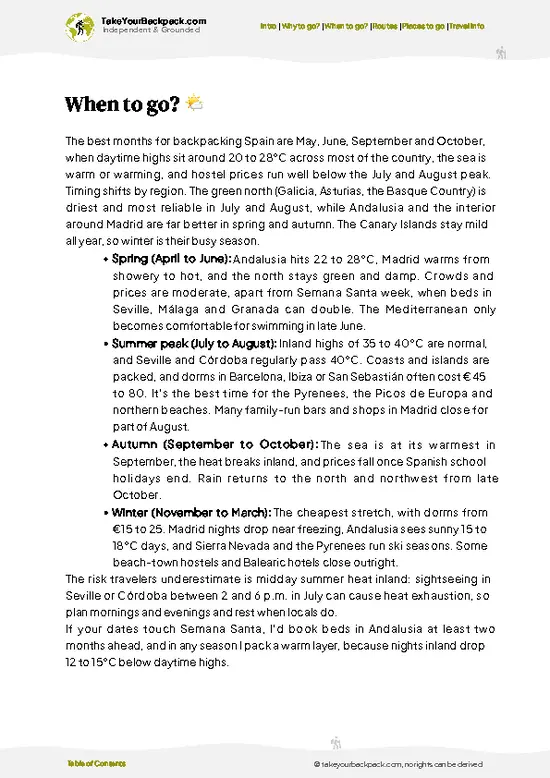
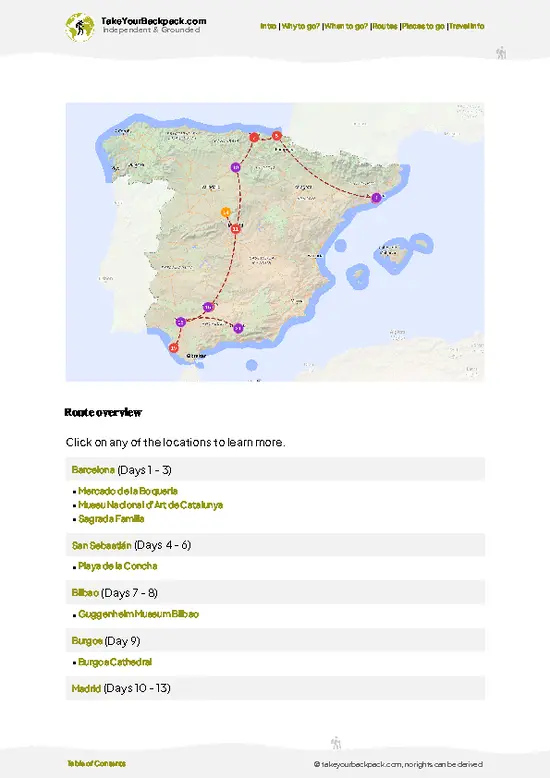
An offline-friendly backpacking guide with optimized travel routes, ranked highlights, transport advice, and the best areas to stay.
example page 0 from our offline Travel Guide for Spain
example page 1 from our offline Travel Guide for Spain
example page 2 from our offline Travel Guide for Spain
example page 3 from our offline Travel Guide for Spain
example page 4 from our offline Travel Guide for Spain
example page 5 from our offline Travel Guide for Spain
example page 6 from our offline Travel Guide for Spain
example page 7 from our offline Travel Guide for Spain
The digital guide (542 pages) contains:
148 highlights, ranked by travel appeal
Optimized 7, 14 & 21-day travel routes
Cities, national parks, landmarks, beaches
How to get around
Offline-friendly for travel without Wi-Fi
👉 Click to see all 30+ guide features

📅 Plan smarter in minutes, not weeks
Month by month travel advice
Festivals & national holidays
Budget expectations

🗺️ Go to the right places, skip the overrated ones
Honest pros & cons of destinations
Top hikes, parks & viewpoints
Lesser-known places most travelers miss
Clear “worth it vs skip it” guidance

🛏️ Travel smoothly without rookie mistakes
Best areas to stay
Transport systems explained simply
Common scams & safety advice
SIM cards, money & practical tips

🌍 Understand the country, not just visit it
Culture & traditions
52 Essential phrases & customs
Festivals worth planning around
Traveler-friendly historical context
Insights that make places more meaningful

📱 Built for real travel conditions
Fully downloadable PDF
Works completely offline
Optimized for phone use
Useful in remote areas & buses
Everything in one place
Save weeks of stressful planning
Get instant access to your full guide. 30‑day money-back guarantee.
+ Add another guide for just US$7.80

By proceeding you agree to our terms.
Sent to your inbox immediately after payment • 100% Secure Checkout
Best Backpacking Travel Advisor 2025 tourism awardBest Backpacking
Travel Advisor
2025
What others say about Take Your Backpack Guides:
⭐⭐⭐⭐⭐
Fantastic, amazing amount of information!
⭐⭐⭐⭐⭐
My goodness this is amazing, it's what I've been looking for hats off too you!
⭐⭐⭐⭐⭐
I think this is absolutely BRILLIANT
⭐⭐⭐⭐
Very complete and informative. It's still missing places, but I gotta to commend you
⭐⭐⭐⭐⭐
This is truly amazing, thank you, can't wait to explore it with my kids!
⭐⭐⭐⭐⭐
Awesome resource, thank you!
⭐⭐⭐⭐⭐
This is amazing! Can't wait to explore the ones I haven't seen
⭐⭐⭐⭐
I love this! Well done, great idea.
⭐⭐⭐⭐⭐
Thanks for taking the time to make this gem!
⭐⭐⭐⭐⭐
This might be the best website I've ever seen.
⭐⭐⭐⭐⭐
Congratulations, and thank you so much for your work; it's incredibly valuable.
⭐⭐⭐⭐
In all seriousness I think you did a great job pointing out the important spots
⭐⭐⭐⭐⭐
10/10 very good
⭐⭐⭐⭐⭐
As someone who's only just starting to visit regularly this is awesome, thank you.
⭐⭐⭐⭐
Thank you very much! I'm going to visit my dad, it's going to be very useful!
⭐⭐⭐⭐⭐
This is really cool! We'll be travelling for the first time and this definitely come in handy.
⭐⭐⭐⭐⭐
You are now our minister of culture, congratulations 👨‍💼
⭐⭐⭐⭐⭐
Just wanted to tell you that this is a pearl! Going to follow your recommendations.
⭐⭐⭐⭐⭐
This is so cool. I'll definitely be using the resource for my travels soon.
⭐⭐⭐⭐⭐
This is very impressive! Good work.
⭐⭐⭐⭐⭐
This is an amazing and informative site. Very well done!

🛏️ Where to stay?Best areas and accommodation options

If you’re chasing the Reina Sofía experience, brace yourself: the crowds are real, and the entry lines can test your patience. This isn’t some quiet shrine; it’s a magnet for art lovers and tourists alike. But here’s the kicker—staying close means you’re in the thick of Madrid’s pulse, not just a museum visit.

The best spots for backpackers are the neighborhoods just east and south of the museum, especially Lavapiés and Atocha. Lavapiés is a gritty, vibrant mix of cultures where you’ll find cheap eats, buzzing bars, and a social vibe that’s perfect for solo travelers looking to connect. It’s … read more 👉
If you’re chasing the Reina Sofía experience, brace yourself: the crowds are real, and the entry lines can test your patience. This isn’t some quiet shrine; it’s a magnet for art lovers and tourists alike. But here’s the kicker—staying close means you’re in the thick of Madrid’s pulse, not just a museum visit.

The best spots for backpackers are the neighborhoods just east and south of the museum, especially Lavapiés and Atocha. Lavapiés is a gritty, vibrant mix of cultures where you’ll find cheap eats, buzzing bars, and a social vibe that’s perfect for solo travelers looking to connect. It’s safe enough, but keep your wits about you after dark—this is authentic city life, not a sanitized tourist bubble.

Atocha, on the other hand, is a transport hub with easy metro access and a bit more polished feel. It’s quieter at night but still offers plenty of budget-friendly cafés and communal spaces where backpackers hang out. Both areas put you within a 10-minute walk of the Reina Sofía, so you can hit the museum early and retreat to a lively neighborhood that’s genuinely Madrid, not just a postcard.

👛 Costs (as of 4 September 2026)How expensive it really is

The general admission ticket to Museo Nacional Centro de Arte Reina Sofía costs around €10. Reduced tickets for EU citizens aged 18-25 are approximately €5. Entry is free for visitors under 18, over 65, and on certain days and times. Additional costs may include guided tours or special exhibitions, which can range from €3 to €5 extra.

source: museoreinasofia.es
⚠️ Prices can change and everyone travels differently, so take this as a rough guide. Hope it helps you plan your adventure!

FAQTraveler FAQ

2 to 3 hours is sufficient to visit Museo Nacional Centro de Arte Reina Sofía to see the main collections and temporary exhibitions. Allocate more time if you want to explore in depth or attend special events. The museum is large, with over 20,000 works of modern and contemporary art.
Yes, Museo Nacional Centro de Arte Reina Sofía is worth the entrance fee, which is around 10 euros. It houses iconic works like Picasso's Guernica and offers a comprehensive overview of 20th-century Spanish art. The quality and significance of the collection justify the cost for most visitors.
You can get to Museo Nacional Centro de Arte Reina Sofía by taking the Madrid Metro to Atocha station, which is a 5-minute walk from the museum. Several bus lines also stop nearby, including lines 6, 10, and 27. The museum is centrally located in Madrid, making it accessible by foot from many downtown hotels.
⚠️ Things can change over time, so always validate details locally before you go.

Other Spanish attractions near Museo Nacional Centro de Arte Reina Sofía

Explore more nearby:


💡 Not sure where to go next?
Create a personalized itinerary for Spain including Museo Nacional Centro de Arte Reina Sofía and the places that fit your trip.

Generate my itinerary

👉 Discover all attractions

Or checkout all Spain has to offer (think cities, towns, villages, national parks, hikes, beaches, festivals)
Country photo of Spain

We 💚 feedbackSumming up the experience

Museo Reina Sofía isn’t your quiet art escape; expect crowds, especially around Picasso’s Guernica. It’s not cheap either—entry fees add up if you’re museum-hopping in Madrid. But here’s the kicker: this place pulses with raw, modern Spanish history and emotion in a way no glossy guidebook captures. If you want to feel the weight of Spain’s 20th century through art that still bites, this is where it hits home.

✈️ When did I visit Spain?
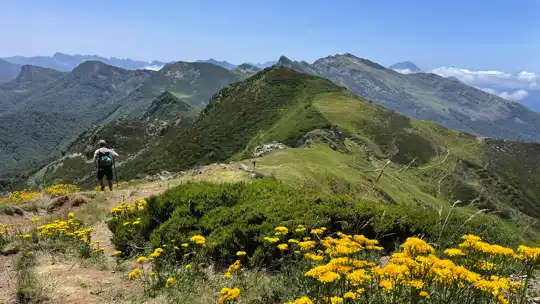
With Spain having so much to offer, I have visited it many times. Best trip was a hiking tour in the Picos de Europa in the North of Spain in July 2023.

✍️ Help improve this page!
The information on this page is based on my own backpacking experience in Spain, supplemented with up-to-date research and feedback from other travelers. Travel details can change, so if you notice anything outdated or incomplete, feel free to let me know.


🙋‍♂️ Give feedback

👋 Meet the founderWho’s Behind Take Your Backpack?

Johan, backpacker and founder of TakeYourBackpackHi, I’m Johan (Netherlands 🇳🇱), the creator of TakeYourBackpack. Over the past decade, I’ve backpacked through 80+ countries across six continents, gaining extensive experience with independent travel, long-term trips, and overland routes.

This site is built on a combination of firsthand travel experience and carefully curated insights from other backpackers. Many guides are based on places I’ve personally visited, while others bring together tips, observations, and practical advice shared by trusted travelers I’ve met along the way.

The goal is to provide realistic, experience-driven guidance — not generic itineraries — so you can explore destinations with better context, clearer expectations, and more confidence.

Get full Spain guide •
Instant download • 148 highlights • Full Offline guide