
×

Suriname🇸🇷 | villagesAwarradamRapids, Maroon village, island lodges | things to do and best time to go

Explore BlancheMarie FallsExplore Witagron

Backpacking in Awarradam
🏆 Top pickvillage ranked #1
By Johan Kruseman 🇳🇱 | Updated July 21, 2026

Your first real decision with Awarradam is this: do you commit to the long, expensive river journey for a full jungle immersion, or save that time and money for more flexible stops like Brownsberg or Galibi? That choice matters, because Awarradam isn’t a casual detour; it’s deep in the Upper Suriname River, south of Atjoni, in the rainforest heartland of the Maroon communities.

Awarradam itself is less “town” and more tiny riverside settlement plus lodge area. For backpackers, it works as a destination, not a base. You come here for days of forest, river rapids, and village visits, then you leave; there’s no onward bus, no café-hopping, no hostel circuit. It’s quieter, pricier, and more structured than Paramaribo or Brownsweg, but also more atmospheric: wood smoke at dusk, insects roaring after dark, stars punching through the canopy. Social life is whoever’s on your tour boat. Safety is solid, logistics are not. If you want raw jungle with training wheels, this is it.

Discover everything you want to know in the 📖 Suriname Travel Guide.


Get your Suriname guide
43 ranked highlights, routes & tips, works offline (185 pages)
Loading the map 🌍
CLICK TO FILTER
cities
towns
villages
landmarks
national parks
hikes
beaches
attractions
festivals
regions
SHOW COUNTRY’S BESTSHOW ALL

✨ Why go?
Ranked #1 village in Suriname
The unique appeal for travelers

Awarradam is a backpacker’s hub that serves as a gateway to Suriname’s wild beauty. It’s not just a stop; it’s a launchpad for nearby hikes and cultural sites. The walkable streets make it easy to explore, with small-scale hostels and guesthouses that foster a friendly social atmosphere. You’ll find local food stalls serving up hearty meals, where the aroma of spices fills the air, inviting you to linger. Most travelers stay a few days, soaking in the laid-back vibe, making it ideal for slow travelers and solo adventurers. The town’s charm lies in its simplicity; it’s not about nightlife but about connecting with nature and fellow travelers. If you’re looking for a place to recharge before heading into the jungle or to the coast, Awarradam is your spot.
Want to include Awarradam in your Suriname route?
Create a personalized Suriname itinerary that includes Awarradam and the places that fit your trip — based on your travel style, budget, and available time. Get your route in seconds.

Generate my trip

💡 HighlightsEssential experiences to have while visiting Awarradam

  • Awarradam Rapids (the waterfalls) — a series of dramatic rapids and granite outcrops right by the village; great for photos, short swims in calmer pools, and to feel how the river shapes daily life here.
  • Awarradam Nature Lodge / village guesthouse — the small lodge run in or next to the village is the practical hub for visitors: stay with local hosts, eat home-cooked Maroon food, and arrange guides and boat trips.
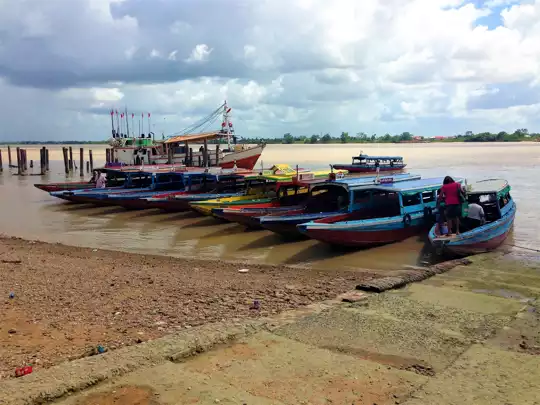
  • Riverfront landing and canoe dock — the village’s main riverfront where longboats arrive and depart; excellent for watching daily commerce, boarding local canoes, and seeing villagers’ river routines up close.
  • Traditional Saramaka houses — the raised wooden homes and compound layouts show traditional Maroon architecture and social life; walking between houses gives a real sense
read more 👉
  • Awarradam Rapids (the waterfalls) — a series of dramatic rapids and granite outcrops right by the village; great for photos, short swims in calmer pools, and to feel how the river shapes daily life here.
  • Awarradam Nature Lodge / village guesthouse — the small lodge run in or next to the village is the practical hub for visitors: stay with local hosts, eat home-cooked Maroon food, and arrange guides and boat trips.
  • Riverfront landing and canoe dock — the village’s main riverfront where longboats arrive and depart; excellent for watching daily commerce, boarding local canoes, and seeing villagers’ river routines up close.
  • Traditional Saramaka houses — the raised wooden homes and compound layouts show traditional Maroon architecture and social life; walking between houses gives a real sense of craft, material culture, and community rhythm.
  • Community cultural evenings — impromptu or organized gatherings where you can hear kawina and drum rhythms, see traditional dances, and meet storytellers; those evenings are where culture feels alive, not staged.
  • Cassava processing demonstration (local household) — a hands-on look at grating, pressing, and baking cassava bread and beiju; very practical, smells great, and explains the cornerstones of village cuisine.
  • Local artisan/woodcarving spot — several villagers carve tools, utensils, and small sculptures; visiting a carver’s shed shows techniques and lets you buy pieces that actually support the maker.
  • Village school and community projects — the small school and any visible community projects (gardens, workshops) offer insight into contemporary village life and are often open to polite visitors who want to learn or help.
  • Short jungle trails and viewpoint rocks — easy guided walks leaving from the village to nearby lookout rocks and forest pockets for birds, monkeys, and a top-down view of the rapids; short, rewarding, and best with a local guide.
  • Fishing with locals / canoe trip on the Upper Suriname — join a morning or late-afternoon fishing outing (traps, lines, or small net techniques) to see traditional fishing knowledge and the river’s quieter places.
A few easy day-trip highlights nearby include the vast Brokopondo Reservoir (Stuwmeer), the viewpoints and trails of Brownsberg Nature Park, and other Upper Suriname River Maroon villages you can reach by boat.
Spotted a mistake or missing something? Contact us.

Things to do near Awarradam

Ratings based on Tripadvisor reviews. When you book through this link, you support our work at no extra cost to you.

⌛️ 1 dayHow to make the most of one day

Awarradam, a small town in Suriname, pulses with the rhythm of everyday life, where the air is thick with the scent of fresh cassava and the sounds of laughter echo from the nearby river. It’s not on every tourist’s radar, but that’s what makes it special. You’re about to unlock a day filled with authentic experiences.

Start your morning at the local market. The vibrant colors of fruits and vegetables catch your eye, while the chatter of vendors fills the air. Grab a warm, flaky roti from a street vendor, paired with a cup of strong Surinamese coffee. This is where the town wakes up, and you’ll feel the energy of the community.

In the afternoon, wander through the neighborhoods. Head towards the riverbank, where you can rent a canoe. Paddle along the peaceful waters, surrounded by lush greenery. … read more 👉
Awarradam, a small town in Suriname, pulses with the rhythm of everyday life, where the air is thick with the scent of fresh cassava and the sounds of laughter echo from the nearby river. It’s not on every tourist’s radar, but that’s what makes it special. You’re about to unlock a day filled with authentic experiences.

Start your morning at the local market. The vibrant colors of fruits and vegetables catch your eye, while the chatter of vendors fills the air. Grab a warm, flaky roti from a street vendor, paired with a cup of strong Surinamese coffee. This is where the town wakes up, and you’ll feel the energy of the community.

In the afternoon, wander through the neighborhoods. Head towards the riverbank, where you can rent a canoe. Paddle along the peaceful waters, surrounded by lush greenery. This isn’t just a scenic route; it’s a chance to connect with the land and its people. Stop by a small village nearby, often overlooked by tourists, where you can chat with locals and learn about their traditions.

As evening falls, return to the town center. The golden light casts long shadows, and the atmosphere shifts. Find a local eatery where you can savor a plate of pom, a traditional dish made from root vegetables and chicken. Share stories with fellow travelers or locals, soaking in the warmth of the community.

Awarradam isn’t just a stop; it’s a moment to breathe in the essence of Suriname, where every experience feels like a step deeper into its heart.
Turn your Awarradam visit into an Suriname adventure
Build a complete Suriname route with Awarradam, hidden gems, must-see destinations, and realistic travel times included.

Generate my trip

🌤️ When to go?Best time to visit Awarradam


  • Weather: Awarradam sits in Suriname’s tropical rainforest, so expect heavy rains from December to July. The dry season, August to November, offers clearer skies and less mud, making trails easier and river crossings safer.

  • Temperature: Temperatures hover between 24°C and 31°C (75°F to 88°F) year-round. The dry season feels less oppressive, with lower humidity that lets you breathe easier on long hikes.

  • Daylight Hours: Near the equator, daylight stays steady around 12 hours daily. This consistency means you can plan your days without worrying about early sunsets cutting your trek short.

  • Crowds: Awarradam is off the beaten path, so crowds are minimal year-round. However, the dry season draws more eco-tourists and local visitors, adding a quiet buzz without overwhelming the vibe.

  • Seasonal
read more 👉

  • Weather: Awarradam sits in Suriname’s tropical rainforest, so expect heavy rains from December to July. The dry season, August to November, offers clearer skies and less mud, making trails easier and river crossings safer.

  • Temperature: Temperatures hover between 24°C and 31°C (75°F to 88°F) year-round. The dry season feels less oppressive, with lower humidity that lets you breathe easier on long hikes.

  • Daylight Hours: Near the equator, daylight stays steady around 12 hours daily. This consistency means you can plan your days without worrying about early sunsets cutting your trek short.

  • Crowds: Awarradam is off the beaten path, so crowds are minimal year-round. However, the dry season draws more eco-tourists and local visitors, adding a quiet buzz without overwhelming the vibe.

  • Seasonal Activities: The dry months are prime for river kayaking, wildlife spotting, and village visits. During the wet season, swollen rivers can limit access but also create dramatic waterfalls and lush greenery.

  • Price Fluctuations: Expect slightly higher prices in the dry season due to demand. The wet season offers better deals but comes with the trade-off of slippery trails and unpredictable weather.


Pro-tip: Aim for late August to early November—when the air is crisp, the forest hums with life, and the trails reward your effort with clear views and fewer bugs.


source: climatestotravel.comJANJanuary: fair for travelingFEBFebruary: fair for travelingMARMarch: fair for travelingAPRApril: fair for travelingMAYMay: fair for travelingJUNJune: fair for travelingJULJuly: fair for travelingAUGAugust: highly recommended for travelingSEPSeptember: excellent for travelingOCTOctober: excellent for travelingNOVNovember: highly recommended for travelingDECDecember: fair for traveling
when-to-go

✈️ The backpacker research shortcutSuriname Travel Guide

An offline-friendly backpacking guide with optimized travel routes, ranked highlights, transport advice, and the best areas to stay.
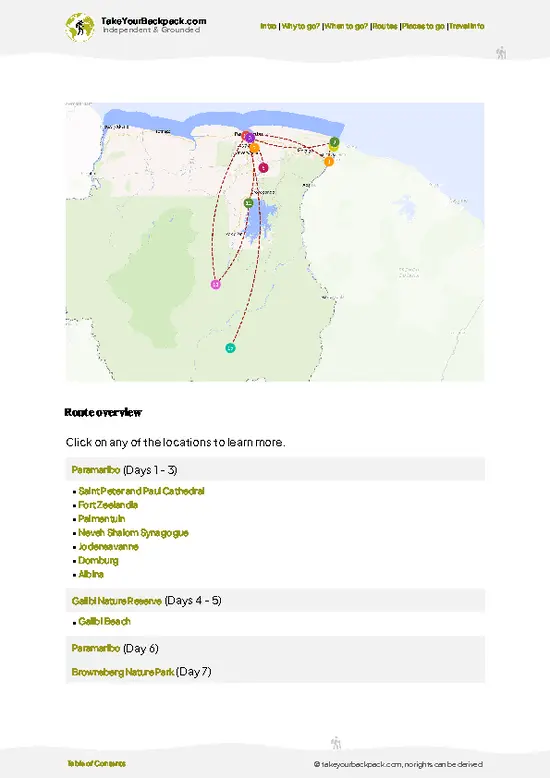
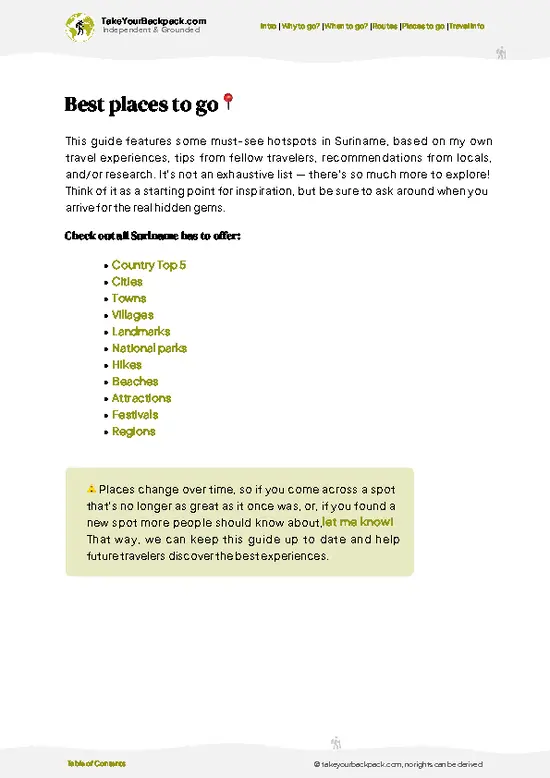
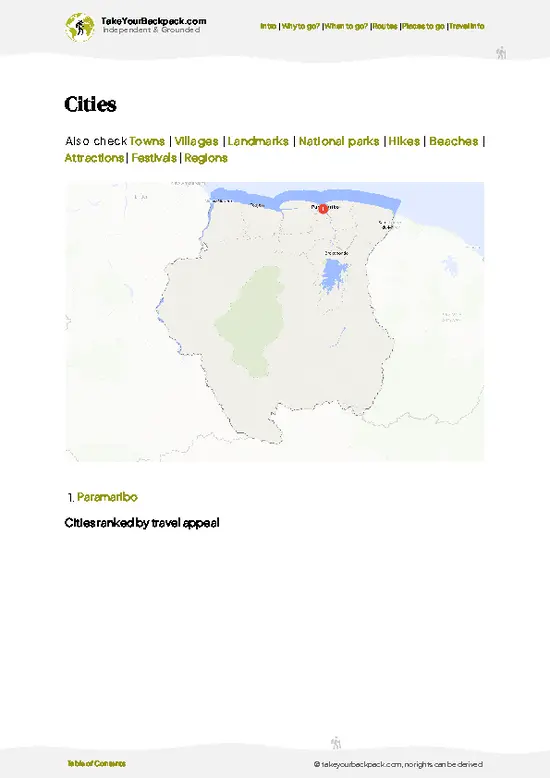
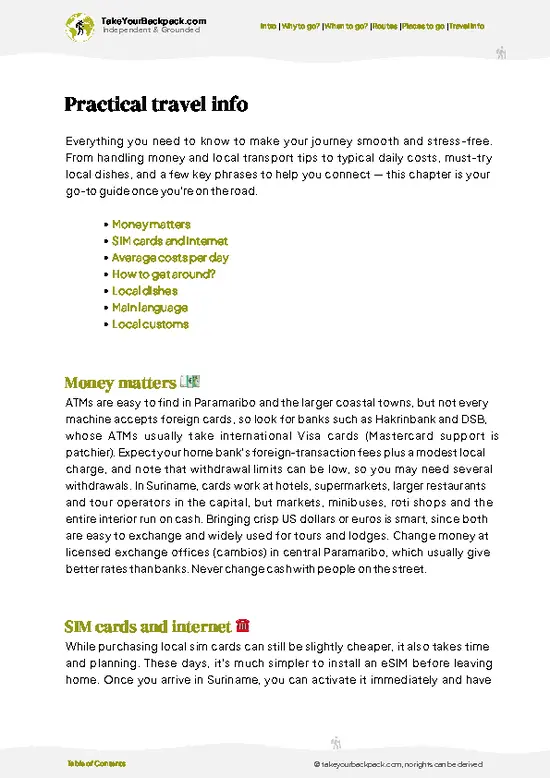
example page 0 from our offline Travel Guide for Suriname
example page 1 from our offline Travel Guide for Suriname
example page 2 from our offline Travel Guide for Suriname
example page 3 from our offline Travel Guide for Suriname
example page 4 from our offline Travel Guide for Suriname
example page 5 from our offline Travel Guide for Suriname
example page 6 from our offline Travel Guide for Suriname
example page 7 from our offline Travel Guide for Suriname
The digital guide (185 pages) contains:
43 highlights, ranked by travel appeal
Optimized 5, 10 & 15-day travel routes
Cities, national parks, landmarks, beaches
How to get around
Offline-friendly for travel without Wi-Fi
👉 Click to see all 30+ guide features

📅 Plan smarter in minutes, not weeks
Month by month travel advice
Festivals & national holidays
Budget expectations

🗺️ Go to the right places, skip the overrated ones
Honest pros & cons of destinations
Top hikes, parks & viewpoints
Lesser-known places most travelers miss
Clear “worth it vs skip it” guidance

🛏️ Travel smoothly without rookie mistakes
Best areas to stay
Transport systems explained simply
Common scams & safety advice
SIM cards, money & practical tips

🌍 Understand the country, not just visit it
Culture & traditions
52 Essential phrases & customs
Festivals worth planning around
Traveler-friendly historical context
Insights that make places more meaningful

📱 Built for real travel conditions
Fully downloadable PDF
Works completely offline
Optimized for phone use
Useful in remote areas & buses
Everything in one place
Save weeks of stressful planning
Get instant access to your full guide. 30‑day money-back guarantee.


By proceeding you agree to our terms.
Sent to your inbox immediately after payment • 100% Secure Checkout
Best Backpacking Travel Advisor 2025 tourism awardBest Backpacking
Travel Advisor
2025
What others say about Take Your Backpack Guides:
⭐⭐⭐⭐⭐
Fantastic, amazing amount of information!
⭐⭐⭐⭐⭐
My goodness this is amazing, it's what I've been looking for hats off too you!
⭐⭐⭐⭐⭐
I think this is absolutely BRILLIANT
⭐⭐⭐⭐
Very complete and informative. It's still missing places, but I gotta to commend you
⭐⭐⭐⭐⭐
This is truly amazing, thank you, can't wait to explore it with my kids!
⭐⭐⭐⭐⭐
Awesome resource, thank you!
⭐⭐⭐⭐⭐
This is amazing! Can't wait to explore the ones I haven't seen
⭐⭐⭐⭐
I love this! Well done, great idea.
⭐⭐⭐⭐⭐
Thanks for taking the time to make this gem!
⭐⭐⭐⭐⭐
This might be the best website I've ever seen.
⭐⭐⭐⭐⭐
Congratulations, and thank you so much for your work; it's incredibly valuable.
⭐⭐⭐⭐
In all seriousness I think you did a great job pointing out the important spots
⭐⭐⭐⭐⭐
10/10 very good
⭐⭐⭐⭐⭐
As someone who's only just starting to visit regularly this is awesome, thank you.
⭐⭐⭐⭐
Thank you very much! I'm going to visit my dad, it's going to be very useful!
⭐⭐⭐⭐⭐
This is really cool! We'll be travelling for the first time and this definitely come in handy.
⭐⭐⭐⭐⭐
You are now our minister of culture, congratulations 👨‍💼
⭐⭐⭐⭐⭐
Just wanted to tell you that this is a pearl! Going to follow your recommendations.
⭐⭐⭐⭐⭐
This is so cool. I'll definitely be using the resource for my travels soon.
⭐⭐⭐⭐⭐
This is very impressive! Good work.
⭐⭐⭐⭐⭐
This is an amazing and informative site. Very well done!

🛏️ Where to stay?Choosing the right base

Awarradam isn’t your typical town with sprawling neighborhoods or bustling streets. It’s a small, remote village deep in Suriname’s rainforest, so the usual urban divisions don’t apply. Instead, your best bet is to stay close to the community center near the river’s edge. This area is where most backpackers gather, drawn by the simple lodges and eco-friendly guesthouses that cater to budget travelers and solo adventurers.

Why here? Because it’s safe, social, and alive with the hum of local life—children playing, fishermen hauling nets, and the scent of wood smoke mingling with fresh jungle air. … read more 👉
Awarradam isn’t your typical town with sprawling neighborhoods or bustling streets. It’s a small, remote village deep in Suriname’s rainforest, so the usual urban divisions don’t apply. Instead, your best bet is to stay close to the community center near the river’s edge. This area is where most backpackers gather, drawn by the simple lodges and eco-friendly guesthouses that cater to budget travelers and solo adventurers.

Why here? Because it’s safe, social, and alive with the hum of local life—children playing, fishermen hauling nets, and the scent of wood smoke mingling with fresh jungle air. Staying near the river means you wake up to the soft splash of water and the chorus of birds, not the silence of isolation or the risk of wandering too far into the dense forest without a guide.

Hostel-style accommodations are rare but the few that exist cluster here, creating a natural hub for meeting fellow travelers and swapping stories over a shared meal or a cold drink. Other parts of Awarradam are either too remote or lack the infrastructure to support visitors comfortably. So, anchoring yourself near the riverfront community is the smart move—where safety, social energy, and authentic local rhythm come together.

🚌 Getting aroundTransportation options and practical tips

Awarradam moves at its own rhythm—less a clockwork town and more a pulse you feel in the air. The scent of damp earth and wood smoke lingers, mixing with the chatter of locals who navigate the streets with a relaxed confidence. Here, schedules bend to the day’s mood, not the other way around. You won’t find rigid timetables, but you will find a flow that rewards patience and a keen eye. The sun’s angle shifts the light through the dense canopy, casting long shadows that guide your steps more than any map. This is a place where the journey is as tactile as the destination, and understanding the transit options means syncing with the town’s natural tempo.

Walking: The most authentic way to experience Awarradam is on foot. The town’s compact layout means you can cover most spots within 30 to … read more 👉
Awarradam moves at its own rhythm—less a clockwork town and more a pulse you feel in the air. The scent of damp earth and wood smoke lingers, mixing with the chatter of locals who navigate the streets with a relaxed confidence. Here, schedules bend to the day’s mood, not the other way around. You won’t find rigid timetables, but you will find a flow that rewards patience and a keen eye. The sun’s angle shifts the light through the dense canopy, casting long shadows that guide your steps more than any map. This is a place where the journey is as tactile as the destination, and understanding the transit options means syncing with the town’s natural tempo.

Walking: The most authentic way to experience Awarradam is on foot. The town’s compact layout means you can cover most spots within 30 to 45 minutes. Paths are uneven and sometimes muddy, so sturdy shoes are a must. Walking lets you soak in the earthy smells, hear the rustle of leaves, and catch spontaneous moments—a market vendor’s call, children playing in the dust. It’s free, flexible, and the best way to move at your own pace.

Shared Minivans: These are the workhorses of local transit, running from early morning around 6:30 AM until dusk, roughly 6 PM. Fares hover around 2-3 USD per ride, making them budget-friendly. They don’t run on strict schedules but leave when full, so expect some waiting. The ride is bumpy, windows open to the humid air, and the chatter inside is a mix of local dialects and laughter. It’s a social experience as much as a transit option.

Motorbike Taxis: If you’re in a hurry or carrying gear, motorbike taxis zip through narrow alleys and dirt roads with ease. They operate from dawn to late evening, charging about 1-2 USD for short hops. The wind and dust hit your face, and the driver’s knowledge of shortcuts can shave off significant time. It’s less comfortable than a minivan but unbeatable for speed and access to off-the-beaten paths.

Bicycle Rentals: For those wanting a bit more control and exercise, renting a bicycle is a solid choice. Rentals cost around 5 USD per day, and you can explore beyond the town center at your own pace. The terrain is mixed—some paved stretches, some rough dirt—so a sturdy mountain bike is best. Early mornings and late afternoons offer cooler temperatures and softer light, perfect for cycling.

Local Boats: If your route includes the river, small wooden boats provide a scenic and practical option. They run irregularly, mostly midday, and cost about 3-4 USD depending on distance. The smell of wet wood and river water fills the air, and the gentle rocking is a welcome break from the dust. It’s slower but offers a unique perspective on Awarradam’s landscape and daily life.

Mastering these options means you’re not just moving through Awarradam—you’re syncing with its heartbeat. Each choice offers a different slice of the town’s character, turning transit from a chore into part of the story.

👛 Costs (as of 1 April 2026)What things cost and how to budget

Backpacking in Awarradam, Suriname, means embracing a remote, nature-heavy vibe where costs reflect both the rustic setting and the limited infrastructure. Here’s what you can expect to spend daily as an independent traveler.
  • Dorm Accommodation: Options are scarce and basic, mostly small guesthouses or eco-lodges with shared rooms. Expect to pay around $10-$20 per night. These places often lack modern amenities, but the trade-off is waking up to the sounds of the rainforest and river nearby.
  • Meals: Food is simple and locally sourced. A meal at a small local eatery or from market stalls will run about $3-$6. If you’re staying at an eco-lodge, meals might be included or cost slightly more, around $7-$10, reflecting the effort to bring supplies into this remote area.
  • Local Transport: Getting
read more 👉
Backpacking in Awarradam, Suriname, means embracing a remote, nature-heavy vibe where costs reflect both the rustic setting and the limited infrastructure. Here’s what you can expect to spend daily as an independent traveler.
  • Dorm Accommodation: Options are scarce and basic, mostly small guesthouses or eco-lodges with shared rooms. Expect to pay around $10-$20 per night. These places often lack modern amenities, but the trade-off is waking up to the sounds of the rainforest and river nearby.
  • Meals: Food is simple and locally sourced. A meal at a small local eatery or from market stalls will run about $3-$6. If you’re staying at an eco-lodge, meals might be included or cost slightly more, around $7-$10, reflecting the effort to bring supplies into this remote area.
  • Local Transport: Getting around Awarradam is mostly by foot or boat. Boat rides to nearby villages or river spots can cost $5-$15 depending on distance. There’s no formal public transport, so budget for occasional boat hires or shared rides.
  • Basic Activities/Entry Fees: Most activities revolve around nature—guided hikes, river tours, or cultural visits. Expect to pay $10-$20 for guided experiences, which often include local knowledge that’s essential for a safe and enriching trip.
  • Miscellaneous Expenses: This covers essentials like bottled water, small souvenirs, or phone credit. Budget around $2-$5 daily, as options are limited and prices can be slightly higher due to the remote location.

Altogether, a realistic daily budget for backpacking in Awarradam falls between $30 and $60. This range balances the simplicity of local living with the occasional cost of accessing the unique natural and cultural experiences that make this place worth the effort.


source: surinametourism.com
⚠️ Prices can change and everyone travels differently, so take this as a rough guide. Hope it helps you plan your adventure!

🚌 Day tripsBest day trips from Awarradam

Awarradam is a backpacker’s dream base, offering a gateway to Suriname’s lush landscapes and vibrant culture. The town’s laid-back vibe makes it easy to recharge before diving into the wild.

Trip to the Voltzberg
This towering granite monolith is a must-see. The hike to the top is challenging but rewarding, with panoramic views that stretch for miles. Expect to spend about 4-5 hours round trip, and don’t forget to pack snacks and plenty of water. The best time to go is during the dry season, from August to November, when the trails are less muddy. A common mistake? Underestimating the sun; wear a hat and sunscreen. Total costs, including transport and park fees, can run around $25.
👉 Explore Voltzberg

Trip to the Brownsberg Nature Park
Just a couple of hours from Awarradam, Brownsberg … read more 👉
Awarradam is a backpacker’s dream base, offering a gateway to Suriname’s lush landscapes and vibrant culture. The town’s laid-back vibe makes it easy to recharge before diving into the wild.

Trip to the Voltzberg
This towering granite monolith is a must-see. The hike to the top is challenging but rewarding, with panoramic views that stretch for miles. Expect to spend about 4-5 hours round trip, and don’t forget to pack snacks and plenty of water. The best time to go is during the dry season, from August to November, when the trails are less muddy. A common mistake? Underestimating the sun; wear a hat and sunscreen. Total costs, including transport and park fees, can run around $25.
👉 Explore Voltzberg

Trip to the Brownsberg Nature Park
Just a couple of hours from Awarradam, Brownsberg offers a mix of hiking and wildlife spotting. The trails lead you through dense rainforest, where you might catch a glimpse of howler monkeys or colorful birds. Plan for a full day, as you’ll want to explore multiple trails. The entrance fee is about $10, and transport can be arranged for around $15. The dry season is ideal, but be prepared for sudden rain showers. Many first-timers miss the best views by sticking to the main paths; venture off the beaten track for a more intimate experience.
👉 Explore Brownsberg Nature Park

Trip to the Sipaliwini Savanna
This unique ecosystem is a stark contrast to the rainforest. The open grasslands are home to diverse wildlife, including capybaras and various bird species. It takes about 3 hours to reach the savanna, and you can expect to spend around $30 for transport. The dry season is best for spotting wildlife. A common rookie mistake is not bringing binoculars; you’ll want them for birdwatching.


Trip to the Kabalebo Nature Resort
A bit off the beaten path, this eco-resort offers guided canoe trips through the waterways. The journey takes about 2 hours, and the cost is around $40, including lunch. The best time to visit is during the dry season when the water levels are lower, making navigation easier. First-timers often overlook the importance of booking in advance; these spots fill up quickly.
Want to know what more Suriname offers?
The Suriname Travel Guide describes 43 highlights, from cities to national parks, from beaches to hikes

Get the Travel Guide -

🛡️ SafetyStaying Safe: What Travelers Should Know

Awarradam is generally safe, but a few practical tips can enhance your experience. The town’s vibrant atmosphere can be intoxicating, but stay aware in crowded markets. Keep your belongings close; pickpockets can lurk where excitement brews.

If you’re solo, avoid wandering too far after dark. The streets can feel deserted, and it’s best to stick to well-lit areas.

While scams are rare, be cautious of overly friendly locals offering unsolicited help. Politely decline and trust your instincts. Everyday annoyances might include slow service in eateries, but consider it part of the local charm. Embrace the laid-back pace; it’s all part of the journey. Carry yourself confidently, and you’ll blend right in.

Other Surinamese villages near Awarradam

Explore more nearby:

  • Witagron—Saamaka village, riverbank huts, forest gateway| 155 km away
  • Kwamalasamutu—Trio villages, rainforest edge, river crossings| 211 km away
  • Apoera—Border outpost, forest edge, railway relics| 226 km away

💡 Not sure where to go next?
Create a personalized itinerary for Suriname including Awarradam and the places that fit your trip.

Generate my itinerary

👉 Discover all villages

Or checkout all Suriname has to offer (think cities, towns, villages, national parks, hikes, beaches, festivals)
Country photo of Suriname

We 💚 feedbackSumming up the experience

Awarradam is a slice of raw Suriname, where the air is thick with the scent of damp earth and the sounds of the jungle pulse around you. Don’t miss the local fish stew—it’s a revelation. Just be ready for the humidity; it can hit hard. Embrace it. The sweat is part of the experience, and the warmth of the community makes every drop worth it.

✍️ Help improve this page!
The information on this page is based on in-depth research, insights shared by experienced travelers, and feedback from the local travel community in Suriname. While every effort is made to keep the information accurate and current, conditions can change — so if you spot anything incorrect or outdated, please get in touch.


🙋‍♂️ Give feedback

👋 Meet the founderWho’s Behind Take Your Backpack?

Johan, backpacker and founder of TakeYourBackpackHi, I’m Johan (Netherlands 🇳🇱), the creator of TakeYourBackpack. Over the past decade, I’ve backpacked through 80+ countries across six continents, gaining extensive experience with independent travel, long-term trips, and overland routes.

This site is built on a combination of firsthand travel experience and carefully curated insights from other backpackers. Many guides are based on places I’ve personally visited, while others bring together tips, observations, and practical advice shared by trusted travelers I’ve met along the way.

The goal is to provide realistic, experience-driven guidance — not generic itineraries — so you can explore destinations with better context, clearer expectations, and more confidence.

Get full Suriname guide •
Instant download • 43 highlights • Full Offline guide