×

Suriname🇸🇷 | festivalsSurifestaKaseko stages, free street entry, soca and zouk, late DJs | things to do and best time to go

Explore Owru YariExplore Holi Phagwa

Backpacking in Surifesta
👍 Recommendedfestival ranked #4
By Johan Kruseman 🇳🇱 | Updated October 19, 2026

Surifesta costs far less than most festivals of its size, because the main draw is a free-to-enter street scene where you can eat well for a few dollars. It takes place in Paramaribo, in the north of Suriname: you walk from the riverfront and follow the bass. Expect Surinamese kaseko, Caribbean soca, Hindustani and Javanese sounds, and DJs, all drifting over warm, humid air thick with peanut sauce, grilled meat and fried cassava. Crowds are mixed: families, locals in their twenties, and a handful of travelers. Stages run late, pavement gets sticky, and mosquitoes find you by the second song. In return you get a rare view of how Paramaribo’s many communities party side by side. Music lovers and curious eaters will love it most. Anyone wanting polished sound, quiet or strict schedules will not.

Discover everything you want to know in the 📖 Suriname Travel Guide.


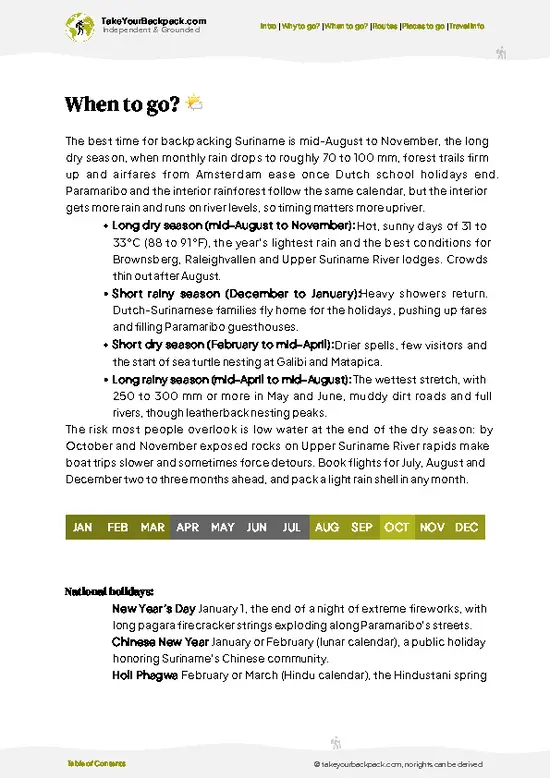
example page 0 from our offline Travel Guide for Suriname
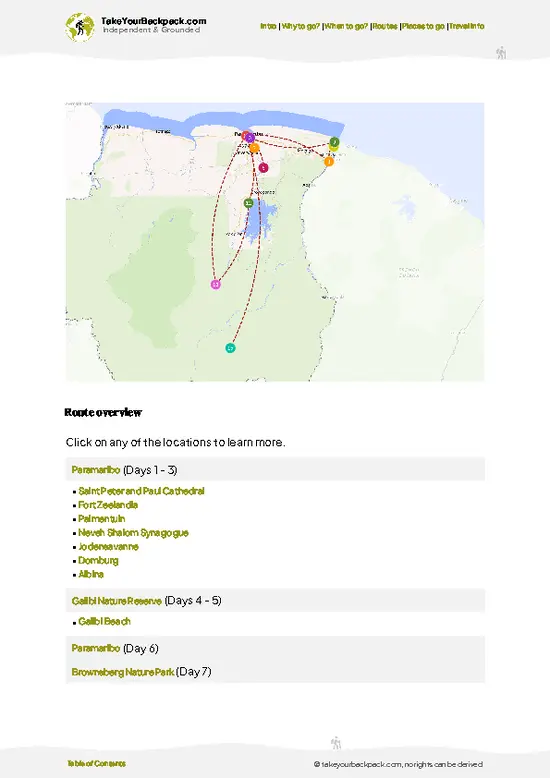
example page 1 from our offline Travel Guide for Suriname
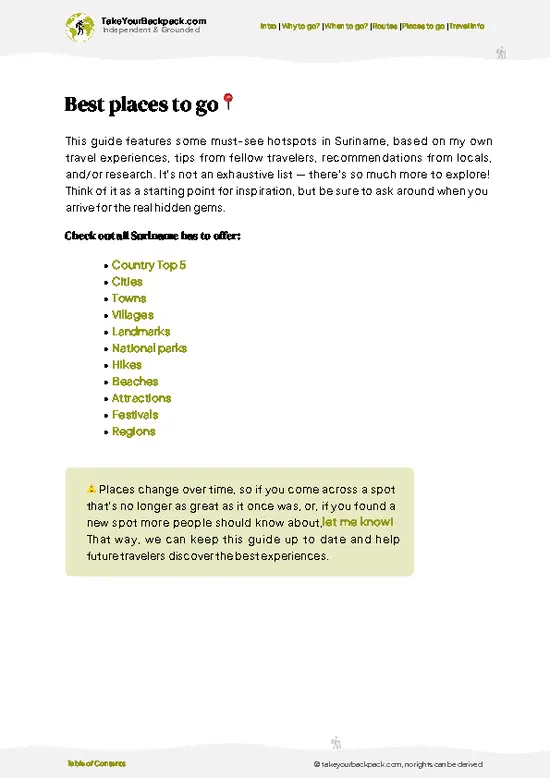
example page 2 from our offline Travel Guide for Suriname
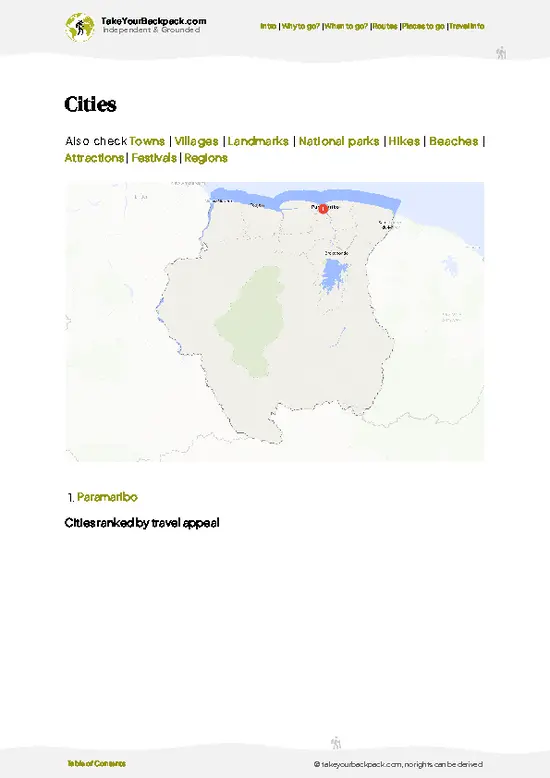
example page 3 from our offline Travel Guide for Suriname
example page 4 from our offline Travel Guide for Suriname
example page 5 from our offline Travel Guide for Suriname
example page 6 from our offline Travel Guide for Suriname
example page 7 from our offline Travel Guide for Suriname
Loading the map 🌍
CLICK TO FILTER
cities
towns
villages
landmarks
national parks
hikes
beaches
attractions
festivals
regions
SHOW COUNTRY’S BESTSHOW ALL

✨ Why go?
Ranked #4 festival in Suriname
The unique appeal for travelers

Surifesta gives you a fast, friendly way into a country where the social scene can be hard to crack from a guesthouse terrace. The first reason is the mix of Surinamese cultures on one stage lineup: Creole kaseko brass, Hindustani singing, Javanese rhythms and Caribbean dancehall share the same crowd. You hear in one night what would otherwise take weeks of searching out small events. The second is the warung and street food stalls around the grounds, where roti, bami, pom and grilled satay cost a fraction of restaurant prices, so you eat the local way while meeting people at shared tables. It also fits easily into a longer trip, slotting between a rainforest lodge stay and a river trip, giving you a city night out to balance the nature days. Locals are curious about visitors, and conversations start fast.

💡 HighlightsMust-see experiences and standout moments

  1. Kaseko Stage Performances: Kaseko is Suriname’s signature sound, mixing African drumming, brass and Caribbean swing. Horn lines and skratji drums get even strangers dancing, and it is the clearest taste of local music you will hear.
  2. Hindustani and Javanese Sets: Expect sitar-tinged songs, Bollywood-inflected pop and gamelan-influenced rhythms. They reflect the communities that arrived as contract laborers, and the crowds sing every word.
  3. Warung Food Stalls: Smoke rises from grills serving satay, roti with chicken, bami and fried snacks like pom pastries. Eat standing, sauce on your fingers, and ask what the vendor recommends.
  4. Late-Night Dance Floors: After the main acts, DJs play soca, zouk and dancehall. It is loose, sweaty and friendly, and nobody minds if you lack moves.
  5. Crowd Watching and
… read more 👉
  1. Kaseko Stage Performances: Kaseko is Suriname’s signature sound, mixing African drumming, brass and Caribbean swing. Horn lines and skratji drums get even strangers dancing, and it is the clearest taste of local music you will hear.
  2. Hindustani and Javanese Sets: Expect sitar-tinged songs, Bollywood-inflected pop and gamelan-influenced rhythms. They reflect the communities that arrived as contract laborers, and the crowds sing every word.
  3. Warung Food Stalls: Smoke rises from grills serving satay, roti with chicken, bami and fried snacks like pom pastries. Eat standing, sauce on your fingers, and ask what the vendor recommends.
  4. Late-Night Dance Floors: After the main acts, DJs play soca, zouk and dancehall. It is loose, sweaty and friendly, and nobody minds if you lack moves.
  5. Crowd Watching and Local Fashion: Groups arrive in matching outfits, bright wraps and fresh sneakers, trading greetings across communities. Spending an hour just wandering shows you Paramaribo’s mix better than any museum.
For a first visit, start with the kaseko stage, because it gives you the sound you will recognize all over Suriname.
Spotted a mistake or missing something? Contact us.

Things to do around Surifesta

Ratings based on Tripadvisor reviews. When you book through this link, you support our work at no extra cost to you.

🌤️ When to go?When is the celebration of Surifesta?

Surifesta runs for about a week around the end of the year, usually late December into early January, with its main events in Paramaribo, so check the program before you book.
  • Best days: Weekends bring the biggest crowds, the loudest sound systems and the most food stalls. Weekdays are calmer, with shorter lines for drinks and easier chats with locals.
  • Weather: Expect 24 to 31°C (75 to 88°F), thick humidity and short, sharp showers, since the rainy spell often starts again around then. Bring a light rain jacket, quick-dry clothes, sandals that grip, insect repellent and a refillable bottle. Daylight lasts about 12 hours.
  • Booking: Reserve a bed three to four weeks ahead, because year-end brings returning relatives from the Netherlands and prices climb roughly 20 to 40 percent, to about US$25 to
… read more 👉
Surifesta runs for about a week around the end of the year, usually late December into early January, with its main events in Paramaribo, so check the program before you book.
  • Best days: Weekends bring the biggest crowds, the loudest sound systems and the most food stalls. Weekdays are calmer, with shorter lines for drinks and easier chats with locals.
  • Weather: Expect 24 to 31°C (75 to 88°F), thick humidity and short, sharp showers, since the rainy spell often starts again around then. Bring a light rain jacket, quick-dry clothes, sandals that grip, insect repellent and a refillable bottle. Daylight lasts about 12 hours.
  • Booking: Reserve a bed three to four weeks ahead, because year-end brings returning relatives from the Netherlands and prices climb roughly 20 to 40 percent, to about US$25 to 60 for a basic room.
  • Crowds and transport: Roads clog on the evening of the main day. Arrive by mid-afternoon, and leave the morning after rather than at midnight, when shared taxis and buses are scarce.
Arrive a day before the opening, when bed prices and taxi fares are still normal.


source: climatestotravel.comJANJanuary: not recommended for travelingFEBFebruary: not recommended for travelingMARMarch: not recommended for travelingAPRApril: not recommended for travelingMAYMay: not recommended for travelingJUNJune: not recommended for travelingJULJuly: not recommended for travelingAUGAugust: highly recommended for travelingSEPSeptember: highly recommended for travelingOCTOctober: highly recommended for travelingNOVNovember: highly recommended for travelingDECDecember: not recommended for traveling

✈️ The backpacker research shortcutSuriname Travel Guide

An offline-friendly backpacking guide with optimized travel routes, ranked highlights, transport advice, and the best areas to stay.
example page 0 from our offline Travel Guide for Suriname
example page 1 from our offline Travel Guide for Suriname
example page 2 from our offline Travel Guide for Suriname
example page 3 from our offline Travel Guide for Suriname
example page 4 from our offline Travel Guide for Suriname
example page 5 from our offline Travel Guide for Suriname
example page 6 from our offline Travel Guide for Suriname
example page 7 from our offline Travel Guide for Suriname
The digital guide (153 pages) contains:
✅ 40 highlights, ranked by travel appeal
✅ Optimized 5, 10 & 15-day travel routes
✅ Cities, national parks, landmarks, beaches
✅ How to get around
✅ Offline-friendly for travel without Wi-Fi
👉 Click to see all 30+ guide features

📅 Plan smarter in minutes, not weeks
✅ Month by month travel advice
✅ Festivals & national holidays
✅ Budget expectations

🗺️ Go to the right places, skip the overrated ones
✅ Honest pros & cons of destinations
✅ Top hikes, parks & viewpoints
✅ Lesser-known places most travelers miss
✅ Clear “worth it vs skip it” guidance

🛏️ Travel smoothly without rookie mistakes
✅ Best areas to stay
✅ Transport systems explained simply
✅ Common scams & safety advice
✅ SIM cards, money & practical tips

🌍 Understand the country, not just visit it
✅ Culture & traditions
✅ 52 Essential phrases & customs
✅ Festivals worth planning around
✅ Traveler-friendly historical context
✅ Insights that make places more meaningful

📱 Built for real travel conditions
✅ Fully downloadable PDF
✅ Works completely offline
✅ Optimized for phone use
✅ Useful in remote areas & buses
✅ Everything in one place
Stop searching, start planning
Get instant access to your full guide. 30‑day money-back guarantee.
+ Add another guide for just

By proceeding you agree to our terms.
Sent to your inbox immediately after payment • 100% Secure Checkout
Best Backpacking Travel Advisor 2025 tourism awardBest Backpacking
Travel Advisor
2025
What others say about Take Your Backpack Guides:
⭐⭐⭐⭐⭐
Fantastic, amazing amount of information!
⭐⭐⭐⭐⭐
My goodness this is amazing, it's what I've been looking for hats off too you!
⭐⭐⭐⭐⭐
I think this is absolutely BRILLIANT
⭐⭐⭐⭐
Very complete and informative. It's still missing places, but I gotta to commend you
⭐⭐⭐⭐⭐
This is truly amazing, thank you, can't wait to explore it with my kids!
⭐⭐⭐⭐⭐
Awesome resource, thank you!
⭐⭐⭐⭐⭐
This is amazing! Can't wait to explore the ones I haven't seen
⭐⭐⭐⭐
I love this! Well done, great idea.
⭐⭐⭐⭐⭐
Thanks for taking the time to make this gem!
⭐⭐⭐⭐⭐
This might be the best website I've ever seen.
⭐⭐⭐⭐⭐
Congratulations, and thank you so much for your work; it's incredibly valuable.
⭐⭐⭐⭐
In all seriousness I think you did a great job pointing out the important spots
⭐⭐⭐⭐⭐
10/10 very good
⭐⭐⭐⭐⭐
As someone who's only just starting to visit regularly this is awesome, thank you.
⭐⭐⭐⭐
Thank you very much! I'm going to visit my dad, it's going to be very useful!
⭐⭐⭐⭐⭐
This is really cool! We'll be travelling for the first time and this definitely come in handy.
⭐⭐⭐⭐⭐
You are now our minister of culture, congratulations 👨‍💼
⭐⭐⭐⭐⭐
Just wanted to tell you that this is a pearl! Going to follow your recommendations.
⭐⭐⭐⭐⭐
This is so cool. I'll definitely be using the resource for my travels soon.
⭐⭐⭐⭐⭐
This is very impressive! Good work.
⭐⭐⭐⭐⭐
This is an amazing and informative site. Very well done!

🛏️ Where to stay?Choosing the right base

Paramaribo’s historic center is the best base for backpackers, with most festival events a short walk or taxi ride away.
The center around the Waterkant and Onafhankelijkheidsplein is walkable, well lit in the evenings and full of guesthouses and dorm-style options. It is also where solo travelers meet, thanks to the cafés and the riverfront food stalls along the Waterkant. Short walks between places keep nighttime risks low, though a taxi after dark is wiser than walking far.
The Palm Garden and Zorg en Hoop neighborhoods, a bit west and south of the core, are quieter and cheaper, with family-run … read more 👉
Paramaribo’s historic center is the best base for backpackers, with most festival events a short walk or taxi ride away.
The center around the Waterkant and Onafhankelijkheidsplein is walkable, well lit in the evenings and full of guesthouses and dorm-style options. It is also where solo travelers meet, thanks to the cafés and the riverfront food stalls along the Waterkant. Short walks between places keep nighttime risks low, though a taxi after dark is wiser than walking far.
The Palm Garden and Zorg en Hoop neighborhoods, a bit west and south of the core, are quieter and cheaper, with family-run guesthouses and more space. They suit light sleepers who still want to reach the center in 10 to 15 minutes by taxi.
For a calmer base, look at the Commewijne side, around Nieuw Amsterdam. Plantation-style lodgings there are calmer and pricier, and they make sense if you have a group to split costs. Transport back at night is limited, so arrange a driver before the festival starts.
For the most social atmosphere, pick the center and share taxis with fellow guests.

👛 Costs (as of 19 October 2026)Travel costs and budget guide for Surifesta

A day at Surifesta costs roughly US$70 to 145 for an independent traveler, with about US$110 as the total when staying in a mid-priced guesthouse in high season.
CategoryBudget RangeLocal Reality
Festival ticketsUS$10 to 30Entry varies by night and lineup, with weekend nights at the higher end.
AccommodationUS$25 to 50Dorm or basic guesthouse in Paramaribo, with higher rates around the main weekend.
Local transportUS$15 to 30Taxis are the practical way back at night, and sharing cuts the cost.
Food & drinksUS$15 to 25Stall meals cost US$4 to 8, and a beer costs US$2 to 4.
Miscellaneous expensesUS$5 to 10Water, repellent, rain gear and tips.
Total Daily BudgetUS$70 to 145About US$110 with a guesthouse in high season.
⚠️ Prices can change and everyone travels differently, so take this as a rough guide. Hope it helps you plan your adventure!

🍲 FoodEating & Drinking in Surifesta

Expect a Surinamese mix at the stalls: roti with chicken or potato filling, bami and nasi with Javanese-style meat, and skewers of saté in peanut sauce. Look for pom, a baked casserole of root vegetable and chicken, and pindasoep (peanut soup) if it is on offer.
Grab a Parbo beer, Suriname’s everyday lager, from the bars and cooler vendors, or try sweet dawet or fresh coconut water to cool off. Rum mixes with cola or juice are common and strong.
Worth trying for the full experience is a broodje (filled bun), often with peanut sauce or fish, and a cup of cold sweet juice from a roadside seller. Order what the longest local line is waiting for.
Bring cash in small bills, since many stalls take no cards and change can run short late at night. Portions are generous, so sharing one plate of roti or … read more 👉
Expect a Surinamese mix at the stalls: roti with chicken or potato filling, bami and nasi with Javanese-style meat, and skewers of saté in peanut sauce. Look for pom, a baked casserole of root vegetable and chicken, and pindasoep (peanut soup) if it is on offer.
Grab a Parbo beer, Suriname’s everyday lager, from the bars and cooler vendors, or try sweet dawet or fresh coconut water to cool off. Rum mixes with cola or juice are common and strong.
Worth trying for the full experience is a broodje (filled bun), often with peanut sauce or fish, and a cup of cold sweet juice from a roadside seller. Order what the longest local line is waiting for.
Bring cash in small bills, since many stalls take no cards and change can run short late at night. Portions are generous, so sharing one plate of roti or nasi between two people is normal and lets you taste more. Lines move slowly in the evening heat, so go early or between acts. Keep water on you and use stalls where food is cooked fresh in front of you.

FAQTraveler FAQ

Surifesta runs from late December into early January, with the program presented around mid-December. It is held in Paramaribo. The main weekend nights draw the largest crowds.
Attending Surifesta costs about US$10 to 30 for entry, depending on the night and the lineup. Add US$4 to 8 for a stall meal and US$2 to 4 for a beer. Budget about US$15 to 30 a day for taxis and US$25 to 50 for a bed in Paramaribo.
Buying tickets for Surifesta in advance is wise for the main weekend nights, when entry can sell out or rise at the gate. Weekday entry is usually easy to buy on arrival. Book a bed in Paramaribo two to three weeks ahead and arrange a return taxi before the night starts.
⚠️ Things can change over time, so always validate details locally before you go.

Other Surinamese festivals near Surifesta

Explore more nearby:

  • Avondvierdaagse—Four evenings, BVSS grounds start, 8 to 10 km loops, porch cheering squads, street snacks
  • Owru Yari—New Year’s Eve, red pagara firecrackers, Fort Zeelandia lawns, midnight smoke| 6 km away
  • Keti Koti—1 July, white cloth, winti drums, Waterkant, kotomisi

💡 Not sure where to go next?
Create a personalized itinerary for Suriname including Surifesta and the places that fit your trip.

Generate my itinerary

👉 Discover all festivals

Or checkout all Suriname has to offer (think cities, towns, villages, national parks, hikes, beaches, festivals)
Country photo of Suriname

We 💚 feedbackIs it worth it?

Pair Surifesta with a few days wandering Paramaribo’s wooden old town and one trip upriver or into the rainforest, so city nights and jungle mornings balance each other. I would bring bug spray, small bills for food stalls and shoes you do not mind getting dirty. Arrive early for good spots and plan a taxi home.

✍️ Help improve this page!
The information on this page is based on in-depth research, insights shared by experienced travelers, and feedback from the local travel community in Suriname. While every effort is made to keep the information accurate and current, conditions can change — so if you spot anything incorrect or outdated, please get in touch.


🙋‍♂️ Give feedback

👋 Meet the founderWho’s Behind Take Your Backpack?

Johan, backpacker and founder of TakeYourBackpackHi, I’m Johan (Netherlands 🇳🇱), the creator of TakeYourBackpack. Over the past 3 decades, I’ve backpacked through 90+ countries across six continents, gaining extensive experience with independent travel, long-term trips, and overland routes.

This site is built on a combination of firsthand travel experience and carefully curated insights from other backpackers. Many guides are based on places I’ve personally visited, while others bring together tips, observations, and practical advice shared by trusted travelers I’ve met along the way.

The goal is to provide realistic, experience-driven guidance — not generic itineraries — so you can explore destinations with better context, clearer expectations, and more confidence.