
×

Suriname🇸🇷 | festivalsHoli PhagwaAbir powder, chowtal singing, Holika Dahan bonfire, pholourie stalls | things to do and best time to go

Explore SurifestaExplore Javanese Immigration Day

Backpacking in Holi Phagwa
🏆 Top pickfestival ranked #2
By Johan Kruseman 🇳🇱 | Updated October 19, 2026

Holi Phagwa suits the traveler who wants to get color-soaked among locals rather than watch from a safe distance, and who likes a party with family warmth more than a festival campground. If you need quiet, spotless clothes or a tidy schedule, you may find it less rewarding. It happens in Paramaribo, Suriname’s capital, with crowds also gathering in Nickerie and other districts, and it marks the arrival of spring in the Hindustani Surinamese calendar, usually in March. Expect abir (bright powder) and sprayed water, the thump of chowtal and baithak gana, and the smell of fried pholourie and roti drifting over the grounds. The heat is wet and sticky, and by midday everyone is magenta. Warn yourself about three things. Pack a waterproof phone pouch, because powder and water ruin phones. Wear old white or light cotton you can throw away. Book your bed early, since good rooms fill. Bring small cash, as stalls take only Surinamese currency.

Discover everything you want to know in the 📖 Suriname Travel Guide.


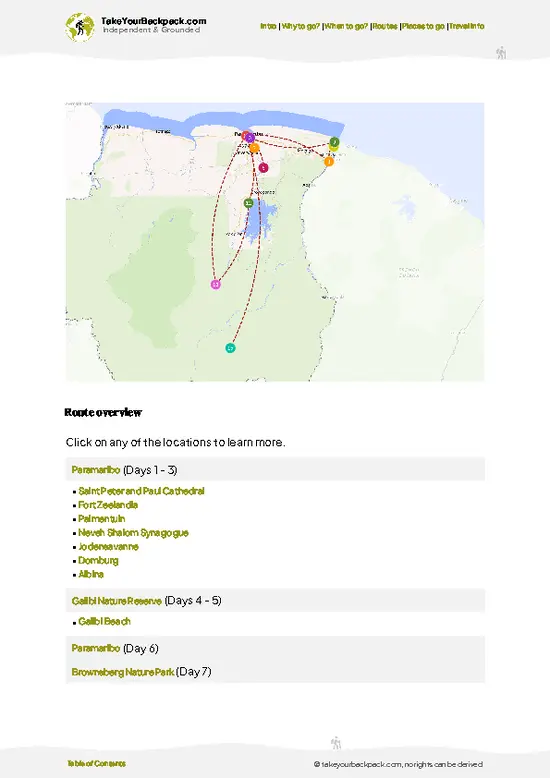
example page 0 from our offline Travel Guide for Suriname
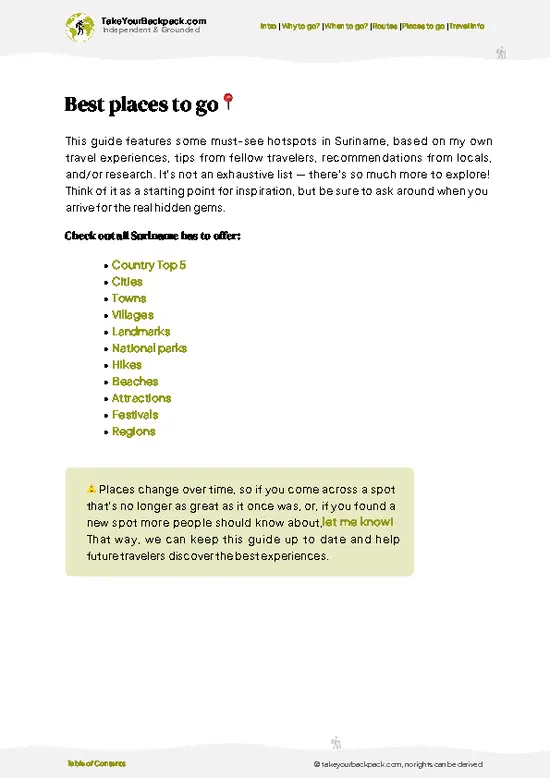
example page 1 from our offline Travel Guide for Suriname
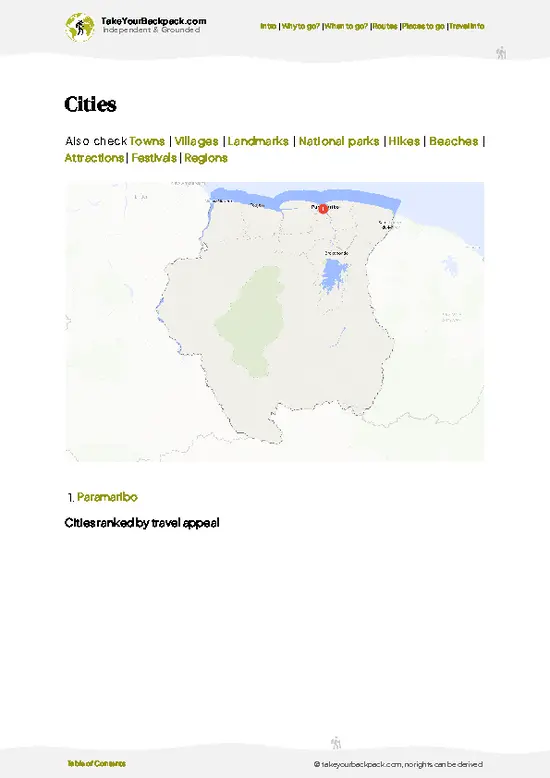
example page 2 from our offline Travel Guide for Suriname
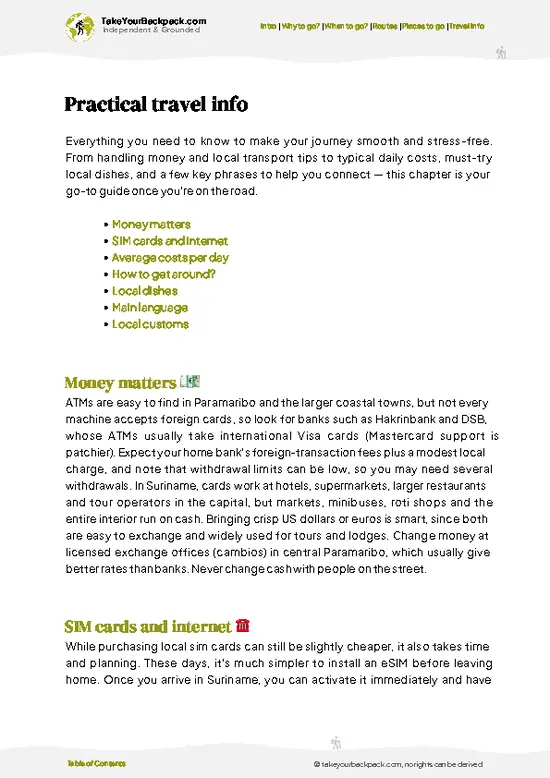
example page 3 from our offline Travel Guide for Suriname
example page 4 from our offline Travel Guide for Suriname
example page 5 from our offline Travel Guide for Suriname
example page 6 from our offline Travel Guide for Suriname
example page 7 from our offline Travel Guide for Suriname
Loading the map 🌍
CLICK TO FILTER
cities
towns
villages
landmarks
national parks
hikes
beaches
attractions
festivals
regions
SHOW COUNTRY’S BESTSHOW ALL

✨ Why go?
Ranked #2 festival in Suriname
Reasons people choose to celebrate the here

Holi Phagwa is the clearest window into Suriname’s Hindustani community, whose ancestors arrived from India as indentured laborers from 1873. Backpackers build their route around it because the street feeling is open: strangers hand you powder, aunties shove plates of food at you, and nobody asks for a ticket. You are a participant from minute one. The festival also shows how Suriname actually works. Hindu, Javanese, Creole and Maroon neighbors celebrate side by side, and you will see that mix in the crowd more than in any museum. Cost is another draw. The main public events are free, so your spending goes to food and a bed. The date fits well with a longer trip, since you can pair it with the rainforest lodges of the interior or the Nickerie rice country in the west. Come for the color, but … read more 👉
Holi Phagwa is the clearest window into Suriname’s Hindustani community, whose ancestors arrived from India as indentured laborers from 1873. Backpackers build their route around it because the street feeling is open: strangers hand you powder, aunties shove plates of food at you, and nobody asks for a ticket. You are a participant from minute one. The festival also shows how Suriname actually works. Hindu, Javanese, Creole and Maroon neighbors celebrate side by side, and you will see that mix in the crowd more than in any museum. Cost is another draw. The main public events are free, so your spending goes to food and a bed. The date fits well with a longer trip, since you can pair it with the rainforest lodges of the interior or the Nickerie rice country in the west. Come for the color, but stay for the chowtal singing, where groups sit in circles and trade verses in Sarnami and Hindi, a tradition that has survived here for roughly 150 years.

💡 HighlightsThe experiences that define the visit

  1. Holika Dahan bonfire: The evening before the color, communities burn a pyre that recalls the story of Holika and Prahlad. It is smoky, quieter and more devotional than the day that follows, and a good place to ask questions.
  2. Chowtal singing: Groups sit with dholak drums and metal jhal cymbals and sing in call and response. The sound builds slowly, and the tradition has been kept alive by Surinamese Hindus since the migration from India.
  3. Abir and water play: Pink, green and yellow powder (abir) is smeared on faces and thrown, and water guns and buckets join in. Wear sunscreen under it, close your mouth, and guard your eyes.
  4. Festival food stalls: Expect pholourie, chana, roti with curried potato and sweet treats such as gulab jamun. Eating from the stalls is the cheapest way to sample the Indo-Surinamese
… read more 👉
  1. Holika Dahan bonfire: The evening before the color, communities burn a pyre that recalls the story of Holika and Prahlad. It is smoky, quieter and more devotional than the day that follows, and a good place to ask questions.
  2. Chowtal singing: Groups sit with dholak drums and metal jhal cymbals and sing in call and response. The sound builds slowly, and the tradition has been kept alive by Surinamese Hindus since the migration from India.
  3. Abir and water play: Pink, green and yellow powder (abir) is smeared on faces and thrown, and water guns and buckets join in. Wear sunscreen under it, close your mouth, and guard your eyes.
  4. Festival food stalls: Expect pholourie, chana, roti with curried potato and sweet treats such as gulab jamun. Eating from the stalls is the cheapest way to sample the Indo-Surinamese kitchen.
Start with the Holika Dahan bonfire, because it gives you the story behind the color and makes the next day’s chaos far easier to understand.
Spotted a mistake or missing something? Contact us.

🌤️ When to go?When is the celebration of Holi Phagwa?

Holi Phagwa is celebrated in Paramaribo on the full moon day of the Hindu month of Phalguna, usually in March, with the main street party lasting one day; the date moves with the lunar calendar, and the biggest crowds gather on Independence Square and at the temple grounds in the Hindustani neighborhoods.
  • Best part: Go on the main day itself. Morning is when the singing and the first powder throwing start, and by mid-afternoon everyone is thoroughly colored.
  • Weather: Expect 27 to 31°C (81 to 88°F), strong sun and the chance of a short shower at the tail end of the short rainy season. Bring a white shirt you will never wear again, a zip bag for your phone, sunglasses and coconut oil for hair and skin.
  • Booking: Beds in central Paramaribo fill up a few weeks ahead, so reserve about 3 to 4 weeks
… read more 👉
Holi Phagwa is celebrated in Paramaribo on the full moon day of the Hindu month of Phalguna, usually in March, with the main street party lasting one day; the date moves with the lunar calendar, and the biggest crowds gather on Independence Square and at the temple grounds in the Hindustani neighborhoods.
  • Best part: Go on the main day itself. Morning is when the singing and the first powder throwing start, and by mid-afternoon everyone is thoroughly colored.
  • Weather: Expect 27 to 31°C (81 to 88°F), strong sun and the chance of a short shower at the tail end of the short rainy season. Bring a white shirt you will never wear again, a zip bag for your phone, sunglasses and coconut oil for hair and skin.
  • Booking: Beds in central Paramaribo fill up a few weeks ahead, so reserve about 3 to 4 weeks early. Prices rise only modestly, roughly 10 to 20 percent.
  • Crowds: Arrive in town the evening before. Roads around the main grounds clog by late morning, so walk or take a taxi in early and leave before dusk.
Arrive early and carry small bills, because taxis charge more once the colored crowds start to leave.


source: climatestotravel.comJANJanuary: not recommended for travelingFEBFebruary: not recommended for travelingMARMarch: excellent for travelingAPRApril: not recommended for travelingMAYMay: not recommended for travelingJUNJune: not recommended for travelingJULJuly: not recommended for travelingAUGAugust: not recommended for travelingSEPSeptember: not recommended for travelingOCTOctober: not recommended for travelingNOVNovember: not recommended for travelingDECDecember: not recommended for traveling

✈️ The backpacker research shortcutSuriname Travel Guide

An offline-friendly backpacking guide with optimized travel routes, ranked highlights, transport advice, and the best areas to stay.
example page 0 from our offline Travel Guide for Suriname
example page 1 from our offline Travel Guide for Suriname
example page 2 from our offline Travel Guide for Suriname
example page 3 from our offline Travel Guide for Suriname
example page 4 from our offline Travel Guide for Suriname
example page 5 from our offline Travel Guide for Suriname
example page 6 from our offline Travel Guide for Suriname
example page 7 from our offline Travel Guide for Suriname
The digital guide (153 pages) contains:
✅ 40 highlights, ranked by travel appeal
✅ Optimized 5, 10 & 15-day travel routes
✅ Cities, national parks, landmarks, beaches
✅ How to get around
✅ Offline-friendly for travel without Wi-Fi
👉 Click to see all 30+ guide features

📅 Plan smarter in minutes, not weeks
✅ Month by month travel advice
✅ Festivals & national holidays
✅ Budget expectations

🗺️ Go to the right places, skip the overrated ones
✅ Honest pros & cons of destinations
✅ Top hikes, parks & viewpoints
✅ Lesser-known places most travelers miss
✅ Clear “worth it vs skip it” guidance

🛏️ Travel smoothly without rookie mistakes
✅ Best areas to stay
✅ Transport systems explained simply
✅ Common scams & safety advice
✅ SIM cards, money & practical tips

🌍 Understand the country, not just visit it
✅ Culture & traditions
✅ 52 Essential phrases & customs
✅ Festivals worth planning around
✅ Traveler-friendly historical context
✅ Insights that make places more meaningful

📱 Built for real travel conditions
✅ Fully downloadable PDF
✅ Works completely offline
✅ Optimized for phone use
✅ Useful in remote areas & buses
✅ Everything in one place
Stop searching, start planning
Get instant access to your full guide. 30‑day money-back guarantee.
+ Add another guide for just

By proceeding you agree to our terms.
Sent to your inbox immediately after payment • 100% Secure Checkout
Best Backpacking Travel Advisor 2025 tourism awardBest Backpacking
Travel Advisor
2025
What others say about Take Your Backpack Guides:
⭐⭐⭐⭐⭐
Fantastic, amazing amount of information!
⭐⭐⭐⭐⭐
My goodness this is amazing, it's what I've been looking for hats off too you!
⭐⭐⭐⭐⭐
I think this is absolutely BRILLIANT
⭐⭐⭐⭐
Very complete and informative. It's still missing places, but I gotta to commend you
⭐⭐⭐⭐⭐
This is truly amazing, thank you, can't wait to explore it with my kids!
⭐⭐⭐⭐⭐
Awesome resource, thank you!
⭐⭐⭐⭐⭐
This is amazing! Can't wait to explore the ones I haven't seen
⭐⭐⭐⭐
I love this! Well done, great idea.
⭐⭐⭐⭐⭐
Thanks for taking the time to make this gem!
⭐⭐⭐⭐⭐
This might be the best website I've ever seen.
⭐⭐⭐⭐⭐
Congratulations, and thank you so much for your work; it's incredibly valuable.
⭐⭐⭐⭐
In all seriousness I think you did a great job pointing out the important spots
⭐⭐⭐⭐⭐
10/10 very good
⭐⭐⭐⭐⭐
As someone who's only just starting to visit regularly this is awesome, thank you.
⭐⭐⭐⭐
Thank you very much! I'm going to visit my dad, it's going to be very useful!
⭐⭐⭐⭐⭐
This is really cool! We'll be travelling for the first time and this definitely come in handy.
⭐⭐⭐⭐⭐
You are now our minister of culture, congratulations 👨‍💼
⭐⭐⭐⭐⭐
Just wanted to tell you that this is a pearl! Going to follow your recommendations.
⭐⭐⭐⭐⭐
This is so cool. I'll definitely be using the resource for my travels soon.
⭐⭐⭐⭐⭐
This is very impressive! Good work.
⭐⭐⭐⭐⭐
This is an amazing and informative site. Very well done!

🛏️ Where to stay?Best areas and accommodation options

Stay in central Paramaribo, in the historic inner city around the Waterkant and Independence Square, because that puts you within walking distance of the main Holi Phagwa gatherings and the places where most budget travelers end up. The streets here are flat, lit in the evenings and busy with people until late, which makes solo walking back after dark feel manageable. Guesthouses and hostels cluster close together, so you meet other backpackers in common areas and over breakfast, and sharing taxis to the celebration grounds is easy.
The streets around Domineestraat and the Palm Garden side of town … read more 👉
Stay in central Paramaribo, in the historic inner city around the Waterkant and Independence Square, because that puts you within walking distance of the main Holi Phagwa gatherings and the places where most budget travelers end up. The streets here are flat, lit in the evenings and busy with people until late, which makes solo walking back after dark feel manageable. Guesthouses and hostels cluster close together, so you meet other backpackers in common areas and over breakfast, and sharing taxis to the celebration grounds is easy.
The streets around Domineestraat and the Palm Garden side of town are a second good option. They are quieter at night, close to restaurants and the Saturday and Sunday street life, and still a short walk from the main festival action. Many travelers like this area because shops and money changers are nearby and you can return to wash off the powder quickly.
I would avoid staying far out in the suburbs unless you have a rental car, since taxis get scarce and pricey on festival day. Do not walk through the outskirts or empty riverfront stretches late at night. Pick a place with a courtyard or a washing area, since you will want to rinse off before touching anything. Book early, as the best-located beds go first.

👛 Costs (as of 19 October 2026)Typical daily expenses

Expect to spend around US$0 to 5 a day for Holi Phagwa as an independent traveler, with a total daily budget of US$68 in high season. The street celebration in Paramaribo is free to join, so most of your money goes to a bed and food.
CategoryBudget RangeLocal Reality
Festival ticketsUS$0 to 5Street celebrations are free; some organized events and stage shows charge a small entrance fee.
AccommodationUS$25 to 45Dorm beds or basic guesthouse rooms in central Paramaribo; high season rate around US$35 is typical.
Local transportUS$5 to 15Taxis do not use meters, so agree a price first. Short rides cost US$3 to 8 and rise on festival day.
Food & drinksUS$15 to 25Roti and snacks from stalls cost US$3 to 6; a beer is US$2 to 4.
Miscellaneous expensesUS$5 to 12Colored powder, a waterproof phone pouch, a
… read more 👉
Expect to spend around US$0 to 5 a day for Holi Phagwa as an independent traveler, with a total daily budget of US$68 in high season. The street celebration in Paramaribo is free to join, so most of your money goes to a bed and food.
CategoryBudget RangeLocal Reality
Festival ticketsUS$0 to 5Street celebrations are free; some organized events and stage shows charge a small entrance fee.
AccommodationUS$25 to 45Dorm beds or basic guesthouse rooms in central Paramaribo; high season rate around US$35 is typical.
Local transportUS$5 to 15Taxis do not use meters, so agree a price first. Short rides cost US$3 to 8 and rise on festival day.
Food & drinksUS$15 to 25Roti and snacks from stalls cost US$3 to 6; a beer is US$2 to 4.
Miscellaneous expensesUS$5 to 12Colored powder, a waterproof phone pouch, a white shirt and laundry.
Total Daily BudgetUS$50 to 102About US$68 for one day with a mid-range bed.


source: suriname.nu
⚠️ Prices can change and everyone travels differently, so take this as a rough guide. Hope it helps you plan your adventure!

🍲 FoodEating & Drinking in Holi Phagwa

Holi Phagwa is a feast day as much as a color fight, and the food comes from Suriname’s large Hindustani community. Stalls and home-style vendors around the celebration grounds sell roti with chicken or potato and long beans, bara (fried lentil fritters), pholourie and chana (spiced chickpeas). Sweet things matter too: look for gulab jamun, barfi and sweet rice made for the occasion. Many families hand out bites to anyone who stops by.
For drinks, coconut water cut fresh from the husk is the best way to deal with the heat. You will also find sweet fruit juices, Parbo beer and, later in the day, plenty of dancing with plastic cups in hand. Alcohol is part of the party for many, but a lot of the older Hindu families celebrate without it.
Try a roti with dhal or a plate of bara met sauce from a … read more 👉
Holi Phagwa is a feast day as much as a color fight, and the food comes from Suriname’s large Hindustani community. Stalls and home-style vendors around the celebration grounds sell roti with chicken or potato and long beans, bara (fried lentil fritters), pholourie and chana (spiced chickpeas). Sweet things matter too: look for gulab jamun, barfi and sweet rice made for the occasion. Many families hand out bites to anyone who stops by.
For drinks, coconut water cut fresh from the husk is the best way to deal with the heat. You will also find sweet fruit juices, Parbo beer and, later in the day, plenty of dancing with plastic cups in hand. Alcohol is part of the party for many, but a lot of the older Hindu families celebrate without it.
Try a roti with dhal or a plate of bara met sauce from a busy stall, because a long line is a sign of quality. Eat before you get fully covered in powder, and use your right hand for taking and passing food. Bring cash in small bills, since cards are rarely accepted. Portions are generous, so share a plate with another traveler, and keep a bottle of water on hand to rinse your mouth and hands.

FAQFrequently asked questions about Holi Phagwa

Holi Phagwa takes place on the full moon of the Hindu month of Phalguna, which usually falls in March. The main celebration lasts one day, with the biggest gatherings in Paramaribo, especially on Independence Square and in the Hindustani neighborhoods. Dates shift each year with the lunar calendar, so check the exact day a few weeks before you book.
Joining Holi Phagwa in Paramaribo is free, since the celebrations happen in public spaces and parks. Budget travelers typically spend about US$50 to 100 a day including a bed at US$25 to 45, food at US$15 to 25 and taxis at US$5 to 15. Colored powder costs only a few dollars, and you pay in Surinamese dollars.
Holi Phagwa does not need tickets for the main street celebrations in Paramaribo, which are open to everyone. A few organized parties and stage events may charge a small entrance fee of roughly US$5 to 15, usually payable at the gate. What you should book ahead is a bed, ideally 3 to 4 weeks before the full moon date.
⚠️ Things can change over time, so always validate details locally before you go.

Other Surinamese festivals near Holi Phagwa

Explore more nearby:

  • Keti Koti—1 July, white cloth, winti drums, Waterkant, kotomisi
  • Maroon Day—10 October, apinti drums, river villages, pangi cloth, ancestral libations
  • Surifesta—Kaseko stages, free street entry, soca and zouk, late DJs

💡 Not sure where to go next?
Create a personalized itinerary for Suriname including Holi Phagwa and the places that fit your trip.

Generate my itinerary

👉 Discover all festivals

Or checkout all Suriname has to offer (think cities, towns, villages, national parks, hikes, beaches, festivals)
Country photo of Suriname

We 💚 feedbackIs it worth it?

Give Holi Phagwa two nights in Paramaribo: one for the bonfire, one to recover after the color day. A third night is only worth it if you plan to join a community celebration outside the capital. I would skip anything you love in your luggage that day, and I would carry a spare shirt and a sealed bag for the ride home.

✍️ Help improve this page!
The information on this page is based on in-depth research, insights shared by experienced travelers, and feedback from the local travel community in Suriname. While every effort is made to keep the information accurate and current, conditions can change — so if you spot anything incorrect or outdated, please get in touch.


🙋‍♂️ Give feedback

👋 Meet the founderWho’s Behind Take Your Backpack?

Johan, backpacker and founder of TakeYourBackpackHi, I’m Johan (Netherlands 🇳🇱), the creator of TakeYourBackpack. Over the past 3 decades, I’ve backpacked through 90+ countries across six continents, gaining extensive experience with independent travel, long-term trips, and overland routes.

This site is built on a combination of firsthand travel experience and carefully curated insights from other backpackers. Many guides are based on places I’ve personally visited, while others bring together tips, observations, and practical advice shared by trusted travelers I’ve met along the way.

The goal is to provide realistic, experience-driven guidance — not generic itineraries — so you can explore destinations with better context, clearer expectations, and more confidence.