×

Suriname🇸🇷 | landmarksTapawatra SulaUpper Suriname rapids, Saramaka villages, dugout boat access, Gran Rio confluence | things to do and best time to go

Explore ColakreekExplore Blanche Marie Falls

Backpacking in Tapawatra Sula
👍 Recommendedunique site ranked #3
By Johan Kruseman 🇳🇱 | Updated October 19, 2026

Tapawatra Sula cannot be reached by road all the way: the last stretch is a dugout boat ride or a flight to the Djumu airstrip, and that is why the water here stays so quiet of visitors. It lies on the Upper Suriname River in the interior of Suriname, south of Paramaribo, close to Goddo and Djumu, where the Gran Rio and Pikin Rio come together. Be honest with yourself about the journey: it is a long day of road and river, it costs more than anything near the coast, and there is no crowd to share it with. That is also the appeal. The rapids roar over dark, wet rock, the air smells of river mud and wood smoke from nearby Saramaka villages, and the spray is cool against hot skin. Photos are easy, the swimming is real, and the evenings are loud with frogs and insects. At the end of the day the rock shelves are warm underfoot while the current keeps pulling at your ankles.

Discover everything you want to know in the 📖 Suriname Travel Guide.


example page 0 from our offline Travel Guide for Suriname
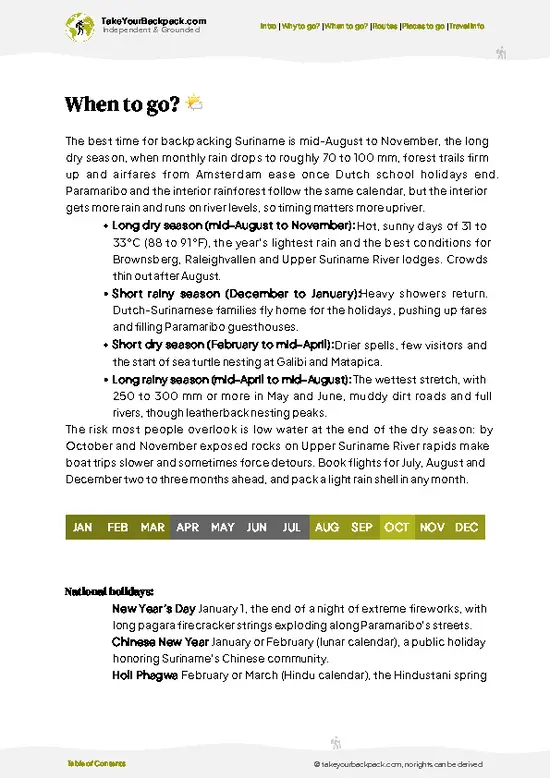
example page 1 from our offline Travel Guide for Suriname
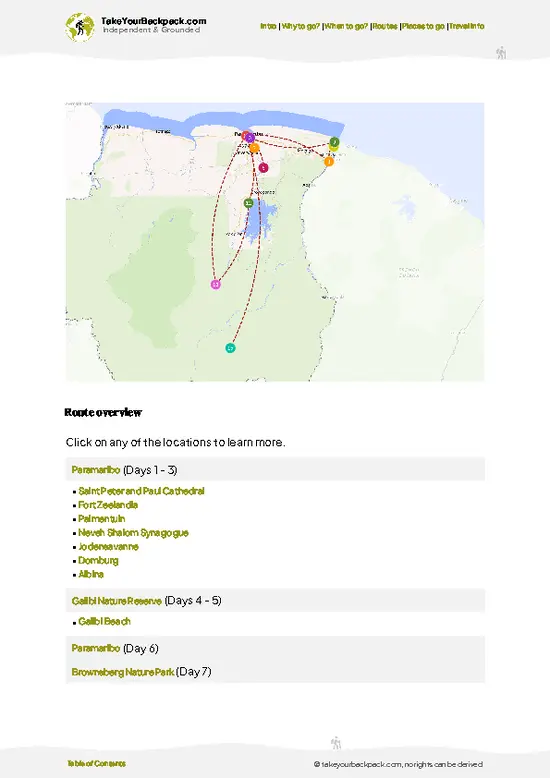
example page 2 from our offline Travel Guide for Suriname
example page 3 from our offline Travel Guide for Suriname
example page 4 from our offline Travel Guide for Suriname
example page 5 from our offline Travel Guide for Suriname
example page 6 from our offline Travel Guide for Suriname
example page 7 from our offline Travel Guide for Suriname
Loading the map 🌍
CLICK TO FILTER
cities
towns
villages
landmarks
national parks
hikes
beaches
attractions
festivals
regions
SHOW COUNTRY’S BESTSHOW ALL

✨ Why go?
Ranked #3 unique site in Suriname
What makes this unique site worth visiting

Tapawatra Sula rewards the effort because it sits in Saramaka Maroon country, where the river is still the main road and the villages around Goddo and Djumu run on boats, not cars. You see a working landscape, not a staged one. The rapids are also a rare place in Suriname where you can sit on warm rock beside fast white water and slip in when the heat gets too much, with nobody selling you anything.

The second reason is how neatly it fits a longer trip. The road ends at Atjoni, so the boat ride upriver becomes part of the story, and the lodges and villages along the Upper Suriname River make natural overnight stops. If you want to skip the river leg, the Djumu airstrip offers a quick way in from Paramaribo and a different view of the forest from above.

Combine it with a night or two in the … read more 👉
Tapawatra Sula rewards the effort because it sits in Saramaka Maroon country, where the river is still the main road and the villages around Goddo and Djumu run on boats, not cars. You see a working landscape, not a staged one. The rapids are also a rare place in Suriname where you can sit on warm rock beside fast white water and slip in when the heat gets too much, with nobody selling you anything.

The second reason is how neatly it fits a longer trip. The road ends at Atjoni, so the boat ride upriver becomes part of the story, and the lodges and villages along the Upper Suriname River make natural overnight stops. If you want to skip the river leg, the Djumu airstrip offers a quick way in from Paramaribo and a different view of the forest from above.

Combine it with a night or two in the interior and you get a fuller sense of Suriname than the capital and coast can give. Go for the water, stay for the people and the pace.

💡 HighlightsTop highlights of Tapawatra Sula

  1. Tapawatra Sula Rapids: The main event. The Upper Suriname River splits around dark boulders and drops in loud, foaming steps. Flat rock shelves at the edge make good seats for watching the current, and the spray carries a cool mineral smell.
  2. Swimming Pools Beside the Rapids: Calmer eddies between the rocks allow a swim when water levels are right. The current is strong in the main channel, so stay in the slack water and let your boatman point out the safe spots.
  3. Gran Rio and Pikin Rio Confluence: Near Goddo and Djumu, two rivers merge to form the Upper Suriname River. The water shifts color and speed where they meet, and it is a good place to see how the river shapes everything here.
  4. Korjaal Ride from Atjoni: The long dugout boat journey upriver is a highlight in itself. Boatmen read the channel
… read more 👉
  1. Tapawatra Sula Rapids: The main event. The Upper Suriname River splits around dark boulders and drops in loud, foaming steps. Flat rock shelves at the edge make good seats for watching the current, and the spray carries a cool mineral smell.
  2. Swimming Pools Beside the Rapids: Calmer eddies between the rocks allow a swim when water levels are right. The current is strong in the main channel, so stay in the slack water and let your boatman point out the safe spots.
  3. Gran Rio and Pikin Rio Confluence: Near Goddo and Djumu, two rivers merge to form the Upper Suriname River. The water shifts color and speed where they meet, and it is a good place to see how the river shapes everything here.
  4. Korjaal Ride from Atjoni: The long dugout boat journey upriver is a highlight in itself. Boatmen read the channel between rocks and sandbars with ease, and you pass forest walls, small landings and villagers washing clothes at the bank.
  5. Goddo Village: A Saramaka Maroon village on the river where daily life centers on the water. Walk with permission and a local guide, and you will see carved wooden doors, smoke from cooking fires, and children swimming at the landing.
  6. Djumu: The village with the airstrip that links the upper river to Paramaribo by small plane. Watching a plane touch down in the forest clearing is a small spectacle, and the village is a handy base for boat trips.
  7. Saramaka Craft Traditions: The Saramaka are known for bold patchwork cloth and carved wooden stools and paddles. Ask your guide or lodge host about buying directly from makers in the villages near Tapawatra Sula, so the money goes to the people who made the work.
Tapawatra Sula and the sights around it fit into a single full day if you start from a nearby lodge, though adding a night on the river lets the pace slow down.
Spotted a mistake or missing something? Contact us.

Things to do near Tapawatra Sula

Ratings based on Tripadvisor reviews. When you book through this link, you support our work at no extra cost to you.

🌤️ When to go?Seasonal considerations and timing

The best window for Tapawatra Sula is the long dry season from late August to early December, when the Upper Suriname River drops and the rapids show their rock ledges and sandbars.
  • Long Dry Season (Aug to Dec): Days run 29 to 33°C (84 to 91°F), with little rain and easy boat travel. Water is lower, so boatmen pick careful lines through the channels. Expect the most visitors and the firmest lodge prices.
  • Short Dry Season (Feb to early Mar): A brief, often sunny break with similar temperatures and fewer travelers. Showers still pass through.
  • Long Rainy Season (late Apr to mid Aug): Heavy downpours, 24 to 31°C (75 to 88°F), and a high, fast river. The rapids roar, but sandbars vanish and some trips get canceled. Lodges often discount rooms.
  • Short Rainy Season (Dec to Jan): Intermittent storms and
… read more 👉
The best window for Tapawatra Sula is the long dry season from late August to early December, when the Upper Suriname River drops and the rapids show their rock ledges and sandbars.
  • Long Dry Season (Aug to Dec): Days run 29 to 33°C (84 to 91°F), with little rain and easy boat travel. Water is lower, so boatmen pick careful lines through the channels. Expect the most visitors and the firmest lodge prices.
  • Short Dry Season (Feb to early Mar): A brief, often sunny break with similar temperatures and fewer travelers. Showers still pass through.
  • Long Rainy Season (late Apr to mid Aug): Heavy downpours, 24 to 31°C (75 to 88°F), and a high, fast river. The rapids roar, but sandbars vanish and some trips get canceled. Lodges often discount rooms.
  • Short Rainy Season (Dec to Jan): Intermittent storms and muddy trails, with fewer visitors.
Daylight stays near 12 hours year-round, so plan river legs for the morning. Book Atjoni boat transfers a few days ahead in August to October.


source: climatestotravel.comJANJanuary: fair for travelingFEBFebruary: fair for travelingMARMarch: fair for travelingAPRApril: fair for travelingMAYMay: fair for travelingJUNJune: good for travelingJULJuly: good for travelingAUGAugust: excellent for travelingSEPSeptember: excellent for travelingOCTOctober: excellent for travelingNOVNovember: highly recommended for travelingDECDecember: good for traveling
when-to-go

✈️ The backpacker research shortcutSuriname Travel Guide

An offline-friendly backpacking guide with optimized travel routes, ranked highlights, transport advice, and the best areas to stay.
example page 0 from our offline Travel Guide for Suriname
example page 1 from our offline Travel Guide for Suriname
example page 2 from our offline Travel Guide for Suriname
example page 3 from our offline Travel Guide for Suriname
example page 4 from our offline Travel Guide for Suriname
example page 5 from our offline Travel Guide for Suriname
example page 6 from our offline Travel Guide for Suriname
example page 7 from our offline Travel Guide for Suriname
The digital guide (153 pages) contains:
✅ 40 highlights, ranked by travel appeal
✅ Optimized 5, 10 & 15-day travel routes
✅ Cities, national parks, landmarks, beaches
✅ How to get around
✅ Offline-friendly for travel without Wi-Fi
👉 Click to see all 30+ guide features

📅 Plan smarter in minutes, not weeks
✅ Month by month travel advice
✅ Festivals & national holidays
✅ Budget expectations

🗺️ Go to the right places, skip the overrated ones
✅ Honest pros & cons of destinations
✅ Top hikes, parks & viewpoints
✅ Lesser-known places most travelers miss
✅ Clear “worth it vs skip it” guidance

🛏️ Travel smoothly without rookie mistakes
✅ Best areas to stay
✅ Transport systems explained simply
✅ Common scams & safety advice
✅ SIM cards, money & practical tips

🌍 Understand the country, not just visit it
✅ Culture & traditions
✅ 52 Essential phrases & customs
✅ Festivals worth planning around
✅ Traveler-friendly historical context
✅ Insights that make places more meaningful

📱 Built for real travel conditions
✅ Fully downloadable PDF
✅ Works completely offline
✅ Optimized for phone use
✅ Useful in remote areas & buses
✅ Everything in one place
Stop searching, start planning
Get instant access to your full guide. 30‑day money-back guarantee.
+ Add another guide for just

By proceeding you agree to our terms.
Sent to your inbox immediately after payment • 100% Secure Checkout
Best Backpacking Travel Advisor 2025 tourism awardBest Backpacking
Travel Advisor
2025
What others say about Take Your Backpack Guides:
⭐⭐⭐⭐⭐
Fantastic, amazing amount of information!
⭐⭐⭐⭐⭐
My goodness this is amazing, it's what I've been looking for hats off too you!
⭐⭐⭐⭐⭐
I think this is absolutely BRILLIANT
⭐⭐⭐⭐
Very complete and informative. It's still missing places, but I gotta to commend you
⭐⭐⭐⭐⭐
This is truly amazing, thank you, can't wait to explore it with my kids!
⭐⭐⭐⭐⭐
Awesome resource, thank you!
⭐⭐⭐⭐⭐
This is amazing! Can't wait to explore the ones I haven't seen
⭐⭐⭐⭐
I love this! Well done, great idea.
⭐⭐⭐⭐⭐
Thanks for taking the time to make this gem!
⭐⭐⭐⭐⭐
This might be the best website I've ever seen.
⭐⭐⭐⭐⭐
Congratulations, and thank you so much for your work; it's incredibly valuable.
⭐⭐⭐⭐
In all seriousness I think you did a great job pointing out the important spots
⭐⭐⭐⭐⭐
10/10 very good
⭐⭐⭐⭐⭐
As someone who's only just starting to visit regularly this is awesome, thank you.
⭐⭐⭐⭐
Thank you very much! I'm going to visit my dad, it's going to be very useful!
⭐⭐⭐⭐⭐
This is really cool! We'll be travelling for the first time and this definitely come in handy.
⭐⭐⭐⭐⭐
You are now our minister of culture, congratulations 👨‍💼
⭐⭐⭐⭐⭐
Just wanted to tell you that this is a pearl! Going to follow your recommendations.
⭐⭐⭐⭐⭐
This is so cool. I'll definitely be using the resource for my travels soon.
⭐⭐⭐⭐⭐
This is very impressive! Good work.
⭐⭐⭐⭐⭐
This is an amazing and informative site. Very well done!

🛏️ Where to stay?Where staying makes the most sense

Atjoni is the practical gateway, and the villages along the Upper Suriname River between Atjoni and Djumu are where you will sleep closest to the rapids.
Atjoni sits at the end of the road from Paramaribo, so it works as a first or last night. It has a handful of simple guesthouses and a lively boat landing where you can sort out river transport and meet other travelers heading upriver. It is the easiest place to find people to split a boat with.
Further upriver, the Saramaka villages around Goddo and Djumu are quieter and more rewarding. Many families and small eco-lodges here offer basic rooms … read more 👉
Atjoni is the practical gateway, and the villages along the Upper Suriname River between Atjoni and Djumu are where you will sleep closest to the rapids.
Atjoni sits at the end of the road from Paramaribo, so it works as a first or last night. It has a handful of simple guesthouses and a lively boat landing where you can sort out river transport and meet other travelers heading upriver. It is the easiest place to find people to split a boat with.
Further upriver, the Saramaka villages around Goddo and Djumu are quieter and more rewarding. Many families and small eco-lodges here offer basic rooms or hammock space, often with meals included. Evenings are social in a low-key way: shared dinners, river swims, and talk around the table with other guests and your boatmen. Staying in a village means you are in Saramaka Maroon country, so ask before photographing people and respect local customs.
Safety is rarely an issue in these communities, though the main risk is river travel itself, so always wear a life jacket. Solo travelers do best booking a lodge package from Paramaribo, which bundles transfers and beds, then adding nights independently once they know the river.

👛 Costs (as of 19 October 2026)Typical daily expenses

Expect to spend about US$25 to 45 per day around Tapawatra Sula, with a Total Daily Budget of US$95 in high season, because boat transport upriver is the main cost.
CategoryBudget RangeLocal Reality
Accommodation (high season)US$25 to 45Village rooms or hammock stays, often with a fan and shared bathroom. Lodges with meals cost more. Rainy season rates can drop.
FoodUS$10 to 20Rice, chicken, fish, and cassava served by hosts. Meals are often included in lodge packages.
Road transport to AtjoniUS$10 to 15Shared minibus or taxi from Paramaribo, about 3 hours. Private cars cost more.
River boatUS$20 to 40Shared dugout canoe rides between Atjoni and the villages, priced per person. A chartered boat to the rapids costs more, so split it.
Rapids visit and guideUS$5 to 15Local guides and boatmen take you
… read more 👉
Expect to spend about US$25 to 45 per day around Tapawatra Sula, with a Total Daily Budget of US$95 in high season, because boat transport upriver is the main cost.
CategoryBudget RangeLocal Reality
Accommodation (high season)US$25 to 45Village rooms or hammock stays, often with a fan and shared bathroom. Lodges with meals cost more. Rainy season rates can drop.
FoodUS$10 to 20Rice, chicken, fish, and cassava served by hosts. Meals are often included in lodge packages.
Road transport to AtjoniUS$10 to 15Shared minibus or taxi from Paramaribo, about 3 hours. Private cars cost more.
River boatUS$20 to 40Shared dugout canoe rides between Atjoni and the villages, priced per person. A chartered boat to the rapids costs more, so split it.
Rapids visit and guideUS$5 to 15Local guides and boatmen take you through the channels. Community or village fees may apply.
ExtrasUS$3 to 5Water, snacks, and tips. Carry cash, as there are no ATMs upriver.
Total Daily BudgetUS$95Sum of the rows above for one day, counting high-season accommodation.
Flying to Djumu by small plane costs far more than the road and boat route.
⚠️ Prices can change and everyone travels differently, so take this as a rough guide. Hope it helps you plan your adventure!

FAQTraveler FAQ

Tapawatra Sula is a set of rapids on the Upper Suriname River, where the Gran Rio and Pikin Rio meet near the villages of Goddo and Djumu. It lies in Saramaka Maroon country, and boatmen run dugout canoes through its channels. The rapids are most visible in the dry season, from late August to early December, when rock ledges and sandbars show.
Plan two to three days. The road from Paramaribo to Atjoni takes about 3 hours, and the boat upriver to the rapids area takes several more hours depending on water level. Most travelers spend one night in a village and one more on the way back, so a quick day trip from the capital is not realistic.
Take the road from Paramaribo to Atjoni, roughly 3 hours by minibus, taxi, or private car, then continue by motorized dugout canoe up the Upper Suriname River. The boat leg to Tapawatra Sula takes several hours, and costs roughly US$20 to 40 per person when shared. A small plane to the Djumu airstrip is the faster but pricier alternative.
⚠️ Things can change over time, so always validate details locally before you go.

Other Surinamese landmarks near Tapawatra Sula

Explore more nearby:

  • Colakreek—Tea-colored creek, white sand banks, weekend barbecues, Para district| 164 km away
  • Blanche Marie Falls—Nickerie River cascades, dark rock shelves, tea-colored wading pools, rough southern road| 175 km away
  • Fort Zeelandia—Star-shaped ramparts, colonial museum, Suriname River bank, 1982 memorial| 205 km away

💡 Not sure where to go next?
Create a personalized itinerary for Suriname including Tapawatra Sula and the places that fit your trip.

Generate my itinerary

👉 Discover all landmarks

Or checkout all Suriname has to offer (think cities, towns, villages, national parks, hikes, beaches, festivals)
Country photo of Suriname

We 💚 feedbackFinal thoughts on visiting Tapawatra Sula

Tapawatra Sula looks best when you ignore the main rapids for a while and watch your boatman instead. The way he picks a line through the rocks tells you more about this river than any sign could. I would bring a dry bag, sandals that grip wet stone, and a few small gifts for the village hosts.

✍️ Help improve this page!
The information on this page is based on in-depth research, insights shared by experienced travelers, and feedback from the local travel community in Suriname. While every effort is made to keep the information accurate and current, conditions can change — so if you spot anything incorrect or outdated, please get in touch.


🙋‍♂️ Give feedback

👋 Meet the founderWho’s Behind Take Your Backpack?

Johan, backpacker and founder of TakeYourBackpackHi, I’m Johan (Netherlands 🇳🇱), the creator of TakeYourBackpack. Over the past 3 decades, I’ve backpacked through 90+ countries across six continents, gaining extensive experience with independent travel, long-term trips, and overland routes.

This site is built on a combination of firsthand travel experience and carefully curated insights from other backpackers. Many guides are based on places I’ve personally visited, while others bring together tips, observations, and practical advice shared by trusted travelers I’ve met along the way.

The goal is to provide realistic, experience-driven guidance — not generic itineraries — so you can explore destinations with better context, clearer expectations, and more confidence.