How many to see: Plan on
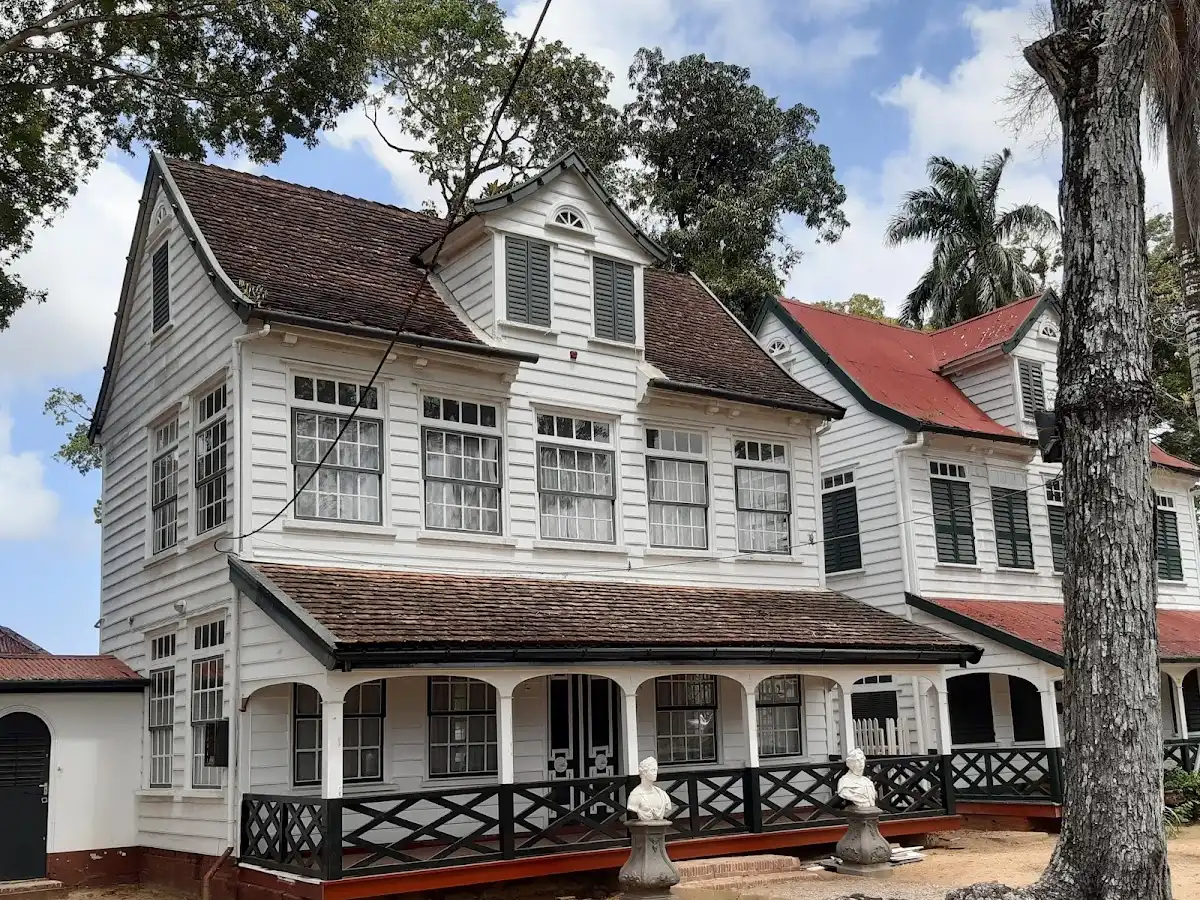
5 to 8 landmarks in total on a typical stay. Suriname is slow to move around, with heat, rain and long river hops, so more than one major excursion per day gets exhausting. That count lets you cover the colonial city, a plantation district and one deep forest or Maroon area without rushing.
Prioritizing by style: If money is tight, put the weight on
Paramaribo and Commewijne, where you can walk, cycle or use local buses and see the layered cultural history for very little. Culture-focused travelers should add a
Maroon village visit, which gives a real sense of living tradition, with drumming, woodcarving and cassava processing. Nature-minded travelers should save for one
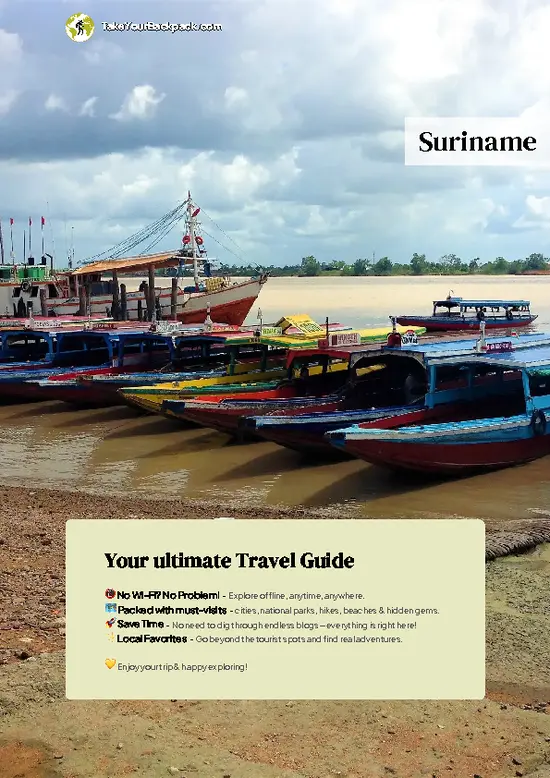
interior stay, where the reward is a dugout canoe ride through brown river water, loud with insects …
read more 👉 How many to see: Plan on 5 to 8 landmarks in total on a typical stay. Suriname is slow to move around, with heat, rain and long river hops, so more than one major excursion per day gets exhausting. That count lets you cover the colonial city, a plantation district and one deep forest or Maroon area without rushing.
Prioritizing by style: If money is tight, put the weight on Paramaribo and Commewijne, where you can walk, cycle or use local buses and see the layered cultural history for very little. Culture-focused travelers should add a Maroon village visit, which gives a real sense of living tradition, with drumming, woodcarving and cassava processing. Nature-minded travelers should save for one interior stay, where the reward is a dugout canoe ride through brown river water, loud with insects and birds, to granite outcrops and rapids.
Costs: A frugal budget runs about US$35 to 60 a day in and around the capital, covering a simple guesthouse, local meals and a few entry fees. Many city sites are free or cost under US$5 to 10, and a taxi or private driver for a day on the coast runs roughly US$60 to 100. Interior trips cost more: expect US$100 to 200 a day per person on organized packages including boat, guide, food and lodging, while flights to remote airstrips add about US$100 to 250 return. Carry cash in euros or US dollars, plus local Surinamese dollars, as machines can be unreliable.
Safety and etiquette: The capital is generally relaxed by day, but take taxis after dark and keep valuables out of sight. In the interior, the danger is more practical: strong sun, dehydration, insects and sudden rain. Bring repellent, rain gear, water purification and a dry bag, and consider malaria prevention and yellow fever vaccination, which is required. Respect is central in Maroon and Indigenous areas. Arrange visits through a local guide or village captain, ask before photographing people or ceremonies, and dress modestly in mosques, temples and the synagogue. Never take sacred objects or enter ritual spaces uninvited. Doing it properly gets you a warm welcome and a much deeper experience.


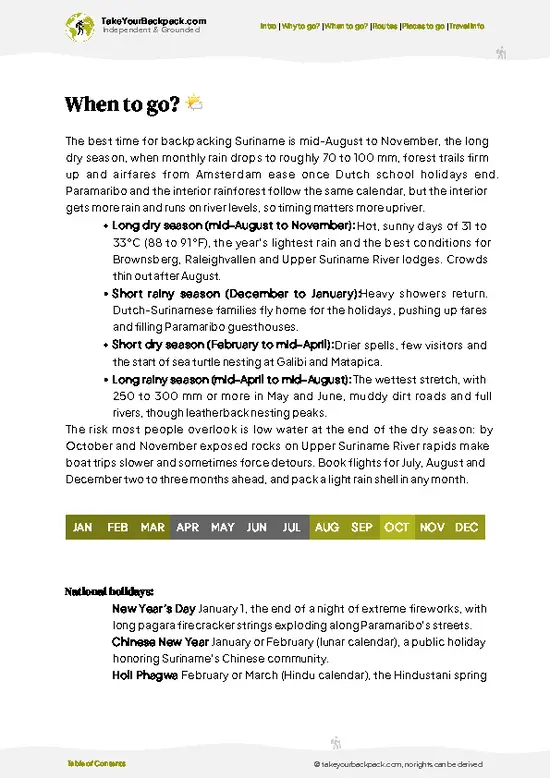
 Best Backpacking
 Hi, I’m Johan (Netherlands 🇳🇱), the creator of TakeYourBackpack. Over the past 3 decades, I’ve backpacked through 90+ countries across six continents, gaining extensive experience with independent travel, long-term trips, and overland routes.