×

Switzerland🇨🇭 | regionsSwiss Alps Jungfrau-AletschAletsch Glacier, UNESCO landscape, high-altitude viewpoints, ice fields | things to do and best time to go

Explore Swiss AlpsExplore Ticino

Backpacking in Swiss Alps Jungfrau-Aletsch
UNESCO World Heritage site
🏆 Top pickregion ranked #2
By Johan Kruseman 🇳🇱 | Updated October 15, 2026

Most people only realize on day three that in Jungfrau-Aletsch you can game the system with early trains and late-afternoon hikes: same world-class views, half the crowds, and you quietly dodge the worst ticket prices by chaining regional passes and free cable-car windows. This region sits in the Bernese Oberland in central Switzerland, roughly between Interlaken and the big glacier basin around the Aletsch. For backpackers, it’s outrageous scenery and very controlled chaos: car-free villages like Mürren and Wengen feel almost too perfect, while Lauterbrunnen is hostel-central and a bit of a circus in high season. It’s expensive, but the density of trails, via ferrata, and viewpoints means every day feels “full value.” Trains and lifts connect everything smoothly, just not cheaply. Compared with, say, Engelberg or the less-famous Valais valleys, Jungfrau-Aletsch is more polished, more international, less “local,” but still worth it if you lean into the mountain playground vibe.

Discover everything you want to know in the 📖 Switzerland Travel Guide.


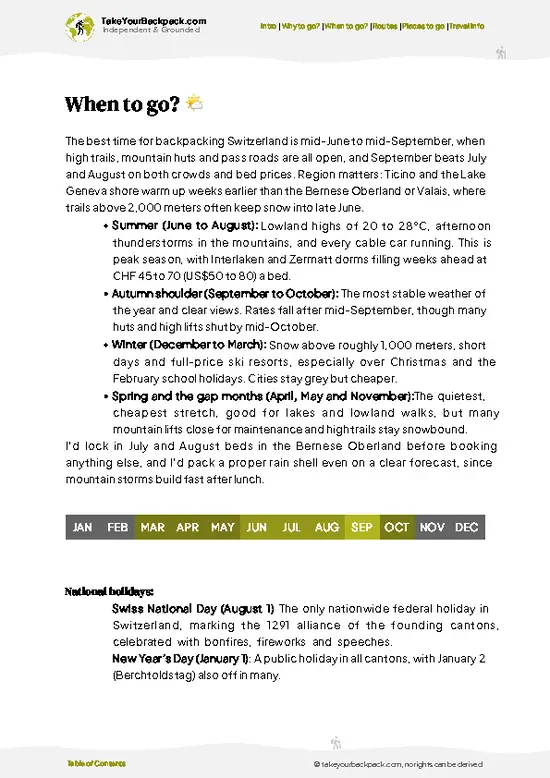
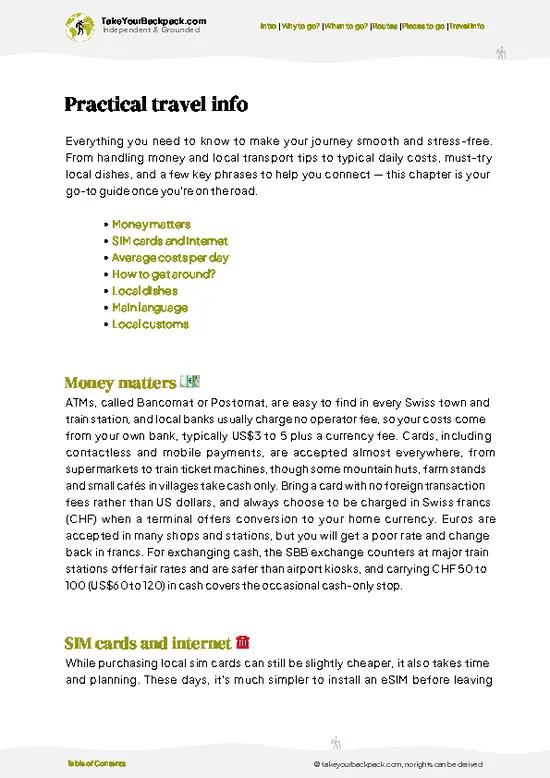
example page 0 from our offline Travel Guide for Switzerland
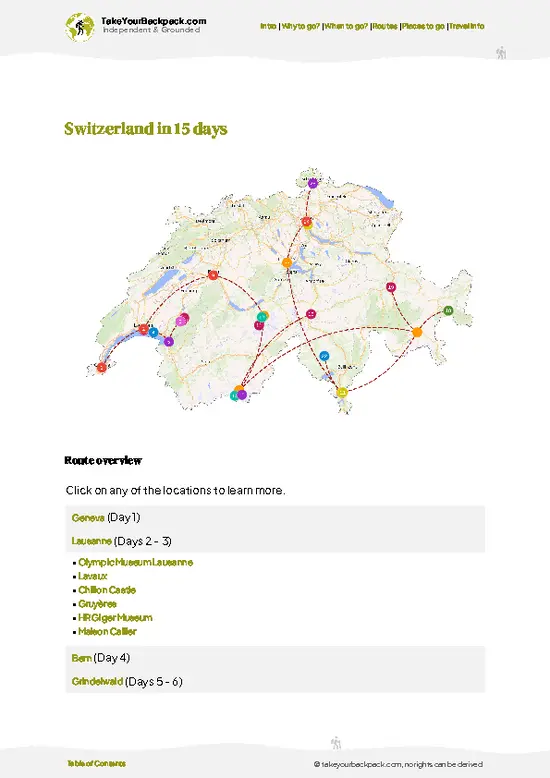
example page 1 from our offline Travel Guide for Switzerland
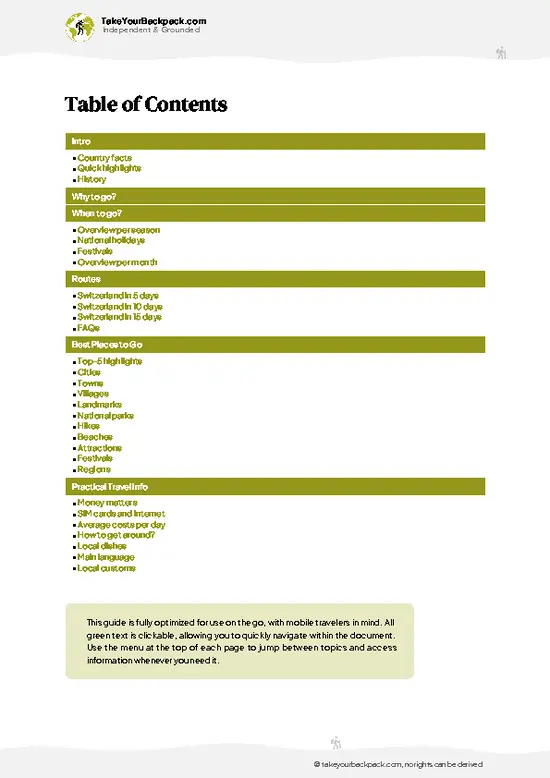
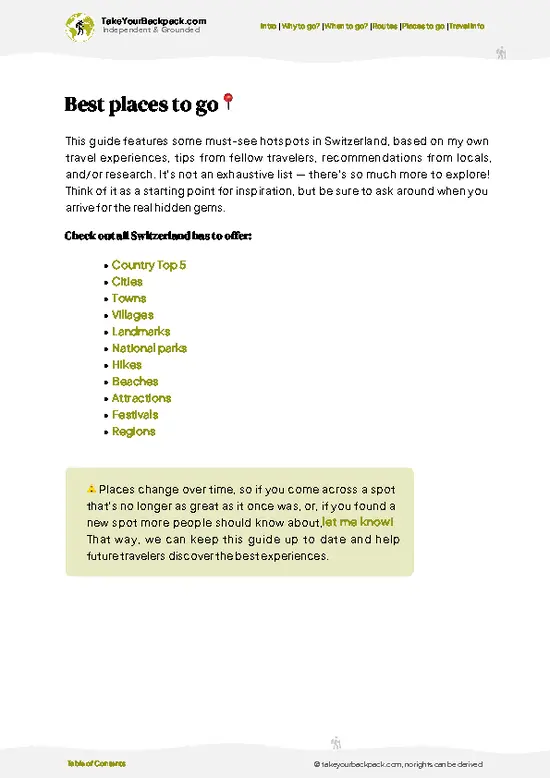
example page 2 from our offline Travel Guide for Switzerland
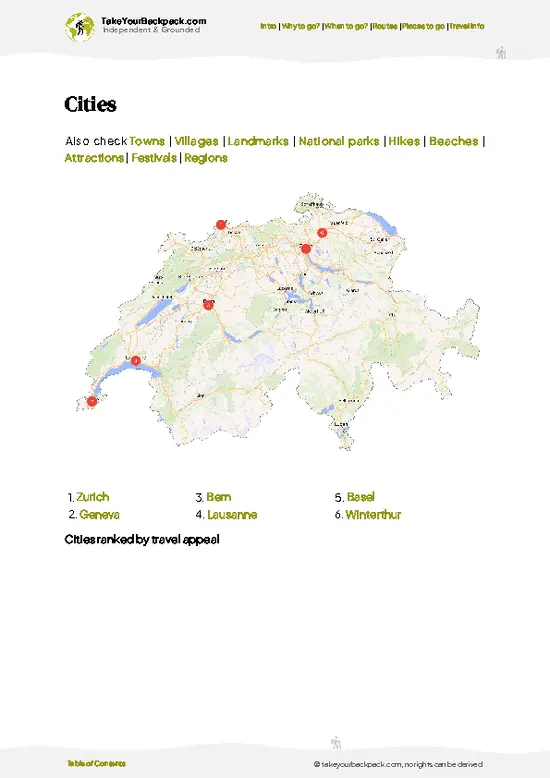
example page 3 from our offline Travel Guide for Switzerland
example page 4 from our offline Travel Guide for Switzerland
example page 5 from our offline Travel Guide for Switzerland
example page 6 from our offline Travel Guide for Switzerland
example page 7 from our offline Travel Guide for Switzerland
Loading the map 🌍
CLICK TO FILTER
cities
towns
villages
landmarks
national parks
hikes
beaches
attractions
festivals
regions
SHOW COUNTRY’S BESTSHOW ALL

✨ Why go?
Ranked #2 region in Switzerland
What makes it a must-see region

In the Swiss Alps Jungfrau-Aletsch, backpackers find a playground that balances time, money, and comfort like a pro. You can dive into a variety of landscapes without the hassle of constant relocation. Picture this: one day you’re hiking through lush valleys, and the next, you’re gazing at towering glaciers. It’s a feast for the senses, and you don’t have to pack up every night.

Transport here is a breeze. The flexible public transport system means you can hop on a train or bus and be whisked away to your next adventure without breaking the bank. Plus, the scenic routes are experiences in themselves—think jaw-dropping views from your window.

What’s more, this region lets you mix nature and culture seamlessly. Spend a morning hiking, then stroll through charming villages in the afternoon. … read more 👉
In the Swiss Alps Jungfrau-Aletsch, backpackers find a playground that balances time, money, and comfort like a pro. You can dive into a variety of landscapes without the hassle of constant relocation. Picture this: one day you’re hiking through lush valleys, and the next, you’re gazing at towering glaciers. It’s a feast for the senses, and you don’t have to pack up every night.

Transport here is a breeze. The flexible public transport system means you can hop on a train or bus and be whisked away to your next adventure without breaking the bank. Plus, the scenic routes are experiences in themselves—think jaw-dropping views from your window.

What’s more, this region lets you mix nature and culture seamlessly. Spend a morning hiking, then stroll through charming villages in the afternoon. You can savor local cheeses and wines, all while soaking in the alpine atmosphere. This blend of slow travel allows you to truly connect with the landscape and its people. It’s not just about ticking boxes; it’s about savoring every moment.

💡 HighlightsTop highlights of Swiss Alps Jungfrau-Aletsch

  1. Eggishorn viewpoint (Aletsch Panorama) — A short walk from the cable car summit gives you a sweeping, almost impossible-to-forget view down the entire Aletsch Glacier and the surrounding peaks; this is where the scale of Europe’s largest glacier really hits home and the geology/ice-formation lines are unmistakable.
  2. Aletsch Forest (Aletschwald) on Riederalp/Bettmeralp — Ancient stone pines clinging to steep slopes above the glacier, a quiet network of trails and boardwalks; fewer day-trippers make the time for this cool, aromatic forest, so you get solitude plus real insight into high-altitude ecology.
  3. Gimmelwald village — Tiny, car-free, and stubbornly local: shepherds, seasonal alpine huts and terraces, a handful of guesthouses. It’s the authentic valley-life antidote to the polished
… read more 👉
  1. Eggishorn viewpoint (Aletsch Panorama) — A short walk from the cable car summit gives you a sweeping, almost impossible-to-forget view down the entire Aletsch Glacier and the surrounding peaks; this is where the scale of Europe’s largest glacier really hits home and the geology/ice-formation lines are unmistakable.
  2. Aletsch Forest (Aletschwald) on Riederalp/Bettmeralp — Ancient stone pines clinging to steep slopes above the glacier, a quiet network of trails and boardwalks; fewer day-trippers make the time for this cool, aromatic forest, so you get solitude plus real insight into high-altitude ecology.
  3. Gimmelwald village — Tiny, car-free, and stubbornly local: shepherds, seasonal alpine huts and terraces, a handful of guesthouses. It’s the authentic valley-life antidote to the polished mountain towns and a great base for unhurried walks to the Schilthorn/Mürren area.
  4. Trümmelbach Falls — Ten glacial waterfalls roaring through a narrow rock gorge inside the mountain in the heart of Lauterbrunnen Valley; you’re literally walking along dramatic, chiseled channels carved by meltwater — a geological and sensory show you don’t see everywhere.
  5. Eiger Trail & Eigergletscher area — A walk literally beneath the infamous Eiger North Face where mountaineering history is written in rock and scars; the trail gives close-up perspective on climbing routes and raw alpine geology that you can’t replicate outside this massif.
  6. Bachalpsee (Grindelwald First hike) — A small, mirror-like alpine lake that reflects the peaks; the hike to it is classic Bernese Oberland terrain — accessible but very alpine-looking — and the light on the lake in early morning or late afternoon is uniquely photogenic.
  7. Isenfluh hamlet and terraces (hidden gem) — A quiet, barely-touristed escarpment above Lauterbrunnen with old stone terraces, local farms and short connecting hikes; perfect for seeing traditional alpine land use and enjoying valley views without the crowds.
  8. Bettmeralp village and the Aletsch Panorama Trail — Car-free village perched above the glacier offering step-off access to long ridge walks, alpine pastures and seasonal cheese-making in mountain huts; it’s a great spot to experience transhumance culture against a glacial backdrop.
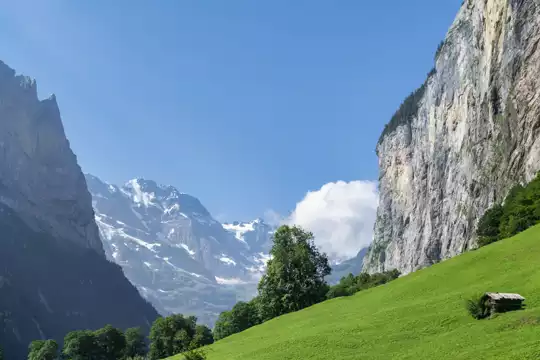
  9. Lauterbrunnen Valley floor and Staubbach Falls — The valley’s dramatic cliffs studded with cascades and tiny farming hamlets are uniquely concentrated here; walking the valley floor gives a compact lesson in how water, rock and village life co-exist in the high Alps.
  10. Märjelensee & Konkordiaplatz viewpoints — The quieter, high-glacier viewing spots where smaller ice streams meet to feed the Aletsch; the lakes and moraine scenery around these viewpoints feel remote and raw — an up-close lesson in glacial processes and seasonal melt patterns most visitors miss.
Spotted a mistake or missing something? Contact us.

Things to do around Swiss Alps Jungfrau-Aletsch

Ratings based on Tripadvisor reviews. When you book through this link, you support our work at no extra cost to you.

⌛️ 5 daysA smart one-week plan

Day 1: Interlaken
You’re diving into the heart of the Swiss Alps here. Interlaken is your launchpad, perfectly situated between Lake Thun and Lake Brienz. The train station is a hub, connecting you to the Jungfrau region and beyond. Spend your first day acclimatizing, wandering the charming streets, and soaking in the views. Grab a local cheese sandwich from a bakery and enjoy it by the lakeside. This sets the tone for your adventure—easy, scenic, and delicious.

Day 2: Grindelwald
Take the train to Grindelwald, a mere 30 minutes away. This village is the gateway to some of the most iconic hikes. The Eiger’s north face looms large, and the trails here are well-marked. Spend your day hiking to the First Cliff Walk for a thrilling view. The transport is seamless; you can hop on a gondola to … read more 👉
Day 1: Interlaken
You’re diving into the heart of the Swiss Alps here. Interlaken is your launchpad, perfectly situated between Lake Thun and Lake Brienz. The train station is a hub, connecting you to the Jungfrau region and beyond. Spend your first day acclimatizing, wandering the charming streets, and soaking in the views. Grab a local cheese sandwich from a bakery and enjoy it by the lakeside. This sets the tone for your adventure—easy, scenic, and delicious.

Day 2: Grindelwald
Take the train to Grindelwald, a mere 30 minutes away. This village is the gateway to some of the most iconic hikes. The Eiger’s north face looms large, and the trails here are well-marked. Spend your day hiking to the First Cliff Walk for a thrilling view. The transport is seamless; you can hop on a gondola to save time and energy. This is where you start to feel the pulse of the Alps.

Day 3: Lauterbrunnen
A quick train ride brings you to Lauterbrunnen, known for its stunning waterfalls. The valley is a postcard come to life. Spend the day exploring the falls and consider a detour to Mürren, a car-free village perched on a cliff. The views are jaw-dropping, and the tranquility is a refreshing break. This off-path reward is worth the extra time, offering a slice of local life.

Day 4: Jungfraujoch
Now for the big ticket: Jungfraujoch, the “Top of Europe.” The train ride is long but spectacular, winding through breathtaking landscapes. This day is all about the experience—take your time at the observatory and enjoy the ice palace. It’s a splurge, but the memories are priceless.

Day 5: Wengen
Wrap up your trip in Wengen, accessible via a short train ride from Lauterbrunnen. This car-free village is a perfect spot to unwind. Enjoy a leisurely hike or simply relax with a view of the mountains.

The must-do day? Day 4 at Jungfraujoch. It’s the pinnacle of your trip, offering a blend of adventure and awe that defines the Swiss Alps experience.

🌤️ When to go?Weather, crowds, and seasonal trade-offs

  • Weather: The Swiss Alps Jungfrau-Aletsch region swings between crisp summers and snowy winters. From June to September, expect mild temperatures perfect for hiking, usually 15-25°C (59-77°F). Winters, from December to March, plunge to -10 to 0°C (14-32°F), ideal for skiing but tough for backpackers.
  • Daylight Hours: Summer days stretch long—up to 16 hours of light in July—giving you plenty of time to explore. Winter days shrink to about 8 hours, squeezing your outdoor adventures into a tighter window.
  • Crowds: Peak summer (July-August) and winter holidays pack the trails and resorts. Shoulder seasons like late May or early October offer quieter paths and a more local vibe, but some lifts and huts may close.
  • Seasonal Activities: Summer is all about hiking, glacier trekking, and alpine flora.
… read more 👉
  • Weather: The Swiss Alps Jungfrau-Aletsch region swings between crisp summers and snowy winters. From June to September, expect mild temperatures perfect for hiking, usually 15-25°C (59-77°F). Winters, from December to March, plunge to -10 to 0°C (14-32°F), ideal for skiing but tough for backpackers.
  • Daylight Hours: Summer days stretch long—up to 16 hours of light in July—giving you plenty of time to explore. Winter days shrink to about 8 hours, squeezing your outdoor adventures into a tighter window.
  • Crowds: Peak summer (July-August) and winter holidays pack the trails and resorts. Shoulder seasons like late May or early October offer quieter paths and a more local vibe, but some lifts and huts may close.
  • Seasonal Activities: Summer is all about hiking, glacier trekking, and alpine flora. Winter flips the script to skiing and snowboarding. Spring and fall bring fewer tourists but limited access to high trails due to snow or early closures.
  • Price Fluctuations: Expect prices to spike during peak summer and winter holidays. Booking in shoulder seasons can save you a bundle on accommodation and transport, plus you dodge the tourist surcharge on mountain passes.
Pro-tip: Aim for late June or early September—weather’s still solid, crowds thin, and you snag the best balance of access, price, and peace.


source: climatestotravel.comJANJanuary: fair for travelingFEBFebruary: fair for travelingMARMarch: fair for travelingAPRApril: good for travelingMAYMay: highly recommended for travelingJUNJune: excellent for travelingJULJuly: highly recommended for travelingAUGAugust: highly recommended for travelingSEPSeptember: excellent for travelingOCTOctober: highly recommended for travelingNOVNovember: fair for travelingDECDecember: fair for traveling
switzerland-region-swiss-alps-jungfrau-aletsch
© Google | Tobias Wirsig

✈️ The backpacker research shortcutSwitzerland Travel Guide

An offline-friendly backpacking guide with optimized travel routes, ranked highlights, transport advice, and the best areas to stay.
example page 0 from our offline Travel Guide for Switzerland
example page 1 from our offline Travel Guide for Switzerland
example page 2 from our offline Travel Guide for Switzerland
example page 3 from our offline Travel Guide for Switzerland
example page 4 from our offline Travel Guide for Switzerland
example page 5 from our offline Travel Guide for Switzerland
example page 6 from our offline Travel Guide for Switzerland
example page 7 from our offline Travel Guide for Switzerland
The digital guide (432 pages) contains:
✅ 117 highlights, ranked by travel appeal
✅ Optimized 5, 10 & 15-day travel routes
✅ Cities, national parks, landmarks, beaches
✅ How to get around
✅ Offline-friendly for travel without Wi-Fi
👉 Click to see all 30+ guide features

📅 Plan smarter in minutes, not weeks
✅ Month by month travel advice
✅ Festivals & national holidays
✅ Budget expectations

🗺️ Go to the right places, skip the overrated ones
✅ Honest pros & cons of destinations
✅ Top hikes, parks & viewpoints
✅ Lesser-known places most travelers miss
✅ Clear “worth it vs skip it” guidance

🛏️ Travel smoothly without rookie mistakes
✅ Best areas to stay
✅ Transport systems explained simply
✅ Common scams & safety advice
✅ SIM cards, money & practical tips

🌍 Understand the country, not just visit it
✅ Culture & traditions
✅ 52 Essential phrases & customs
✅ Festivals worth planning around
✅ Traveler-friendly historical context
✅ Insights that make places more meaningful

📱 Built for real travel conditions
✅ Fully downloadable PDF
✅ Works completely offline
✅ Optimized for phone use
✅ Useful in remote areas & buses
✅ Everything in one place
Stop searching, start planning
Get instant access to your full guide. 30‑day money-back guarantee.
+ Add another guide for just

By proceeding you agree to our terms.
Sent to your inbox immediately after payment • 100% Secure Checkout
Best Backpacking Travel Advisor 2025 tourism awardBest Backpacking
Travel Advisor
2025
What others say about Take Your Backpack Guides:
⭐⭐⭐⭐⭐
Fantastic, amazing amount of information!
⭐⭐⭐⭐⭐
My goodness this is amazing, it's what I've been looking for hats off too you!
⭐⭐⭐⭐⭐
I think this is absolutely BRILLIANT
⭐⭐⭐⭐
Very complete and informative. It's still missing places, but I gotta to commend you
⭐⭐⭐⭐⭐
This is truly amazing, thank you, can't wait to explore it with my kids!
⭐⭐⭐⭐⭐
Awesome resource, thank you!
⭐⭐⭐⭐⭐
This is amazing! Can't wait to explore the ones I haven't seen
⭐⭐⭐⭐
I love this! Well done, great idea.
⭐⭐⭐⭐⭐
Thanks for taking the time to make this gem!
⭐⭐⭐⭐⭐
This might be the best website I've ever seen.
⭐⭐⭐⭐⭐
Congratulations, and thank you so much for your work; it's incredibly valuable.
⭐⭐⭐⭐
In all seriousness I think you did a great job pointing out the important spots
⭐⭐⭐⭐⭐
10/10 very good
⭐⭐⭐⭐⭐
As someone who's only just starting to visit regularly this is awesome, thank you.
⭐⭐⭐⭐
Thank you very much! I'm going to visit my dad, it's going to be very useful!
⭐⭐⭐⭐⭐
This is really cool! We'll be travelling for the first time and this definitely come in handy.
⭐⭐⭐⭐⭐
You are now our minister of culture, congratulations 👨‍💼
⭐⭐⭐⭐⭐
Just wanted to tell you that this is a pearl! Going to follow your recommendations.
⭐⭐⭐⭐⭐
This is so cool. I'll definitely be using the resource for my travels soon.
⭐⭐⭐⭐⭐
This is very impressive! Good work.
⭐⭐⭐⭐⭐
This is an amazing and informative site. Very well done!

🛏️ Where to stay?Where staying makes the most sense

When you’re diving into the Swiss Alps Jungfrau-Aletsch region, your choice of where to stay can make or break your experience. Let’s break down the best spots for backpackers, where safety, social vibes, and budget-friendliness reign supreme.

First up, Interlaken. This town is the backpacker’s playground. It’s buzzing with energy, thanks to its adventure sports scene. You’ll find fellow travelers in every café, swapping stories over a coffee. Plus, it’s a transport hub, making it easy to hop on trains to nearby hikes or attractions.

Next, consider Grindelwald. It’s a bit quieter but offers … read more 👉
When you’re diving into the Swiss Alps Jungfrau-Aletsch region, your choice of where to stay can make or break your experience. Let’s break down the best spots for backpackers, where safety, social vibes, and budget-friendliness reign supreme.

First up, Interlaken. This town is the backpacker’s playground. It’s buzzing with energy, thanks to its adventure sports scene. You’ll find fellow travelers in every café, swapping stories over a coffee. Plus, it’s a transport hub, making it easy to hop on trains to nearby hikes or attractions.

Next, consider Grindelwald. It’s a bit quieter but offers jaw-dropping views and access to stunning trails. The charm here is palpable, and you’ll feel like you’re in a postcard. It’s a great base for solo travelers looking to connect with nature and fellow hikers.

Then there’s Lauterbrunnen. This village is a slice of paradise, with waterfalls cascading down cliffs. It’s safe and small, perfect for those wanting a cozy atmosphere. You can easily meet others on the trails or in local eateries.

Each of these spots offers a unique flavor of the Alps, so weigh your priorities: time spent traveling, money saved, or comfort found. Choose wisely, and you’ll unlock the region’s true magic.

🚌 Getting aroundTransportation options and practical tips

The Swiss Alps Jungfrau-Aletsch region is a symphony of nature and movement, where the rhythm of the mountains dictates the flow of travel. Here, you’ll find a delightful blend of punctuality and spontaneity. Trains glide through valleys like clockwork, while cable cars whisk you up to dizzying heights, inviting you to embrace the chaos of adventure. It’s a place where you can plan your day down to the minute or let the winds guide you to an impromptu hike. The choice is yours, but knowing your transport options will help you navigate this stunning landscape like a local.
  • Train: The backbone of travel here. Trains run frequently from Interlaken to Grindelwald and Lauterbrunnen, with first departures around 5:30 AM and the last ones around 11 PM. Prices range from CHF 10 to CHF 30, depending
… read more 👉
The Swiss Alps Jungfrau-Aletsch region is a symphony of nature and movement, where the rhythm of the mountains dictates the flow of travel. Here, you’ll find a delightful blend of punctuality and spontaneity. Trains glide through valleys like clockwork, while cable cars whisk you up to dizzying heights, inviting you to embrace the chaos of adventure. It’s a place where you can plan your day down to the minute or let the winds guide you to an impromptu hike. The choice is yours, but knowing your transport options will help you navigate this stunning landscape like a local.
  • Train: The backbone of travel here. Trains run frequently from Interlaken to Grindelwald and Lauterbrunnen, with first departures around 5:30 AM and the last ones around 11 PM. Prices range from CHF 10 to CHF 30, depending on your destination. The ride is smooth, and the views are jaw-dropping, making it a comfortable choice.
  • Cable Car: Essential for reaching those breathtaking mountain peaks. The Firstbahn cable car from Grindelwald to First operates from 8:00 AM to 5:00 PM, with tickets costing around CHF 30 for a round trip. It’s a quick ascent that offers panoramic views, but be prepared for some crowds during peak hours.
  • PostBus: This is your ticket to the more remote corners of the region. Buses connect villages like Mürren and Wengen with the main hubs. They run from about 6:00 AM to 8:00 PM, with fares typically around CHF 10 to CHF 20. While not as fast as trains, they offer a scenic ride through charming alpine landscapes.
  • Bike Rentals: For the adventurous spirit, renting a bike can be a game-changer. Prices start at CHF 30 for a full day. You can pedal along designated trails, feeling the fresh mountain air on your face. Just be mindful of the steep climbs!
  • Hiking: Yes, it’s free! The best way to explore the region is on foot. Trails are well-marked and range from easy strolls to challenging hikes. Just remember to check the weather and pack accordingly.

For a tactical tip: invest in a Swiss Travel Pass if you plan to hop between towns and attractions. It covers most trains, buses, and even some cable cars, saving you both time and money. Plus, it allows for spontaneous detours without the stress of buying individual tickets. Embrace the flow of the Alps, and let the journey unfold!

🍲 FoodEating & Drinking in Swiss Alps Jungfrau-Aletsch

In the Swiss Alps Jungfrau-Aletsch, food is as much about the experience as it is about the flavors. You can’t miss Rösti, a crispy potato dish that’s a breakfast staple. Picture this: golden, buttery shreds of potato, perfectly fried, often topped with cheese or served alongside sausages. Pair it with a local cheese, like Emmental or Appenzeller, and you’re in for a treat.

For a true taste of the region, seek out mountain huts where you can enjoy Älplermagronen—a hearty mix of pasta, potatoes, cream, and cheese, often served with applesauce. It’s comfort food that warms you up after a day on the trails.

When it comes to drinks, don’t skip the local wines or a glass of Eau de Vie, a potent fruit brandy that packs a punch. You’ll find cozy cafés in small villages, where you can sip hot chocolate … read more 👉
In the Swiss Alps Jungfrau-Aletsch, food is as much about the experience as it is about the flavors. You can’t miss Rösti, a crispy potato dish that’s a breakfast staple. Picture this: golden, buttery shreds of potato, perfectly fried, often topped with cheese or served alongside sausages. Pair it with a local cheese, like Emmental or Appenzeller, and you’re in for a treat.

For a true taste of the region, seek out mountain huts where you can enjoy Älplermagronen—a hearty mix of pasta, potatoes, cream, and cheese, often served with applesauce. It’s comfort food that warms you up after a day on the trails.

When it comes to drinks, don’t skip the local wines or a glass of Eau de Vie, a potent fruit brandy that packs a punch. You’ll find cozy cafés in small villages, where you can sip hot chocolate made from real Swiss chocolate, thick and rich, while chatting with locals.

Dining here is relaxed. Don’t be surprised if you share a table with fellow hikers. It’s common to greet others and share stories. Just remember: in Switzerland, it’s polite to say “Guten Appetit” before digging in. Embrace the communal vibe, and you’ll feel like you belong.

FAQFrequently asked questions about Swiss Alps Jungfrau-Aletsch

3 to 5 days are ideal to explore the Swiss Alps Jungfrau-Aletsch region thoroughly. This allows time for hiking, visiting key spots like Jungfraujoch and Aletsch Glacier, and enjoying local villages. Longer stays enable more extensive trekking or winter sports.
You can get around the Swiss Alps Jungfrau-Aletsch without a car using the extensive public transport network. Trains and buses connect major towns like Interlaken, Grindelwald, and Lauterbrunnen, with mountain railways and cable cars providing access to high-altitude trails. The Swiss Travel Pass offers unlimited travel on these services for a fixed price.
The Swiss Alps Jungfrau-Aletsch is known for its dramatic alpine scenery, including the Jungfrau peak and the Aletsch Glacier, the largest glacier in the Alps. It is a UNESCO World Heritage site famous for hiking, skiing, and panoramic views. The region also features charming alpine villages and diverse wildlife.
⚠️ Things can change over time, so always validate details locally before you go.

Other Swiss regions near Swiss Alps Jungfrau-Aletsch

Explore more nearby:

  • Jungfrau Region—glacier valleys, cog railways, iconic peaks| 14 km away
  • Lauterbrunnen Valley—waterfalls, cliffside hamlets, alpine pastures| 16 km away
  • Emmental—rolling hills, dairy farms, timber houses, cheese dairies| 49 km away

💡 Not sure where to go next?
Create a personalized itinerary for Switzerland including Swiss Alps Jungfrau-Aletsch and the places that fit your trip.

Generate my itinerary

👉 Discover all regions

Or checkout all Switzerland has to offer (think cities, towns, villages, national parks, hikes, beaches, festivals)
Country photo of Switzerland

We 💚 feedbackKey takeaways before you go

The Swiss Alps Jungfrau-Aletsch is a playground for the senses. Imagine standing on a glacier, the crisp air filling your lungs, and the mountains towering around you—it’s pure magic. But here’s the catch: it can get pricey, especially if you’re eyeing those scenic train rides. Plan ahead, and you can snag deals, but be ready to balance your budget with those jaw-dropping views. It’s all about finding that sweet spot.

✈️ When did I visit Switzerland?
Being so close to my home country, and me loving mountains, I have visited Switzerland many times in my childhood during summer holidays for hiking in the Alps. One of the most beautiful countries in the world, though expensive.

✍️ Help improve this page!
The information on this page is based on my own backpacking experience in Switzerland, supplemented with up-to-date research and feedback from other travelers. Travel details can change, so if you notice anything outdated or incomplete, feel free to let me know.


🙋‍♂️ Give feedback

👋 Meet the founderWho’s Behind Take Your Backpack?

Johan, backpacker and founder of TakeYourBackpackHi, I’m Johan (Netherlands 🇳🇱), the creator of TakeYourBackpack. Over the past 3 decades, I’ve backpacked through 90+ countries across six continents, gaining extensive experience with independent travel, long-term trips, and overland routes.

This site is built on a combination of firsthand travel experience and carefully curated insights from other backpackers. Many guides are based on places I’ve personally visited, while others bring together tips, observations, and practical advice shared by trusted travelers I’ve met along the way.

The goal is to provide realistic, experience-driven guidance — not generic itineraries — so you can explore destinations with better context, clearer expectations, and more confidence.