×

Switzerland🇨🇭 | regionsSwiss Alpsglacier valleys, high peaks, alpine huts, rugged trails | things to do and best time to go

Explore St. Peter’s IslandExplore Swiss Alps Jungfrau-Aletsch

Backpacking in Swiss Alps
🏆 Top pickregion ranked #1
By Johan Kruseman 🇳🇱 | Updated June 1, 2026

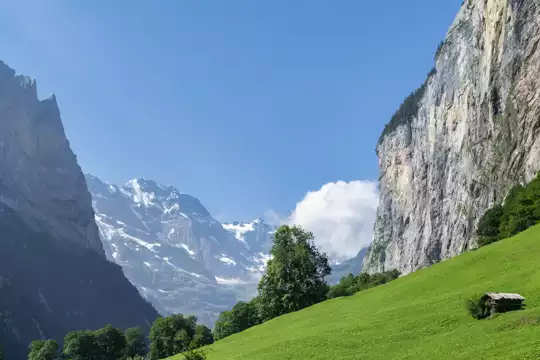
Everyone thinks the Swiss Alps are just luxury chalets, fondue, and people in €800 ski jackets. The real plot twist: it’s also one of Europe’s best playgrounds for dirtbag backpackers who are willing to trade comfort for access. The Alps stretch like a spine across southern Switzerland, from the French border near Geneva through Valais and Bernese Oberland to the Italian border in Ticino and the eastern Graubünden peaks. You get outrageous scenery, tight little valleys, and towns like Lauterbrunnen, Grindelwald, Zermatt, Interlaken, and Chur that feel built for trail-hopping. Trains and cable cars are insanely efficient but brutally expensive; hiking between villages is cheap and slow and often way more satisfying. Compared with, say, Lucerne’s lakes or Zurich’s city buzz, the Alps are purer nature, more postcard, and more tour-bus heavy. It’s magical, but you’ll work to find the quiet, authentic corners—and they’re worth the hunt.

Discover everything you want to know in the 📖 Switzerland Travel Guide.
Loading the map 🌍
CLICK TO FILTER
cities
towns
villages
landmarks
national parks
hikes
beaches
attractions
festivals
regions
SHOW COUNTRY’S BESTSHOW ALL

✨ Why go?
Ranked #1 region in Switzerland
What makes it a must-see region

The Swiss Alps are a backpacker’s playground, and here’s why savvy travelers flock here. First off, the variety of landscapes is jaw-dropping. You can hike through lush valleys, conquer rocky peaks, and chill by serene lakes—all without needing to pack up and move every few days.

Transport is a breeze. The train system is efficient and scenic, whisking you from one stunning spot to another. You can hop on a train in the morning and be sipping coffee in a mountain village by noon. This flexibility lets you mix nature and culture seamlessly. Spend a morning hiking, then dive into local cheese and chocolate in the afternoon.

Slow travel is the name of the game here. You can linger in a quaint town, soaking in the atmosphere, or take a leisurely stroll along a trail, letting the beauty sink … read more 👉
The Swiss Alps are a backpacker’s playground, and here’s why savvy travelers flock here. First off, the variety of landscapes is jaw-dropping. You can hike through lush valleys, conquer rocky peaks, and chill by serene lakes—all without needing to pack up and move every few days.

Transport is a breeze. The train system is efficient and scenic, whisking you from one stunning spot to another. You can hop on a train in the morning and be sipping coffee in a mountain village by noon. This flexibility lets you mix nature and culture seamlessly. Spend a morning hiking, then dive into local cheese and chocolate in the afternoon.

Slow travel is the name of the game here. You can linger in a quaint town, soaking in the atmosphere, or take a leisurely stroll along a trail, letting the beauty sink in. Each moment feels richer when you’re not rushing.

So, if you’re looking for high-value experiences that blend adventure with relaxation, the Swiss Alps are calling. Embrace the trade-offs of time, money, and comfort, and you’ll find rewards that are truly worth it.
Want to include Swiss Alps in your Switzerland route?
Create a personalized Switzerland itinerary that includes Swiss Alps and the places that fit your trip — based on your travel style, budget, and available time. Get your route in seconds.

Generate my trip

💡 HighlightsThe experiences that define the visit

  1. Riffelsee (Zermatt) — That little alpine lake that gives you the postcard-perfect reflection of the Matterhorn at sunrise. Walkable from the Gornergrat trail, it’s a photographer’s dream but also a quiet, deliberate place to watch light change on one of the Alps’ most dramatic faces.
  2. Eggishorn & Great Aletsch Glacier — The highest view over the largest glacier in the Alps. The Eggishorn ridge gives a jaw-dropping perspective of the Aletsch snout and ice streams; hiking here feels like stepping onto a continental-scale landscape you won’t see anywhere else.
  3. Trümmelbach Falls (Lauterbrunnen) — A set of roaring, glacial waterfalls that run entirely inside a mountain, carved through rock over centuries. You can take the lift and walkways right into the heart of the torrent — an intimate, wet,
read more 👉
  1. Riffelsee (Zermatt) — That little alpine lake that gives you the postcard-perfect reflection of the Matterhorn at sunrise. Walkable from the Gornergrat trail, it’s a photographer’s dream but also a quiet, deliberate place to watch light change on one of the Alps’ most dramatic faces.
  2. Eggishorn & Great Aletsch Glacier — The highest view over the largest glacier in the Alps. The Eggishorn ridge gives a jaw-dropping perspective of the Aletsch snout and ice streams; hiking here feels like stepping onto a continental-scale landscape you won’t see anywhere else.
  3. Trümmelbach Falls (Lauterbrunnen) — A set of roaring, glacial waterfalls that run entirely inside a mountain, carved through rock over centuries. You can take the lift and walkways right into the heart of the torrent — an intimate, wet, and oddly mesmerizing taste of Alpine geology.
  4. Oeschinensee (Kandersteg) — A high-mountain lake ringed by steep cliffs and ridges; turquoise water, rowboats for rent, and a handful of trails that quickly put you above the crowds. It’s alpine serenity with easy access — great for a sunrise hike or a day of paddling and picnicking.
  5. Bisses of Valais (historic irrigation trails) — Hidden gem: centuries-old stone channels that carry mountain water across sunny terraces and through larch forests. Walking a bisse is as much a cultural route as a hike — you’ll pass vineyards, hamlets and old stonework telling local agricultural history few tourists notice.
  6. Swiss National Park (Engadine) — Switzerland’s strictest protected area: no dogs, no camping off-trail, and real wilderness management. The landscape is raw, wildlife-rich (ibex, chamois, marmots) and feels like a rare, purposefully preserved piece of Alpine ecology.
  7. Soglio & the Bregaglia Valley — Hidden gem: a tiny stone village with postcards of mountain terraces and Italian-influenced architecture, sitting beneath granite faces like Piz Badile. It’s slow, beautifully overlooked by climbers’ peaks, and a place where language, food and style shift from Swiss-German to an Alpine-Italian blend.
  8. Schynige Platte (alpine garden & cog railway) — An old-school cog train climb to meadows ablaze with alpine flowers and sweeping views of Eiger-Mönch-Jungfrau. It’s a laid-back alpine classic: short hikes, a heritage railway, and flora you won’t find lower down.
  9. Saas-Fee (car-free glacier village) — A high, car-free village framed by multiple 4,000m peaks and year-round glacier hiking. It’s a village that still feels like mountaineering country — local hut culture, glacier walks, and easy access to high-altitude terrain without big-city kitsch.
  10. Lötschental Valley & Tschäggättä tradition — Hidden gem: a remote Valais valley of traditional wooden houses, high pastures and a surviving winter carnival where locals wear carved masks (Tschäggättä). It’s an authentic pocket of folk culture and seasonal ritual that’s very specific to this part of the Alps.
Spotted a mistake or missing something? Contact us.

Things to do around Swiss Alps

Ratings based on Tripadvisor reviews. When you book through this link, you support our work at no extra cost to you.

⌛️ 5 daysHow to make the most of Swiss Alps

Day 1: Zermatt
The journey kicks off in Zermatt, a car-free village that’s the gateway to the iconic Matterhorn. Arrive early to soak in the atmosphere. The train ride here is part of the experience, winding through stunning valleys. Spend the day exploring the village, and don’t miss the Gornergrat Railway for breathtaking views. This sets the tone for your trip: you’re here for the scenery, not just the destination.

Day 2: Zermatt to Gimmelwald
Leave Zermatt in the morning, taking the train to Lauterbrunnen, then a short bus ride to Gimmelwald. This quaint village is a hidden treasure, perched on a cliff. The transport system is efficient, but timing is key; catch the early train to maximize your day. Spend the afternoon hiking the trails around Gimmelwald. The fresh air and panoramic … read more 👉
Day 1: Zermatt
The journey kicks off in Zermatt, a car-free village that’s the gateway to the iconic Matterhorn. Arrive early to soak in the atmosphere. The train ride here is part of the experience, winding through stunning valleys. Spend the day exploring the village, and don’t miss the Gornergrat Railway for breathtaking views. This sets the tone for your trip: you’re here for the scenery, not just the destination.

Day 2: Zermatt to Gimmelwald
Leave Zermatt in the morning, taking the train to Lauterbrunnen, then a short bus ride to Gimmelwald. This quaint village is a hidden treasure, perched on a cliff. The transport system is efficient, but timing is key; catch the early train to maximize your day. Spend the afternoon hiking the trails around Gimmelwald. The fresh air and panoramic views are worth every step.

Day 3: Gimmelwald to Interlaken
Head to Interlaken next. The train ride is quick, but the scenery is a feast for the eyes. Interlaken is the adventure capital, so embrace the thrill. Try paragliding or take a leisurely boat ride on Lake Thun. The balance of adrenaline and relaxation here is perfect.

Day 4: Interlaken to Grindelwald
A short train ride takes you to Grindelwald, where you can hike to the First Cliff Walk. This is where the ‘high-value’ experiences come into play. The views from the cliff are jaw-dropping, and the hike is manageable for most.

Day 5: Off-Path Reward - Lauterbrunnen
On your way back, take a detour to Lauterbrunnen. The waterfalls here are stunning, and the valley is less crowded. Spend a few hours exploring before heading back to your starting point.

For the must-do day, I recommend Day 2 in Gimmelwald. The combination of stunning hikes, fresh mountain air, and the charm of a less-traveled village makes it the highlight of your Swiss Alps adventure. Embrace the pace of the trains and the rhythm of the mountains; it’s all part of the experience.
Turn your Swiss Alps visit into an Switzerland adventure
Build a complete Switzerland route with Swiss Alps, hidden gems, must-see destinations, and realistic travel times included.

Generate my trip

🌤️ When to go?Seasonal considerations and timing


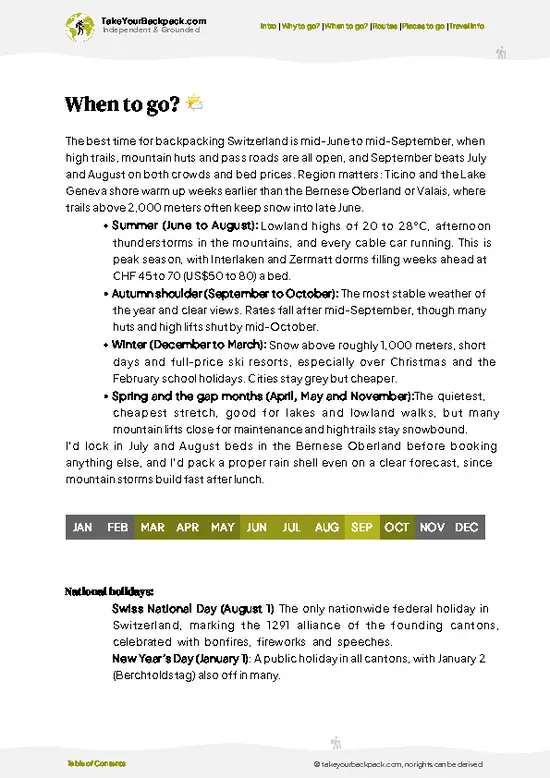
  • Weather: The Swiss Alps swing between crisp winters and mild summers. Winter (December to February) is perfect for snow lovers, with temperatures often dropping below -5°C (23°F). Summer (June to August) warms up to a comfortable 15-25°C (59-77°F), ideal for hiking without the chill.

  • Temperature: Spring and autumn are shoulder seasons, with temps ranging from 5-15°C (41-59°F). These months can be unpredictable—sunny mornings can flip to chilly afternoons—so pack layers.

  • Daylight Hours: Summer days stretch long, up to 16 hours of light, giving you more trail time. Winter days are short, often under 9 hours, which means planning your hikes carefully to avoid being caught out after dark.

  • Crowds: Peak summer and winter holidays pack the trails and resorts. Late spring and early autumn
read more 👉

  • Weather: The Swiss Alps swing between crisp winters and mild summers. Winter (December to February) is perfect for snow lovers, with temperatures often dropping below -5°C (23°F). Summer (June to August) warms up to a comfortable 15-25°C (59-77°F), ideal for hiking without the chill.

  • Temperature: Spring and autumn are shoulder seasons, with temps ranging from 5-15°C (41-59°F). These months can be unpredictable—sunny mornings can flip to chilly afternoons—so pack layers.

  • Daylight Hours: Summer days stretch long, up to 16 hours of light, giving you more trail time. Winter days are short, often under 9 hours, which means planning your hikes carefully to avoid being caught out after dark.

  • Crowds: Peak summer and winter holidays pack the trails and resorts. Late spring and early autumn offer quieter paths and a more local vibe, perfect if you want to dodge the tourist crush.

  • Seasonal Activities: Winter is ski and snowshoe central. Summer flips to hiking, mountain biking, and alpine flower spotting. Spring and autumn bring fewer activities but more solitude and stunning seasonal shifts in the landscape.

  • Price Fluctuations: Expect peak prices in July-August and December-January. Shoulder seasons offer better deals on lodging and transport, making them the sweet spot for budget-conscious backpackers who still want solid weather.


Pro-tip: Aim for late June or early September—weather’s solid, crowds thin, and prices dip. You’ll feel like you’ve hacked the Alps’ secret season.


source: climatestotravel.comJANJanuary: highly recommended for travelingFEBFebruary: highly recommended for travelingMARMarch: fair for travelingAPRApril: good for travelingMAYMay: good for travelingJUNJune: excellent for travelingJULJuly: highly recommended for travelingAUGAugust: highly recommended for travelingSEPSeptember: excellent for travelingOCTOctober: good for travelingNOVNovember: fair for travelingDECDecember: highly recommended for traveling
switzerland-region-swiss-alps
© Google | Gabriel Matis

✈️ The backpacker research shortcutSwitzerland Travel Guide

An offline-friendly backpacking guide with optimized travel routes, ranked highlights, transport advice, and the best areas to stay.
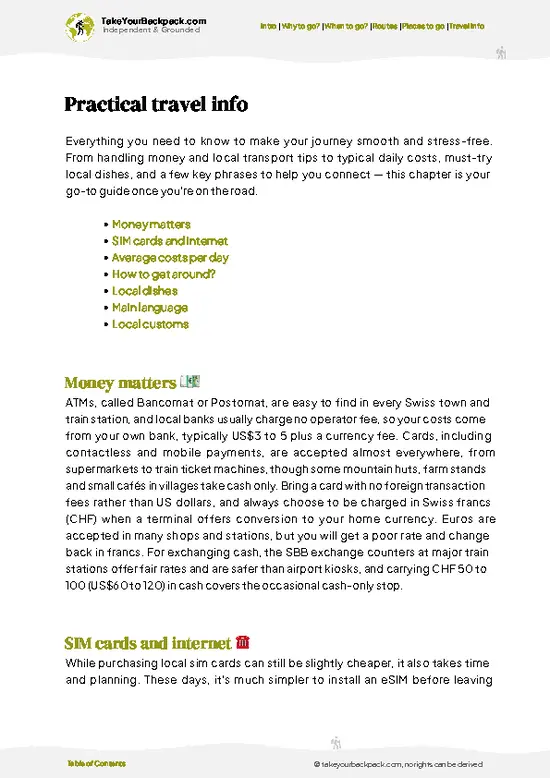
example page 0 from our offline Travel Guide for Switzerland
example page 1 from our offline Travel Guide for Switzerland
example page 2 from our offline Travel Guide for Switzerland
example page 3 from our offline Travel Guide for Switzerland
example page 4 from our offline Travel Guide for Switzerland
example page 5 from our offline Travel Guide for Switzerland
example page 6 from our offline Travel Guide for Switzerland
example page 7 from our offline Travel Guide for Switzerland
The digital guide (449 pages) contains:
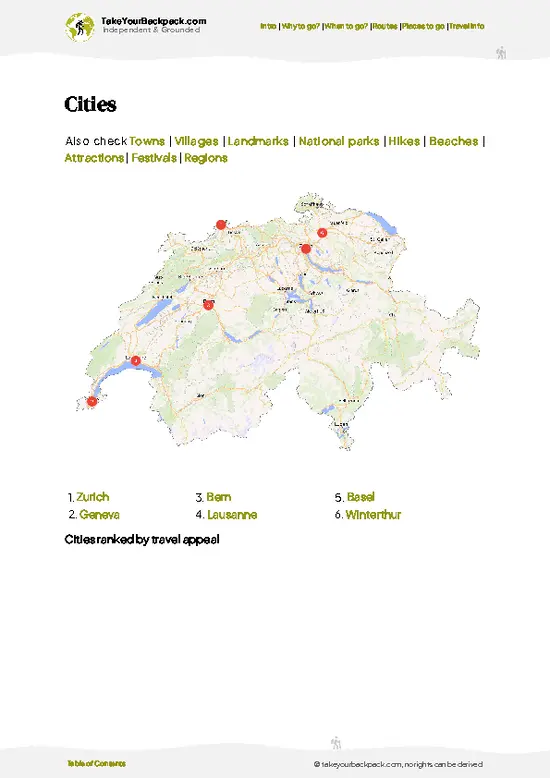
121 highlights, ranked by travel appeal
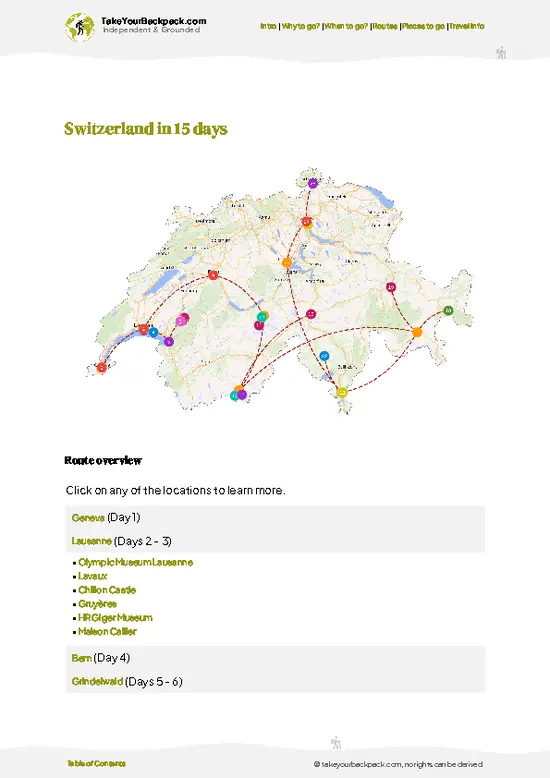
Optimized 5, 10 & 15-day travel routes
Cities, national parks, landmarks, beaches
How to get around
Offline-friendly for travel without Wi-Fi
👉 Click to see all 30+ guide features

📅 Plan smarter in minutes, not weeks
Month by month travel advice
Festivals & national holidays
Budget expectations

🗺️ Go to the right places, skip the overrated ones
Honest pros & cons of destinations
Top hikes, parks & viewpoints
Lesser-known places most travelers miss
Clear “worth it vs skip it” guidance

🛏️ Travel smoothly without rookie mistakes
Best areas to stay
Transport systems explained simply
Common scams & safety advice
SIM cards, money & practical tips

🌍 Understand the country, not just visit it
Culture & traditions
52 Essential phrases & customs
Festivals worth planning around
Traveler-friendly historical context
Insights that make places more meaningful

📱 Built for real travel conditions
Fully downloadable PDF
Works completely offline
Optimized for phone use
Useful in remote areas & buses
Everything in one place
Save weeks of stressful planning
Get instant access to your full guide. 30‑day money-back guarantee.


By proceeding you agree to our terms.
Sent to your inbox immediately after payment • 100% Secure Checkout
Best Backpacking Travel Advisor 2025 tourism awardBest Backpacking
Travel Advisor
2025
What others say about Take Your Backpack Guides:
⭐⭐⭐⭐⭐
Fantastic, amazing amount of information!
⭐⭐⭐⭐⭐
My goodness this is amazing, it's what I've been looking for hats off too you!
⭐⭐⭐⭐⭐
I think this is absolutely BRILLIANT
⭐⭐⭐⭐
Very complete and informative. It's still missing places, but I gotta to commend you
⭐⭐⭐⭐⭐
This is truly amazing, thank you, can't wait to explore it with my kids!
⭐⭐⭐⭐⭐
Awesome resource, thank you!
⭐⭐⭐⭐⭐
This is amazing! Can't wait to explore the ones I haven't seen
⭐⭐⭐⭐
I love this! Well done, great idea.
⭐⭐⭐⭐⭐
Thanks for taking the time to make this gem!
⭐⭐⭐⭐⭐
This might be the best website I've ever seen.
⭐⭐⭐⭐⭐
Congratulations, and thank you so much for your work; it's incredibly valuable.
⭐⭐⭐⭐
In all seriousness I think you did a great job pointing out the important spots
⭐⭐⭐⭐⭐
10/10 very good
⭐⭐⭐⭐⭐
As someone who's only just starting to visit regularly this is awesome, thank you.
⭐⭐⭐⭐
Thank you very much! I'm going to visit my dad, it's going to be very useful!
⭐⭐⭐⭐⭐
This is really cool! We'll be travelling for the first time and this definitely come in handy.
⭐⭐⭐⭐⭐
You are now our minister of culture, congratulations 👨‍💼
⭐⭐⭐⭐⭐
Just wanted to tell you that this is a pearl! Going to follow your recommendations.
⭐⭐⭐⭐⭐
This is so cool. I'll definitely be using the resource for my travels soon.
⭐⭐⭐⭐⭐
This is very impressive! Good work.
⭐⭐⭐⭐⭐
This is an amazing and informative site. Very well done!

🛏️ Where to stay?How to pick the right area

When you’re diving into the Swiss Alps, the right base can make all the difference. Let’s break down some top spots that scream “backpacker-friendly” while keeping your wallet happy.

First up, Interlaken. This place is a magnet for adventurers. You’ll find a vibrant backpacker scene, with plenty of bars and cafes buzzing with fellow travelers. It’s a hub for outdoor activities, from paragliding to hiking, and the views? Absolutely killer. Just be ready to share your space; it can get crowded in peak season.

Next, consider Grindelwald. It’s a bit quieter but offers stunning scenery and direct … read more 👉
When you’re diving into the Swiss Alps, the right base can make all the difference. Let’s break down some top spots that scream “backpacker-friendly” while keeping your wallet happy.

First up, Interlaken. This place is a magnet for adventurers. You’ll find a vibrant backpacker scene, with plenty of bars and cafes buzzing with fellow travelers. It’s a hub for outdoor activities, from paragliding to hiking, and the views? Absolutely killer. Just be ready to share your space; it can get crowded in peak season.

Next, consider Grindelwald. It’s a bit quieter but offers stunning scenery and direct access to some of the best trails. The charm of this village is palpable, and you’ll often bump into fellow hikers. The local vibe is laid-back, making it easy to connect with others.

Then there’s Zermatt. Yes, it’s a bit pricier, but the car-free streets and the iconic Matterhorn make it worth it. You can find budget-friendly eateries and a lively atmosphere, especially in the summer months.

Lastly, Lauterbrunnen is a must. With its breathtaking waterfalls and lush valleys, it’s a postcard come to life. The community is tight-knit, and you’ll find plenty of opportunities to meet fellow travelers while soaking in the natural beauty.

Choose wisely, and you’ll unlock the true essence of the Alps without breaking the bank.

🚌 Getting aroundMoving around without the hassle

The Swiss Alps pulse with a rhythm that’s both structured and spontaneous. Picture this: you’re surrounded by towering peaks, and the air is crisp with the scent of pine. Here, schedules exist, but they’re more like guidelines than hard rules. Trains glide through valleys, while buses weave between villages, each offering a chance to soak in the breathtaking scenery. You can plan your day down to the minute, or you can let the mountains guide you, stopping for a spontaneous cheese fondue when the mood strikes. It’s a place where the journey is as much a part of the experience as the destination itself.


  • Train: The backbone of Swiss transport. Trains run frequently, with the first trains departing around 5:00 AM and the last ones around midnight. Prices vary, but a scenic ride from Zurich
read more 👉
The Swiss Alps pulse with a rhythm that’s both structured and spontaneous. Picture this: you’re surrounded by towering peaks, and the air is crisp with the scent of pine. Here, schedules exist, but they’re more like guidelines than hard rules. Trains glide through valleys, while buses weave between villages, each offering a chance to soak in the breathtaking scenery. You can plan your day down to the minute, or you can let the mountains guide you, stopping for a spontaneous cheese fondue when the mood strikes. It’s a place where the journey is as much a part of the experience as the destination itself.


  • Train: The backbone of Swiss transport. Trains run frequently, with the first trains departing around 5:00 AM and the last ones around midnight. Prices vary, but a scenic ride from Zurich to Interlaken can cost around CHF 30-50. Expect comfort and stunning views, especially on the GoldenPass Line.


  • PostBus: These yellow buses connect the dots between smaller towns and hiking trails. They usually run from early morning until around 8:00 PM. A ride from Interlaken to Lauterbrunnen costs about CHF 10-15. While not as fast as trains, they offer access to remote areas and are often less crowded.


  • Car Rentals: If you crave flexibility, renting a car is an option. Prices start around CHF 60 per day, plus fuel. This gives you the freedom to explore at your own pace, but parking can be tricky in popular spots. Early mornings or late afternoons are best for avoiding crowds.


  • Cable Cars: Essential for reaching high-altitude trails and viewpoints. Prices vary widely, from CHF 15 for short rides to CHF 100+ for full-day passes. They typically operate from 8:00 AM to 5:00 PM, but check specific times for seasonal variations. The views from the top? Worth every franc.


  • Bike Rentals: For the adventurous, renting a bike can be a thrilling way to explore. Daily rentals start around CHF 30. Many towns have dedicated bike paths, and you can often find e-bikes for a little extra. Just be prepared for some uphill battles!


To navigate the Swiss Alps efficiently, consider getting a Swiss Travel Pass. It covers trains, buses, and boats, allowing unlimited travel for a set number of days. It’s a game-changer for hopping between towns and trails without the hassle of buying individual tickets. Plus, you’ll feel like a local, breezing through the stations with ease.

🍲 FoodWhat to Eat & Drink

In the Swiss Alps, food is as much about the experience as it is about the flavors. You can’t visit without diving into fondue, that gooey, melted cheese dish that’s a communal delight. Picture yourself gathered around a bubbling pot, dipping crusty bread while the mountain air nips at your cheeks. Then there’s raclette, where you scrape melted cheese over potatoes and pickles. It’s comfort food at its finest, perfect after a long day on the trails.

For drinks, don’t miss out on local wines and craft beers. The Valais region produces some stellar whites, while the Appenzeller beer is a must-try. Sip them in a cozy mountain hut or a rustic café, where the atmosphere is warm and inviting.

When it comes to dining, skip the tourist traps. Instead, seek out markets where locals shop. You’ll find … read more 👉
In the Swiss Alps, food is as much about the experience as it is about the flavors. You can’t visit without diving into fondue, that gooey, melted cheese dish that’s a communal delight. Picture yourself gathered around a bubbling pot, dipping crusty bread while the mountain air nips at your cheeks. Then there’s raclette, where you scrape melted cheese over potatoes and pickles. It’s comfort food at its finest, perfect after a long day on the trails.

For drinks, don’t miss out on local wines and craft beers. The Valais region produces some stellar whites, while the Appenzeller beer is a must-try. Sip them in a cozy mountain hut or a rustic café, where the atmosphere is warm and inviting.

When it comes to dining, skip the tourist traps. Instead, seek out markets where locals shop. You’ll find fresh bread, cured meats, and artisanal cheeses. Grab a sandwich from a street vendor and enjoy it on a bench with a view.

Etiquette is relaxed but remember to say “en guete” before digging in. Sharing food is common, so don’t hesitate to pass the cheese or bread. This isn’t just a meal; it’s a chance to connect with the culture and the people.

Other Swiss regions near Swiss Alps

Explore more nearby:

  • Rhaetian Railway in the Albula—spiral tunnels, stone viaducts, mountain rail route, UNESCO site| 2 km away
  • Graubünden—mountain passes, three-language region, remote hamlets, national parks| 8 km away
  • Engadin Valley—broad valley, Romansh villages, larch forests, alpine lakes| 23 km away

💡 Not sure where to go next?
Create a personalized itinerary for Switzerland including Swiss Alps and the places that fit your trip.

Generate my itinerary

👉 Discover all regions

Or checkout all Switzerland has to offer (think cities, towns, villages, national parks, hikes, beaches, festivals)
Country photo of Switzerland

We 💚 feedbackSumming up the experience

The Swiss Alps are a playground for the senses. Picture this: crisp air, jaw-dropping peaks, and trails that lead you to hidden mountain huts serving the best fondue. But here’s the kicker—accommodation can drain your wallet faster than you can say “yodel.” If you’re not careful, you might end up splurging on a bed instead of a meal. Balance your budget wisely, and you’ll savor every moment in this alpine wonderland.

✈️ When did I visit Switzerland?
Being so close to my home country, and me loving mountains, I have visited Switzerland many times in my childhood during summer holidays for hiking in the Alps. One of the most beautiful countries in the world, though expensive.

✍️ Help improve this page!
The information on this page is based on my own backpacking experience in Switzerland, supplemented with up-to-date research and feedback from other travelers. Travel details can change, so if you notice anything outdated or incomplete, feel free to let me know.


🙋‍♂️ Give feedback

👋 Meet the founderWho’s Behind Take Your Backpack?

Johan, backpacker and founder of TakeYourBackpackHi, I’m Johan (Netherlands 🇳🇱), the creator of TakeYourBackpack. Over the past decade, I’ve backpacked through 80+ countries across six continents, gaining extensive experience with independent travel, long-term trips, and overland routes.

This site is built on a combination of firsthand travel experience and carefully curated insights from other backpackers. Many guides are based on places I’ve personally visited, while others bring together tips, observations, and practical advice shared by trusted travelers I’ve met along the way.

The goal is to provide realistic, experience-driven guidance — not generic itineraries — so you can explore destinations with better context, clearer expectations, and more confidence.

Get full country guide •
Instant download • 121 highlights • Full Offline guide