×

Switzerland🇨🇭 | best regionsThe Must-See 10 regions in Switzerland

Switzerland is a patchwork of regions, each with its own climate, landscapes, and cultural character. From the snow-capped Alps to the serene lakes of the Jura, your choice of region can dramatically shape your backpacking experience. For instance, the German-speaking areas offer a blend of urban vibrancy and traditional charm, while the French-speaking regions exude a more relaxed, café culture. Seasonal nuances also play a critical role; summer hiking in the Bernese Oberland differs vastly from winter sports in Zermatt. Understanding these patterns not only enhances your cultural immersion but also influences your budget, safety, and ease of travel. Choose wisely to unlock the full potential of your Swiss adventure.

By Johan Kruseman 🇳🇱 | Updated June 5, 2026
Explore the best cities in Switzerland

Why go?Why Travelers Love These Spots

Switzerland’s regions matter because they encapsulate a climatic diversity that few countries can rival. From the snow-capped peaks of the Alps to the temperate valleys of the Jura, each area offers distinct weather patterns that influence not just activities but also local culture and agriculture. This variety allows travelers to experience everything from winter sports to summer hiking within a short distance, making it a playground for outdoor enthusiasts year-round.

Culturally, Switzerland is a mosaic of influences, with four national languages reflecting its historical ties and regional identities. This linguistic diversity enriches the travel experience, as each region boasts unique traditions, cuisines, and festivals. However, this also means that navigating cultural nuances requires … read more 👉
Switzerland’s regions matter because they encapsulate a climatic diversity that few countries can rival. From the snow-capped peaks of the Alps to the temperate valleys of the Jura, each area offers distinct weather patterns that influence not just activities but also local culture and agriculture. This variety allows travelers to experience everything from winter sports to summer hiking within a short distance, making it a playground for outdoor enthusiasts year-round.

Culturally, Switzerland is a mosaic of influences, with four national languages reflecting its historical ties and regional identities. This linguistic diversity enriches the travel experience, as each region boasts unique traditions, cuisines, and festivals. However, this also means that navigating cultural nuances requires some awareness; understanding local customs can enhance interactions and deepen immersion.

Geographically, Switzerland’s compact size belies its rich landscapes. While travel distances are short, the trade-off is that some regions may feel less explored. Opting for depth over breadth can lead to more meaningful experiences, but it may require longer stays in specific areas.

Infrastructure is another critical factor. Switzerland boasts an efficient public transport system, yet accessing remote areas may demand more planning. Travelers should weigh the convenience of quick connections against the allure of less accessible, yet profoundly rewarding, locales. Understanding these dynamics transforms logistics into a strategic game, empowering travelers to make informed choices that enhance their Swiss adventure.
Evaluating the Top Choices
The list of best regions in Switzerland is created based on landscapes, local culture, attractions, vibes, and overall appeal. If you feel a region is missing in this list, please let us know.

When to go?Optimal Periods for Travel

Climate Variation
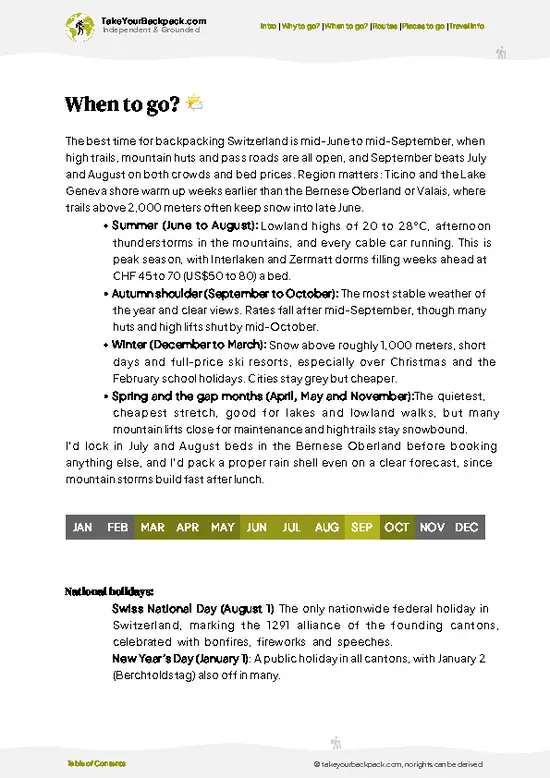
Switzerland’s climate varies significantly by region and season. The Alps experience colder temperatures and heavy snowfall in winter, while the lowlands enjoy milder conditions. Summer brings warmth, but the mountains can still be cool, especially at higher elevations. Understanding these patterns is crucial for planning.

Optimal Months
Late spring to early autumn is ideal for most regions. This period offers pleasant weather, making outdoor activities enjoyable. Late June to early September is peak hiking season, with trails accessible and wildflowers in bloom. However, this is also when crowds swell, particularly in popular areas.

Shoulder Seasons
Visiting during shoulder seasons—late autumn and early spring—can provide a different experience. Fewer tourists mean … read more 👉
Climate Variation
Switzerland’s climate varies significantly by region and season. The Alps experience colder temperatures and heavy snowfall in winter, while the lowlands enjoy milder conditions. Summer brings warmth, but the mountains can still be cool, especially at higher elevations. Understanding these patterns is crucial for planning.

Optimal Months
Late spring to early autumn is ideal for most regions. This period offers pleasant weather, making outdoor activities enjoyable. Late June to early September is peak hiking season, with trails accessible and wildflowers in bloom. However, this is also when crowds swell, particularly in popular areas.

Shoulder Seasons
Visiting during shoulder seasons—late autumn and early spring—can provide a different experience. Fewer tourists mean less crowded attractions and often lower prices. However, weather can be unpredictable, with some trails closed due to snow or mud. Weigh the trade-offs: quieter experiences versus potential limitations in accessibility.

Peak Periods
Winter attracts ski enthusiasts, leading to busy resorts and higher prices. Conversely, summer festivals draw crowds, enhancing cultural experiences but also increasing accommodation costs. Balancing comfort with experience is key; consider timing visits to coincide with local events for a richer experience while avoiding peak tourist influx.

region hoppingSuggested Travel Strategies

General Routing Logic

Switzerland’s compact size makes it easy to connect regions, but strategic planning is essential. Start in Zurich, the transportation hub, then move south toward Lucerne and the Central region. This route allows for a natural progression into the stunning landscapes of the Bernese Oberland and then onward to the Italian-influenced Ticino.

Typical Time Needed

Allocate at least two to three days per major region. This pacing allows for exploration without feeling rushed. For instance, spend a day in Lucerne soaking in the lake views and another day venturing into nearby Mount Pilatus.

Common Planning Mistakes

Many travelers underestimate travel times between regions. The Swiss rail system is efficient, but scenic routes can take longer than expected. Avoid cramming … read more 👉

General Routing Logic

Switzerland’s compact size makes it easy to connect regions, but strategic planning is essential. Start in Zurich, the transportation hub, then move south toward Lucerne and the Central region. This route allows for a natural progression into the stunning landscapes of the Bernese Oberland and then onward to the Italian-influenced Ticino.

Typical Time Needed

Allocate at least two to three days per major region. This pacing allows for exploration without feeling rushed. For instance, spend a day in Lucerne soaking in the lake views and another day venturing into nearby Mount Pilatus.

Common Planning Mistakes

Many travelers underestimate travel times between regions. The Swiss rail system is efficient, but scenic routes can take longer than expected. Avoid cramming too many stops into a short timeframe; it often leads to fatigue rather than enjoyment.

Trade-offs and Constraints

Consider the balance between speed and depth. A quick visit may save time but sacrifices the immersive experience. Budget travelers might opt for regional trains, while those seeking comfort could consider first-class options. Flexibility is key; allow for spontaneous detours to enhance the journey. Prioritize what truly excites you, whether it’s a mountain hike or a cultural experience, to ensure a rewarding trip.

The ListMust-Visit regions in Switzerland

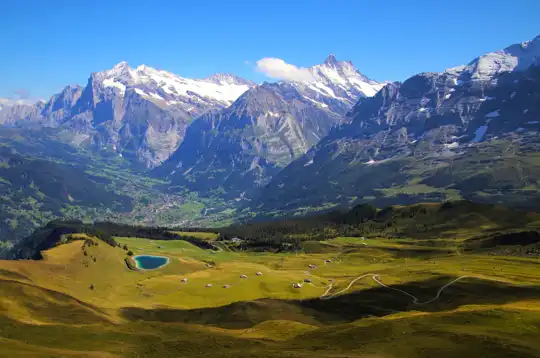
1 Swiss Alps

glacier valleys, high peaks, alpine huts, rugged trails

Ascend marked routes through varied terrain, staying in mountain refuges and navigating between snowfields, meadows, and rocky summits.

switzerland-region-swiss-alps
© Google | Gabriel Matis

2 Swiss Alps Jungfrau-Aletsch

Aletsch Glacier, UNESCO landscape, high-altitude viewpoints, ice fields

Experience vast glacier systems and panoramic lookouts, with access to marked trails that reveal the region’s geological scale and diversity.

switzerland-region-swiss-alps-jungfrau-aletsch
© Google | Tobias Wirsig

3 Engadin Valley

broad valley, Romansh villages, larch forests, alpine lakes

Follow scenic trails past historic villages and shimmering lakes, with mountain panoramas and a distinct local language shaping the experience.

switzerland-region-engadin-valley
© Google | Salvatore Patacca

4 Graubünden

mountain passes, three-language region, remote hamlets, national parks

Traverse high-altitude routes linking isolated communities, where linguistic diversity and protected landscapes define the journey.

5 Ticino

Italian-speaking towns, palm-lined lakes, stone villages, chestnut woods

Cross from lakeside promenades to hillside hamlets, sampling Mediterranean-influenced cuisine and exploring shaded chestnut forests.

switzerland-region-ticino
© Google |

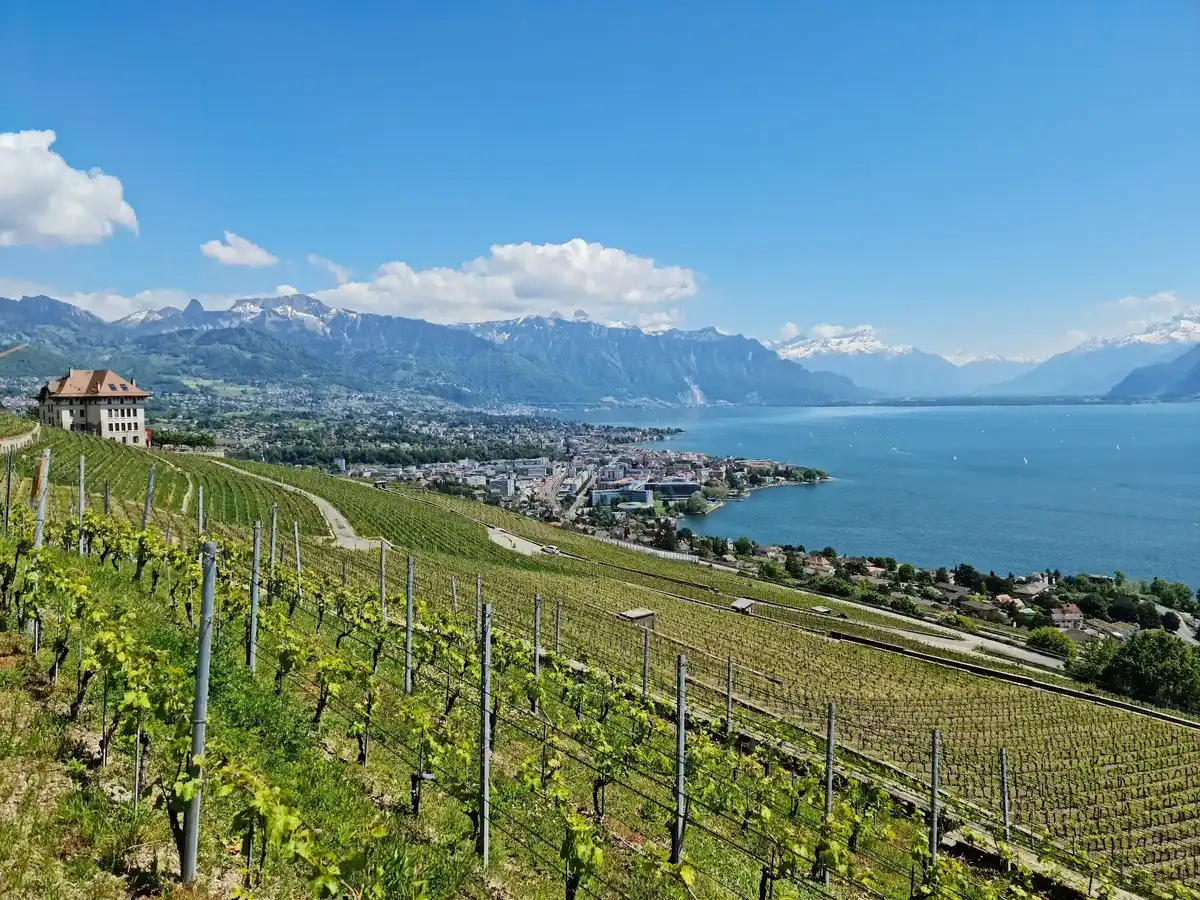
6 Lavaux, Vineyard Terraces

steep vineyards, stone walls, lake views, wine cellars

Walk narrow paths above Lake Geneva, sampling local vintages and observing centuries-old terracing that shapes the hillsides.

switzerland-region-lavaux-vineyard-terraces
© Google | Aline Délitroz

7 Verzasca valley

emerald river, stone bridges, terraced slopes, granite houses

Follow the river’s course past clear pools and traditional stone architecture, with opportunities for swimming and quiet exploration.

switzerland-region-verzasca-valley
© Google |

8 Emmental

rolling hills, dairy farms, timber houses, cheese dairies

Travel through a rural landscape where winding lanes connect traditional farmhouses and local producers offer fresh cheese and regional specialties.

switzerland-region-emmental
© Google | Daniela Rullo

9 St. Peter’s Island

peninsula forest, lakeshore trails, historic inn, bird habitats

Wander shaded paths along the water’s edge, encountering quiet beaches and a centuries-old inn surrounded by protected natural areas.

10 Rhaetian Railway in the Albula

spiral tunnels, stone viaducts, mountain rail route, UNESCO site

Ride a historic train line that winds through dramatic engineering feats and alpine scenery, offering constant views from panoramic windows.

switzerland-region-rhaetian-railway-in-the-albula
© Google | Muthuraja S
Loading the map 🌍

Expert viewInsights from Locals and Experts

Geographic Diversity

Switzerland is a patchwork of distinct regions, each with its own character shaped by geography. The Alps dominate the southern landscape, offering breathtaking views and outdoor adventures. The central plateau, where most of the population resides, is more urbanized and serves as the economic heart. The northern regions, influenced by the Rhine River, have a different cultural vibe, leaning towards a more Germanic influence. Understanding this diversity is crucial for your journey.

You should aim to explore at least three regions to grasp the full spectrum of Swiss culture and scenery. However, be mindful of the trade-off: the more regions you visit, the less time you can spend in each. A week-long trip might allow you to dive into three regions, but if you want to … read more 👉

Geographic Diversity

Switzerland is a patchwork of distinct regions, each with its own character shaped by geography. The Alps dominate the southern landscape, offering breathtaking views and outdoor adventures. The central plateau, where most of the population resides, is more urbanized and serves as the economic heart. The northern regions, influenced by the Rhine River, have a different cultural vibe, leaning towards a more Germanic influence. Understanding this diversity is crucial for your journey.

You should aim to explore at least three regions to grasp the full spectrum of Swiss culture and scenery. However, be mindful of the trade-off: the more regions you visit, the less time you can spend in each. A week-long trip might allow you to dive into three regions, but if you want to savor the local culture and landscapes, consider focusing on two. This way, you can immerse yourself without feeling rushed.

Transport Between Regions

Switzerland boasts one of the most efficient public transport systems in the world. Trains are punctual, clean, and offer stunning views, making them the preferred mode of travel. However, the trade-off here is that while train travel is convenient, it can also be costly, especially if you don’t plan ahead. Consider purchasing a Swiss Travel Pass for unlimited travel on the network, which can save you money if you’re hopping between regions frequently.

Be strategic about your travel times. Peak hours can be crowded, and you might miss out on the scenic routes if you’re not careful. Early morning or late evening trains often provide a more relaxed experience. Also, don’t overlook the scenic train routes; they can be an attraction in themselves, turning travel time into part of your adventure.

Cultural Variation

Each region has its own dialect, cuisine, and traditions, influenced by its geographical and historical context. For instance, the French-speaking areas offer a culinary experience rich in cheese and wine, while the German-speaking regions focus on hearty dishes and local brews. The Italian influence in the south brings a Mediterranean flair to food and lifestyle.

When planning your itinerary, consider how cultural experiences can enhance your trip. If you’re a foodie, prioritize regions known for their culinary offerings. However, be prepared for the trade-off of time; immersing yourself in local culture often requires patience and flexibility. Attend local festivals or markets to truly experience the essence of each region.

Pacing Trade-offs

Pacing is crucial in Switzerland. The country’s compact size can be deceptive; while you can cover distances quickly, each region has its own rhythm. If you rush through, you risk missing the nuances that make each area unique. A slower pace allows for spontaneous discoveries, whether it’s a hidden café or a local artisan.

Consider your travel style. If you thrive on exploration, allow for downtime in each region to soak in the atmosphere. Conversely, if you prefer a more structured approach, prioritize must-see attractions but remain flexible for unexpected experiences. The trade-off here is between depth and breadth; a deeper dive into fewer regions can yield richer experiences, while a broader approach offers a taste of everything.

Safety & Cultural Considerations

Switzerland is generally safe, but cultural norms vary. In the German-speaking areas, punctuality is highly valued, while in the Italian regions, a more relaxed attitude prevails. Understanding these nuances can enhance your interactions with locals.

Be aware of language barriers; while many Swiss speak English, making an effort to learn a few phrases in the local language can go a long way. This not only shows respect but can also lead to more authentic exchanges.

In summary, navigating Switzerland’s regions is a balancing act of time, culture, and logistics. By understanding the systems at play, you can craft a journey that feels both rewarding and enriching.

✈️ The backpacker research shortcutSwitzerland Travel Guide

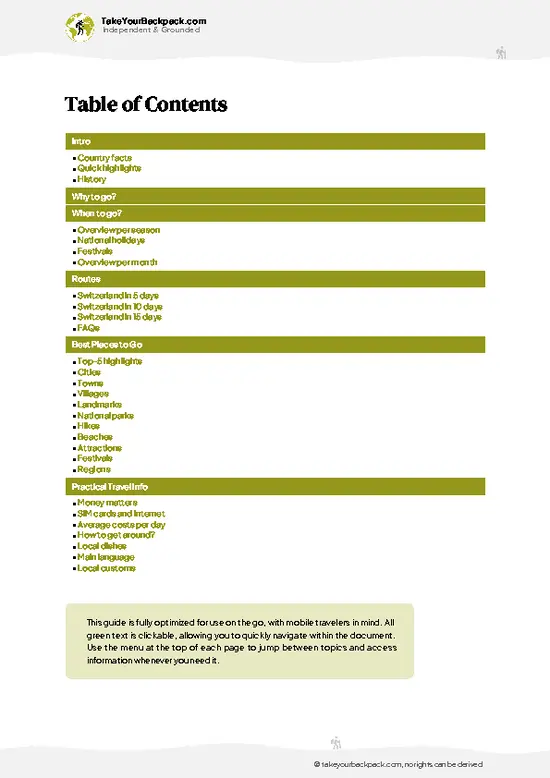
An offline-friendly backpacking guide with optimized travel routes, ranked highlights, transport advice, and the best areas to stay.
example page 0 from our offline Travel Guide for Switzerland
example page 1 from our offline Travel Guide for Switzerland
example page 2 from our offline Travel Guide for Switzerland
example page 3 from our offline Travel Guide for Switzerland
example page 4 from our offline Travel Guide for Switzerland
example page 5 from our offline Travel Guide for Switzerland
example page 6 from our offline Travel Guide for Switzerland
example page 7 from our offline Travel Guide for Switzerland
The digital guide (449 pages) contains:
121 highlights, ranked by travel appeal
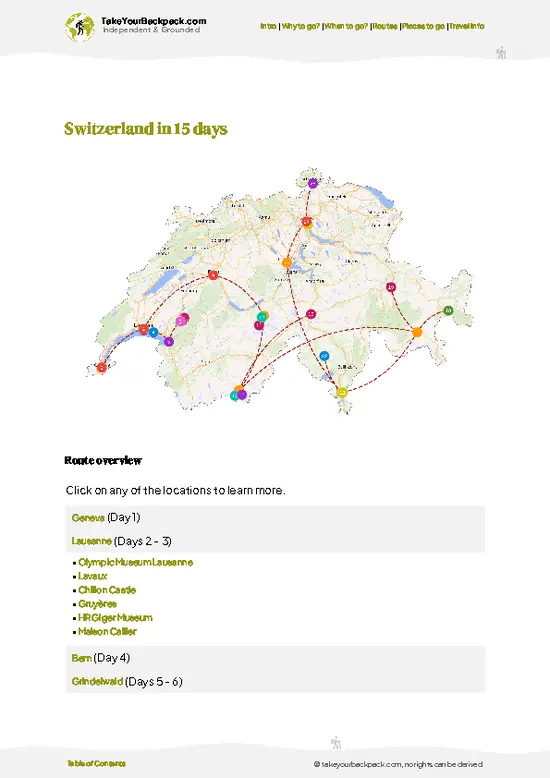
Optimized 5, 10 & 15-day travel routes
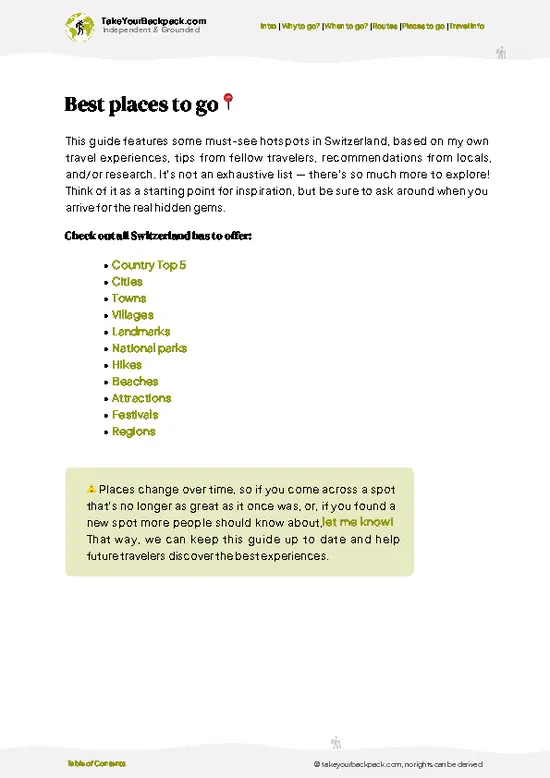
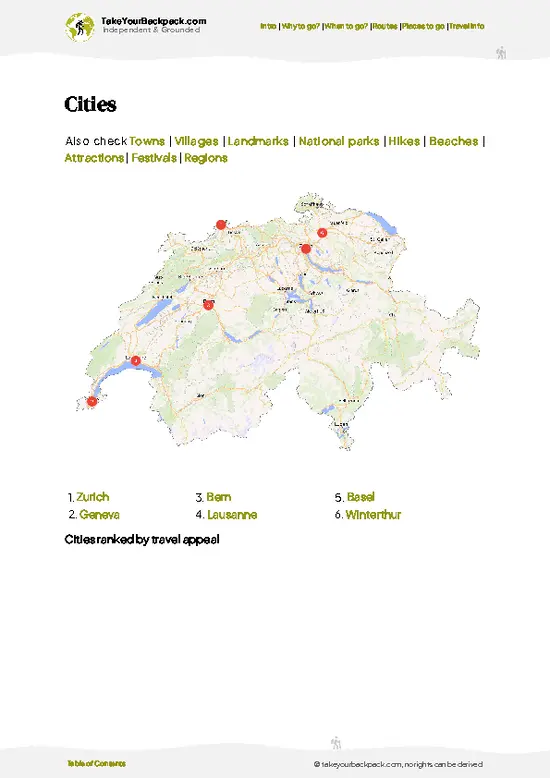
Cities, national parks, landmarks, beaches
How to get around
Offline-friendly for travel without Wi-Fi
👉 Click to see all 30+ guide features

📅 Plan smarter in minutes, not weeks
Month by month travel advice
Festivals & national holidays
Budget expectations

🗺️ Go to the right places, skip the overrated ones
Honest pros & cons of destinations
Top hikes, parks & viewpoints
Lesser-known places most travelers miss
Clear “worth it vs skip it” guidance

🛏️ Travel smoothly without rookie mistakes
Best areas to stay
Transport systems explained simply
Common scams & safety advice
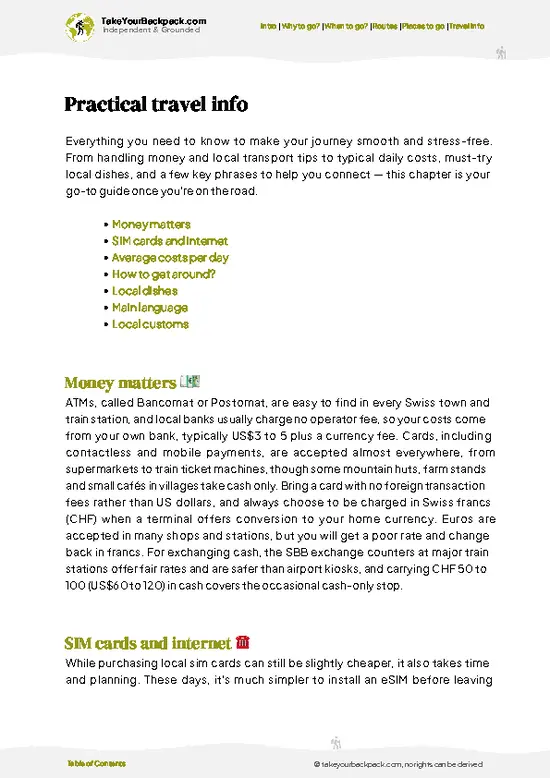
SIM cards, money & practical tips

🌍 Understand the country, not just visit it
Culture & traditions
52 Essential phrases & customs
Festivals worth planning around
Traveler-friendly historical context
Insights that make places more meaningful

📱 Built for real travel conditions
Fully downloadable PDF
Works completely offline
Optimized for phone use
Useful in remote areas & buses
Everything in one place
Save weeks of stressful planning
Get instant access to your full guide. 30‑day money-back guarantee.


By proceeding you agree to our terms.
Sent to your inbox immediately after payment • 100% Secure Checkout
Best Backpacking Travel Advisor 2025 tourism awardBest Backpacking
Travel Advisor
2025
What others say about Take Your Backpack Guides:
⭐⭐⭐⭐⭐
Fantastic, amazing amount of information!
⭐⭐⭐⭐⭐
My goodness this is amazing, it's what I've been looking for hats off too you!
⭐⭐⭐⭐⭐
I think this is absolutely BRILLIANT
⭐⭐⭐⭐
Very complete and informative. It's still missing places, but I gotta to commend you
⭐⭐⭐⭐⭐
This is truly amazing, thank you, can't wait to explore it with my kids!
⭐⭐⭐⭐⭐
Awesome resource, thank you!
⭐⭐⭐⭐⭐
This is amazing! Can't wait to explore the ones I haven't seen
⭐⭐⭐⭐
I love this! Well done, great idea.
⭐⭐⭐⭐⭐
Thanks for taking the time to make this gem!
⭐⭐⭐⭐⭐
This might be the best website I've ever seen.
⭐⭐⭐⭐⭐
Congratulations, and thank you so much for your work; it's incredibly valuable.
⭐⭐⭐⭐
In all seriousness I think you did a great job pointing out the important spots
⭐⭐⭐⭐⭐
10/10 very good
⭐⭐⭐⭐⭐
As someone who's only just starting to visit regularly this is awesome, thank you.
⭐⭐⭐⭐
Thank you very much! I'm going to visit my dad, it's going to be very useful!
⭐⭐⭐⭐⭐
This is really cool! We'll be travelling for the first time and this definitely come in handy.
⭐⭐⭐⭐⭐
You are now our minister of culture, congratulations 👨‍💼
⭐⭐⭐⭐⭐
Just wanted to tell you that this is a pearl! Going to follow your recommendations.
⭐⭐⭐⭐⭐
This is so cool. I'll definitely be using the resource for my travels soon.
⭐⭐⭐⭐⭐
This is very impressive! Good work.
⭐⭐⭐⭐⭐
This is an amazing and informative site. Very well done!

🛏️ Where to stay?Where to Base Yourself

Yes; hostels and budget accommodation are common in Switzerland, concentrated in city centres and tourist hubs such as Zurich (Old Town / Kreis 1, Langstrasse), Geneva (Old Town, Plainpalais), Lucerne (Old Town / near the train station), Interlaken (West, Ost, Matten), Bern (Old Town, Länggasse) and Basel (Old Town, St. Johann).
Old Towns and station areas put you closest to highlights and transport but can be busier and pricier; Langstrasse and Interlaken West offer cheaper beds and nightlife at the cost of more noise; suburbs and neighbourhoods like Länggasse or station suburbs are quieter, cheaper and safer for early mountain departures; mountain villages have fewer budget beds and higher … read more 👉
Yes; hostels and budget accommodation are common in Switzerland, concentrated in city centres and tourist hubs such as Zurich (Old Town / Kreis 1, Langstrasse), Geneva (Old Town, Plainpalais), Lucerne (Old Town / near the train station), Interlaken (West, Ost, Matten), Bern (Old Town, Länggasse) and Basel (Old Town, St. Johann).
Old Towns and station areas put you closest to highlights and transport but can be busier and pricier; Langstrasse and Interlaken West offer cheaper beds and nightlife at the cost of more noise; suburbs and neighbourhoods like Länggasse or station suburbs are quieter, cheaper and safer for early mountain departures; mountain villages have fewer budget beds and higher prices, so book early and factor in extra travel time.

If you enjoy meeting fellow travelers, consider choosing hostels with high ratings for atmosphere. On the other hand, if you prefer having your own space, a hotel might be a better option.

SwitzerlandExpand Your Journey

👋 Meet the founderWho’s Behind Take Your Backpack?

Johan, backpacker and founder of TakeYourBackpackHi, I’m Johan (Netherlands 🇳🇱), the creator of TakeYourBackpack. Over the past decade, I’ve backpacked through 80+ countries across six continents, gaining extensive experience with independent travel, long-term trips, and overland routes.

This site is built on a combination of firsthand travel experience and carefully curated insights from other backpackers. Many guides are based on places I’ve personally visited, while others bring together tips, observations, and practical advice shared by trusted travelers I’ve met along the way.

The goal is to provide realistic, experience-driven guidance — not generic itineraries — so you can explore destinations with better context, clearer expectations, and more confidence.

Get full country guide •
Instant download • 121 highlights • Full Offline guide