×

Switzerland🇨🇭 | townsZermattMatterhorn views, car-free village, glacier access | things to do and best time to go

Explore St. MoritzExplore Lugano

Backpacking in Zermatt
🏆 Top picktown ranked #1
By Johan Kruseman 🇳🇱 | Updated June 3, 2026

Everyone comes for the Matterhorn, but the mountain is just the poster. What actually matters in Zermatt is how you move through the valley around it: the car-free streets under crisp, resin-scented air, the web of trains and cable cars that turn a tight alpine bowl into a huge playground, the way the light slides off the glaciers at the end of a long hiking day. Zermatt sits at the very south of Switzerland in the canton of Valais, right up against the Italian border, literally at the end of the railway line.

For backpackers, it’s a high-impact, high-cost base rather than a casual stop. Think: superb trail access, easy day trips up to Gornergrat or across to Sunnegga, and a compact, walkable center where you’ll actually bump into the same faces again. It’s pricier and more polished than nearby Täsch or Saas-Fee, but also more scenic and better connected. Hostels and bars make it social without being wild; nights feel more gear-talk over beers than party crawl. Safe, efficient, a bit curated, but if you use it as a launchpad into the surrounding mountains instead of a selfie stop, it earns its reputation.

Discover everything you want to know in the 📖 Switzerland Travel Guide.
Loading the map 🌍
CLICK TO FILTER
cities
towns
villages
landmarks
national parks
hikes
beaches
attractions
festivals
regions
SHOW COUNTRY’S BESTSHOW ALL

✨ Why go?
Ranked #1 town in Switzerland
What makes this town worth visiting

Zermatt draws backpackers for its strategic location at the foot of the iconic Matterhorn, making it a gateway to some of the best hiking trails in the Alps. The walkable streets create a cozy atmosphere, where you can easily pop into a local bakery for fresh bread or a hearty cheese fondue. This town thrives on small-scale hostels and guesthouses, offering a chance to connect with fellow travelers over shared meals or stories of the day’s adventures.

While many pass through for a quick stop, those who linger a few days find a rhythm in the slow travel vibe. The air is crisp, and the scent of pine fills the valley, inviting you to explore nearby trails or simply soak in the views. Zermatt is particularly appealing to hikers and solo travelers looking for a blend of nature and community. … read more 👉
Zermatt draws backpackers for its strategic location at the foot of the iconic Matterhorn, making it a gateway to some of the best hiking trails in the Alps. The walkable streets create a cozy atmosphere, where you can easily pop into a local bakery for fresh bread or a hearty cheese fondue. This town thrives on small-scale hostels and guesthouses, offering a chance to connect with fellow travelers over shared meals or stories of the day’s adventures.

While many pass through for a quick stop, those who linger a few days find a rhythm in the slow travel vibe. The air is crisp, and the scent of pine fills the valley, inviting you to explore nearby trails or simply soak in the views. Zermatt is particularly appealing to hikers and solo travelers looking for a blend of nature and community. The friendly locals and fellow adventurers create a welcoming environment, perfect for those seeking camaraderie without the distractions of a bustling nightlife.

In essence, Zermatt is not just a stopover; it’s a launchpad for unforgettable experiences, making it a must-visit for those ready to embrace the mountains.
Want to include Zermatt in your Switzerland route?
Create a personalized Switzerland itinerary that includes Zermatt and the places that fit your trip — based on your travel style, budget, and available time. Get your route in seconds.

Generate my trip

💡 HighlightsMust-see experiences and standout moments

1. Gornergrat Bahn (Gornergrat Railway)
Riding the Gornergrat Bahn is the Zermatt rite of passage. The cogwheel train grinds up from the heart of town, windows framing the Matterhorn as it grows from a distant icon to a looming, jagged reality. The air thins, the scent of pine gives way to cold stone and glacier wind. At the top, you’re 3,089 meters above sea level—eye-level with a panorama of 29 peaks over 4,000 meters. The best time is early morning for soft light and fewer crowds. Tickets run about CHF 88 round-trip (cheaper with Swiss Travel Pass), and you’ll want at least 2-3 hours to ride, wander, and let the scale of the Alps reset your sense of smallness.


2. Matterhorn Museum - Zermatlantis
This isn’t your standard glass-case snooze. The Matterhorn Museum is built underground, a warren … read more 👉
1. Gornergrat Bahn (Gornergrat Railway)
Riding the Gornergrat Bahn is the Zermatt rite of passage. The cogwheel train grinds up from the heart of town, windows framing the Matterhorn as it grows from a distant icon to a looming, jagged reality. The air thins, the scent of pine gives way to cold stone and glacier wind. At the top, you’re 3,089 meters above sea level—eye-level with a panorama of 29 peaks over 4,000 meters. The best time is early morning for soft light and fewer crowds. Tickets run about CHF 88 round-trip (cheaper with Swiss Travel Pass), and you’ll want at least 2-3 hours to ride, wander, and let the scale of the Alps reset your sense of smallness.


2. Matterhorn Museum - Zermatlantis
This isn’t your standard glass-case snooze. The Matterhorn Museum is built underground, a warren of reconstructed chalets and artifacts that smell faintly of old wood and adventure. You’ll see the original rope from the first ascent—frayed, heartbreakingly thin—and stories of triumph and tragedy that shaped Zermatt’s soul. It’s a crash course in why this town exists at all. Go late afternoon when the crowds thin and the lighting feels cinematic. Entry is CHF 12, and you’ll need about an hour to do it justice.


3. Kirchbrücke (Church Bridge) & Matterhorn Viewpoint
Every postcard of Zermatt owes something to this spot. Stand on the Kirchbrücke at dusk, and the Matterhorn glows pink and gold, the river below chattering over stones. Locals and travelers alike pause here, cameras forgotten, just breathing in the moment. It’s free, always open, and best at sunset or sunrise. Five minutes is enough for a photo, but linger longer and you’ll catch the rhythm of the town.


4. Hinterdorf (Old Village)
Step off the main drag and you’re in another century. Hinterdorf is a tight cluster of 16th-century wooden barns and homes, their sun-blackened larch beams creaking in the mountain air. The scent here is a mix of resin, hay, and cold earth. Walk quietly—this is still a lived-in neighborhood, not a museum. Early morning is magical, with dew on the stones and barely a soul around. Free to wander, and 30-45 minutes is enough to soak in the details.


5. St. Mauritius Church & Cemetery
The church bells mark Zermatt’s hours, but the real story is in the cemetery behind. Here, mountaineers from every era rest beneath simple stones, their stories etched in weathered script. It’s a place of humility and awe, where the grandeur of the mountains meets the fragility of life. Visit midday for quiet contemplation. Free entry, and 20 minutes is enough to feel the weight and wonder of Zermatt’s legacy.


If you’re itching to stretch your legs beyond town, the Five Lakes Walk, the Schwarzsee cable car, and the Gorner Gorge are all close enough for a day’s adventure—Schwarzsee is my personal favorite for its wild, reflective silence and Matterhorn views that feel earned, not handed to you.
Spotted a mistake or missing something? Contact us.

Things to do around Zermatt

Ratings based on Tripadvisor reviews. When you book through this link, you support our work at no extra cost to you.

🏘️ NeighborhoodsWhere things are and how it's laid out

Zermatt is a postcard-perfect town that offers a blend of alpine charm and adventure. Each neighborhood has its own character, shaping your experience in this Swiss wonderland.

Hinterdorf: This area is the heart of Zermatt’s charm. Cobblestone streets and wooden chalets create a cozy vibe. It’s quieter, perfect for those who want to soak in the scenery without the nightlife distractions. Walkability is excellent; you can easily reach the Matterhorn Museum or grab a bite at a local eatery. Ideal for short stays, it offers a taste of traditional Swiss life without breaking the bank.

Bahnhofstrasse: The main artery of Zermatt, this street buzzes with energy. It’s lined with shops, cafes, and restaurants, making it a great spot for socializing. While it can be pricier, you’ll find budget-friendly … read more 👉
Zermatt is a postcard-perfect town that offers a blend of alpine charm and adventure. Each neighborhood has its own character, shaping your experience in this Swiss wonderland.

Hinterdorf: This area is the heart of Zermatt’s charm. Cobblestone streets and wooden chalets create a cozy vibe. It’s quieter, perfect for those who want to soak in the scenery without the nightlife distractions. Walkability is excellent; you can easily reach the Matterhorn Museum or grab a bite at a local eatery. Ideal for short stays, it offers a taste of traditional Swiss life without breaking the bank.

Bahnhofstrasse: The main artery of Zermatt, this street buzzes with energy. It’s lined with shops, cafes, and restaurants, making it a great spot for socializing. While it can be pricier, you’ll find budget-friendly options if you look closely. The area is walkable, but expect more foot traffic. Perfect for longer stays, especially if you want to be in the thick of things.

Winkelmatten: A bit more secluded, this neighborhood offers stunning views of the Matterhorn. It’s quieter and feels more residential, making it ideal for those seeking peace after a day of hiking. The walk to the main attractions is a bit longer, but the tranquility is worth it. Great for longer stays, especially if you want to recharge in nature.

Schwarzsee: This area is all about the views. It’s a bit of a trek from the town center, but the payoff is breathtaking. Perfect for day trips or a longer stay if you’re into hiking. The atmosphere is serene, and you’ll find fewer tourists here. Just be prepared for a bit of a hike back to the main town.

⌛️ 1 dayWhat you can realistically do in a day

Zermatt, Switzerland, is a postcard come to life, framed by the jagged peaks of the Alps and the iconic Matterhorn looming like a sentinel. This car-free village pulses with a unique blend of alpine charm and outdoor adventure. The air is crisp, filled with the scent of pine and fresh snow, making it a perfect base for a day of exploration.

Start your morning with a hearty breakfast at Restaurant Whymper-Stube. The warm, wooden interior invites you to savor Swiss specialties like rösti while the sun spills golden light through the windows. After fueling up, take a leisurely stroll through the Old Town, where narrow streets wind past traditional chalets adorned with flower boxes. Don’t miss the Zermatlantis Matterhorn Museum, which offers a fascinating glimpse into the town’s mountaineering … read more 👉
Zermatt, Switzerland, is a postcard come to life, framed by the jagged peaks of the Alps and the iconic Matterhorn looming like a sentinel. This car-free village pulses with a unique blend of alpine charm and outdoor adventure. The air is crisp, filled with the scent of pine and fresh snow, making it a perfect base for a day of exploration.

Start your morning with a hearty breakfast at Restaurant Whymper-Stube. The warm, wooden interior invites you to savor Swiss specialties like rösti while the sun spills golden light through the windows. After fueling up, take a leisurely stroll through the Old Town, where narrow streets wind past traditional chalets adorned with flower boxes. Don’t miss the Zermatlantis Matterhorn Museum, which offers a fascinating glimpse into the town’s mountaineering history. It’s often overlooked, but the stories of early climbers are captivating and set the stage for your day.

In the afternoon, hop on the Gornergrat Railway. The ride is a thrill, climbing through stunning landscapes that shift from lush meadows to rocky outcrops. Once at the top, the panoramic views of the Matterhorn and surrounding peaks are breathtaking. Take a moment to breathe in the crisp mountain air; it’s a reward for your efforts. If you’re feeling adventurous, consider a short hike along the ridge—just a couple of hours will do. The trails are well-marked, and the sense of solitude is palpable.

As evening falls, return to the village and wander into the Findelbach neighborhood. This area is quieter, with fewer tourists, and offers a glimpse of local life. Grab dinner at Restaurant La Ginabelle, where the fondue is a must-try. The rich, gooey cheese paired with crusty bread is a perfect end to your alpine adventure.

Zermatt isn’t just a destination; it’s an experience that rewards those willing to explore its nooks and crannies. Each moment, from the first bite of breakfast to the last sip of wine, is a step deeper into its enchanting embrace.
Turn your Zermatt visit into an Switzerland adventure
Build a complete Switzerland route with Zermatt, hidden gems, must-see destinations, and realistic travel times included.

Generate my trip

🌤️ When to go?Choosing the right time of year


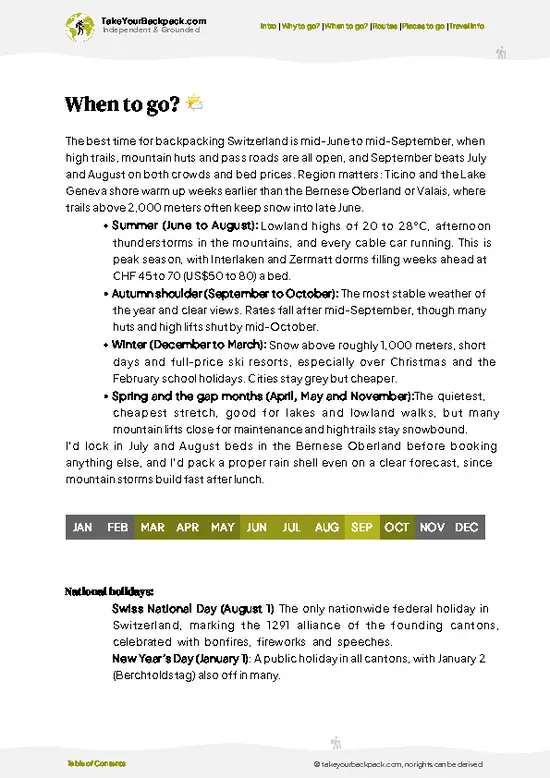
  • Topic: Weather and Temperature — Zermatt’s weather swings dramatically with the seasons. Summer days hover around 15-20°C (59-68°F), perfect for hiking without overheating. Winters plunge to -10°C (14°F) or colder, ideal for skiing but tough for backpackers who dislike the cold bite.

  • Topic: Daylight Hours — In summer, you get up to 16 hours of light, stretching your trekking window and letting you savor the mountain air well into the evening. Winter days shrink to about 8 hours, so plan your outdoor adventures accordingly to avoid being caught in the dark.

  • Topic: Crowds — Peak summer and winter bring tourists in droves, especially around the Matterhorn. Shoulder seasons like late spring and early autumn offer quieter trails and a more intimate connection with the landscape, though some
read more 👉

  • Topic: Weather and Temperature — Zermatt’s weather swings dramatically with the seasons. Summer days hover around 15-20°C (59-68°F), perfect for hiking without overheating. Winters plunge to -10°C (14°F) or colder, ideal for skiing but tough for backpackers who dislike the cold bite.

  • Topic: Daylight Hours — In summer, you get up to 16 hours of light, stretching your trekking window and letting you savor the mountain air well into the evening. Winter days shrink to about 8 hours, so plan your outdoor adventures accordingly to avoid being caught in the dark.

  • Topic: Crowds — Peak summer and winter bring tourists in droves, especially around the Matterhorn. Shoulder seasons like late spring and early autumn offer quieter trails and a more intimate connection with the landscape, though some lifts and huts may close.

  • Topic: Seasonal Activities — Summer is all about hiking, climbing, and mountain biking. Winter transforms Zermatt into a snow playground with world-class skiing and snowboarding. Spring and autumn offer a peaceful vibe with wildflowers or fall colors but limited activities.

  • Topic: Price Fluctuations — Expect prices to spike during the high seasons—summer and winter holidays. Booking in shoulder seasons can save you a chunk, plus you’ll dodge the tourist rush and enjoy a more authentic vibe.


Pro-tip: Aim for late June or September to catch mild weather, fewer crowds, and open trails—Zermatt’s magic feels earned when you’re not elbow-to-elbow with tourists.


source: climatestotravel.comJANJanuary: highly recommended for travelingFEBFebruary: highly recommended for travelingMARMarch: good for travelingAPRApril: good for travelingMAYMay: good for travelingJUNJune: highly recommended for travelingJULJuly: excellent for travelingAUGAugust: excellent for travelingSEPSeptember: highly recommended for travelingOCTOctober: good for travelingNOVNovember: fair for travelingDECDecember: highly recommended for traveling
switzerland-city-zermatt
© Google | Reane Delseth

✈️ The backpacker research shortcutSwitzerland Travel Guide

An offline-friendly backpacking guide with optimized travel routes, ranked highlights, transport advice, and the best areas to stay.
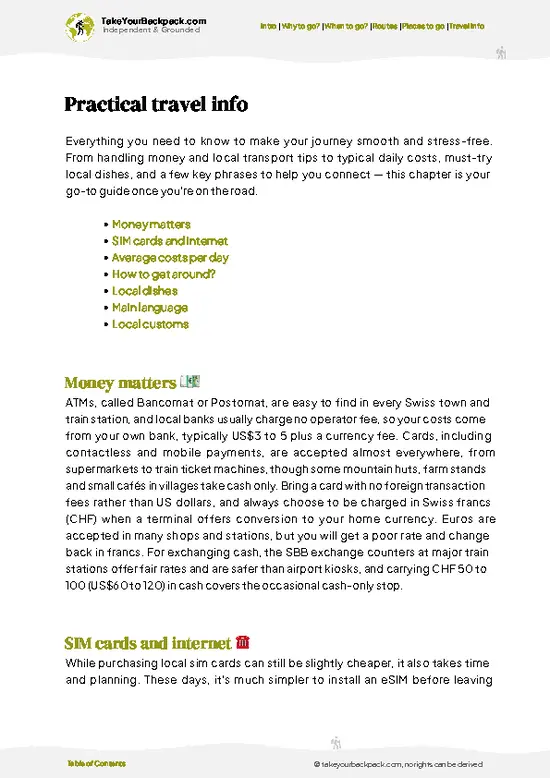
example page 0 from our offline Travel Guide for Switzerland
example page 1 from our offline Travel Guide for Switzerland
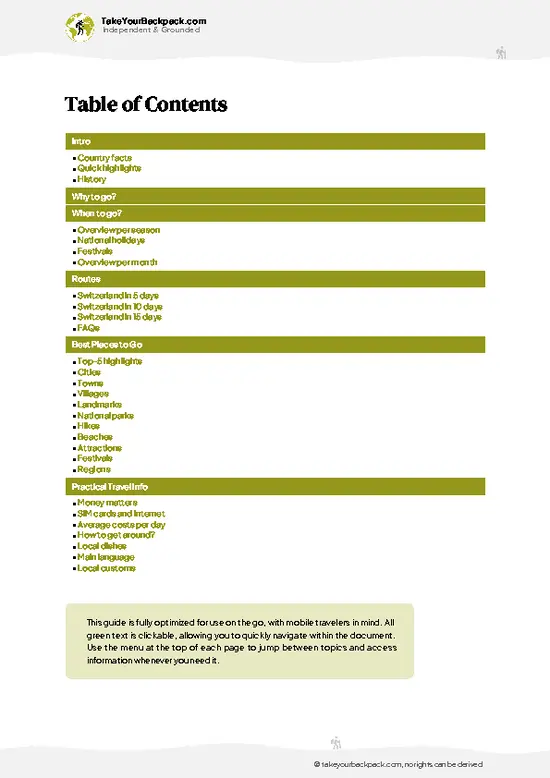
example page 2 from our offline Travel Guide for Switzerland
example page 3 from our offline Travel Guide for Switzerland
example page 4 from our offline Travel Guide for Switzerland
example page 5 from our offline Travel Guide for Switzerland
example page 6 from our offline Travel Guide for Switzerland
example page 7 from our offline Travel Guide for Switzerland
The digital guide (449 pages) contains:
121 highlights, ranked by travel appeal
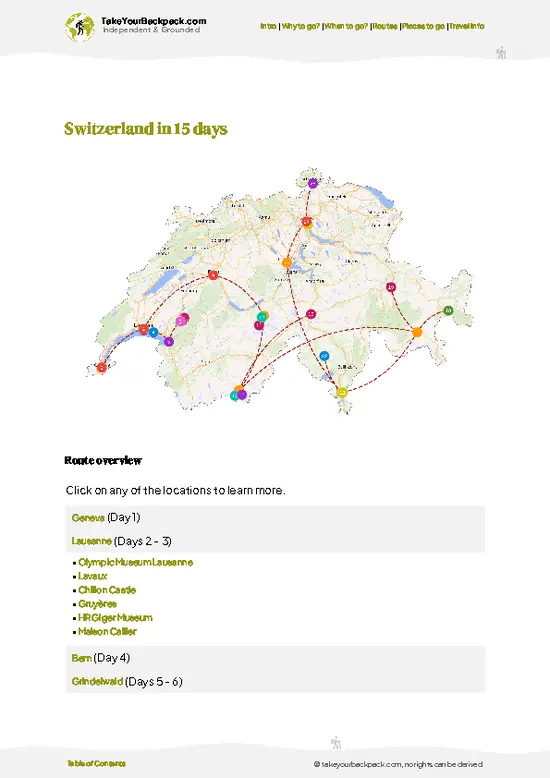
Optimized 5, 10 & 15-day travel routes
Cities, national parks, landmarks, beaches
How to get around
Offline-friendly for travel without Wi-Fi
👉 Click to see all 30+ guide features

📅 Plan smarter in minutes, not weeks
Month by month travel advice
Festivals & national holidays
Budget expectations

🗺️ Go to the right places, skip the overrated ones
Honest pros & cons of destinations
Top hikes, parks & viewpoints
Lesser-known places most travelers miss
Clear “worth it vs skip it” guidance

🛏️ Travel smoothly without rookie mistakes
Best areas to stay
Transport systems explained simply
Common scams & safety advice
SIM cards, money & practical tips

🌍 Understand the country, not just visit it
Culture & traditions
52 Essential phrases & customs
Festivals worth planning around
Traveler-friendly historical context
Insights that make places more meaningful

📱 Built for real travel conditions
Fully downloadable PDF
Works completely offline
Optimized for phone use
Useful in remote areas & buses
Everything in one place
Save weeks of stressful planning
Get instant access to your full guide. 30‑day money-back guarantee.


By proceeding you agree to our terms.
Sent to your inbox immediately after payment • 100% Secure Checkout
Best Backpacking Travel Advisor 2025 tourism awardBest Backpacking
Travel Advisor
2025
What others say about Take Your Backpack Guides:
⭐⭐⭐⭐⭐
Fantastic, amazing amount of information!
⭐⭐⭐⭐⭐
My goodness this is amazing, it's what I've been looking for hats off too you!
⭐⭐⭐⭐⭐
I think this is absolutely BRILLIANT
⭐⭐⭐⭐
Very complete and informative. It's still missing places, but I gotta to commend you
⭐⭐⭐⭐⭐
This is truly amazing, thank you, can't wait to explore it with my kids!
⭐⭐⭐⭐⭐
Awesome resource, thank you!
⭐⭐⭐⭐⭐
This is amazing! Can't wait to explore the ones I haven't seen
⭐⭐⭐⭐
I love this! Well done, great idea.
⭐⭐⭐⭐⭐
Thanks for taking the time to make this gem!
⭐⭐⭐⭐⭐
This might be the best website I've ever seen.
⭐⭐⭐⭐⭐
Congratulations, and thank you so much for your work; it's incredibly valuable.
⭐⭐⭐⭐
In all seriousness I think you did a great job pointing out the important spots
⭐⭐⭐⭐⭐
10/10 very good
⭐⭐⭐⭐⭐
As someone who's only just starting to visit regularly this is awesome, thank you.
⭐⭐⭐⭐
Thank you very much! I'm going to visit my dad, it's going to be very useful!
⭐⭐⭐⭐⭐
This is really cool! We'll be travelling for the first time and this definitely come in handy.
⭐⭐⭐⭐⭐
You are now our minister of culture, congratulations 👨‍💼
⭐⭐⭐⭐⭐
Just wanted to tell you that this is a pearl! Going to follow your recommendations.
⭐⭐⭐⭐⭐
This is so cool. I'll definitely be using the resource for my travels soon.
⭐⭐⭐⭐⭐
This is very impressive! Good work.
⭐⭐⭐⭐⭐
This is an amazing and informative site. Very well done!

🛏️ Where to stay?Where staying makes the most sense

Zermatt’s heart for backpackers beats strongest in the area around the Bahnhof (train station) and the nearby Bahnhofstrasse. This is where the pulse of the town is easiest to catch without draining your wallet. The Bahnhof area is a practical hub—quiet enough at night to rest after a day on the trails, yet lively enough during the day to meet fellow travelers swapping route tips over coffee or a quick bite. The scent of fresh mountain air mingles with the faint aroma of roasting chestnuts in winter, grounding you in the alpine rhythm.

Why here? Because Zermatt is car-free, and the Bahnhof is … read more 👉
Zermatt’s heart for backpackers beats strongest in the area around the Bahnhof (train station) and the nearby Bahnhofstrasse. This is where the pulse of the town is easiest to catch without draining your wallet. The Bahnhof area is a practical hub—quiet enough at night to rest after a day on the trails, yet lively enough during the day to meet fellow travelers swapping route tips over coffee or a quick bite. The scent of fresh mountain air mingles with the faint aroma of roasting chestnuts in winter, grounding you in the alpine rhythm.

Why here? Because Zermatt is car-free, and the Bahnhof is your gateway to everything—trains, buses, and shuttles to trailheads. Staying close means less time hauling gear and more time soaking in the crisp light that bounces off the Matterhorn’s jagged face. Hostels cluster around this zone, offering dorm-style rooms that naturally foster camaraderie. It’s where solo travelers find their tribe without the pressure of forced socializing.

Compared to the quieter, more upscale neighborhoods like Winkelmatten or the outskirts near Sunnegga, the Bahnhof area feels more accessible and social. Those other spots are peaceful but can isolate you from the buzz and budget options. Here, you’re plugged into the town’s veins—ready to dive into mountain adventures or unwind with new friends in a cozy, alpine atmosphere that’s as real as the rocky peaks looming overhead.

🚌 Getting aroundMoving around without the hassle

Zermatt moves at the pace of mountain air—crisp, deliberate, and unhurried. This isn’t a place where you rush; the town’s rhythm is set by the clatter of electric taxis and the steady chug of cogwheel trains, all framed by the sharp scent of pine and the distant echo of cowbells. The sun filters through the narrow streets, casting long shadows on cobblestones that have felt the footsteps of generations. Here, time feels elastic—structured enough to keep you moving, but loose enough to savor the alpine calm. Understanding how Zermatt flows means embracing its blend of precision and peacefulness, where every transit choice is a step deeper into the mountain’s embrace.


  • Walking: The heart of Zermatt beats on foot. The compact village is best explored by wandering its pedestrian-only streets,
read more 👉
Zermatt moves at the pace of mountain air—crisp, deliberate, and unhurried. This isn’t a place where you rush; the town’s rhythm is set by the clatter of electric taxis and the steady chug of cogwheel trains, all framed by the sharp scent of pine and the distant echo of cowbells. The sun filters through the narrow streets, casting long shadows on cobblestones that have felt the footsteps of generations. Here, time feels elastic—structured enough to keep you moving, but loose enough to savor the alpine calm. Understanding how Zermatt flows means embracing its blend of precision and peacefulness, where every transit choice is a step deeper into the mountain’s embrace.


  • Walking: The heart of Zermatt beats on foot. The compact village is best explored by wandering its pedestrian-only streets, where the crunch of gravel and the faint aroma of fresh bakery waft through the air. Walking is free, naturally, and the best way to catch the subtle shifts in light on the Matterhorn’s face. Expect to cover most spots within 20-30 minutes, making it the most intimate and budget-friendly way to get around.


  • Electric Taxis: Zermatt bans combustion engines, so electric taxis hum quietly through the town. They’re pricier than walking but faster and perfect for hauling gear or beating the chill after sunset. Fares start around CHF 10 for short hops, with service running roughly from 7 a.m. to midnight. The smooth, silent ride feels like a modern nod to the town’s eco-conscious ethos.


  • Gornergrat Bahn (Cogwheel Train): This is your ticket to alpine grandeur. Departing from Zermatt station, the cogwheel train climbs steadily to Gornergrat, offering jaw-dropping views of glaciers and peaks. Trains run every 24-30 minutes from early morning (around 7 a.m.) until evening (about 7 p.m.). Tickets cost about CHF 40 one-way, but the panoramic vistas make it a worthwhile splurge. The ride is slow and steady—perfect for soaking in the changing light and crisp mountain air.


  • Local Bus: For budget travelers aiming to reach nearby spots like Täsch or Sunnegga, the local bus is a reliable choice. Buses run frequently from early morning until late evening, with fares around CHF 3-5. They’re less scenic but practical, offering a warm, sheltered ride when the weather turns. The buses connect well with train schedules, making transfers smooth if you’re juggling multiple legs.


  • Sunnegga Funicular: This short but steep ride zips you up from Zermatt to Sunnegga in about 3 minutes. Operating from early morning until late afternoon, tickets cost roughly CHF 15 one-way. It’s a quick, efficient way to access hiking trails and ski slopes without breaking a sweat. The enclosed car offers panoramic windows, so you don’t miss a moment of the mountain’s changing moods.

👛 Costs (as of 16 April 2026)Money, prices, and spending tips

Backpacking in Zermatt, Switzerland, means stepping into a high-alpine playground where the costs reflect the pristine environment and exclusive vibe. Here’s the real deal on daily expenses to keep your trip smooth without surprises.
  • Dorm Accommodation: Dorm beds in Zermatt’s hostels hover around €40 to €60 per night. It’s not cheap, but you’re paying for clean, cozy lodgings with mountain views and easy access to trails. Booking early can snag better rates, especially in peak seasons.
  • Meals: Eating out leans toward the pricey side. Budget around €15 to €25 for a simple meal at a casual café or takeaway spot. Grocery stores offer a more wallet-friendly option—think €5 to €10 for bread, cheese, and fruit if you’re ready to DIY your meals.
  • Local Transport: Zermatt is car-free, so you’ll rely
read more 👉
Backpacking in Zermatt, Switzerland, means stepping into a high-alpine playground where the costs reflect the pristine environment and exclusive vibe. Here’s the real deal on daily expenses to keep your trip smooth without surprises.
  • Dorm Accommodation: Dorm beds in Zermatt’s hostels hover around €40 to €60 per night. It’s not cheap, but you’re paying for clean, cozy lodgings with mountain views and easy access to trails. Booking early can snag better rates, especially in peak seasons.
  • Meals: Eating out leans toward the pricey side. Budget around €15 to €25 for a simple meal at a casual café or takeaway spot. Grocery stores offer a more wallet-friendly option—think €5 to €10 for bread, cheese, and fruit if you’re ready to DIY your meals.
  • Local Transport: Zermatt is car-free, so you’ll rely on electric taxis, buses, or walking. A single bus ticket costs about €3, but if you plan multiple trips, a day pass for roughly €10 makes more sense. Walking is often the best way to soak in the crisp mountain air and the scent of pine.
  • Basic Activities/Entry Fees: Hiking itself is free, which is a huge plus. For cable cars or mountain lifts, expect to pay €30 to €50 for a day pass. These lifts unlock access to iconic views and alpine trails that justify the splurge.
  • Miscellaneous Expenses: Factor in about €5 to €10 for essentials like water, snacks, or a coffee break. If you want souvenirs or a local beer, prices climb quickly, so keep a mental cap on impulse buys.

Zermatt’s daily budget for backpackers realistically falls between €95 and €155. It’s a place where every euro feels like an investment in breathtaking scenery and fresh mountain air. The higher cost is the price of admission to one of the most pristine alpine experiences on the planet—worth every cent if you’re ready to embrace the pace and the payoff.


source: zermatt.ch
⚠️ Prices can change and everyone travels differently, so take this as a rough guide. Hope it helps you plan your adventure!

🚌 Day tripsBest day trips from Zermatt

Zermatt is a backpacker’s dream base, surrounded by the majestic Alps and offering easy access to some of Switzerland’s most breathtaking landscapes. Here are a few day trips that make the most of your time here.

Gornergrat Railway
Hop on the Gornergrat Railway for a ride that feels like a rollercoaster through the mountains. The train climbs steeply, revealing panoramic views of the Matterhorn and surrounding peaks. The summit station is a perfect spot for a picnic, with the crisp mountain air filling your lungs. The round trip takes about 2.5 hours, costing around CHF 90, but the experience is worth every cent. Best visited in the morning when the light dances on the snow-capped peaks. A common rookie mistake? Forgetting to layer up; it can be chilly at the top, even in summer.


Riffelsee read more 👉
Zermatt is a backpacker’s dream base, surrounded by the majestic Alps and offering easy access to some of Switzerland’s most breathtaking landscapes. Here are a few day trips that make the most of your time here.

Gornergrat Railway
Hop on the Gornergrat Railway for a ride that feels like a rollercoaster through the mountains. The train climbs steeply, revealing panoramic views of the Matterhorn and surrounding peaks. The summit station is a perfect spot for a picnic, with the crisp mountain air filling your lungs. The round trip takes about 2.5 hours, costing around CHF 90, but the experience is worth every cent. Best visited in the morning when the light dances on the snow-capped peaks. A common rookie mistake? Forgetting to layer up; it can be chilly at the top, even in summer.


Riffelsee Hike
For those who crave a bit of sweat with their scenery, the hike to Riffelsee is a must. Starting from the Gornergrat station, it’s a manageable 1.5-hour trek down to the lake, where you’ll find the Matterhorn reflecting in its crystal-clear waters. The trail is well-marked and offers a mix of rocky paths and lush meadows. Plan for a total of 4-5 hours, including time to soak in the views. Bring a packed lunch to enjoy by the lake. Late spring to early fall is ideal, as the wildflowers bloom and the trails are clear. Many first-timers underestimate the time it takes to return; don’t rush it!


Zermatt Village Exploration
Sometimes the best adventures are right at your doorstep. Spend a day wandering through Zermatt’s charming streets, lined with wooden chalets and local shops. Visit the Matterhorn Museum to dive into the town’s rich mountaineering history. Grab a slice of local cheese or a hearty rösti at a café. This trip is free, aside from your food budget, and can be done any time of year. A common oversight is not taking the time to enjoy the local culture; it’s easy to get caught up in the big hikes and overlook the small joys.


Schwarzsee
Take the cable car to Schwarzsee for a quick escape into the alpine world. The ride is about 30 minutes and costs around CHF 30. Once there, you can enjoy stunning views of the Matterhorn and even catch a glimpse of the surrounding glaciers. The area offers several short trails, perfect for a leisurely stroll. Late spring to early fall is best, when the flowers are in bloom. Many backpackers miss this spot because they think it’s just a transit point; don’t rush through—take a moment to breathe in the alpine air.


Each of these trips offers a unique slice of the Swiss experience, making your Zermatt adventure all the more rewarding.
Want to know what more Switzerland offers?
The Switzerland Travel Guide describes 121 highlights, from cities to national parks, from beaches to hikes

Get the Travel Guide -

🛡️ SafetySafety Tips and Common Scams in Zermatt

Zermatt is generally a safe haven for backpackers, but a few practical tips can enhance your experience. The main streets are well-lit and bustling, but as you wander into quieter alleys or venture out at night, keep your awareness sharp. Trust your instincts; if a street feels off, it’s okay to turn back.

Solo travelers should feel comfortable, but it’s wise to stick to populated areas after dark. The atmosphere shifts when the sun sets, and while the town is peaceful, a little caution goes a long way.

Scams are rare, but watch for overly aggressive souvenir sellers near the train station. They can be persistent, so a polite but firm “no, thank you” usually suffices. Everyday annoyances might include the occasional tourist crowd, especially around popular spots like the Matterhorn view … read more 👉
Zermatt is generally a safe haven for backpackers, but a few practical tips can enhance your experience. The main streets are well-lit and bustling, but as you wander into quieter alleys or venture out at night, keep your awareness sharp. Trust your instincts; if a street feels off, it’s okay to turn back.

Solo travelers should feel comfortable, but it’s wise to stick to populated areas after dark. The atmosphere shifts when the sun sets, and while the town is peaceful, a little caution goes a long way.

Scams are rare, but watch for overly aggressive souvenir sellers near the train station. They can be persistent, so a polite but firm “no, thank you” usually suffices. Everyday annoyances might include the occasional tourist crowd, especially around popular spots like the Matterhorn view points. Embrace the hustle; it’s part of the charm.

Carry yourself with confidence, and you’ll blend in seamlessly, enjoying Zermatt’s beauty without a hitch.

Other Swiss towns near Zermatt

Explore more nearby:

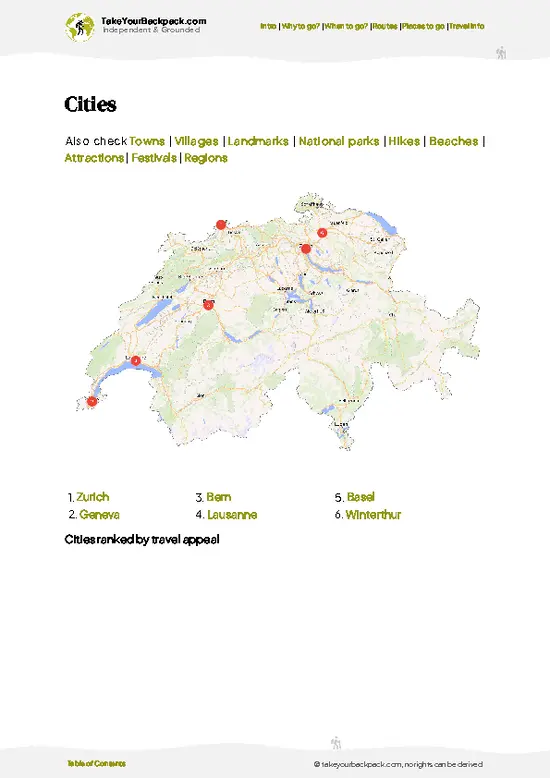
  • Sion—hilltop fortresses, vineyards, Roman ruins| 38 km away
  • Lauterbrunnen Valley—waterfalls, cliffside hamlets, alpine pastures| 65 km away
  • Grindelwald—glacier views, hiking base, mountain railways| 71 km away

💡 Not sure where to go next?
Create a personalized itinerary for Switzerland including Zermatt and the places that fit your trip.

Generate my itinerary

👉 Discover all towns

Or checkout all Switzerland has to offer (think cities, towns, villages, national parks, hikes, beaches, festivals)
Country photo of Switzerland

We 💚 feedbackFinal thoughts on visiting Zermatt

Zermatt is a slice of alpine magic, where the crisp mountain air fills your lungs and the Matterhorn looms like a guardian. The hiking trails are a dream, offering breathtaking views that make every uphill step worth it. But here’s the catch: it can get pricey. Dining and lodging can stretch your budget, so plan ahead. Embrace the challenge, and you’ll find that the experience is as rich as the scenery.

✈️ When did I visit Switzerland?
Being so close to my home country, and me loving mountains, I have visited Switzerland many times in my childhood during summer holidays for hiking in the Alps. One of the most beautiful countries in the world, though expensive.

✍️ Help improve this page!
The information on this page is based on my own backpacking experience in Switzerland, supplemented with up-to-date research and feedback from other travelers. Travel details can change, so if you notice anything outdated or incomplete, feel free to let me know.


🙋‍♂️ Give feedback

👋 Meet the founderWho’s Behind Take Your Backpack?

Johan, backpacker and founder of TakeYourBackpackHi, I’m Johan (Netherlands 🇳🇱), the creator of TakeYourBackpack. Over the past decade, I’ve backpacked through 80+ countries across six continents, gaining extensive experience with independent travel, long-term trips, and overland routes.

This site is built on a combination of firsthand travel experience and carefully curated insights from other backpackers. Many guides are based on places I’ve personally visited, while others bring together tips, observations, and practical advice shared by trusted travelers I’ve met along the way.

The goal is to provide realistic, experience-driven guidance — not generic itineraries — so you can explore destinations with better context, clearer expectations, and more confidence.

Get full country guide •
Instant download • 121 highlights • Full Offline guide