×

Syria🇸🇾 | best regionsDiscover the 2 Best regions Across Syria

Syria splits into four kinds of regions: the old inland cities along the Damascus to Aleppo corridor, the Mediterranean coast and its mountains, the eastern desert, and the northeast and south, which have the least infrastructure. For independent travel, the inland corridor is the practical core. It has the most guesthouses, the easiest transport and the densest sights. The coast is greener, cooler in summer and cheaper per night. The desert needs planning and a driver. The northeast and south are not worth building a first trip around, because roads, lodging and reliable information thin out fast. Syria rewards focus, not coverage.

By Johan Kruseman 🇳🇱 | Updated October 19, 2026
Explore the best cities in Syria

Why go?Key Factors That Shape the Experience

Syria’s appeal comes from geography. The country sits where the Mediterranean, the Anatolian plateau and the Arabian desert meet, so a few hours’ drive changes the landscape, the food and the building stone. Cities such as Damascus and Aleppo have been occupied continuously for thousands of years, which means layered old quarters, covered souks and citadels sit within walking distance of each other. That density is the reason Syria suits a regional approach better than most countries.

Know the limits before choosing it. Years of war damaged infrastructure: electricity is patchy, fuel and cash are inconsistent, and some historic sites are partly ruined or closed. Several governments still advise against travel to all or part of the country, and that affects insurance and consular help. Conditions … read more 👉
Syria’s appeal comes from geography. The country sits where the Mediterranean, the Anatolian plateau and the Arabian desert meet, so a few hours’ drive changes the landscape, the food and the building stone. Cities such as Damascus and Aleppo have been occupied continuously for thousands of years, which means layered old quarters, covered souks and citadels sit within walking distance of each other. That density is the reason Syria suits a regional approach better than most countries.

Know the limits before choosing it. Years of war damaged infrastructure: electricity is patchy, fuel and cash are inconsistent, and some historic sites are partly ruined or closed. Several governments still advise against travel to all or part of the country, and that affects insurance and consular help. Conditions change quickly, so a plan made months ahead goes stale. Do not expect the polished tourism system of Jordan or Turkey: there are few tour desks, little signage in English and almost no booking platforms covering small guesthouses.

The upside is real. Crowds are minimal, locals are eager to talk, and prices for food and lodging are low. Choose Syria if you accept flexibility and local help as part of the trip. Skip it if you need fixed schedules.
Evaluating the Top Choices
The list of best regions in Syria is created based on landscapes, local culture, attractions, vibes, and overall appeal. If you feel a region is missing in this list, please let us know.

When to go?Seasonal Guide to Visiting

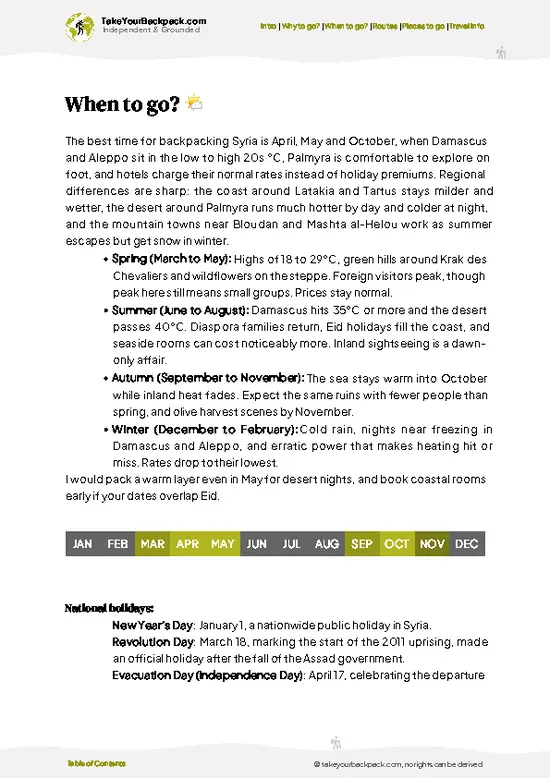
Best months: The best months are April to May and late September to October, when daytime highs in most of the country sit around 20 to 30°C and the heat and winter rain are both absent. These are the only months when walking old quarters all day and taking long road transfers are both comfortable.Summer and winter: June to August is hot inland. Damascus and Aleppo often reach 35°C or more, and the eastern desert regularly passes 40°C, so midday sightseeing there is a waste of effort. The coast stays around 28 to 33°C but is humid, which feels heavier than the numbers suggest. Plan desert stops for early morning only, or skip them in summer.

November to March is the wet season. The coast and western mountains receive most of Syria’s rain, roughly 600 to 1,000 mm a year, while the interior and … read more 👉
Best months: The best months are April to May and late September to October, when daytime highs in most of the country sit around 20 to 30°C and the heat and winter rain are both absent. These are the only months when walking old quarters all day and taking long road transfers are both comfortable.Summer and winter: June to August is hot inland. Damascus and Aleppo often reach 35°C or more, and the eastern desert regularly passes 40°C, so midday sightseeing there is a waste of effort. The coast stays around 28 to 33°C but is humid, which feels heavier than the numbers suggest. Plan desert stops for early morning only, or skip them in summer.

November to March is the wet season. The coast and western mountains receive most of Syria’s rain, roughly 600 to 1,000 mm a year, while the interior and desert get far less, often under 250 mm. Inland cities drop to 0 to 12°C at night in winter, and many older guesthouses have weak heating. Snow closes mountain roads occasionally.Crowds and prices: Tourist crowds are thin year round, so high season does not change availability much. Prices move mainly with Ramadan, when restaurants close by day, opening hours shift, and long transfers are tiring, and during Eid holidays, when buses fill with Syrians visiting family. Book transport a day or two ahead in those weeks.

region hoppingSuggested Travel Strategies

How long to allow: A trip combining several regions in Syria needs 10 to 14 days. Fewer than that turns the trip into a series of transfers on roads that are slower than the map suggests.Direction and grouping: The inland cities group naturally along one north-south line, so travel it in a single direction: Damascus, Homs, Hama, then Aleppo, or the reverse. Damascus to Homs takes about 2 hours, Homs to Hama under an hour, Hama to Aleppo 2 to 2.5 hours. Damascus to Aleppo in one go is 4 to 5 hours. The coast works as a separate leg reached from Homs or Damascus (about 4 to 5 hours to Latakia), and it makes a good finish after the dense old cities. Palmyra in the desert sits roughly 3 hours from Damascus or Homs and needs a full day with a driver, so treat it as its own add-on, not a stopover. … read more 👉
How long to allow: A trip combining several regions in Syria needs 10 to 14 days. Fewer than that turns the trip into a series of transfers on roads that are slower than the map suggests.Direction and grouping: The inland cities group naturally along one north-south line, so travel it in a single direction: Damascus, Homs, Hama, then Aleppo, or the reverse. Damascus to Homs takes about 2 hours, Homs to Hama under an hour, Hama to Aleppo 2 to 2.5 hours. Damascus to Aleppo in one go is 4 to 5 hours. The coast works as a separate leg reached from Homs or Damascus (about 4 to 5 hours to Latakia), and it makes a good finish after the dense old cities. Palmyra in the desert sits roughly 3 hours from Damascus or Homs and needs a full day with a driver, so treat it as its own add-on, not a stopover.Time per stop and common errors: Allow 2 to 3 nights in each major city and 1 to 2 for smaller ones. Anything shorter wastes the travel time.

The usual mistakes are packing in too many regions, which leaves two or three days lost to checkpoints and slow roads. Another is assuming daily bus or minibus service on every route. Confirm departures the day before, and use a shared taxi or a hired driver where schedules fail. A third is driving after dark. Finish transfers by mid-afternoon, and keep a buffer day before any flight home.

The ListHighly Recommended regions of Syria

1 Dead Cities

stone ruins, Byzantine churches, deserted villages

Wander among silent relics of once-thriving towns, observing intricate masonry and the layered history of forgotten settlements.

2 Orontes River

meandering waterway, fertile valley, riverside villages

Follow the Orontes as it winds through cultivated fields and quiet settlements, offering a glimpse into rural life shaped by the river’s steady presence.

syria-region-orontes-river
© Google |
Loading the map 🌍

Expert viewInsights from Locals and Experts

How many regions to visit: Plan on two or three regions for a two-week trip. Roads are slow, checkpoints add delays, and a fourth region mostly buys you extra hours in vehicles. Two regions in a week works fine if time is short.Which kind to prioritize: First-timers and history-driven travelers should put the inland old cities first, because they have the best lodging, food and local help. Travelers who want beaches, cooler air and lower prices should favor the coast and its hills, which are easy going but thin on major monuments. The desert suits those willing to hire a driver and accept early starts. The remote northeast and south are not worth the time unless you have a local contact, since lodging and transport are unreliable and information changes weekly.What it costs: Budget US$40 to … read more 👉
How many regions to visit: Plan on two or three regions for a two-week trip. Roads are slow, checkpoints add delays, and a fourth region mostly buys you extra hours in vehicles. Two regions in a week works fine if time is short.Which kind to prioritize: First-timers and history-driven travelers should put the inland old cities first, because they have the best lodging, food and local help. Travelers who want beaches, cooler air and lower prices should favor the coast and its hills, which are easy going but thin on major monuments. The desert suits those willing to hire a driver and accept early starts. The remote northeast and south are not worth the time unless you have a local contact, since lodging and transport are unreliable and information changes weekly.What it costs: Budget US$40 to 70 a day for a comfortable independent trip: US$20 to 45 for a guesthouse or simple hotel, US$8 to 15 for meals, and the rest for transport. Shared taxis and buses between cities typically cost US$3 to 10. A private driver for a full day runs US$80 to 150 and is the biggest swing in your budget. Site entry fees for foreigners are usually a few dollars up to around US$15 each. A local guide for a day costs about US$30 to 60.

Cash is the trap. Card machines and ATMs are unreliable, and withdrawals may be capped or unavailable. Bring enough clean, undamaged US dollar notes for the entire trip, plus a reserve, and change small amounts as needed. Worn or torn notes get refused.Safety and cultural considerations: Check your government’s current advisory before booking, because many still advise against travel and travel insurance may not cover Syria unless you confirm it in writing. Former front lines and some rural roads may contain unexploded ordnance. Stay on paved roads and marked paths, and never touch debris or enter damaged buildings off the main sites. Hire local help for any route you do not know.

Expect checkpoints and carry your passport and visa paperwork at all times. Ask before photographing soldiers, checkpoints and government buildings, and ask permission before photographing people. Dress modestly: covered shoulders and knees for everyone, and a headscarf for women entering mosques. During Ramadan, avoid eating and drinking in public by day. Arrange your visa before you travel, since entry rules change, and tell your accommodation where you are heading each day.

✈️ The backpacker research shortcutSyria Travel Guide

An offline-friendly backpacking guide with optimized travel routes, ranked highlights, transport advice, and the best areas to stay.
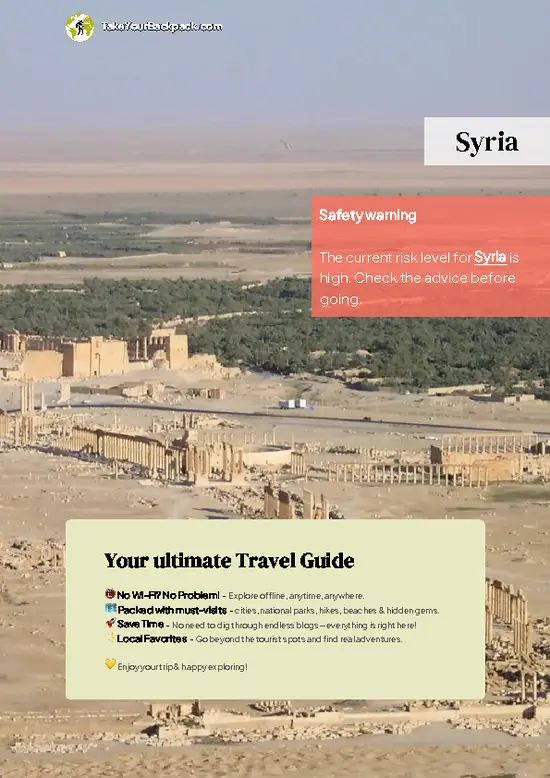
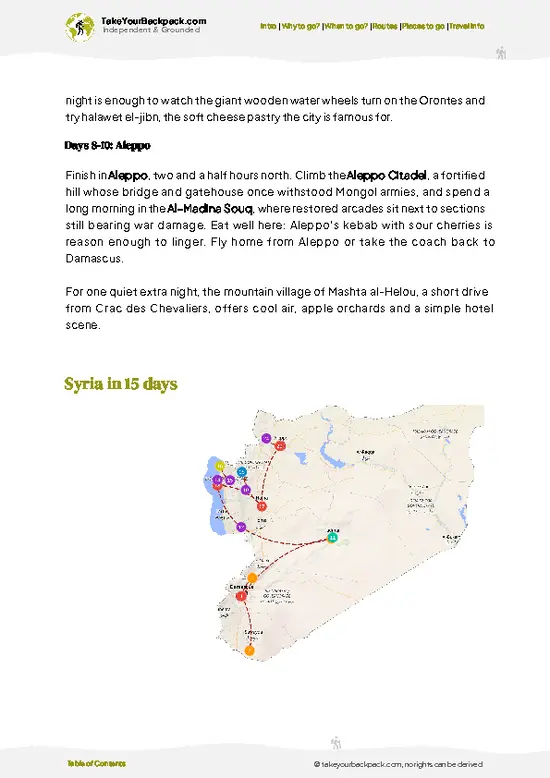
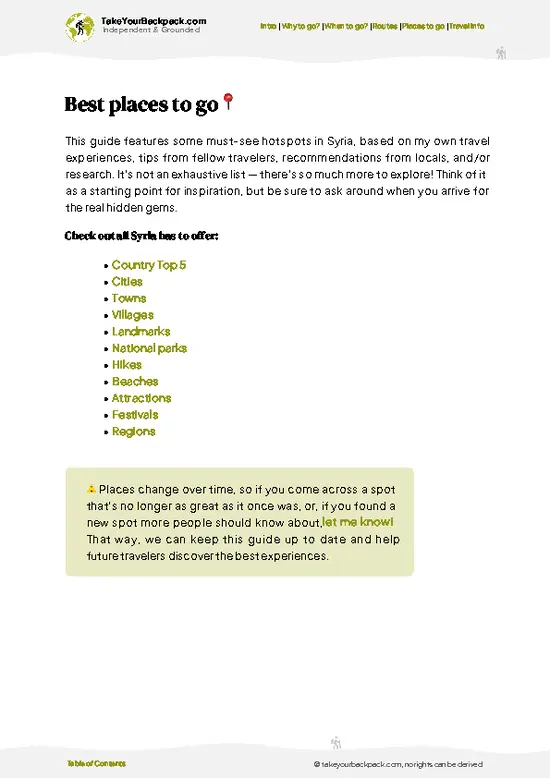
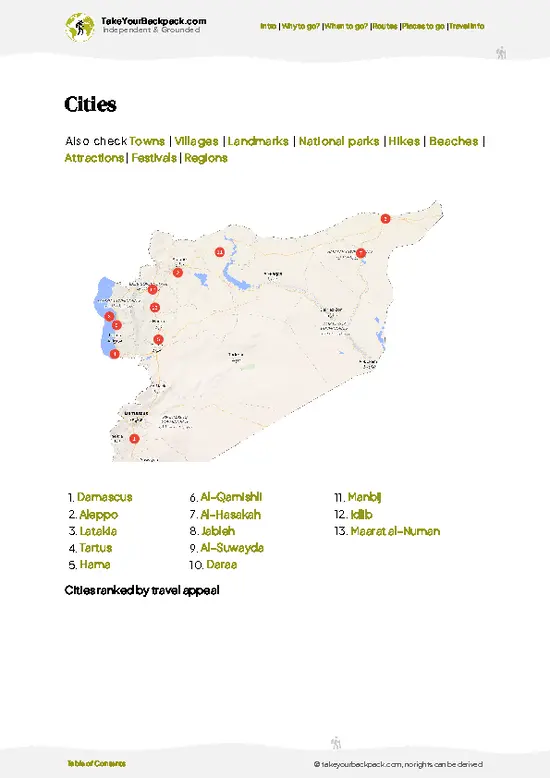
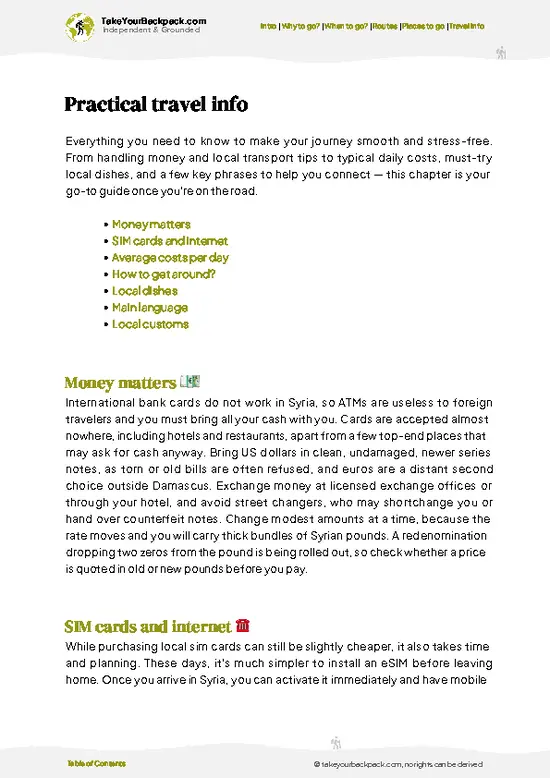
example page 0 from our offline Travel Guide for Syria
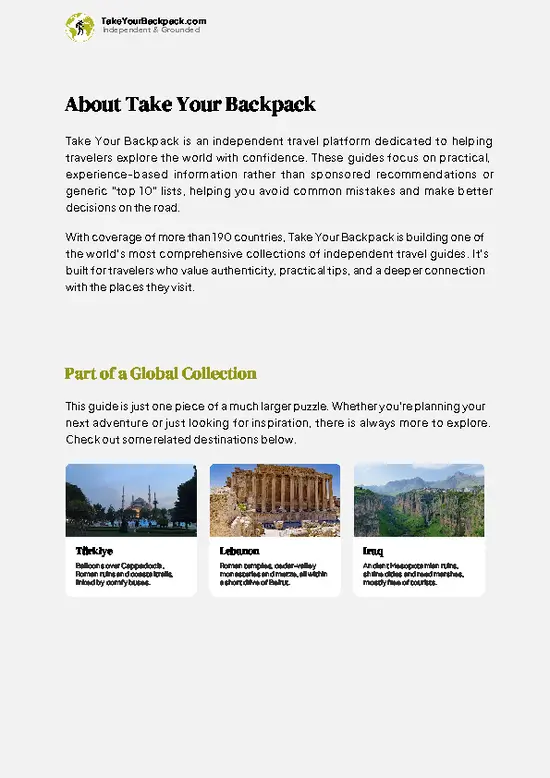
example page 1 from our offline Travel Guide for Syria
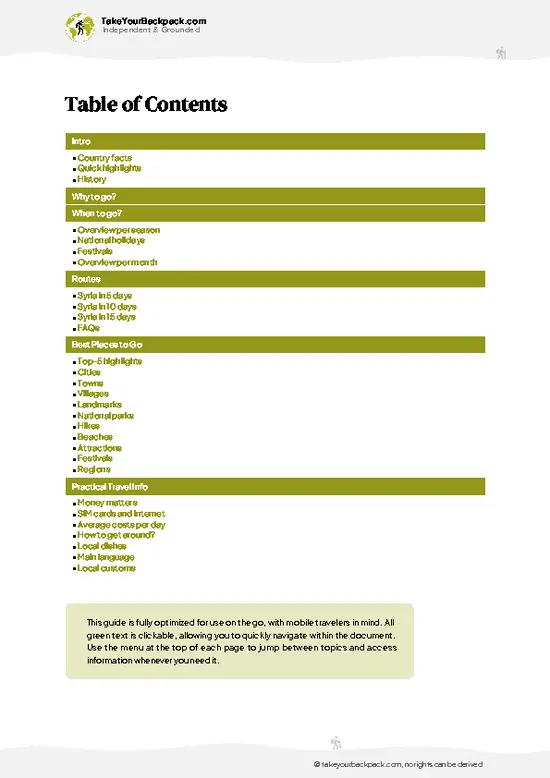
example page 2 from our offline Travel Guide for Syria
example page 3 from our offline Travel Guide for Syria
example page 4 from our offline Travel Guide for Syria
example page 5 from our offline Travel Guide for Syria
example page 6 from our offline Travel Guide for Syria
example page 7 from our offline Travel Guide for Syria
The digital guide (288 pages) contains:
✅ 70 highlights, ranked by travel appeal
✅ Optimized 5, 10 & 15-day travel routes
✅ Cities, national parks, landmarks, beaches
✅ How to get around
✅ Offline-friendly for travel without Wi-Fi
👉 Click to see all 30+ guide features

📅 Plan smarter in minutes, not weeks
✅ Month by month travel advice
✅ Festivals & national holidays
✅ Budget expectations

🗺️ Go to the right places, skip the overrated ones
✅ Honest pros & cons of destinations
✅ Top hikes, parks & viewpoints
✅ Lesser-known places most travelers miss
✅ Clear “worth it vs skip it” guidance

🛏️ Travel smoothly without rookie mistakes
✅ Best areas to stay
✅ Transport systems explained simply
✅ Common scams & safety advice
✅ SIM cards, money & practical tips

🌍 Understand the country, not just visit it
✅ Culture & traditions
✅ 52 Essential phrases & customs
✅ Festivals worth planning around
✅ Traveler-friendly historical context
✅ Insights that make places more meaningful

📱 Built for real travel conditions
✅ Fully downloadable PDF
✅ Works completely offline
✅ Optimized for phone use
✅ Useful in remote areas & buses
✅ Everything in one place
Stop searching, start planning
Get instant access to your full guide. 30‑day money-back guarantee.
+ Add another guide for just

By proceeding you agree to our terms.
Sent to your inbox immediately after payment • 100% Secure Checkout
Best Backpacking Travel Advisor 2025 tourism awardBest Backpacking
Travel Advisor
2025
What others say about Take Your Backpack Guides:
⭐⭐⭐⭐⭐
Fantastic, amazing amount of information!
⭐⭐⭐⭐⭐
My goodness this is amazing, it's what I've been looking for hats off too you!
⭐⭐⭐⭐⭐
I think this is absolutely BRILLIANT
⭐⭐⭐⭐
Very complete and informative. It's still missing places, but I gotta to commend you
⭐⭐⭐⭐⭐
This is truly amazing, thank you, can't wait to explore it with my kids!
⭐⭐⭐⭐⭐
Awesome resource, thank you!
⭐⭐⭐⭐⭐
This is amazing! Can't wait to explore the ones I haven't seen
⭐⭐⭐⭐
I love this! Well done, great idea.
⭐⭐⭐⭐⭐
Thanks for taking the time to make this gem!
⭐⭐⭐⭐⭐
This might be the best website I've ever seen.
⭐⭐⭐⭐⭐
Congratulations, and thank you so much for your work; it's incredibly valuable.
⭐⭐⭐⭐
In all seriousness I think you did a great job pointing out the important spots
⭐⭐⭐⭐⭐
10/10 very good
⭐⭐⭐⭐⭐
As someone who's only just starting to visit regularly this is awesome, thank you.
⭐⭐⭐⭐
Thank you very much! I'm going to visit my dad, it's going to be very useful!
⭐⭐⭐⭐⭐
This is really cool! We'll be travelling for the first time and this definitely come in handy.
⭐⭐⭐⭐⭐
You are now our minister of culture, congratulations 👨‍💼
⭐⭐⭐⭐⭐
Just wanted to tell you that this is a pearl! Going to follow your recommendations.
⭐⭐⭐⭐⭐
This is so cool. I'll definitely be using the resource for my travels soon.
⭐⭐⭐⭐⭐
This is very impressive! Good work.
⭐⭐⭐⭐⭐
This is an amazing and informative site. Very well done!

🛏️ Where to stay?Best Stay Options in Syria

True dorm-style hostels are rare in Syria, but budget guesthouses and small family-run hotels are easy to find, with private rooms typically running US$15 to 35 a night. In Damascus, the Old City around Bab Touma and Bab Sharqi has the most character, with courtyard houses and lively cafes and bars within walking distance of the main sights, though street noise carries late into the evening. Marjeh, near Martyrs’ Square, has the cheapest rooms close to transport and souqs but feels grittier after dark, while in Aleppo the area around Bab al-Faraj keeps you near the citadel and old souqs with fewer evening options.

If you enjoy meeting fellow travelers, consider choosing hostels with high ratings … read more 👉
True dorm-style hostels are rare in Syria, but budget guesthouses and small family-run hotels are easy to find, with private rooms typically running US$15 to 35 a night. In Damascus, the Old City around Bab Touma and Bab Sharqi has the most character, with courtyard houses and lively cafes and bars within walking distance of the main sights, though street noise carries late into the evening. Marjeh, near Martyrs’ Square, has the cheapest rooms close to transport and souqs but feels grittier after dark, while in Aleppo the area around Bab al-Faraj keeps you near the citadel and old souqs with fewer evening options.

If you enjoy meeting fellow travelers, consider choosing hostels with high ratings for atmosphere. On the other hand, if you prefer having your own space, a hotel might be a better option.

SyriaWhere to Go Next

👋 Meet the founderWho’s Behind Take Your Backpack?

Johan, backpacker and founder of TakeYourBackpackHi, I’m Johan (Netherlands 🇳🇱), the creator of TakeYourBackpack. Over the past 3 decades, I’ve backpacked through 90+ countries across six continents, gaining extensive experience with independent travel, long-term trips, and overland routes.

This site is built on a combination of firsthand travel experience and carefully curated insights from other backpackers. Many guides are based on places I’ve personally visited, while others bring together tips, observations, and practical advice shared by trusted travelers I’ve met along the way.

The goal is to provide realistic, experience-driven guidance — not generic itineraries — so you can explore destinations with better context, clearer expectations, and more confidence.