×

Syria🇸🇾 | citiesRaqqa
Euphrates bend, mudbrick walls, riverside park | things to do and best time to go

Explore LatakiaExplore Tartus

Backpacking in Raqqa
🌟 Highlightcity ranked #4
By Johan Kruseman 🇳🇱 | Updated May 19, 2026

Your first real fork in the road with Raqqa is simple and heavy: do you pass through to understand a scarred chapter of Syria’s story, or skip it to save time, nerves, and logistics. That choice matters because Raqqa, in north-central Syria on the Euphrates, is less a “sight” and more a reality check. The town feels flat and workaday, dust in the air, concrete under harsh sun, with only fragments of its Abbasid past and riverside calm hinting at what once was. For backpackers, it’s a practical stop between Aleppo and Deir ez-Zor rather than a base; transport is mostly shared taxis and local minibuses, streets are walkable but spread out, and you won’t find a hostel scene or easy traveler meetups. It’s cheaper than coastal cities, more tense than Hama, and any visit demands extra caution, local contacts, and a high tolerance for emotional weight.

Discover everything you want to know in the 📖 Syria Travel Guide.
Safety warning

The current risk level for Syria is high. Check the advice before going.


Get your Syria Travel Guide
Loading the map 🌍
CLICK TO FILTER
city
town
unique site
national park
hike
beach
attraction
festival
region
SHOW COUNTRY‘S BESTSHOW ALL

✨ Why go?
Ranked #4 city in Syria
What sets this place apart

Backpackers find their way to Raqqa for its strategic position on the route to nearby hikes and cultural sites. The walkable streets invite exploration, while small-scale hostels offer a cozy, communal vibe. You can savor local food experiences that reflect the region’s rich history. Most travelers stay briefly, often just a couple of days, soaking in the atmosphere before moving on. It’s a place for slow travelers and solo adventurers who appreciate a quieter pace. The friendly locals add warmth, making it a worthwhile stop rather than a destination to linger.
Get the complete Travel Guide for Syria
Everything organized for offline planning — routes, highlights, costs & tips

See what’s inside 👉

Get the Travel Guide -

💡 HighlightsTop highlights of Raqqa

  • The Euphrates corniche (riverfront) — The river is Raqqa’s lifeline: walking the corniche you’ll see fishermen, neighborhood life, informal riverside cafés and great sunset light for photography — a simple, real way to sense the city’s pulse.
  • The Umayyad-palatial ensemble (archaeological ruins within the city) — Raqqa was a major Abbasid/Umayyad administrative center; the scattered palace remains and foundations inside the city give a tangible feel for that early medieval capital, even if much is fragmentary.
  • Qasr al-Banat (the “Palace of the Ladies”) — One of the most recognizable ruins in Raqqa: surviving arches and carved pieces from an early Islamic palace that make the city’s imperial past clear on the ground.
  • Raqqa Museum (Matḥaf ar-Raqqa) site — The museum building and what remains
read more 👉
  • The Euphrates corniche (riverfront) — The river is Raqqa’s lifeline: walking the corniche you’ll see fishermen, neighborhood life, informal riverside cafés and great sunset light for photography — a simple, real way to sense the city’s pulse.
  • The Umayyad-palatial ensemble (archaeological ruins within the city) — Raqqa was a major Abbasid/Umayyad administrative center; the scattered palace remains and foundations inside the city give a tangible feel for that early medieval capital, even if much is fragmentary.
  • Qasr al-Banat (the “Palace of the Ladies”) — One of the most recognizable ruins in Raqqa: surviving arches and carved pieces from an early Islamic palace that make the city’s imperial past clear on the ground.
  • Raqqa Museum (Matḥaf ar-Raqqa) site — The museum building and what remains of its collection contextualize the local finds and tells the modern story of heritage in this region; check opening status before you go, but the site itself is important to visit for context.
  • The old souq area and local markets — Markets are where ordinary Raqqa life plays out: spices, bakeries, small produce stalls and the daily rhythms you won’t get from ruins alone. Good for chatting with vendors and tasting local street food.
  • Traditional tea houses and bakeries in the older neighborhoods — Sitting in a low-key tea house with locals, watching bread come out of tandoor ovens, is one of the most immediate cultural experiences the city still offers.
  • River crossings and bridge remains — The bridges (and their ruined or repaired approaches) give dramatic views of the Euphrates and the changing cityscape; useful for photography and understanding Raqqa’s strategic geography.
  • Community rebuilding projects and cultural spaces — In parts of the city you can see grassroots efforts to restore cultural life: murals, small community centers and reclaimed public spaces — they tell the contemporary story of Raqqa’s recovery.
  • Local artisan and repair workshops — Small metalworkers, carpenters and traditional craft shops still operate; watching or speaking with artisans gives a practical insight into daily survival and skills that have kept neighborhoods running.
  • Old residential quarters (street-level history) — Wandering the older lanes and reconstructed blocks is valuable: the architecture and patterns of living (courtyards, narrow alleys) communicate social history in a way no museum label can.
A few real, visitable highlights just outside Raqqa worth day-tripping to are Tabqa Dam and Lake Assad, the dramatic Qalʿat Jaʿbar (Jaabar Castle) on the reservoir, and the ancient site of Resafa (Sergiopolis); my personal favorite for a day trip is Qalʿat Jaʿbar — it’s visually striking and easy to combine with a lakeshore stroll.
Spotted a mistake or missing something? Contact us.
🏘️ NeighborhoodsKey areas and districts to know

Raqqa offers a unique blend of history and resilience, making it a fascinating stop for adventurous backpackers.

City Center: The heart of Raqqa pulses with local life. Markets brim with spices and fresh produce. It’s walkable, with affordable eateries lining the streets. Perfect for short stays, you can soak in the atmosphere and grab a bite without breaking the bank.

Al-Mansour: This neighborhood leans towards the quieter side. It’s ideal for longer stays, with cozy guesthouses and a more relaxed vibe. You’ll find fewer tourists here, allowing for genuine interactions with locals.

Al-Raqqa Corniche: A scenic stretch along the Euphrates River. Great for evening strolls, it offers a mix of nightlife and tranquility. Grab a drink at a riverside café and watch the sunset—an experience that feels earned after a day of exploration.

⌛️ 1 daySeeing the highlights in 24 hours

Raqqa, a city with a complex history, offers a unique blend of ancient and modern life. Start your morning at the bustling Al-Mansour Street, where the aroma of freshly baked bread mingles with the scent of spices from nearby stalls. Grab a local breakfast of foul (fava beans) and bread from a street vendor.

In the afternoon, head to the Euphrates River. The riverside park is a peaceful escape, perfect for a leisurely stroll. You might even catch locals fishing or families enjoying picnics. Don’t miss the ancient Raqqa Citadel, a site often overlooked by tourists, where you can feel the weight of history in the crumbling stones.

As evening falls, explore the vibrant Al-Mashlab neighborhood. The atmosphere shifts as street vendors set up, and the sounds of laughter fill the air. Treat yourself … read more 👉
Raqqa, a city with a complex history, offers a unique blend of ancient and modern life. Start your morning at the bustling Al-Mansour Street, where the aroma of freshly baked bread mingles with the scent of spices from nearby stalls. Grab a local breakfast of foul (fava beans) and bread from a street vendor.

In the afternoon, head to the Euphrates River. The riverside park is a peaceful escape, perfect for a leisurely stroll. You might even catch locals fishing or families enjoying picnics. Don’t miss the ancient Raqqa Citadel, a site often overlooked by tourists, where you can feel the weight of history in the crumbling stones.

As evening falls, explore the vibrant Al-Mashlab neighborhood. The atmosphere shifts as street vendors set up, and the sounds of laughter fill the air. Treat yourself to a dinner of kebabs at a local eatery, where the flavors are rich and the hospitality is warm. This day in Raqqa isn’t just about sights; it’s about connecting with the heart of the city.
Build the Right Itinerary
Use the Syria Travel Guide’s 5, 10 & 15-day routes as a starting point to plan a trip that actually works on the ground.

Get the Travel Guide -

🌤️ When to go?Seasonal considerations and timing


  • Weather: Raqqa’s summers scorch with highs often hitting 40°C (104°F), making midday trekking a sweat-drenched slog. Winters are mild, hovering around 10-15°C (50-59°F), which feels like a gentle reprieve under clear skies.

  • Temperature: Spring and autumn offer the sweet spot—daytime temps settle between 20-25°C (68-77°F), perfect for wandering without overheating or bundling up.

  • Daylight Hours: Expect long days in summer, with up to 14 hours of light, ideal for maximizing exploration. Winter days shrink to about 10 hours, so plan your hikes accordingly.

  • Crowds: Raqqa isn’t a tourist hotspot, so crowds are minimal year-round. However, local holidays can bring a spike in domestic visitors, especially in spring.

  • Seasonal Activities: Spring blooms bring a subtle green to the landscape,
read more 👉

  • Weather: Raqqa’s summers scorch with highs often hitting 40°C (104°F), making midday trekking a sweat-drenched slog. Winters are mild, hovering around 10-15°C (50-59°F), which feels like a gentle reprieve under clear skies.

  • Temperature: Spring and autumn offer the sweet spot—daytime temps settle between 20-25°C (68-77°F), perfect for wandering without overheating or bundling up.

  • Daylight Hours: Expect long days in summer, with up to 14 hours of light, ideal for maximizing exploration. Winter days shrink to about 10 hours, so plan your hikes accordingly.

  • Crowds: Raqqa isn’t a tourist hotspot, so crowds are minimal year-round. However, local holidays can bring a spike in domestic visitors, especially in spring.

  • Seasonal Activities: Spring blooms bring a subtle green to the landscape, while autumn harvests fill markets with fresh produce—both seasons offer a richer sensory experience.

  • Price Fluctuations: Prices remain relatively stable due to low tourism volume, but expect slight increases during local festivals or holidays.


Pro-tip: Aim for late March to early May or late September to early November—these windows balance comfortable weather, extended daylight, and a quiet, authentic vibe that makes every dusty street and sun-warmed stone feel like a discovery.


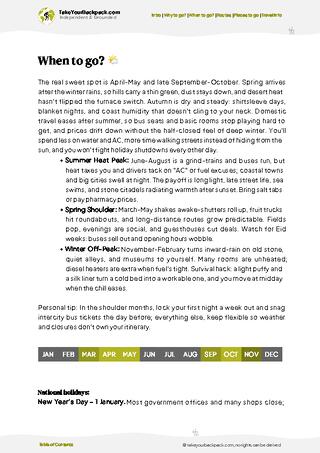
source: climatestotravel.comJANJanuary: good for travelingFEBFebruary: good for travelingMARMarch: highly recommended for travelingAPRApril: excellent for travelingMAYMay: highly recommended for travelingJUNJune: fair for travelingJULJuly: below average for travelingAUGAugust: below average for travelingSEPSeptember: highly recommended for travelingOCTOctober: excellent for travelingNOVNovember: highly recommended for travelingDECDecember: good for traveling
when-to-go

✈️ The backpacker research shortcutSyria Travel Guide

An offline-friendly backpacking guide with optimized travel routes, ranked highlights, transport advice, and the best areas to stay.
example page 0 from our offline Travel Guide for Syriaexample page 1 from our offline Travel Guide for Syriaexample page 2 from our offline Travel Guide for Syriaexample page 3 from our offline Travel Guide for Syriaexample page 4 from our offline Travel Guide for Syriaexample page 5 from our offline Travel Guide for Syriaexample page 6 from our offline Travel Guide for Syriaexample page 7 from our offline Travel Guide for Syria
The digital guide (347 pages) contains:
90 highlights, ranked by travel appeal
Optimized 5, 10 & 15-day travel routes
Best neighborhoods to stay
How to get around
Offline-friendly for travel without Wi-Fi
👉 See all 30+ guide features

📅 Plan smarter in minutes, not weeks
Month by month travel advice
Festivals & national holidays
Budget expectations

🗺️ Go to the right places, skip the overrated ones
Honest pros & cons of destinations
Top hikes, parks & viewpoints
Lesser-known places most travelers miss
Clear “worth it vs skip it” guidance

🛏️ Travel smoothly without rookie mistakes
Best areas to stay
Transport systems explained simply
Common scams & safety advice
SIM cards, money & practical tips

🌍 Understand the country, not just visit it
Culture & traditions
52 Essential phrases & customs
Festivals worth planning around
Traveler-friendly historical context
Insights that make places more meaningful

📱 Built for real travel conditions
Fully downloadable PDF
Works completely offline
Optimized for phone use
Useful in remote areas & buses
Everything in one place
Save weeks of stressful planning
Get instant access to the full guide directly. 30-day money-back guarantee.


Sent to your inbox immediately after payment • 100% Secure Checkout
Best Backpacking Travel Advisor 2025 tourism awardBest Backpacking
Travel Advisor
2025
What others say about Take Your Backpack Guides:
⭐⭐⭐⭐⭐
Fantastic, amazing amount of information!
⭐⭐⭐⭐⭐
My goodness this is amazing, it's what I've been looking for hats off too you!
⭐⭐⭐⭐⭐
I think this is absolutely BRILLIANT
⭐⭐⭐⭐
Very complete and informative. It's still missing places, but I gotta to commend you
⭐⭐⭐⭐⭐
This is truly amazing, thank you, can't wait to explore it with my kids!
⭐⭐⭐⭐⭐
Awesome resource, thank you!
⭐⭐⭐⭐⭐
This is amazing! Can't wait to explore the ones I haven't seen
⭐⭐⭐⭐
I love this! Well done, great idea.
⭐⭐⭐⭐⭐
Thanks for taking the time to make this gem!
⭐⭐⭐⭐⭐
This might be the best website I've ever seen.
⭐⭐⭐⭐⭐
Congratulations, and thank you so much for your work; it's incredibly valuable.
⭐⭐⭐⭐
In all seriousness I think you did a great job pointing out the important spots
⭐⭐⭐⭐⭐
10/10 very good
⭐⭐⭐⭐⭐
As someone who's only just starting to visit regularly this is awesome, thank you.
⭐⭐⭐⭐
Thank you very much! I'm going to visit my dad, it's going to be very useful!
⭐⭐⭐⭐⭐
This is really cool! We'll be travelling for the first time and this definitely come in handy.
⭐⭐⭐⭐⭐
You are now our minister of culture, congratulations 👨‍💼
⭐⭐⭐⭐⭐
Just wanted to tell you that this is a pearl! Going to follow your recommendations.
⭐⭐⭐⭐⭐
This is so cool. I'll definitely be using the resource for my travels soon.
⭐⭐⭐⭐⭐
This is very impressive! Good work.
⭐⭐⭐⭐⭐
This is an amazing and informative site. Very well done!

🛏️ Where to stay?Where staying makes the most sense

Raqqa’s recent history means its urban fabric is still healing, so picking where to stay isn’t just about convenience—it’s about tapping into the city’s pulse without stepping into trouble. For backpackers, the safest and most practical zone is the area around the city center, especially near the main market streets. This neighborhood hums with everyday life: vendors calling out, the scent of fresh bread mingling with spices, and locals chatting over tea in small cafés. It’s where you’ll find the few budget guesthouses and informal hostels that cater to travelers who want to blend in rather than … read more 👉
Raqqa’s recent history means its urban fabric is still healing, so picking where to stay isn’t just about convenience—it’s about tapping into the city’s pulse without stepping into trouble. For backpackers, the safest and most practical zone is the area around the city center, especially near the main market streets. This neighborhood hums with everyday life: vendors calling out, the scent of fresh bread mingling with spices, and locals chatting over tea in small cafés. It’s where you’ll find the few budget guesthouses and informal hostels that cater to travelers who want to blend in rather than stand out.

Why here? Because it’s the social heart of Raqqa, where you can strike up conversations easily and feel the city’s rhythm without wandering into quieter, less secure residential districts. The streets are busy enough to feel alive but not so chaotic that you’re overwhelmed. Compared to the outskirts or newer developments, this area offers a better chance to connect with locals and other travelers, making it easier to swap tips or find a guide.

Hostel options are limited and basic, but that’s part of the charm—expect simple dorms or shared rooms, often run by locals who know the city’s nuances. The vibe is unpolished but genuine, a raw snapshot of a city reclaiming its identity. Staying here means embracing the imperfect, gritty reality of Raqqa, which is exactly what makes the experience authentic and rewarding.

🚌 Getting aroundHow to get from A to B

Raqqa moves at the pace of the Euphrates itself—steady, deliberate, and shaped by the rhythms of daily life rather than rigid timetables. The sun casts long shadows over dusty streets where vendors call out in bursts of energy, and the scent of fresh bread mingles with the dry earth. Here, transit isn’t about catching a precise bus at an exact minute; it’s about reading the flow, feeling the pulse of the town, and knowing when to step in. The chaos feels organic, not overwhelming, and mastering it means embracing a bit of unpredictability with a confident stride.


  • Walking: The heart of Raqqa’s transit. Most neighborhoods and markets are within a 20- to 30-minute walk of each other, letting you soak in the textures of the city—the cracked plaster walls, the chatter from tea shops, the occasional
read more 👉
Raqqa moves at the pace of the Euphrates itself—steady, deliberate, and shaped by the rhythms of daily life rather than rigid timetables. The sun casts long shadows over dusty streets where vendors call out in bursts of energy, and the scent of fresh bread mingles with the dry earth. Here, transit isn’t about catching a precise bus at an exact minute; it’s about reading the flow, feeling the pulse of the town, and knowing when to step in. The chaos feels organic, not overwhelming, and mastering it means embracing a bit of unpredictability with a confident stride.


  • Walking: The heart of Raqqa’s transit. Most neighborhoods and markets are within a 20- to 30-minute walk of each other, letting you soak in the textures of the city—the cracked plaster walls, the chatter from tea shops, the occasional stray cat weaving through alleys. Walking is free, flexible, and the best way to catch the town’s atmosphere firsthand.


  • Shared Taxis: These are the lifeblood of local transit, running on a loose schedule but frequent enough to hop on without long waits. Expect to pay around 100 to 200 Syrian pounds per ride, which is a bargain if you’re covering longer distances or heading to the outskirts. They’re faster than walking but can get cramped, so pack light and be ready to squeeze in with locals.


  • Minibuses: Operating mainly from early morning until late afternoon, minibuses follow set routes connecting major neighborhoods and the bus station. Tickets cost roughly 150 to 250 Syrian pounds. They’re a step up in speed and comfort from shared taxis, with a bit more predictability, but still expect some crowding during peak hours.


  • Motorcycle Taxis: For quick, nimble trips through narrow streets or when time is tight, motorcycle taxis are your go-to. They’re more expensive—around 300 to 500 Syrian pounds—but cut through traffic and chaos with ease. Helmets aren’t always guaranteed, so brace for a raw, wind-in-your-face ride that’s as much about adrenaline as efficiency.


  • Bicycle Rentals: Less common but growing in popularity, renting a bicycle offers a sweet balance between speed and immersion. Rental prices hover around 500 Syrian pounds per day. It’s perfect for exploring beyond the center without the noise and congestion, letting you glide past markets and along the riverbank at your own pace.

👛 Costs (as of 11 July 2025)Typical daily expenses

Backpacking in Raqqa, Syria, is a raw experience where every dollar counts, and understanding the local cost landscape helps you stretch your budget without sacrificing the essentials.
  • Dorm Accommodation: Options here are extremely limited due to the region’s instability and rebuilding phase. Expect to pay around $5 to $10 per night for basic guesthouses or shared rooms, often with minimal amenities but enough to rest your head safely.
  • Meals: Food is simple and hearty—think flatbreads, lentils, and grilled meats. Street food and local eateries will cost you roughly $2 to $5 per meal. Fresh produce markets offer affordable snacks, but dining in a modest restaurant might push closer to $7.
  • Local Transport: Public transport is sparse and informal. Shared taxis or minibuses are your best bet,
read more 👉
Backpacking in Raqqa, Syria, is a raw experience where every dollar counts, and understanding the local cost landscape helps you stretch your budget without sacrificing the essentials.
  • Dorm Accommodation: Options here are extremely limited due to the region’s instability and rebuilding phase. Expect to pay around $5 to $10 per night for basic guesthouses or shared rooms, often with minimal amenities but enough to rest your head safely.
  • Meals: Food is simple and hearty—think flatbreads, lentils, and grilled meats. Street food and local eateries will cost you roughly $2 to $5 per meal. Fresh produce markets offer affordable snacks, but dining in a modest restaurant might push closer to $7.
  • Local Transport: Public transport is sparse and informal. Shared taxis or minibuses are your best bet, usually costing between $0.50 and $1.50 per trip within town. Walking is often the most reliable way to get around, letting you soak in the city’s atmosphere.
  • Basic Activities/Entry Fees: Cultural sites and museums, if accessible, tend to have very low or no entry fees, around $1 to $3. Many historical spots are still under restoration, so plan for limited options and focus on exploring the city’s streets and markets.
  • Miscellaneous Expenses: This covers essentials like bottled water, SIM cards, and small personal items. Budget around $1 to $3 daily, as imported goods can be pricier and availability fluctuates.

All told, a realistic daily budget for backpacking in Raqqa hovers between $10 and $25. It’s a place where the simplicity of life is palpable—the dusty air, the call to prayer echoing through quiet streets—and your spending reflects a stripped-down, authentic experience rather than tourist comforts. Planning with this in mind means you’re not just avoiding overspending; you’re tuning into the rhythm of a city rebuilding itself.
⚠️ Prices can change and everyone travels differently, so take this as a rough guide. Hope it helps you plan your adventure!

🚌 Day tripsExploring the surroundings

Raqqa serves as a unique base for exploring the rich tapestry of Syria’s history and landscapes. Here are some day trips that truly capture the essence of the region.

**Ancient City of Apamea**
Just a couple of hours from Raqqa, Apamea is a treasure trove of Roman ruins. The sprawling colonnade stretches out like a time capsule, whispering stories of ancient life. The best time to visit is in spring when wildflowers bloom among the stones, adding a splash of color to the dusty ruins. Expect to spend around $10 for transportation and entry. Many first-timers underestimate the heat; bring plenty of water and a hat to stay comfortable.
👉 Explore Apamea

**Qalat Ja’bar**
This medieval fortress perched on the banks of the Euphrates is a must-see. It’s about an hour away, and the views from … read more 👉
Raqqa serves as a unique base for exploring the rich tapestry of Syria’s history and landscapes. Here are some day trips that truly capture the essence of the region.

**Ancient City of Apamea**
Just a couple of hours from Raqqa, Apamea is a treasure trove of Roman ruins. The sprawling colonnade stretches out like a time capsule, whispering stories of ancient life. The best time to visit is in spring when wildflowers bloom among the stones, adding a splash of color to the dusty ruins. Expect to spend around $10 for transportation and entry. Many first-timers underestimate the heat; bring plenty of water and a hat to stay comfortable.
👉 Explore Apamea

**Qalat Ja’bar**
This medieval fortress perched on the banks of the Euphrates is a must-see. It’s about an hour away, and the views from the top are breathtaking, especially at sunset when the sky ignites in hues of orange and pink. The entrance fee is minimal, around $5, making it a budget-friendly option. A common mistake is to rush through; take your time to explore the nooks and crannies of the castle.


**Raqqa’s Old City**
Staying local can be just as rewarding. The Old City is rich with history and local culture. Spend a day wandering through the narrow alleys, sampling street food like kebabs and fresh bread. The atmosphere is vibrant, especially in the early morning when vendors set up shop. This trip costs little more than your appetite and curiosity. Many overlook the charm of local life, but it’s where you’ll find the heart of Raqqa.
Want to know what more Syria offers?
The Syria Travel Guide describes 90 highlights, from cities to national parks, from beaches to hikes

Get the Travel Guide -

🍲 FoodLocal Flavors for Backpackers

In Raqqa, food is a direct line to the city’s soul—bold, hearty, and unapologetically authentic. You’ll want to dive into kebab, where smoky, spiced meat sizzles over open flames, or savor mujaddara, a humble yet deeply satisfying mix of lentils and rice crowned with caramelized onions. These dishes aren’t just meals; they’re the kind of comfort that sticks with you long after the last bite.

Backpackers find their rhythm in the bustling markets and street stalls, where the air is thick with the scent of grilled lamb and freshly baked flatbread. Casual eateries spill onto the sidewalks, inviting you to sit on simple stools and watch the city’s pulse while you eat. Don’t expect fancy menus—here, it’s about the experience, the chatter, and the shared plates.

Drinking culture leans heavily on … read more 👉
In Raqqa, food is a direct line to the city’s soul—bold, hearty, and unapologetically authentic. You’ll want to dive into kebab, where smoky, spiced meat sizzles over open flames, or savor mujaddara, a humble yet deeply satisfying mix of lentils and rice crowned with caramelized onions. These dishes aren’t just meals; they’re the kind of comfort that sticks with you long after the last bite.

Backpackers find their rhythm in the bustling markets and street stalls, where the air is thick with the scent of grilled lamb and freshly baked flatbread. Casual eateries spill onto the sidewalks, inviting you to sit on simple stools and watch the city’s pulse while you eat. Don’t expect fancy menus—here, it’s about the experience, the chatter, and the shared plates.

Drinking culture leans heavily on strong, sweet tea served in tiny glasses, a ritual of hospitality and pause. Coffee is thick and bitter, often brewed with cardamom, perfect for slow conversations. Note the local custom: tea is offered generously, and refusing can feel like turning down friendship. Alcohol is scarce and discreet, so lean into the tea and coffee culture to connect with locals and soak in the city’s rhythm.

🛡️ SafetyStaying Safe: What Travelers Should Know

Raqqa offers a unique experience, but staying aware is key. The bustling markets can be lively, but keep your belongings close; pickpockets occasionally lurk in crowded areas. Solo travelers should avoid wandering alone after dark, as the streets can feel different when the sun sets.

Be cautious with offers from locals; some may try to guide you for a fee, even if you didn’t ask. Trust your instincts. Carry yourself confidently, and engage with the community—most people are welcoming, but a keen eye will help you navigate the nuances.

Other Syrian cities near Raqqa

Explore more nearby:

  • Manbij—Euphrates proximity, wheat plains, mixed communities| 114 km away
  • Al-Hasakah—River confluence, grain silos, administrative center| 167 km away
  • Aleppo—Citadel, labyrinthine souks, industrial quarters| 171 km away

👉 Discover all cities

Or checkout all Syria has to offer (think cities, towns, villages, national parks, hikes, beaches, festivals)
Country photo of Syria

We 💚 feedbackIs it worth it?

Raqqa’s resilience is palpable; you can feel the weight of history in the air. The Euphrates flows nearby, offering a serene contrast to the town’s past. But be prepared: infrastructure is still rebuilding. Expect challenges, but those hurdles lead to genuine connections and stories worth sharing.

✈️ When did I visit Syria?
As part of my trip to Jordan in August 2004, I also visited Syria, which sadly changed for the worse soon afterwards.

✍️ Help improve this page!
The information on this page is based on my own backpacking experience in Syria, supplemented with up-to-date research and feedback from other travelers. Travel details can change, so if you notice anything outdated or incomplete, feel free to let me know.


🙋‍♂️ Give feedback

👋 Meet the founderWho’s Behind Take Your Backpack?

Johan, backpacker and founder of TakeYourBackpackHi, I’m Johan (Netherlands 🇳🇱), the creator of TakeYourBackpack. Over the past decade, I’ve backpacked through 80+ countries across six continents, gaining extensive experience with independent travel, long-term trips, and overland routes.

This site is built on a combination of firsthand travel experience and carefully curated insights from other backpackers. Many guides are based on places I’ve personally visited, while others bring together tips, observations, and practical advice shared by trusted travelers I’ve met along the way.

The goal is to provide realistic, experience-driven guidance — not generic itineraries — so you can explore destinations with better context, clearer expectations, and more confidence.

Get Full Country Guide |
Instant download • 90 highlights • Full Offline guide