v2.webp)
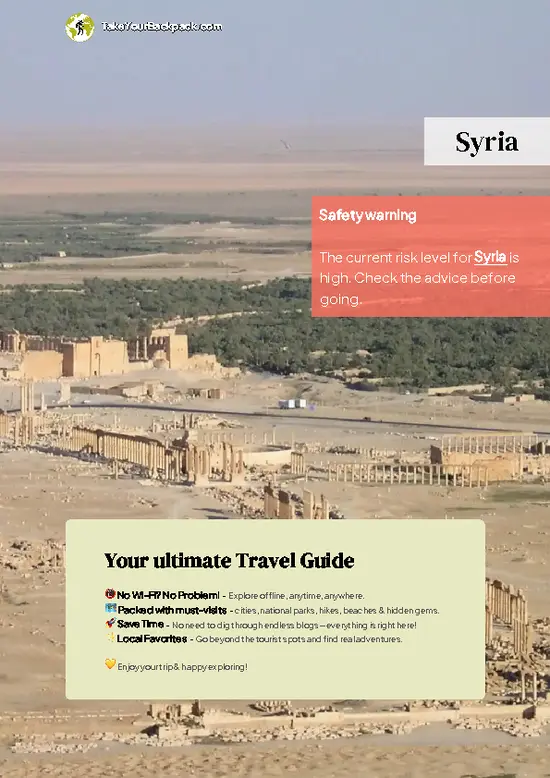
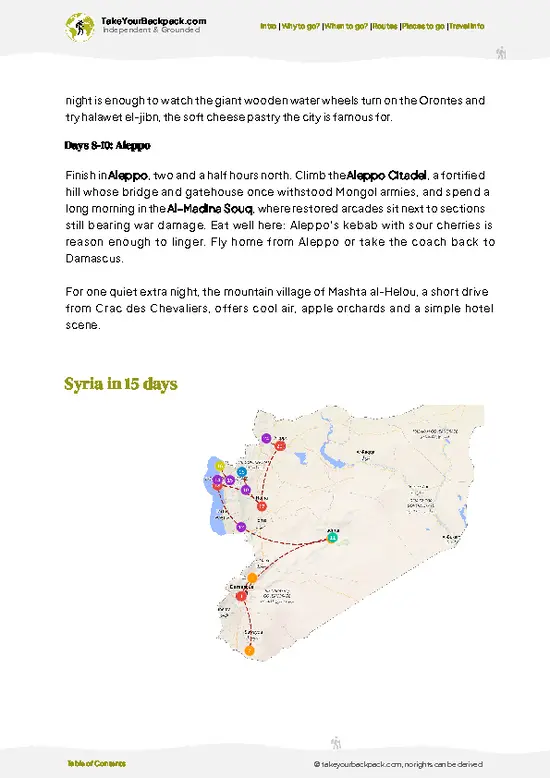
- Citadel of Aleppo (Qalat Halab) — The hilltop fortress that defines the city: layered fortifications from Hellenistic to Ottoman times, brutal wartime scars, and one of the best vantage points for a feel of Aleppo’s scale and history.
- Al-Madina Souq (the Old Covered Market) — A labyrinth of alleys, khans and stalls where you can still find copperware, spices, textiles and old caravan routes folded into daily life; parts were restored and it’s the real cultural pulse of the city.
- Great Mosque of Aleppo (Jami’ al-Qaymariyya / Umayyad-era mosque) — One of Aleppo’s oldest religious sites; the minaret was destroyed in the war but the prayer hall, courtyard and atmosphere tell centuries of faith, art and conflict in one place.
- Al-Jdayde (Jdeideh) Quarter — The old Christian quarter of narrow
- Citadel of Aleppo (Qalat Halab) — The hilltop fortress that defines the city: layered fortifications from Hellenistic to Ottoman times, brutal wartime scars, and one of the best vantage points for a feel of Aleppo’s scale and history.
- Al-Madina Souq (the Old Covered Market) — A labyrinth of alleys, khans and stalls where you can still find copperware, spices, textiles and old caravan routes folded into daily life; parts were restored and it’s the real cultural pulse of the city.
- Great Mosque of Aleppo (Jami’ al-Qaymariyya / Umayyad-era mosque) — One of Aleppo’s oldest religious sites; the minaret was destroyed in the war but the prayer hall, courtyard and atmosphere tell centuries of faith, art and conflict in one place.
- Al-Jdayde (Jdeideh) Quarter — The old Christian quarter of narrow streets, ornate facades and courtyard mansions; wander here for authentic neighborhood life, small galleries and churches away from the main tourist trail.
- Beit Ghazaleh (Ghazaleh House) — A restored Ottoman-era mansion in Jdaydeh with carved woodwork, painted ceilings and an intimate museum vibe — a great spot to see traditional Aleppine domestic architecture up close.
- Bab al-Faraj Clock Tower — A late-19th/early-20th-century landmark in downtown Aleppo; it’s a useful meeting point and a good snapshot of the city’s more modern civic life and street energy.
- Khan al-Wazir — One of the larger caravanserais off the main souq; the courtyard architecture and surrounding workshops give you a sense of the city’s trading past and, often, small cafes or craft stalls to poke around.
- Khan al-Nahhasin (Copperworkers’ Khan) — A compact stretch of traditional metalworkers’ shops where you can watch artisans hammer and chase brass and copper — a hands-on reminder that craft culture in Aleppo still survives.
- Aleppo soap workshops and the Souk al-Saboun area — Aleppo’s famed olive-oil soap is made and sold here; small workshops will show the process and you can buy a kilo of genuinely local soap as a practical souvenir.
- Historic Hammams (examples like Hammam Yalbugha and others) — Ottoman-era bath architecture is everywhere; even if you don’t take the steam, the tiled domes, carved stone and social history of these places are worth seeing — some still operate as functioning baths.
Spotted a mistake or missing something? Contact us.

 Best Backpacking
.jpg) Hi, I’m Johan (Netherlands 🇳🇱), the creator of TakeYourBackpack. Over the past 3 decades, I’ve backpacked through 90+ countries across six continents, gaining extensive experience with independent travel, long-term trips, and overland routes.
Hi, I’m Johan (Netherlands 🇳🇱), the creator of TakeYourBackpack. Over the past 3 decades, I’ve backpacked through 90+ countries across six continents, gaining extensive experience with independent travel, long-term trips, and overland routes.