v2.webp)
The Courtyard at Dusk
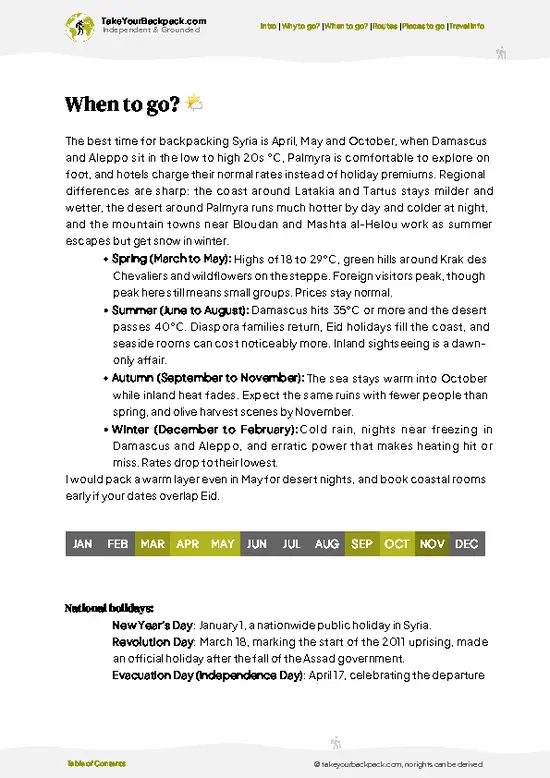
Forget the Instagram shots of empty marble. The real magic is in the living, breathing courtyard at dusk, when the call to prayer echoes off ancient stone and the city’s chaos hushes for a heartbeat. You’ll see families picnicking, kids darting between columns, and old men deep in chess matches. The gold mosaics catch the last light, and suddenly you’re not in a museum—you’re in the heart of a city that’s been alive for millennia. This is the pulse of Damascus, not a postcard.
The Shrine of John the Baptist
Yes, it’s crowded. Yes, you’ll queue behind pilgrims from every continent. But there’s a reason: this is one of the only places in the world where Christians and Muslims both revere the same relic—what’s believed to be the head of John the Baptist. The shrine’s green … read more 👉
Forget the Instagram shots of empty marble. The real magic is in the living, breathing courtyard at dusk, when the call to prayer echoes off ancient stone and the city’s chaos hushes for a heartbeat. You’ll see families picnicking, kids darting between columns, and old men deep in chess matches. The gold mosaics catch the last light, and suddenly you’re not in a museum—you’re in the heart of a city that’s been alive for millennia. This is the pulse of Damascus, not a postcard.
The Shrine of John the Baptist
Yes, it’s crowded. Yes, you’ll queue behind pilgrims from every continent. But there’s a reason: this is one of the only places in the world where Christians and Muslims both revere the same relic—what’s believed to be the head of John the Baptist. The shrine’s green … read more 👉
The Courtyard at Dusk
Forget the Instagram shots of empty marble. The real magic is in the living, breathing courtyard at dusk, when the call to prayer echoes off ancient stone and the city’s chaos hushes for a heartbeat. You’ll see families picnicking, kids darting between columns, and old men deep in chess matches. The gold mosaics catch the last light, and suddenly you’re not in a museum—you’re in the heart of a city that’s been alive for millennia. This is the pulse of Damascus, not a postcard.
The Shrine of John the Baptist
Yes, it’s crowded. Yes, you’ll queue behind pilgrims from every continent. But there’s a reason: this is one of the only places in the world where Christians and Muslims both revere the same relic—what’s believed to be the head of John the Baptist. The shrine’s green lamps and silver latticework are beautiful, but it’s the raw emotion of visitors—tears, prayers, whispered hopes—that hits hardest. This is faith, stripped of pretense.
The Umayyad Mosaics
You’ve seen mosaics before, but not like this. The Umayyad Mosque’s mosaics are a fever dream of gold, green, and blue, depicting a paradise of rivers and trees. They’re battered by time and war, but what’s left is still jaw-dropping. No two panels are quite the same. Stand close and you’ll see the fingerprints of artisans who worked here before Charlemagne was even born. This is art as survival.
The Minaret of the Bride
It’s not the tallest minaret in the world, but it’s one of the oldest, and it’s got stories layered thicker than the city’s traffic. The Minaret of the Bride is a symbol of Damascus itself—weathered, elegant, and stubbornly standing through centuries of earthquakes and invasions. You can’t climb it, but you can stand beneath it and feel the weight of history pressing down, then lifting you up.
The Mihrab and Prayer Hall
Step inside the prayer hall and you’ll feel the temperature drop and the noise fade. The mihrab (prayer niche) is carved with geometric precision, and the carpets are soft enough to tempt even the most devout to nap. Non-Muslims are welcome outside prayer times, and the sense of peace is almost physical. This is my personal favorite—there’s a humility here that Instagram can’t fake. It’s a place to breathe, reflect, and remember why you travel.
The Souq al-Hamidiyeh Approach
Technically not inside the mosque, but the approach through Souq al-Hamidiyeh is half the experience. Dodge baklava vendors, sidestep a donkey cart, and let the scent of cardamom and roasting nuts pull you forward. By the time you reach the mosque’s Roman arch, you’ll have earned your entrance. This is the real Damascus—messy, noisy, and utterly alive.
Forget the Instagram shots of empty marble. The real magic is in the living, breathing courtyard at dusk, when the call to prayer echoes off ancient stone and the city’s chaos hushes for a heartbeat. You’ll see families picnicking, kids darting between columns, and old men deep in chess matches. The gold mosaics catch the last light, and suddenly you’re not in a museum—you’re in the heart of a city that’s been alive for millennia. This is the pulse of Damascus, not a postcard.
The Shrine of John the Baptist
Yes, it’s crowded. Yes, you’ll queue behind pilgrims from every continent. But there’s a reason: this is one of the only places in the world where Christians and Muslims both revere the same relic—what’s believed to be the head of John the Baptist. The shrine’s green lamps and silver latticework are beautiful, but it’s the raw emotion of visitors—tears, prayers, whispered hopes—that hits hardest. This is faith, stripped of pretense.
The Umayyad Mosaics
You’ve seen mosaics before, but not like this. The Umayyad Mosque’s mosaics are a fever dream of gold, green, and blue, depicting a paradise of rivers and trees. They’re battered by time and war, but what’s left is still jaw-dropping. No two panels are quite the same. Stand close and you’ll see the fingerprints of artisans who worked here before Charlemagne was even born. This is art as survival.
The Minaret of the Bride
It’s not the tallest minaret in the world, but it’s one of the oldest, and it’s got stories layered thicker than the city’s traffic. The Minaret of the Bride is a symbol of Damascus itself—weathered, elegant, and stubbornly standing through centuries of earthquakes and invasions. You can’t climb it, but you can stand beneath it and feel the weight of history pressing down, then lifting you up.
The Mihrab and Prayer Hall
Step inside the prayer hall and you’ll feel the temperature drop and the noise fade. The mihrab (prayer niche) is carved with geometric precision, and the carpets are soft enough to tempt even the most devout to nap. Non-Muslims are welcome outside prayer times, and the sense of peace is almost physical. This is my personal favorite—there’s a humility here that Instagram can’t fake. It’s a place to breathe, reflect, and remember why you travel.
The Souq al-Hamidiyeh Approach
Technically not inside the mosque, but the approach through Souq al-Hamidiyeh is half the experience. Dodge baklava vendors, sidestep a donkey cart, and let the scent of cardamom and roasting nuts pull you forward. By the time you reach the mosque’s Roman arch, you’ll have earned your entrance. This is the real Damascus—messy, noisy, and utterly alive.
Spotted a mistake or missing something? Contact us.

 Best Backpacking
.jpg) Hi, I’m Johan (Netherlands 🇳🇱), the creator of TakeYourBackpack. Over the past 3 decades, I’ve backpacked through 90+ countries across six continents, gaining extensive experience with independent travel, long-term trips, and overland routes.
Hi, I’m Johan (Netherlands 🇳🇱), the creator of TakeYourBackpack. Over the past 3 decades, I’ve backpacked through 90+ countries across six continents, gaining extensive experience with independent travel, long-term trips, and overland routes.