×

Tanzania🇹🇿 | national parksRubondo IslandIsland forest, sitatunga canoe, Nile perch, shoreline birds | things to do and best time to go

Explore Ruaha National ParkExplore Saadani National Park

Backpacking in Rubondo Island
👍 Recommendednational park ranked #14
By Johan Kruseman 🇳🇱 | Updated October 22, 2026

The big decision at Rubondo Island is whether to commit the time and money to reach it, and the answer is yes if you want to walk among wildlife without a single minibus of tourists beside you. The park sits in the southwest corner of Lake Victoria, in northwestern Tanzania. Getting there takes planning, and the lodging options are thin. But you step off the boat into forest, spot sitatunga antelope in the papyrus, and hear fish eagles calling over water. Chimpanzees live here too, though they are hard to find. Bring bug spray for the tsetse flies.

Discover everything you want to know in the 📖 Tanzania Travel Guide.


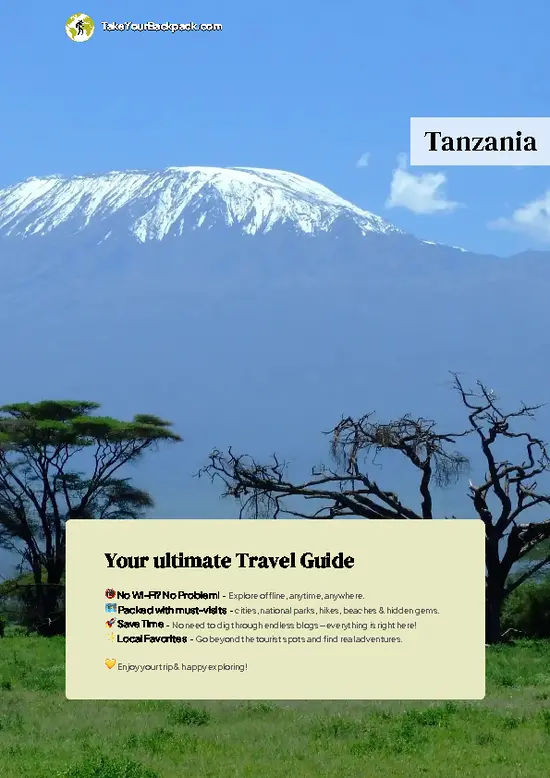
example page 0 from our offline Travel Guide for Tanzania
example page 1 from our offline Travel Guide for Tanzania
example page 2 from our offline Travel Guide for Tanzania
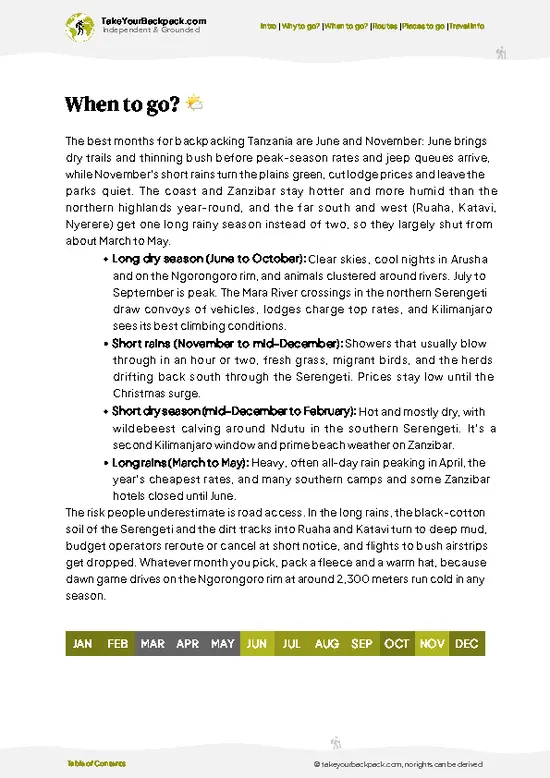
example page 3 from our offline Travel Guide for Tanzania
example page 4 from our offline Travel Guide for Tanzania
example page 5 from our offline Travel Guide for Tanzania
example page 6 from our offline Travel Guide for Tanzania
example page 7 from our offline Travel Guide for Tanzania
Loading the map 🌍
CLICK TO FILTER
cities
towns
landmarks
national parks
hikes
beaches
attractions
festivals
regions
SHOW COUNTRY’S BESTSHOW ALL

✨ Why go?
Ranked #14 national park in Tanzania
Why visitors keep coming back

Rubondo Island suits independent travelers who want wilderness without the crowds of the northern circuit. Here you walk with a ranger rather than ride in a vehicle, so the island reads as a walking and boating park where you set the pace. With fewer than a few thousand visitors a year, you often have a forest trail entirely to yourself. The lake gives you extra options: canoe trips through the papyrus for sitatunga, and fishing for Nile perch from a small boat. If you like finding your own wildlife rather than chasing a checklist, this is the place. Camping on the shore beats any lodge for atmosphere, and the lake breeze keeps nights comfortable.

💡 HighlightsPlaces and moments you shouldn't skip

  1. Sitatunga in the papyrus: These shy, water-loving antelope have splayed hooves made for swamp. A quiet canoe at dawn gives you the best chance of seeing one.
  2. Chimpanzee tracking: A small group introduced to the island lives in the forest. Tracking is slow and uncertain, but a sighting is memorable.
  3. Fish eagle and bird watching: Over 400 bird species have been recorded, including African fish eagles, kingfishers and herons along the shoreline.
  4. Sport fishing for Nile perch: Boat trips on Lake Victoria can produce very large fish, usually on a catch and release basis.
  5. Forest walks with a ranger: Trails run through lush forest with giraffe, hippo and elephant introduced to the island, plus colobus and vervet monkeys in the trees.
  6. Hippo and crocodile spotting: Quiet bays hold hippos and crocodiles,
… read more 👉
  1. Sitatunga in the papyrus: These shy, water-loving antelope have splayed hooves made for swamp. A quiet canoe at dawn gives you the best chance of seeing one.
  2. Chimpanzee tracking: A small group introduced to the island lives in the forest. Tracking is slow and uncertain, but a sighting is memorable.
  3. Fish eagle and bird watching: Over 400 bird species have been recorded, including African fish eagles, kingfishers and herons along the shoreline.
  4. Sport fishing for Nile perch: Boat trips on Lake Victoria can produce very large fish, usually on a catch and release basis.
  5. Forest walks with a ranger: Trails run through lush forest with giraffe, hippo and elephant introduced to the island, plus colobus and vervet monkeys in the trees.
  6. Hippo and crocodile spotting: Quiet bays hold hippos and crocodiles, best viewed from a boat.
  7. Beach and island picnics: Sandy coves and rocky outcrops on smaller islets make a calm break from the trail.
Rubondo Island requires a ranger for every walk and a boat for water activities, so book both ahead through the park office or your lodge, along with chimpanzee tracking.
Spotted a mistake or missing something? Contact us.

🌤️ When to go?Seasonal considerations and timing

  • Dry Season (June to October): Rubondo Island is easiest now, with trails firm, boat crossings calmer and sitatunga and chimpanzee tracking more predictable. Days run 27-31°C (81-88°F), nights 15-19°C (59-66°F). Lodge rates peak, and July to August is the busiest.
  • Short Rains (November to December): Brief afternoon showers cool things to 24-29°C (75-84°F). Migratory birds arrive and the forest turns green, with fewer visitors.
  • Long Rains (March to May): Heavy downpours soften trails, mosquitoes multiply, and some camps close or discount. Temperatures sit around 23-28°C (73-82°F).
  • Daylight: Near the equator, expect roughly 12 hours of light in every month.
Book the boat transfer and your lodge early if you plan to travel in July or August.

source: climatestotravel.comJANJanuary: fair for travelingFEBFebruary: fair for travelingMARMarch: fair for travelingAPRApril: fair for travelingMAYMay: fair for travelingJUNJune: excellent for travelingJULJuly: excellent for travelingAUGAugust: highly recommended for travelingSEPSeptember: highly recommended for travelingOCTOctober: highly recommended for travelingNOVNovember: fair for travelingDECDecember: fair for traveling
when-to-go

✈️ The backpacker research shortcutTanzania Travel Guide

An offline-friendly backpacking guide with optimized travel routes, ranked highlights, transport advice, and the best areas to stay.
example page 0 from our offline Travel Guide for Tanzania
example page 1 from our offline Travel Guide for Tanzania
example page 2 from our offline Travel Guide for Tanzania
example page 3 from our offline Travel Guide for Tanzania
example page 4 from our offline Travel Guide for Tanzania
example page 5 from our offline Travel Guide for Tanzania
example page 6 from our offline Travel Guide for Tanzania
example page 7 from our offline Travel Guide for Tanzania
The digital guide (396 pages) contains:
✅ 103 highlights, ranked by travel appeal
✅ Optimized 7, 14 & 21-day travel routes
✅ Cities, national parks, landmarks, beaches
✅ How to get around
✅ Offline-friendly for travel without Wi-Fi
👉 Click to see all 30+ guide features

📅 Plan smarter in minutes, not weeks
✅ Month by month travel advice
✅ Festivals & national holidays
✅ Budget expectations

🗺️ Go to the right places, skip the overrated ones
✅ Honest pros & cons of destinations
✅ Top hikes, parks & viewpoints
✅ Lesser-known places most travelers miss
✅ Clear “worth it vs skip it” guidance

🛏️ Travel smoothly without rookie mistakes
✅ Best areas to stay
✅ Transport systems explained simply
✅ Common scams & safety advice
✅ SIM cards, money & practical tips

🌍 Understand the country, not just visit it
✅ Culture & traditions
✅ 52 Essential phrases & customs
✅ Festivals worth planning around
✅ Traveler-friendly historical context
✅ Insights that make places more meaningful

📱 Built for real travel conditions
✅ Fully downloadable PDF
✅ Works completely offline
✅ Optimized for phone use
✅ Useful in remote areas & buses
✅ Everything in one place
Stop searching, start planning
Get instant access to your full guide. 30‑day money-back guarantee.
+ Add another guide for just

By proceeding you agree to our terms.
Sent to your inbox immediately after payment • 100% Secure Checkout
Best Backpacking Travel Advisor 2025 tourism awardBest Backpacking
Travel Advisor
2025
What others say about Take Your Backpack Guides:
⭐⭐⭐⭐⭐
Fantastic, amazing amount of information!
⭐⭐⭐⭐⭐
My goodness this is amazing, it's what I've been looking for hats off too you!
⭐⭐⭐⭐⭐
I think this is absolutely BRILLIANT
⭐⭐⭐⭐
Very complete and informative. It's still missing places, but I gotta to commend you
⭐⭐⭐⭐⭐
This is truly amazing, thank you, can't wait to explore it with my kids!
⭐⭐⭐⭐⭐
Awesome resource, thank you!
⭐⭐⭐⭐⭐
This is amazing! Can't wait to explore the ones I haven't seen
⭐⭐⭐⭐
I love this! Well done, great idea.
⭐⭐⭐⭐⭐
Thanks for taking the time to make this gem!
⭐⭐⭐⭐⭐
This might be the best website I've ever seen.
⭐⭐⭐⭐⭐
Congratulations, and thank you so much for your work; it's incredibly valuable.
⭐⭐⭐⭐
In all seriousness I think you did a great job pointing out the important spots
⭐⭐⭐⭐⭐
10/10 very good
⭐⭐⭐⭐⭐
As someone who's only just starting to visit regularly this is awesome, thank you.
⭐⭐⭐⭐
Thank you very much! I'm going to visit my dad, it's going to be very useful!
⭐⭐⭐⭐⭐
This is really cool! We'll be travelling for the first time and this definitely come in handy.
⭐⭐⭐⭐⭐
You are now our minister of culture, congratulations 👨‍💼
⭐⭐⭐⭐⭐
Just wanted to tell you that this is a pearl! Going to follow your recommendations.
⭐⭐⭐⭐⭐
This is so cool. I'll definitely be using the resource for my travels soon.
⭐⭐⭐⭐⭐
This is very impressive! Good work.
⭐⭐⭐⭐⭐
This is an amazing and informative site. Very well done!

🛏️ Where to stay?How to pick the right area

The best places to stay on Rubondo Island are inside the park itself, since the island has no villages. Budget travelers use the Rubondo Island National Park campsites near the Kageye headquarters, which have basic facilities, and the TANAPA bandas (simple cottages) nearby. Both put you minutes from the shoreline and forest trails. Higher-priced options include Rubondo Island Camp, a tented lodge on the beach, which is a real splurge but includes guided activities. On the mainland, Mwanza is the main gateway city, with plenty of hostels and guesthouses for a night before or after the trip. Nkome, … read more 👉
The best places to stay on Rubondo Island are inside the park itself, since the island has no villages. Budget travelers use the Rubondo Island National Park campsites near the Kageye headquarters, which have basic facilities, and the TANAPA bandas (simple cottages) nearby. Both put you minutes from the shoreline and forest trails. Higher-priced options include Rubondo Island Camp, a tented lodge on the beach, which is a real splurge but includes guided activities. On the mainland, Mwanza is the main gateway city, with plenty of hostels and guesthouses for a night before or after the trip. Nkome, Kasenda and Muganza are smaller lakeside bases for park boat transfers, with only basic guesthouses. Bring food from Mwanza, because supplies on the island are very limited.

👛 Costs (as of 22 October 2026)What things cost and how to budget

Rubondo Island costs a backpacker about US$150 to 190 a day when camping and sharing transfers. The island is remote, so most spending goes on fees and transport.
CategoryBudget RangeLocal Reality
Park entranceUS$30 to 40Per 24 hours for foreign adults, with conservation fees paid by card or in advance.
Camping or bandasUS$30 to 50Public campsites are cheaper; bandas are pricier. Lodge tents run US$300 or more.
TransportUS$40 to 60Shared share of the boat transfer from the mainland, plus road transport from Mwanza.
Guides and rangersUS$20 to 30Ranger escort fees for walks, with boat activities extra.
Food and suppliesUS$15 to 25Buy staples in Mwanza, since island options are minimal.
Total Daily BudgetUS$155Based on high season camping and shared transport.


source: tanzaniaparks.go.tz
⚠️ Prices can change and everyone travels differently, so take this as a rough guide. Hope it helps you plan your adventure!

🥾 TrailsExploring Rubondo Island: trails, terrain, and views

Rubondo Island offers guided walks, since entering the forest alone is not allowed, so every route starts with a ranger at the park headquarters or shoreline camp.
  • Forest walks: Short walks of 1 to 3 hours, easy, on flat to gently rolling forest trails with a chance of monkeys, bushbuck and birds.
  • Chimpanzee tracking: Half a day, moderate, through dense undergrowth. Sightings are never guaranteed, but the rangers know where the group has been feeding.
  • Shoreline walks: Easy, 1 to 2 hours, sand and rock along Lake Victoria with birds, hippo tracks and views of small islets.
  • Canoe and boat outings: Calm
… read more 👉
Rubondo Island offers guided walks, since entering the forest alone is not allowed, so every route starts with a ranger at the park headquarters or shoreline camp.
  • Forest walks: Short walks of 1 to 3 hours, easy, on flat to gently rolling forest trails with a chance of monkeys, bushbuck and birds.
  • Chimpanzee tracking: Half a day, moderate, through dense undergrowth. Sightings are never guaranteed, but the rangers know where the group has been feeding.
  • Shoreline walks: Easy, 1 to 2 hours, sand and rock along Lake Victoria with birds, hippo tracks and views of small islets.
  • Canoe and boat outings: Calm water, suitable for beginners, and the best way to see sitatunga and fish eagles.
Wear long sleeves and neutral colors, since tsetse flies are common in the forest. The island is quiet, with very few other visitors. Access is by boat or small plane, and there is no regular public transport onto the island, so arrange the crossing in advance through the park or a lodge. A park entrance fee applies, along with a ranger fee and camping charges, payable at the gate.
⚠️ Hiking info can sometimes be outdated or inaccurate. Before you hit the trail, check the latest conditions with locals. If you do spot anything that's off, I'd love to hear from you, so I can update it for fellow travelers.

🛡️ SafetySafety Tips and Common Scams in Rubondo Island

Rubondo Island is straightforward and well managed, but it asks for sensible lake and forest habits. Boat crossings on Lake Victoria can turn choppy in afternoon winds, so travel in the morning and wear a life jacket. Trails are flat to gently rolling, though humid and muddy after rain. Mosquitoes carry malaria, so take prophylaxis and cover up at dusk. Hippos and crocodiles live along the shoreline, so never swim or walk the water’s edge at night. Elephants, buffalo and chimpanzees are present, and rangers accompany all walks. Keep your distance and follow their instructions. Carry plenty of water, because the heat builds fast.

FAQFrequently asked questions about Rubondo Island

Two to three days works best for Rubondo Island, with one full day for the forest walk to spot sitatunga and birds and another for a boat trip. Reaching it from Mwanza takes half a day by road and boat, so a single night wastes most of it. Chimpanzee tracking needs an extra morning if you want a proper attempt.
Rubondo Island cannot be reached without arranging transport, but you do not need your own car. Take a bus from Mwanza to a mainland gateway such as Nkome (about 4 to 5 hours), then take the park boat to the island. Once there, you explore on foot with rangers, and a vehicle is not necessary.
Yes, Rubondo Island requires a park entrance fee, which is roughly US$30 to 40 per 24 hours for foreign adults, plus extra charges for camping and ranger escorts. No separate trekking permit is needed for the standard walks, but chimpanzee tracking costs more. Payment is by card through TANAPA, so book ahead and carry some backup cash.
⚠️ Things can change over time, so always validate details locally before you go.

Other Tanzanian national parks near Rubondo Island

Explore more nearby:


💡 Not sure where to go next?
Create a personalized itinerary for Tanzania including Rubondo Island and the places that fit your trip.

Generate my itinerary

👉 Discover all national parks

Or checkout all Tanzania has to offer (think cities, towns, villages, national parks, hikes, beaches, festivals)
Country photo of Tanzania

We 💚 feedbackWhat to keep in mind

Rubondo Island trips go wrong when travelers squeeze it into one night and skip the water. Give yourself at least two full days, book the canoe for early morning, and pack insect repellent plus a good hat. The sitatunga reward the early riser.

✍️ Help improve this page!
The information on this page is based on in-depth research, insights shared by experienced travelers, and feedback from the local travel community in Tanzania. While every effort is made to keep the information accurate and current, conditions can change — so if you spot anything incorrect or outdated, please get in touch.


🙋‍♂️ Give feedback

👋 Meet the founderWho’s Behind Take Your Backpack?

Johan, backpacker and founder of TakeYourBackpackHi, I’m Johan (Netherlands 🇳🇱), the creator of TakeYourBackpack. Over the past 3 decades, I’ve backpacked through 90+ countries across six continents, gaining extensive experience with independent travel, long-term trips, and overland routes.

This site is built on a combination of firsthand travel experience and carefully curated insights from other backpackers. Many guides are based on places I’ve personally visited, while others bring together tips, observations, and practical advice shared by trusted travelers I’ve met along the way.

The goal is to provide realistic, experience-driven guidance — not generic itineraries — so you can explore destinations with better context, clearer expectations, and more confidence.