×
Mount Kilimanjaro National Park

Tanzania🇹🇿 | national parksMount Kilimanjaro National ParkAfrica’s highest peak, alpine desert, glacier views, rainforest trails | things to do and best time to go

Explore Mikumi National ParkExplore Ngorongoro Conservation Area

Backpacking in Mount Kilimanjaro
UNESCO World Heritage site
By Johan Kruseman 🇳🇱 | Updated October 15, 2026

The first real fork in the road at Mount Kilimanjaro National Park is whether you’ll attempt the summit or stick to the lower slopes. This isn’t just about ambition—it’s about money, time, and how much discomfort you’re willing to buy. Kilimanjaro sits in northern Tanzania, near the Kenyan border, and it’s the kind of place that lures you in with its snow-capped peak and then quietly empties your wallet if you’re not careful. The park is famous for its high-altitude drama, but the price of entry is steep—literally and financially. Multi-day treks are mandatory for the summit, and you’ll need to hire guides and porters, which is non-negotiable and expensive. The scenery is dramatic, shifting from rainforest to alpine desert, but wildlife is sparse compared to Serengeti or Ngorongoro. Budget accommodation is limited to basic campsites, and crowds can be thick in high season. Kilimanjaro is less about animal encounters and more about the challenge—if you want classic safari wildlife, look elsewhere. But if you want to test your limits, this is the mountain that sets the bar.

Discover everything you want to know in the 📖 Tanzania Travel Guide.


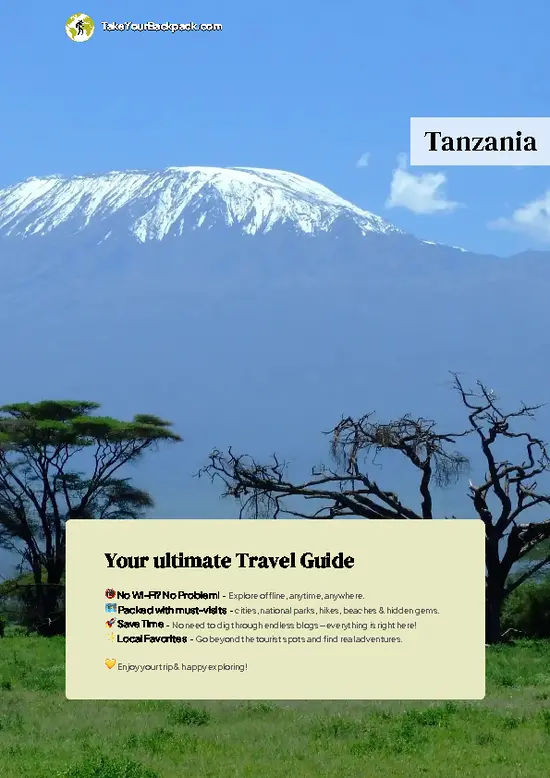
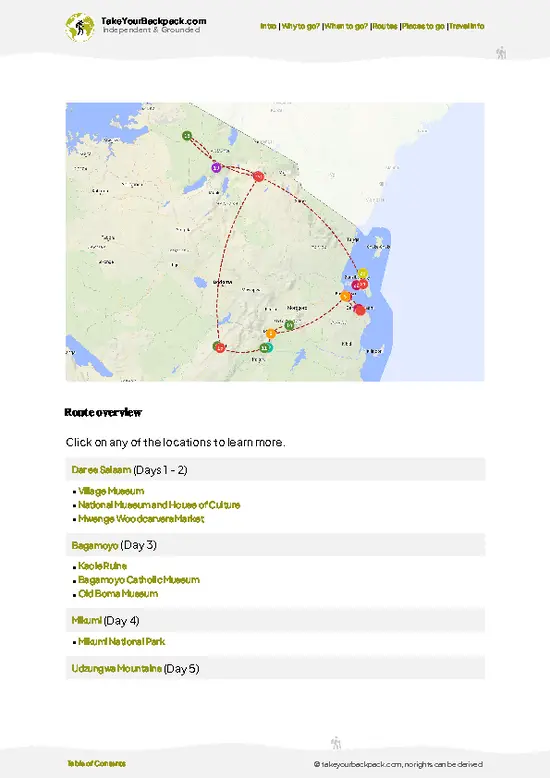
example page 0 from our offline Travel Guide for Tanzania
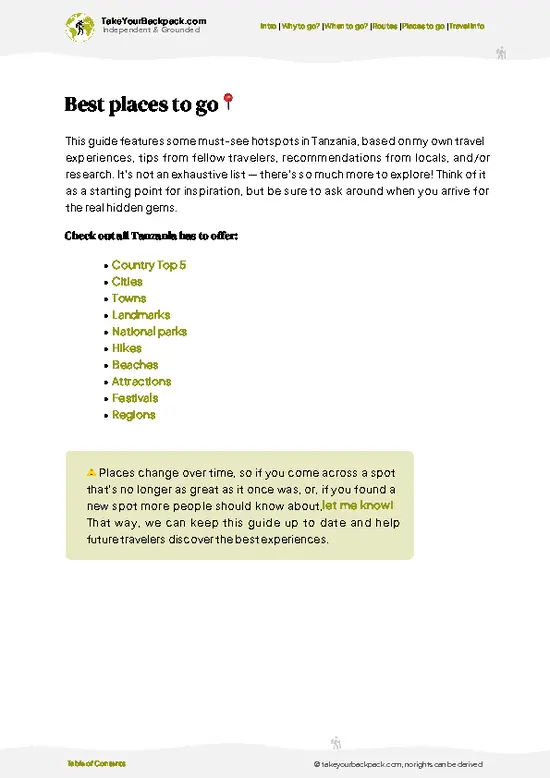
example page 1 from our offline Travel Guide for Tanzania
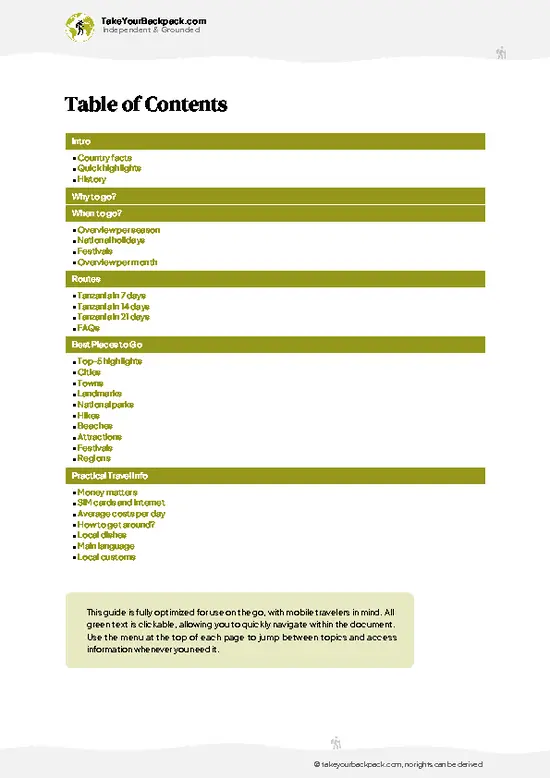
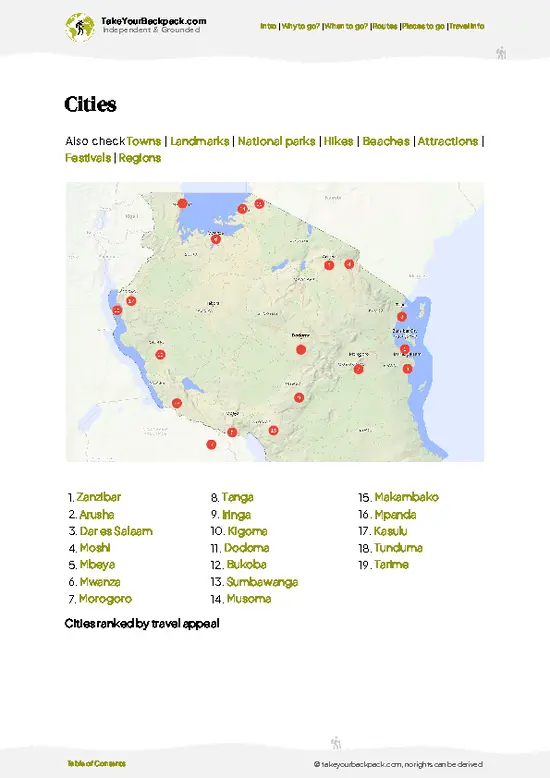
example page 2 from our offline Travel Guide for Tanzania
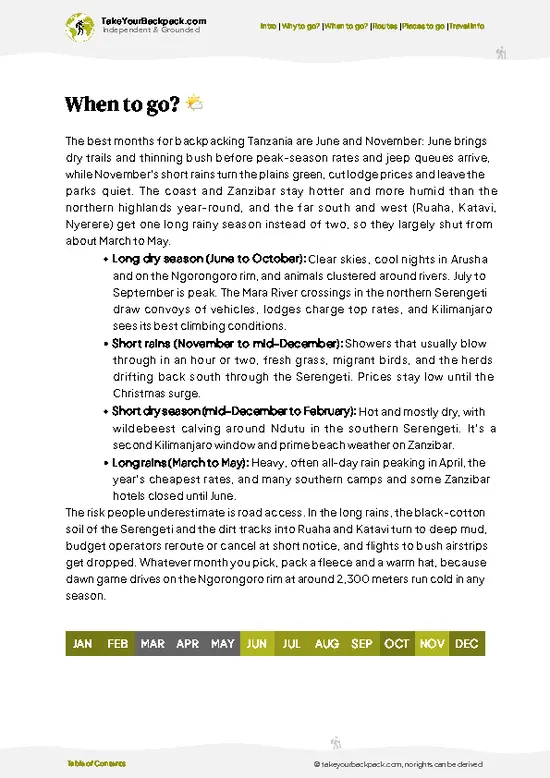
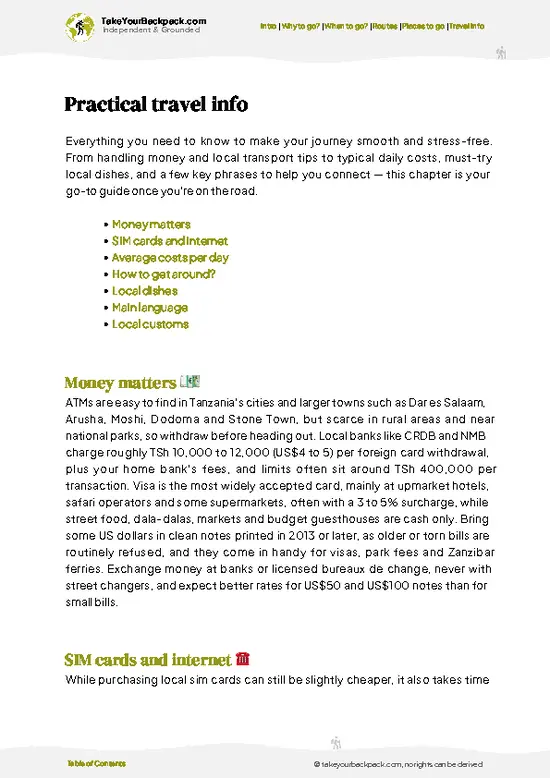
example page 3 from our offline Travel Guide for Tanzania
example page 4 from our offline Travel Guide for Tanzania
example page 5 from our offline Travel Guide for Tanzania
example page 6 from our offline Travel Guide for Tanzania
example page 7 from our offline Travel Guide for Tanzania
Loading the map 🌍
CLICK TO FILTER
cities
towns
landmarks
national parks
hikes
beaches
attractions
festivals
regions
SHOW COUNTRY’S BESTSHOW ALL

✨ Why go?
Ranked #99 national park in Tanzania
The unique appeal for travelers

Mount Kilimanjaro National Park attracts backpackers for several compelling reasons. First, independent exploration is a major draw. Many travelers relish the freedom to set their own pace and choose their own routes, especially on the less-traveled paths. This autonomy allows for a more personal connection with the landscape.

Budget-conscious adventurers appreciate the camping and hostel options nearby. Affordable accommodations make it easier to stretch your funds, allowing you to invest more in experiences rather than just a place to sleep.

The trail variety is another highlight. From lush rainforests to stark alpine deserts, each section offers a unique perspective of the mountain. This diversity caters to different skill levels and interests, making it accessible for both novices and … read more 👉
Mount Kilimanjaro National Park attracts backpackers for several compelling reasons. First, independent exploration is a major draw. Many travelers relish the freedom to set their own pace and choose their own routes, especially on the less-traveled paths. This autonomy allows for a more personal connection with the landscape.

Budget-conscious adventurers appreciate the camping and hostel options nearby. Affordable accommodations make it easier to stretch your funds, allowing you to invest more in experiences rather than just a place to sleep.

The trail variety is another highlight. From lush rainforests to stark alpine deserts, each section offers a unique perspective of the mountain. This diversity caters to different skill levels and interests, making it accessible for both novices and seasoned hikers.

While guided tours are popular, the park is also suitable for self-guided travelers. However, it’s crucial to be well-prepared. Navigating the terrain without a guide can be challenging, so having a solid plan is essential. This balance of independence and support makes Kilimanjaro a top choice for backpackers.

💡 HighlightsTop highlights of Mount Kilimanjaro

  • Uhuru Peak (Kibo Summit): The real reason most people come — Africa’s highest point at about 5,895 m. The sunrise from the crater rim is brutal, beautiful and unforgettable; expect thin air, bitter cold and a massive sense of achievement when you reach it.
  • Shira Plateau: A wide, windswept high plateau with moorland plants and panoramas of both Kibo and Mawenzi. It feels otherworldly and is one of the best places on the mountain to relax, take photos and acclimatize without constant climbing.
  • Lava Tower: A dramatic 400-500 m high volcanic plug at roughly 4,500-4,600 m that most routes pass by. It’s a great acclimatization landmark and a photogenic, jagged outcrop that breaks up long days on the trail.
  • Barranco Wall: A steep, exposed scramble that’s more fun than scary for most trekkers
… read more 👉
  • Uhuru Peak (Kibo Summit): The real reason most people come — Africa’s highest point at about 5,895 m. The sunrise from the crater rim is brutal, beautiful and unforgettable; expect thin air, bitter cold and a massive sense of achievement when you reach it.
  • Shira Plateau: A wide, windswept high plateau with moorland plants and panoramas of both Kibo and Mawenzi. It feels otherworldly and is one of the best places on the mountain to relax, take photos and acclimatize without constant climbing.
  • Lava Tower: A dramatic 400-500 m high volcanic plug at roughly 4,500-4,600 m that most routes pass by. It’s a great acclimatization landmark and a photogenic, jagged outcrop that breaks up long days on the trail.
  • Barranco Wall: A steep, exposed scramble that’s more fun than scary for most trekkers — a must-do on the southern routes. The views over Karanga Valley and the sense of achievement after the wall are big reasons it’s famous.
  • Mawenzi Peaks: The jagged, cathedral-like spires opposite Kibo — dramatic, rugged and very photogenic. You won’t summit Mawenzi on most routes, but the skyline it creates is one of Kilimanjaro’s signature looks.
  • Ecological Zones & Rainforest Wildlife: Kilimanjaro’s vertical ecosystems — rainforest, heath, moorland, alpine desert and summit ice — change every few hours of hiking. Lower slopes hide colobus and blue monkeys, diverse birds and giant lobelias, so the trek is part mountain climb, part natural history walk.
  • Furtwängler Glacier and Summit Icefields: Small, brilliant blue glaciers clinging to the crater rim that are vanishing fast. They’re visually striking and a stark, up-close example of climate change on a tropical mountain.
Spotted a mistake or missing something? Contact us.

Things to do around Mount Kilimanjaro National Park

Ratings based on Tripadvisor reviews. When you book through this link, you support our work at no extra cost to you.

🌤️ When to go?Best time to explore Mount Kilimanjaro

  • Topic: Weather and Temperature: The best windows are January to mid-March and late June to October. These months avoid the heavy rains typical in April-May and November. Daytime temps at the base hover around 20-25°C (68-77°F), but nights can plunge below freezing near the summit, so pack layers.
  • Topic: Daylight Hours: Near the equator, daylight stays steady year-round, roughly 12 hours. This consistency means you won’t lose precious trekking time to short days, but early starts are still key to avoid afternoon storms.
  • Topic: Crowds: Peak season (June to October) draws the most trekkers, which means busier trails and higher prices. For a quieter climb, aim for the shoulder seasons, but be ready for more unpredictable weather.
  • Topic: Seasonal Activities: Wildlife spotting is better during
… read more 👉
  • Topic: Weather and Temperature: The best windows are January to mid-March and late June to October. These months avoid the heavy rains typical in April-May and November. Daytime temps at the base hover around 20-25°C (68-77°F), but nights can plunge below freezing near the summit, so pack layers.
  • Topic: Daylight Hours: Near the equator, daylight stays steady year-round, roughly 12 hours. This consistency means you won’t lose precious trekking time to short days, but early starts are still key to avoid afternoon storms.
  • Topic: Crowds: Peak season (June to October) draws the most trekkers, which means busier trails and higher prices. For a quieter climb, aim for the shoulder seasons, but be ready for more unpredictable weather.
  • Topic: Seasonal Activities: Wildlife spotting is better during the dry seasons when animals gather around water sources. The mountain itself offers the same climbing challenge year-round, but clearer skies in dry months improve summit views.
  • Topic: Price Fluctuations: Expect higher costs during peak months due to demand for guides, permits, and accommodation. Booking in the off-season can save money but comes with trade-offs in weather and trail conditions.
Pro-tip: Prioritize dry-season climbs for safer, more comfortable trekking—even if it means paying a bit more—because bad weather on Kilimanjaro isn’t just inconvenient; it can be dangerous and energy-sapping.


source: climatestotravel.comJANJanuary: excellent for travelingFEBFebruary: excellent for travelingMARMarch: highly recommended for travelingAPRApril: fair for travelingMAYMay: fair for travelingJUNJune: highly recommended for travelingJULJuly: excellent for travelingAUGAugust: excellent for travelingSEPSeptember: excellent for travelingOCTOctober: highly recommended for travelingNOVNovember: fair for travelingDECDecember: good for traveling
Tanzania - Mount Kilimanjaro National Park

✈️ The backpacker research shortcutTanzania Travel Guide

An offline-friendly backpacking guide with optimized travel routes, ranked highlights, transport advice, and the best areas to stay.
example page 0 from our offline Travel Guide for Tanzania
example page 1 from our offline Travel Guide for Tanzania
example page 2 from our offline Travel Guide for Tanzania
example page 3 from our offline Travel Guide for Tanzania
example page 4 from our offline Travel Guide for Tanzania
example page 5 from our offline Travel Guide for Tanzania
example page 6 from our offline Travel Guide for Tanzania
example page 7 from our offline Travel Guide for Tanzania
The digital guide (396 pages) contains:
✅ 103 highlights, ranked by travel appeal
✅ Optimized 7, 14 & 21-day travel routes
✅ Cities, national parks, landmarks, beaches
✅ How to get around
✅ Offline-friendly for travel without Wi-Fi
👉 Click to see all 30+ guide features

📅 Plan smarter in minutes, not weeks
✅ Month by month travel advice
✅ Festivals & national holidays
✅ Budget expectations

🗺️ Go to the right places, skip the overrated ones
✅ Honest pros & cons of destinations
✅ Top hikes, parks & viewpoints
✅ Lesser-known places most travelers miss
✅ Clear “worth it vs skip it” guidance

🛏️ Travel smoothly without rookie mistakes
✅ Best areas to stay
✅ Transport systems explained simply
✅ Common scams & safety advice
✅ SIM cards, money & practical tips

🌍 Understand the country, not just visit it
✅ Culture & traditions
✅ 52 Essential phrases & customs
✅ Festivals worth planning around
✅ Traveler-friendly historical context
✅ Insights that make places more meaningful

📱 Built for real travel conditions
✅ Fully downloadable PDF
✅ Works completely offline
✅ Optimized for phone use
✅ Useful in remote areas & buses
✅ Everything in one place
Stop searching, start planning
Get instant access to your full guide. 30‑day money-back guarantee.
+ Add another guide for just

By proceeding you agree to our terms.
Sent to your inbox immediately after payment • 100% Secure Checkout
Best Backpacking Travel Advisor 2025 tourism awardBest Backpacking
Travel Advisor
2025
What others say about Take Your Backpack Guides:
⭐⭐⭐⭐⭐
Fantastic, amazing amount of information!
⭐⭐⭐⭐⭐
My goodness this is amazing, it's what I've been looking for hats off too you!
⭐⭐⭐⭐⭐
I think this is absolutely BRILLIANT
⭐⭐⭐⭐
Very complete and informative. It's still missing places, but I gotta to commend you
⭐⭐⭐⭐⭐
This is truly amazing, thank you, can't wait to explore it with my kids!
⭐⭐⭐⭐⭐
Awesome resource, thank you!
⭐⭐⭐⭐⭐
This is amazing! Can't wait to explore the ones I haven't seen
⭐⭐⭐⭐
I love this! Well done, great idea.
⭐⭐⭐⭐⭐
Thanks for taking the time to make this gem!
⭐⭐⭐⭐⭐
This might be the best website I've ever seen.
⭐⭐⭐⭐⭐
Congratulations, and thank you so much for your work; it's incredibly valuable.
⭐⭐⭐⭐
In all seriousness I think you did a great job pointing out the important spots
⭐⭐⭐⭐⭐
10/10 very good
⭐⭐⭐⭐⭐
As someone who's only just starting to visit regularly this is awesome, thank you.
⭐⭐⭐⭐
Thank you very much! I'm going to visit my dad, it's going to be very useful!
⭐⭐⭐⭐⭐
This is really cool! We'll be travelling for the first time and this definitely come in handy.
⭐⭐⭐⭐⭐
You are now our minister of culture, congratulations 👨‍💼
⭐⭐⭐⭐⭐
Just wanted to tell you that this is a pearl! Going to follow your recommendations.
⭐⭐⭐⭐⭐
This is so cool. I'll definitely be using the resource for my travels soon.
⭐⭐⭐⭐⭐
This is very impressive! Good work.
⭐⭐⭐⭐⭐
This is an amazing and informative site. Very well done!

🛏️ Where to stay?Best areas and accommodation options

When it comes to staying near Mount Kilimanjaro National Park, you have a few solid options that cater to backpackers without breaking the bank.

Inside the park, accommodations are limited. Most climbers opt for camping, which is a budget-friendly choice. You’ll need to book through a tour operator, as they handle permits and logistics. Camping allows you to immerse yourself in the mountain’s atmosphere, but be prepared for basic amenities.

If you prefer a bit more comfort, head to Moshi, a town just a short drive from the park entrance. Moshi is backpacker-friendly, with a range of hostels … read more 👉
When it comes to staying near Mount Kilimanjaro National Park, you have a few solid options that cater to backpackers without breaking the bank.

Inside the park, accommodations are limited. Most climbers opt for camping, which is a budget-friendly choice. You’ll need to book through a tour operator, as they handle permits and logistics. Camping allows you to immerse yourself in the mountain’s atmosphere, but be prepared for basic amenities.

If you prefer a bit more comfort, head to Moshi, a town just a short drive from the park entrance. Moshi is backpacker-friendly, with a range of hostels and guesthouses. Places like the Moshi Backpackers or the Kilimanjaro Home stay offer affordable beds and a chance to meet fellow adventurers. They often provide useful tips and connections for your climb.

Another option is Arusha, about an hour and a half away. It’s a larger city with more amenities, but the travel time can cut into your climbing prep.

Keep in mind that prices can spike during peak climbing seasons. Booking in advance can save you from last-minute surprises. Prioritize your energy and budget for the climb itself; those moments on the mountain are what you’re really here for.

👛 Costs (as of 15 October 2026)Money, prices, and spending tips

Visiting Mount Kilimanjaro National Park is an adventure that comes with its own set of costs. Here’s what you need to know to avoid any surprises.

First, park entry fees are a significant part of your budget. As of the latest estimates, expect to pay around $70 to $100 per person per day. This fee varies depending on the season and the length of your stay.

Next, if you’re planning to trek to the summit, you’ll need to hire a guide. This is not just a recommendation; it’s a requirement. Guide services typically range from $1,500 to $3,000 for a standard six to eight-day trek. This cost usually includes the guide, porters, and meals, but always check what’s included.

Accommodation before and after your trek can add up. Budget options in nearby towns like Moshi or Arusha can start at around … read more 👉
Visiting Mount Kilimanjaro National Park is an adventure that comes with its own set of costs. Here’s what you need to know to avoid any surprises.

First, park entry fees are a significant part of your budget. As of the latest estimates, expect to pay around $70 to $100 per person per day. This fee varies depending on the season and the length of your stay.

Next, if you’re planning to trek to the summit, you’ll need to hire a guide. This is not just a recommendation; it’s a requirement. Guide services typically range from $1,500 to $3,000 for a standard six to eight-day trek. This cost usually includes the guide, porters, and meals, but always check what’s included.

Accommodation before and after your trek can add up. Budget options in nearby towns like Moshi or Arusha can start at around $20 per night, while mid-range hotels might run you $50 to $100. Luxury lodges can easily exceed $200.

Don’t forget about gear rental if you don’t have your own. Renting equipment like sleeping bags and trekking poles can cost between $10 to $30 per item per day.

Lastly, factor in additional costs for tips. It’s customary to tip your guide and porters, which can add another $100 to $200 to your total expenses.

Being aware of these costs helps you allocate your budget wisely. This way, you can focus on the experience rather than financial stress.


source: tanzaniaparks.go.tz
⚠️ Prices can change and everyone travels differently, so take this as a rough guide. Hope it helps you plan your adventure!

🥾 TrailsDiscover Mount Kilimanjaro's top trails and natural wonders

The hiking opportunities in Mount Kilimanjaro National Park are nothing short of breathtaking. The park is home to Africa’s highest peak, and the trails offer a variety of landscapes, from lush rainforests to stark alpine deserts. You’ll encounter unique wildlife like monkeys and colorful birds, especially in the lower elevations. As you ascend, the air gets thinner and the terrain shifts dramatically, so be prepared for a physical challenge.

One of the most popular trails is the Marangu Route. Here are the details:
  • Length: 70 km (43 miles)
  • Estimated Duration: 5-6 days
  • Difficulty Level: Moderate
  • Key
… read more 👉
The hiking opportunities in Mount Kilimanjaro National Park are nothing short of breathtaking. The park is home to Africa’s highest peak, and the trails offer a variety of landscapes, from lush rainforests to stark alpine deserts. You’ll encounter unique wildlife like monkeys and colorful birds, especially in the lower elevations. As you ascend, the air gets thinner and the terrain shifts dramatically, so be prepared for a physical challenge.

One of the most popular trails is the Marangu Route. Here are the details:
  • Length: 70 km (43 miles)
  • Estimated Duration: 5-6 days
  • Difficulty Level: Moderate
  • Key Features: Stunning views, huts for accommodation, and the famous ”Coca-Cola” route.
  • Terrain: Varied, including rainforest, moorland, and alpine desert.

Another option is the Lemosho Route:
  • Length: 70 km (43 miles)
  • Estimated Duration: 7-8 days
  • Difficulty Level: Moderate to Challenging
  • Key Features: Less crowded, diverse ecosystems, and great views of the summit.
  • Terrain: Rainforest, heath, and high-altitude deserts.

Getting to the park is relatively straightforward. You can catch a bus to Moshi, which is the closest town, and from there, it’s a short taxi ride to the park entrance. However, be mindful that it can get a bit crowded, especially during peak climbing seasons. As for the entrance fee, it’s not exactly pocket change, so budget accordingly. You’ll want to check for the latest fees because they can change, but expect to pay around $70 per day for foreign visitors.
⚠️ Hiking info can sometimes be outdated or inaccurate. Before you hit the trail, check the latest conditions with locals. If you do spot anything that's off, I'd love to hear from you, so I can update it for fellow travelers.

🛡️ SafetyStaying Safe: What Travelers Should Know

Mount Kilimanjaro National Park is generally well-managed, but there are practical realities every backpacker should know. Weather can shift quickly; pack layers to adapt to temperature swings. The higher you go, the thinner the air gets, so acclimatization is key. Take your time—rushing can lead to altitude sickness, which is no joke.

The terrain varies. Some trails are steep and rocky, requiring careful footing. Navigation is straightforward, but always keep an eye on trail markers. River crossings are rare, but if you encounter one, assess the flow before crossing.

Wildlife is present, but encounters are typically low-key. Respect their space; don’t approach or feed animals.

First-timers often underestimate the importance of hydration and nutrition. Bring enough water and snacks to … read more 👉
Mount Kilimanjaro National Park is generally well-managed, but there are practical realities every backpacker should know. Weather can shift quickly; pack layers to adapt to temperature swings. The higher you go, the thinner the air gets, so acclimatization is key. Take your time—rushing can lead to altitude sickness, which is no joke.

The terrain varies. Some trails are steep and rocky, requiring careful footing. Navigation is straightforward, but always keep an eye on trail markers. River crossings are rare, but if you encounter one, assess the flow before crossing.

Wildlife is present, but encounters are typically low-key. Respect their space; don’t approach or feed animals.

First-timers often underestimate the importance of hydration and nutrition. Bring enough water and snacks to maintain your energy. With the right preparation, you can focus on the experience rather than the pitfalls.

FAQTraveler FAQ

6 to 9 days are typically needed to climb Mount Kilimanjaro, depending on the route chosen. Most popular routes like Machame or Lemosho take about 7 to 8 days to allow for proper acclimatization. Shorter climbs of 5 days are possible but increase the risk of altitude sickness.
Yes, you can visit Mount Kilimanjaro National Park without a car. Many climbers arrange transport from Moshi or Arusha to the park gate via shuttle, taxi, or organized tour transfers. Walking is required once inside the park for the climb itself.
Yes, an entrance fee and climbing permit are required for Mount Kilimanjaro National Park. The permit costs around $70 to $100 USD for the park entrance, plus additional fees for camping and rescue services. These permits must be purchased in advance through registered tour operators.
⚠️ Things can change over time, so always validate details locally before you go.

Other Tanzanian national parks near Mount Kilimanjaro

Explore more nearby:


💡 Not sure where to go next?
Create a personalized itinerary for Tanzania including Mount Kilimanjaro and the places that fit your trip.

Generate my itinerary

👉 Discover all national parks

Or checkout all Tanzania has to offer (think cities, towns, villages, national parks, hikes, beaches, festivals)
Country photo of Tanzania

We 💚 feedbackParting advice and final tips

Climbing Kilimanjaro is a journey that demands respect. The vibe shifts from lush rainforests to stark alpine desert, each step revealing a new world. Expect the unexpected: the sunrise from Uhuru Peak is a soul-stirring moment that makes the effort worthwhile. But here’s the catch—don’t underestimate altitude sickness. Acclimatize properly and hydrate like it’s your job. It’s not just about reaching the top; it’s about savoring every moment along the way. Trust me, those memories are what you’ll cherish most.

✍️ Help improve this page!
The information on this page is based on in-depth research, insights shared by experienced travelers, and feedback from the local travel community in Tanzania. While every effort is made to keep the information accurate and current, conditions can change — so if you spot anything incorrect or outdated, please get in touch.


🙋‍♂️ Give feedback

👋 Meet the founderWho’s Behind Take Your Backpack?

Johan, backpacker and founder of TakeYourBackpackHi, I’m Johan (Netherlands 🇳🇱), the creator of TakeYourBackpack. Over the past 3 decades, I’ve backpacked through 90+ countries across six continents, gaining extensive experience with independent travel, long-term trips, and overland routes.

This site is built on a combination of firsthand travel experience and carefully curated insights from other backpackers. Many guides are based on places I’ve personally visited, while others bring together tips, observations, and practical advice shared by trusted travelers I’ve met along the way.

The goal is to provide realistic, experience-driven guidance — not generic itineraries — so you can explore destinations with better context, clearer expectations, and more confidence.