×

Tanzania🇹🇿 | festivalsUhuru Torch RaceRelay flame, regional handovers, project openings, roadside crowds | things to do and best time to go

Explore Swahili Fashion WeekExplore Lushoto Cultural Tourism Festival

Backpacking in Uhuru Torch Race
👀 For curious travelersfestival ranked #14
By Johan Kruseman 🇳🇱 | Updated October 22, 2026

Mount Kilimanjaro’s summit hosts the torch’s most famous moment: in December 1961 the flame was first lit there, and every year since, a relay carries it across Tanzania. The Uhuru Torch Race runs through the whole of Tanzania, so you chase it town by town rather than visit one site. Expect brass bands, schoolchildren, officials and dancing crowds at regional stops. Dates and routes shift, so confirm stops with regional offices early and skip rigid bookings. Arrive at a stop an hour ahead because ceremonies start late. Carry small cash for snacks. Your first day could mean grabbing a spot at a town square, watching the runners arrive, and joining the celebration.

Discover everything you want to know in the 📖 Tanzania Travel Guide.


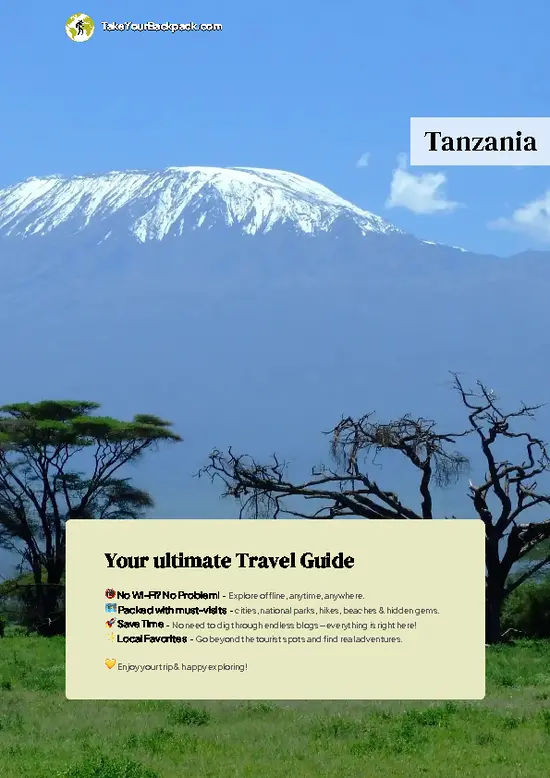
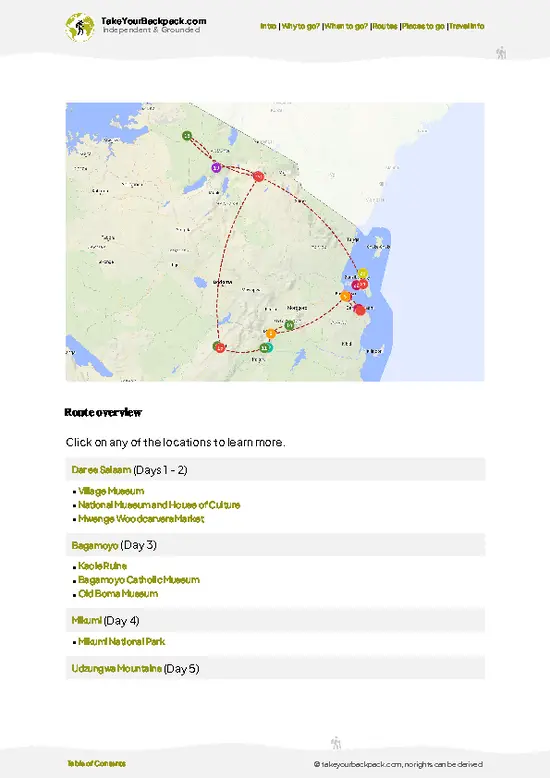
example page 0 from our offline Travel Guide for Tanzania
example page 1 from our offline Travel Guide for Tanzania
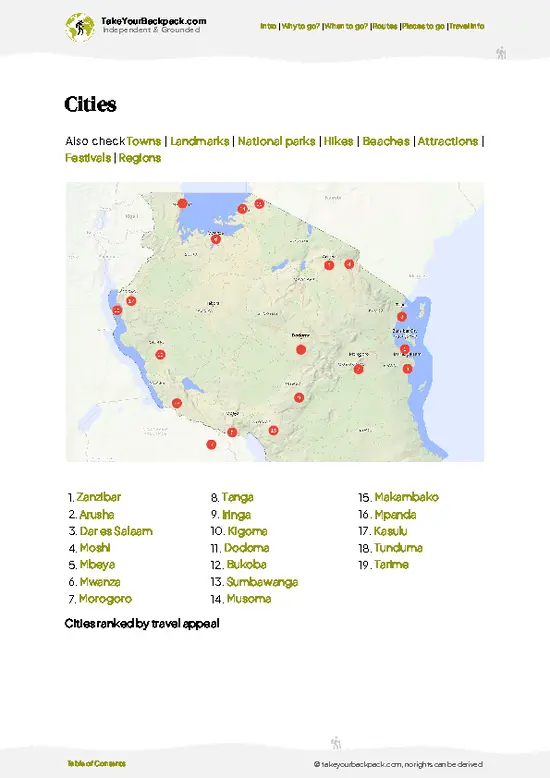
example page 2 from our offline Travel Guide for Tanzania
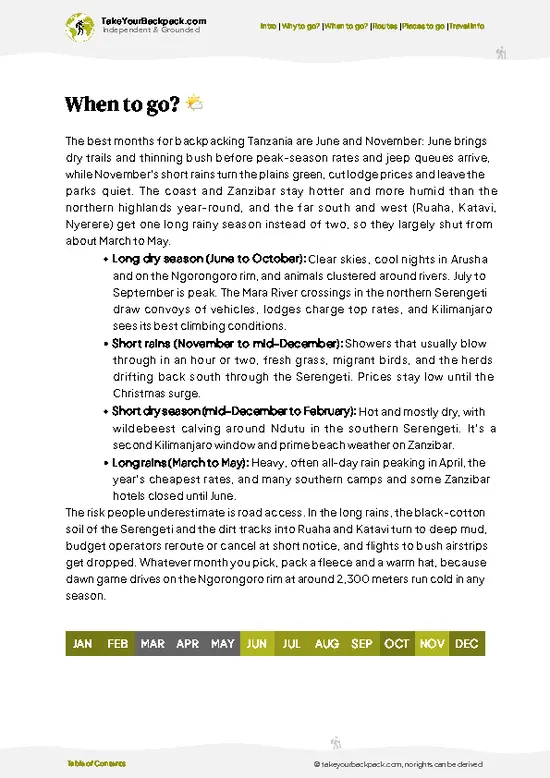
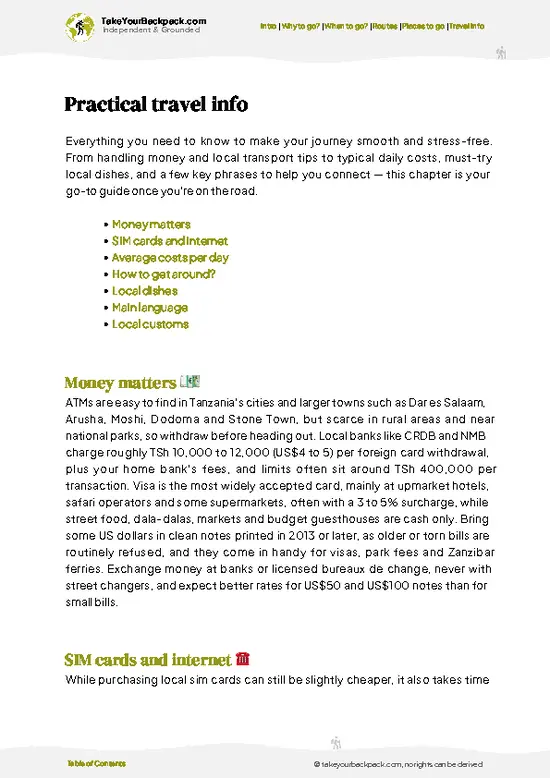
example page 3 from our offline Travel Guide for Tanzania
example page 4 from our offline Travel Guide for Tanzania
example page 5 from our offline Travel Guide for Tanzania
example page 6 from our offline Travel Guide for Tanzania
example page 7 from our offline Travel Guide for Tanzania
Loading the map 🌍
CLICK TO FILTER
cities
towns
landmarks
national parks
hikes
beaches
attractions
festivals
regions
SHOW COUNTRY’S BESTSHOW ALL

✨ Why go?
Ranked #14 festival in Tanzania
Why visitors keep coming back

Uhuru Torch Race gives you a way into Tanzania that no safari circuit offers: the flame passes through regions, villages and district squares, so your route becomes a chase across the country. Backpackers plan around it for the temporary community that forms at each stop, where locals pull strangers into the singing and the speeches without a second thought. It also costs almost nothing to watch, since the public ceremonies are free to attend, which beats any ticketed festival for value. The relay fits neatly into a longer trip too. You can cross it with a Kilimanjaro climb, since the Kilimanjaro summit is where the flame first burned, or fold a few stops into a bus journey between Arusha, Dodoma and the coast.

💡 HighlightsKey sights and experiences for travelers

  1. Kilimanjaro summit ceremony: The flame was first lit on Uhuru Peak in 1961 to mark independence, and the symbolism of that peak still frames the whole relay.
  2. The torch handover at regional squares: Officials pass the flame between regions with speeches, drumming and uniformed escorts. It is the clearest view of local civic pride.
  3. Runners on the road: Athletes and local volunteers carry the torch along highways and village roads, and crowds line the verges to cheer and run alongside.
  4. Project inauguration stops: The race is used to open or inspect new schools, clinics and roads, so you see which development projects the community is proud of.
  5. Evening cultural performances: Ngoma drumming, dance troupes and choirs fill the night at many stops, and spectators are welcome to join in.
Uhuru Torch Race … read more 👉
  1. Kilimanjaro summit ceremony: The flame was first lit on Uhuru Peak in 1961 to mark independence, and the symbolism of that peak still frames the whole relay.
  2. The torch handover at regional squares: Officials pass the flame between regions with speeches, drumming and uniformed escorts. It is the clearest view of local civic pride.
  3. Runners on the road: Athletes and local volunteers carry the torch along highways and village roads, and crowds line the verges to cheer and run alongside.
  4. Project inauguration stops: The race is used to open or inspect new schools, clinics and roads, so you see which development projects the community is proud of.
  5. Evening cultural performances: Ngoma drumming, dance troupes and choirs fill the night at many stops, and spectators are welcome to join in.
Uhuru Torch Race costs nothing to watch, and the roadside runs and square ceremonies are the cheapest items on this list.
Spotted a mistake or missing something? Contact us.

🌤️ When to go?When is the celebration of Uhuru Torch Race?

The Uhuru Torch Race runs from about April to October each year, ending on October 14 at a regional or national finale, with the torch crossing every region of Tanzania over roughly six months, so the route and dates shift annually.
  • Best day: Go on a day the torch enters a district, when crowds, school choirs and officials gather at the handover.
  • Weather: Expect 22 to 32°C (72 to 90°F), dry and sunny in most regions. Bring a hat, sunscreen and water.
  • Booking: No tickets are needed. Book beds in small towns a few days ahead, since officials fill local guesthouses.
  • Crowds: Arrive early, as roads close during the procession.
Check the regional schedule with local government offices the week before.

source: climatestotravel.comJANJanuary: not recommended for travelingFEBFebruary: not recommended for travelingMARMarch: not recommended for travelingAPRApril: not recommended for travelingMAYMay: not recommended for travelingJUNJune: excellent for travelingJULJuly: not recommended for travelingAUGAugust: not recommended for travelingSEPSeptember: not recommended for travelingOCTOctober: not recommended for travelingNOVNovember: not recommended for travelingDECDecember: not recommended for traveling

✈️ The backpacker research shortcutTanzania Travel Guide

An offline-friendly backpacking guide with optimized travel routes, ranked highlights, transport advice, and the best areas to stay.
example page 0 from our offline Travel Guide for Tanzania
example page 1 from our offline Travel Guide for Tanzania
example page 2 from our offline Travel Guide for Tanzania
example page 3 from our offline Travel Guide for Tanzania
example page 4 from our offline Travel Guide for Tanzania
example page 5 from our offline Travel Guide for Tanzania
example page 6 from our offline Travel Guide for Tanzania
example page 7 from our offline Travel Guide for Tanzania
The digital guide (396 pages) contains:
✅ 103 highlights, ranked by travel appeal
✅ Optimized 7, 14 & 21-day travel routes
✅ Cities, national parks, landmarks, beaches
✅ How to get around
✅ Offline-friendly for travel without Wi-Fi
👉 Click to see all 30+ guide features

📅 Plan smarter in minutes, not weeks
✅ Month by month travel advice
✅ Festivals & national holidays
✅ Budget expectations

🗺️ Go to the right places, skip the overrated ones
✅ Honest pros & cons of destinations
✅ Top hikes, parks & viewpoints
✅ Lesser-known places most travelers miss
✅ Clear “worth it vs skip it” guidance

🛏️ Travel smoothly without rookie mistakes
✅ Best areas to stay
✅ Transport systems explained simply
✅ Common scams & safety advice
✅ SIM cards, money & practical tips

🌍 Understand the country, not just visit it
✅ Culture & traditions
✅ 52 Essential phrases & customs
✅ Festivals worth planning around
✅ Traveler-friendly historical context
✅ Insights that make places more meaningful

📱 Built for real travel conditions
✅ Fully downloadable PDF
✅ Works completely offline
✅ Optimized for phone use
✅ Useful in remote areas & buses
✅ Everything in one place
Stop searching, start planning
Get instant access to your full guide. 30‑day money-back guarantee.
+ Add another guide for just

By proceeding you agree to our terms.
Sent to your inbox immediately after payment • 100% Secure Checkout
Best Backpacking Travel Advisor 2025 tourism awardBest Backpacking
Travel Advisor
2025
What others say about Take Your Backpack Guides:
⭐⭐⭐⭐⭐
Fantastic, amazing amount of information!
⭐⭐⭐⭐⭐
My goodness this is amazing, it's what I've been looking for hats off too you!
⭐⭐⭐⭐⭐
I think this is absolutely BRILLIANT
⭐⭐⭐⭐
Very complete and informative. It's still missing places, but I gotta to commend you
⭐⭐⭐⭐⭐
This is truly amazing, thank you, can't wait to explore it with my kids!
⭐⭐⭐⭐⭐
Awesome resource, thank you!
⭐⭐⭐⭐⭐
This is amazing! Can't wait to explore the ones I haven't seen
⭐⭐⭐⭐
I love this! Well done, great idea.
⭐⭐⭐⭐⭐
Thanks for taking the time to make this gem!
⭐⭐⭐⭐⭐
This might be the best website I've ever seen.
⭐⭐⭐⭐⭐
Congratulations, and thank you so much for your work; it's incredibly valuable.
⭐⭐⭐⭐
In all seriousness I think you did a great job pointing out the important spots
⭐⭐⭐⭐⭐
10/10 very good
⭐⭐⭐⭐⭐
As someone who's only just starting to visit regularly this is awesome, thank you.
⭐⭐⭐⭐
Thank you very much! I'm going to visit my dad, it's going to be very useful!
⭐⭐⭐⭐⭐
This is really cool! We'll be travelling for the first time and this definitely come in handy.
⭐⭐⭐⭐⭐
You are now our minister of culture, congratulations 👨‍💼
⭐⭐⭐⭐⭐
Just wanted to tell you that this is a pearl! Going to follow your recommendations.
⭐⭐⭐⭐⭐
This is so cool. I'll definitely be using the resource for my travels soon.
⭐⭐⭐⭐⭐
This is very impressive! Good work.
⭐⭐⭐⭐⭐
This is an amazing and informative site. Very well done!

🛏️ Where to stay?Choosing the right base

Stay in the regional capital or district town the torch is passing through, since that is where the handover ceremonies and public rallies happen. Towns like Arusha, Mwanza, Dodoma and Mbeya have the best mix of safe, walkable central areas with budget guesthouses, shared transport and other travelers. Pick a guesthouse near the main bus stand, because buses and daladalas leave from there, and you can walk to most events. In smaller district towns, choose basic lodgings within a few blocks of the district commissioner’s office or main square, where the torch usually stops. These areas have the … read more 👉
Stay in the regional capital or district town the torch is passing through, since that is where the handover ceremonies and public rallies happen. Towns like Arusha, Mwanza, Dodoma and Mbeya have the best mix of safe, walkable central areas with budget guesthouses, shared transport and other travelers. Pick a guesthouse near the main bus stand, because buses and daladalas leave from there, and you can walk to most events. In smaller district towns, choose basic lodgings within a few blocks of the district commissioner’s office or main square, where the torch usually stops. These areas have the most people around in the evening, so walking back is easier and safer. Solo travelers meet people most easily in Arusha and Mwanza, where backpacker-oriented places cluster near the center. Book a few days ahead, as officials and security staff fill rooms in small towns during the visit.

👛 Costs (as of 22 October 2026)How expensive it really is

Following the Uhuru Torch Race costs about US$30 to 55 a day for an independent traveler.
CategoryBudget RangeLocal Reality
Festival ticketsUS$0Public events along the route are free to watch.
AccommodationUS$8 to 25Basic guesthouses in district towns cost US$8 to 15. Regional capitals cost more, and rooms tighten on handover days.
Local transportUS$3 to 12Daladalas cost under US$1 per hop. Intercity buses cost US$4 to 12 per leg, and motorbike taxis cost US$1 to 2.
Food & drinksUS$6 to 12Street meals are US$1.50 to 4. Nyama choma by weight costs US$4 to 7.
MiscellaneousUS$2 to 5Water, SIM data, small tips and souvenir flags or caps.
Total Daily BudgetUS$39Based on mid-range choices in high season, with room to go lower.
⚠️ Prices can change and everyone travels differently, so take this as a rough guide. Hope it helps you plan your adventure!

🍲 FoodLocal Flavors for Backpackers

Food at the Uhuru Torch Race comes from the roadside and the market. Expect nyama choma (grilled goat or beef) sold by weight, chipsi mayai (a fries omelet), mishkaki skewers, samosas and maandazi, the fried dough that vendors pile into plastic bowls. Along coastal routes, look for grilled fish and coconut-based dishes. Drinks are mostly bottled sodas, fresh sugarcane juice and sweet milky chai from thermoses. Try whatever is grilled in front of you at the rally edge, because it is hot and fresh.
Bring small cash in shilling notes, since vendors rarely have change for large bills and cards are rarely accepted. Mobile money is common in towns. Portions are generous, meat is shared from a single plate, and you eat with your hands, so wash first at the water jug offered at most stalls.

FAQCommon questions from travelers

The Uhuru Torch Race runs from roughly April to October each year and finishes on October 14, Nyerere Day. The torch visits every region, spending a day or two in each district. Exact route dates are set annually by the national organizers and announced through regional offices.
Watching the Uhuru Torch Race costs nothing, since the public ceremonies are free. Your real spending is travel and beds, about US$30 to 55 a day. Guesthouses in district towns run US$8 to 25, and intercity buses cost US$4 to 12 per leg.
No tickets are needed for the Uhuru Torch Race, because the rallies and handovers are open to the public. Book a bed a few days ahead in small towns, as officials and security staff fill local guesthouses. Confirm the route with the regional commissioner’s office about a week before, since schedules shift.
⚠️ Things can change over time, so always validate details locally before you go.

Other Tanzanian festivals near Uhuru Torch Race

Explore more nearby:


💡 Not sure where to go next?
Create a personalized itinerary for Tanzania including Uhuru Torch Race and the places that fit your trip.

Generate my itinerary

👉 Discover all festivals

Or checkout all Tanzania has to offer (think cities, towns, villages, national parks, hikes, beaches, festivals)
Country photo of Tanzania

We 💚 feedbackWhat to keep in mind

Uhuru Torch Race is easiest to enjoy at small district stops, where crowds are friendly and you can stand close to the runners. Ask at a local government office for the next day’s route, bring a hat, and give yourself time to stay for the dancing after the speeches.

✍️ Help improve this page!
The information on this page is based on in-depth research, insights shared by experienced travelers, and feedback from the local travel community in Tanzania. While every effort is made to keep the information accurate and current, conditions can change — so if you spot anything incorrect or outdated, please get in touch.


🙋‍♂️ Give feedback

👋 Meet the founderWho’s Behind Take Your Backpack?

Johan, backpacker and founder of TakeYourBackpackHi, I’m Johan (Netherlands 🇳🇱), the creator of TakeYourBackpack. Over the past 3 decades, I’ve backpacked through 90+ countries across six continents, gaining extensive experience with independent travel, long-term trips, and overland routes.

This site is built on a combination of firsthand travel experience and carefully curated insights from other backpackers. Many guides are based on places I’ve personally visited, while others bring together tips, observations, and practical advice shared by trusted travelers I’ve met along the way.

The goal is to provide realistic, experience-driven guidance — not generic itineraries — so you can explore destinations with better context, clearer expectations, and more confidence.