×

Thailand🇹🇭 | attractionsBridge on the River Kwai and JEATH War MuseumWWII railway, memorial exhibits, riverside bridge | things to do and best time to go

Explore Hellfire Pass Interpretive Centre and Memorial Walking TrailExplore Phuket Big Buddha

Backpacking in Bridge on the River Kwai and JEATH War Museum
👌 Worth visitingattraction ranked #14
By Johan Kruseman 🇳🇱 | Updated September 4, 2026

Here’s what nobody tells you: if you time your visit to the Bridge on the River Kwai and the JEATH War Museum for early morning, you dodge the tour bus stampede and actually hear the river. Both sit in Kanchanaburi, western Thailand—easy enough to reach by train, but far enough from Bangkok to filter out the laziest crowds. The bridge itself is less cinematic than Instagram suggests, but the weight of history hits hard—especially after the museum’s raw, unvarnished exhibits. It’s not cheap by Thai standards, and yes, the selfie-stick brigade is real, but the gravity of the place lingers long after the crowds thin out.

Discover everything you want to know in the 📖 Thailand Travel Guide.
Loading the map 🌍
CLICK TO FILTER
cities
towns
landmarks
national parks
hikes
beaches
attractions
festivals
regions
SHOW COUNTRY’S BESTSHOW ALL

✨ Why go?
Ranked #14 attraction in Thailand
What makes it a must-see attraction

The Bridge on the River Kwai isn’t just a photo op—it’s a raw, gritty symbol of human endurance and tragedy. Yes, it’s crowded and touristy, but skipping it means missing a key chapter of WWII history that shaped Southeast Asia. The JEATH War Museum adds layers, showing the brutal reality behind the iconic bridge, far from the glamorized movie version. Backpackers come here not for pretty views but for a sobering, visceral connection to the past. It’s a checkpoint on the classic Thailand route, where you pause to reflect on sacrifice and resilience. The effort to get here pays off with a deep, unfiltered history lesson that no guidebook hype can match. This place demands respect—and it delivers.
Want to include Bridge on the River Kwai and JEATH War Museum in your Thailand route?
Create a personalized Thailand itinerary that includes Bridge on the River Kwai and JEATH War Museum and the places that fit your trip — based on your travel style, budget, and available time. Get your route in seconds.

Generate my trip

💡 HighlightsThe experiences that define the visit

The Bridge on the River Kwai (Death Railway Bridge)
Let’s cut through the movie myth: the bridge is real, but it’s not the rickety wooden structure from Hollywood. This is a hulking, black steel bridge built by Allied POWs under brutal Japanese command. Yes, it’s crowded, and yes, you’ll dodge selfie sticks, but standing on the actual rails—where thousands suffered—hits you in the gut. The trains still run, and when one approaches, the crowd parts in a nervous shuffle. It’s a rare place where history feels physical, not just visual.


JEATH War Museum
This is not a polished, air-conditioned museum. It’s raw, sometimes jarringly so. Bamboo huts recreate the POW camps, and the artifacts—rusted tools, faded letters, battered helmets—aren’t behind glass. The museum’s name (Japan, England, Australia, … read more 👉
The Bridge on the River Kwai (Death Railway Bridge)
Let’s cut through the movie myth: the bridge is real, but it’s not the rickety wooden structure from Hollywood. This is a hulking, black steel bridge built by Allied POWs under brutal Japanese command. Yes, it’s crowded, and yes, you’ll dodge selfie sticks, but standing on the actual rails—where thousands suffered—hits you in the gut. The trains still run, and when one approaches, the crowd parts in a nervous shuffle. It’s a rare place where history feels physical, not just visual.


JEATH War Museum
This is not a polished, air-conditioned museum. It’s raw, sometimes jarringly so. Bamboo huts recreate the POW camps, and the artifacts—rusted tools, faded letters, battered helmets—aren’t behind glass. The museum’s name (Japan, England, Australia, Thailand, Holland) tells you who was there, but the real impact comes from the personal stories and photos. It’s uncomfortable, and that’s the point.


Riding the Death Railway Train
This is the only way to understand the scale of what was built. The train rattles over the bridge and along cliffs, with the river below and jungle pressing in. It’s slow, noisy, and far from luxurious, but that’s the magic. You see the landscape as the POWs did—minus the terror, but with a sense of awe for what was endured. This is my personal favorite: it’s not just a ride, it’s a moving memorial.


Chungkai War Cemetery
A short walk from the bridge, this cemetery is heartbreakingly orderly. Thousands of white headstones, each with a name and age, drive home the scale of loss. It’s quiet, shaded, and far from the tourist bustle—a place for reflection, not spectacle.
Spotted a mistake or missing something? Contact us.

Things to do around Bridge on the River Kwai and JEATH War Museum

Ratings based on Tripadvisor reviews. When you book through this link, you support our work at no extra cost to you.

🌤️ When to go?Best time to visit Bridge on the River Kwai and JEATH War Museum


  • Weather: The dry season from November to February is your best bet—expect less rain and more reliable hiking conditions. March to May heats up brutally, often hitting 35°C (95°F) or more, which can sap your energy fast.

  • Temperature: Cooler months (December and January) hover around 25°C (77°F) during the day, making outdoor exploration bearable. Avoid April and May if you hate sweating buckets; temps soar above 35°C (95°F).

  • Daylight Hours: Roughly 11 to 12 hours year-round, but the dry season offers clearer skies, so you get more usable daylight for trekking and museum visits without the afternoon monsoon interruptions.

  • Crowds: Peak tourist season aligns with the dry months, especially December and January, so expect busier trails and museum rooms. Off-peak (June to October) means
read more 👉

  • Weather: The dry season from November to February is your best bet—expect less rain and more reliable hiking conditions. March to May heats up brutally, often hitting 35°C (95°F) or more, which can sap your energy fast.

  • Temperature: Cooler months (December and January) hover around 25°C (77°F) during the day, making outdoor exploration bearable. Avoid April and May if you hate sweating buckets; temps soar above 35°C (95°F).

  • Daylight Hours: Roughly 11 to 12 hours year-round, but the dry season offers clearer skies, so you get more usable daylight for trekking and museum visits without the afternoon monsoon interruptions.

  • Crowds: Peak tourist season aligns with the dry months, especially December and January, so expect busier trails and museum rooms. Off-peak (June to October) means fewer people but prepare for heavy rains and muddy paths.

  • Seasonal Activities: The dry season is when local festivals and commemorations related to WWII history often take place, adding depth to your visit. Monsoon months see fewer events and limited outdoor activities.

  • Price Fluctuations: Accommodation and tours spike in the dry season, particularly December through February. Booking ahead is crucial. During the rainy season, prices drop, but so does convenience and comfort.


Pro-tip: Aim for late November or early February—cooler, manageable crowds, and you’ll dodge the worst of both heat and rain without paying premium prices.


source: climatestotravel.comJANJanuary: excellent for travelingFEBFebruary: highly recommended for travelingMARMarch: fair for travelingAPRApril: below average for travelingMAYMay: below average for travelingJUNJune: fair for travelingJULJuly: fair for travelingAUGAugust: fair for travelingSEPSeptember: fair for travelingOCTOctober: fair for travelingNOVNovember: highly recommended for travelingDECDecember: excellent for traveling
when-to-go

✈️ The backpacker research shortcutThailand Travel Guide

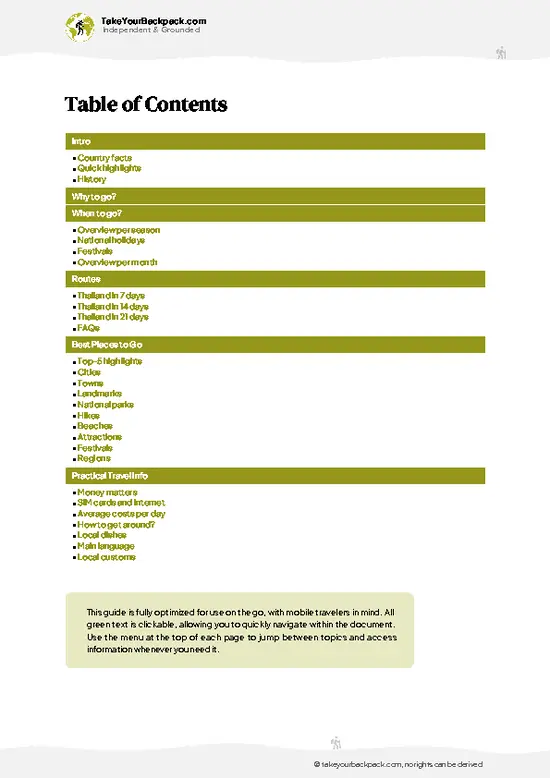
An offline-friendly backpacking guide with optimized travel routes, ranked highlights, transport advice, and the best areas to stay.
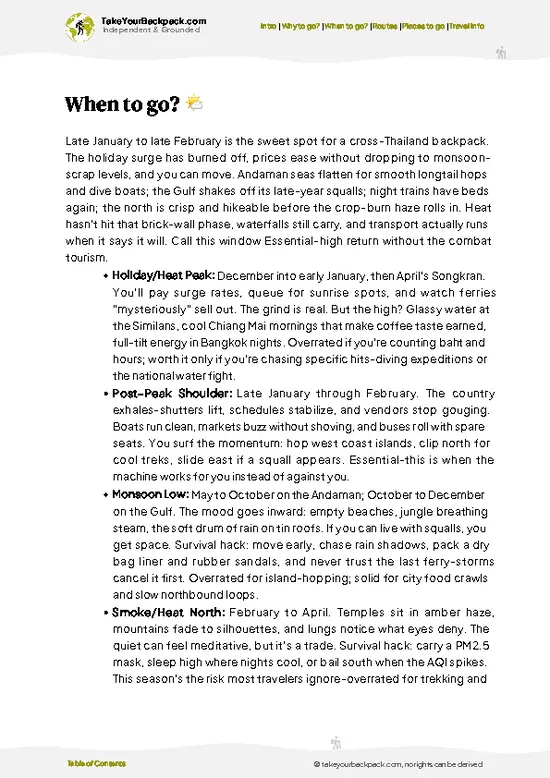
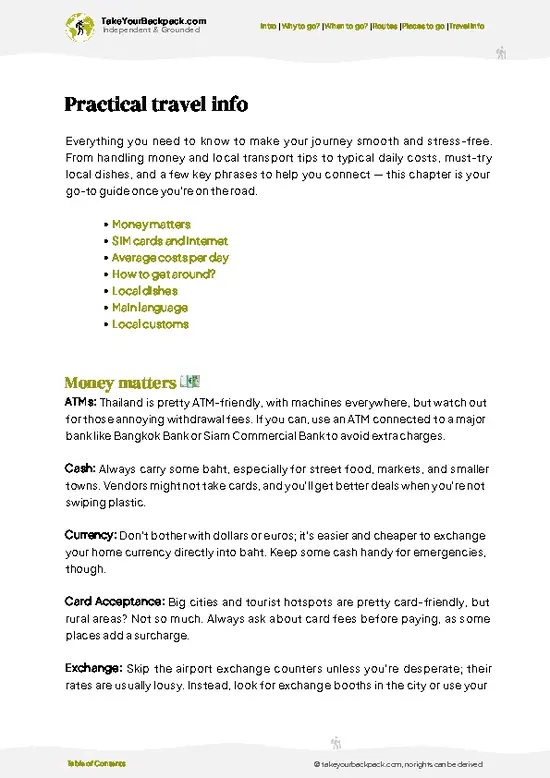
example page 0 from our offline Travel Guide for Thailand
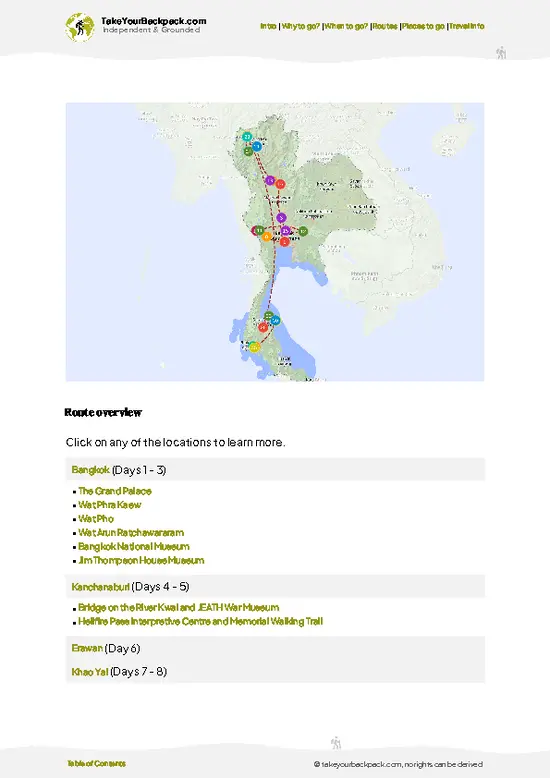
example page 1 from our offline Travel Guide for Thailand
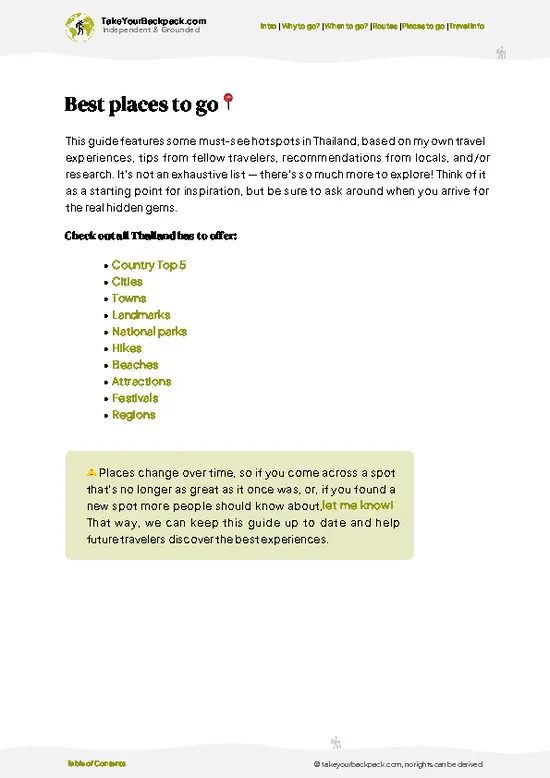
example page 2 from our offline Travel Guide for Thailand
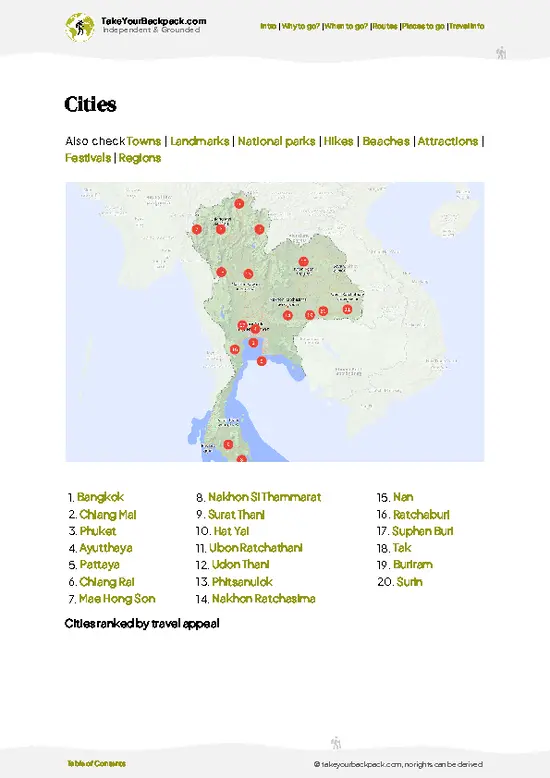
example page 3 from our offline Travel Guide for Thailand
example page 4 from our offline Travel Guide for Thailand
example page 5 from our offline Travel Guide for Thailand
example page 6 from our offline Travel Guide for Thailand
example page 7 from our offline Travel Guide for Thailand
The digital guide (495 pages) contains:
137 highlights, ranked by travel appeal
Optimized 7, 14 & 21-day travel routes
Cities, national parks, landmarks, beaches
How to get around
Offline-friendly for travel without Wi-Fi
👉 Click to see all 30+ guide features

📅 Plan smarter in minutes, not weeks
Month by month travel advice
Festivals & national holidays
Budget expectations

🗺️ Go to the right places, skip the overrated ones
Honest pros & cons of destinations
Top hikes, parks & viewpoints
Lesser-known places most travelers miss
Clear “worth it vs skip it” guidance

🛏️ Travel smoothly without rookie mistakes
Best areas to stay
Transport systems explained simply
Common scams & safety advice
SIM cards, money & practical tips

🌍 Understand the country, not just visit it
Culture & traditions
52 Essential phrases & customs
Festivals worth planning around
Traveler-friendly historical context
Insights that make places more meaningful

📱 Built for real travel conditions
Fully downloadable PDF
Works completely offline
Optimized for phone use
Useful in remote areas & buses
Everything in one place
Save weeks of stressful planning
Get instant access to your full guide. 30‑day money-back guarantee.
+ Add another guide for just A$12.35

By proceeding you agree to our terms.
Sent to your inbox immediately after payment • 100% Secure Checkout
Best Backpacking Travel Advisor 2025 tourism awardBest Backpacking
Travel Advisor
2025
What others say about Take Your Backpack Guides:
⭐⭐⭐⭐⭐
Fantastic, amazing amount of information!
⭐⭐⭐⭐⭐
My goodness this is amazing, it's what I've been looking for hats off too you!
⭐⭐⭐⭐⭐
I think this is absolutely BRILLIANT
⭐⭐⭐⭐
Very complete and informative. It's still missing places, but I gotta to commend you
⭐⭐⭐⭐⭐
This is truly amazing, thank you, can't wait to explore it with my kids!
⭐⭐⭐⭐⭐
Awesome resource, thank you!
⭐⭐⭐⭐⭐
This is amazing! Can't wait to explore the ones I haven't seen
⭐⭐⭐⭐
I love this! Well done, great idea.
⭐⭐⭐⭐⭐
Thanks for taking the time to make this gem!
⭐⭐⭐⭐⭐
This might be the best website I've ever seen.
⭐⭐⭐⭐⭐
Congratulations, and thank you so much for your work; it's incredibly valuable.
⭐⭐⭐⭐
In all seriousness I think you did a great job pointing out the important spots
⭐⭐⭐⭐⭐
10/10 very good
⭐⭐⭐⭐⭐
As someone who's only just starting to visit regularly this is awesome, thank you.
⭐⭐⭐⭐
Thank you very much! I'm going to visit my dad, it's going to be very useful!
⭐⭐⭐⭐⭐
This is really cool! We'll be travelling for the first time and this definitely come in handy.
⭐⭐⭐⭐⭐
You are now our minister of culture, congratulations 👨‍💼
⭐⭐⭐⭐⭐
Just wanted to tell you that this is a pearl! Going to follow your recommendations.
⭐⭐⭐⭐⭐
This is so cool. I'll definitely be using the resource for my travels soon.
⭐⭐⭐⭐⭐
This is very impressive! Good work.
⭐⭐⭐⭐⭐
This is an amazing and informative site. Very well done!

🛏️ Where to stay?Best areas to stay in Thailand

The Bridge on the River Kwai draws crowds, no sugarcoating that. It’s a major historical site, so expect a steady stream of tourists, especially during high season. If you want to dodge the tourist traps and overpriced spots, skip staying right at the bridge. Instead, aim for Kanchanaburi town itself. It’s a 20-minute ride away, but that’s where the real backpacker vibe lives—safe streets, lively bars, and plenty of fellow travelers swapping stories over cheap beers. The town’s social scene is low-key but genuine, perfect for solo backpackers who want to connect without the forced party atmosphere. … read more 👉
The Bridge on the River Kwai draws crowds, no sugarcoating that. It’s a major historical site, so expect a steady stream of tourists, especially during high season. If you want to dodge the tourist traps and overpriced spots, skip staying right at the bridge. Instead, aim for Kanchanaburi town itself. It’s a 20-minute ride away, but that’s where the real backpacker vibe lives—safe streets, lively bars, and plenty of fellow travelers swapping stories over cheap beers. The town’s social scene is low-key but genuine, perfect for solo backpackers who want to connect without the forced party atmosphere. Plus, you’ll find budget guesthouses and hostels that don’t gouge your wallet. Staying here means you get the history fix during the day and a relaxed, authentic Thai town experience by night—far better than the sterile tourist bubble near the bridge.

👛 Costs (as of 4 September 2026)What things cost and how to budget

Visiting the Bridge on the River Kwai is free. The JEATH War Museum charges an entrance fee of approximately 40 to 50 Thai Baht (about €1 to €1.25). Additional costs may include transportation to Kanchanaburi, meals, and optional activities like the Death Railway train ride, which can vary in price.
⚠️ Prices can change and everyone travels differently, so take this as a rough guide. Hope it helps you plan your adventure!

FAQCommon questions from travelers

2 to 3 hours is sufficient to visit both the Bridge on the River Kwai and the JEATH War Museum. This allows time to walk the bridge, explore the museum exhibits, and take photos. Arriving early helps avoid crowds and the midday heat.
Yes, the entrance fee is worth it for history enthusiasts and backpackers interested in World War II. The fee is around 100 THB, granting access to the museum and the bridge area. The museum provides detailed exhibits on the Death Railway and POW experiences, adding depth to the visit.
You can get to the Bridge on the River Kwai and JEATH War Museum by taking a train or bus from Kanchanaburi town center, about 3 km away. Tuk-tuks and motorbike taxis are also available for a quick 10-minute ride. The site is well signposted and accessible by road.
⚠️ Things can change over time, so always validate details locally before you go.

Other Thai attractions near Bridge on the River Kwai and JEATH War Museum

Explore more nearby:


💡 Not sure where to go next?
Create a personalized itinerary for Thailand including Bridge on the River Kwai and JEATH War Museum and the places that fit your trip.

Generate my itinerary

👉 Discover all attractions

Or checkout all Thailand has to offer (think cities, towns, villages, national parks, hikes, beaches, festivals)
Country photo of Thailand

We 💚 feedbackSumming up the experience

The Bridge on the River Kwai pulls you into a raw slice of history that’s impossible to shake—walking its worn planks, you feel the weight of the past in a way no textbook can deliver. But brace yourself: it’s a magnet for tourists, so expect crowds and a few souvenir stalls that dilute the solemnity. Still, the real story here hits deep and stays with you.

✈️ When did I visit Thailand?
Before visiting Vietnam (1998), I had some time in Thailand to explore the country.

✍️ Help improve this page!
The information on this page is based on my own backpacking experience in Thailand, supplemented with up-to-date research and feedback from other travelers. Travel details can change, so if you notice anything outdated or incomplete, feel free to let me know.


🙋‍♂️ Give feedback

👋 Meet the founderWho’s Behind Take Your Backpack?

Johan, backpacker and founder of TakeYourBackpackHi, I’m Johan (Netherlands 🇳🇱), the creator of TakeYourBackpack. Over the past decade, I’ve backpacked through 80+ countries across six continents, gaining extensive experience with independent travel, long-term trips, and overland routes.

This site is built on a combination of firsthand travel experience and carefully curated insights from other backpackers. Many guides are based on places I’ve personally visited, while others bring together tips, observations, and practical advice shared by trusted travelers I’ve met along the way.

The goal is to provide realistic, experience-driven guidance — not generic itineraries — so you can explore destinations with better context, clearer expectations, and more confidence.

Get full Thailand guide •
Instant download • 137 highlights • Full Offline guide