×

Thailand🇹🇭 | best attractionsYour Guide to the 10 Best attractions in Thailand

Thailand’s best attractions aren’t just about ticking off famous landmarks; they’re defined by how deeply you want to dive into its diverse regions and rhythms. From the chaotic charm of Bangkok’s street markets to the tranquil beaches of the south, each spot offers a distinct vibe that shapes your backpacking experience. Timing matters here—monsoon season can turn island hopping into a soggy slog, while the cooler months invite easier travel and better safety on mountain trails in the north. Independent travelers quickly learn that choosing the right attraction isn’t just about sightseeing; it’s about syncing with local life, managing budget constraints, and navigating transport quirks that vary dramatically between urban hubs and rural outposts. Knowing which places deliver authentic cultural immersion versus those that cater to mass tourism can transform your trip from a generic checklist into a story worth telling. This guide cuts through the noise, spotlighting what’s truly essential for backpackers who want to travel smart and soak in Thailand’s soul.

By Johan Kruseman 🇳🇱 | Updated June 6, 2026
Explore the best festivals in Thailand

Why go?Key Factors That Shape the Experience

Why These Attractions Matter

Thailand’s attractions stand apart because they offer a rare blend of accessibility and depth, shaped by the country’s unique geography and cultural layers. Unlike many destinations where reaching remote sites demands days of travel, Thailand’s compact size and relatively developed infrastructure mean you can pivot from bustling urban temples to serene jungle retreats within hours. This proximity creates a trade-off: you gain variety and convenience but must choose between a quick overview or a slower, more immersive experience. The country’s tropical climate also dictates timing; monsoon seasons can transform a trek into a slog, while the dry months open up opportunities for exploring natural wonders without the usual crowds.

Culturally, Thailand’s attractions are … read more 👉
Why These Attractions Matter

Thailand’s attractions stand apart because they offer a rare blend of accessibility and depth, shaped by the country’s unique geography and cultural layers. Unlike many destinations where reaching remote sites demands days of travel, Thailand’s compact size and relatively developed infrastructure mean you can pivot from bustling urban temples to serene jungle retreats within hours. This proximity creates a trade-off: you gain variety and convenience but must choose between a quick overview or a slower, more immersive experience. The country’s tropical climate also dictates timing; monsoon seasons can transform a trek into a slog, while the dry months open up opportunities for exploring natural wonders without the usual crowds.

Culturally, Thailand’s attractions are steeped in a living tradition that’s both deeply historical and vibrantly present. The coexistence of ancient Buddhist practices with modern life offers a layered experience that’s hard to replicate elsewhere. This makes the country especially well-suited for travelers seeking more than just sightseeing—they want to witness a culture in motion. However, this also means some sites can feel commercialized or staged if visited during peak tourist hours, diluting the authenticity. Timing and approach matter here more than in many other countries.

Geographically, Thailand’s diversity—from mountainous north to tropical south—means attractions vary widely in character and accessibility. Some require a willingness to navigate less-developed roads or endure longer journeys, which can be a barrier but also a filter for those craving genuine encounters away from the tourist bubble. Infrastructure is generally solid in major hubs but thins out quickly, so travelers must weigh convenience against the payoff of venturing off the beaten path.

In short, Thailand’s attractions matter because they offer a spectrum of experiences shaped by a dynamic interplay of history, culture, and environment. The challenge lies in balancing ease of access with the desire for depth, making thoughtful choices essential to unlocking the country’s true character.
Evaluating the Top Choices
The list of best attractions in Thailand is created based on cultural significance or entertainment value. If you feel a attraction is missing in this list, please let us know.

When to go?Timing Your Visit for the Best Experience

Seasonal Rhythms Shape Your Thailand Experience

Thailand’s attractions don’t just wait for you—they respond to the weather’s mood swings. The country swings between three main seasons: hot, rainy, and cool. Each one reshapes the landscape and your access to what’s on offer.

The cool season is the sweet spot for most travelers. It’s when the air clears, humidity drops, and the heat mellows to something manageable. This period is prime for exploring outdoor attractions without the oppressive sweat or sudden downpours. Expect crowds to swell during this time, especially around major holidays and festivals, which can push prices up and snag your preferred accommodations.

The hot season, arriving just before the rains, turns the country into a furnace. Daytime temperatures can spike, making … read more 👉

Seasonal Rhythms Shape Your Thailand Experience

Thailand’s attractions don’t just wait for you—they respond to the weather’s mood swings. The country swings between three main seasons: hot, rainy, and cool. Each one reshapes the landscape and your access to what’s on offer.

The cool season is the sweet spot for most travelers. It’s when the air clears, humidity drops, and the heat mellows to something manageable. This period is prime for exploring outdoor attractions without the oppressive sweat or sudden downpours. Expect crowds to swell during this time, especially around major holidays and festivals, which can push prices up and snag your preferred accommodations.

The hot season, arriving just before the rains, turns the country into a furnace. Daytime temperatures can spike, making strenuous outdoor activities less appealing. However, this period offers a quieter scene at popular spots, with fewer tourists and often better deals. Just be ready to adjust your pace and hydrate like a pro.

Then comes the rainy season, which is a double-edged sword. Monsoon rains can be relentless, flooding trails and closing off some attractions temporarily. But the landscape bursts into lush green, waterfalls roar, and the air feels fresher. This is the shoulder season where you’ll find the best value on lodging and fewer crowds, but you’ll need flexibility in your plans and a tolerance for sudden weather shifts.

Timing your visit means balancing these trade-offs. If you want to dodge the crowds and don’t mind the heat, the hot season can be a stealth move. If you crave comfort and clear skies, the cool season is your go-to, but book early to avoid the scramble. The rainy season rewards the patient with verdant views and budget perks but demands a backup plan.

Understanding these seasonal pulses lets you approach Thailand’s attractions like a local who knows when to show up and when to lay low.

attraction hoppingHow to Combine attractions Into One Trip

How to Combine the best attractions of Thailand Into One Trip


Thailand’s geography naturally divides the country into distinct regions, each with its own rhythm and character. The key to a smooth trip is to cluster your stops regionally—north, central, and south—before hopping between them. Trying to zigzag across the country wastes precious time and energy. Start with Bangkok or Chiang Mai, depending on your entry point, then move outward in a logical flow. For example, northern cultural sites and mountain treks pair well before heading south to beaches and islands.

Expect to spend at least two to three days in major urban or cultural hubs to absorb their layers—rushing through ruins or markets dilutes the experience. Nature and beach destinations demand flexibility; a minimum of three … read more 👉

How to Combine the best attractions of Thailand Into One Trip


Thailand’s geography naturally divides the country into distinct regions, each with its own rhythm and character. The key to a smooth trip is to cluster your stops regionally—north, central, and south—before hopping between them. Trying to zigzag across the country wastes precious time and energy. Start with Bangkok or Chiang Mai, depending on your entry point, then move outward in a logical flow. For example, northern cultural sites and mountain treks pair well before heading south to beaches and islands.

Expect to spend at least two to three days in major urban or cultural hubs to absorb their layers—rushing through ruins or markets dilutes the experience. Nature and beach destinations demand flexibility; a minimum of three days allows for weather shifts and spontaneous side trips. Trying to cram too many stops into a short window is the most common rookie mistake. It turns a trip into a checklist rather than an exploration.

Balancing speed and depth is the real challenge. Fast travelers might hit more spots but risk skimming the surface. Slow travelers savor details but cover less ground. Budget and comfort also pull in opposite directions: overnight trains save money but cost sleep, while flights save time but add expense. Factor in travel time realistically—Thailand’s infrastructure is good but not always swift, especially in remote areas.

Flexibility is your secret weapon. Build buffer days to absorb delays or detours. Prioritize a few “must-see” places and allow the rest to be optional. This mindset turns travel from a race into a discovery. The best trips are those where the itinerary breathes, letting you linger where the vibe clicks and move on when it doesn’t. That’s how you turn a multi-stop Thailand trip into a seamless, soul-rich adventure.

The ListMust-Visit attractions in Thailand

1 The Grand Palace

royal halls, gilded spires, ceremonial grounds

Tour a complex of ornate buildings and sacred sites, observing strict dress codes and security as you navigate the former royal residence.

2 Ayutthaya Historical Park Temples Complex

ruined stupas, riverside temples, UNESCO site

Trace centuries-old temple ruins and Buddha statues scattered across grassy grounds, best explored by bicycle or tuk-tuk in the early morning.

3 Sukhothai Historical Park Temples Complex

ancient Buddha images, lotus ponds, moated ruins

Cycle or walk among tranquil temple remains and lotus-filled ponds, experiencing the early capital’s layout and distinctive stone carvings.

4 Wat Pho

reclining Buddha, massage school, mural-lined halls

Admire the enormous gold-plated Buddha statue and explore temple courtyards, also home to a renowned traditional massage school.

5 Wat Arun Ratchawararam

riverside prang, ceramic mosaics, steep staircases

Climb the central spire for river views and examine detailed porcelain inlays that decorate one of Bangkok’s most recognizable temples.

6 Wat Chedi Luang

crumbling chedi, city pillar shrine, monastic grounds

Walk around a massive brick stupa and visit active monk quarters, with remnants of ancient structures in Chiang Mai’s old city center.

7 Wat Phra Singh Woramahawihan

Lanna architecture, revered Buddha image, temple murals

Experience a working monastery with classic northern Thai design, intricate woodwork, and a highly venerated Buddha statue in Chiang Mai.

8 Jim Thompson House Museum

silk merchant’s home, teak architecture, art collection

Tour a traditional Thai house filled with Southeast Asian art and textiles, preserved as a museum by the legacy of Jim Thompson.

9 Bangkok National Museum

royal artifacts, Thai art collections, historic pavilions

View diverse exhibits spanning royal regalia, religious art, and regional crafts in Thailand’s largest and oldest national museum.

10 Phuket Big Buddha

hilltop statue, panoramic views, marble-clad monument

Climb to a serene hilltop for sweeping island vistas and a close look at a massive seated Buddha constructed from white Burmese marble.

11 Chiang Mai Night Bazaar

street stalls, handicraft vendors, food courts

Browse a lively maze of market stalls offering textiles, souvenirs, and local snacks, with bargaining expected and crowds peaking after sunset.

12 Chiang Mai Sunday Walking Street

artisan goods, pedestrian zone, live performers

Stroll a closed-off street lined with handmade crafts, regional foods, and buskers, drawing locals and travelers every Sunday evening.

13 Ratchada Rot Fai Train Night Market

retro collectibles, neon-lit stalls, street food

Sample local dishes and browse vintage goods in a bustling night market known for its colorful tents and energetic evening atmosphere.

14 Bridge on the River Kwai and JEATH War Museum

WWII railway, memorial exhibits, riverside bridge

Walk across the infamous bridge and visit museum displays that document the wartime construction and prisoner experiences along the Death Railway.

15 Hellfire Pass Interpretive Centre and Memorial Walking Trail

jungle trail, memorial plaques, WWII railway cutting

Follow a marked trail through dense forest and rock cuttings, with interpretive displays recounting the hardships faced by wartime laborers.

16 Ancient City

architectural replicas, landscaped gardens, open-air museum

Wander through scaled recreations of Thailand’s architectural heritage, set in a sprawling park designed for easy exploration by foot or bike.

17 Erawan Museum

three-headed elephant statue, mythological art, decorative halls

Ascend inside a colossal sculpture to see intricate murals and religious relics, blending Thai mythology with ornate architectural detail.

18 Siam Niramit Bangkok

theatrical show, cultural performances, elaborate costumes

Watch a large-scale stage production depicting Thai history and folklore, featuring traditional dance, music, and dramatic set changes.

Think you know Thailand?

Prove you’re a true local — uncover 8 lesser-known attractions in Thailand that locals tend to keep to themselves.
Loading the map 🌍

Expert viewExpert Commentary on attractions

Essential or Overrated: The Real Deal on Thailand’s Attractions


Thailand’s reputation as a backpacker’s paradise and cultural playground is well-earned, but here’s the kicker: not every attraction deserves your precious time or baht. If you’re serious about soaking in the country’s essence without falling into the tourist trap vortex, you need to be ruthless with your choices. My rule of thumb? Aim for about three to five major attractions during your trip. This isn’t about rushing through a checklist; it’s about carving out space to really engage with what you’re seeing. More than that, you risk turning your journey into a blur of photo ops and overpriced snacks.

Time, Budget, and Effort: The Balancing Act


Thailand’s attractions vary wildly in how much time and money they demand. Some … read more 👉

Essential or Overrated: The Real Deal on Thailand’s Attractions


Thailand’s reputation as a backpacker’s paradise and cultural playground is well-earned, but here’s the kicker: not every attraction deserves your precious time or baht. If you’re serious about soaking in the country’s essence without falling into the tourist trap vortex, you need to be ruthless with your choices. My rule of thumb? Aim for about three to five major attractions during your trip. This isn’t about rushing through a checklist; it’s about carving out space to really engage with what you’re seeing. More than that, you risk turning your journey into a blur of photo ops and overpriced snacks.

Time, Budget, and Effort: The Balancing Act


Thailand’s attractions vary wildly in how much time and money they demand. Some spots are easy day trips with minimal cost, while others require a full day or more and a bigger chunk of your budget. The catch is that travel infrastructure outside the main tourist corridors can be patchy. Roads might be winding, buses infrequent, and local transport a guessing game. This means that squeezing in too many attractions, especially those far-flung or less developed, can eat up your schedule and energy. If you’re on a tight timeline, pick fewer places but dive deeper.

Budget-wise, Thailand is famously affordable, but that’s relative. Some attractions come with entry fees that feel like a bargain compared to Western standards but can add up if you’re hopping from one to another. Factor in transport costs, especially if you’re opting for private taxis or tours, which can quickly inflate your daily spend. The savvy move is to mix free or low-cost cultural experiences with a couple of splurges on iconic sites that truly resonate.

Regional Variation: Not All Attractions Are Created Equal


Thailand’s regions each have their own flavor, and this affects what you’ll find and how you experience it. The north offers cooler climates and a slower pace, with attractions that lean heavily on natural beauty and hill tribe cultures. Here, infrastructure can be basic, so expect longer travel times and fewer amenities. The south, by contrast, is a magnet for beach lovers and island hoppers, but the crowds and commercialization can dilute the authenticity if you’re not careful. The central plains and northeast bring a mix of historical sites and rural life, often overlooked but rich in cultural texture.

This regional diversity means you can’t just pick attractions based on hype. If you’re chasing a certain vibe—say, serene nature or vibrant street life—choose your region accordingly. Trying to cram attractions from multiple regions into a short trip is a recipe for exhaustion and disappointment. Instead, pick a region and get under its skin.

Safety and Cultural Nuances: The Insider’s Edge


Thailand is generally safe, but like anywhere, it pays to be street-smart. Tourist-heavy spots can attract pickpockets and scams, so keep your wits about you and your valuables close. More importantly, understanding local customs can transform your experience. For instance, dress modestly when visiting temples—this isn’t just about respect but also about avoiding being turned away or drawing unwanted attention. Timing your visits to avoid religious holidays or local festivals can also make a huge difference. Sometimes, showing up during a festival means crowds and chaos; other times, it’s a chance to witness something genuinely unique, but you have to be prepared for the trade-offs in comfort and access.

Planning and Prioritizing: The Art of Saying No


Here’s where most travelers trip up: they say yes to everything and end up exhausted and underwhelmed. Thailand’s attractions are tempting, but the real skill is in the art of saying no. Prioritize based on what moves you—whether that’s history, nature, food, or people. If you’re a first-timer, focus on a mix of cultural and natural sites that offer a window into Thai life beyond the postcard. For repeat visitors, dig deeper into less touristy areas or niche experiences that require more effort but pay off in authenticity.

Timing your visits early in the morning or late afternoon can help you avoid the worst crowds and heat, especially at popular spots. Weekdays are usually quieter than weekends, and off-peak seasons can offer a more relaxed vibe, though weather might be a factor. If you’re flexible, this is a simple hack to upgrade your experience without extra cost.

The Trade-Offs: What You Give Up and Gain


Every choice in Thailand’s attraction landscape comes with trade-offs. Spending more time at a single site means missing out on others, but it also means a richer, less rushed experience. Opting for convenience—like guided tours or private transport—costs more but saves time and hassle. Going off the beaten path can yield incredible encounters but demands patience and a tolerance for unpredictability.

One anecdote that sticks with me: I once skipped a famous temple because it was packed with tour groups and instead wandered into a smaller, less known shrine nearby. The quiet, the incense, the locals quietly praying—it was a moment of genuine connection that no guidebook could promise. That’s the payoff when you prioritize depth over breadth.

Final Word: Cut the Noise, Double Down on Soul


Thailand’s best attractions aren’t about ticking boxes; they’re about moments that stick with you long after the trip ends. Be selective. Invest your time and energy where you’ll feel the pulse of the country, not just its postcard. Three to five well-chosen spots, balanced with local experiences and paced to your rhythm, will leave you richer in stories and less drained. That’s the insider’s secret: quality over quantity, depth over surface, and a willingness to embrace the unexpected.

✈️ The backpacker research shortcutThailand Travel Guide

An offline-friendly backpacking guide with optimized travel routes, ranked highlights, transport advice, and the best areas to stay.
example page 0 from our offline Travel Guide for Thailand
example page 1 from our offline Travel Guide for Thailand
example page 2 from our offline Travel Guide for Thailand
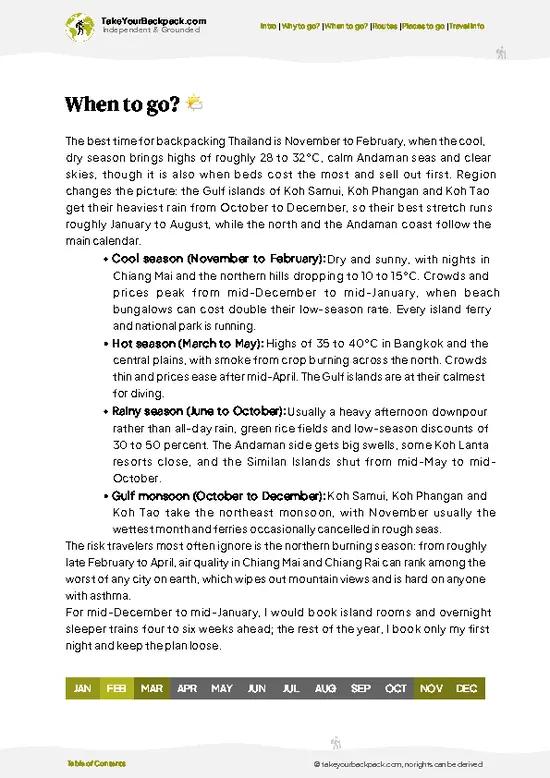
example page 3 from our offline Travel Guide for Thailand
example page 4 from our offline Travel Guide for Thailand
example page 5 from our offline Travel Guide for Thailand
example page 6 from our offline Travel Guide for Thailand
example page 7 from our offline Travel Guide for Thailand
The digital guide (510 pages) contains:
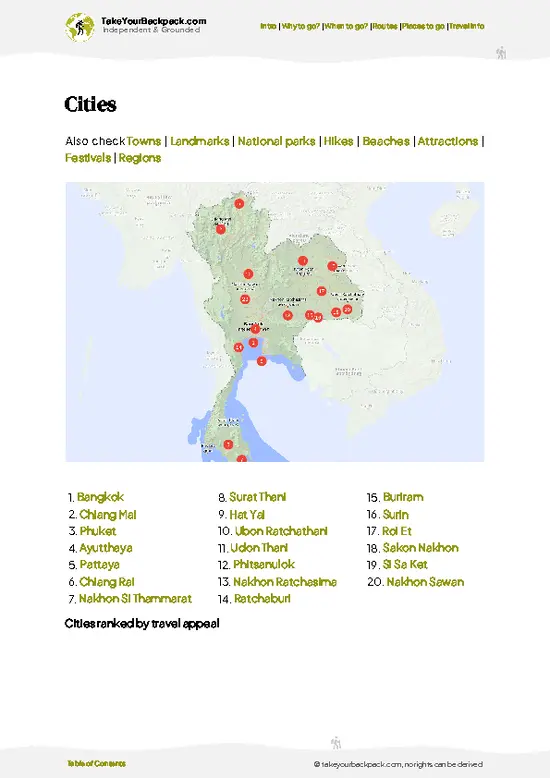
139 highlights, ranked by travel appeal
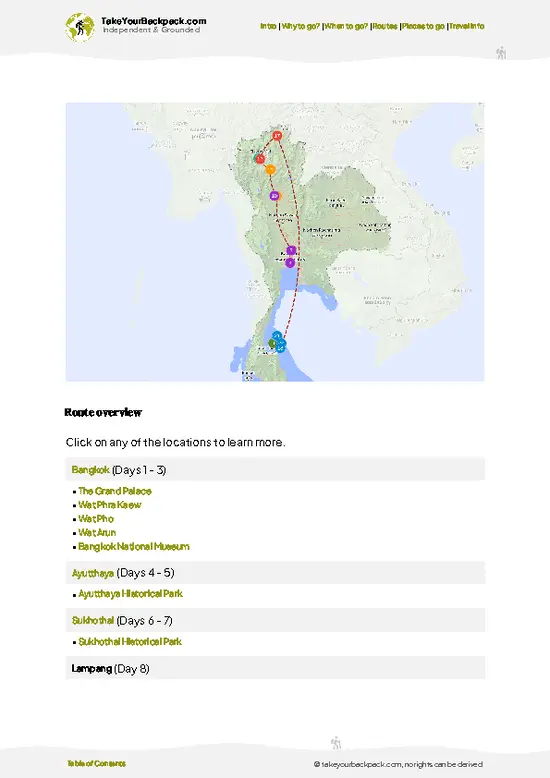
Optimized 7, 14 & 21-day travel routes
Cities, national parks, landmarks, beaches
How to get around
Offline-friendly for travel without Wi-Fi
👉 Click to see all 30+ guide features

📅 Plan smarter in minutes, not weeks
Month by month travel advice
Festivals & national holidays
Budget expectations

🗺️ Go to the right places, skip the overrated ones
Honest pros & cons of destinations
Top hikes, parks & viewpoints
Lesser-known places most travelers miss
Clear “worth it vs skip it” guidance

🛏️ Travel smoothly without rookie mistakes
Best areas to stay
Transport systems explained simply
Common scams & safety advice
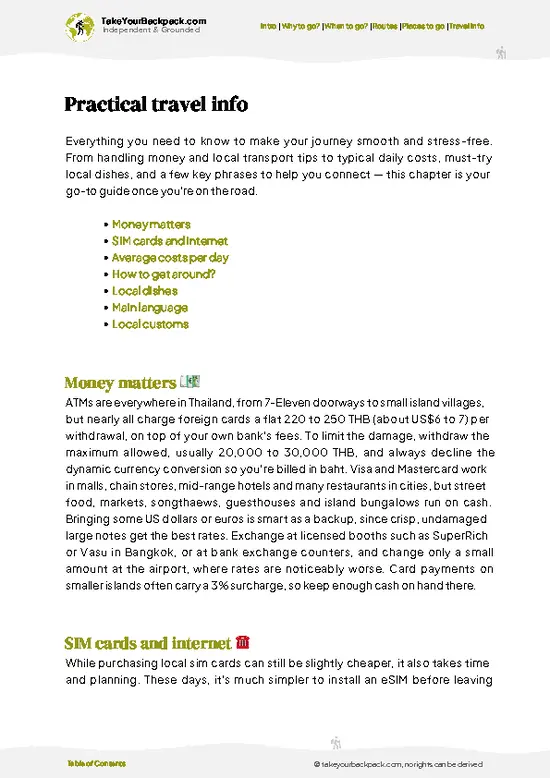
SIM cards, money & practical tips

🌍 Understand the country, not just visit it
Culture & traditions
52 Essential phrases & customs
Festivals worth planning around
Traveler-friendly historical context
Insights that make places more meaningful

📱 Built for real travel conditions
Fully downloadable PDF
Works completely offline
Optimized for phone use
Useful in remote areas & buses
Everything in one place
Save weeks of stressful planning
Get instant access to your full guide. 30‑day money-back guarantee.


By proceeding you agree to our terms.
Sent to your inbox immediately after payment • 100% Secure Checkout
Best Backpacking Travel Advisor 2025 tourism awardBest Backpacking
Travel Advisor
2025
What others say about Take Your Backpack Guides:
⭐⭐⭐⭐⭐
Fantastic, amazing amount of information!
⭐⭐⭐⭐⭐
My goodness this is amazing, it's what I've been looking for hats off too you!
⭐⭐⭐⭐⭐
I think this is absolutely BRILLIANT
⭐⭐⭐⭐
Very complete and informative. It's still missing places, but I gotta to commend you
⭐⭐⭐⭐⭐
This is truly amazing, thank you, can't wait to explore it with my kids!
⭐⭐⭐⭐⭐
Awesome resource, thank you!
⭐⭐⭐⭐⭐
This is amazing! Can't wait to explore the ones I haven't seen
⭐⭐⭐⭐
I love this! Well done, great idea.
⭐⭐⭐⭐⭐
Thanks for taking the time to make this gem!
⭐⭐⭐⭐⭐
This might be the best website I've ever seen.
⭐⭐⭐⭐⭐
Congratulations, and thank you so much for your work; it's incredibly valuable.
⭐⭐⭐⭐
In all seriousness I think you did a great job pointing out the important spots
⭐⭐⭐⭐⭐
10/10 very good
⭐⭐⭐⭐⭐
As someone who's only just starting to visit regularly this is awesome, thank you.
⭐⭐⭐⭐
Thank you very much! I'm going to visit my dad, it's going to be very useful!
⭐⭐⭐⭐⭐
This is really cool! We'll be travelling for the first time and this definitely come in handy.
⭐⭐⭐⭐⭐
You are now our minister of culture, congratulations 👨‍💼
⭐⭐⭐⭐⭐
Just wanted to tell you that this is a pearl! Going to follow your recommendations.
⭐⭐⭐⭐⭐
This is so cool. I'll definitely be using the resource for my travels soon.
⭐⭐⭐⭐⭐
This is very impressive! Good work.
⭐⭐⭐⭐⭐
This is an amazing and informative site. Very well done!

🛏️ Where to stay?Best Stay Options in Thailand

Yes, hostels and budget accommodation are plentiful across Thailand, concentrated in backpacker and transit hubs such as Khao San Road, Sukhumvit and Silom in Bangkok, Old City and Nimmanhaemin in Chiang Mai, and beach towns like Patong, Kata/Karon on Phuket and Chaweng, Lamai on Koh Samui.
Khao San and Patong deliver the cheapest beds and nonstop nightlife but are noisy and very touristy; Sukhumvit and Silom give the best transit links and a mix of nightlife with higher prices; Chiang Mai Old City is compact, temple-close and quieter at night while Nimmanhaemin has more cafes and slightly pricier rooms; Kata/Karon and Lamai are calmer beach options with better swimming and family-friendly … read more 👉
Yes, hostels and budget accommodation are plentiful across Thailand, concentrated in backpacker and transit hubs such as Khao San Road, Sukhumvit and Silom in Bangkok, Old City and Nimmanhaemin in Chiang Mai, and beach towns like Patong, Kata/Karon on Phuket and Chaweng, Lamai on Koh Samui.
Khao San and Patong deliver the cheapest beds and nonstop nightlife but are noisy and very touristy; Sukhumvit and Silom give the best transit links and a mix of nightlife with higher prices; Chiang Mai Old City is compact, temple-close and quieter at night while Nimmanhaemin has more cafes and slightly pricier rooms; Kata/Karon and Lamai are calmer beach options with better swimming and family-friendly evenings compared with party-heavy Chaweng.
Choose by priority: pick Khao San/Patong/Chaweng for social, budget party scenes; Sukhumvit/Silom for transport convenience and variety; Chiang Mai Old City for culture and quiet; Kata/Karon/Lamai for relaxed beach time to avoid noise and overpriced central hostels.

If you enjoy meeting fellow travelers, consider choosing hostels with high ratings for atmosphere. On the other hand, if you prefer having your own space, a hotel might be a better option.

ThailandWhere to Go Next

👋 Meet the founderWho’s Behind Take Your Backpack?

Johan, backpacker and founder of TakeYourBackpackHi, I’m Johan (Netherlands 🇳🇱), the creator of TakeYourBackpack. Over the past decade, I’ve backpacked through 80+ countries across six continents, gaining extensive experience with independent travel, long-term trips, and overland routes.

This site is built on a combination of firsthand travel experience and carefully curated insights from other backpackers. Many guides are based on places I’ve personally visited, while others bring together tips, observations, and practical advice shared by trusted travelers I’ve met along the way.

The goal is to provide realistic, experience-driven guidance — not generic itineraries — so you can explore destinations with better context, clearer expectations, and more confidence.

Get full Thailand guide •
Instant download • 139 highlights • Full Offline guide