×

Thailand🇹🇭 | regionsChiang Mai Provincemountain valleys, hill tribe villages, Buddhist temples | things to do and best time to go

Explore Namtok PhlioExplore Koh Chang

Backpacking in Chiang Mai Province
👀 For curious travelersregion ranked #14
By Johan Kruseman 🇳🇱 | Updated October 15, 2026

Most people think “Chiang Mai = one city with a cute Old Town.” The surprise: Chiang Mai is actually a whole northern province, and most of the real backpacker magic happens outside the city, in the hills, villages, and border roads that almost never make Instagram. It sits in Thailand’s far north, up against the mountains that lean toward Myanmar and Laos.

As a base, it’s a dream: cheap guesthouses, easy buses, and enough cafés to write a novel. But the city core can feel like a backpacker theme park now—yoga, smoothie bowls, same-same markets. The payoff is when you push out: Mae Chaem for quiet rice-valley life, Mae Wang and Doi Inthanon for misty national-park mornings, the Mae Hong Son loop for motorbike freedom and hill-country curves. Compared with Pai or Chiang Rai, Chiang Mai province is busier and less “remote,” but it’s where you can mix real countryside, workable transport, and still keep your costs low.

Discover everything you want to know in the 📖 Thailand Travel Guide.


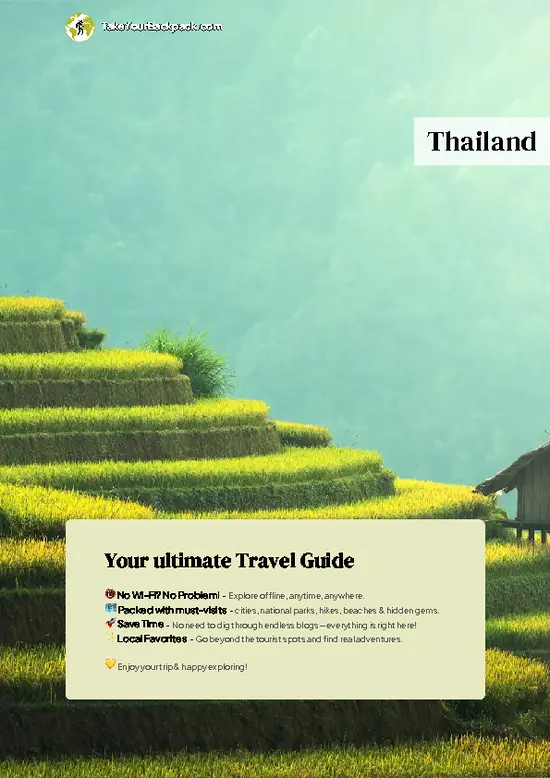
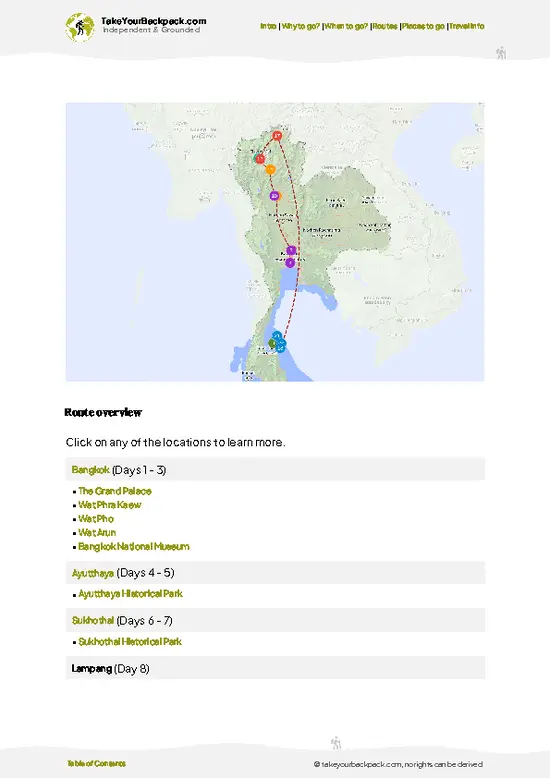
example page 0 from our offline Travel Guide for Thailand
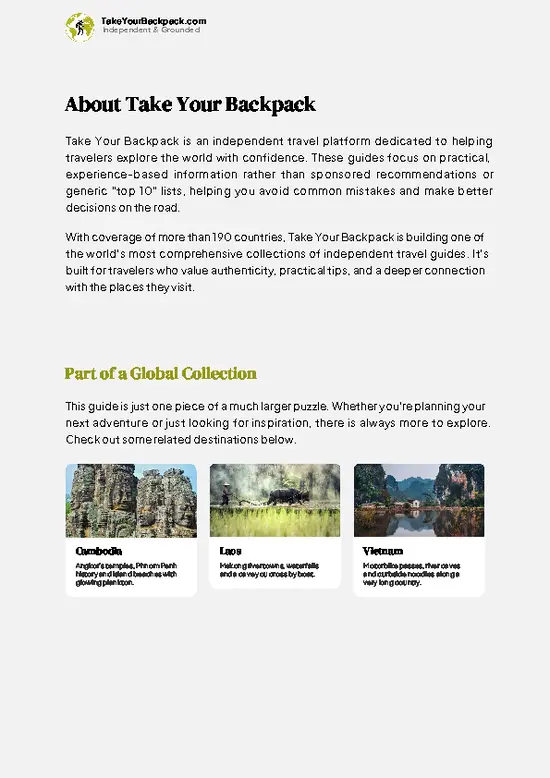
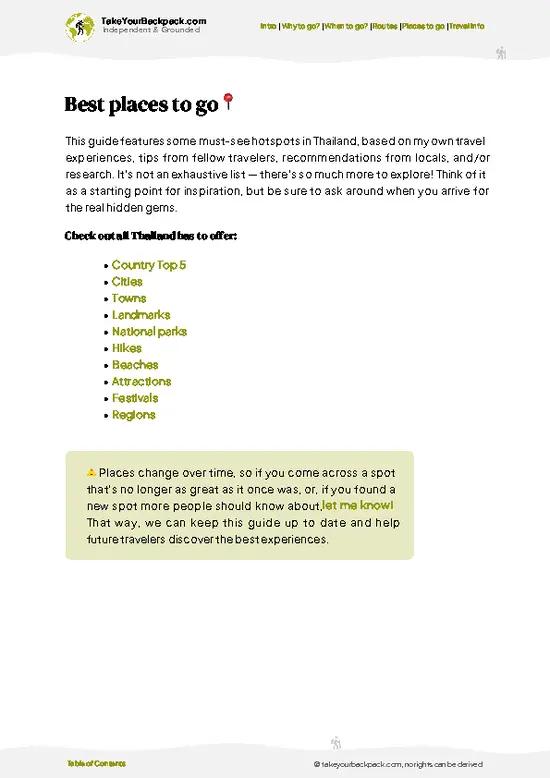
example page 1 from our offline Travel Guide for Thailand
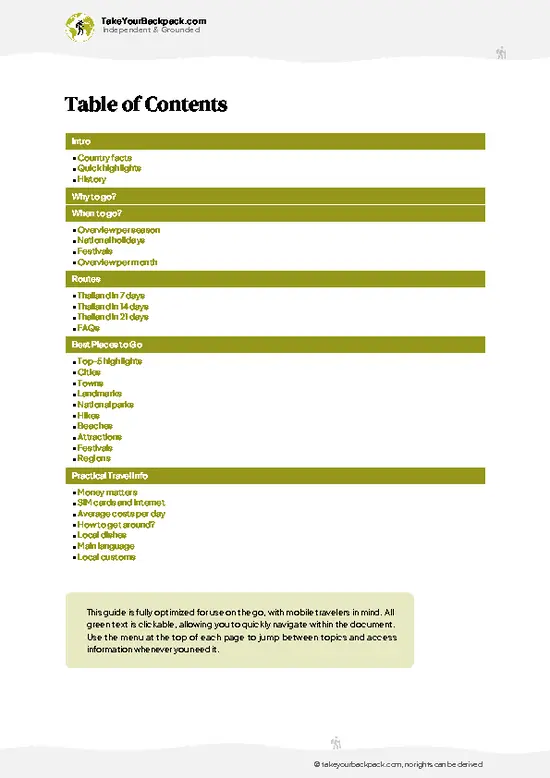
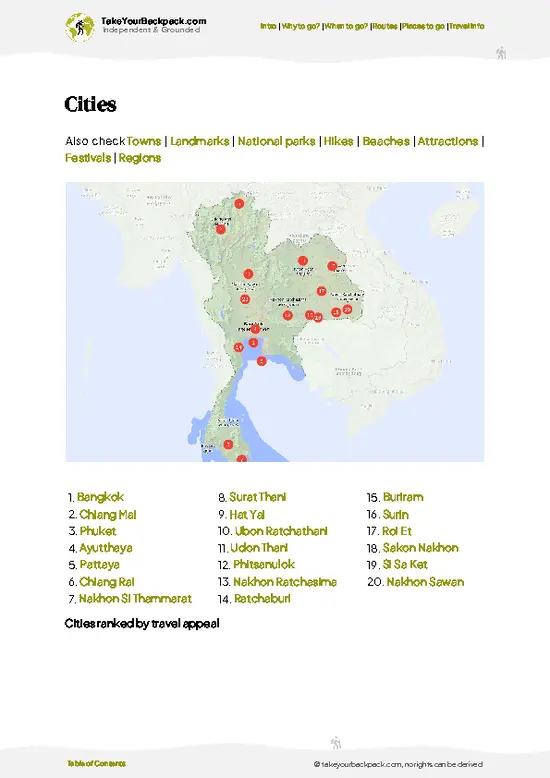
example page 2 from our offline Travel Guide for Thailand
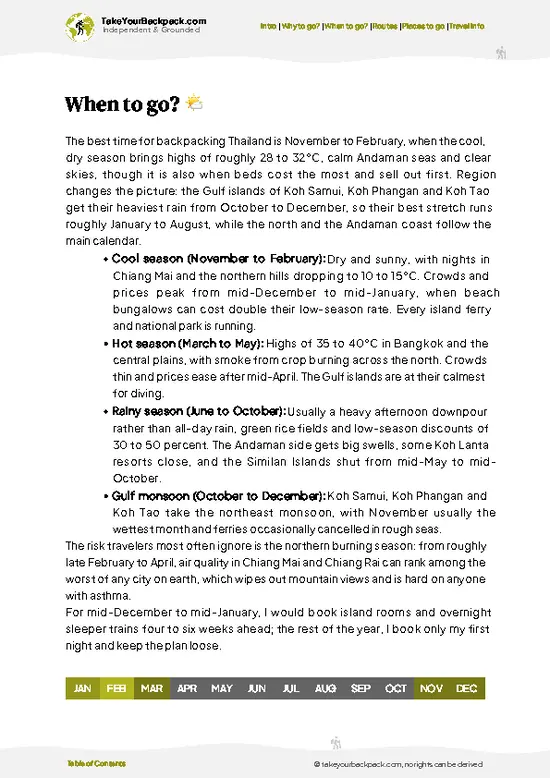
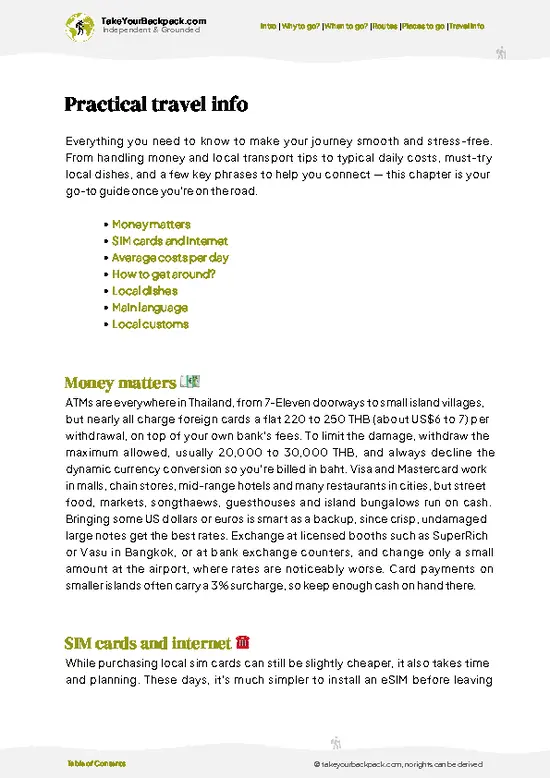
example page 3 from our offline Travel Guide for Thailand
example page 4 from our offline Travel Guide for Thailand
example page 5 from our offline Travel Guide for Thailand
example page 6 from our offline Travel Guide for Thailand
example page 7 from our offline Travel Guide for Thailand
Loading the map 🌍
CLICK TO FILTER
cities
towns
landmarks
national parks
hikes
beaches
attractions
festivals
regions
SHOW COUNTRY’S BESTSHOW ALL

✨ Why go?
Ranked #14 region in Thailand
Why Chiang Mai Province should be on your travel list

Chiang Mai state is a backpacker’s paradise for a reason. First off, the variety of landscapes is mind-blowing. You can go from lush mountains to serene rice paddies in a single day. This means you can soak in the beauty without the hassle of constant relocation.

Transport here is a breeze. Buses, songthaews, and motorbike rentals give you the freedom to explore at your own pace. Want to hit the night markets after a day of trekking? Easy. Prefer to lounge by a waterfall? No problem.

But what really sets Chiang Mai apart is the ability to mix nature and culture seamlessly. You can hike to a hill tribe village, then dive into the local cuisine at a cooking class. This blend of experiences allows for slow travel, where you can truly absorb the essence of the region.

So, if you’re looking … read more 👉
Chiang Mai state is a backpacker’s paradise for a reason. First off, the variety of landscapes is mind-blowing. You can go from lush mountains to serene rice paddies in a single day. This means you can soak in the beauty without the hassle of constant relocation.

Transport here is a breeze. Buses, songthaews, and motorbike rentals give you the freedom to explore at your own pace. Want to hit the night markets after a day of trekking? Easy. Prefer to lounge by a waterfall? No problem.

But what really sets Chiang Mai apart is the ability to mix nature and culture seamlessly. You can hike to a hill tribe village, then dive into the local cuisine at a cooking class. This blend of experiences allows for slow travel, where you can truly absorb the essence of the region.

So, if you’re looking to maximize your time and money while enjoying a rich tapestry of experiences, Chiang Mai state is your go-to. It’s all about making those conscious choices that elevate your adventure from ordinary to extraordinary.

💡 HighlightsTop highlights of Chiang Mai Province

  • Doi Inthanon National Park — Thailand’s highest peak, cloud forests, roaring waterfalls (Wachirathan, Siriphum) and the Kew Mae Pan trail with epic misty views. The mix of cool mountain weather, native flora (including rare rhododendrons) and nearby Karen/Hmong villages makes it feel very different from the plains below.
  • Wat Phra That Doi Suthep — the classic Lanna temple on the mountain above Chiang Mai with gilded chedi and sweeping views of the city. It’s touristy for a reason: architecture, monk rituals and mountain-top panoramas are uniquely tied to Chiang Mai’s identity.
  • Wat Umong (the Tunnel Temple) — a chilled forest temple with ancient tunnels, mossy stupas and big shady grounds where locals meditate and kids feed fish. Quiet, weirdly peaceful and more atmospheric than the big
… read more 👉
  • Doi Inthanon National Park — Thailand’s highest peak, cloud forests, roaring waterfalls (Wachirathan, Siriphum) and the Kew Mae Pan trail with epic misty views. The mix of cool mountain weather, native flora (including rare rhododendrons) and nearby Karen/Hmong villages makes it feel very different from the plains below.
  • Wat Phra That Doi Suthep — the classic Lanna temple on the mountain above Chiang Mai with gilded chedi and sweeping views of the city. It’s touristy for a reason: architecture, monk rituals and mountain-top panoramas are uniquely tied to Chiang Mai’s identity.
  • Wat Umong (the Tunnel Temple) — a chilled forest temple with ancient tunnels, mossy stupas and big shady grounds where locals meditate and kids feed fish. Quiet, weirdly peaceful and more atmospheric than the big gilded temples in town.
  • Wiang Kum Kam (the buried city) — hidden archaeological ruins of the old Lanna settlement south of the modern city; walk or bike between partially excavated temples and brick chedis. A less-crowded, tangible piece of Chiang Mai’s history that most people skip for the Old City.
  • Bua Tong “Sticky” Waterfall (Mae Taeng) — a limestone waterfall you can actually walk up thanks to grippy mineral deposits. It’s playful, surprisingly accessible and the kind of nature experience you won’t replicate elsewhere in Thailand.
  • Tham Chiang Dao (Chiang Dao Cave) & Chiang Dao massif — a vast limestone cave system threaded with stalagmites/stalactites and simple shrines, plus sharp karst peaks around the town. Great for spelunking, local guide stories and dramatic mountain sunsets.
  • Mae Kampong village — hidden gem: a mountain village with homestays, tea and coffee farms, short hikes and genuine local hospitality. Quiet, real village life and misty mornings — a proper escape from Chiang Mai’s city buzz.
  • Huay Tung Tao Lake — hidden gem: a low-key lakeside spot with bamboo platforms, sunset views of Doi Suthep and families grilling fish. Locals come for chill weekends; bring cash and snacks and soak in the relaxed vibe.
  • Samoeng Loop — a scenic driving/ride loop through pine forests, orchards and coffee farms with viewpoints and tiny cafes. Perfect for hiring a motorbike and getting off the beaten track — you’ll see local farm life and far fewer tourists than at the main attractions.
  • Baan Kang Wat (artist village & craft lanes) — hidden gem: a compact creative community near Nimman with craftspeople, tiny cafés, galleries and relaxed weekend markets. It’s where locals hang out to buy handmade goods and avoid the tourist bazars — good for a slow afternoon stroll.
Spotted a mistake or missing something? Contact us.

Things to do around Chiang Mai Province

Ratings based on Tripadvisor reviews. When you book through this link, you support our work at no extra cost to you.

⌛️ 5 daysWhat you can realistically do in a week

Day 1: Chiang Mai:
Start your journey in Chiang Mai, the cultural heart of northern Thailand. The city’s transport system is a mix of songthaews (shared taxis) and tuk-tuks, making it easy to navigate. Spend your day exploring the Old City’s temples, like Wat Phra Singh and Wat Chedi Luang. The vibe here is relaxed, allowing you to soak in the local culture. Grab a bowl of khao soi from a street vendor; it’s a must-try.

Day 2: Doi Suthep:
On Day 2, head to Doi Suthep. The winding road up the mountain is a bit of a trek, but the views and the temple at the top are worth every minute. You can take a songthaew, but if you’re feeling adventurous, rent a motorbike. The ride is exhilarating, and you’ll feel like a local. The temple’s golden stupa is a sight to behold, especially at sunset. … read more 👉
Day 1: Chiang Mai:
Start your journey in Chiang Mai, the cultural heart of northern Thailand. The city’s transport system is a mix of songthaews (shared taxis) and tuk-tuks, making it easy to navigate. Spend your day exploring the Old City’s temples, like Wat Phra Singh and Wat Chedi Luang. The vibe here is relaxed, allowing you to soak in the local culture. Grab a bowl of khao soi from a street vendor; it’s a must-try.

Day 2: Doi Suthep:
On Day 2, head to Doi Suthep. The winding road up the mountain is a bit of a trek, but the views and the temple at the top are worth every minute. You can take a songthaew, but if you’re feeling adventurous, rent a motorbike. The ride is exhilarating, and you’ll feel like a local. The temple’s golden stupa is a sight to behold, especially at sunset.

Day 3: Pai:
Day 3 is all about Pai, a small town about three hours from Chiang Mai. The journey is part of the experience; the road is twisty, so brace yourself. Pai is known for its laid-back atmosphere and stunning landscapes. Rent a bicycle to explore the rice paddies and waterfalls. This is where you can really unwind and connect with nature.

Day 4: Mae Hong Son:
From Pai, head to Mae Hong Son. The bus ride is scenic but can take a while, so plan for a full day. This town is less touristy and offers a glimpse into traditional hill tribe culture. Visit the local markets and try some homemade sausages. The slower pace here is refreshing, and you’ll appreciate the authenticity.

Day 5: Off-Path Reward - Huay Nam Dang National Park:
On your final day, take a detour to Huay Nam Dang National Park. It’s a bit off the beaten path, but the stunning views and hiking trails are a reward for your effort. The park is less crowded, allowing you to enjoy nature in peace.

The must-do day? Day 2 at Doi Suthep. The combination of culture, breathtaking views, and the thrill of the ride makes it the highlight of your trip. You’ll leave feeling like you’ve truly experienced the essence of northern Thailand.

🌤️ When to go?Weather, crowds, and seasonal trade-offs

  • Topic: Weather - The sweet spot is November to early February. Dry, cool air hovers around 20-25°C (68-77°F), perfect for trekking without melting into your shirt. Avoid April and May unless you’re into sauna-level heat hitting 35-40°C (95-104°F).
  • Topic: Temperature - Nights can dip to a crisp 15°C (59°F) in December and January, so pack a light jacket. Daytime temps stay comfortable, making long hikes and city strolls a breeze.
  • Topic: Daylight Hours - Expect about 11-12 hours of daylight year-round, but the dry season’s clearer skies mean you get more usable daylight for adventures, unlike the wet season’s gray, early evenings.
  • Topic: Crowds - Peak season (Nov-Feb) draws tourists and digital nomads, especially around Loi Krathong in November. If you want fewer people, hit shoulder months
… read more 👉
  • Topic: Weather - The sweet spot is November to early February. Dry, cool air hovers around 20-25°C (68-77°F), perfect for trekking without melting into your shirt. Avoid April and May unless you’re into sauna-level heat hitting 35-40°C (95-104°F).
  • Topic: Temperature - Nights can dip to a crisp 15°C (59°F) in December and January, so pack a light jacket. Daytime temps stay comfortable, making long hikes and city strolls a breeze.
  • Topic: Daylight Hours - Expect about 11-12 hours of daylight year-round, but the dry season’s clearer skies mean you get more usable daylight for adventures, unlike the wet season’s gray, early evenings.
  • Topic: Crowds - Peak season (Nov-Feb) draws tourists and digital nomads, especially around Loi Krathong in November. If you want fewer people, hit shoulder months like October or March, but prepare for some rain or heat.
  • Topic: Seasonal Activities - November’s Loi Krathong festival lights up the city with floating lanterns—worth timing your visit for. March’s Songkran (Thai New Year) is wild but wet, a blast if you’re up for soaking and chaos.
  • Topic: Price Fluctuations - Expect accommodation and flights to spike during peak season and festivals. Booking early or aiming for shoulder seasons can save you a solid chunk of cash without sacrificing too much comfort.
Pro-tip: Arrive just before Loi Krathong to enjoy the festival’s magic without the full tourist crush—locals start prepping early, and you get the best of both worlds.


source: climatestotravel.comJANJanuary: excellent for travelingFEBFebruary: excellent for travelingMARMarch: highly recommended for travelingAPRApril: fair for travelingMAYMay: fair for travelingJUNJune: good for travelingJULJuly: good for travelingAUGAugust: good for travelingSEPSeptember: good for travelingOCTOctober: highly recommended for travelingNOVNovember: excellent for travelingDECDecember: excellent for traveling
when-to-go

✈️ The backpacker research shortcutThailand Travel Guide

An offline-friendly backpacking guide with optimized travel routes, ranked highlights, transport advice, and the best areas to stay.
example page 0 from our offline Travel Guide for Thailand
example page 1 from our offline Travel Guide for Thailand
example page 2 from our offline Travel Guide for Thailand
example page 3 from our offline Travel Guide for Thailand
example page 4 from our offline Travel Guide for Thailand
example page 5 from our offline Travel Guide for Thailand
example page 6 from our offline Travel Guide for Thailand
example page 7 from our offline Travel Guide for Thailand
The digital guide (476 pages) contains:
✅ 131 highlights, ranked by travel appeal
✅ Optimized 7, 14 & 21-day travel routes
✅ Cities, national parks, landmarks, beaches
✅ How to get around
✅ Offline-friendly for travel without Wi-Fi
👉 Click to see all 30+ guide features

📅 Plan smarter in minutes, not weeks
✅ Month by month travel advice
✅ Festivals & national holidays
✅ Budget expectations

🗺️ Go to the right places, skip the overrated ones
✅ Honest pros & cons of destinations
✅ Top hikes, parks & viewpoints
✅ Lesser-known places most travelers miss
✅ Clear “worth it vs skip it” guidance

🛏️ Travel smoothly without rookie mistakes
✅ Best areas to stay
✅ Transport systems explained simply
✅ Common scams & safety advice
✅ SIM cards, money & practical tips

🌍 Understand the country, not just visit it
✅ Culture & traditions
✅ 52 Essential phrases & customs
✅ Festivals worth planning around
✅ Traveler-friendly historical context
✅ Insights that make places more meaningful

📱 Built for real travel conditions
✅ Fully downloadable PDF
✅ Works completely offline
✅ Optimized for phone use
✅ Useful in remote areas & buses
✅ Everything in one place
Stop searching, start planning
Get instant access to your full guide. 30‑day money-back guarantee.
+ Add another guide for just

By proceeding you agree to our terms.
Sent to your inbox immediately after payment • 100% Secure Checkout
Best Backpacking Travel Advisor 2025 tourism awardBest Backpacking
Travel Advisor
2025
What others say about Take Your Backpack Guides:
⭐⭐⭐⭐⭐
Fantastic, amazing amount of information!
⭐⭐⭐⭐⭐
My goodness this is amazing, it's what I've been looking for hats off too you!
⭐⭐⭐⭐⭐
I think this is absolutely BRILLIANT
⭐⭐⭐⭐
Very complete and informative. It's still missing places, but I gotta to commend you
⭐⭐⭐⭐⭐
This is truly amazing, thank you, can't wait to explore it with my kids!
⭐⭐⭐⭐⭐
Awesome resource, thank you!
⭐⭐⭐⭐⭐
This is amazing! Can't wait to explore the ones I haven't seen
⭐⭐⭐⭐
I love this! Well done, great idea.
⭐⭐⭐⭐⭐
Thanks for taking the time to make this gem!
⭐⭐⭐⭐⭐
This might be the best website I've ever seen.
⭐⭐⭐⭐⭐
Congratulations, and thank you so much for your work; it's incredibly valuable.
⭐⭐⭐⭐
In all seriousness I think you did a great job pointing out the important spots
⭐⭐⭐⭐⭐
10/10 very good
⭐⭐⭐⭐⭐
As someone who's only just starting to visit regularly this is awesome, thank you.
⭐⭐⭐⭐
Thank you very much! I'm going to visit my dad, it's going to be very useful!
⭐⭐⭐⭐⭐
This is really cool! We'll be travelling for the first time and this definitely come in handy.
⭐⭐⭐⭐⭐
You are now our minister of culture, congratulations 👨‍💼
⭐⭐⭐⭐⭐
Just wanted to tell you that this is a pearl! Going to follow your recommendations.
⭐⭐⭐⭐⭐
This is so cool. I'll definitely be using the resource for my travels soon.
⭐⭐⭐⭐⭐
This is very impressive! Good work.
⭐⭐⭐⭐⭐
This is an amazing and informative site. Very well done!

🛏️ Where to stay?Best areas and accommodation options

Chiang Mai is a backpacker’s playground, and knowing where to stay can make all the difference.

Start with the Old City. This area is a maze of temples and street food stalls, buzzing with energy. You’ll find fellow travelers in cafes and markets, swapping stories over a bowl of khao soi. The vibe is relaxed, and everything is within walking distance.

Next up, Nimmanhaemin. This hipster haven is where art meets nightlife. Think trendy coffee shops and vibrant bars. It’s a bit pricier, but the social scene is worth it. You’ll rub elbows with digital nomads and creatives, making it easy to connect. … read more 👉
Chiang Mai is a backpacker’s playground, and knowing where to stay can make all the difference.

Start with the Old City. This area is a maze of temples and street food stalls, buzzing with energy. You’ll find fellow travelers in cafes and markets, swapping stories over a bowl of khao soi. The vibe is relaxed, and everything is within walking distance.

Next up, Nimmanhaemin. This hipster haven is where art meets nightlife. Think trendy coffee shops and vibrant bars. It’s a bit pricier, but the social scene is worth it. You’ll rub elbows with digital nomads and creatives, making it easy to connect.

For a quieter experience, head to Santitham. It’s less touristy, giving you a taste of local life. You’ll find charming eateries and friendly locals. Plus, it’s close enough to the action without the chaos.

Finally, consider Pai, a small town about three hours from Chiang Mai. It’s a bit of a trek, but the laid-back atmosphere and stunning scenery make it a worthwhile detour. You’ll find a mix of backpackers and locals, creating a welcoming community.

Each area offers a unique flavor, so choose based on your vibe. You’re not just finding a place to crash; you’re setting the stage for your adventure.

🚌 Getting aroundHow to get around Chiang Mai Province

Chiang Mai state is a vibrant tapestry of chaos and charm, where the rhythm of life dances between the structured and the spontaneous. Here, you’ll find that schedules are more of a suggestion than a rule. The streets pulse with energy, from the early morning markets to the late-night street food stalls. It’s a place where you can hop on a songthaew and find yourself in a completely different world within minutes, or get lost in the winding alleys of the Old City, where every turn reveals a new adventure. Embrace the flow, and you’ll discover that the journey is just as rewarding as the destination.
  • Songthaew: These red trucks are the lifeblood of local transport. They operate from around 6 AM to 10 PM, with fares typically ranging from 20 to 40 baht depending on distance. They’re a bit cramped
… read more 👉
Chiang Mai state is a vibrant tapestry of chaos and charm, where the rhythm of life dances between the structured and the spontaneous. Here, you’ll find that schedules are more of a suggestion than a rule. The streets pulse with energy, from the early morning markets to the late-night street food stalls. It’s a place where you can hop on a songthaew and find yourself in a completely different world within minutes, or get lost in the winding alleys of the Old City, where every turn reveals a new adventure. Embrace the flow, and you’ll discover that the journey is just as rewarding as the destination.
  • Songthaew: These red trucks are the lifeblood of local transport. They operate from around 6 AM to 10 PM, with fares typically ranging from 20 to 40 baht depending on distance. They’re a bit cramped but offer a real taste of local life. Just flag one down and hop in; it’s as easy as that.
  • Tuk-Tuk: For a more exhilarating ride, tuk-tuks are your go-to. They’re available from dawn until midnight, with prices starting at about 60 baht for short trips. While they can be pricier than songthaews, the open-air experience is unbeatable. Just negotiate your fare before you hop in to avoid surprises.
  • Motorbike Rentals: If you’re feeling adventurous, renting a motorbike is a fantastic way to explore. Prices hover around 150 to 300 baht per day, depending on the model. You’ll have the freedom to roam at your own pace, but be sure to wear a helmet and have an international driving permit. The roads can be chaotic, but the views are worth it.
  • Public Buses: For longer distances, public buses connect Chiang Mai to nearby towns and attractions. They run from early morning until late evening, with fares starting at around 50 baht. While they might not be the fastest option, they’re comfortable and a great way to see the countryside.
  • Grab: This ride-hailing app is a lifesaver for those late-night returns or when you’re in a hurry. Prices vary based on demand, but it’s generally affordable. Just download the app, and you’ll have a ride at your fingertips.

To navigate Chiang Mai state efficiently, consider timing your travels around local events or peak hours. Early mornings are perfect for avoiding crowds, and late afternoons can be a bit chaotic. Use Grab for those moments when you want to skip the hassle and get straight to the good stuff.

🍲 FoodWhat to Eat & Drink

In Chiang Mai, the food scene is a vibrant tapestry of flavors that beckons you to dive in. Start with Khao Soi, a creamy coconut curry noodle soup that’s a local staple. The rich broth, paired with crispy noodles, is a warm hug in a bowl. Don’t miss Sai Oua, a spicy herbal sausage that bursts with flavor; the aroma alone will draw you in.

Street food is where the magic happens. Wander through the Night Bazaar or Warorot Market. Here, you’ll find vendors serving up som tam (papaya salad) that’s a perfect balance of spicy, sour, and sweet. Grab a plate of grilled skewers and wash it down with a refreshing cha yen, Thai iced tea that’s sweet and creamy.

Dining customs are laid-back. You’ll often see locals sharing dishes, so don’t hesitate to order a few things to share. It’s all about the … read more 👉
In Chiang Mai, the food scene is a vibrant tapestry of flavors that beckons you to dive in. Start with Khao Soi, a creamy coconut curry noodle soup that’s a local staple. The rich broth, paired with crispy noodles, is a warm hug in a bowl. Don’t miss Sai Oua, a spicy herbal sausage that bursts with flavor; the aroma alone will draw you in.

Street food is where the magic happens. Wander through the Night Bazaar or Warorot Market. Here, you’ll find vendors serving up som tam (papaya salad) that’s a perfect balance of spicy, sour, and sweet. Grab a plate of grilled skewers and wash it down with a refreshing cha yen, Thai iced tea that’s sweet and creamy.

Dining customs are laid-back. You’ll often see locals sharing dishes, so don’t hesitate to order a few things to share. It’s all about the communal vibe. When you’re at a street stall, it’s common to eat standing up or perched on a plastic stool. Just remember, it’s polite to greet the vendor with a smile and a simple “sawasdee.”

Embrace the chaos, savor the flavors, and let the local food culture wrap around you like a warm blanket.

FAQFrequently asked questions about Chiang Mai Province

3 to 5 days are sufficient to explore Chiang Mai state thoroughly. This allows time to visit the Old City, Doi Suthep temple, and nearby hill tribe villages. Additional days can be spent exploring national parks like Doi Inthanon or participating in local cooking classes.
You can get around Chiang Mai state without a car using red songthaews (shared taxis) that operate on fixed routes for about 20-40 THB per ride. Tuk-tuks and motorbike taxis are also widely available for short trips. Renting a bicycle or motorbike is common for more flexibility, with daily rates around 150-300 THB.
Chiang Mai state is known for its rich cultural heritage, including over 300 Buddhist temples and traditional Lanna architecture. It is also famous for its vibrant night markets, annual Yi Peng Lantern Festival in November, and proximity to natural attractions like Doi Inthanon, Thailand's highest peak.
⚠️ Things can change over time, so always validate details locally before you go.

Other Thai regions near Chiang Mai Province

Explore more nearby:

  • Mae Hong Son Province—mountain passes, Shan villages, misty valleys| 121 km away
  • Koh Chang—rainforest hills, rugged coastline, fishing villages| 830 km away
  • Koh Mak—quiet roads, rubber plantations, family-run resorts| 861 km away

💡 Not sure where to go next?
Create a personalized itinerary for Thailand including Chiang Mai Province and the places that fit your trip.

Generate my itinerary

👉 Discover all regions

Or checkout all Thailand has to offer (think cities, towns, villages, national parks, hikes, beaches, festivals)
Country photo of Thailand

We 💚 feedbackKey takeaways before you go

Chiang Mai is a treasure trove of culture and adventure. The night markets? They’re a feast for the senses, with street food that’ll make your taste buds dance. But here’s the kicker: the humidity can be a beast, especially in the summer. You’ll sweat buckets while exploring ancient temples, so pack that extra water bottle and a good attitude. Embrace the chaos, and you’ll leave with stories that outshine any postcard.

✈️ When did I visit Thailand?
Before visiting Vietnam (1998), I had some time in Thailand to explore the country.

✍️ Help improve this page!
The information on this page is based on my own backpacking experience in Thailand, supplemented with up-to-date research and feedback from other travelers. Travel details can change, so if you notice anything outdated or incomplete, feel free to let me know.


🙋‍♂️ Give feedback

👋 Meet the founderWho’s Behind Take Your Backpack?

Johan, backpacker and founder of TakeYourBackpackHi, I’m Johan (Netherlands 🇳🇱), the creator of TakeYourBackpack. Over the past 3 decades, I’ve backpacked through 90+ countries across six continents, gaining extensive experience with independent travel, long-term trips, and overland routes.

This site is built on a combination of firsthand travel experience and carefully curated insights from other backpackers. Many guides are based on places I’ve personally visited, while others bring together tips, observations, and practical advice shared by trusted travelers I’ve met along the way.

The goal is to provide realistic, experience-driven guidance — not generic itineraries — so you can explore destinations with better context, clearer expectations, and more confidence.