×

Thailand🇹🇭 | best regionsYour Guide to the 10 Best regions in Thailand

In Thailand, the choice of region can dramatically shape your backpacking experience. Each area boasts its own climate, landscapes, and cultural character, influencing everything from your budget to your safety. The north, with its mountainous terrain and cooler temperatures, offers a serene escape into lush jungles and ancient temples. In contrast, the south dazzles with beaches and vibrant nightlife, perfect for those seeking sun-soaked adventures.

Timing is crucial; the monsoon season can turn idyllic spots into soggy retreats, while the dry season invites exploration. Regions like Chiang Mai provide rich cultural immersion, while Bangkok buzzes with urban energy. Understanding these nuances allows you to navigate Thailand’s diverse attractions effectively. Choosing the right region not only enhances your travel vibe but also impacts your ease of movement and connection with local life. In a country where every corner tells a story, your regional choice is the first chapter.

By Johan Kruseman 🇳🇱 | Updated June 10, 2026
Explore the best cities in Thailand

Why go?Key Factors That Shape the Experience

Thailand’s regions are a tapestry of climatic diversity, cultural character, and landscapes that set them apart from other countries. The north, with its cooler temperatures and mountainous terrain, offers a stark contrast to the tropical heat of the south. This climatic variation allows for a range of experiences, from trekking through lush jungles to lounging on pristine beaches.

Culturally, Thailand is a melting pot. Each region boasts its own traditions, languages, and culinary delights. The historical significance of places like Ayutthaya and Sukhothai adds layers to the travel experience, providing context that enriches every visit. This cultural depth is often overlooked, yet it’s what makes Thailand especially compelling for those seeking more than just surface-level tourism.

Geographically, … read more 👉
Thailand’s regions are a tapestry of climatic diversity, cultural character, and landscapes that set them apart from other countries. The north, with its cooler temperatures and mountainous terrain, offers a stark contrast to the tropical heat of the south. This climatic variation allows for a range of experiences, from trekking through lush jungles to lounging on pristine beaches.

Culturally, Thailand is a melting pot. Each region boasts its own traditions, languages, and culinary delights. The historical significance of places like Ayutthaya and Sukhothai adds layers to the travel experience, providing context that enriches every visit. This cultural depth is often overlooked, yet it’s what makes Thailand especially compelling for those seeking more than just surface-level tourism.

Geographically, the country is well-connected, with a robust infrastructure that facilitates travel. However, this comes with trade-offs. While major cities are easily accessible, venturing into the less-traveled areas often requires more time and effort. This can lead to a richer, more immersive experience, but it demands a willingness to embrace longer travel times for the sake of depth.

The climatic and cultural factors also influence the best times to visit. For instance, the rainy season can deter travelers from exploring certain regions, while the cooler months draw larger crowds to popular destinations. Understanding these nuances is crucial for maximizing the experience.

Ultimately, Thailand’s regions offer a unique blend of accessibility and adventure. The challenge lies in balancing travel distance with the breadth of experiences. Those willing to invest the time will find that the rewards are well worth it, revealing the soul of a country that is as diverse as it is inviting.
Our Approach to Ranking
The list of best regions in Thailand is created based on landscapes, local culture, attractions, vibes, and overall appeal. If you feel a region is missing in this list, please let us know.

When to go?Timing Your Visit for the Best Experience

Thailand’s climate varies significantly across its regions, influenced by the monsoon seasons. The country generally experiences three main seasons: hot, rainy, and cool. Understanding these patterns is crucial for planning a visit.

Cool season runs from November to February. This is when temperatures are most comfortable, especially in the northern regions. Expect pleasant weather, making it ideal for outdoor activities. However, this is also peak tourist season. Crowds can be overwhelming, and prices for accommodations often spike.

Hot season spans March to May. Temperatures can soar, particularly in the central and northern areas. While this period sees fewer tourists, the heat can be intense. Those willing to brave the warmth may find better deals and less crowded attractions.

Rainy read more 👉
Thailand’s climate varies significantly across its regions, influenced by the monsoon seasons. The country generally experiences three main seasons: hot, rainy, and cool. Understanding these patterns is crucial for planning a visit.

Cool season runs from November to February. This is when temperatures are most comfortable, especially in the northern regions. Expect pleasant weather, making it ideal for outdoor activities. However, this is also peak tourist season. Crowds can be overwhelming, and prices for accommodations often spike.

Hot season spans March to May. Temperatures can soar, particularly in the central and northern areas. While this period sees fewer tourists, the heat can be intense. Those willing to brave the warmth may find better deals and less crowded attractions.

Rainy season occurs from June to October. This is when the southwest monsoon brings heavy rainfall, particularly affecting the southern regions. While the rain can be a deterrent, it also offers a unique experience. The landscapes are lush, and some regions are less crowded. However, travelers should be prepared for sudden downpours and potential flooding, which can disrupt plans.

Shoulder seasons—the transition periods between these main seasons—offer a balance. Late October and early November, for instance, can be a sweet spot. The rains taper off, and the weather begins to cool, but tourist numbers are still manageable.

Consider regional festivals as well. Timing a visit to coincide with local celebrations can enhance the experience, but it may also mean navigating larger crowds. Each region has its own unique festivals, so aligning travel plans with these events can provide deeper cultural insights.

Ultimately, the best time to visit Thailand hinges on balancing comfort, experience, and personal interests.

region hoppingHow to Combine regions Into One Trip

General Routing Logic

Thailand’s regions are like puzzle pieces that fit together beautifully. Start in Bangkok, the bustling heart, then head north to Chiang Mai for culture and mountains. From there, swing east to Isaan for authenticity, and finally, drop south to the islands for that beach bliss. This route flows naturally, minimizing backtracking and maximizing experiences.

Timing and Pacing

Allocate at least three days in Bangkok to soak in the street food and temples. Chiang Mai deserves a solid four days for its markets and treks. Isaan can be a quick two-day stop, but it’s worth lingering longer if local festivals are happening. The islands? Plan for at least five days to unwind and explore. This pacing allows for a mix of depth and breadth without feeling rushed.

Common Planning

read more 👉

General Routing Logic

Thailand’s regions are like puzzle pieces that fit together beautifully. Start in Bangkok, the bustling heart, then head north to Chiang Mai for culture and mountains. From there, swing east to Isaan for authenticity, and finally, drop south to the islands for that beach bliss. This route flows naturally, minimizing backtracking and maximizing experiences.

Timing and Pacing

Allocate at least three days in Bangkok to soak in the street food and temples. Chiang Mai deserves a solid four days for its markets and treks. Isaan can be a quick two-day stop, but it’s worth lingering longer if local festivals are happening. The islands? Plan for at least five days to unwind and explore. This pacing allows for a mix of depth and breadth without feeling rushed.

Common Planning Mistakes

One major pitfall is trying to cram too much into too little time. Avoid the temptation to hop from one region to another without giving yourself time to breathe. Another mistake is overlooking internal flights. They can save hours compared to bus rides, especially when heading to the islands.

Trade-offs and Constraints

Speed versus depth is a constant balancing act. Rushing through regions means missing local nuances. Budget travelers might opt for buses, but splurging on a train or flight can enhance comfort and save time. Flexibility is key; allow for spontaneous detours based on local recommendations or events.

Strategic Planning

Map out your must-see spots but leave room for serendipity. Local festivals, pop-up markets, or even a chance encounter can turn a good trip into a great one. Embrace the journey, and let the rhythm of Thailand guide you.

The ListMust-Visit regions in Thailand

1 Koh Samui

palm-fringed beaches, night markets, resort clusters

Experience a blend of lively coastal towns, accessible comforts, and diverse food scenes, with easy day trips to smaller surrounding islands.

2 Chiang Mai state

mountain valleys, hill tribe villages, Buddhist temples

Navigate winding roads through forested hills, encounter traditional crafts, and find quiet moments in centuries-old temple courtyards.

3 Koh Phan Gan

party beaches, yoga retreats, jungle hills

Balance lively festival scenes with quiet coves, forested trails, and a growing community of wellness travelers.

4 Koh Tao

dive schools, rocky bays, hillside viewpoints

Learn to dive in warm, clear water, hike to panoramic lookouts, and relax in small beachside villages.

5 Koh Lipe

coral reefs, walking street, compact island

Swim off white-sand beaches, snorkel close to shore, and walk everywhere in minutes on this small, easy-to-navigate island.

6 Koh Lanta

long sandy shores, Muslim villages, mangrove forests

Move between laid-back beach strips, explore local markets, and paddle through calm mangrove waterways on the island’s east side.

7 Koh Chang

rainforest hills, rugged coastline, fishing villages

Travelers cross steep jungle roads to reach secluded bays, rustic bungalows, and a slower pace shaped by the island’s wild terrain.

8 Koh Kood

untouched beaches, coconut groves, clear lagoons

Settle into a remote island rhythm where quiet beaches, gentle tides, and simple guesthouses define daily life.

9 Koh Yao Noi

rice paddies, stilt houses, limestone seascapes

Ride quiet roads past working farms, meet local fishing families, and look out over dramatic karst islands rising from the sea.

10 Koh Mak

quiet roads, rubber plantations, family-run resorts

Cycle along empty lanes, stay in low-key bungalows, and watch sunsets from uncrowded beaches with few distractions.

11 Koh Nang Yuan

sandbar islets, viewpoint hike, snorkeling spots

Climb to panoramic viewpoints, swim in shallow turquoise water, and spend the day exploring a trio of tiny connected islands.

12 Koh Tarutao

national park, dense jungle, remote campsites

Pitch a tent under towering trees, spot wildlife on empty trails, and experience an undeveloped island with minimal infrastructure.

13 Koh Phayam

cashew groves, wide beaches, rustic bungalows

Unplug on an island with sandy tracks, simple huts, and a relaxed pace shaped by tides and local rhythms.

14 Mae Hong Son region

mountain passes, Shan villages, misty valleys

Wind through remote highlands, visit borderland communities, and wake to cool mornings surrounded by forested hills.

15 Southern Islands

Andaman archipelagos, marine parks, diverse cultures

Island-hop between protected reserves, sample regional seafood, and discover distinct traditions shaped by centuries of sea travel.

Think you know Thailand?

Prove you’re a true local — uncover 5 lesser-known regions in Thailand that locals tend to keep to themselves.
Loading the map 🌍

Expert viewExpert Commentary on regions

Regions Overview
Thailand is a patchwork of diverse regions, each with its own character and charm. I’d recommend focusing on three to four regions to get a well-rounded experience. This allows you to dive deep without feeling rushed. Each area has its own rhythm, and understanding that can make or break your trip.

North Thailand
The north is where you’ll find the mountains, lush jungles, and a slower pace of life. It’s rich in culture, with hill tribes and ancient temples that tell stories of a different era. The food here is a revelation—think spicy, herbal, and fresh. However, the trade-off is that getting around can be a bit of a slog. Roads wind through mountains, and public transport can be sporadic. If you’re short on time, consider flying into key hubs, but don’t skip the bus rides; … read more 👉
Regions Overview
Thailand is a patchwork of diverse regions, each with its own character and charm. I’d recommend focusing on three to four regions to get a well-rounded experience. This allows you to dive deep without feeling rushed. Each area has its own rhythm, and understanding that can make or break your trip.

North Thailand
The north is where you’ll find the mountains, lush jungles, and a slower pace of life. It’s rich in culture, with hill tribes and ancient temples that tell stories of a different era. The food here is a revelation—think spicy, herbal, and fresh. However, the trade-off is that getting around can be a bit of a slog. Roads wind through mountains, and public transport can be sporadic. If you’re short on time, consider flying into key hubs, but don’t skip the bus rides; they offer a glimpse into local life.

Safety is generally good, but be mindful of your surroundings, especially in rural areas. Respect local customs, particularly in temples. Dress modestly and be aware of cultural sensitivities.

Central Thailand
This region is the heart of the country, where Bangkok reigns supreme. It’s a chaotic blend of modernity and tradition. You can hop from street food stalls to high-end restaurants in a matter of blocks. The cultural offerings are immense, but the crowds can be overwhelming. If you’re not a fan of hustle and bustle, plan your visits during off-peak hours. Early mornings or late evenings can transform the experience.

Transport is relatively easy here, with a robust public transit system. However, traffic can be a nightmare. Allocate extra time for travel, especially if you’re heading to the airport.

Culturally, Central Thailand is a melting pot. You’ll encounter a mix of locals and expats, which can be both enriching and confusing. Keep an open mind and be prepared for a sensory overload.

Isaan (Northeast Thailand)
Isaan is often overlooked, but it’s a treasure trove of authentic experiences. The food is distinct—spicy papaya salad and grilled meats dominate the scene. The pace is slower, and the people are incredibly welcoming. However, English is less commonly spoken, so brush up on a few Thai phrases. This will go a long way in connecting with locals.

Traveling here requires a bit more effort. Public transport is available, but it’s not as frequent or reliable as in other regions. Renting a motorbike can be a game-changer, giving you the freedom to explore at your own pace. Just be cautious; roads can be less maintained.

Culturally, Isaan is a blend of influences from Laos and Thailand, making it unique. Be respectful of local traditions, especially during festivals.

Southern Thailand
The south is where you’ll find stunning beaches and islands, but it’s not just about the sun and sand. The culture here is heavily influenced by Muslim communities, especially in the southern provinces. This means different customs and culinary delights, like fresh seafood and rich curries.

The trade-off here is the infrastructure. While some areas are well-connected, others require a bit of planning. Ferries and long-tail boats are common, but schedules can be erratic. If you’re island-hopping, allow for flexibility in your itinerary.

Safety can vary, particularly in the southernmost regions. Stay informed about local conditions and be respectful of cultural norms. Dress modestly, especially in Muslim-majority areas.

Planning Your Journey
When planning your trip, consider the time of year. The rainy season can affect travel plans, especially in the south. Aim for the cooler months, typically from November to February, for the best experience.

Budget-wise, Thailand can cater to various wallets. Street food is cheap and delicious, while upscale dining can be a splurge. Accommodations range from hostels to luxury resorts, so you can tailor your experience.

In terms of pacing, don’t try to cram too much into your itinerary. Each region deserves time to breathe. A week in the north, a few days in Bangkok, and a long weekend in the south can provide a satisfying balance.

Ultimately, Thailand is about the connections you make and the experiences you have. Embrace the chaos, savor the flavors, and let the regions reveal their stories to you.

✈️ The backpacker research shortcutThailand Travel Guide

An offline-friendly backpacking guide with optimized travel routes, ranked highlights, transport advice, and the best areas to stay.
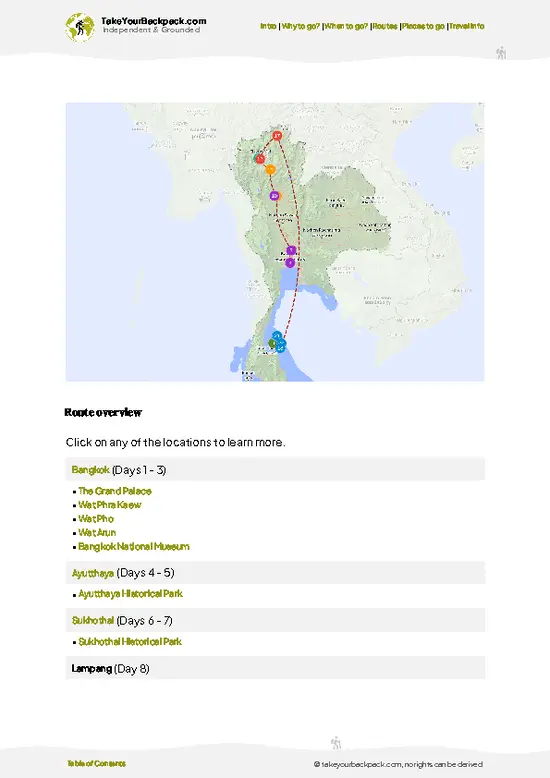
example page 0 from our offline Travel Guide for Thailand
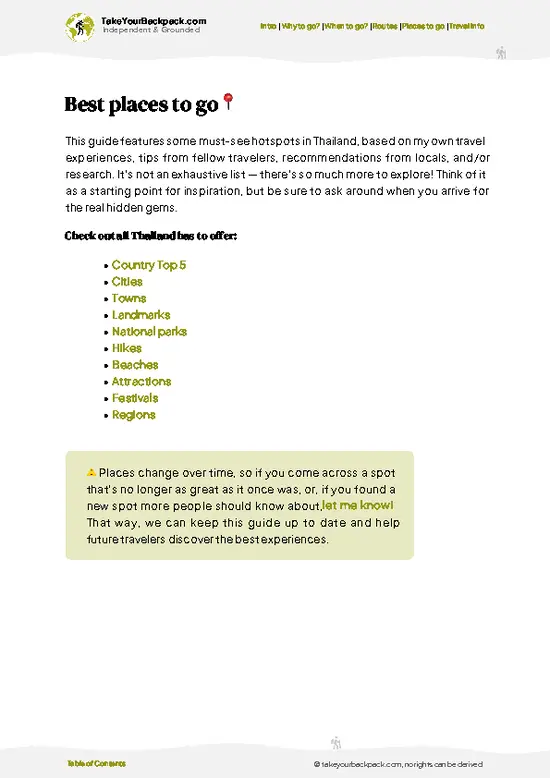
example page 1 from our offline Travel Guide for Thailand
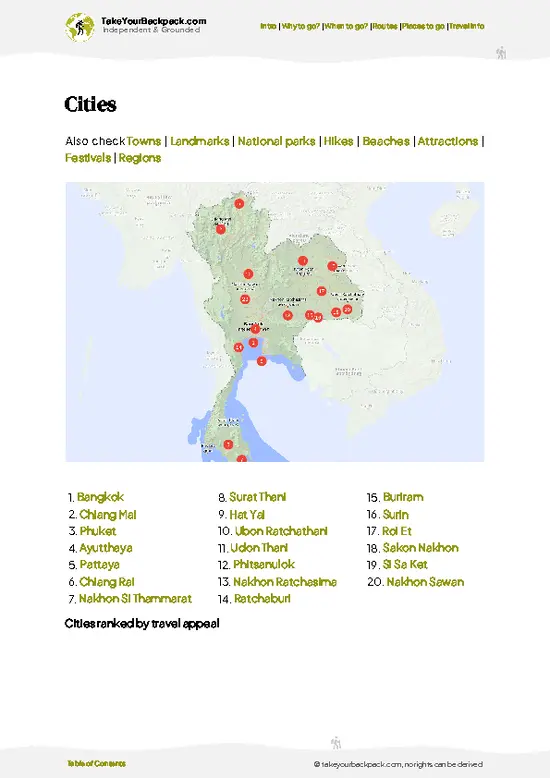
example page 2 from our offline Travel Guide for Thailand
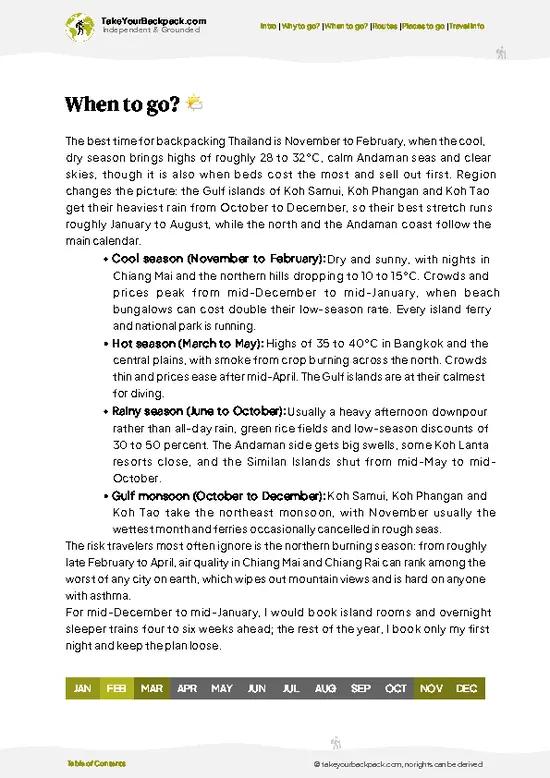
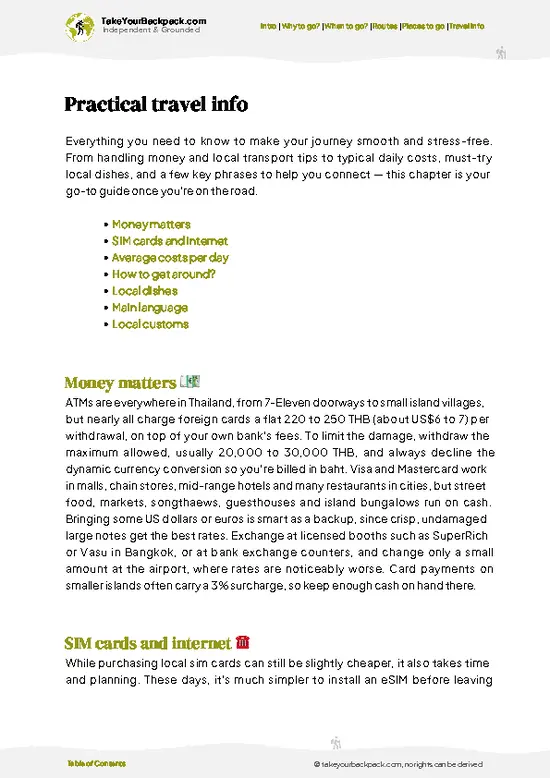
example page 3 from our offline Travel Guide for Thailand
example page 4 from our offline Travel Guide for Thailand
example page 5 from our offline Travel Guide for Thailand
example page 6 from our offline Travel Guide for Thailand
example page 7 from our offline Travel Guide for Thailand
The digital guide (510 pages) contains:
139 highlights, ranked by travel appeal
Optimized 7, 14 & 21-day travel routes
Cities, national parks, landmarks, beaches
How to get around
Offline-friendly for travel without Wi-Fi
👉 Click to see all 30+ guide features

📅 Plan smarter in minutes, not weeks
Month by month travel advice
Festivals & national holidays
Budget expectations

🗺️ Go to the right places, skip the overrated ones
Honest pros & cons of destinations
Top hikes, parks & viewpoints
Lesser-known places most travelers miss
Clear “worth it vs skip it” guidance

🛏️ Travel smoothly without rookie mistakes
Best areas to stay
Transport systems explained simply
Common scams & safety advice
SIM cards, money & practical tips

🌍 Understand the country, not just visit it
Culture & traditions
52 Essential phrases & customs
Festivals worth planning around
Traveler-friendly historical context
Insights that make places more meaningful

📱 Built for real travel conditions
Fully downloadable PDF
Works completely offline
Optimized for phone use
Useful in remote areas & buses
Everything in one place
Save weeks of stressful planning
Get instant access to your full guide. 30‑day money-back guarantee.


By proceeding you agree to our terms.
Sent to your inbox immediately after payment • 100% Secure Checkout
Best Backpacking Travel Advisor 2025 tourism awardBest Backpacking
Travel Advisor
2025
What others say about Take Your Backpack Guides:
⭐⭐⭐⭐⭐
Fantastic, amazing amount of information!
⭐⭐⭐⭐⭐
My goodness this is amazing, it's what I've been looking for hats off too you!
⭐⭐⭐⭐⭐
I think this is absolutely BRILLIANT
⭐⭐⭐⭐
Very complete and informative. It's still missing places, but I gotta to commend you
⭐⭐⭐⭐⭐
This is truly amazing, thank you, can't wait to explore it with my kids!
⭐⭐⭐⭐⭐
Awesome resource, thank you!
⭐⭐⭐⭐⭐
This is amazing! Can't wait to explore the ones I haven't seen
⭐⭐⭐⭐
I love this! Well done, great idea.
⭐⭐⭐⭐⭐
Thanks for taking the time to make this gem!
⭐⭐⭐⭐⭐
This might be the best website I've ever seen.
⭐⭐⭐⭐⭐
Congratulations, and thank you so much for your work; it's incredibly valuable.
⭐⭐⭐⭐
In all seriousness I think you did a great job pointing out the important spots
⭐⭐⭐⭐⭐
10/10 very good
⭐⭐⭐⭐⭐
As someone who's only just starting to visit regularly this is awesome, thank you.
⭐⭐⭐⭐
Thank you very much! I'm going to visit my dad, it's going to be very useful!
⭐⭐⭐⭐⭐
This is really cool! We'll be travelling for the first time and this definitely come in handy.
⭐⭐⭐⭐⭐
You are now our minister of culture, congratulations 👨‍💼
⭐⭐⭐⭐⭐
Just wanted to tell you that this is a pearl! Going to follow your recommendations.
⭐⭐⭐⭐⭐
This is so cool. I'll definitely be using the resource for my travels soon.
⭐⭐⭐⭐⭐
This is very impressive! Good work.
⭐⭐⭐⭐⭐
This is an amazing and informative site. Very well done!

🛏️ Where to stay?Accommodation Highlights

Yes, hostels and budget accommodation are plentiful across Thailand, concentrated in backpacker and transit hubs such as Khao San Road, Sukhumvit and Silom in Bangkok, Old City and Nimmanhaemin in Chiang Mai, and beach towns like Patong, Kata/Karon on Phuket and Chaweng, Lamai on Koh Samui.
Khao San and Patong deliver the cheapest beds and nonstop nightlife but are noisy and very touristy; Sukhumvit and Silom give the best transit links and a mix of nightlife with higher prices; Chiang Mai Old City is compact, temple-close and quieter at night while Nimmanhaemin has more cafes and slightly pricier rooms; Kata/Karon and Lamai are calmer beach options with better swimming and family-friendly … read more 👉
Yes, hostels and budget accommodation are plentiful across Thailand, concentrated in backpacker and transit hubs such as Khao San Road, Sukhumvit and Silom in Bangkok, Old City and Nimmanhaemin in Chiang Mai, and beach towns like Patong, Kata/Karon on Phuket and Chaweng, Lamai on Koh Samui.
Khao San and Patong deliver the cheapest beds and nonstop nightlife but are noisy and very touristy; Sukhumvit and Silom give the best transit links and a mix of nightlife with higher prices; Chiang Mai Old City is compact, temple-close and quieter at night while Nimmanhaemin has more cafes and slightly pricier rooms; Kata/Karon and Lamai are calmer beach options with better swimming and family-friendly evenings compared with party-heavy Chaweng.
Choose by priority: pick Khao San/Patong/Chaweng for social, budget party scenes; Sukhumvit/Silom for transport convenience and variety; Chiang Mai Old City for culture and quiet; Kata/Karon/Lamai for relaxed beach time to avoid noise and overpriced central hostels.

If you enjoy meeting fellow travelers, consider choosing hostels with high ratings for atmosphere. On the other hand, if you prefer having your own space, a hotel might be a better option.

ThailandSee More of Thailand

👋 Meet the founderWho’s Behind Take Your Backpack?

Johan, backpacker and founder of TakeYourBackpackHi, I’m Johan (Netherlands 🇳🇱), the creator of TakeYourBackpack. Over the past decade, I’ve backpacked through 80+ countries across six continents, gaining extensive experience with independent travel, long-term trips, and overland routes.

This site is built on a combination of firsthand travel experience and carefully curated insights from other backpackers. Many guides are based on places I’ve personally visited, while others bring together tips, observations, and practical advice shared by trusted travelers I’ve met along the way.

The goal is to provide realistic, experience-driven guidance — not generic itineraries — so you can explore destinations with better context, clearer expectations, and more confidence.

Get full Thailand guide •
Instant download • 139 highlights • Full Offline guide