v2.webp)
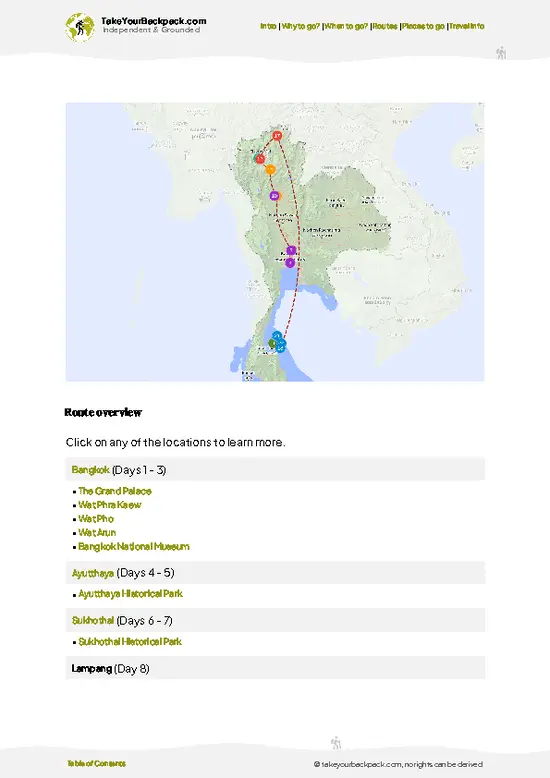
- Kamphaeng Phet Historical Park (archaeological zone) — The town’s UNESCO-listed ruins are the heartbeat of Kamphaeng Phet: intact city walls, moats and a spread of ruined wats and chedis that show how this frontier city looked in the Sukhothai-Ayutthaya era. Walkable, atmospheric and best seen slowly in the late afternoon light.
- Wat Phra Kaeo (within the Historical Park) — Once a royal temple, its remaining chedi bases and Buddha platforms give a clear feel for the scale and layout of royal religious complexes here; great for photos and imagining the old capital.
- Wat Chang Rop — Famous for the elephant sculptures around its base (hence the name), this temple is one of the most photogenic ruins in the park and shows the distinctive local stone-carving style.
- Nakhon Chum group (west-river
- Kamphaeng Phet Historical Park (archaeological zone) — The town’s UNESCO-listed ruins are the heartbeat of Kamphaeng Phet: intact city walls, moats and a spread of ruined wats and chedis that show how this frontier city looked in the Sukhothai-Ayutthaya era. Walkable, atmospheric and best seen slowly in the late afternoon light.
- Wat Phra Kaeo (within the Historical Park) — Once a royal temple, its remaining chedi bases and Buddha platforms give a clear feel for the scale and layout of royal religious complexes here; great for photos and imagining the old capital.
- Wat Chang Rop — Famous for the elephant sculptures around its base (hence the name), this temple is one of the most photogenic ruins in the park and shows the distinctive local stone-carving style.
- Nakhon Chum group (west-river chedis) — A cluster of three large bell-shaped chedis on the Ping’s west bank; they’re a striking riverside landmark and easy to reach by a short walk from the central park area.
- Ancient city wall, moat and surviving gates — You can still walk along parts of the old ramparts and see the original defensive layout up close; the surviving gate sections give a tangible sense of the city’s military past.
- Kamphaeng Phet National Museum — Compact but well-curated: pottery, inscriptions, Buddha images and explanatory displays that put the ruins into context. Good place to start before touring the park.
- Riverside area along the Ping River — Low-key riverside life, old wooden houses and small boat activity make for pleasant strolls at sunset; local eateries nearby serve straightforward northern-Thai dishes and river views.
- Wat Phra Non — Another important temple ruin inside the old city complex with interesting Buddha bases and lintel carvings; quieter than the headline sites, so good if you want fewer crowds and more atmosphere.
- Local markets and food stalls around the town center — The morning market and evening food stalls are where you’ll find real local flavors — simple noodles, grilled fish and northern snacks — and an authentic slice of daily life.
- Small community museums and restored wooden houses — Scattered around the historic core are a few local heritage houses and small museums run by the province or local communities; they’re low-cost, often staffed by friendly locals and give neat insights into traditional life here.
Spotted a mistake or missing something? Contact us.

 Best Backpacking
.jpg) Hi, I’m Johan (Netherlands 🇳🇱), the creator of TakeYourBackpack. Over the past 3 decades, I’ve backpacked through 90+ countries across six continents, gaining extensive experience with independent travel, long-term trips, and overland routes.
Hi, I’m Johan (Netherlands 🇳🇱), the creator of TakeYourBackpack. Over the past 3 decades, I’ve backpacked through 90+ countries across six continents, gaining extensive experience with independent travel, long-term trips, and overland routes.