
×

Thailand🇹🇭 | townsSukhothaitemple ruins, historical park, lotus ponds | things to do and best time to go

Explore SangkhlaburiExplore Hua Hin

Backpacking in Sukhothai
🏆 Top picktown ranked #3
By Johan Kruseman 🇳🇱 | Updated June 2, 2026

Most people only realize after leaving that Sukhothai is where you can experience Thailand’s ancient ruins without the Bangkok or Ayutthaya crowds breathing down your neck. It sits in lower northern Thailand, roughly halfway between Bangkok and Chiang Mai, just far enough off the main express line to thin out the tour buses. The modern town itself is workaday and a bit scruffy, with fluorescent-lit shopfronts and the smell of grilled pork skewers drifting from curbside carts at dusk, but that’s the point: it feels lived-in, not curated. For backpackers, Sukhothai works best as a one- or two-night stop to break the Bangkok–Chiang Mai run, using songthaews or rented bikes to reach the historical park’s moats and Buddha statues. It’s cheaper and quieter than Chiang Mai, less charming than Lampang, but easy, safe, and low-pressure, with a small cluster of guesthouses and mellow cafés where meeting other travelers happens, just not on demand.

Discover everything you want to know in the 📖 Thailand Travel Guide.
Loading the map 🌍
CLICK TO FILTER
cities
towns
landmarks
national parks
hikes
beaches
attractions
festivals
regions
SHOW COUNTRY’S BESTSHOW ALL

✨ Why go?
Ranked #3 town in Thailand
What makes this town worth visiting

Sukhothai draws backpackers for its convenience and authenticity. It’s a strategic stop on the way to Chiang Mai or Bangkok, making it easy to hop on a bus or train. The town’s walkable streets invite you to explore at your own pace, with small-scale hostels and guesthouses that feel like home. You’ll find friendly locals serving up delicious street food—think savory noodles and fresh fruit shakes that burst with flavor.

For those who love hiking, the nearby Sukhothai Historical Park offers a chance to wander among ancient ruins, while the surrounding countryside is perfect for a day trek. Backpackers often stay a few days, soaking in the laid-back vibe and connecting with fellow travelers. It’s a haven for slow travelers and solo adventurers who appreciate a quieter atmosphere over bustling … read more 👉
Sukhothai draws backpackers for its convenience and authenticity. It’s a strategic stop on the way to Chiang Mai or Bangkok, making it easy to hop on a bus or train. The town’s walkable streets invite you to explore at your own pace, with small-scale hostels and guesthouses that feel like home. You’ll find friendly locals serving up delicious street food—think savory noodles and fresh fruit shakes that burst with flavor.

For those who love hiking, the nearby Sukhothai Historical Park offers a chance to wander among ancient ruins, while the surrounding countryside is perfect for a day trek. Backpackers often stay a few days, soaking in the laid-back vibe and connecting with fellow travelers. It’s a haven for slow travelers and solo adventurers who appreciate a quieter atmosphere over bustling nightlife. If you’re looking for a place to recharge and immerse yourself in local culture, Sukhothai is a rewarding stop that feels both enriching and accessible.
Want to include Sukhothai in your Thailand route?
Create a personalized Thailand itinerary that includes Sukhothai and the places that fit your trip — based on your travel style, budget, and available time. Get your route in seconds.

Generate my trip

💡 HighlightsKey sights and experiences for travelers

  1. Sukhothai Historical Park (Mueang Kao) — The heart of Sukhothai: a compact, walkable concentration of ruins, ponds and tree-lined paths that give you a real sense of the kingdom’s scale and daily life. Best experienced by bike at sunrise or sunset when light and crowd levels are perfect.
  2. Wat Mahathat — The park’s spiritual center, with the large lotus-bud chedi and standing/lying Buddhas scattered around a reflective pond. It’s where most people feel the true weight of Sukhothai’s artistic and religious achievement.
  3. Wat Si Chum (Phra Achana) — Home to the famous massive seated Buddha framed inside a narrow mondop; the face of Phra Achana through the slit is one of Thailand’s most iconic images. The acoustics inside that enclosure are also oddly powerful for chanting or quiet reflection.
read more 👉
  1. Sukhothai Historical Park (Mueang Kao) — The heart of Sukhothai: a compact, walkable concentration of ruins, ponds and tree-lined paths that give you a real sense of the kingdom’s scale and daily life. Best experienced by bike at sunrise or sunset when light and crowd levels are perfect.
  2. Wat Mahathat — The park’s spiritual center, with the large lotus-bud chedi and standing/lying Buddhas scattered around a reflective pond. It’s where most people feel the true weight of Sukhothai’s artistic and religious achievement.
  3. Wat Si Chum (Phra Achana) — Home to the famous massive seated Buddha framed inside a narrow mondop; the face of Phra Achana through the slit is one of Thailand’s most iconic images. The acoustics inside that enclosure are also oddly powerful for chanting or quiet reflection.
  4. Wat Sa Si — A picture-perfect island temple set in a lotus-filled pond, great for calm photos and watching fishermen on the park’s canals. It’s small, atmospheric, and elegant—especially at golden hour.
  5. Wat Phra Phai Luang — A large, Khmer-influenced complex north of the central zone with dramatic prangs and heavy stonework that show Sukhothai’s regional connections. It feels more rugged and ancient compared with the park’s later Thai-style temples.
  6. Wat Si Sawai — Three Khmer-style prangs make this one visually distinct; it’s quieter than the main temples and rewards slow exploration of its layers of construction and carvings. Good spot to dodge the big crowds and nerd out on architecture.
  7. Wat Chang Lom — A later-period chedi surrounded by stone elephants at its base—an instantly recognizable Sukhothai silhouette. Its setting near the outer moats makes it great for photos and short, shaded walks.
  8. Wat Saphan Hin — Up on a small hill reached by stone steps, this site has a large Buddha and excellent panoramic views over rice fields and the park. The climb is short and shaded; the view at sunrise or late afternoon is worth the effort.
  9. Ramkhamhaeng National Museum — Small but well-curated, with original sculptures, inscriptions and everyday objects from the Sukhothai era. A good stop either before or after visiting the ruins to give the sites real historical context.
  10. Cycle or walk the Old City walls and moats (Mueang Kao layout) — Not a single monument, but the experience of tracing the rectangular walls and canals of Old Sukhothai gives the best sense of how the city functioned. Rent a bike, follow the ring road, and stop at humble ruins and local temples the guidebooks often skip.
A few excellent day trips outside the town: Si Satchanalai Historical Park and the nearby Sangkhalok kiln sites/museum (ceramics history), and Phitsanulok’s Wat Phra Si Rattana Mahathat (home of the Phra Chinnarat Buddha image).
Spotted a mistake or missing something? Contact us.

🏘️ NeighborhoodsNeighborhood guide to Sukhothai

Sukhothai is a captivating blend of history and local life, perfect for backpackers seeking both adventure and authenticity. Here’s a breakdown of the key neighborhoods to help you navigate this charming town.

Old Sukhothai: This is where the ancient ruins of Sukhothai Historical Park lie. The vibe is serene, with a sense of stepping back in time. You can rent a bike to explore the park’s temples, making it easy to cover ground. Accommodation ranges from budget guesthouses to mid-range hotels, keeping costs manageable. It’s ideal for longer stays, as you can soak in the history and enjoy the peaceful atmosphere.

New Sukhothai: A bit more modern, this area offers a lively mix of local eateries and shops. The walkability is decent, but you might need a tuk-tuk for longer distances. Nightlife … read more 👉
Sukhothai is a captivating blend of history and local life, perfect for backpackers seeking both adventure and authenticity. Here’s a breakdown of the key neighborhoods to help you navigate this charming town.

Old Sukhothai: This is where the ancient ruins of Sukhothai Historical Park lie. The vibe is serene, with a sense of stepping back in time. You can rent a bike to explore the park’s temples, making it easy to cover ground. Accommodation ranges from budget guesthouses to mid-range hotels, keeping costs manageable. It’s ideal for longer stays, as you can soak in the history and enjoy the peaceful atmosphere.

New Sukhothai: A bit more modern, this area offers a lively mix of local eateries and shops. The walkability is decent, but you might need a tuk-tuk for longer distances. Nightlife here is low-key, with a few bars and cafes, perfect for winding down after a day of exploration. It’s suitable for short stays, especially if you want a taste of local life without straying too far from the main attractions.

Thung Teao: This quieter neighborhood is a hidden retreat. It’s less touristy, with a few homestays and local markets. The atmosphere is laid-back, making it great for those looking to escape the hustle. Transport options are limited, so it’s best for longer stays where you can fully immerse yourself in the local culture.

⌛️ 1 day1-day itinerary for Sukhothai

Sukhothai, the cradle of Thai civilization, is a treasure trove of ancient ruins and lush landscapes. The air is thick with the scent of jasmine and fried street food, a perfect backdrop for a day of exploration.

Start your morning at the Sukhothai Historical Park. Arrive early to catch the soft light filtering through the trees, illuminating the crumbling stupas and serene Buddha statues. Rent a bicycle—it’s the best way to navigate the park’s sprawling grounds. Pedal past the iconic Wat Mahathat, where the massive seated Buddha seems to watch over you, and take a moment to absorb the tranquility. The stillness here is palpable, broken only by the distant chirping of birds.

After soaking in the history, head to the local market for lunch. The Sukhothai Market is often overlooked by tourists, … read more 👉
Sukhothai, the cradle of Thai civilization, is a treasure trove of ancient ruins and lush landscapes. The air is thick with the scent of jasmine and fried street food, a perfect backdrop for a day of exploration.

Start your morning at the Sukhothai Historical Park. Arrive early to catch the soft light filtering through the trees, illuminating the crumbling stupas and serene Buddha statues. Rent a bicycle—it’s the best way to navigate the park’s sprawling grounds. Pedal past the iconic Wat Mahathat, where the massive seated Buddha seems to watch over you, and take a moment to absorb the tranquility. The stillness here is palpable, broken only by the distant chirping of birds.

After soaking in the history, head to the local market for lunch. The Sukhothai Market is often overlooked by tourists, but it’s where you’ll find authentic flavors. Try the Sukhothai noodles, a delightful mix of savory broth and fresh herbs. The vibrant colors of the fresh produce and the chatter of locals create an inviting atmosphere.

In the afternoon, explore the lesser-known Wat Si Chum, famous for its giant Buddha statue. The light filtering through the temple’s open mouth creates a surreal ambiance. It’s a bit off the beaten path, but the experience is worth the extra effort.

As evening approaches, stroll through the Old City. The golden hour casts a warm glow on the ancient ruins, making for stunning photos. Grab dinner at a riverside restaurant, where you can enjoy grilled fish and sticky rice while listening to the gentle flow of the river.

End your day with a leisurely walk along the riverbank, reflecting on the beauty of Sukhothai. Each moment here feels like a step back in time, a reminder of the rich tapestry of Thai history.
Turn your Sukhothai visit into an Thailand adventure
Build a complete Thailand route with Sukhothai, hidden gems, must-see destinations, and realistic travel times included.

Generate my trip

🌤️ When to go?Weather, crowds, and seasonal trade-offs


  • Topic: Weather – The dry season from November to February is your best bet. Expect clear skies and minimal rain, which means dusty trails and ruins you can explore without slipping or soggy gear. Temperatures hover between 20-30°C (68-86°F), perfect for long days outside without overheating.

  • Topic: Temperature – March to May heats up sharply, often hitting 35-40°C (95-104°F). That’s brutal midday sun baking the ancient stones and your energy. Early mornings and late afternoons become your only windows for comfortable trekking.

  • Topic: Daylight Hours – Around 11-12 hours of daylight year-round, but the dry season’s cooler mornings and evenings make those hours feel longer and more usable. The sun rises around 6:30 AM and sets near 6:30 PM, giving you ample time to chase golden light over
read more 👉

  • Topic: Weather – The dry season from November to February is your best bet. Expect clear skies and minimal rain, which means dusty trails and ruins you can explore without slipping or soggy gear. Temperatures hover between 20-30°C (68-86°F), perfect for long days outside without overheating.

  • Topic: Temperature – March to May heats up sharply, often hitting 35-40°C (95-104°F). That’s brutal midday sun baking the ancient stones and your energy. Early mornings and late afternoons become your only windows for comfortable trekking.

  • Topic: Daylight Hours – Around 11-12 hours of daylight year-round, but the dry season’s cooler mornings and evenings make those hours feel longer and more usable. The sun rises around 6:30 AM and sets near 6:30 PM, giving you ample time to chase golden light over the ruins.

  • Topic: Crowds – Peak tourist season aligns with the dry months, so expect more visitors, especially around the Loy Krathong festival in November when the city glows with lanterns and floating candles. It’s magical but plan for busier sites and higher prices.

  • Topic: Seasonal Activities – November’s Loy Krathong and Songkran in April are cultural highlights. Loy Krathong offers a sensory feast of lights and water rituals, while Songkran’s water fights provide a refreshing break from the heat, but both bring crowds and higher costs.

  • Topic: Price Fluctuations – Accommodation and tours spike during the dry season and festivals. Booking early can lock in better rates. The rainy season (June to October) sees fewer tourists and lower prices but comes with the trade-off of muddy trails and unpredictable showers.


Pro-tip: Aim for late November or early December—cool, dry, and just before the tourist rush peaks—so you get the best light, manageable crowds, and a real sense of space to soak in Sukhothai’s ancient soul.


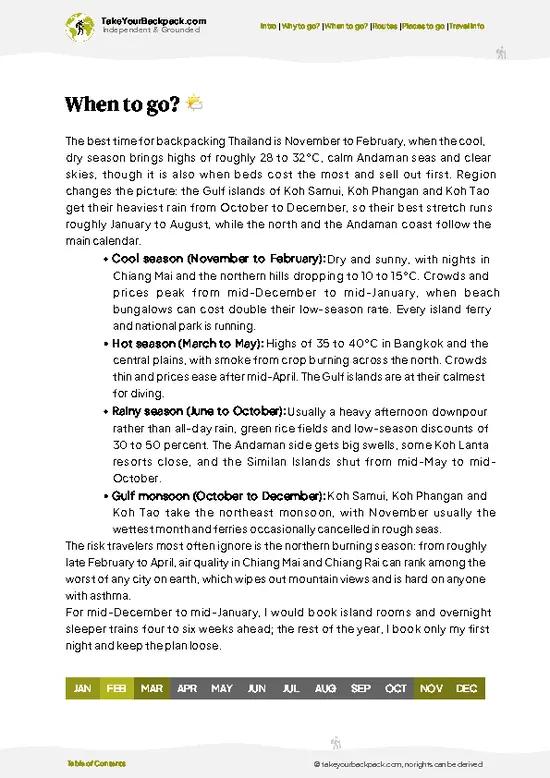
source: climatestotravel.comJANJanuary: excellent for travelingFEBFebruary: excellent for travelingMARMarch: good for travelingAPRApril: good for travelingMAYMay: fair for travelingJUNJune: fair for travelingJULJuly: fair for travelingAUGAugust: fair for travelingSEPSeptember: fair for travelingOCTOctober: fair for travelingNOVNovember: highly recommended for travelingDECDecember: excellent for traveling
when-to-go

✈️ The backpacker research shortcutThailand Travel Guide

An offline-friendly backpacking guide with optimized travel routes, ranked highlights, transport advice, and the best areas to stay.
example page 0 from our offline Travel Guide for Thailandexample page 1 from our offline Travel Guide for Thailandexample page 2 from our offline Travel Guide for Thailandexample page 3 from our offline Travel Guide for Thailandexample page 4 from our offline Travel Guide for Thailandexample page 5 from our offline Travel Guide for Thailandexample page 6 from our offline Travel Guide for Thailandexample page 7 from our offline Travel Guide for Thailand
The digital guide (510 pages) contains:
139 highlights, ranked by travel appeal
Optimized 7, 14 & 21-day travel routes
Cities, national parks, landmarks, beaches
How to get around
Offline-friendly for travel without Wi-Fi
👉 Click to see all 30+ guide features

📅 Plan smarter in minutes, not weeks
Month by month travel advice
Festivals & national holidays
Budget expectations

🗺️ Go to the right places, skip the overrated ones
Honest pros & cons of destinations
Top hikes, parks & viewpoints
Lesser-known places most travelers miss
Clear “worth it vs skip it” guidance

🛏️ Travel smoothly without rookie mistakes
Best areas to stay
Transport systems explained simply
Common scams & safety advice
SIM cards, money & practical tips

🌍 Understand the country, not just visit it
Culture & traditions
52 Essential phrases & customs
Festivals worth planning around
Traveler-friendly historical context
Insights that make places more meaningful

📱 Built for real travel conditions
Fully downloadable PDF
Works completely offline
Optimized for phone use
Useful in remote areas & buses
Everything in one place
Save weeks of stressful planning
Get instant access to your full guide. 30‑day money-back guarantee.


By proceeding you agree to our terms.
Sent to your inbox immediately after payment • 100% Secure Checkout
Best Backpacking Travel Advisor 2025 tourism awardBest Backpacking
Travel Advisor
2025
What others say about Take Your Backpack Guides:
⭐⭐⭐⭐⭐
Fantastic, amazing amount of information!
⭐⭐⭐⭐⭐
My goodness this is amazing, it's what I've been looking for hats off too you!
⭐⭐⭐⭐⭐
I think this is absolutely BRILLIANT
⭐⭐⭐⭐
Very complete and informative. It's still missing places, but I gotta to commend you
⭐⭐⭐⭐⭐
This is truly amazing, thank you, can't wait to explore it with my kids!
⭐⭐⭐⭐⭐
Awesome resource, thank you!
⭐⭐⭐⭐⭐
This is amazing! Can't wait to explore the ones I haven't seen
⭐⭐⭐⭐
I love this! Well done, great idea.
⭐⭐⭐⭐⭐
Thanks for taking the time to make this gem!
⭐⭐⭐⭐⭐
This might be the best website I've ever seen.
⭐⭐⭐⭐⭐
Congratulations, and thank you so much for your work; it's incredibly valuable.
⭐⭐⭐⭐
In all seriousness I think you did a great job pointing out the important spots
⭐⭐⭐⭐⭐
10/10 very good
⭐⭐⭐⭐⭐
As someone who's only just starting to visit regularly this is awesome, thank you.
⭐⭐⭐⭐
Thank you very much! I'm going to visit my dad, it's going to be very useful!
⭐⭐⭐⭐⭐
This is really cool! We'll be travelling for the first time and this definitely come in handy.
⭐⭐⭐⭐⭐
You are now our minister of culture, congratulations 👨‍💼
⭐⭐⭐⭐⭐
Just wanted to tell you that this is a pearl! Going to follow your recommendations.
⭐⭐⭐⭐⭐
This is so cool. I'll definitely be using the resource for my travels soon.
⭐⭐⭐⭐⭐
This is very impressive! Good work.
⭐⭐⭐⭐⭐
This is an amazing and informative site. Very well done!

🛏️ Where to stay?How to pick the right area

Sukhothai’s backpacker sweet spot is the Old City area, especially around the moat and the main road that loops the historical park. This neighborhood pulses with a laid-back energy that’s perfect for solo travelers and budget adventurers. The streets here are calm after sunset, lit by soft yellow lamps and the occasional buzz of a tuk-tuk, making it feel safe without the sterile quiet of a tourist trap. You’ll find a handful of hostels scattered along these roads, offering dorm beds and communal spaces where it’s easy to strike up conversations over shared meals or motorbike rental tips.

Why … read more 👉
Sukhothai’s backpacker sweet spot is the Old City area, especially around the moat and the main road that loops the historical park. This neighborhood pulses with a laid-back energy that’s perfect for solo travelers and budget adventurers. The streets here are calm after sunset, lit by soft yellow lamps and the occasional buzz of a tuk-tuk, making it feel safe without the sterile quiet of a tourist trap. You’ll find a handful of hostels scattered along these roads, offering dorm beds and communal spaces where it’s easy to strike up conversations over shared meals or motorbike rental tips.

Why this area? It’s the gateway to the ancient ruins, so you can wake up early and catch the golden hour light filtering through centuries-old temples without a long commute. Plus, the vibe is social but not overwhelming—locals run small eateries and markets nearby, so you’re immersed in everyday life, not just tourist routines. Compared to the newer parts of town, which lean more residential and quiet, the Old City balances accessibility with atmosphere. It’s a place where the scent of grilled street food mingles with the dusty earth, and the rhythm of the day naturally guides you from exploration to evening chill without fuss.

🚌 Getting aroundTransportation options and practical tips

Sukhothai moves at the pace of a slow river, not a rushing torrent. The sun spills golden light over ancient ruins, and the air carries the faint scent of frangipani mixed with dust from the red earth. Here, time isn’t dictated by strict schedules but by the rhythm of the day—early mornings when the temples glow soft and cool, afternoons when the heat presses down and the streets quiet, and evenings when locals gather under the fading light. The town’s flow is intuitive, inviting you to wander without a clock, but that doesn’t mean you can’t move smartly between spots. Knowing your transit options means you spend less time waiting and more time soaking in the atmosphere.


  • Walking: The heart of Sukhothai’s Old City is compact and flat, perfect for exploring on foot. Most ruins and museums
read more 👉
Sukhothai moves at the pace of a slow river, not a rushing torrent. The sun spills golden light over ancient ruins, and the air carries the faint scent of frangipani mixed with dust from the red earth. Here, time isn’t dictated by strict schedules but by the rhythm of the day—early mornings when the temples glow soft and cool, afternoons when the heat presses down and the streets quiet, and evenings when locals gather under the fading light. The town’s flow is intuitive, inviting you to wander without a clock, but that doesn’t mean you can’t move smartly between spots. Knowing your transit options means you spend less time waiting and more time soaking in the atmosphere.


  • Walking: The heart of Sukhothai’s Old City is compact and flat, perfect for exploring on foot. Most ruins and museums are within a 2-3 km radius, so lace up your shoes and prepare for a sensory stroll—feel the cracked stone underfoot, hear the distant calls of market vendors, and catch the scent of grilled street food. Walking is free, flexible, and the best way to absorb the town’s quiet pulse.


  • Rental Bicycle: For about 40-60 THB per day, renting a bicycle is the budget traveler’s golden ticket. Bikes are available near guesthouses and the bus station. Early morning rides are a dream—cool air, soft light filtering through trees, and the freedom to reach ruins outside the Old City walls. Just watch for uneven paths and occasional stray dogs; the pace is yours to set.


  • Songthaew (Shared Truck Taxi): These red pickup trucks with benches in the back run on flexible routes around town and to nearby attractions. Fares hover around 20-30 THB. They don’t run on a strict timetable but start early morning and taper off by early evening. It’s a bumpy, open-air ride that’s cheap and social, perfect if you want to cover more ground without the hassle of renting a bike or waiting for a taxi.


  • Motorbike Taxi: For quick, short hops—like from the bus station to your guesthouse or between the Old City and the night market—motorbike taxis are everywhere. Expect to pay 30-50 THB depending on distance. They’re fast and nimble but negotiate the price upfront. The wind on your face and the scent of jasmine from roadside stalls make these rides a sensory snapshot of local life.


  • Local Bus to Si Satchanalai: If you want to stretch beyond Sukhothai, the local bus to Si Satchanalai is a budget-friendly option at around 40 THB. Buses leave from the main station roughly every hour from early morning until late afternoon. The ride takes about 1.5 hours, winding through countryside that shifts from rice paddies to limestone hills, giving you a glimpse of rural northern Thailand’s quieter side.

👛 Costs (as of 15 June 2026)What things cost and how to budget

Backpacking in Sukhothai, Thailand, offers a laid-back vibe with costs that reflect its small-town charm and historical significance. Here’s what you can expect to spend daily as an independent traveler.
  • Dorm Accommodation: Dorm beds in guesthouses or hostels typically run between $5 and $10 per night. These places are simple but clean, often with fans rather than air conditioning, which suits the warm, dry air of the region. Expect basic amenities and a quiet atmosphere, perfect for resting after a day exploring ancient ruins.
  • Meals: Street food and local eateries dominate here. You’ll find hearty plates of khao soi or pad thai for around $1.50 to $3. A full day of meals can be managed for $4 to $7 if you stick to local joints. The scent of grilled meats and fresh herbs fills the air, making
read more 👉
Backpacking in Sukhothai, Thailand, offers a laid-back vibe with costs that reflect its small-town charm and historical significance. Here’s what you can expect to spend daily as an independent traveler.
  • Dorm Accommodation: Dorm beds in guesthouses or hostels typically run between $5 and $10 per night. These places are simple but clean, often with fans rather than air conditioning, which suits the warm, dry air of the region. Expect basic amenities and a quiet atmosphere, perfect for resting after a day exploring ancient ruins.
  • Meals: Street food and local eateries dominate here. You’ll find hearty plates of khao soi or pad thai for around $1.50 to $3. A full day of meals can be managed for $4 to $7 if you stick to local joints. The scent of grilled meats and fresh herbs fills the air, making every meal a sensory highlight without breaking the bank.
  • Local Transport: Sukhothai is compact, and many travelers rent bicycles for about $1.50 to $2 per day, which is the best way to soak in the early morning light on temple ruins. Tuk-tuks and motorbike taxis are available but pricier, around $2 to $5 for short rides. Walking is also a solid option if you’re up for it.
  • Basic Activities/Entry Fees: The main draw is the Historical Park, with an entry fee of about $6. Renting a bike to explore the park is often included or costs a couple of dollars extra. Other small temples and museums may charge $1 to $3. These fees keep the site maintained and the experience authentic.
  • Miscellaneous Expenses: Bottled water, snacks, and occasional coffee or a cold drink will add around $1 to $3 daily. If you want a local SIM card for data, expect to pay about $5 for a basic package that lasts a week.

All told, you’re looking at roughly $15 to $25 per day to cover the essentials without skimping on comfort or experience. Sukhothai’s slower pace means you won’t feel rushed to spend, and the quiet mornings cycling through ruins make every dollar feel well spent.
⚠️ Prices can change and everyone travels differently, so take this as a rough guide. Hope it helps you plan your adventure!

🚌 Day tripsWhere to go beyond the main area

Sukhothai is a backpacker’s dream base, offering easy access to rich history and stunning landscapes. Here are some day trips that make the most of your time in this vibrant region.

Historical Park Exploration
Just a short bike ride from town, the Sukhothai Historical Park is a treasure trove of ancient ruins. Picture yourself wandering among the towering stupas and serene Buddha statues, the scent of fresh jasmine wafting through the air. Spend a few hours here, ideally in the early morning or late afternoon to avoid the heat. Entry is around 100 THB, and renting a bike costs about 50 THB for the day. Many first-timers miss the chance to catch the sunrise, which casts a magical glow over the ruins.


Si Satchanalai Historical Park
A bit further afield, Si Satchanalai offers a quieter … read more 👉
Sukhothai is a backpacker’s dream base, offering easy access to rich history and stunning landscapes. Here are some day trips that make the most of your time in this vibrant region.

Historical Park Exploration
Just a short bike ride from town, the Sukhothai Historical Park is a treasure trove of ancient ruins. Picture yourself wandering among the towering stupas and serene Buddha statues, the scent of fresh jasmine wafting through the air. Spend a few hours here, ideally in the early morning or late afternoon to avoid the heat. Entry is around 100 THB, and renting a bike costs about 50 THB for the day. Many first-timers miss the chance to catch the sunrise, which casts a magical glow over the ruins.


Si Satchanalai Historical Park
A bit further afield, Si Satchanalai offers a quieter alternative to its more famous sibling. It’s about an hour’s bus ride from Sukhothai, costing around 30 THB. The park is less crowded, allowing you to soak in the atmosphere of ancient temples surrounded by lush greenery. Bring a picnic to enjoy under the shade of a banyan tree. The best time to visit is during the cool season, from November to February. Many backpackers overlook this gem, thinking it’s too far, but the journey is part of the adventure.


Phra Si Ratana Temple
Located in the nearby town of Phitsanulok, this temple is home to one of Thailand’s most revered Buddha images. The bus ride takes about an hour and costs around 50 THB. The temple’s intricate architecture and vibrant colors are a feast for the eyes, especially in the soft morning light. Aim to visit on a weekday to avoid crowds. A common mistake is rushing through; take your time to appreciate the local monks’ rituals and the peaceful ambiance.


Ramkhamhaeng National Park
For nature lovers, a trip to Ramkhamhaeng National Park is a must. It’s about an hour’s ride by songthaew, costing around 60 THB. The park features stunning waterfalls and hiking trails that lead you through dense forests. Bring sturdy shoes and plenty of water. The best time to hike is during the cooler months, when the trails are less muddy. Many backpackers skip this for historical sites, but the tranquility and natural beauty are worth every step.
Want to know what more Thailand offers?
The Thailand Travel Guide describes 139 highlights, from cities to national parks, from beaches to hikes

Get the Travel Guide -

🛡️ SafetyScams, Hazards, and Annoyances

Sukhothai is generally safe, but a few practical tips can enhance your experience. The historical park is a must-see, but keep your belongings close, especially in crowded areas. Pickpockets are rare, yet being aware of your surroundings is always wise.

If you’re traveling solo, the evenings can feel quiet. Stick to well-lit areas and main streets; the atmosphere is peaceful, but it’s smart to stay alert.

Common scams are minimal, but be cautious of overly friendly locals offering unsolicited tours. Politely decline and seek out official guides.

Annoyances like aggressive tuk-tuk drivers can pop up, especially near tourist spots. A firm “no” usually does the trick. Carry yourself confidently, and don’t hesitate to ask locals for directions or advice—they’re often more than willing to … read more 👉
Sukhothai is generally safe, but a few practical tips can enhance your experience. The historical park is a must-see, but keep your belongings close, especially in crowded areas. Pickpockets are rare, yet being aware of your surroundings is always wise.

If you’re traveling solo, the evenings can feel quiet. Stick to well-lit areas and main streets; the atmosphere is peaceful, but it’s smart to stay alert.

Common scams are minimal, but be cautious of overly friendly locals offering unsolicited tours. Politely decline and seek out official guides.

Annoyances like aggressive tuk-tuk drivers can pop up, especially near tourist spots. A firm “no” usually does the trick. Carry yourself confidently, and don’t hesitate to ask locals for directions or advice—they’re often more than willing to help. Enjoy the journey; the charm of Sukhothai is well worth it.

Other Thai towns near Sukhothai

Explore more nearby:

  • Kamphaeng Phet—UNESCO ruins, city walls, banana plantations| 66 km away
  • Phichit—river town, crocodile folklore, lotus ponds| 107 km away
  • Mae Sot—border trade, Burmese cuisine, hill tribe textiles| 137 km away

💡 Not sure where to go next?
Create a personalized itinerary for Thailand including Sukhothai and the places that fit your trip.

Generate my itinerary

👉 Discover all towns

Or checkout all Thailand has to offer (think cities, towns, villages, national parks, hikes, beaches, festivals)
Country photo of Thailand

We 💚 feedbackKey takeaways before you go

Sukhothai’s ancient ruins whisper stories of a bygone era, their weathered stones warmed by the golden light of dawn. You’ll feel the weight of history as you wander, the scent of jasmine wafting through the air. But be ready for the heat; it can be relentless. Hydrate often and take breaks in the shade. Embrace the sweat—it’s part of the experience. The reward? A deeper connection to Thailand’s roots that you won’t find in a guidebook.

✈️ When did I visit Thailand?
Before visiting Vietnam (1998), I had some time in Thailand to explore the country.

✍️ Help improve this page!
The information on this page is based on my own backpacking experience in Thailand, supplemented with up-to-date research and feedback from other travelers. Travel details can change, so if you notice anything outdated or incomplete, feel free to let me know.


🙋‍♂️ Give feedback

👋 Meet the founderWho’s Behind Take Your Backpack?

Johan, backpacker and founder of TakeYourBackpackHi, I’m Johan (Netherlands 🇳🇱), the creator of TakeYourBackpack. Over the past decade, I’ve backpacked through 80+ countries across six continents, gaining extensive experience with independent travel, long-term trips, and overland routes.

This site is built on a combination of firsthand travel experience and carefully curated insights from other backpackers. Many guides are based on places I’ve personally visited, while others bring together tips, observations, and practical advice shared by trusted travelers I’ve met along the way.

The goal is to provide realistic, experience-driven guidance — not generic itineraries — so you can explore destinations with better context, clearer expectations, and more confidence.

Get full Thailand guide •
Instant download • 139 highlights • Full Offline guide