×

Togo🇹🇬 | best landmarksTop-Rated landmarks in Togo

Landmarks in Togo are mostly lived-in places, not roped-off monuments: stilt villages over brown lagoon water, mud-walled compounds, red-earth hill tracks, and shrines where palm oil and incense hang in the air. The coast is easy and cheap by shared taxi. The Plateaux hills mean humid walks, and the far north means long, dusty rides. Independent travelers meet few crowds, and sites often need a local guide.

By Johan Kruseman 🇳🇱 | Updated October 23, 2026
Explore the best national parks in Togo

Why go?What Makes Them Special

Togo packs several worlds into a thin strip of land about 56 kilometers wide at the coast and 600 kilometers long. Humid coastal lagoons, forested hills, dry savanna and the northern plains each carry different traditions, so landmarks here are tied to living culture, from Ewe vodun practice in the south to the earth-built architecture of the Batammariba in the north. German, French and British colonial layers add another thread.

Before choosing Togo, know that infrastructure is basic. Signage is thin, roads can be potholed, and few sites have ticket offices or printed information, so a local guide is usually how you get context. Expect red dust, heat, motorbike taxis and very few other tourists. Respect for ritual spaces matters more than any checklist.
Our Approach to Ranking
The list of best unique sites in Togo is created based on history or culture, wow factor, atmosphere, quirks, and memorability. If you feel a unique site is missing in this list, please let us know.

When to go?Best Time to Visit Togo for landmarks

Best months: The best months are November to February, when the dry season and the Harmattan wind bring cooler mornings and little rain. Days reach roughly 30 to 33°C, nights drop to around 20°C in the south and lower in the hills, and dirt tracks stay passable. Expect a pale, hazy sky from Harmattan dust, which dulls long views and leaves a fine grit on everything.

Shoulder and wet seasons: March to April turns hot and sticky, often 33 to 36°C, with the north hotter still. The south has its main rains from April to July, with a shorter spell from September to October, when roads turn to red mud and heavy downpours drum on tin roofs. The north has a single wet season, roughly May to October. Room prices barely shift, though 4x4 and driver costs rise when tracks are bad.

unique site hoppingPlanning Your Route Efficiently

Time needed: A trip linking several landmarks in Togo needs 7 to 12 days. Start in Lomé and work north, since the coast has the best transport and the far north is the long haul. Allow a half day to a full day per stop, and two days for the northern region, where visits mean early starts and slow walking in the heat.

Getting between regions: Lomé to the Plateaux hills around Kpalimé takes about 2.5 to 3.5 hours by minibus. Lomé to Kara takes about 6 to 8 hours, and Kara to the far north around Dapaong another 3 to 4 hours. Shared taxis leave when full, so build in buffer time.

Common planning mistakes are cramming the north into one day, traveling after dark on unlit roads, and counting on cash machines outside main towns. Instead, carry enough CFA francs, leave early, and keep a spare day for delays.

The ListHighly Recommended landmarks of Togo

1 Koutammakou

Takienta mud towers, family compounds, millet fields, Atakora hills, guided visits

Walk farm paths between thatch-roofed clay towers where families live, climb a rooftop terrace, and learn the compound layout and shrines from a local guide.

Loading the map 🌍

Expert viewTips and Advice from Travelers

How many to visit: I would advise 4 to 6 landmarks in total. Roads are slow, the heat saps energy by midday, and a good visit often means sitting with a guide and watching village life instead of ticking off a place. More than that blurs into dust and bus seats, while fewer leaves you without enough variety.

Which kind to prioritize: If you like culture and ritual, put vodun-linked sites and earth-built villages first, since they give the clearest sense of Togo. If you prefer history, choose colonial-era coastal and hill sites. If your time is short or budget tight, stay near Lomé and the Plateaux, where shared taxis reach most places for little money and the reward is shade, birdsong and cooler air.

What it costs: Plan on US$25 to 45 a day (about 15,000 to 27,000 CFA francs) with simple … read more 👉
How many to visit: I would advise 4 to 6 landmarks in total. Roads are slow, the heat saps energy by midday, and a good visit often means sitting with a guide and watching village life instead of ticking off a place. More than that blurs into dust and bus seats, while fewer leaves you without enough variety.

Which kind to prioritize: If you like culture and ritual, put vodun-linked sites and earth-built villages first, since they give the clearest sense of Togo. If you prefer history, choose colonial-era coastal and hill sites. If your time is short or budget tight, stay near Lomé and the Plateaux, where shared taxis reach most places for little money and the reward is shade, birdsong and cooler air.

What it costs: Plan on US$25 to 45 a day (about 15,000 to 27,000 CFA francs) with simple guesthouses, shared taxis and local meals. Entry fees usually run 1,000 to 5,000 CFA francs (US$2 to 8). Guides add roughly 3,000 to 10,000 CFA francs (US$5 to 17), and a motorbike taxi hire for a half day costs about 5,000 to 10,000 CFA francs (US$8 to 17). Bring small notes, since change is scarce.

Safety and etiquette: The far north border areas call for checking current government advice, and avoiding night travel anywhere. Ask before photographing people, shrines or ceremonies, and expect to pay a fee or make an offering at ritual sites. Dress modestly, remove shoes or hats when asked, and follow your guide’s lead around sacred objects. Carry water, sun protection and a printed copy of your passport, as police checkpoints are common and polite patience gets you through.

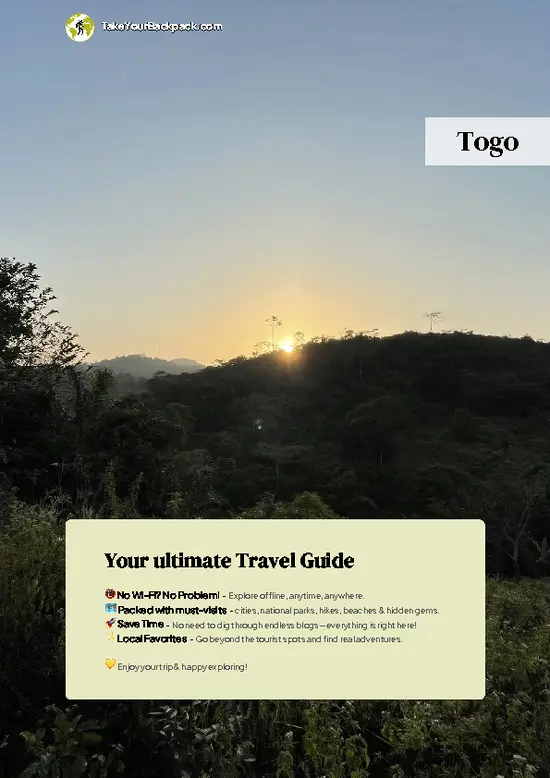
✈️ The backpacker research shortcutTogo Travel Guide

An offline-friendly backpacking guide with optimized travel routes, ranked highlights, transport advice, and the best areas to stay.
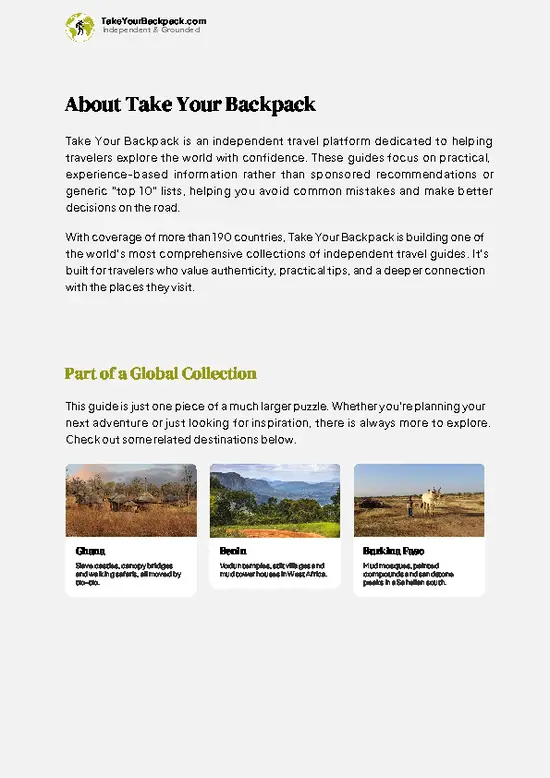
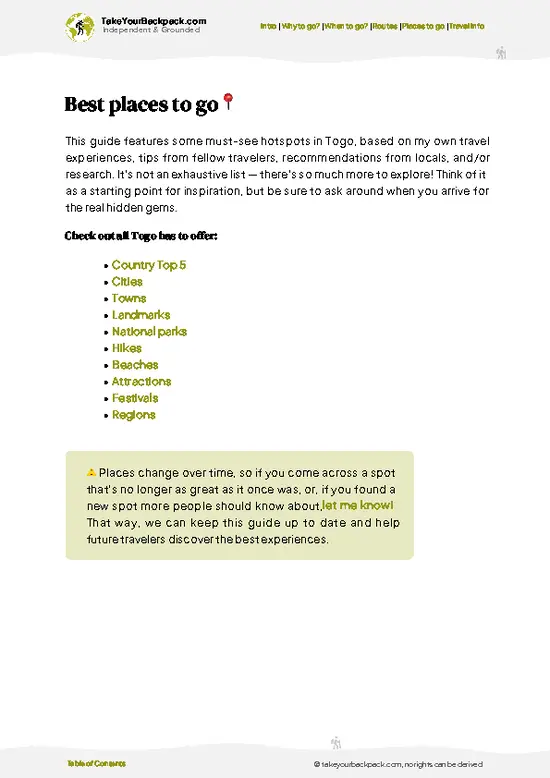
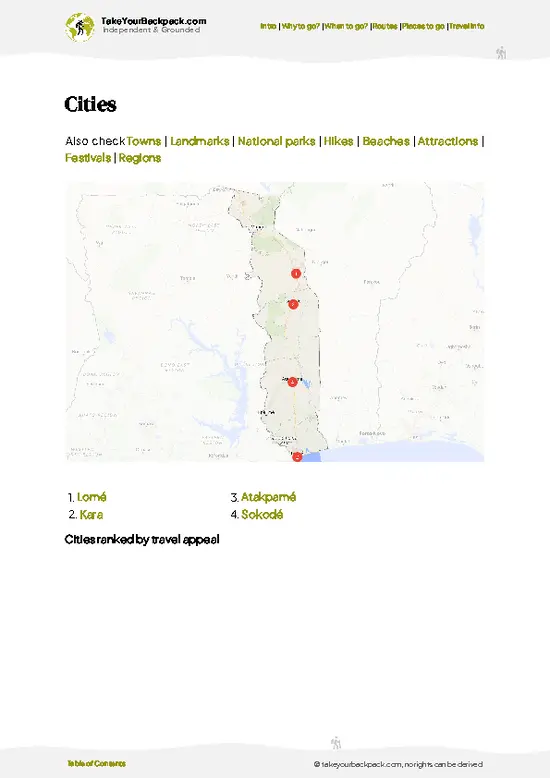
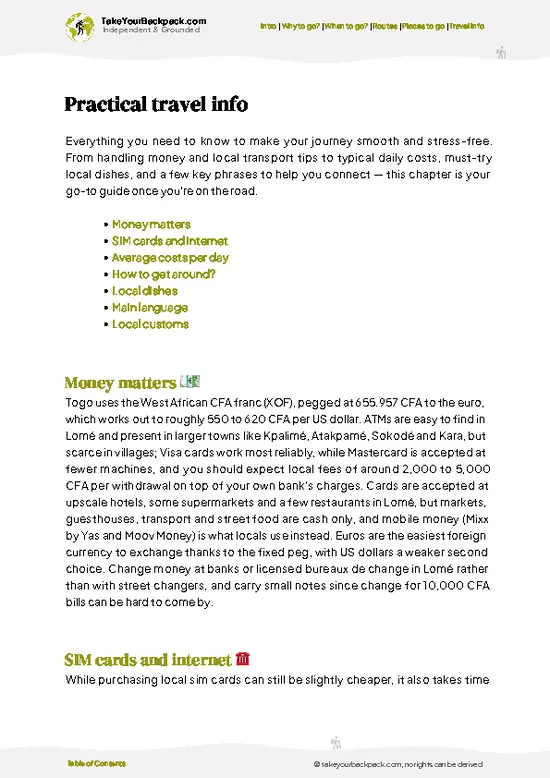
example page 0 from our offline Travel Guide for Togo
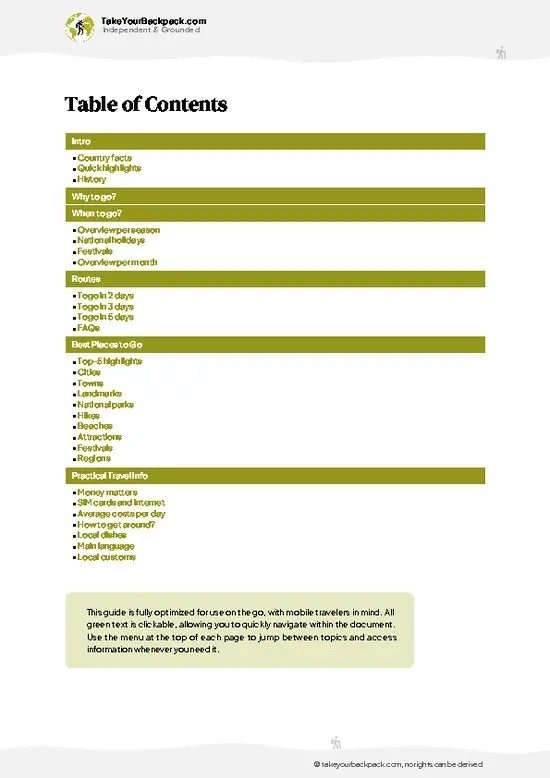
example page 1 from our offline Travel Guide for Togo
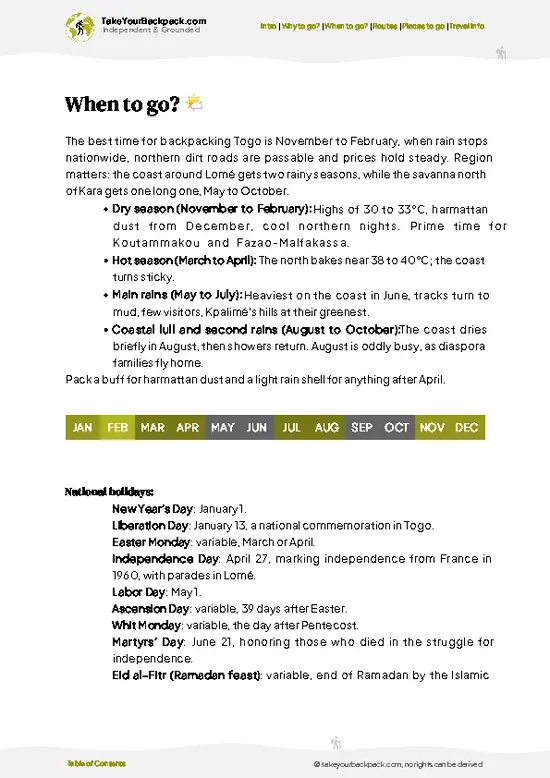
example page 2 from our offline Travel Guide for Togo
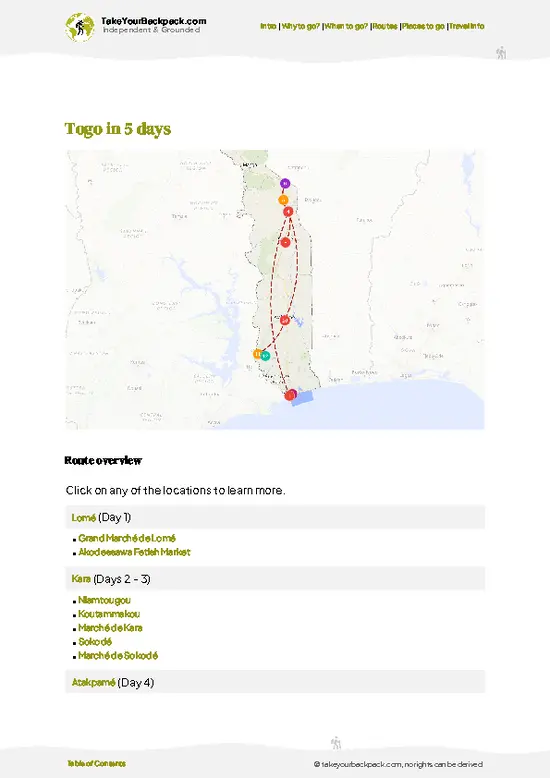
example page 3 from our offline Travel Guide for Togo
example page 4 from our offline Travel Guide for Togo
example page 5 from our offline Travel Guide for Togo
example page 6 from our offline Travel Guide for Togo
example page 7 from our offline Travel Guide for Togo
The digital guide (194 pages) contains:
✅ 42 highlights, ranked by travel appeal
✅ Optimized 2, 3 & 5-day travel routes
✅ Cities, national parks, landmarks, beaches
✅ How to get around
✅ Offline-friendly for travel without Wi-Fi
👉 Click to see all 30+ guide features

📅 Plan smarter in minutes, not weeks
✅ Month by month travel advice
✅ Festivals & national holidays
✅ Budget expectations

🗺️ Go to the right places, skip the overrated ones
✅ Honest pros & cons of destinations
✅ Top hikes, parks & viewpoints
✅ Lesser-known places most travelers miss
✅ Clear “worth it vs skip it” guidance

🛏️ Travel smoothly without rookie mistakes
✅ Best areas to stay
✅ Transport systems explained simply
✅ Common scams & safety advice
✅ SIM cards, money & practical tips

🌍 Understand the country, not just visit it
✅ Culture & traditions
✅ 52 Essential phrases & customs
✅ Festivals worth planning around
✅ Traveler-friendly historical context
✅ Insights that make places more meaningful

📱 Built for real travel conditions
✅ Fully downloadable PDF
✅ Works completely offline
✅ Optimized for phone use
✅ Useful in remote areas & buses
✅ Everything in one place
Stop searching, start planning
Get instant access to your full guide. 30‑day money-back guarantee.
+ Add another guide for just

By proceeding you agree to our terms.
Sent to your inbox immediately after payment • 100% Secure Checkout
Best Backpacking Travel Advisor 2025 tourism awardBest Backpacking
Travel Advisor
2025
What others say about Take Your Backpack Guides:
⭐⭐⭐⭐⭐
Fantastic, amazing amount of information!
⭐⭐⭐⭐⭐
My goodness this is amazing, it's what I've been looking for hats off too you!
⭐⭐⭐⭐⭐
I think this is absolutely BRILLIANT
⭐⭐⭐⭐
Very complete and informative. It's still missing places, but I gotta to commend you
⭐⭐⭐⭐⭐
This is truly amazing, thank you, can't wait to explore it with my kids!
⭐⭐⭐⭐⭐
Awesome resource, thank you!
⭐⭐⭐⭐⭐
This is amazing! Can't wait to explore the ones I haven't seen
⭐⭐⭐⭐
I love this! Well done, great idea.
⭐⭐⭐⭐⭐
Thanks for taking the time to make this gem!
⭐⭐⭐⭐⭐
This might be the best website I've ever seen.
⭐⭐⭐⭐⭐
Congratulations, and thank you so much for your work; it's incredibly valuable.
⭐⭐⭐⭐
In all seriousness I think you did a great job pointing out the important spots
⭐⭐⭐⭐⭐
10/10 very good
⭐⭐⭐⭐⭐
As someone who's only just starting to visit regularly this is awesome, thank you.
⭐⭐⭐⭐
Thank you very much! I'm going to visit my dad, it's going to be very useful!
⭐⭐⭐⭐⭐
This is really cool! We'll be travelling for the first time and this definitely come in handy.
⭐⭐⭐⭐⭐
You are now our minister of culture, congratulations 👨‍💼
⭐⭐⭐⭐⭐
Just wanted to tell you that this is a pearl! Going to follow your recommendations.
⭐⭐⭐⭐⭐
This is so cool. I'll definitely be using the resource for my travels soon.
⭐⭐⭐⭐⭐
This is very impressive! Good work.
⭐⭐⭐⭐⭐
This is an amazing and informative site. Very well done!

🛏️ Where to stay?Best Stay Options in Togo

Dedicated backpacker hostels are rare in Togo, but simple guesthouses and auberges are easy to find, usually at 8,000 to 15,000 CFA (about €12 to 23) for a fan room and a bit more with air-conditioning. In Lomé, Kodjoviakopé and Nyékonakpoè near the beach and the Ghana border hold the most budget rooms and are quiet and walkable to the coast road, while Bè puts you closer to cheap maquis bars and late music but gets rowdier at night, and the area around the Grand Marché is central for errands yet empties out after dark. Up-country, Kpalimé has a good spread of cheap, calm guesthouses within easy reach of the hills and waterfalls, and Aného offers a handful of laid-back lagoon-side options.

If … read more 👉
Dedicated backpacker hostels are rare in Togo, but simple guesthouses and auberges are easy to find, usually at 8,000 to 15,000 CFA (about €12 to 23) for a fan room and a bit more with air-conditioning. In Lomé, Kodjoviakopé and Nyékonakpoè near the beach and the Ghana border hold the most budget rooms and are quiet and walkable to the coast road, while Bè puts you closer to cheap maquis bars and late music but gets rowdier at night, and the area around the Grand Marché is central for errands yet empties out after dark. Up-country, Kpalimé has a good spread of cheap, calm guesthouses within easy reach of the hills and waterfalls, and Aného offers a handful of laid-back lagoon-side options.

If you enjoy meeting fellow travelers, consider choosing hostels with high ratings for atmosphere. On the other hand, if you prefer having your own space, a hotel might be a better option.

TogoWhere to Go Next

👋 Meet the founderWho’s Behind Take Your Backpack?

Johan, backpacker and founder of TakeYourBackpackHi, I’m Johan (Netherlands 🇳🇱), the creator of TakeYourBackpack. Over the past 3 decades, I’ve backpacked through 90+ countries across six continents, gaining extensive experience with independent travel, long-term trips, and overland routes.

This site is built on a combination of firsthand travel experience and carefully curated insights from other backpackers. Many guides are based on places I’ve personally visited, while others bring together tips, observations, and practical advice shared by trusted travelers I’ve met along the way.

The goal is to provide realistic, experience-driven guidance — not generic itineraries — so you can explore destinations with better context, clearer expectations, and more confidence.