×

Togo🇹🇬 | best attractionsTop-Rated 10 attractions in Togo

Attractions in Togo run in a thin north-south strip, and the mood shifts with every few hours of road. On the coast, Lomé’s sea-salted air mixes with moped exhaust and market smoke. Inland hills turn cooler and green, while the north sits dusty, quiet and rarely crowded. Independent travelers pay little, but shared taxis and rough tracks set the pace.

By Johan Kruseman 🇳🇱 | Updated October 23, 2026
Explore the best festivals in Togo

Why go?What Makes Them Special

Togo packs coastal markets, forested hills, savanna and fortified mud-tower villages into a country about 600 kilometers long and barely 100 wide at its narrowest. That compression, plus a history shaped by Ewe, Kabiye and Tem peoples and by German, then French colonial rule, means culture and landscape change quickly without long transfers.

What you will not find is polished tourism. Signage is thin, opening hours are loose, and many sites are reached by a bush taxi that leaves when it is full. Harmattan dust, midday heat of 30 to 35°C and drumming rain on tin roofs are part of the day. Entry costs stay low, but sites often need a local guide to make sense, and English is rare. Expect French, Ewe and Kabiye, and plan on small bills.
Why These Made the Cut
The list of best attractions in Togo is created based on cultural significance or entertainment value. If you feel a attraction is missing in this list, please let us know.

When to go?Best Time to Visit Togo for attractions

Best months: The best months are November to February, when the south and center are driest and the roads are firm. Days reach 30 to 33°C, and mornings are cool enough for hill walking.
Shoulder seasons: March to May turns hot and sticky, often 32 to 36°C, with the first storms flattening the dust. The south has two rainy periods, roughly April to July and a lighter one in September to October, with monthly rainfall often above 150 millimeters at the peak. Muddy tracks slow transport in the hills and near Kara.
Harmattan and the north: From December to February the Harmattan wind brings a pale haze that dulls distant views and dries your throat. The north has one wet season, around May to October, and nights can drop to about 15°C in January. Prices stay steady year round, though festival weeks lift room rates in Lomé.

attraction hoppingPlanning Your Route Efficiently

Trip length: A trip linking several attractions needs 7 to 12 days. Moving south to north works best, starting in Lomé and ending around Kara or the far north, because the main road, the N1, runs straight up the country.
Pacing: Allow 1 to 2 days per stop and an extra day for hill areas such as Kpalimé. Lomé to Kpalimé takes about 2.5 to 3 hours, Lomé to Sokodé 5 to 7, and Sokodé to Kara roughly 1.5 to 2.5. Shared taxis and minibuses leave from the big gares when full, so mornings are smarter.
Common mistakes: Travelers cram too many stops into a week and spend it staring through dusty windows. Cut one stop instead. Another error is traveling after dark, when unlit trucks and potholes make the road dangerous. Book rooms ahead only for weekends, and keep a buffer day for rain or a late departure.

The ListHighly Recommended attractions of Togo

1 Akodessawa Fetish Market

Skull tables, dried chameleons, vodun priests, guide required

Walk the stalls with a local guide to see how skulls, herbs and carved charms are prescribed for protection, luck and healing.

2 Grand Marché de Lomé

Wax-print cloth, Nana Benz traders, tailor booths, zemidjan taxis

Climb past the ground-floor crush to the upper cloth floors, then have a seamstress sew your fabric into a shirt within days.

3 National Museum of Togo

Chiefly regalia, drums and harps, colonial photographs, masks

Spend an hour reading labels on royal stools, regional instruments and German, French and British era records before heading into the markets.

4 Maison des Esclaves d’Agbodrafo

Lagoon shore, holding cells, Dos Santos story, Point of No Return

Follow a guide through low captive rooms and the courtyard, then stand at the lagoon where people were taken to waiting ships.

5 Lomé Cathedral

Red-brown brick, Sacred Heart, stained glass, Sunday choir

Step out of the horn-filled street into a cool nave, where colored light crosses the pews and Sunday mass fills with drums.

6 Independence Monument

April 1960 marker, traffic circle, no ticket, little shade

Stop at the roundabout monument marking Togo's break from French rule, then continue on foot toward the market and cathedral.

7 Village Artisanal de Kpalimé

Woodcarvers, batik dyers, raffia weavers, workshop bargaining

Watch carvers, batik makers and weavers at work in open stalls, then haggle with the person who made your piece.

8 Marché de Kpalimé

Hill-farm produce, coffee and cocoa beans, ginger, herbal remedies

Shop before nine for pyramids of vegetables and bagged beans from nearby plantations, plus ground ginger and pepper that pack easily.

9 Marché de Kara

Afitin cakes, clay pots, shea butter, Kabyè highlands

Arrive early to follow your nose through product-sorted aisles of fermented locust bean cakes, hand-formed pottery and shea butter wrapped in leaves.

10 Marché de Sokodé

Indigo cloth, soumbala, shea balls, rotating trading day

Time your visit for the big trading day to find indigo cloth, shea butter and pungent locust bean balls among Tem and Kabye sellers.

Loading the map 🌍

Expert viewTips and Advice from Travelers

How many to visit: I advise 4 to 6 attractions in a trip of ten days or so. Beyond that, every extra stop costs a half day in a shared taxi, packed knee to knee with sacks of yams, and you see less of each place. Fewer stops mean time to sit through a village market, listen to the drumming and eat grilled fish by the road.
Choosing a kind: Culture-focused travelers should lean toward villages and markets, where a guide turns mud walls and shrines into stories. Nature lovers should favor forest hills and waterfalls, with red clay trails that turn slick after rain. Beach people can stay on the coast, though currents are strong and swimming is risky. Short on time, pick one of each kind.
Budget: Plan on US$25 to 45 a day (about 15,000 to 27,000 CFA francs), covering a simple room, street food and … read more 👉
How many to visit: I advise 4 to 6 attractions in a trip of ten days or so. Beyond that, every extra stop costs a half day in a shared taxi, packed knee to knee with sacks of yams, and you see less of each place. Fewer stops mean time to sit through a village market, listen to the drumming and eat grilled fish by the road.
Choosing a kind: Culture-focused travelers should lean toward villages and markets, where a guide turns mud walls and shrines into stories. Nature lovers should favor forest hills and waterfalls, with red clay trails that turn slick after rain. Beach people can stay on the coast, though currents are strong and swimming is risky. Short on time, pick one of each kind.
Budget: Plan on US$25 to 45 a day (about 15,000 to 27,000 CFA francs), covering a simple room, street food and shared transport. Entry fees are usually small, around 1,000 to 5,000 CFA francs (US$2 to 8), and guides commonly ask 5,000 to 15,000 CFA francs (US$8 to 25) for a half day. Moto-taxis for the last stretch run about 500 to 3,000 CFA francs (under US$1 to 5), and you get a breeze in the face for the money.
Safety and respect: The far north near the Burkina Faso border has security concerns, so check current advice before heading beyond Kara. Carry a yellow fever certificate and a photocopy of your passport. Ask before photographing people, shrines or ceremonies, and expect to pay a small fee or leave a gift. Dress modestly in villages, greet elders first, and keep small coins for guides and children who guard motorbikes.

✈️ The backpacker research shortcutTogo Travel Guide

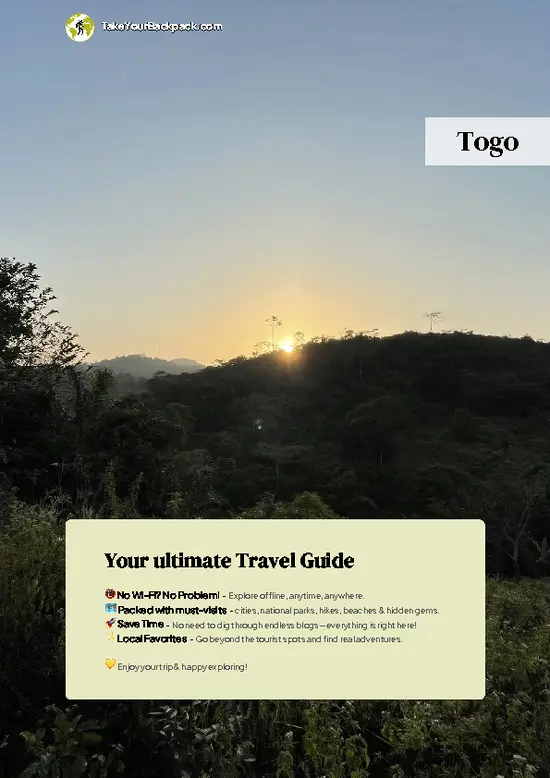
An offline-friendly backpacking guide with optimized travel routes, ranked highlights, transport advice, and the best areas to stay.
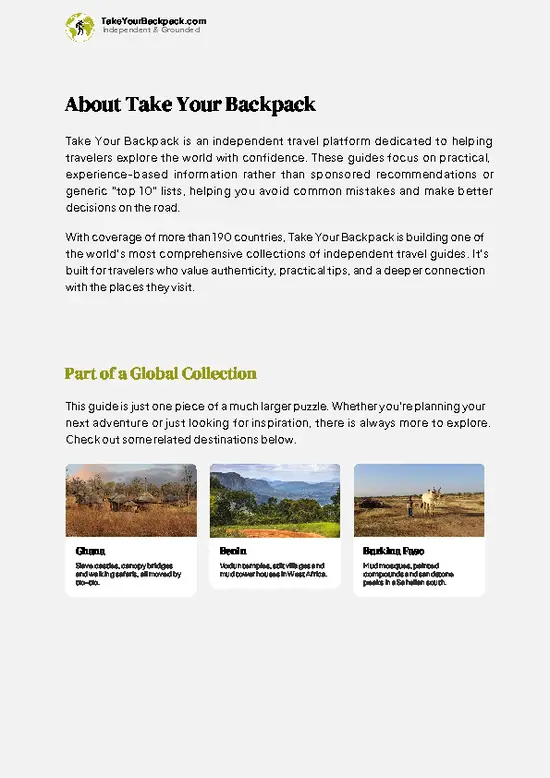
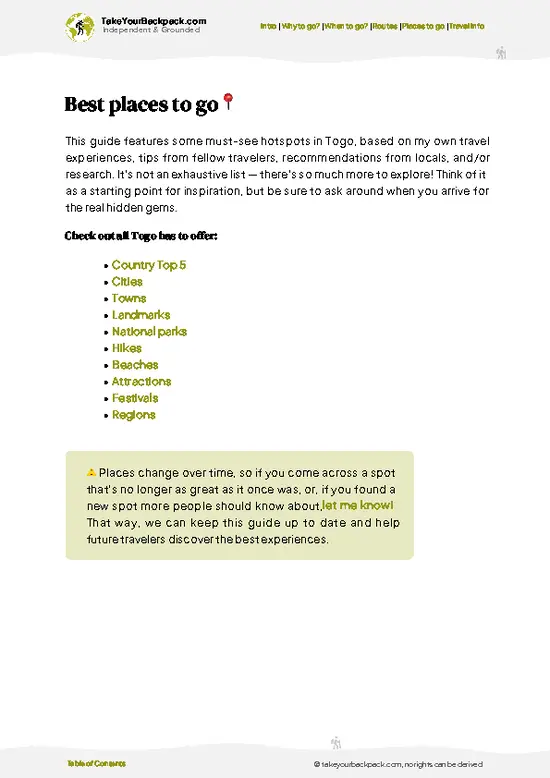
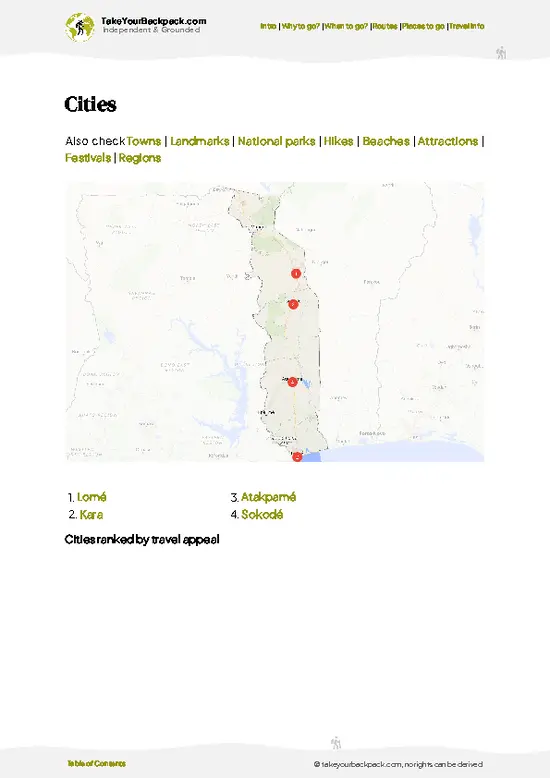
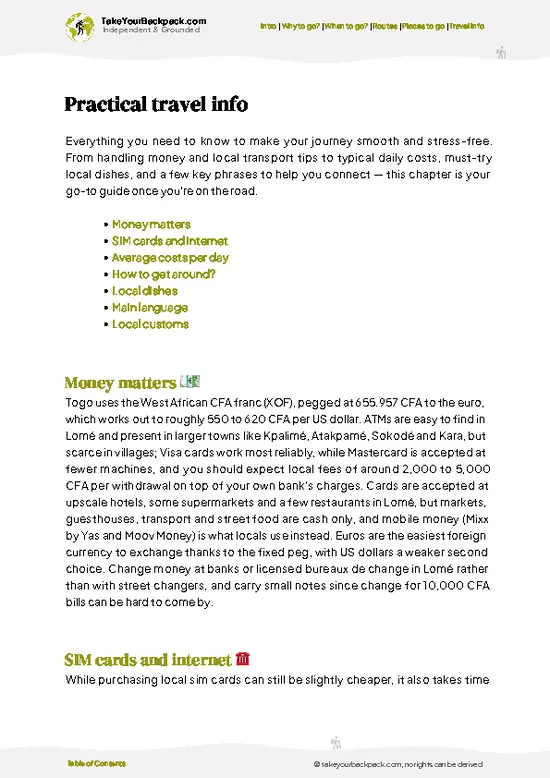
example page 0 from our offline Travel Guide for Togo
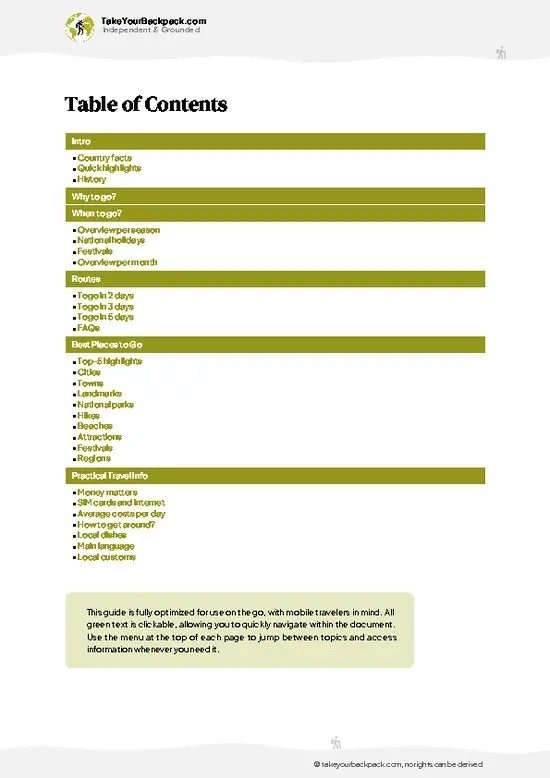
example page 1 from our offline Travel Guide for Togo
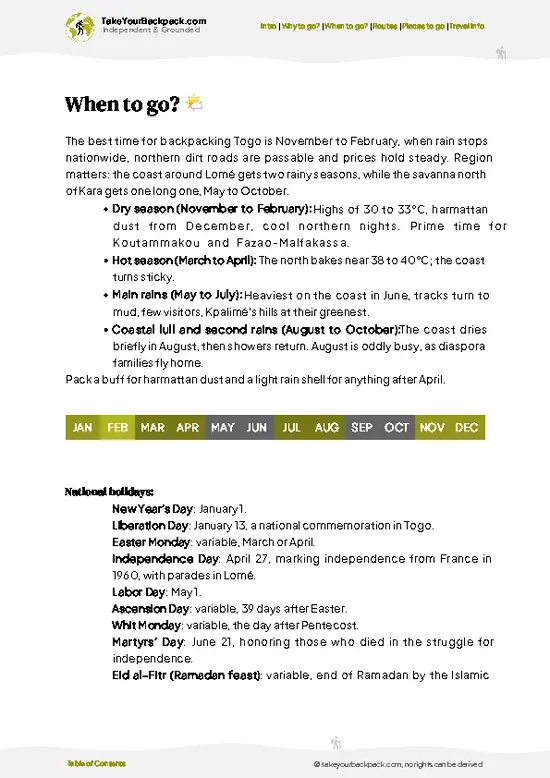
example page 2 from our offline Travel Guide for Togo
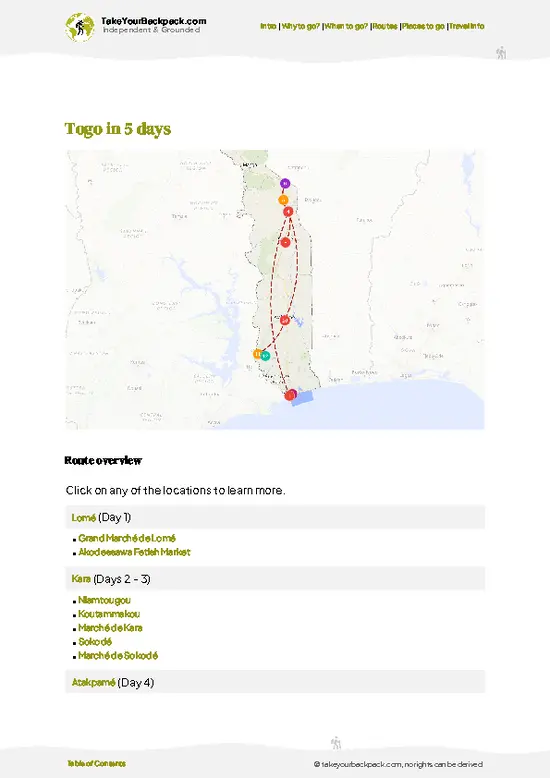
example page 3 from our offline Travel Guide for Togo
example page 4 from our offline Travel Guide for Togo
example page 5 from our offline Travel Guide for Togo
example page 6 from our offline Travel Guide for Togo
example page 7 from our offline Travel Guide for Togo
The digital guide (194 pages) contains:
✅ 42 highlights, ranked by travel appeal
✅ Optimized 2, 3 & 5-day travel routes
✅ Cities, national parks, landmarks, beaches
✅ How to get around
✅ Offline-friendly for travel without Wi-Fi
👉 Click to see all 30+ guide features

📅 Plan smarter in minutes, not weeks
✅ Month by month travel advice
✅ Festivals & national holidays
✅ Budget expectations

🗺️ Go to the right places, skip the overrated ones
✅ Honest pros & cons of destinations
✅ Top hikes, parks & viewpoints
✅ Lesser-known places most travelers miss
✅ Clear “worth it vs skip it” guidance

🛏️ Travel smoothly without rookie mistakes
✅ Best areas to stay
✅ Transport systems explained simply
✅ Common scams & safety advice
✅ SIM cards, money & practical tips

🌍 Understand the country, not just visit it
✅ Culture & traditions
✅ 52 Essential phrases & customs
✅ Festivals worth planning around
✅ Traveler-friendly historical context
✅ Insights that make places more meaningful

📱 Built for real travel conditions
✅ Fully downloadable PDF
✅ Works completely offline
✅ Optimized for phone use
✅ Useful in remote areas & buses
✅ Everything in one place
Stop searching, start planning
Get instant access to your full guide. 30‑day money-back guarantee.
+ Add another guide for just

By proceeding you agree to our terms.
Sent to your inbox immediately after payment • 100% Secure Checkout
Best Backpacking Travel Advisor 2025 tourism awardBest Backpacking
Travel Advisor
2025
What others say about Take Your Backpack Guides:
⭐⭐⭐⭐⭐
Fantastic, amazing amount of information!
⭐⭐⭐⭐⭐
My goodness this is amazing, it's what I've been looking for hats off too you!
⭐⭐⭐⭐⭐
I think this is absolutely BRILLIANT
⭐⭐⭐⭐
Very complete and informative. It's still missing places, but I gotta to commend you
⭐⭐⭐⭐⭐
This is truly amazing, thank you, can't wait to explore it with my kids!
⭐⭐⭐⭐⭐
Awesome resource, thank you!
⭐⭐⭐⭐⭐
This is amazing! Can't wait to explore the ones I haven't seen
⭐⭐⭐⭐
I love this! Well done, great idea.
⭐⭐⭐⭐⭐
Thanks for taking the time to make this gem!
⭐⭐⭐⭐⭐
This might be the best website I've ever seen.
⭐⭐⭐⭐⭐
Congratulations, and thank you so much for your work; it's incredibly valuable.
⭐⭐⭐⭐
In all seriousness I think you did a great job pointing out the important spots
⭐⭐⭐⭐⭐
10/10 very good
⭐⭐⭐⭐⭐
As someone who's only just starting to visit regularly this is awesome, thank you.
⭐⭐⭐⭐
Thank you very much! I'm going to visit my dad, it's going to be very useful!
⭐⭐⭐⭐⭐
This is really cool! We'll be travelling for the first time and this definitely come in handy.
⭐⭐⭐⭐⭐
You are now our minister of culture, congratulations 👨‍💼
⭐⭐⭐⭐⭐
Just wanted to tell you that this is a pearl! Going to follow your recommendations.
⭐⭐⭐⭐⭐
This is so cool. I'll definitely be using the resource for my travels soon.
⭐⭐⭐⭐⭐
This is very impressive! Good work.
⭐⭐⭐⭐⭐
This is an amazing and informative site. Very well done!

🛏️ Where to stay?Where to Base Yourself

Dedicated backpacker hostels are rare in Togo, but simple guesthouses and auberges are easy to find, usually at 8,000 to 15,000 CFA (about €12 to 23) for a fan room and a bit more with air-conditioning. In Lomé, Kodjoviakopé and Nyékonakpoè near the beach and the Ghana border hold the most budget rooms and are quiet and walkable to the coast road, while Bè puts you closer to cheap maquis bars and late music but gets rowdier at night, and the area around the Grand Marché is central for errands yet empties out after dark. Up-country, Kpalimé has a good spread of cheap, calm guesthouses within easy reach of the hills and waterfalls, and Aného offers a handful of laid-back lagoon-side options.

If … read more 👉
Dedicated backpacker hostels are rare in Togo, but simple guesthouses and auberges are easy to find, usually at 8,000 to 15,000 CFA (about €12 to 23) for a fan room and a bit more with air-conditioning. In Lomé, Kodjoviakopé and Nyékonakpoè near the beach and the Ghana border hold the most budget rooms and are quiet and walkable to the coast road, while Bè puts you closer to cheap maquis bars and late music but gets rowdier at night, and the area around the Grand Marché is central for errands yet empties out after dark. Up-country, Kpalimé has a good spread of cheap, calm guesthouses within easy reach of the hills and waterfalls, and Aného offers a handful of laid-back lagoon-side options.

If you enjoy meeting fellow travelers, consider choosing hostels with high ratings for atmosphere. On the other hand, if you prefer having your own space, a hotel might be a better option.

TogoExpand Your Journey

👋 Meet the founderWho’s Behind Take Your Backpack?

Johan, backpacker and founder of TakeYourBackpackHi, I’m Johan (Netherlands 🇳🇱), the creator of TakeYourBackpack. Over the past 3 decades, I’ve backpacked through 90+ countries across six continents, gaining extensive experience with independent travel, long-term trips, and overland routes.

This site is built on a combination of firsthand travel experience and carefully curated insights from other backpackers. Many guides are based on places I’ve personally visited, while others bring together tips, observations, and practical advice shared by trusted travelers I’ve met along the way.

The goal is to provide realistic, experience-driven guidance — not generic itineraries — so you can explore destinations with better context, clearer expectations, and more confidence.