×

Togo🇹🇬 | citiesAtakpamehilltop views, textile workshops, regional crossroads | things to do and best time to go

Explore Kpémé BeachExplore Kara

Backpacking in Atakpame
👌 Worth visitingcity ranked #5
By Johan Kruseman 🇳🇱 | Updated June 17, 2026

Everyone talks about Atakpamé’s hilltop views, but the real reason to stop here isn’t the panorama—it’s the rhythm of a town that feels like a crossroads, not a destination. Atakpamé sits in central Togo, halfway between Lomé’s coastal bustle and the green folds of the north. For backpackers, it’s less about bucket-list sights and more about catching your breath: the air is cooler, the pace slower, and the markets hum with a mix of Ewe, Kotokoli, and Yoruba voices. The old colonial center is walkable, but don’t expect architectural drama—think faded facades, red dust, and the scent of grilled corn at dusk. It’s a practical stopover, not a party hub; you’ll find basic guesthouses, a handful of cafés, and the kind of evenings where you swap stories with locals over cheap brochettes. Transport is straightforward—bush taxis and buses connect you to Kpalimé’s waterfalls or Sokodé’s markets, but you’ll need patience for schedules. Compared to Kpalimé, Atakpamé is less lush and touristic, but more relaxed and real. Costs are low, safety is typical for Togo (watch your bag, but don’t stress), and while you might not meet many other backpackers, the town rewards those who linger with a sense of place that’s hard to fake.

Discover everything you want to know in the 📖 Togo Travel Guide.


Get your Togo guide
55 ranked highlights, routes & tips, works offline (234 pages)
Loading the map 🌍
CLICK TO FILTER
cities
towns
landmarks
national parks
hikes
beaches
attractions
festivals
regions
SHOW COUNTRY’S BESTSHOW ALL

✨ Why go?
Ranked #5 city in Togo
Reasons people choose to visit here

Atakpamé serves as a gateway for backpackers looking to explore Togo’s lush landscapes and vibrant culture. Nestled in the Plateau Region, it’s a convenient stop for those heading to the Akwapim-Togo mountain range for hiking. The trails here offer a mix of challenging ascents and gentle walks, with the scent of wildflowers and earthy soil filling the air.

The town itself is a friendly hub, where small-scale guesthouses and hostels provide a cozy base. You’ll find local food stalls serving up steaming bowls of fufu and spicy sauce that will fuel your adventures. The streets are walkable, making it easy to soak in the atmosphere and chat with locals, who are often eager to share stories.

Backpackers typically stay a few days, enjoying the slow pace and the chance to connect with fellow travelers. … read more 👉
Atakpamé serves as a gateway for backpackers looking to explore Togo’s lush landscapes and vibrant culture. Nestled in the Plateau Region, it’s a convenient stop for those heading to the Akwapim-Togo mountain range for hiking. The trails here offer a mix of challenging ascents and gentle walks, with the scent of wildflowers and earthy soil filling the air.

The town itself is a friendly hub, where small-scale guesthouses and hostels provide a cozy base. You’ll find local food stalls serving up steaming bowls of fufu and spicy sauce that will fuel your adventures. The streets are walkable, making it easy to soak in the atmosphere and chat with locals, who are often eager to share stories.

Backpackers typically stay a few days, enjoying the slow pace and the chance to connect with fellow travelers. It’s ideal for solo adventurers and small groups looking for a blend of culture and nature. While nightlife isn’t the main draw, the social vibe is warm and inviting, making it a perfect spot to recharge before heading deeper into Togo’s wonders.
Want to include Atakpame in your Togo route?
Create a personalized Togo itinerary that includes Atakpame and the places that fit your trip — based on your travel style, budget, and available time. Get your route in seconds.

Generate my trip

💡 HighlightsPlaces and moments you shouldn't skip

  • Marché central d’Atakpamé (Central Market) — The city’s beating heart: a chaotic, colorful maze of stalls selling food, textiles, spices and second-hand clothes. Great for people-watching, cheap street food and picking up fabrics or souvenirs straight from the sellers.
  • Palais des chefs / Chief’s compound — The traditional seat of local authority. Even if you can’t go inside without an introduction, the compound, carved stools, painted gates and nearby storytellers give a real sense of local power, history and ceremony.
  • Cathedral (seat of the Diocese of Atakpamé) — The main Catholic church is both an architectural landmark and a place where you can see religion woven into daily life. Attend a service if you can — the music and community energy are memorable.
  • Grand Mosque of Atakpamé
read more 👉
  • Marché central d’Atakpamé (Central Market) — The city’s beating heart: a chaotic, colorful maze of stalls selling food, textiles, spices and second-hand clothes. Great for people-watching, cheap street food and picking up fabrics or souvenirs straight from the sellers.
  • Palais des chefs / Chief’s compound — The traditional seat of local authority. Even if you can’t go inside without an introduction, the compound, carved stools, painted gates and nearby storytellers give a real sense of local power, history and ceremony.
  • Cathedral (seat of the Diocese of Atakpamé) — The main Catholic church is both an architectural landmark and a place where you can see religion woven into daily life. Attend a service if you can — the music and community energy are memorable.
  • Grand Mosque of Atakpamé — An important religious site that shows the city’s religious mix. Respectful exterior visits and timing your visit outside prayer times give insight into everyday Muslim life here.
  • Old town / Colonial quarter — Narrow streets, faded colonial buildings and government offices. Walk slowly: the built environment tells stories about trade, administration and how modern Atakpamé grew out of older layers.
  • Handicraft and weaving workshops — Small, family-run places where you can watch weavers, dyers and woodcarvers work and buy directly from makers. More rewarding and cheaper than tourist shops — and you’ll meet people who actually make the stuff.
  • Maison des Jeunes / Local cultural spaces — Community centers where dance troupes rehearse, drummers gather and occasional performances happen. If a rehearsal or show is on, it’s the best way to see authentic music and dance without staged tourist polish.
  • Place des Fêtes / Central square and evening life — The square fills up at night with vendors, small bars and kids playing football. It’s an uncomplicated way to feel the city’s social rhythm after dark.
  • Traditional herbalists and spice lanes — A short walk from the main market will bring you to stalls of roots, dried leaves and handmade remedies. It’s an eye-opening look at traditional medicine and a good place to pick up local spices and tonics.
  • Stade municipal (local football grounds) — Catching a club match or youth game is noisy, cheap and utterly local. Supporters, drums and banter make this a quick cultural crash course — bring cash for entry and snacks.
For nearby day trips: Kpalimé (craft markets and waterfalls), Mount Agou (Togo’s highest peak for a hike), and the small traditional villages of the Plateaux for weaving and village life are all easily reached from Atakpamé.
Spotted a mistake or missing something? Contact us.

🏘️ NeighborhoodsKey areas and districts to know

Atakpamé is a vibrant hub in Togo, where the pulse of local life meets the rugged beauty of the surrounding hills. Each neighborhood offers a unique flavor, making it essential to choose wisely.

Centre Ville: This is the heart of Atakpamé. Bustling markets and street vendors fill the air with the scent of grilled plantains and spices. It’s walkable, with easy access to transport options like shared taxis. Ideal for short stays, you’ll find budget accommodations here, but nightlife is limited to local bars that close early.

Kpogan: A bit quieter, Kpogan offers a more laid-back vibe. It’s perfect for longer stays, with guesthouses that feel like home. The streets are less crowded, making it easy to explore on foot. You’ll find small eateries serving authentic Togolese dishes. While nightlife … read more 👉
Atakpamé is a vibrant hub in Togo, where the pulse of local life meets the rugged beauty of the surrounding hills. Each neighborhood offers a unique flavor, making it essential to choose wisely.

Centre Ville: This is the heart of Atakpamé. Bustling markets and street vendors fill the air with the scent of grilled plantains and spices. It’s walkable, with easy access to transport options like shared taxis. Ideal for short stays, you’ll find budget accommodations here, but nightlife is limited to local bars that close early.

Kpogan: A bit quieter, Kpogan offers a more laid-back vibe. It’s perfect for longer stays, with guesthouses that feel like home. The streets are less crowded, making it easy to explore on foot. You’ll find small eateries serving authentic Togolese dishes. While nightlife is subdued, the local community is welcoming.

Ablogamé: This area is known for its lush greenery and scenic views. It’s a bit farther from the center, so transport is necessary, but the tranquility is worth it. Great for those seeking a peaceful retreat, Ablogamé has a few charming lodges. Perfect for longer stays, you can immerse yourself in nature and local culture.

Kpélé: A lively neighborhood with a youthful energy, Kpélé is where you’ll find the best nightlife. Bars and music venues buzz with activity, making it ideal for social backpackers. Accommodations range from budget hostels to mid-range hotels. It’s walkable, but be prepared for a lively atmosphere that lasts into the night.

⌛️ 1 dayHow to make the most of one day

Atakpamé, Togo, is a vibrant tapestry of culture and nature, nestled in the foothills of the Togo Mountains. The air is thick with the scent of spices and the sounds of lively conversations. This town is a gateway to authentic Togolese life, where you can experience the rhythm of daily activities and the warmth of its people.

Start your morning at the bustling market in the heart of Atakpamé. The sun filters through the colorful awnings, casting playful shadows on the ground. Here, you can sample fresh fruits—mangoes, pineapples, and bananas—while chatting with local vendors. Don’t miss the chance to try some “akpan,” a traditional dish made from fermented corn. It’s a perfect fuel for your day.

After soaking in the market’s energy, head to the nearby **Kpalimé Road**. This scenic route … read more 👉
Atakpamé, Togo, is a vibrant tapestry of culture and nature, nestled in the foothills of the Togo Mountains. The air is thick with the scent of spices and the sounds of lively conversations. This town is a gateway to authentic Togolese life, where you can experience the rhythm of daily activities and the warmth of its people.

Start your morning at the bustling market in the heart of Atakpamé. The sun filters through the colorful awnings, casting playful shadows on the ground. Here, you can sample fresh fruits—mangoes, pineapples, and bananas—while chatting with local vendors. Don’t miss the chance to try some “akpan,” a traditional dish made from fermented corn. It’s a perfect fuel for your day.

After soaking in the market’s energy, head to the nearby **Kpalimé Road**. This scenic route leads you to the **Koutammakou**, a UNESCO World Heritage site, where you can explore the unique mud huts of the Batammariba people. The craftsmanship is stunning, and the stories behind these structures are even more captivating. This spot is often overlooked by tourists, but it’s a treasure trove of history and culture.

In the afternoon, return to Atakpamé and wander through the **Akwapim neighborhood**. Here, you’ll find local artisans crafting beautiful textiles and pottery. Engage with them; they love sharing their skills and stories. The vibrant colors of the fabrics and the intricate designs will inspire you.

As the sun begins to set, make your way to **Lake Togo**. The golden light reflecting off the water is breathtaking. Grab a seat at a local eatery nearby and enjoy a plate of grilled fish seasoned with local spices. The atmosphere is relaxed, and the laughter of families enjoying their evening will wrap around you like a warm blanket.

Spending a day in Atakpamé is not just about seeing sights; it’s about immersing yourself in the local culture, savoring the flavors, and connecting with the people. Each moment is a step deeper into the heart of Togo.
Turn your Atakpame visit into an Togo adventure
Build a complete Togo route with Atakpame, hidden gems, must-see destinations, and realistic travel times included.

Generate my trip

🌤️ When to go?When to go for the best experience


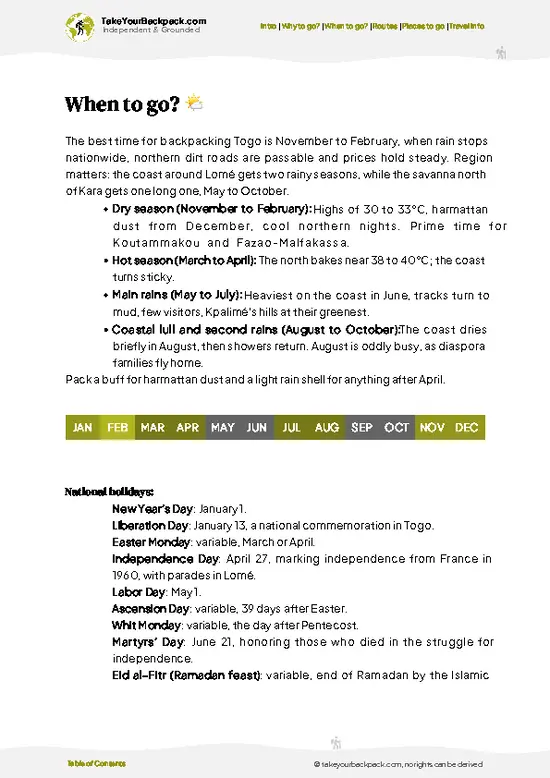
  • Weather: The dry season from November to March is your best bet. Skies clear up, and the air sheds the heavy humidity that clings during the rainy months. Expect less mud and more reliable trails for trekking and exploring.

  • Temperature: Daytime highs hover around 28-32°C (82-90°F) in the dry season, cooling off to a comfortable 20-24°C (68-75°F) at night. The rainy season pushes temps higher but brings sticky, oppressive heat that can drain your energy fast.

  • Daylight Hours: Daylight stays steady year-round, roughly 11 to 12 hours. This means you can plan full days without worrying about early sunsets cutting your adventures short.

  • Crowds: Atakpame isn’t a tourist hotspot, so crowds are minimal year-round. However, local festivals in December can bring a lively buzz, offering a chance
read more 👉

  • Weather: The dry season from November to March is your best bet. Skies clear up, and the air sheds the heavy humidity that clings during the rainy months. Expect less mud and more reliable trails for trekking and exploring.

  • Temperature: Daytime highs hover around 28-32°C (82-90°F) in the dry season, cooling off to a comfortable 20-24°C (68-75°F) at night. The rainy season pushes temps higher but brings sticky, oppressive heat that can drain your energy fast.

  • Daylight Hours: Daylight stays steady year-round, roughly 11 to 12 hours. This means you can plan full days without worrying about early sunsets cutting your adventures short.

  • Crowds: Atakpame isn’t a tourist hotspot, so crowds are minimal year-round. However, local festivals in December can bring a lively buzz, offering a chance to experience authentic culture without overwhelming tourist traffic.

  • Seasonal Activities: Dry months are prime for hiking the nearby Akwapim-Togo mountain range and visiting local markets. The rainy season, while less convenient, paints the landscape lush and green, perfect for photographers who don’t mind a little mud.

  • Price Fluctuations: Accommodation and transport costs dip slightly during the rainy season due to fewer visitors. If you’re flexible and don’t mind wetter trails, you can snag better deals, but expect some trade-offs in comfort and accessibility.


Pro-tip: Aim for late November or early December—dry air, manageable temps, and the start of festive local events combine for a backpacking experience that feels both smooth and richly textured.


source: climatestotravel.comJANJanuary: excellent for travelingFEBFebruary: excellent for travelingMARMarch: excellent for travelingAPRApril: fair for travelingMAYMay: fair for travelingJUNJune: fair for travelingJULJuly: fair for travelingAUGAugust: fair for travelingSEPSeptember: fair for travelingOCTOctober: good for travelingNOVNovember: highly recommended for travelingDECDecember: highly recommended for traveling
when-to-go

✈️ The backpacker research shortcutTogo Travel Guide

An offline-friendly backpacking guide with optimized travel routes, ranked highlights, transport advice, and the best areas to stay.
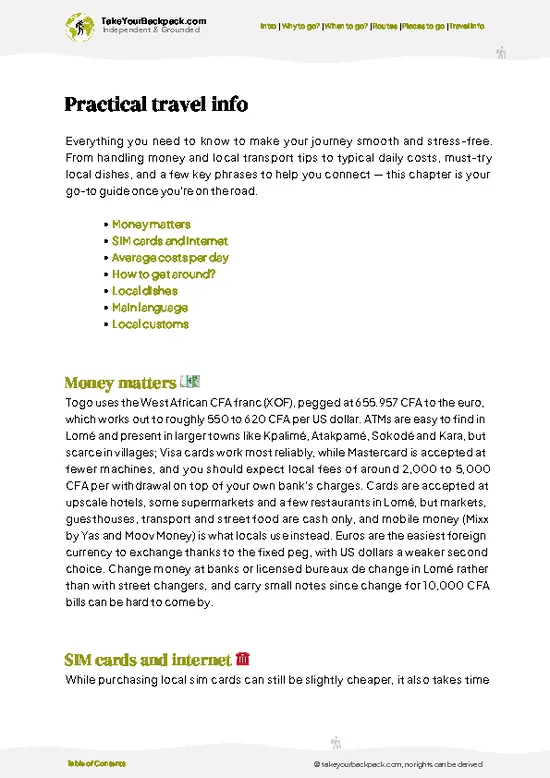
example page 0 from our offline Travel Guide for Togo
example page 1 from our offline Travel Guide for Togo
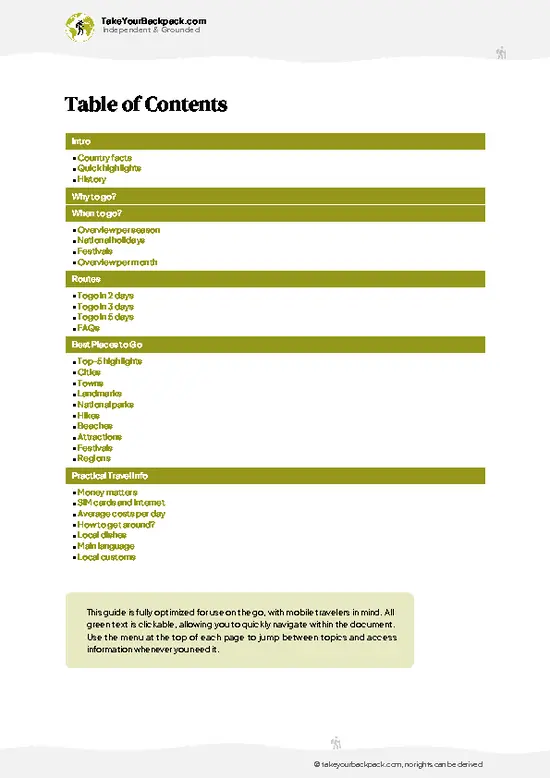
example page 2 from our offline Travel Guide for Togo
example page 3 from our offline Travel Guide for Togo
example page 4 from our offline Travel Guide for Togo
example page 5 from our offline Travel Guide for Togo
example page 6 from our offline Travel Guide for Togo
example page 7 from our offline Travel Guide for Togo
The digital guide (234 pages) contains:
55 highlights, ranked by travel appeal
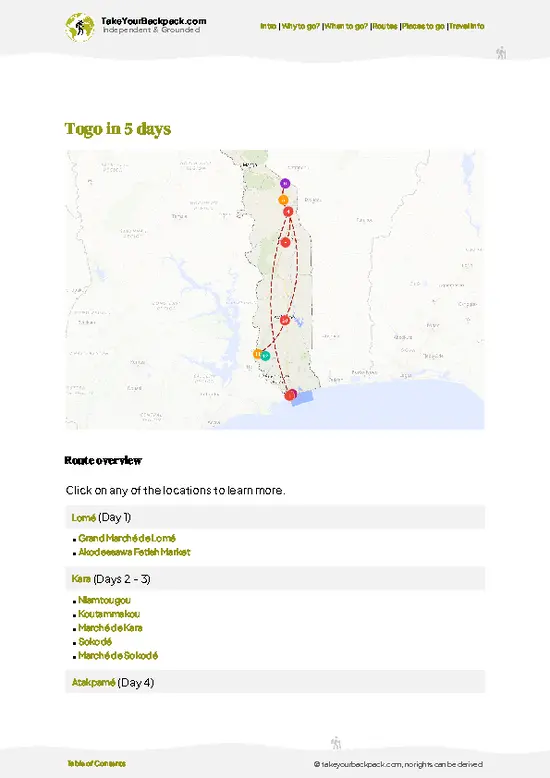
Optimized 2, 3 & 5-day travel routes
Cities, national parks, landmarks, beaches
How to get around
Offline-friendly for travel without Wi-Fi
👉 Click to see all 30+ guide features

📅 Plan smarter in minutes, not weeks
Month by month travel advice
Festivals & national holidays
Budget expectations

🗺️ Go to the right places, skip the overrated ones
Honest pros & cons of destinations
Top hikes, parks & viewpoints
Lesser-known places most travelers miss
Clear “worth it vs skip it” guidance

🛏️ Travel smoothly without rookie mistakes
Best areas to stay
Transport systems explained simply
Common scams & safety advice
SIM cards, money & practical tips

🌍 Understand the country, not just visit it
Culture & traditions
52 Essential phrases & customs
Festivals worth planning around
Traveler-friendly historical context
Insights that make places more meaningful

📱 Built for real travel conditions
Fully downloadable PDF
Works completely offline
Optimized for phone use
Useful in remote areas & buses
Everything in one place
Save weeks of stressful planning
Get instant access to your full guide. 30‑day money-back guarantee.


By proceeding you agree to our terms.
Sent to your inbox immediately after payment • 100% Secure Checkout
Best Backpacking Travel Advisor 2025 tourism awardBest Backpacking
Travel Advisor
2025
What others say about Take Your Backpack Guides:
⭐⭐⭐⭐⭐
Fantastic, amazing amount of information!
⭐⭐⭐⭐⭐
My goodness this is amazing, it's what I've been looking for hats off too you!
⭐⭐⭐⭐⭐
I think this is absolutely BRILLIANT
⭐⭐⭐⭐
Very complete and informative. It's still missing places, but I gotta to commend you
⭐⭐⭐⭐⭐
This is truly amazing, thank you, can't wait to explore it with my kids!
⭐⭐⭐⭐⭐
Awesome resource, thank you!
⭐⭐⭐⭐⭐
This is amazing! Can't wait to explore the ones I haven't seen
⭐⭐⭐⭐
I love this! Well done, great idea.
⭐⭐⭐⭐⭐
Thanks for taking the time to make this gem!
⭐⭐⭐⭐⭐
This might be the best website I've ever seen.
⭐⭐⭐⭐⭐
Congratulations, and thank you so much for your work; it's incredibly valuable.
⭐⭐⭐⭐
In all seriousness I think you did a great job pointing out the important spots
⭐⭐⭐⭐⭐
10/10 very good
⭐⭐⭐⭐⭐
As someone who's only just starting to visit regularly this is awesome, thank you.
⭐⭐⭐⭐
Thank you very much! I'm going to visit my dad, it's going to be very useful!
⭐⭐⭐⭐⭐
This is really cool! We'll be travelling for the first time and this definitely come in handy.
⭐⭐⭐⭐⭐
You are now our minister of culture, congratulations 👨‍💼
⭐⭐⭐⭐⭐
Just wanted to tell you that this is a pearl! Going to follow your recommendations.
⭐⭐⭐⭐⭐
This is so cool. I'll definitely be using the resource for my travels soon.
⭐⭐⭐⭐⭐
This is very impressive! Good work.
⭐⭐⭐⭐⭐
This is an amazing and informative site. Very well done!

🛏️ Where to stay?Choosing the right base

In Atakpame, the heartbeat for backpackers pulses strongest around the central market district and the nearby Avenue de la République. This area is your best bet for safety and social energy. The streets here hum with daily commerce—vendors shouting, the scent of grilled street food mingling with fresh produce—and it’s where locals and travelers cross paths naturally. Staying here means you’re never far from the pulse of the town, making it easier to strike up conversations or find a group heading out for a day hike or village visit.

Hostels and budget guesthouses cluster around this zone, offering … read more 👉
In Atakpame, the heartbeat for backpackers pulses strongest around the central market district and the nearby Avenue de la République. This area is your best bet for safety and social energy. The streets here hum with daily commerce—vendors shouting, the scent of grilled street food mingling with fresh produce—and it’s where locals and travelers cross paths naturally. Staying here means you’re never far from the pulse of the town, making it easier to strike up conversations or find a group heading out for a day hike or village visit.

Hostels and budget guesthouses cluster around this zone, offering simple, clean accommodations that encourage mingling. Unlike quieter residential neighborhoods on the outskirts, this central strip keeps you in the thick of things without tipping into chaos. The vibe is lively but manageable, with enough foot traffic to feel secure walking back after dark.

Avoid the more industrial or isolated parts of Atakpame, where the streets empty early and local services for travelers thin out. By choosing the market district and Avenue de la République, you tap into the town’s social fabric and practical conveniences, turning your stay into a launchpad for authentic experiences rather than a logistical headache.

🚌 Getting aroundMoving around without the hassle

Atakpame moves at its own rhythm—less a clockwork precision and more a pulse you feel in the air. The sun filters through dusty streets, casting long shadows on the cracked pavement, while the scent of grilled meat and fresh cassava drifts from open-air stalls. Here, time is elastic. You won’t find strict timetables or polished terminals. Instead, transport flows with a blend of local intuition and communal understanding. It’s a place where catching a ride means reading the mood of the street, spotting the right vehicle, and sometimes waiting patiently as the driver loads passengers and goods with practiced efficiency. This isn’t chaos; it’s a system built on trust and rhythm, rewarding those who tune in.

Walking: The most straightforward way to get around Atakpame, especially if you’re budget-conscious … read more 👉
Atakpame moves at its own rhythm—less a clockwork precision and more a pulse you feel in the air. The sun filters through dusty streets, casting long shadows on the cracked pavement, while the scent of grilled meat and fresh cassava drifts from open-air stalls. Here, time is elastic. You won’t find strict timetables or polished terminals. Instead, transport flows with a blend of local intuition and communal understanding. It’s a place where catching a ride means reading the mood of the street, spotting the right vehicle, and sometimes waiting patiently as the driver loads passengers and goods with practiced efficiency. This isn’t chaos; it’s a system built on trust and rhythm, rewarding those who tune in.

Walking: The most straightforward way to get around Atakpame, especially if you’re budget-conscious and want to soak in the town’s texture. Streets are compact, and many key spots—markets, local eateries, and guesthouses—are within a 20-30 minute stroll. Walking lets you catch the subtle shifts in light and sound, from the chatter of vendors to the occasional honk of a moto-taxi. It’s free, flexible, and the best way to feel the town’s heartbeat.

Moto-taxis: These buzzing two-wheelers are the lifeblood of local transit. They dart through narrow alleys and crowded streets with surprising agility. Expect to pay around 200-500 CFA francs for short trips within town. They operate from early morning until late evening, roughly 6 AM to 9 PM, but don’t expect a fixed schedule—just flag one down when you see it. The ride is quick but can be bumpy, so hold on tight and enjoy the wind and street smells rushing past.

Shared Minibuses (Gbaka): For longer distances or trips to nearby villages, shared minibuses are your go-to. They leave once full, so timing is flexible but unpredictable. Fares hover around 500-1000 CFA francs depending on distance. These rides are slower, often crowded, and packed with locals and goods, but they offer a genuine slice of daily life and a chance to chat with fellow passengers. Departure points cluster near the main market area.

Private Taxis: Less common and pricier, private taxis offer comfort and speed but at a cost that can quickly add up. If you’re traveling with a group or carrying heavy gear, negotiating a flat rate upfront is essential. Expect to pay 2000 CFA francs or more for rides within town. These taxis run on demand, so you can call or find one near busier spots, but they’re not the budget traveler’s first choice.

Bicycle Rentals: A quiet, eco-friendly option if you want to cover more ground than walking but keep control over your schedule. Rentals are rare and informal, often arranged through guesthouses or local shops. Prices vary but expect around 1000 CFA francs per day. The terrain is mostly flat, and cycling lets you explore outskirts and markets at your own pace, with the added bonus of catching the warm sun and fresh air without the noise of traffic.

👛 Costs (as of 1 June 2026)What things cost and how to budget

Backpacking in Atakpame, Togo, means embracing a pace where every cfa spent counts toward a genuine experience, not just ticking boxes. Here’s what you’re looking at day-to-day.
  • Dorm Accommodation: Expect basic guesthouses or hostels with shared rooms, often without frills but clean enough. Prices hover around €5 to €10 per night. The lighting is usually soft, sometimes flickering, but it’s a roof and a bed, which is what matters.
  • Meals: Street food and local eateries dominate the scene. A hearty plate of grilled fish or chicken with rice and sauce costs about €1.50 to €3. Fresh fruit from markets adds a refreshing touch. Meals are simple but flavorful, often cooked over charcoal, filling the air with smoky, earthy aromas.
  • Local Transport: Shared taxis and minibuses (called “Gbakas”) are
read more 👉
Backpacking in Atakpame, Togo, means embracing a pace where every cfa spent counts toward a genuine experience, not just ticking boxes. Here’s what you’re looking at day-to-day.
  • Dorm Accommodation: Expect basic guesthouses or hostels with shared rooms, often without frills but clean enough. Prices hover around €5 to €10 per night. The lighting is usually soft, sometimes flickering, but it’s a roof and a bed, which is what matters.
  • Meals: Street food and local eateries dominate the scene. A hearty plate of grilled fish or chicken with rice and sauce costs about €1.50 to €3. Fresh fruit from markets adds a refreshing touch. Meals are simple but flavorful, often cooked over charcoal, filling the air with smoky, earthy aromas.
  • Local Transport: Shared taxis and minibuses (called “Gbakas”) are the norm. A typical ride within town costs around €0.30 to €0.50. The vehicles are often crowded and noisy, but they’re the fastest way to move through the bustling streets lined with vendors and chatter.
  • Basic Activities/Entry Fees: Cultural sites and local markets usually have minimal or no entry fees, often under €1. If you want to visit a nearby village or natural spot, budget around €2 to €5 for transport or guide fees. The payoff is in the vibrant colors and sounds of daily life, not polished tourist traps.
  • Miscellaneous Expenses: Bottled water, snacks, and occasional phone credit top up will add about €1 to €2 daily. Keep cash handy; card payments are rare, and the scent of fresh bread or roasted peanuts from street vendors can tempt you to spend a little extra.

All told, you’re looking at roughly €10 to €20 per day to cover the essentials comfortably. This range gives you enough wiggle room to enjoy the local rhythm without feeling pinched, making each day in Atakpame a straightforward, immersive experience.
⚠️ Prices can change and everyone travels differently, so take this as a rough guide. Hope it helps you plan your adventure!

🚌 Day tripsBest day trips from Atakpame

Atakpamé, Togo, is a backpacker’s dream base, offering a gateway to rich experiences without the hassle of overnight stays. The vibrant local culture and stunning landscapes are just a day trip away.

Mount Agou Adventure
A trek to Togo’s highest peak, Mount Agou, is a must. The trail winds through lush forests, where the air is thick with the scent of damp earth and wildflowers. Expect a 2-3 hour hike to the summit, where the panoramic views will make you forget the sweat on your brow. Round-trip transport from Atakpamé costs around 5,000 CFA, and the best time to go is during the dry season, from November to March. A common rookie mistake? Underestimating the trail’s difficulty; wear sturdy shoes and bring plenty of water.
👉 Explore Mount Agou

Kpalimé Craft Market
Just an hour away, … read more 👉
Atakpamé, Togo, is a backpacker’s dream base, offering a gateway to rich experiences without the hassle of overnight stays. The vibrant local culture and stunning landscapes are just a day trip away.

Mount Agou Adventure
A trek to Togo’s highest peak, Mount Agou, is a must. The trail winds through lush forests, where the air is thick with the scent of damp earth and wildflowers. Expect a 2-3 hour hike to the summit, where the panoramic views will make you forget the sweat on your brow. Round-trip transport from Atakpamé costs around 5,000 CFA, and the best time to go is during the dry season, from November to March. A common rookie mistake? Underestimating the trail’s difficulty; wear sturdy shoes and bring plenty of water.
👉 Explore Mount Agou

Kpalimé Craft Market
Just an hour away, Kpalimé’s craft market is a sensory overload of colors and sounds. The vibrant stalls overflow with handmade textiles, wood carvings, and local art. You can easily spend half a day here, soaking in the atmosphere and chatting with artisans. Budget around 3,000 CFA for transport and a little extra for souvenirs. The market is best visited on Saturdays when the energy peaks. Many first-timers rush through; take your time to engage with the locals and learn the stories behind their crafts.


Togoville Cultural Experience
A boat ride across Lake Togo leads to Togoville, a town steeped in history and tradition. The journey takes about 30 minutes, and the lake’s calm waters reflect the sky, creating a serene backdrop. Once there, explore the local culture, visit the sacred sites, and enjoy a meal at a local eatery for around 2,500 CFA. The best time to visit is during the dry season when the weather is pleasant. A common pitfall is not trying the local dishes; don’t miss out on the spicy fish stew that locals rave about.
👉 Explore Togoville

Kpalimé Waterfalls
For a refreshing escape, head to the Kpalimé waterfalls. The journey takes about 45 minutes, and the sound of cascading water is a siren call for weary travelers. The area is perfect for a picnic, and you can swim in the cool pools. Expect to spend around 4,000 CFA for transport. The rainy season (April to October) brings the falls to life, but be cautious of slippery paths. Many newcomers overlook the importance of timing; visiting after a rain can lead to a more spectacular sight.
Want to know what more Togo offers?
The Togo Travel Guide describes 55 highlights, from cities to national parks, from beaches to hikes

Get the Travel Guide -

🍲 FoodEating & Drinking in Atakpame

Atakpame’s food scene is a playground for your taste buds, where local flavors hit hard and fresh. The star here is definitely fufu, a dense, doughy staple made from cassava or yams, usually paired with a spicy, tomato-based sauce or peanut stew that’s rich and earthy. Don’t miss out on pâte, a cornmeal porridge that’s a perfect canvas for bold, savory toppings. These dishes aren’t just meals; they’re a way to tap into the city’s heartbeat.

Backpackers will find themselves drawn to the bustling markets and street food stalls, where the air is thick with the scent of grilled fish and smoky spices. It’s casual, it’s lively, and it’s where you’ll rub elbows with locals over plates served on banana leaves or simple plastic trays. For a break, small cafés offer strong, sweetened coffee—often brewed … read more 👉
Atakpame’s food scene is a playground for your taste buds, where local flavors hit hard and fresh. The star here is definitely fufu, a dense, doughy staple made from cassava or yams, usually paired with a spicy, tomato-based sauce or peanut stew that’s rich and earthy. Don’t miss out on pâte, a cornmeal porridge that’s a perfect canvas for bold, savory toppings. These dishes aren’t just meals; they’re a way to tap into the city’s heartbeat.

Backpackers will find themselves drawn to the bustling markets and street food stalls, where the air is thick with the scent of grilled fish and smoky spices. It’s casual, it’s lively, and it’s where you’ll rub elbows with locals over plates served on banana leaves or simple plastic trays. For a break, small cafés offer strong, sweetened coffee—often brewed with a hint of local spices—that’s perfect for people-watching.

When it comes to drinking, palm wine is the go-to, served fresh and slightly fermented, offering a tangy, fruity kick that’s both refreshing and social. Sharing a cup is a gesture of friendship here, so expect to be invited into conversations. Eating with your hands is the norm, and a little mess is part of the experience—just follow the locals’ lead and enjoy the rhythm of Atakpame’s food culture.

🛡️ SafetyTraveler Safety Guide

Atakpame is generally safe, but a few practical tips can enhance your experience. The bustling market is a vibrant hub, but keep your belongings close. Pickpockets can be a nuisance in crowded areas, so wear a crossbody bag and stay aware of your surroundings.

If you’re traveling solo, consider sticking to well-lit streets after dark. The atmosphere shifts, and while locals are friendly, it’s wise to avoid isolated paths.

Scams are rare, but some taxi drivers might inflate fares for tourists. Always agree on a price before getting in. You might also encounter persistent vendors; a polite but firm “no, thank you” usually does the trick.

Embrace the local culture, engage with the community, and trust your instincts. The warmth of Atakpame is worth navigating these small challenges, turning … read more 👉
Atakpame is generally safe, but a few practical tips can enhance your experience. The bustling market is a vibrant hub, but keep your belongings close. Pickpockets can be a nuisance in crowded areas, so wear a crossbody bag and stay aware of your surroundings.

If you’re traveling solo, consider sticking to well-lit streets after dark. The atmosphere shifts, and while locals are friendly, it’s wise to avoid isolated paths.

Scams are rare, but some taxi drivers might inflate fares for tourists. Always agree on a price before getting in. You might also encounter persistent vendors; a polite but firm “no, thank you” usually does the trick.

Embrace the local culture, engage with the community, and trust your instincts. The warmth of Atakpame is worth navigating these small challenges, turning potential annoyances into memorable interactions.

Other Togolese cities near Atakpame

Explore more nearby:

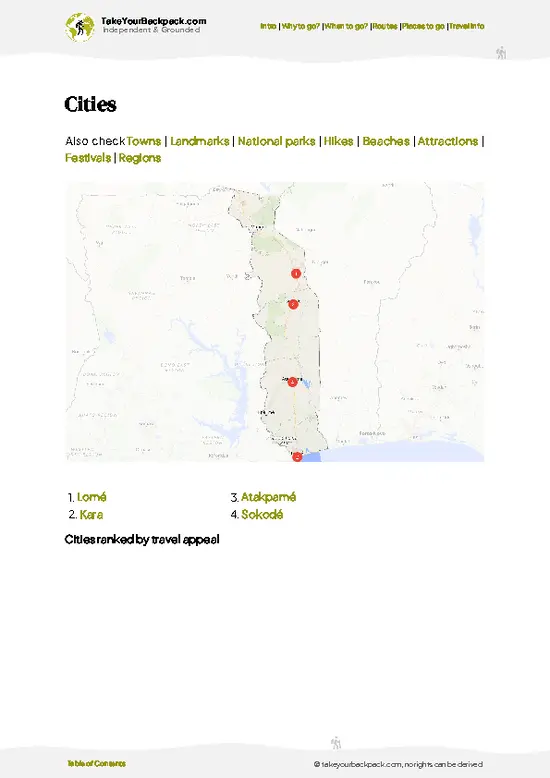
  • Lome—beachfront boulevards, grand marché, colonial architecture, port activity| 156 km away
  • Sokode—central crossroads, traditional festivals, mosque quarter, local textiles| 161 km away
  • Kara—urban center, presidential palace, market district| 225 km away

💡 Not sure where to go next?
Create a personalized itinerary for Togo including Atakpame and the places that fit your trip.

Generate my itinerary

👉 Discover all cities

Or checkout all Togo has to offer (think cities, towns, villages, national parks, hikes, beaches, festivals)
Country photo of Togo

We 💚 feedbackWhat to keep in mind

Atakpame has a pulse that feels alive, a blend of bustling markets and the distant hum of the mountains. The best surprise? The warmth of the locals—everyone seems to share a smile or a story. But keep your wits about you; the roads can be tricky, especially during the rainy season. Embrace the chaos, though; it’s part of the charm. You’ll leave with more than just photos; you’ll carry a piece of Togo’s heart with you.

✍️ Help improve this page!
The information on this page is based on in-depth research, insights shared by experienced travelers, and feedback from the local travel community in Togo. While every effort is made to keep the information accurate and current, conditions can change — so if you spot anything incorrect or outdated, please get in touch.


🙋‍♂️ Give feedback

👋 Meet the founderWho’s Behind Take Your Backpack?

Johan, backpacker and founder of TakeYourBackpackHi, I’m Johan (Netherlands 🇳🇱), the creator of TakeYourBackpack. Over the past decade, I’ve backpacked through 80+ countries across six continents, gaining extensive experience with independent travel, long-term trips, and overland routes.

This site is built on a combination of firsthand travel experience and carefully curated insights from other backpackers. Many guides are based on places I’ve personally visited, while others bring together tips, observations, and practical advice shared by trusted travelers I’ve met along the way.

The goal is to provide realistic, experience-driven guidance — not generic itineraries — so you can explore destinations with better context, clearer expectations, and more confidence.

Get full Togo guide •
Instant download • 55 highlights • Full Offline guide