v2.webp)
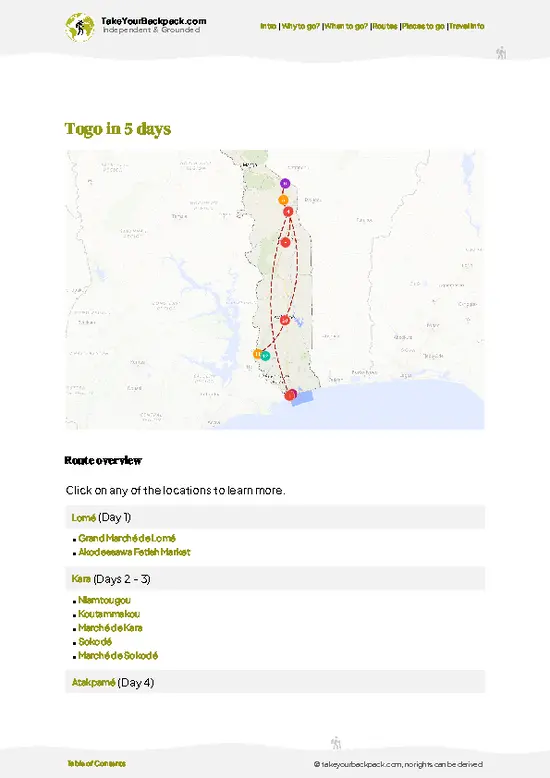
- Grand Marché (Assigamé): The market is the city’s center of gravity, a multi-story maze of wax-print cloth, spices, dried fish and phone repairers, once run by the famed Nana Benz cloth traders. Go early, between 7 and 10 AM, before the heat peaks. Entry is free, and 1.5 to 2 hours is enough. Keep valuables in a front pocket.
- Akodessewa Fetish Market: A vodun marketplace piled with dried monkey heads, snakeskins, crocodile skulls and charms used by healers and priests. It is confronting but educational when you go with a guide who explains the rituals. Plan on €2 to 5 entry plus a small camera fee, and about 1 hour. Mornings are quieter.
- Cathédrale du Sacré-Coeur: A twin-towered 1902 church built under German rule, with colored light through its windows and a cool interior. Visit outside Sunday
- Grand Marché (Assigamé): The market is the city’s center of gravity, a multi-story maze of wax-print cloth, spices, dried fish and phone repairers, once run by the famed Nana Benz cloth traders. Go early, between 7 and 10 AM, before the heat peaks. Entry is free, and 1.5 to 2 hours is enough. Keep valuables in a front pocket.
- Akodessewa Fetish Market: A vodun marketplace piled with dried monkey heads, snakeskins, crocodile skulls and charms used by healers and priests. It is confronting but educational when you go with a guide who explains the rituals. Plan on €2 to 5 entry plus a small camera fee, and about 1 hour. Mornings are quieter.
- Cathédrale du Sacré-Coeur: A twin-towered 1902 church built under German rule, with colored light through its windows and a cool interior. Visit outside Sunday service times for a quiet look. It is free, and 20 to 30 minutes covers it.
- Independence Monument and Place de l’Indépendance: A large plaza with a monument commemorating Togo’s 1960 independence, a short walk from the central district. Late afternoon is pleasant and shaded. Free, 15 to 20 minutes.
- Musée National du Togo: A modest museum with colonial-era objects, traditional instruments, ceremonial items and photographs of leaders. Expect about €1 to 2 entry and 45 minutes. It is calm and air is mildly cooler inside.
- Lomé Beach and the Fishermen’s Shore: Wide golden sand with palms, with fishermen hauling nets and painted pirogues near the port end. Mornings are best for watching the work, but swimming is risky because of rip currents. Free, 1 to 2 hours.
- Hôtel du 2 Février viewpoint: The tall hotel tower on the central square has a high-floor view over the city and the sea. A drink at the top costs roughly €3 to 5, and an hour is plenty. Late afternoon gives the clearest outlook.
All seven sights fit comfortably into one long day, or two relaxed half-days with a break at midday.
Spotted a mistake or missing something? Contact us.

Guided tour of the city of Lomé

Day Trip to Agbodrafo Togoville and Aneho

Private full day to see the best of Lomé-TOGO

Kpalimé & Mont Agou: Adventure in the Heart of the Wonders of Togo

Lomé authentic tour

Historical Tour to Togoville

3-Day Tour in the Heart of Benin - Check-out Lomé or Cotonou

Private Maritimes Region Historical And Cultural Tour

Private transfer from Lomé Airport to Lomé


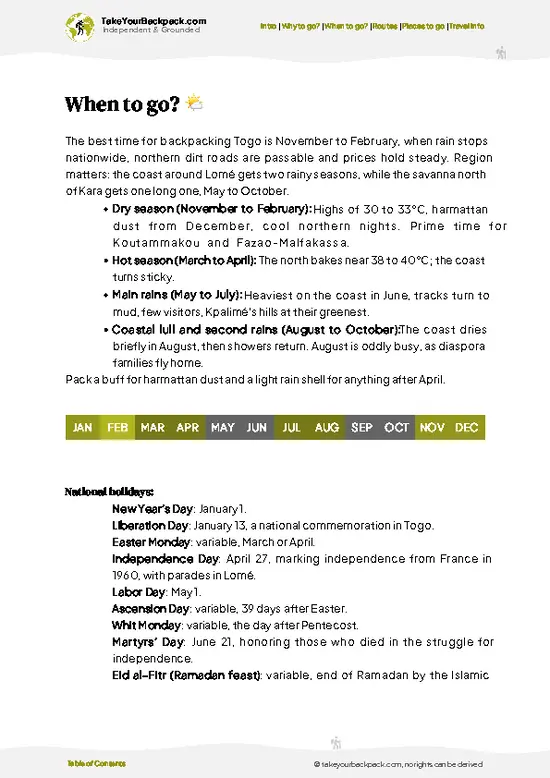
 Best Backpacking
.jpg) Hi, I’m Johan (Netherlands 🇳🇱), the creator of TakeYourBackpack. Over the past 3 decades, I’ve backpacked through 90+ countries across six continents, gaining extensive experience with independent travel, long-term trips, and overland routes.
Hi, I’m Johan (Netherlands 🇳🇱), the creator of TakeYourBackpack. Over the past 3 decades, I’ve backpacked through 90+ countries across six continents, gaining extensive experience with independent travel, long-term trips, and overland routes.