
×

Tonga🇹🇴 | national parks‘Eua National ParkSea cliffs, clay ridge trails, limestone caves, red shining parrot | things to do and best time to go

Explore ʻEua National Park Coastal TrackExplore Uoleva Island

Backpacking in ‘Eua
🏆 Top picknational park ranked #1
By Johan Kruseman 🇳🇱 | Updated October 15, 2026

Sheer forested cliffs drop into the Pacific along the edge of ’Eua, with surf booming into the caves and chasms below. The national park sits on the high ridge of ’Eua island in Tonga, southeast of Tongatapu. Expect damp red-brown clay underfoot, the smell of rotting fruit and wet leaves, and birdsong from a canopy that blocks most of the sun. Tracks are rough, signs are thin, and the loop sections can vanish after rain, so carry a downloaded map and a headlamp. Ferries and flights get delayed or canceled in rough weather, so leave a spare day before any onward connection. Cash runs short fast on the island, and bring it from Nuku’alofa. Crowds are almost nonexistent, which is the draw. Independent hikers who like mud, caves and quiet will love it. Anyone wanting groomed paths, cafés or guaranteed views should skip it.

Discover everything you want to know in the 📖 Tonga Travel Guide.


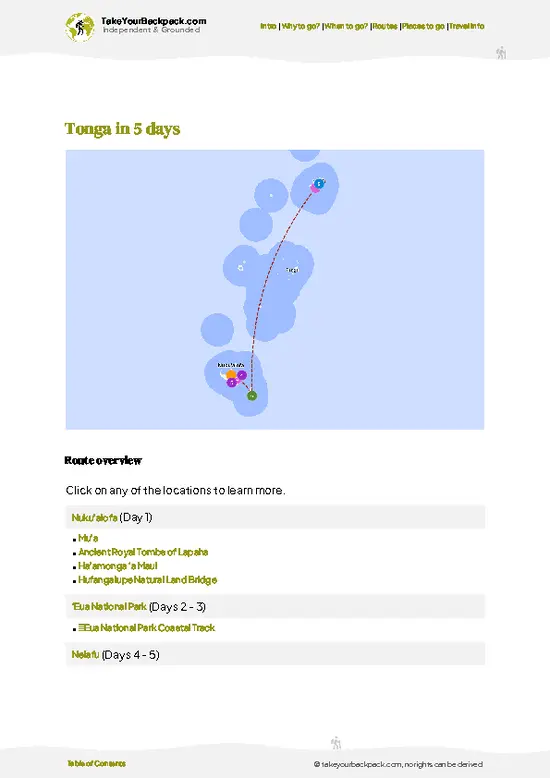
example page 0 from our offline Travel Guide for Tonga
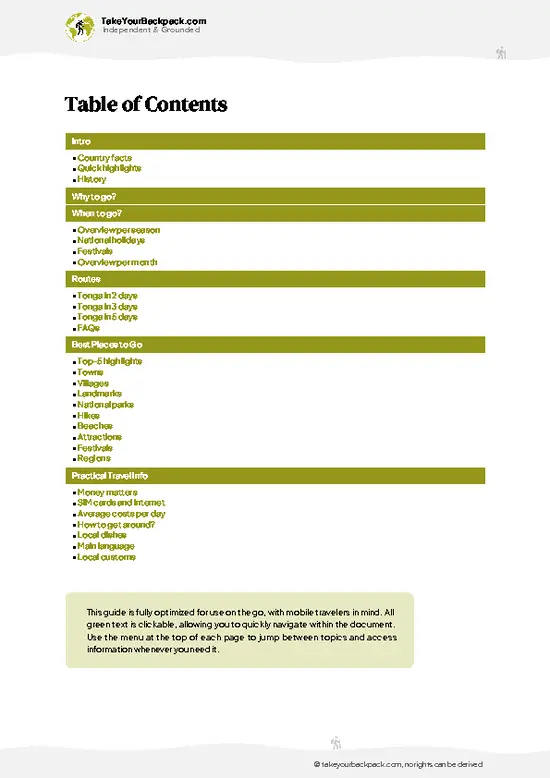
example page 1 from our offline Travel Guide for Tonga
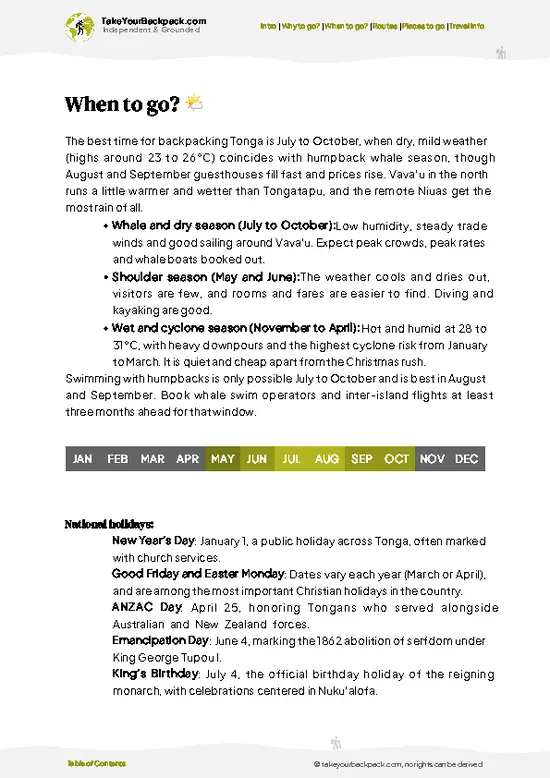
example page 2 from our offline Travel Guide for Tonga
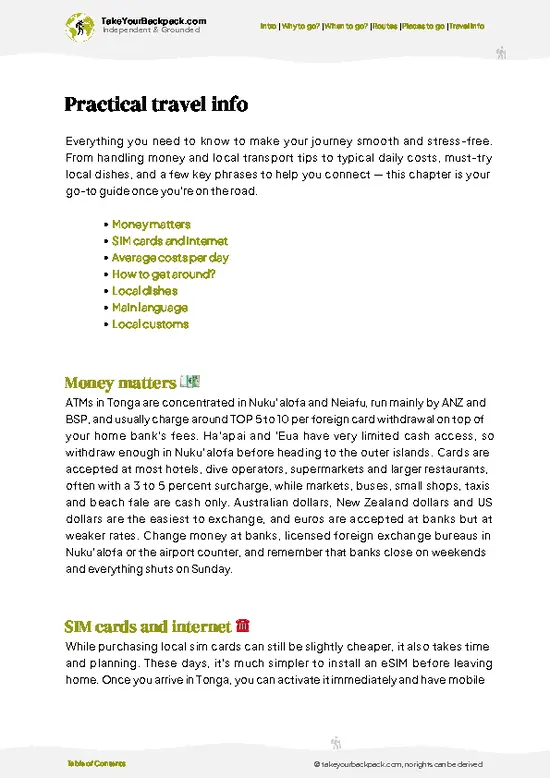
example page 3 from our offline Travel Guide for Tonga
example page 4 from our offline Travel Guide for Tonga
example page 5 from our offline Travel Guide for Tonga
example page 6 from our offline Travel Guide for Tonga
example page 7 from our offline Travel Guide for Tonga
Loading the map 🌍
CLICK TO FILTER
towns
villages
landmarks
national parks
hikes
beaches
attractions
festivals
regions
SHOW COUNTRY’S BESTSHOW ALL

✨ Why go?
Ranked #1 national park in Tonga
Why visitors keep coming back

Backpackers choose ’Eua because it is the one place in Tonga where the walking is the point. Most of the kingdom is flat coral and beach. Here a rainforested ridge climbs to roughly 300 meters (about 1,000 feet), then drops in limestone cliffs along the eastern coast that look out over open ocean with no land in sight. You can link the pieces yourself on foot, by hitching or by renting a bike or scooter, with no tour required. A guide is useful for the cave and the less obvious tracks, but a self-guided day with a map works for the main viewpoints.

The island also holds wildlife you will not see on the main island. The forest shelters the red shining parrot, known locally as koki, which in Tonga lives only here, and its screech carries through the trees before you spot a flash of color. Guesthouses … read more 👉
Backpackers choose ’Eua because it is the one place in Tonga where the walking is the point. Most of the kingdom is flat coral and beach. Here a rainforested ridge climbs to roughly 300 meters (about 1,000 feet), then drops in limestone cliffs along the eastern coast that look out over open ocean with no land in sight. You can link the pieces yourself on foot, by hitching or by renting a bike or scooter, with no tour required. A guide is useful for the cave and the less obvious tracks, but a self-guided day with a map works for the main viewpoints.

The island also holds wildlife you will not see on the main island. The forest shelters the red shining parrot, known locally as koki, which in Tonga lives only here, and its screech carries through the trees before you spot a flash of color. Guesthouses in the main village of Ohonua are simple and cheap, and the village gives you a base with a shop and a few places to eat, so you can come back to a bed after a muddy day. The pace is slow, the people stop to talk, and nothing is overcrowded.

💡 HighlightsWhat this place is best known for

  1. Eastern Cliff Lookouts: Along the park’s eastern edge, the forest ends abruptly at cliffs dropping to the Pacific. Clear mornings give the best views, with waves breaking on the rocks far below and seabirds riding the updraft.
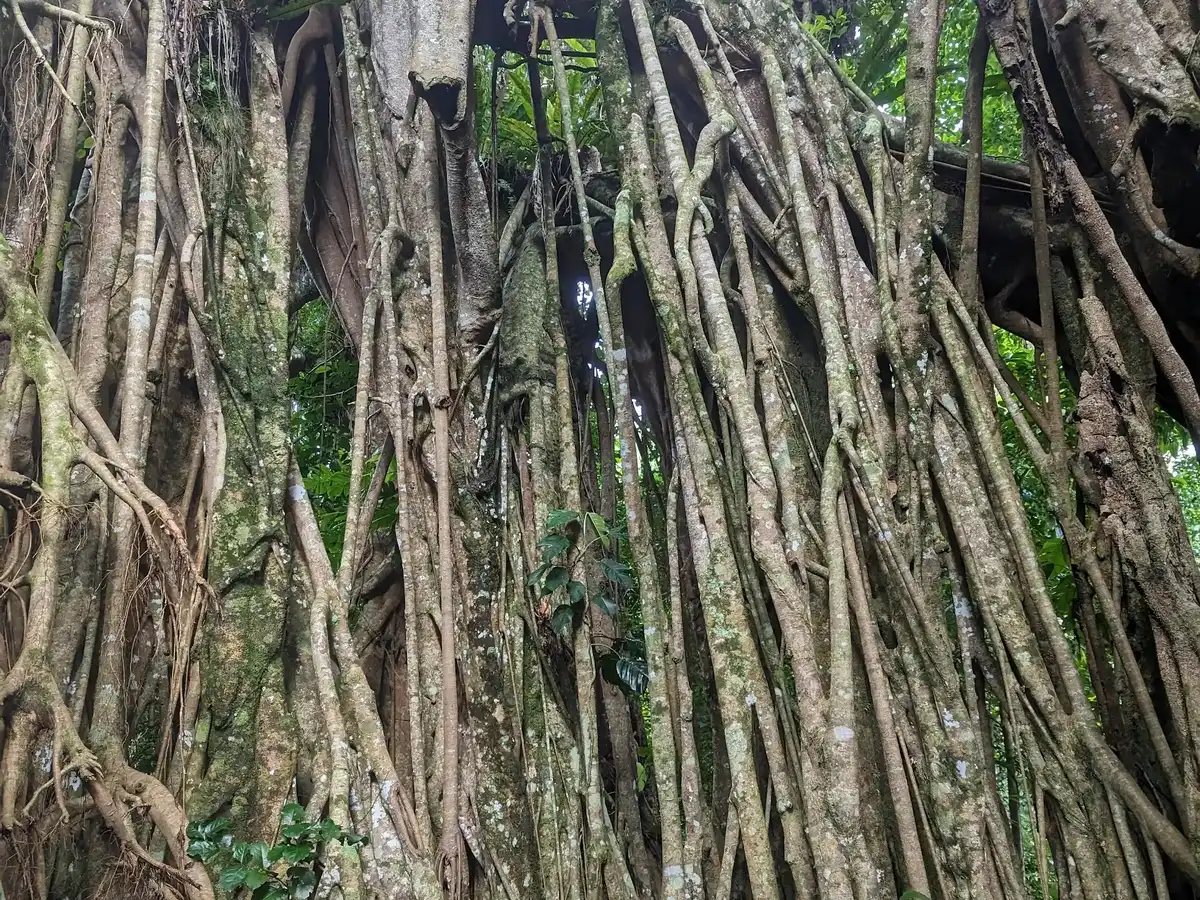
  2. The Big Tree: A giant banyan in the rainforest, with a broad web of buttress roots and aerial roots. The walk to it passes tree ferns and wet clay trails, and the air under the canopy is noticeably cooler.
  3. Rainforest Birdlife: The park protects the red shining parrot (koki), found in Tonga only on ’Eua, along with fruit pigeons and honeyeaters. Early morning, with the forest still dim, is the time to listen and look.
  4. Tropical Forest Ridge Walking: The cooler highland section is the island’s main hiking environment, with tree ferns, vines, and thick moss on trunks. It feels
… read more 👉
  1. Eastern Cliff Lookouts: Along the park’s eastern edge, the forest ends abruptly at cliffs dropping to the Pacific. Clear mornings give the best views, with waves breaking on the rocks far below and seabirds riding the updraft.
  2. The Big Tree: A giant banyan in the rainforest, with a broad web of buttress roots and aerial roots. The walk to it passes tree ferns and wet clay trails, and the air under the canopy is noticeably cooler.
  3. Rainforest Birdlife: The park protects the red shining parrot (koki), found in Tonga only on ’Eua, along with fruit pigeons and honeyeaters. Early morning, with the forest still dim, is the time to listen and look.
  4. Tropical Forest Ridge Walking: The cooler highland section is the island’s main hiking environment, with tree ferns, vines, and thick moss on trunks. It feels completely different from the beaches of the rest of Tonga.
Most visitors rush between the cliff views and skip the quiet banyan forest walk, which is where the parrots are easiest to hear.
Spotted a mistake or missing something? Contact us.
🌤️ When to go?Best time to explore ‘Eua

May to October is the best window for ʻEua, with drier trails and cooler air that makes the cliff walks comfortable.
  • Dry Season (May to October): Days run 22 to 27°C (72 to 81°F), nights drop to 16 to 19°C (61 to 66°F). Daylight lasts about 11 hours in June and July. Trails to the Ha’atu’a cliffs and Hafu Pool are firmest and least muddy.
  • Whale Season (July to October): Humpbacks pass the island, and you may spot them from the eastern cliff lookouts. Flights and guesthouses from Tongatapu fill up, so book ahead.
  • Wet Season (November to April): Expect 26 to 31°C (79 to 88°F), heavy humidity and downpours that turn clay paths to slick mud. Cyclones are possible, especially January to March. Daylight stretches to about 13 hours, and prices are steady with few visitors.
  • Shoulder Months (May and November):
… read more 👉
May to October is the best window for ʻEua, with drier trails and cooler air that makes the cliff walks comfortable.
  • Dry Season (May to October): Days run 22 to 27°C (72 to 81°F), nights drop to 16 to 19°C (61 to 66°F). Daylight lasts about 11 hours in June and July. Trails to the Ha’atu’a cliffs and Hafu Pool are firmest and least muddy.
  • Whale Season (July to October): Humpbacks pass the island, and you may spot them from the eastern cliff lookouts. Flights and guesthouses from Tongatapu fill up, so book ahead.
  • Wet Season (November to April): Expect 26 to 31°C (79 to 88°F), heavy humidity and downpours that turn clay paths to slick mud. Cyclones are possible, especially January to March. Daylight stretches to about 13 hours, and prices are steady with few visitors.
  • Shoulder Months (May and November): Fewer people, decent weather, and easier bookings.
Book the short flight or ferry early for July to September, and keep a spare day for weather delays.


source: climatestotravel.comJANJanuary: below average for travelingFEBFebruary: below average for travelingMARMarch: fair for travelingAPRApril: fair for travelingMAYMay: highly recommended for travelingJUNJune: excellent for travelingJULJuly: highly recommended for travelingAUGAugust: highly recommended for travelingSEPSeptember: excellent for travelingOCTOctober: highly recommended for travelingNOVNovember: fair for travelingDECDecember: below average for traveling
tonga-national-park-eua-national-park
© Google | Sheri Ward

✈️ The backpacker research shortcutTonga Travel Guide

An offline-friendly backpacking guide with optimized travel routes, ranked highlights, transport advice, and the best areas to stay.
example page 0 from our offline Travel Guide for Tonga
example page 1 from our offline Travel Guide for Tonga
example page 2 from our offline Travel Guide for Tonga
example page 3 from our offline Travel Guide for Tonga
example page 4 from our offline Travel Guide for Tonga
example page 5 from our offline Travel Guide for Tonga
example page 6 from our offline Travel Guide for Tonga
example page 7 from our offline Travel Guide for Tonga
The digital guide (128 pages) contains:
✅ 31 highlights, ranked by travel appeal
✅ Optimized 2, 3 & 5-day travel routes
✅ Cities, national parks, landmarks, beaches
✅ How to get around
✅ Offline-friendly for travel without Wi-Fi
👉 Click to see all 30+ guide features

📅 Plan smarter in minutes, not weeks
✅ Month by month travel advice
✅ Festivals & national holidays
✅ Budget expectations

🗺️ Go to the right places, skip the overrated ones
✅ Honest pros & cons of destinations
✅ Top hikes, parks & viewpoints
✅ Lesser-known places most travelers miss
✅ Clear “worth it vs skip it” guidance

🛏️ Travel smoothly without rookie mistakes
✅ Best areas to stay
✅ Transport systems explained simply
✅ Common scams & safety advice
✅ SIM cards, money & practical tips

🌍 Understand the country, not just visit it
✅ Culture & traditions
✅ 52 Essential phrases & customs
✅ Festivals worth planning around
✅ Traveler-friendly historical context
✅ Insights that make places more meaningful

📱 Built for real travel conditions
✅ Fully downloadable PDF
✅ Works completely offline
✅ Optimized for phone use
✅ Useful in remote areas & buses
✅ Everything in one place
Stop searching, start planning
Get instant access to your full guide. 30‑day money-back guarantee.
+ Add another guide for just

By proceeding you agree to our terms.
Sent to your inbox immediately after payment • 100% Secure Checkout
Best Backpacking Travel Advisor 2025 tourism awardBest Backpacking
Travel Advisor
2025
What others say about Take Your Backpack Guides:
⭐⭐⭐⭐⭐
Fantastic, amazing amount of information!
⭐⭐⭐⭐⭐
My goodness this is amazing, it's what I've been looking for hats off too you!
⭐⭐⭐⭐⭐
I think this is absolutely BRILLIANT
⭐⭐⭐⭐
Very complete and informative. It's still missing places, but I gotta to commend you
⭐⭐⭐⭐⭐
This is truly amazing, thank you, can't wait to explore it with my kids!
⭐⭐⭐⭐⭐
Awesome resource, thank you!
⭐⭐⭐⭐⭐
This is amazing! Can't wait to explore the ones I haven't seen
⭐⭐⭐⭐
I love this! Well done, great idea.
⭐⭐⭐⭐⭐
Thanks for taking the time to make this gem!
⭐⭐⭐⭐⭐
This might be the best website I've ever seen.
⭐⭐⭐⭐⭐
Congratulations, and thank you so much for your work; it's incredibly valuable.
⭐⭐⭐⭐
In all seriousness I think you did a great job pointing out the important spots
⭐⭐⭐⭐⭐
10/10 very good
⭐⭐⭐⭐⭐
As someone who's only just starting to visit regularly this is awesome, thank you.
⭐⭐⭐⭐
Thank you very much! I'm going to visit my dad, it's going to be very useful!
⭐⭐⭐⭐⭐
This is really cool! We'll be travelling for the first time and this definitely come in handy.
⭐⭐⭐⭐⭐
You are now our minister of culture, congratulations 👨‍💼
⭐⭐⭐⭐⭐
Just wanted to tell you that this is a pearl! Going to follow your recommendations.
⭐⭐⭐⭐⭐
This is so cool. I'll definitely be using the resource for my travels soon.
⭐⭐⭐⭐⭐
This is very impressive! Good work.
⭐⭐⭐⭐⭐
This is an amazing and informative site. Very well done!

🛏️ Where to stay?Choosing the right base

Stay in ʻEua’s main village, Ohonua, or the handful of guesthouses scattered nearby, because there is no accommodation inside the national park itself.
Ohonua holds the wharf, the small airstrip road, shops and the market, so it is the most practical spot to arrive and resupply. Several family-run guesthouses and lodges sit along the coast and inland roads within a short drive of the park entrances. Expect simple rooms, fans, shared or private bathrooms, and home-cooked dinners that you usually need to arrange in advance. Some hosts pick you up from the ferry or airport and can arrange guides for … read more 👉
Stay in ʻEua’s main village, Ohonua, or the handful of guesthouses scattered nearby, because there is no accommodation inside the national park itself.
Ohonua holds the wharf, the small airstrip road, shops and the market, so it is the most practical spot to arrive and resupply. Several family-run guesthouses and lodges sit along the coast and inland roads within a short drive of the park entrances. Expect simple rooms, fans, shared or private bathrooms, and home-cooked dinners that you usually need to arrange in advance. Some hosts pick you up from the ferry or airport and can arrange guides for the cliff walks, Lokupo Lookout, and the caves.
Backpackers who want a hostel dorm scene will not find one here. What you get instead is a family atmosphere, shared meals, and easy local advice. Camping is sometimes possible through your host or on private land, but ask first, since land is owned and the park has no formal campsites.
The nearest larger base is Nuku’alofa on Tongatapu, which has more hotels, guesthouses and restaurants. It makes sense only for a day trip, since the ferry and flight schedules do not suit a same-day return well. Sleep on ʻEua for at least two nights and plan your hikes from there.

👛 Costs (as of 15 October 2026)How expensive it really is

Budget about US$55 to 107 a day on ʻEua, with accommodation making up most of the spend. Prices below are shown in US dollars, though you pay in Tongan paʻanga (TOP).
CategoryBudget RangeLocal Reality
Park EntryUS$0 to 5Most trails and lookouts carry no formal fee, though some sites or landowners ask a small contribution.
Accommodation (high season)US$30 to 55Family-run guesthouse rooms, often with a basic breakfast. Prices rise slightly in whale season.
Food and SuppliesUS$12 to 22Home-cooked dinners at your guesthouse run US$8 to 15. Shops in Ohonua sell basics such as bread, tinned fish and fruit.
Local TransportUS$5 to 10Few buses exist. Shared rides or hosts’ pickups are common, and a rental vehicle costs more.
Guides and ActivitiesUS$8 to 15Guided hikes for cliffs, caves and Lokupo Lookout
… read more 👉
Budget about US$55 to 107 a day on ʻEua, with accommodation making up most of the spend. Prices below are shown in US dollars, though you pay in Tongan paʻanga (TOP).
CategoryBudget RangeLocal Reality
Park EntryUS$0 to 5Most trails and lookouts carry no formal fee, though some sites or landowners ask a small contribution.
Accommodation (high season)US$30 to 55Family-run guesthouse rooms, often with a basic breakfast. Prices rise slightly in whale season.
Food and SuppliesUS$12 to 22Home-cooked dinners at your guesthouse run US$8 to 15. Shops in Ohonua sell basics such as bread, tinned fish and fruit.
Local TransportUS$5 to 10Few buses exist. Shared rides or hosts’ pickups are common, and a rental vehicle costs more.
Guides and ActivitiesUS$8 to 15Guided hikes for cliffs, caves and Lokupo Lookout are often split among a group, with fees depending on length.
Total Daily BudgetUS$55 to 107Lower end assumes shared guides and simple meals. Getting to ʻEua from Tongatapu by ferry or flight is a separate cost.
⚠️ Prices can change and everyone travels differently, so take this as a rough guide. Hope it helps you plan your adventure!

🥾 TrailsTrail guide for ‘Eua national park

The hiking here is rough, muddy and rarely signed in detail, so treat every outing as a navigation exercise. Terrain ranges from flat forest roads to slick clay tracks and exposed limestone near the cliffs.
  • Eastern Cliff Walk: A rougher route along the coastal edge with repeated lookouts over the ocean. Moderate, 2 to 3 hours depending on how far you go. The ground is uneven and the edges are unprotected.
  • Big Tree and Forest Loop: A shaded walk of roughly an hour or two to the banyan, moderate when wet. This is the best section for hearing the koki and other forest birds.
Wildlife is mostly birds, … read more 👉
The hiking here is rough, muddy and rarely signed in detail, so treat every outing as a navigation exercise. Terrain ranges from flat forest roads to slick clay tracks and exposed limestone near the cliffs.
  • Eastern Cliff Walk: A rougher route along the coastal edge with repeated lookouts over the ocean. Moderate, 2 to 3 hours depending on how far you go. The ground is uneven and the edges are unprotected.
  • Big Tree and Forest Loop: A shaded walk of roughly an hour or two to the banyan, moderate when wet. This is the best section for hearing the koki and other forest birds.
Wildlife is mostly birds, with the red shining parrot the standout, plus fruit pigeons in the canopy. Bring plenty of water, as streams are not reliable, and wear shoes with real grip.

Access to the island is by ferry or short flight from Tongatapu, and weather can disrupt both. On the island, public transport is very limited, so most visitors rent a scooter or car or arrange rides through their guesthouse. Roads to the trailheads are partly unpaved and become slippery after rain. Crowds are minimal, and you may walk for hours without meeting anyone. A small entrance fee may apply at some sites, so carry cash in small bills.
⚠️ Hiking info can sometimes be outdated or inaccurate. Before you hit the trail, check the latest conditions with locals. If you do spot anything that's off, I'd love to hear from you, so I can update it for fellow travelers.

🛡️ SafetySafety Tips and Common Scams in ‘Eua

ʻEua is a straightforward park, but the cliffs and the clay paths deserve respect. After rain, the trails turn slick and the red mud makes steep sections treacherous, so wear shoes with real grip rather than sandals. The eastern cliffs drop hundreds of feet with no fences at lookouts such as Ha’atu’a, so stay well back from the edge, especially in wind or fog.
Navigation is the main practical issue. Trails are lightly marked and branch into plantation tracks, so hire a local guide through your guesthouse or download an offline map. Caves need a headlamp and a guide.
There are no dangerous large animals. Mosquitoes carrying dengue are present, so cover up and use repellent. Stray dogs and roaming pigs are common but mostly ignore hikers.
First-timers often underestimate the heat and humidity, … read more 👉
ʻEua is a straightforward park, but the cliffs and the clay paths deserve respect. After rain, the trails turn slick and the red mud makes steep sections treacherous, so wear shoes with real grip rather than sandals. The eastern cliffs drop hundreds of feet with no fences at lookouts such as Ha’atu’a, so stay well back from the edge, especially in wind or fog.
Navigation is the main practical issue. Trails are lightly marked and branch into plantation tracks, so hire a local guide through your guesthouse or download an offline map. Caves need a headlamp and a guide.
There are no dangerous large animals. Mosquitoes carrying dengue are present, so cover up and use repellent. Stray dogs and roaming pigs are common but mostly ignore hikers.
First-timers often underestimate the heat and humidity, and the shortage of shops on the trails. Carry at least 2 liters of water per person, start early, and tell your host your route and expected return time. Mobile signal is patchy inland.

FAQCommon questions from travelers

Two to three days is enough to cover the main sights on ʻEua. That gives you time for the eastern cliff lookouts at Ha’atu’a, the Hafu Pool, a cave visit, and a half-day of walking in the rainforest. Add a fourth day if you want a slow pace or the weather turns wet.
Yes, you can reach ʻEua and explore it without bringing a car, because the island is small and hosts routinely help guests. Ferry or flight from Nuku’alofa lands you at Ohonua, and guesthouses usually offer pickups. For park trails, you can walk from some lodgings, arrange a ride, or hire a local guide with a vehicle for around US$10 to 25 depending on distance.
There is no major national entry charge or permit system for most of ʻEua National Park, and the main trails and lookouts are open to walkers. Some guided routes, caves and landowner-managed sites ask for a small payment, usually about US$3 to 10. Your guesthouse host can confirm any current fees and book a guide, which is the practical way to handle access.
⚠️ Things can change over time, so always validate details locally before you go.

More places to explore across Tonga

‘Eua isn’t the only highlight in Tonga. Explore all what Tonga has to offer.
Country photo of Tonga

We 💚 feedbackWhat to keep in mind

Most travelers treat ʻEua as a day trip from Nukuʻalofa and spend the whole time worrying about the ferry or flight home. That is the mistake. The island rewards a night or two, because the east coast cliffs, the Hafu Pool and the Ana Kuma cave all sit far apart. I would stay at least two nights, rent a bicycle or bargain for a local driver, and bring a headlamp for the caves.

✍️ Help improve this page!
The information on this page is based on in-depth research, insights shared by experienced travelers, and feedback from the local travel community in Tonga. While every effort is made to keep the information accurate and current, conditions can change — so if you spot anything incorrect or outdated, please get in touch.


🙋‍♂️ Give feedback

👋 Meet the founderWho’s Behind Take Your Backpack?

Johan, backpacker and founder of TakeYourBackpackHi, I’m Johan (Netherlands 🇳🇱), the creator of TakeYourBackpack. Over the past 3 decades, I’ve backpacked through 90+ countries across six continents, gaining extensive experience with independent travel, long-term trips, and overland routes.

This site is built on a combination of firsthand travel experience and carefully curated insights from other backpackers. Many guides are based on places I’ve personally visited, while others bring together tips, observations, and practical advice shared by trusted travelers I’ve met along the way.

The goal is to provide realistic, experience-driven guidance — not generic itineraries — so you can explore destinations with better context, clearer expectations, and more confidence.