

×

Tonga🇹🇴 | regionsUoleva IslandBeach fale stays, no roads, lantern dinners, humpback season | things to do and best time to go

Explore ‘Eua National ParkExplore Niuatoputapu

Backpacking in Uoleva Island
🌟 Highlightregion ranked #3
By Johan Kruseman 🇳🇱 | Updated October 15, 2026

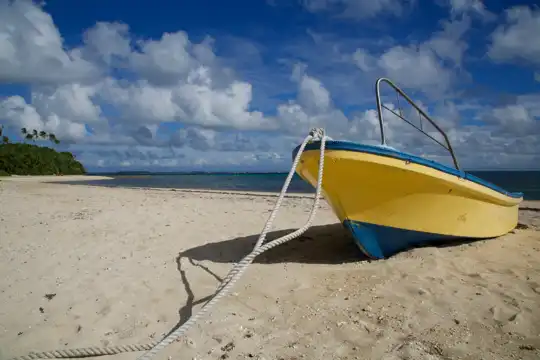
Uoleva has no roads, no cars and almost no electricity after the generators go quiet, which means the night sky and the surf are the only soundtrack you get. The island lies in the Ha’apai group in the central part of Tonga, a small boat ride from Lifuka, and its long western beach is pale coral sand lined with leaning coconut palms. Water is clear and shallow at high tide, though at low tide the reef flat gets rocky underfoot and swimming turns into wading. Crowds are thin: a handful of beach fale operations, rarely more than a few dozen guests. Costs are not rock-bottom because everything arrives by boat, and meals are set menus, usually fish, root crops and coconut. Snorkeling off the reef is good, whales pass here in season, and the sunsets are slow and orange. Expect warm air smelling of woodsmoke and salt. A first day might mean arriving by boat at noon, dropping your pack in a fale, snorkeling the reef edge, then eating dinner by lantern light.

Discover everything you want to know in the 📖 Tonga Travel Guide.


example page 0 from our offline Travel Guide for Tonga
example page 1 from our offline Travel Guide for Tonga
example page 2 from our offline Travel Guide for Tonga
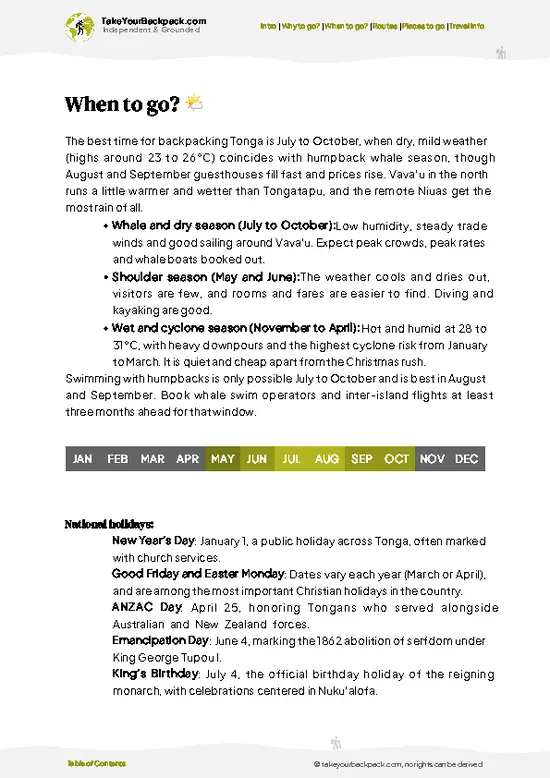
example page 3 from our offline Travel Guide for Tonga
example page 4 from our offline Travel Guide for Tonga
example page 5 from our offline Travel Guide for Tonga
example page 6 from our offline Travel Guide for Tonga
example page 7 from our offline Travel Guide for Tonga
Loading the map 🌍
CLICK TO FILTER
towns
villages
landmarks
national parks
hikes
beaches
attractions
festivals
regions
SHOW COUNTRY’S BESTSHOW ALL

✨ Why go?
Ranked #3 region in Tonga
Why Uoleva Island should be on your travel list

Backpackers come to Uoleva because it is the easiest place in Tonga to stop doing anything. The island is a few kilometers of sand with beach fale on the western shore that sit just steps from the tideline, so the sea is your front yard. There are no shops, no nightlife to chase and no schedule except the tides and the meal bell. That quiet is the draw, and it suits travelers who have spent weeks on buses and ferries across the Pacific.

The second reason is the water. From July to October, humpback whales calve in the Ha’apai channels, and boat operators take small groups out to swim near them, which is a much less crowded experience than in Vava’u. Outside whale season, the reef off the beach gives easy snorkeling with coral and reef fish, and kayaks or a walk along the sand fill the rest … read more 👉
Backpackers come to Uoleva because it is the easiest place in Tonga to stop doing anything. The island is a few kilometers of sand with beach fale on the western shore that sit just steps from the tideline, so the sea is your front yard. There are no shops, no nightlife to chase and no schedule except the tides and the meal bell. That quiet is the draw, and it suits travelers who have spent weeks on buses and ferries across the Pacific.

The second reason is the water. From July to October, humpback whales calve in the Ha’apai channels, and boat operators take small groups out to swim near them, which is a much less crowded experience than in Vava’u. Outside whale season, the reef off the beach gives easy snorkeling with coral and reef fish, and kayaks or a walk along the sand fill the rest of the day.

Uoleva also works as a pause on the route through Ha’apai. Pair it with a few days on Lifuka and you have a loop that feels remote without being difficult, since the island is only a short boat transfer from the main town of Pangai.

💡 HighlightsPlaces and moments you shouldn't skip

  1. The western beach at sunset. Uoleva’s signature view is a long stretch of pale sand facing the sunset, with palms leaning over the high-tide line. Walk it barefoot in the late afternoon when the light turns copper and the crabs come out.
  2. Reef snorkeling off the beach. The reef sits close to shore, so you can slip in from the sand and see coral heads, parrotfish and small reef fish without a boat. Go near high tide for easier entry and clearer water.
  3. Whale swimming in season. From roughly July to October, local boat operators run trips to swim with humpback whales and their calves in the Ha’apai waters. Groups are small, and the experience is regulated and quiet.
  4. Evening by lantern in the beach fale. With power limited, nights here are dark and star-heavy. Dinner is a shared meal of fish, taro
… read more 👉
  1. The western beach at sunset. Uoleva’s signature view is a long stretch of pale sand facing the sunset, with palms leaning over the high-tide line. Walk it barefoot in the late afternoon when the light turns copper and the crabs come out.
  2. Reef snorkeling off the beach. The reef sits close to shore, so you can slip in from the sand and see coral heads, parrotfish and small reef fish without a boat. Go near high tide for easier entry and clearer water.
  3. Whale swimming in season. From roughly July to October, local boat operators run trips to swim with humpback whales and their calves in the Ha’apai waters. Groups are small, and the experience is regulated and quiet.
  4. Evening by lantern in the beach fale. With power limited, nights here are dark and star-heavy. Dinner is a shared meal of fish, taro or cassava and coconut, followed by conversation and the sound of waves on the reef.
  5. Walking the island coast. At low tide you can follow the shoreline around the island, past tide pools, shells and quiet stretches where you may see no one at all. Bring sandals for the rocky reef flats.
Most visitors miss the east side of the island, where the shoreline is wilder, emptier and good for beachcombing at low tide.
Spotted a mistake or missing something? Contact us.

⌛️ 5 daysHow to make the most of Uoleva Island

Day 1: Uoleva Island: A lazy beach day, and that is the whole plan. Boats from Pangai on Lifuka land you on the sand, and the island has no roads worth the name, so your pace is set by your feet and the tide. Drop your pack at a beachfront fale, swim off the long white shore on the western side, and let the first afternoon go slowly.
Day 2: Western Reef: Snorkeling day. The reef sits close to the beach, so you can drift out from your fale without arranging transport. Go in calm morning water, rest through the midday heat, then walk the sand again. Staying put keeps you from paying for extra boat transfers, which is why the island suits a slow rhythm.
Day 3: Northern Tip and Eastern Shore: Walk the island end to end. The path along the sand and through coconut palms is flat and easy, and the … read more 👉
Day 1: Uoleva Island: A lazy beach day, and that is the whole plan. Boats from Pangai on Lifuka land you on the sand, and the island has no roads worth the name, so your pace is set by your feet and the tide. Drop your pack at a beachfront fale, swim off the long white shore on the western side, and let the first afternoon go slowly.
Day 2: Western Reef: Snorkeling day. The reef sits close to the beach, so you can drift out from your fale without arranging transport. Go in calm morning water, rest through the midday heat, then walk the sand again. Staying put keeps you from paying for extra boat transfers, which is why the island suits a slow rhythm.
Day 3: Northern Tip and Eastern Shore: Walk the island end to end. The path along the sand and through coconut palms is flat and easy, and the eastern side is wilder, with fewer people and more shells. Carry water, because shops are scarce. Tides matter here, so check them with your host before setting out.
Day 4: Lifuka and Pangai: Take a morning boat back across the channel for a market and town day. Pangai has the shops, the bank and the harbor, and you can bike the causeway to Foa for village life. Sunday services here are worth hearing if your timing lines up, though boats and shops run on a lighter schedule that day.
Detour: Ride to Foa and on to Hihifo, where quiet roads link villages and you can stop at a roadside stall. It adds a lot and costs no extra logistics, since you come back to Pangai by bike.
Day 5: Back to Uoleva Island: Return to the island for one more reef swim before leaving. If your trip happens in the whale season of roughly July to October, book a swim with humpbacks from Pangai. That is the one day that justifies the whole trip: sharing open water with a mother and calf is something no beach elsewhere can match.

🌤️ When to go?Best time to visit Uoleva Island

May to October is the window to aim for on Uoleva, with dry, breezy days and the calmest, clearest water for snorkeling.
  • Dry Season (May to October): Days reach roughly 24 to 27°C (75 to 81°F), nights dip to 18 to 21°C (64 to 70°F), and humidity drops. Daylight runs about 11 hours in June and July. July to October is humpback whale season, when you can swim with them on tours run by Lifuka and Uoleva operators.
  • Wet Season (November to April): Expect 27 to 31°C (81 to 88°F), thick humidity, sudden downpours and a risk of cyclones, mostly January to March. Daylight stretches to about 13 hours. Some beach fales close or run thin on staff, and boats can be canceled in rough weather.
  • Crowds and Prices: Uoleva stays quiet even in July and August, when a handful of fales fill up. Rates barely move through
… read more 👉
May to October is the window to aim for on Uoleva, with dry, breezy days and the calmest, clearest water for snorkeling.
  • Dry Season (May to October): Days reach roughly 24 to 27°C (75 to 81°F), nights dip to 18 to 21°C (64 to 70°F), and humidity drops. Daylight runs about 11 hours in June and July. July to October is humpback whale season, when you can swim with them on tours run by Lifuka and Uoleva operators.
  • Wet Season (November to April): Expect 27 to 31°C (81 to 88°F), thick humidity, sudden downpours and a risk of cyclones, mostly January to March. Daylight stretches to about 13 hours. Some beach fales close or run thin on staff, and boats can be canceled in rough weather.
  • Crowds and Prices: Uoleva stays quiet even in July and August, when a handful of fales fill up. Rates barely move through the year, but the few beds book out in whale season.
Book your fale and the boat transfer a few weeks ahead if you arrive between July and September.


source: climatestotravel.comJANJanuary: fair for travelingFEBFebruary: fair for travelingMARMarch: fair for travelingAPRApril: fair for travelingMAYMay: excellent for travelingJUNJune: highly recommended for travelingJULJuly: highly recommended for travelingAUGAugust: highly recommended for travelingSEPSeptember: excellent for travelingOCTOctober: highly recommended for travelingNOVNovember: fair for travelingDECDecember: fair for traveling

✈️ The backpacker research shortcutTonga Travel Guide

An offline-friendly backpacking guide with optimized travel routes, ranked highlights, transport advice, and the best areas to stay.
example page 0 from our offline Travel Guide for Tonga
example page 1 from our offline Travel Guide for Tonga
example page 2 from our offline Travel Guide for Tonga
example page 3 from our offline Travel Guide for Tonga
example page 4 from our offline Travel Guide for Tonga
example page 5 from our offline Travel Guide for Tonga
example page 6 from our offline Travel Guide for Tonga
example page 7 from our offline Travel Guide for Tonga
The digital guide (128 pages) contains:
✅ 31 highlights, ranked by travel appeal
✅ Optimized 2, 3 & 5-day travel routes
✅ Cities, national parks, landmarks, beaches
✅ How to get around
✅ Offline-friendly for travel without Wi-Fi
👉 Click to see all 30+ guide features

📅 Plan smarter in minutes, not weeks
✅ Month by month travel advice
✅ Festivals & national holidays
✅ Budget expectations

🗺️ Go to the right places, skip the overrated ones
✅ Honest pros & cons of destinations
✅ Top hikes, parks & viewpoints
✅ Lesser-known places most travelers miss
✅ Clear “worth it vs skip it” guidance

🛏️ Travel smoothly without rookie mistakes
✅ Best areas to stay
✅ Transport systems explained simply
✅ Common scams & safety advice
✅ SIM cards, money & practical tips

🌍 Understand the country, not just visit it
✅ Culture & traditions
✅ 52 Essential phrases & customs
✅ Festivals worth planning around
✅ Traveler-friendly historical context
✅ Insights that make places more meaningful

📱 Built for real travel conditions
✅ Fully downloadable PDF
✅ Works completely offline
✅ Optimized for phone use
✅ Useful in remote areas & buses
✅ Everything in one place
Stop searching, start planning
Get instant access to your full guide. 30‑day money-back guarantee.
+ Add another guide for just

By proceeding you agree to our terms.
Sent to your inbox immediately after payment • 100% Secure Checkout
Best Backpacking Travel Advisor 2025 tourism awardBest Backpacking
Travel Advisor
2025
What others say about Take Your Backpack Guides:
⭐⭐⭐⭐⭐
Fantastic, amazing amount of information!
⭐⭐⭐⭐⭐
My goodness this is amazing, it's what I've been looking for hats off too you!
⭐⭐⭐⭐⭐
I think this is absolutely BRILLIANT
⭐⭐⭐⭐
Very complete and informative. It's still missing places, but I gotta to commend you
⭐⭐⭐⭐⭐
This is truly amazing, thank you, can't wait to explore it with my kids!
⭐⭐⭐⭐⭐
Awesome resource, thank you!
⭐⭐⭐⭐⭐
This is amazing! Can't wait to explore the ones I haven't seen
⭐⭐⭐⭐
I love this! Well done, great idea.
⭐⭐⭐⭐⭐
Thanks for taking the time to make this gem!
⭐⭐⭐⭐⭐
This might be the best website I've ever seen.
⭐⭐⭐⭐⭐
Congratulations, and thank you so much for your work; it's incredibly valuable.
⭐⭐⭐⭐
In all seriousness I think you did a great job pointing out the important spots
⭐⭐⭐⭐⭐
10/10 very good
⭐⭐⭐⭐⭐
As someone who's only just starting to visit regularly this is awesome, thank you.
⭐⭐⭐⭐
Thank you very much! I'm going to visit my dad, it's going to be very useful!
⭐⭐⭐⭐⭐
This is really cool! We'll be travelling for the first time and this definitely come in handy.
⭐⭐⭐⭐⭐
You are now our minister of culture, congratulations 👨‍💼
⭐⭐⭐⭐⭐
Just wanted to tell you that this is a pearl! Going to follow your recommendations.
⭐⭐⭐⭐⭐
This is so cool. I'll definitely be using the resource for my travels soon.
⭐⭐⭐⭐⭐
This is very impressive! Good work.
⭐⭐⭐⭐⭐
This is an amazing and informative site. Very well done!

🛏️ Where to stay?Where staying makes the most sense

Stay on the western beach of Uoleva, where the island’s handful of beachfront fales (open-sided thatched huts) sit within a few minutes’ walk of each other along one stretch of white sand.
That single strip is the whole social scene. Budget travelers cluster here because meals are served communally at the fale compounds, so you end up sharing tables and boat rides with the same 10 to 30 people for days. Solo travelers do well here, since conversation happens naturally over dinner and at the sunset spots on the sand. Expect to pay roughly TOP$60 to 150 (US$25 to 65) a night for a basic fale or dorm-style … read more 👉
Stay on the western beach of Uoleva, where the island’s handful of beachfront fales (open-sided thatched huts) sit within a few minutes’ walk of each other along one stretch of white sand.
That single strip is the whole social scene. Budget travelers cluster here because meals are served communally at the fale compounds, so you end up sharing tables and boat rides with the same 10 to 30 people for days. Solo travelers do well here, since conversation happens naturally over dinner and at the sunset spots on the sand. Expect to pay roughly TOP$60 to 150 (US$25 to 65) a night for a basic fale or dorm-style bed, often with meals extra or sold as a package.
The southern end of the strip is a little quieter and good for sleeping, while the middle tends to be livelier and closer to the swimming and snorkeling spots. Electricity is limited and Wi-Fi is patchy or absent, so plan to switch off.
If you want more choice, Lifuka island across the channel has guesthouses and cafes in Pangai, but you lose the beach at your door. For most backpackers, sleeping on Uoleva itself is the better call.

🚌 Getting aroundGetting around like a local

Uoleva Island has no town center, just a sandy track and the beach itself running about 5 km along the western shore, and on foot is how you move between the guesthouses and beach fales. Walking works for everything within the first few kilometers, then the soft sand slows you down and the midday sun makes the far southern tip a real commitment. Getting on and off the island means a short boat hop from Lifuka in the Ha’apai group, and the sea decides your schedule more than any timetable does.

  • Guesthouse boat transfer from Lifuka: Most stays collect you from Pangai harbor or the Lifuka wharf in a small open boat, a 15 to 25 minute crossing that costs roughly US$10 to 20 per person each way, usually arranged when you book. Expect spray on your face and a turquoise-to-navy color shift as the
… read more 👉
Uoleva Island has no town center, just a sandy track and the beach itself running about 5 km along the western shore, and on foot is how you move between the guesthouses and beach fales. Walking works for everything within the first few kilometers, then the soft sand slows you down and the midday sun makes the far southern tip a real commitment. Getting on and off the island means a short boat hop from Lifuka in the Ha’apai group, and the sea decides your schedule more than any timetable does.

  • Guesthouse boat transfer from Lifuka: Most stays collect you from Pangai harbor or the Lifuka wharf in a small open boat, a 15 to 25 minute crossing that costs roughly US$10 to 20 per person each way, usually arranged when you book. Expect spray on your face and a turquoise-to-navy color shift as the reef drops away, then you wade ashore onto powder-soft sand.
  • Walking the beach: The island is flat, and a stroll along the shoreline at low tide is free and takes 1 to 2 hours end to end. Your feet sink in warm coral sand, hermit crabs scatter in the shade of the pandanus, and you pass empty stretches where the only sound is surf on the reef.
  • Rented bicycle on Lifuka: Once back on Lifuka, bikes rent for about US$5 to 10 a day and the paved road links Pangai to Foa in roughly 30 to 40 minutes. You pass pigs, churches with whitewashed walls and cemeteries heaped with bright artificial flowers, and the coconut-scented breeze keeps the heat bearable.
  • Kayak or paddleboard: Many guesthouses lend kayaks or rent them for around US$10 to 20 a day. Paddling the sheltered lagoon on the calm side gives you clear water over coral heads, and you can reach tiny neighboring sandbars with nobody else in sight.
  • Chartered boat for whales and islands: Day charters for snorkeling, sandbars or whale encounters (July to October) run about US$80 to 150 per person. You get a face-to-face moment with a humpback calf, or a picnic on a sandbank with water the color of glass.

Bring cash and confirm your boat pickup the day before, because swells and tides can shift departure times, and carry a dry bag for your pack.

🍲 FoodEating & Drinking in Uoleva Island

Eating on Uoleva Island means fresh-caught fish grilled over coals or fried crisp, served with a pile of boiled cassava, taro or sweet potato that soaks up the juices. Many guesthouses cook a set dinner, and lu pulu (corned beef and coconut cream steamed in taro leaves) or ota ika arrive with a sweet, creamy coconut richness that cools the tongue. Lobster sometimes appears in season, sweet and smoky from the fire, for roughly US$15 to 25 a plate.

There are no markets or street stalls on the island itself. Meals are mostly eaten at your guesthouse or beach fale, usually around US$10 to 20 for dinner and half that for breakfast, which tends to be fried doughnut-like faikakai or pancakes with fruit and strong coffee. Stock up on snacks and water at shops in Pangai on Lifuka before you cross. … read more 👉
Eating on Uoleva Island means fresh-caught fish grilled over coals or fried crisp, served with a pile of boiled cassava, taro or sweet potato that soaks up the juices. Many guesthouses cook a set dinner, and lu pulu (corned beef and coconut cream steamed in taro leaves) or ota ika arrive with a sweet, creamy coconut richness that cools the tongue. Lobster sometimes appears in season, sweet and smoky from the fire, for roughly US$15 to 25 a plate.

There are no markets or street stalls on the island itself. Meals are mostly eaten at your guesthouse or beach fale, usually around US$10 to 20 for dinner and half that for breakfast, which tends to be fried doughnut-like faikakai or pancakes with fruit and strong coffee. Stock up on snacks and water at shops in Pangai on Lifuka before you cross. Drinks are simple: fresh coconut water cut straight from the tree, cold local beer, and sweet kava sessions in the evening, earthy and numbing on the lips.

Meals are ordered ahead, so tell your host by mid-afternoon what you want. Dining is slow and communal, and Sundays are quiet, with cooking minimal.

🛡️ SafetySafety Tips and Common Scams in Uoleva Island

Uoleva’s western beach is calm and safe for most travelers, sheltered by the Ha’apai reef so waves are small and currents are mild.
The lagoon is shallow and clear, and tides matter more than waves: at low tide the water can retreat far out and expose coral, so reef shoes help for walking. Currents pick up in the channel gaps and around the island’s ends, so swim along the main beach rather than toward open passes. Sea snakes (the harmless-looking banded kind) turn up occasionally, are shy, and rarely bother anyone. Sharks exist on the reef but incidents are very rare.
The sun is the real hazard. It’s strong all year, especially at midday, so bring reef-safe sunscreen and a rash shirt. Wet season brings squalls and cyclone risk.
Theft is rare, and people leave sandals and towels on the sand. … read more 👉
Uoleva’s western beach is calm and safe for most travelers, sheltered by the Ha’apai reef so waves are small and currents are mild.
The lagoon is shallow and clear, and tides matter more than waves: at low tide the water can retreat far out and expose coral, so reef shoes help for walking. Currents pick up in the channel gaps and around the island’s ends, so swim along the main beach rather than toward open passes. Sea snakes (the harmless-looking banded kind) turn up occasionally, are shy, and rarely bother anyone. Sharks exist on the reef but incidents are very rare.
The sun is the real hazard. It’s strong all year, especially at midday, so bring reef-safe sunscreen and a rash shirt. Wet season brings squalls and cyclone risk.
Theft is rare, and people leave sandals and towels on the sand. Lock valuables in your fale anyway, and carry a flashlight for walking at night.

FAQFrequently asked questions about Uoleva Island

Reach Uoleva by boat from Lifuka, the main island of Ha’apai, in about 15 to 30 minutes. Getting to Lifuka means a domestic flight from Nuku’alofa (about 30 to 45 minutes) or an overnight ferry. Your fale will arrange a boat pickup, usually TOP$20 to 50 (US$8 to 22) per person, so book it when you reserve your bed.
Swimming and snorkeling are good here, while surfing is not. The western lagoon is shallow and calm, with clear water and patches of coral just off the beach, and the best visibility comes between May and October. From July to October, tours can take you swimming with humpback whales, usually costing around TOP$250 to 400 (US$105 to 170) per person.
The beach itself is free to visit, with no entry fee or gate. Your costs come from the boat transfer, usually TOP$20 to 50 (US$8 to 22) each way, and accommodation, around TOP$60 to 150 (US$25 to 65) a night. Day visitors can walk the sand and eat at the fales if they arrange a meal in advance.
⚠️ Things can change over time, so always validate details locally before you go.

Other Tongan regions near Uoleva Island

Explore more nearby:

  • Lifuka—Pangai wharf, Taufa’ahau Road, church choirs, Hihifo reef edge| 7 km away
  • Ha’apai—Whale swims, Lifuka-Foa cycling, Uoleva beach fales, Tofua crater| 11 km away
  • Vava’u—Neiafu harbor, sea caves, sheltered channels, whale swimming| 140 km away

💡 Not sure where to go next?
Create a personalized itinerary for Tonga including Uoleva Island and the places that fit your trip.

Generate my itinerary

👉 Discover all regions

Or checkout all Tonga has to offer (think cities, towns, villages, national parks, hikes, beaches, festivals)
Country photo of Tonga

We 💚 feedbackWhat to keep in mind

Come in the late dry season if you want whales and calmer days, and plan to be on the sand an hour before sunset. That is when the light softens, the heat drops and the whole beach goes quiet. Bring cash, a headlamp and a book, because nothing here will entertain you except the view.

✍️ Help improve this page!
The information on this page is based on in-depth research, insights shared by experienced travelers, and feedback from the local travel community in Tonga. While every effort is made to keep the information accurate and current, conditions can change — so if you spot anything incorrect or outdated, please get in touch.


🙋‍♂️ Give feedback

👋 Meet the founderWho’s Behind Take Your Backpack?

Johan, backpacker and founder of TakeYourBackpackHi, I’m Johan (Netherlands 🇳🇱), the creator of TakeYourBackpack. Over the past 3 decades, I’ve backpacked through 90+ countries across six continents, gaining extensive experience with independent travel, long-term trips, and overland routes.

This site is built on a combination of firsthand travel experience and carefully curated insights from other backpackers. Many guides are based on places I’ve personally visited, while others bring together tips, observations, and practical advice shared by trusted travelers I’ve met along the way.

The goal is to provide realistic, experience-driven guidance — not generic itineraries — so you can explore destinations with better context, clearer expectations, and more confidence.