v2.webp)


- Swimming with humpback whales: licensed small-boat operators take you out from Lifuka between roughly July and October. You slip in near mothers and calves, and the groups are small.
- Lifuka and Foa cycling loop: the two islands are joined by a causeway, so a rented bicycle takes you past villages, churches and empty beaches without a car.
- Pangai waterfront: the main settlement has a harbor, a few shops and a sleepy market, and it is where boats, pigs and children all seem to arrive at once.
- Captain Cook’s Landing Monument: a simple marker on Lifuka commemorates his 1777 stop, and the shoreline here is quieter than the plaque suggests.
- Uoleva Island beaches: a short boat ride from Lifuka leads to long white sand and a handful of beach fales, with no roads and no traffic.
- Tongan Royal Tomb at Hihifo:
- Swimming with humpback whales: licensed small-boat operators take you out from Lifuka between roughly July and October. You slip in near mothers and calves, and the groups are small.
- Lifuka and Foa cycling loop: the two islands are joined by a causeway, so a rented bicycle takes you past villages, churches and empty beaches without a car.
- Pangai waterfront: the main settlement has a harbor, a few shops and a sleepy market, and it is where boats, pigs and children all seem to arrive at once.
- Captain Cook’s Landing Monument: a simple marker on Lifuka commemorates his 1777 stop, and the shoreline here is quieter than the plaque suggests.
- Uoleva Island beaches: a short boat ride from Lifuka leads to long white sand and a handful of beach fales, with no roads and no traffic.
- Tongan Royal Tomb at Hihifo: on Lifuka, a quiet grave site tied to Tonga’s royal history, worth a respectful pause rather than a long stay.
- Ha’ano Island: a flat, farmed island with small villages where visitors are rare and every passerby waves.
- Tofua and Kao volcanoes: active Tofua has a crater lake, and Kao is a perfect cone visible from far away. Trips are weather dependent and arranged locally.
- Houmale’eia Beach on Foa: the beach at Foa’s northern tip, where you can watch evening light turn the shallows copper.
- Ha’afeva Island: remote and tiny, with a village where homestay hosts treat you as family and the pace is deliberately slow.
Spotted a mistake or missing something? Contact us.

 Best Backpacking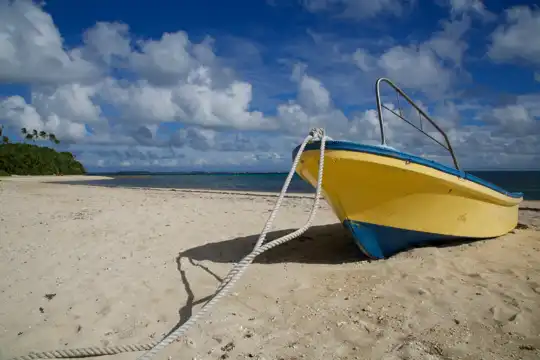
.jpg) Hi, I’m Johan (Netherlands 🇳🇱), the creator of TakeYourBackpack. Over the past 3 decades, I’ve backpacked through 90+ countries across six continents, gaining extensive experience with independent travel, long-term trips, and overland routes.
Hi, I’m Johan (Netherlands 🇳🇱), the creator of TakeYourBackpack. Over the past 3 decades, I’ve backpacked through 90+ countries across six continents, gaining extensive experience with independent travel, long-term trips, and overland routes.