×

Tonga🇹🇴 | regionsPangaimotu IslandBig Mama’s bar, sand-floor beach, barge wreck, casuarina shade | things to do and best time to go

Explore Tongatapu IslandExplore Ha’apai

Backpacking in Pangaimotu Island
👌 Worth visitingregion ranked #5
By Johan Kruseman 🇳🇱 | Updated October 15, 2026

Pangaimotu gives you a South Pacific sandbar-and-reef day without the cost or logistics of a Ha’apai or Vava’u trip. It sits in the Tongatapu lagoon, just off the north coast of Nuku’alofa, in Tonga’s main island group. Expect powder sand under casuarina shade, water that shifts from milky turquoise to deep blue, and the smell of grilled fish drifting from the beach bar. Snorkeling over the reef edge is easy, and the wreck-strewn shallows near the island’s famous Big Mama’s hangout draw a steady, relaxed crowd. The trade-off is size: you finish exploring in minutes, and weekends bring boat loads of day-trippers. Boats run on a loose schedule, so you ask your guesthouse to call ahead, and then you go midweek for quiet. Bring cash, reef shoes and sunscreen, because shade is limited and the sun is fierce.

Discover everything you want to know in the 📖 Tonga Travel Guide.


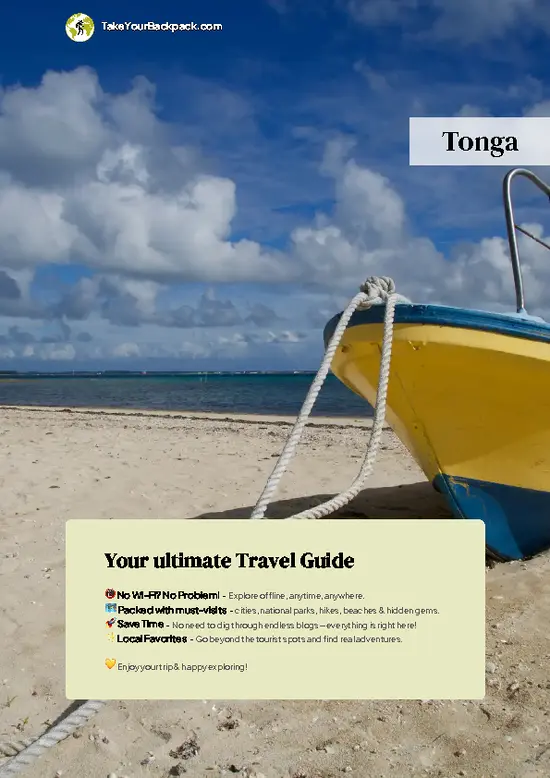
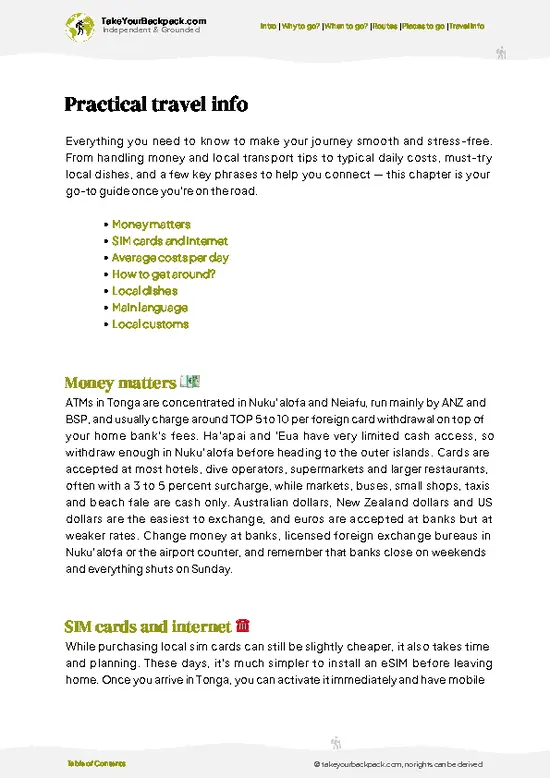
example page 0 from our offline Travel Guide for Tonga
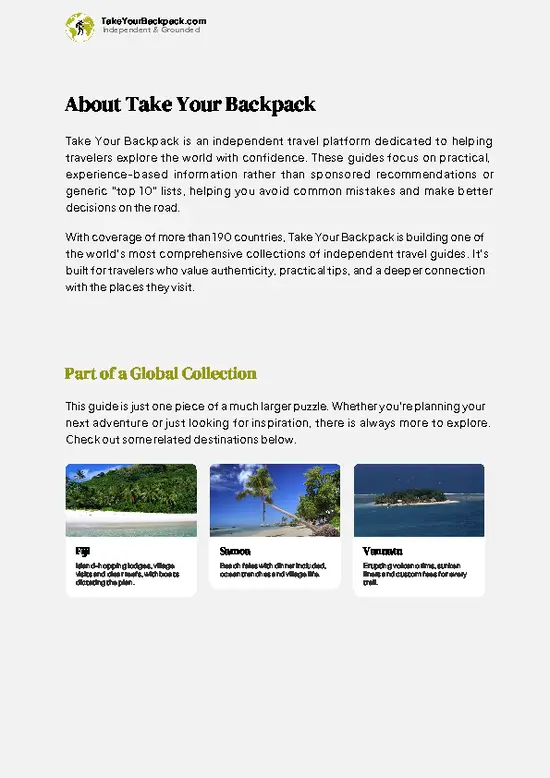
example page 1 from our offline Travel Guide for Tonga
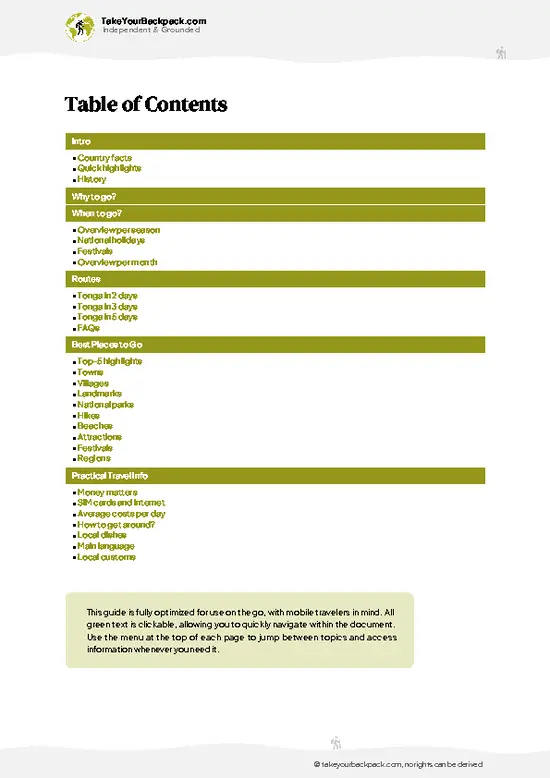
example page 2 from our offline Travel Guide for Tonga
example page 3 from our offline Travel Guide for Tonga
example page 4 from our offline Travel Guide for Tonga
example page 5 from our offline Travel Guide for Tonga
example page 6 from our offline Travel Guide for Tonga
example page 7 from our offline Travel Guide for Tonga
Loading the map 🌍
CLICK TO FILTER
towns
villages
landmarks
national parks
hikes
beaches
attractions
festivals
regions
SHOW COUNTRY’S BESTSHOW ALL

✨ Why go?
Ranked #5 region in Tonga
The unique appeal for travelers

Backpackers come for the contrast with the capital. In about ten minutes by small boat you trade Nuku’alofa’s traffic and tin roofs for a beach where the loudest sound is a ukulele. The island works as a reset day between Tongatapu’s sightseeing circuit of blowholes, tombs and markets, and it costs little compared with outer-island flights.

The swimming is the real draw. Reef snorkeling right off the beach means you see parrotfish and clams without a tour, and the shallow lagoon suits first-timers who dislike deep water. Weather can cancel boats, so the flexibility of choosing a day suits slow travel.

There is also a social side. The beach bar and its long tables are where travelers, yachties and local families end up sharing food, which makes it easy to find companions for the next leg onward to Ha’apai or Vava’u.

💡 HighlightsEssential experiences to have while visiting Pangaimotu Island

  1. Big Mama’s Yacht Club beach bar: the island’s best-known stop, with a sand-floor bar, fresh fish plates and a social mix of sailors and backpackers.
  2. Reef snorkeling off the north shore: coral heads and schools of small fish sit a short swim from the sand, with calm water in the morning.
  3. Wreck of the Pangaimotu lagoon barge: a rusting hull in the shallows, popular for snorkeling around and photographing at low tide.
  4. Sunset from the west beach: the light turns the lagoon copper and Nuku’alofa’s skyline shrinks to a thin line.
  5. Casuarina shade strip: a quiet row of trees on the island’s interior where locals nap through midday heat, and most day-trippers never walk there.
  6. Sandbar walk at low tide: exposed flats show sea cucumbers, hermit crabs and shells, best done with reef shoes.
  7. Kayak or paddleboard
… read more 👉
  1. Big Mama’s Yacht Club beach bar: the island’s best-known stop, with a sand-floor bar, fresh fish plates and a social mix of sailors and backpackers.
  2. Reef snorkeling off the north shore: coral heads and schools of small fish sit a short swim from the sand, with calm water in the morning.
  3. Wreck of the Pangaimotu lagoon barge: a rusting hull in the shallows, popular for snorkeling around and photographing at low tide.
  4. Sunset from the west beach: the light turns the lagoon copper and Nuku’alofa’s skyline shrinks to a thin line.
  5. Casuarina shade strip: a quiet row of trees on the island’s interior where locals nap through midday heat, and most day-trippers never walk there.
  6. Sandbar walk at low tide: exposed flats show sea cucumbers, hermit crabs and shells, best done with reef shoes.
  7. Kayak or paddleboard loop: a slow paddle around the island shows the less-visited eastern side in under an hour.
  8. Boat ride from the Nuku’alofa wharf: the short crossing itself is part of the day, passing anchored yachts and fishing boats.
  9. Evening yacht watching: sailing crews gather at dusk, a good way to ask about passage to the northern groups.
  10. Quiet southern shoreline: a thin, empty beach where locals picnic on weekdays, away from the bar.
Start with the snorkeling in the morning, while the water is clear and the day-trippers have not yet arrived.
Spotted a mistake or missing something? Contact us.

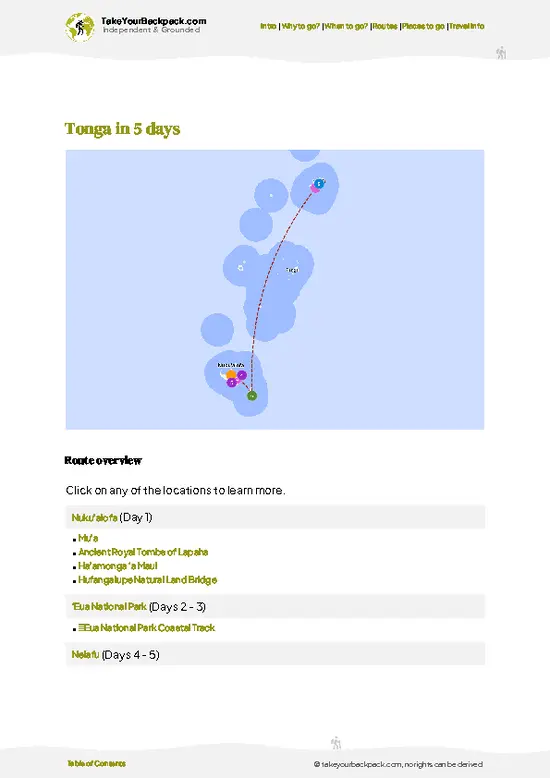
⌛️ 5 daysA smart one-week plan

Start at the Nuku’alofa wharf early, because morning boats are calmer and the beach is empty before the weekend crowd lands. Boats here run on demand and weather, so the pace is set by the water, not a timetable.

Day 1: Nuku’alofa: Use the first day for the market, the royal palace exterior and booking your boat. Sorting the crossing in person avoids a no-show later.

Day 2: Pangaimotu Island: Cross in the morning, snorkel first, then eat at the beach bar and stay for sunset. Pace is slow by design, and a full day here beats a quick lunch stop.

Day 3: Tongatapu: Return to the mainland and go by taxi or rental car to the blowholes at Houma and the Ha’amonga ‘a Maui trilithon. A flat island makes loops easy.

Day 4: Detour to ‘Eua: A short flight or ferry reaches ‘Eua, with cliffs, caves and … read more 👉
Start at the Nuku’alofa wharf early, because morning boats are calmer and the beach is empty before the weekend crowd lands. Boats here run on demand and weather, so the pace is set by the water, not a timetable.

Day 1: Nuku’alofa: Use the first day for the market, the royal palace exterior and booking your boat. Sorting the crossing in person avoids a no-show later.

Day 2: Pangaimotu Island: Cross in the morning, snorkel first, then eat at the beach bar and stay for sunset. Pace is slow by design, and a full day here beats a quick lunch stop.

Day 3: Tongatapu: Return to the mainland and go by taxi or rental car to the blowholes at Houma and the Ha’amonga ‘a Maui trilithon. A flat island makes loops easy.

Day 4: Detour to ‘Eua: A short flight or ferry reaches ‘Eua, with cliffs, caves and forest hiking. It adds drama without breaking the loop if you return the next day.

Day 5: Pangaimotu Island: Come back for a lazy final swim before departing. If you can only justify one day of the trip, make it Day 2, when reef, light and food line up.

🌤️ When to go?When to go for the best experience

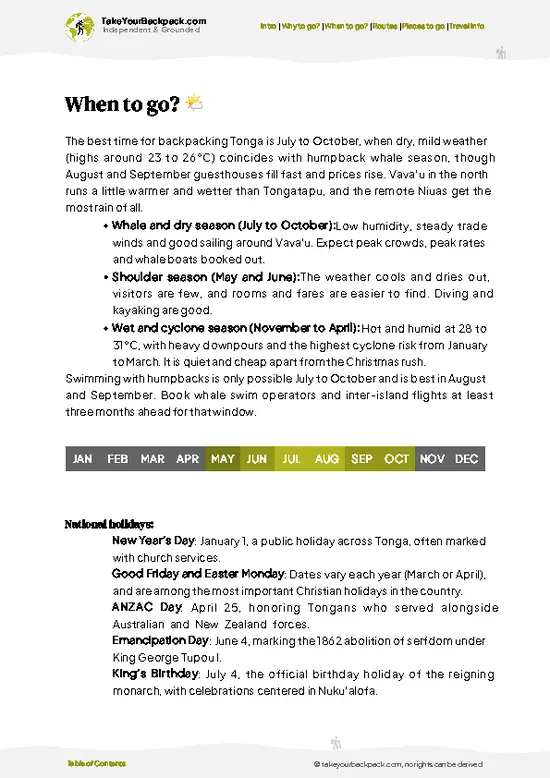
May to October is the best window for Pangaimotu, with dry air, light breezes and calm water for the short boat hop from Nuku’alofa.
  • Dry Season (May to October): Days run 24 to 27°C (75 to 81°F), nights dip to about 17 to 20°C (63 to 68°F), and humidity drops. Sunrise is around 6:00 to 7:20 and sunset about 6:05 to 6:50. Snorkeling visibility is at its best, and humpback whales pass between July and October, so boat transfers fill up and prices for nearby rooms rise.
  • Wet Season (November to April): Expect 27 to 31°C (81 to 88°F), heavy showers, sticky nights and a cyclone risk, mostly January to March. Daylight stretches to about 7:30 pm. Crowds thin out, accommodation is cheaper, but boats can cancel when the wind and swell pick up.
  • Shoulder Months (April, November): Warm water, fewer visitors
… read more 👉
May to October is the best window for Pangaimotu, with dry air, light breezes and calm water for the short boat hop from Nuku’alofa.
  • Dry Season (May to October): Days run 24 to 27°C (75 to 81°F), nights dip to about 17 to 20°C (63 to 68°F), and humidity drops. Sunrise is around 6:00 to 7:20 and sunset about 6:05 to 6:50. Snorkeling visibility is at its best, and humpback whales pass between July and October, so boat transfers fill up and prices for nearby rooms rise.
  • Wet Season (November to April): Expect 27 to 31°C (81 to 88°F), heavy showers, sticky nights and a cyclone risk, mostly January to March. Daylight stretches to about 7:30 pm. Crowds thin out, accommodation is cheaper, but boats can cancel when the wind and swell pick up.
  • Shoulder Months (April, November): Warm water, fewer visitors and mostly workable weather, with the odd squall.
For a whale encounter plus a beach day, book the island trip for a weekday morning, when the lagoon is calmest and the sand is quiet.


source: climatestotravel.comJANJanuary: below average for travelingFEBFebruary: below average for travelingMARMarch: below average for travelingAPRApril: fair for travelingMAYMay: excellent for travelingJUNJune: highly recommended for travelingJULJuly: highly recommended for travelingAUGAugust: highly recommended for travelingSEPSeptember: excellent for travelingOCTOctober: excellent for travelingNOVNovember: fair for travelingDECDecember: fair for traveling
when-to-go

✈️ The backpacker research shortcutTonga Travel Guide

An offline-friendly backpacking guide with optimized travel routes, ranked highlights, transport advice, and the best areas to stay.
example page 0 from our offline Travel Guide for Tonga
example page 1 from our offline Travel Guide for Tonga
example page 2 from our offline Travel Guide for Tonga
example page 3 from our offline Travel Guide for Tonga
example page 4 from our offline Travel Guide for Tonga
example page 5 from our offline Travel Guide for Tonga
example page 6 from our offline Travel Guide for Tonga
example page 7 from our offline Travel Guide for Tonga
The digital guide (128 pages) contains:
✅ 31 highlights, ranked by travel appeal
✅ Optimized 2, 3 & 5-day travel routes
✅ Cities, national parks, landmarks, beaches
✅ How to get around
✅ Offline-friendly for travel without Wi-Fi
👉 Click to see all 30+ guide features

📅 Plan smarter in minutes, not weeks
✅ Month by month travel advice
✅ Festivals & national holidays
✅ Budget expectations

🗺️ Go to the right places, skip the overrated ones
✅ Honest pros & cons of destinations
✅ Top hikes, parks & viewpoints
✅ Lesser-known places most travelers miss
✅ Clear “worth it vs skip it” guidance

🛏️ Travel smoothly without rookie mistakes
✅ Best areas to stay
✅ Transport systems explained simply
✅ Common scams & safety advice
✅ SIM cards, money & practical tips

🌍 Understand the country, not just visit it
✅ Culture & traditions
✅ 52 Essential phrases & customs
✅ Festivals worth planning around
✅ Traveler-friendly historical context
✅ Insights that make places more meaningful

📱 Built for real travel conditions
✅ Fully downloadable PDF
✅ Works completely offline
✅ Optimized for phone use
✅ Useful in remote areas & buses
✅ Everything in one place
Stop searching, start planning
Get instant access to your full guide. 30‑day money-back guarantee.
+ Add another guide for just

By proceeding you agree to our terms.
Sent to your inbox immediately after payment • 100% Secure Checkout
Best Backpacking Travel Advisor 2025 tourism awardBest Backpacking
Travel Advisor
2025
What others say about Take Your Backpack Guides:
⭐⭐⭐⭐⭐
Fantastic, amazing amount of information!
⭐⭐⭐⭐⭐
My goodness this is amazing, it's what I've been looking for hats off too you!
⭐⭐⭐⭐⭐
I think this is absolutely BRILLIANT
⭐⭐⭐⭐
Very complete and informative. It's still missing places, but I gotta to commend you
⭐⭐⭐⭐⭐
This is truly amazing, thank you, can't wait to explore it with my kids!
⭐⭐⭐⭐⭐
Awesome resource, thank you!
⭐⭐⭐⭐⭐
This is amazing! Can't wait to explore the ones I haven't seen
⭐⭐⭐⭐
I love this! Well done, great idea.
⭐⭐⭐⭐⭐
Thanks for taking the time to make this gem!
⭐⭐⭐⭐⭐
This might be the best website I've ever seen.
⭐⭐⭐⭐⭐
Congratulations, and thank you so much for your work; it's incredibly valuable.
⭐⭐⭐⭐
In all seriousness I think you did a great job pointing out the important spots
⭐⭐⭐⭐⭐
10/10 very good
⭐⭐⭐⭐⭐
As someone who's only just starting to visit regularly this is awesome, thank you.
⭐⭐⭐⭐
Thank you very much! I'm going to visit my dad, it's going to be very useful!
⭐⭐⭐⭐⭐
This is really cool! We'll be travelling for the first time and this definitely come in handy.
⭐⭐⭐⭐⭐
You are now our minister of culture, congratulations 👨‍💼
⭐⭐⭐⭐⭐
Just wanted to tell you that this is a pearl! Going to follow your recommendations.
⭐⭐⭐⭐⭐
This is so cool. I'll definitely be using the resource for my travels soon.
⭐⭐⭐⭐⭐
This is very impressive! Good work.
⭐⭐⭐⭐⭐
This is an amazing and informative site. Very well done!

🛏️ Where to stay?Best areas and accommodation options

Stay on Pangaimotu itself if you want a barefoot, hammock-and-lagoon night, and base the rest of your trip in Nuku’alofa. The island has only a small handful of simple beach fales and rooms, so accommodation is limited and quiet, with no nightlife beyond a sunset drink and the sound of lapping water. Expect to pay roughly T$80 to 200 (US$33 to 84) a night for basic island options, and bring cash and snacks.
Nuku’alofa on Tongatapu is where most backpackers sleep, because it has the guesthouses, supermarkets, ATMs and bars you will not find on the island. The waterfront and central streets around … read more 👉
Stay on Pangaimotu itself if you want a barefoot, hammock-and-lagoon night, and base the rest of your trip in Nuku’alofa. The island has only a small handful of simple beach fales and rooms, so accommodation is limited and quiet, with no nightlife beyond a sunset drink and the sound of lapping water. Expect to pay roughly T$80 to 200 (US$33 to 84) a night for basic island options, and bring cash and snacks.
Nuku’alofa on Tongatapu is where most backpackers sleep, because it has the guesthouses, supermarkets, ATMs and bars you will not find on the island. The waterfront and central streets around Vuna Road are flat, walkable and safe by day, with cheap dorms and private rooms from about T$40 to 100 (US$17 to 42). It is also where you meet other travelers over cheap fish and a cold Ikale beer.
If you want a calmer base, look at the lagoon-side villages east of town along the coast, where family-run places keep rates low. Most travelers do one island night for the stars and a lazy morning snorkel, then return to the capital for the buses, markets and onward flights.

🚌 Getting aroundMoving around without the hassle

The island is tiny, about a ten-minute stroll end to end, so you walk everywhere on it, barefoot on pale sand that squeaks underfoot, and walking stops making sense the moment you want to leave it. Everything here depends on water. The only way on or off is a small boat from Nuku’alofa’s waterfront, running a few kilometers across the lagoon, and it is reliable in calm weather but not in strong wind.
  • Island boat transfer: Boats from the Faua Jetty area take about 10 to 15 minutes and cost roughly T$20 to 40 (US$8 to 17) return. Operators run on demand and on set schedules because the island has no ferry service. Experienced travelers book a day ahead through their guesthouse or the island’s resort, and confirm the pickup time so they are not stranded at the last light.
  • Taxi to the jetty: Nuku’alofa
… read more 👉
The island is tiny, about a ten-minute stroll end to end, so you walk everywhere on it, barefoot on pale sand that squeaks underfoot, and walking stops making sense the moment you want to leave it. Everything here depends on water. The only way on or off is a small boat from Nuku’alofa’s waterfront, running a few kilometers across the lagoon, and it is reliable in calm weather but not in strong wind.
  • Island boat transfer: Boats from the Faua Jetty area take about 10 to 15 minutes and cost roughly T$20 to 40 (US$8 to 17) return. Operators run on demand and on set schedules because the island has no ferry service. Experienced travelers book a day ahead through their guesthouse or the island’s resort, and confirm the pickup time so they are not stranded at the last light.
  • Taxi to the jetty: Nuku’alofa taxis are unmetered and cost around T$5 to 10 (US$2 to 4) within town. Agree the fare before you get in. Most people skip this and walk the flat 10 to 20 minutes along the waterfront, with diesel fumes, roosters and frangipani drifting past.
  • Day-trip and whale-watching boats: Many tours stop here for snorkeling and lunch, often T$100 to 200 (US$42 to 84) per person. They are pricier than a plain transfer, but tours include gear, and you step off at the wreck-dotted shallows with a guide rather than guessing at currents.
  • Kayak or paddleboard: Some paddlers cross from nearby Nuku’alofa beaches in calm conditions, but the channel has boat traffic and shifting tides. Locals advise leaving this to guided trips and hiring a boat instead.
Roll your phone, cash and sunscreen into a dry bag, because transfers are open boats with salt spray on every crossing. Carry small bills for the boatman, since change is rarely on hand, and leave the island early on windy afternoons, when the crossing turns rough and the last boat is the one you do not want to miss.

🍲 FoodEating & Drinking in Pangaimotu Island

Eat fresh fish and ‘ota ‘ika, raw fish cured in lime and finished with coconut milk, which tastes bright, cool and slightly sweet. Island kitchens also grill reef fish with garlic, and a plate often comes with taro or cassava that is dense, earthy and filling.
Pangaimotu itself has very few places to eat, mostly a beachside bar-restaurant where lunch costs about T$25 to 50 (US$10 to 21). Smoke from the grill, the clink of ice and a breeze off the lagoon set the scene. In Nuku’alofa, the Talamahu Market is the better value, with fruit, baked buns, lu pulu and cheap plates of chicken and root vegetables for T$8 to 15 (US$3 to 6). Bakeries open early and sell warm coconut buns.
Drink fresh coconut straight from the husk, and try kava, a muddy, numbing brew served in coconut cups at social evenings. … read more 👉
Eat fresh fish and ‘ota ‘ika, raw fish cured in lime and finished with coconut milk, which tastes bright, cool and slightly sweet. Island kitchens also grill reef fish with garlic, and a plate often comes with taro or cassava that is dense, earthy and filling.
Pangaimotu itself has very few places to eat, mostly a beachside bar-restaurant where lunch costs about T$25 to 50 (US$10 to 21). Smoke from the grill, the clink of ice and a breeze off the lagoon set the scene. In Nuku’alofa, the Talamahu Market is the better value, with fruit, baked buns, lu pulu and cheap plates of chicken and root vegetables for T$8 to 15 (US$3 to 6). Bakeries open early and sell warm coconut buns.
Drink fresh coconut straight from the husk, and try kava, a muddy, numbing brew served in coconut cups at social evenings. Clap once when you receive your cup, drink it in one go, and clap again. Sunday is a rest day, so many Nuku’alofa shops close, and you should stock up on snacks and water before heading to the island.

FAQTraveler FAQ

One full day is enough for Pangaimotu, and an overnight stay stretches it into a proper slow escape. The island sits about 3 km (2 miles) off Nuku’alofa, and the boat crossing takes roughly 10 to 15 minutes. Most visitors spend a day on the beach, snorkel the shallows, and eat lunch at the beach bar. Staying overnight in a simple beach bungalow lets you catch sunset and a quiet morning swim before day boats arrive.
Boats are the only way, and they run from the Nuku’alofa waterfront, so no car is involved at any point. Resort and bar boats usually leave from the Faua Jetty area in the morning and return in the late afternoon, with a return fare of roughly T$30 to 50 (US$13 to 22), and you should book the day before. Once on the island, you walk everything in about 10 minutes end to end, and the beach is the main thoroughfare. Water taxis from Nuku’alofa can be hired privately if you miss the scheduled sailing, though that costs noticeably more.
Pangaimotu is known for its sandy beach, clear shallow lagoon, and the Pangaimotu Island Resort’s famous floating-style beach bar culture, with a quirky shipwreck just offshore. The wreck, a small rusted hull in around 2 to 4 meters (7 to 13 feet) of water, is an easy snorkel straight from the sand, and the reef fish around it are plentiful. Between July and October, humpback whales pass through Tongan waters, and whale-watching trips from Nuku’alofa often touch the area. It is the standard Sunday escape from the capital, since most of Tonga shuts down for the Sabbath, so check boat times for that day.
⚠️ Things can change over time, so always validate details locally before you go.

Other Tongan regions near Pangaimotu Island

Explore more nearby:

  • Tongatapu Island—Coral blowholes, stone trilithon, royal langi tombs, Talamahu market| 1 km away
  • Uoleva Island—Beach fale stays, no roads, lantern dinners, humpback season| 162 km away
  • Lifuka—Pangai wharf, Taufa’ahau Road, church choirs, Hihifo reef edge| 169 km away

💡 Not sure where to go next?
Create a personalized itinerary for Tonga including Pangaimotu Island and the places that fit your trip.

Generate my itinerary

👉 Discover all regions

Or checkout all Tonga has to offer (think cities, towns, villages, national parks, hikes, beaches, festivals)
Country photo of Tonga

We 💚 feedbackParting advice and final tips

Pair Pangaimotu with a day of Tongatapu’s south coast and a night in Nuku’alofa before flying north. It works best as a pause, not a destination. I’d go on a weekday, bring cash and reef shoes, and skip the midday heat by swimming early.

✍️ Help improve this page!
The information on this page is based on in-depth research, insights shared by experienced travelers, and feedback from the local travel community in Tonga. While every effort is made to keep the information accurate and current, conditions can change — so if you spot anything incorrect or outdated, please get in touch.


🙋‍♂️ Give feedback

👋 Meet the founderWho’s Behind Take Your Backpack?

Johan, backpacker and founder of TakeYourBackpackHi, I’m Johan (Netherlands 🇳🇱), the creator of TakeYourBackpack. Over the past 3 decades, I’ve backpacked through 90+ countries across six continents, gaining extensive experience with independent travel, long-term trips, and overland routes.

This site is built on a combination of firsthand travel experience and carefully curated insights from other backpackers. Many guides are based on places I’ve personally visited, while others bring together tips, observations, and practical advice shared by trusted travelers I’ve met along the way.

The goal is to provide realistic, experience-driven guidance — not generic itineraries — so you can explore destinations with better context, clearer expectations, and more confidence.