


×

Tonga🇹🇴 | villagesHa‘avakatolocoastal lagoon, fishing canoes, local handicrafts | things to do and best time to go

Explore PangaiExplore Falevai

Backpacking in Ha‘avakatolo
👌 Worth visitingvillage ranked #4
By Johan Kruseman 🇳🇱 | Updated September 4, 2026

Everyone talks about Ha‘avakatolo as “that blowholes side-trip,” like it’s just a dot you pass on the way to the big spray shows on Tongatapu’s coast. The real reason it matters to you, though, is quieter: this is where Tonga starts to feel like a lived-in island instead of a resort brochure, and that shift changes how you move, spend, and connect.

Ha‘avakatolo sits on the main island of Tongatapu, west of Nuku‘alofa, close enough to the capital for an easy bus or shared-taxi ride, but far enough that evenings drop into village-dark, with dogs barking and smoke from cooking fires in the air. As a destination, it’s more “basecamp village” than “must-see town”: simple shops, church life, kids on the roadside, and access to the coastal road that links blowholes, rugged shoreline, and scattered beaches. You walk some stretches, hitch or flag minibuses for others, and you learn quickly that timing your movements around church days and school hours matters more than any timetable.

For backpackers, it works best as a low-cost, low-noise base for exploring Tongatapu’s southwest coast, not as a place to “stay put and be entertained.” There’s little in the way of classic hostel culture or nightlife; you’re more likely to share a beer on a guesthouse porch than bar-hop, and meeting other travelers depends on who else happens to be staying that week. Compared with Nuku‘alofa, Ha‘avakatolo feels cheaper, slower, and more conservative, but also more intimate: fewer cafés, more family compounds; fewer menus, more set plates of root crops and fish if you arrange meals in advance. Safety is mostly about common sense and respecting village norms—modest dress, quiet Sundays, ask before wandering through what looks like private land. If you want convenience and options, base in Nuku‘alofa. If you want to feel the rhythm of Tongatapu’s countryside and are willing to work a bit harder on logistics, Ha‘avakatolo earns its place on the route.

Discover everything you want to know in the 📖 Tonga Travel Guide.


Get your Tonga guide
34 ranked highlights, routes & tips, works offline (153 pages)
Loading the map 🌍
CLICK TO FILTER
towns
villages
landmarks
national parks
hikes
beaches
attractions
festivals
regions
SHOW COUNTRY’S BESTSHOW ALL

✨ Why go?
Ranked #4 village in Tonga
The unique appeal for travelers

In the heart of Ha‘avakatolo, backpackers find a sweet spot that balances convenience and charm. This town serves as a gateway to stunning hikes and pristine beaches, making it ideal for those who crave adventure without the hassle of long transfers. The local guesthouses and small-scale hostels offer a cozy atmosphere, where you can swap stories over a shared meal or a cup of strong coffee. The streets are walkable, inviting you to explore at your own pace, whether you’re heading to a nearby cultural site or just soaking in the laid-back vibe.

Most travelers tend to linger a few days, soaking up the friendly social atmosphere that encourages connections among solo travelers and small groups alike. You’ll find that the pace here allows for both quiet reflection and lively conversation, making … read more 👉
In the heart of Ha‘avakatolo, backpackers find a sweet spot that balances convenience and charm. This town serves as a gateway to stunning hikes and pristine beaches, making it ideal for those who crave adventure without the hassle of long transfers. The local guesthouses and small-scale hostels offer a cozy atmosphere, where you can swap stories over a shared meal or a cup of strong coffee. The streets are walkable, inviting you to explore at your own pace, whether you’re heading to a nearby cultural site or just soaking in the laid-back vibe.

Most travelers tend to linger a few days, soaking up the friendly social atmosphere that encourages connections among solo travelers and small groups alike. You’ll find that the pace here allows for both quiet reflection and lively conversation, making it a perfect stop for slow travelers who appreciate the journey as much as the destination. If you’re looking for a place that feels like home while still offering a taste of Tongan life, Ha‘avakatolo is where you want to be.
Want to include Ha‘avakatolo in your Tonga route?
Create a personalized Tonga itinerary that includes Ha‘avakatolo and the places that fit your trip — based on your travel style, budget, and available time. Get your route in seconds.

Generate my trip

💡 HighlightsKey sights and experiences for travelers

  • Ha‘avakatolo Village Church — The spiritual and social heart of the village: an imposing Tongan church building where Sunday services shape daily rhythms, the choir sings, and visitors get a direct look at local dress, hymn traditions, and community hospitality.
  • The Malaʻe (Village Green) — Open communal ground used for chiefly ceremonies, funerals, kava gatherings and sports; this is where the village’s social life and history play out, and watching or respectfully taking part gives real insight into local customs and authority structures.
  • Coastal Shoreline & Reef Access — A walkable stretch of coastline right from the village offering tidepool exploration, snorkeling off the reef at low tide, and simple beach time; excellent for sunrise/sunset walks and seeing everyday fishing activity
read more 👉
  • Ha‘avakatolo Village Church — The spiritual and social heart of the village: an imposing Tongan church building where Sunday services shape daily rhythms, the choir sings, and visitors get a direct look at local dress, hymn traditions, and community hospitality.
  • The Malaʻe (Village Green) — Open communal ground used for chiefly ceremonies, funerals, kava gatherings and sports; this is where the village’s social life and history play out, and watching or respectfully taking part gives real insight into local customs and authority structures.
  • Coastal Shoreline & Reef Access — A walkable stretch of coastline right from the village offering tidepool exploration, snorkeling off the reef at low tide, and simple beach time; excellent for sunrise/sunset walks and seeing everyday fishing activity up close.
  • Community Kava Circle / Fale Gathering Spots — Everyday meeting places where kava and conversation bring people together; joining a session (with respect) gives an authentic cultural exchange—stories, song, protocol and friendly banter you won’t get from a guidebook.
A few real, visitable highlights just outside Ha‘avakatolo that make perfect day trips are the Mapu‘a ‘a Vaea blowholes, the surf and snorkel breaks at Haʻatafu Beach, and the markets and waterfront sights of Nukuʻalofa.
Spotted a mistake or missing something? Contact us.

⌛️ 1 dayWhat you can realistically do in a day

Ha‘avakatolo, a charming town in Tonga, offers a slice of local life that feels both authentic and inviting. The air is thick with the scent of salt and frangipani, and the gentle hum of island life sets a relaxed pace. You’ll find friendly locals, vibrant markets, and stunning coastal views that make this place special.

Start your morning at the local market, where the colors of fresh produce pop against the sun-drenched stalls. Grab a coconut to sip on while you wander. The market isn’t just about food; it’s a hub of community life. Engage with vendors who share stories about their crafts and produce. This isn’t just shopping; it’s connecting with the heart of Ha‘avakatolo.

Afterward, take a leisurely stroll to the nearby beach. The soft sand beneath your feet and the sound of waves crashing … read more 👉
Ha‘avakatolo, a charming town in Tonga, offers a slice of local life that feels both authentic and inviting. The air is thick with the scent of salt and frangipani, and the gentle hum of island life sets a relaxed pace. You’ll find friendly locals, vibrant markets, and stunning coastal views that make this place special.

Start your morning at the local market, where the colors of fresh produce pop against the sun-drenched stalls. Grab a coconut to sip on while you wander. The market isn’t just about food; it’s a hub of community life. Engage with vendors who share stories about their crafts and produce. This isn’t just shopping; it’s connecting with the heart of Ha‘avakatolo.

Afterward, take a leisurely stroll to the nearby beach. The soft sand beneath your feet and the sound of waves crashing create a perfect backdrop for reflection. If you’re feeling adventurous, rent a kayak and paddle out to explore the nearby reefs. The underwater world here is vibrant, teeming with fish that dart between coral formations.

As the sun begins to dip, head toward the less-traveled neighborhood of Fanga‘uta. Here, you’ll find a local eatery where the aroma of grilled fish fills the air. Enjoy a plate of ika mata, a traditional dish that captures the essence of Tongan cuisine. The flavors are fresh and bright, a true taste of the island.

As night falls, find a spot along the coast to watch the sunset. The sky transforms into a canvas of oranges and purples, a fitting end to a day filled with discovery. In Ha‘avakatolo, every moment is a reminder that the journey is as rewarding as the destination.
Turn your Ha‘avakatolo visit into an Tonga adventure
Build a complete Tonga route with Ha‘avakatolo, hidden gems, must-see destinations, and realistic travel times included.

Generate my trip

🌤️ When to go?Best time to visit Ha‘avakatolo


  • Weather: Ha‘avakatolo basks in a tropical climate, with a wet season from November to April bringing heavy rains and humidity. The dry season, May to October, offers clearer skies and less stickiness, making trekking and beach days far more enjoyable.

  • Temperature: Expect highs around 28-31°C (82-88°F) in the dry months, dropping slightly to 24-27°C (75-81°F) during the wet season. Nights stay warm year-round, rarely dipping below 20°C (68°F), so pack light layers for comfort.

  • Daylight Hours: Near the equator, daylight stays steady—about 11 to 12 hours daily. This consistency means you can plan hikes or village visits without worrying about early sunsets cutting your day short.

  • Crowds: Tourist numbers swell during the dry season, especially July and August, when international travelers
read more 👉

  • Weather: Ha‘avakatolo basks in a tropical climate, with a wet season from November to April bringing heavy rains and humidity. The dry season, May to October, offers clearer skies and less stickiness, making trekking and beach days far more enjoyable.

  • Temperature: Expect highs around 28-31°C (82-88°F) in the dry months, dropping slightly to 24-27°C (75-81°F) during the wet season. Nights stay warm year-round, rarely dipping below 20°C (68°F), so pack light layers for comfort.

  • Daylight Hours: Near the equator, daylight stays steady—about 11 to 12 hours daily. This consistency means you can plan hikes or village visits without worrying about early sunsets cutting your day short.

  • Crowds: Tourist numbers swell during the dry season, especially July and August, when international travelers escape northern winters. Visiting shoulder months like May or September offers a quieter vibe without sacrificing good weather.

  • Seasonal Activities: The dry season aligns with cultural festivals and whale-watching opportunities, adding layers to your experience. The wet season’s lush greenery is tempting but can limit outdoor plans with sudden downpours.

  • Price Fluctuations: Accommodation and transport costs spike during peak dry months. Booking in shoulder seasons can save money and still deliver solid weather, letting you stretch your budget further.


Pro-tip: Aim for late May or early September to catch the sweet spot—pleasant weather, fewer crowds, and better deals—so your Ha‘avakatolo adventure feels like a well-earned reward, not a scramble.


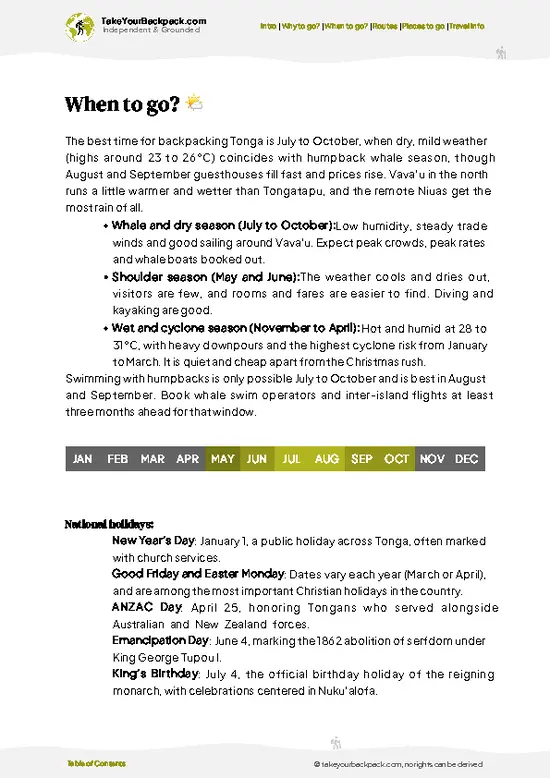
source: climatestotravel.comJANJanuary: fair for travelingFEBFebruary: fair for travelingMARMarch: fair for travelingAPRApril: fair for travelingMAYMay: highly recommended for travelingJUNJune: excellent for travelingJULJuly: excellent for travelingAUGAugust: excellent for travelingSEPSeptember: highly recommended for travelingOCTOctober: excellent for travelingNOVNovember: fair for travelingDECDecember: fair for traveling
when-to-go

✈️ The backpacker research shortcutTonga Travel Guide

An offline-friendly backpacking guide with optimized travel routes, ranked highlights, transport advice, and the best areas to stay.
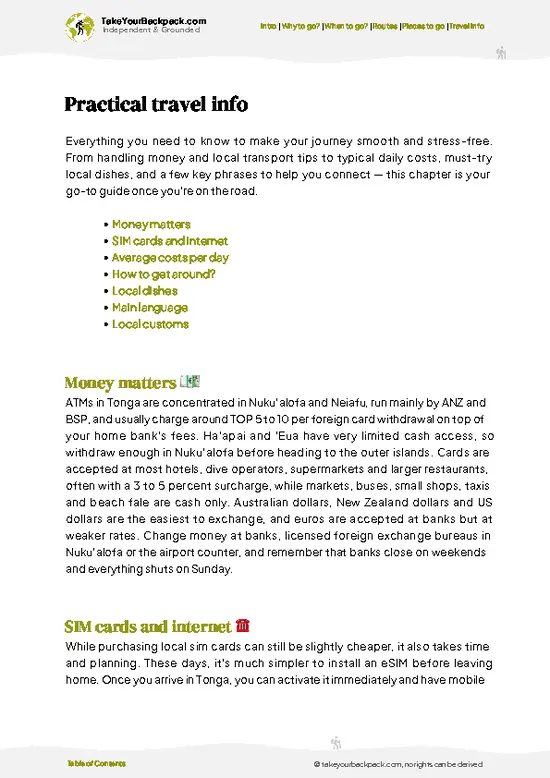
example page 0 from our offline Travel Guide for Tonga
example page 1 from our offline Travel Guide for Tonga
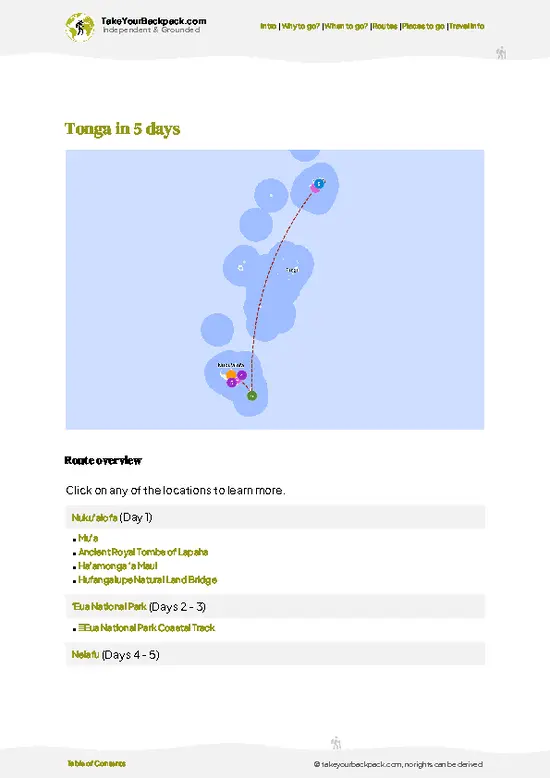
example page 2 from our offline Travel Guide for Tonga
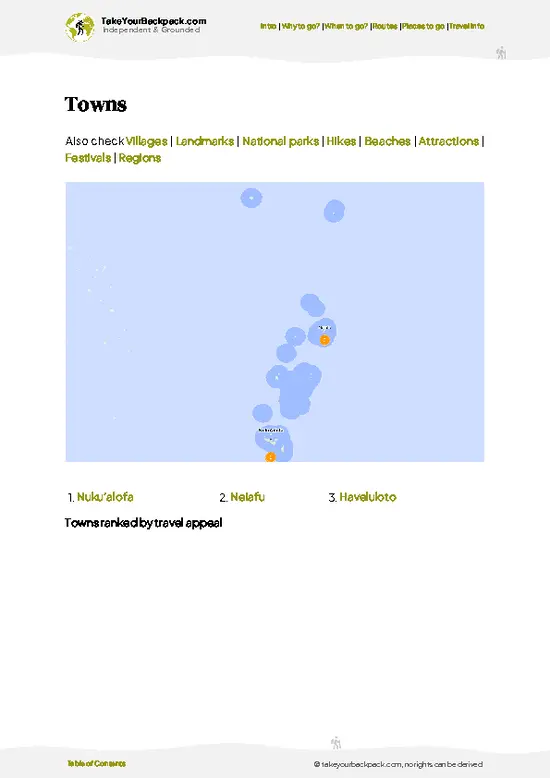
example page 3 from our offline Travel Guide for Tonga
example page 4 from our offline Travel Guide for Tonga
example page 5 from our offline Travel Guide for Tonga
example page 6 from our offline Travel Guide for Tonga
example page 7 from our offline Travel Guide for Tonga
The digital guide (153 pages) contains:
34 highlights, ranked by travel appeal
Optimized 2, 3 & 5-day travel routes
Cities, national parks, landmarks, beaches
How to get around
Offline-friendly for travel without Wi-Fi
👉 Click to see all 30+ guide features

📅 Plan smarter in minutes, not weeks
Month by month travel advice
Festivals & national holidays
Budget expectations

🗺️ Go to the right places, skip the overrated ones
Honest pros & cons of destinations
Top hikes, parks & viewpoints
Lesser-known places most travelers miss
Clear “worth it vs skip it” guidance

🛏️ Travel smoothly without rookie mistakes
Best areas to stay
Transport systems explained simply
Common scams & safety advice
SIM cards, money & practical tips

🌍 Understand the country, not just visit it
Culture & traditions
52 Essential phrases & customs
Festivals worth planning around
Traveler-friendly historical context
Insights that make places more meaningful

📱 Built for real travel conditions
Fully downloadable PDF
Works completely offline
Optimized for phone use
Useful in remote areas & buses
Everything in one place
Save weeks of stressful planning
Get instant access to your full guide. 30‑day money-back guarantee.
+ Add another guide for just US$7.80

By proceeding you agree to our terms.
Sent to your inbox immediately after payment • 100% Secure Checkout
Best Backpacking Travel Advisor 2025 tourism awardBest Backpacking
Travel Advisor
2025
What others say about Take Your Backpack Guides:
⭐⭐⭐⭐⭐
Fantastic, amazing amount of information!
⭐⭐⭐⭐⭐
My goodness this is amazing, it's what I've been looking for hats off too you!
⭐⭐⭐⭐⭐
I think this is absolutely BRILLIANT
⭐⭐⭐⭐
Very complete and informative. It's still missing places, but I gotta to commend you
⭐⭐⭐⭐⭐
This is truly amazing, thank you, can't wait to explore it with my kids!
⭐⭐⭐⭐⭐
Awesome resource, thank you!
⭐⭐⭐⭐⭐
This is amazing! Can't wait to explore the ones I haven't seen
⭐⭐⭐⭐
I love this! Well done, great idea.
⭐⭐⭐⭐⭐
Thanks for taking the time to make this gem!
⭐⭐⭐⭐⭐
This might be the best website I've ever seen.
⭐⭐⭐⭐⭐
Congratulations, and thank you so much for your work; it's incredibly valuable.
⭐⭐⭐⭐
In all seriousness I think you did a great job pointing out the important spots
⭐⭐⭐⭐⭐
10/10 very good
⭐⭐⭐⭐⭐
As someone who's only just starting to visit regularly this is awesome, thank you.
⭐⭐⭐⭐
Thank you very much! I'm going to visit my dad, it's going to be very useful!
⭐⭐⭐⭐⭐
This is really cool! We'll be travelling for the first time and this definitely come in handy.
⭐⭐⭐⭐⭐
You are now our minister of culture, congratulations 👨‍💼
⭐⭐⭐⭐⭐
Just wanted to tell you that this is a pearl! Going to follow your recommendations.
⭐⭐⭐⭐⭐
This is so cool. I'll definitely be using the resource for my travels soon.
⭐⭐⭐⭐⭐
This is very impressive! Good work.
⭐⭐⭐⭐⭐
This is an amazing and informative site. Very well done!

🛏️ Where to stay?Where staying makes the most sense

Ha‘avakatolo’s charm for backpackers lies in its compact, approachable neighborhoods where the pulse of local life beats strongest. The best spot to drop your pack is the central coastal stretch—think of it as the town’s social spine. Here, the air carries a salty tang mixed with the faint aroma of grilled fish from nearby market stalls. This area hums with a laid-back energy, where you can easily strike up conversations with fellow travelers and locals alike, especially around communal spaces like small cafes and beachside benches.

Why this area? Safety and sociability go hand in hand here. … read more 👉
Ha‘avakatolo’s charm for backpackers lies in its compact, approachable neighborhoods where the pulse of local life beats strongest. The best spot to drop your pack is the central coastal stretch—think of it as the town’s social spine. Here, the air carries a salty tang mixed with the faint aroma of grilled fish from nearby market stalls. This area hums with a laid-back energy, where you can easily strike up conversations with fellow travelers and locals alike, especially around communal spaces like small cafes and beachside benches.

Why this area? Safety and sociability go hand in hand here. The streets are well-trodden by budget travelers, so you’re never far from a hostel or guesthouse that understands the needs of solo adventurers—think affordable dorms, shared kitchens, and a vibe that encourages swapping stories over a cold drink. Compared to the quieter, more residential outskirts, this neighborhood offers a richer, more immersive experience without the hassle of long commutes or feeling isolated.

Staying here means waking up to the soft crash of waves and the chance to explore the town’s heart on foot, making every step part of the adventure rather than a chore.

🚌 Getting aroundTransportation options and practical tips

Ha‘avakatolo moves at its own rhythm—neither frantic nor sluggish, but a steady pulse that matches the ocean breeze and the scent of salt and wood smoke drifting from local kitchens. The town’s flow is a blend of laid-back island time and the practical hustle of daily life, where schedules exist but bend easily to the whims of weather, tides, and the occasional impromptu market. You’ll find that patience here isn’t just a virtue; it’s the key to unlocking the town’s charm. The streets don’t hum with the constant roar of engines but with the shuffle of feet, the occasional honk, and the chatter of neighbors who know when to slow down and when to move fast.

Walking: The most authentic way to absorb Ha‘avakatolo’s character is on foot. The town is compact, with narrow lanes lined by weathered … read more 👉
Ha‘avakatolo moves at its own rhythm—neither frantic nor sluggish, but a steady pulse that matches the ocean breeze and the scent of salt and wood smoke drifting from local kitchens. The town’s flow is a blend of laid-back island time and the practical hustle of daily life, where schedules exist but bend easily to the whims of weather, tides, and the occasional impromptu market. You’ll find that patience here isn’t just a virtue; it’s the key to unlocking the town’s charm. The streets don’t hum with the constant roar of engines but with the shuffle of feet, the occasional honk, and the chatter of neighbors who know when to slow down and when to move fast.

Walking: The most authentic way to absorb Ha‘avakatolo’s character is on foot. The town is compact, with narrow lanes lined by weathered wooden houses and vibrant market stalls. Walking costs nothing, lets you catch the scent of fresh bread or the tang of sea salt, and gives you the freedom to pause at a roadside café or chat with locals. Expect to cover most key spots within 30-45 minutes on foot.

Local Minibus (Taxi-Brousse): These shared minibuses are the backbone of budget transit. They run roughly from 6:00 AM to 6:00 PM, with fares around $1–$2 depending on distance. They’re slow, often packed, and stop frequently, but they’re a direct line to nearby villages and the main bus station. The ride is a sensory overload—windows down, music blaring, and the smell of diesel mixed with tropical flowers.

Bicycle Rental: For about $5–$7 per day, renting a bike is a smart middle ground between walking and motorized transport. The terrain is mostly flat with occasional gentle hills, perfect for exploring beyond the town center. Early mornings and late afternoons offer the best light and cooler air, making the ride a pleasure rather than a chore.

Motorcycle Taxi (Pousse-Pousse): These are quick, nimble, and cost around $2–$4 for short hops within town. They’re ideal if you’re carrying gear or want to beat the midday heat. The drivers know every shortcut and can weave through traffic, but hold on tight—the ride is bumpy and the streets can be unpredictable.

Boat Taxi: If your plans include nearby coastal spots or islands, the boat taxis operate on a flexible schedule, usually from 7:00 AM to 5:00 PM. Prices vary by destination but expect $10–$15 for short trips. The ride offers a refreshing breeze and a different perspective on Ha‘avakatolo’s rugged shoreline, but it’s weather-dependent and less reliable than land options.

Mastering these options means you’re not just moving through Ha‘avakatolo—you’re syncing with its pulse, turning transit from a chore into part of the adventure.

👛 Costs (as of 4 September 2026)Typical daily expenses

Backpacking in Ha‘avakatolo, Tonga, means embracing a laid-back island vibe where costs stay modest but the experience feels rich. Here’s what you can expect to spend daily as an independent traveler navigating this small town.
  • Dorm Accommodation: Budget stays here are simple but clean, often in guesthouses or small hostels. Expect to pay around $10 to $20 USD per night. These places usually offer basic amenities—think a fan, shared bathroom, and a chance to meet fellow travelers without the tourist crowd.
  • Meals: Food costs are low if you stick to local fare. A typical meal from a roadside stall or small eatery runs about $2 to $5 USD. Fresh fish, root vegetables, and tropical fruits dominate menus, giving you a taste of authentic Tongan flavors without breaking the bank.
  • Local Transport:
read more 👉
Backpacking in Ha‘avakatolo, Tonga, means embracing a laid-back island vibe where costs stay modest but the experience feels rich. Here’s what you can expect to spend daily as an independent traveler navigating this small town.
  • Dorm Accommodation: Budget stays here are simple but clean, often in guesthouses or small hostels. Expect to pay around $10 to $20 USD per night. These places usually offer basic amenities—think a fan, shared bathroom, and a chance to meet fellow travelers without the tourist crowd.
  • Meals: Food costs are low if you stick to local fare. A typical meal from a roadside stall or small eatery runs about $2 to $5 USD. Fresh fish, root vegetables, and tropical fruits dominate menus, giving you a taste of authentic Tongan flavors without breaking the bank.
  • Local Transport: Getting around Ha‘avakatolo is straightforward but limited. Local buses or shared taxis cost roughly $1 to $3 USD per trip. Many travelers prefer renting a bicycle or walking, which is free and lets you soak in the salty sea air and island sounds.
  • Basic Activities/Entry Fees: Tonga’s natural beauty is mostly free to enjoy—beaches, hikes, and village visits don’t usually charge entry. If you want to visit cultural sites or join a guided tour, budget around $5 to $15 USD. These fees support local communities and enrich your experience with deeper context.
  • Miscellaneous Expenses: This covers essentials like bottled water, snacks, or occasional internet access. Plan for about $2 to $5 USD daily. Keep in mind that some items might be pricier due to Tonga’s remote location, so a little extra cash here smooths out surprises.

All told, a daily budget in Ha‘avakatolo typically falls between $20 and $45 USD. This range gives you enough flexibility to enjoy simple comforts, savor local flavors, and explore without feeling pinched. The modest costs reflect the town’s slow pace and genuine island charm, making every dollar feel well spent.


source: tongaholiday.com
⚠️ Prices can change and everyone travels differently, so take this as a rough guide. Hope it helps you plan your adventure!

🚌 Day tripsWhere to go beyond the main area

Ha‘avakatolo, Tonga, is a backpacker’s dream base, offering easy access to stunning landscapes and rich culture. The laid-back vibe here sets the stage for adventure, and the day trips are where the magic happens.

Snorkeling at Ha‘apai Islands
Just a short boat ride away, the Ha‘apai Islands are a snorkeler’s paradise. Picture yourself gliding through crystal-clear waters, surrounded by vibrant coral reefs teeming with life. The trip typically takes about 30 minutes, and you can expect to pay around T$50 for the boat ride and gear rental. The best time to go is during the dry season, from May to October, when visibility is at its peak. A common mistake? Forgetting to bring your own snacks; the islands are remote, and food options are limited.


Cultural Experience in Lifuka
A visit … read more 👉
Ha‘avakatolo, Tonga, is a backpacker’s dream base, offering easy access to stunning landscapes and rich culture. The laid-back vibe here sets the stage for adventure, and the day trips are where the magic happens.

Snorkeling at Ha‘apai Islands
Just a short boat ride away, the Ha‘apai Islands are a snorkeler’s paradise. Picture yourself gliding through crystal-clear waters, surrounded by vibrant coral reefs teeming with life. The trip typically takes about 30 minutes, and you can expect to pay around T$50 for the boat ride and gear rental. The best time to go is during the dry season, from May to October, when visibility is at its peak. A common mistake? Forgetting to bring your own snacks; the islands are remote, and food options are limited.


Cultural Experience in Lifuka
A visit to Lifuka offers a deep dive into Tongan culture. The ferry ride takes about an hour and costs around T$30. Once there, you can explore local markets and witness traditional crafts. Aim for a Saturday visit to catch the bustling market scene. Many first-timers miss the chance to engage with locals; don’t be shy—ask questions and share a laugh.
👉 Explore Lifuka

Hiking to Mount Talau
For the adventurous spirit, hiking Mount Talau is a must. The trailhead is just a 20-minute drive from Ha‘avakatolo. The hike takes about two hours, and the panoramic views from the summit are worth every drop of sweat. Bring plenty of water and snacks, as the trail can be steep and challenging. The best time to hike is early morning to avoid the midday heat. A common pitfall? Underestimating the trail’s difficulty; wear sturdy shoes and be prepared for a workout.
👉 Explore Mount Talau

Beach Day at Uoleva Island
Uoleva Island is a slice of paradise, perfect for a relaxing beach day. The boat ride takes about 45 minutes and costs around T$40. Once you arrive, you’ll find soft white sands and swaying palms. Bring your own lunch and enjoy a picnic by the water. The best time to visit is during low tide when the beach expands, revealing tidal pools. Many newcomers forget sunscreen; don’t make that mistake—reapply often!
👉 Explore Uoleva Island
Want to know what more Tonga offers?
The Tonga Travel Guide describes 34 highlights, from cities to national parks, from beaches to hikes

Get the Travel Guide -

🛡️ SafetyStaying Safe: What Travelers Should Know

Ha‘avakatolo, Tonga, is generally safe, but a few practical tips can enhance your experience. The town’s laid-back vibe can lull you into a sense of ease, yet it’s wise to stay aware, especially in busier areas like the market. Keep your belongings close; petty theft can happen, particularly when crowds gather.

If you’re traveling solo, consider your evening plans. While the streets are quiet and locals are friendly, it’s best to stick to well-lit areas after dark. Trust your instincts—if a situation feels off, it probably is.

Scams are rare, but be cautious of overly friendly strangers offering unsolicited help. Politely decline and keep moving. Everyday annoyances might include slow service in restaurants, but embrace the pace; it’s part of the local charm. Enjoy the journey, and let the rhythm of Ha‘avakatolo guide you.

FAQTraveler FAQ

Ha‘avakatolo is accessible by road from Nuku'alofa, the capital of Tonga, located about 20 kilometers away. You can take a local bus or taxi from Nuku'alofa, which typically takes around 30 minutes. Renting a scooter or car is also a practical option for more flexibility.
Yes, Ha‘avakatolo is worth the trip for travelers interested in authentic village life and traditional Tongan culture. The village offers a peaceful atmosphere and opportunities to experience local crafts and community events, especially during cultural festivals held in July and August.
Yes, Ha‘avakatolo can be visited as a day trip from Nuku'alofa. The travel time is short enough to allow a few hours to explore the village and interact with locals before returning the same day. Plan to spend at least 3-4 hours in the village to make the visit worthwhile.
⚠️ Things can change over time, so always validate details locally before you go.

Other Tongan villages near Ha‘avakatolo

Explore more nearby:

  • Mu‘a—ancient royal tombs, stone monuments, inland plateau| 25 km away
  • Pangai—colonial-era buildings, government offices, Sunday markets, coastal promenade| 177 km away
  • Falevai—island cluster, tidal flats, traditional stilt houses| 300 km away

💡 Not sure where to go next?
Create a personalized itinerary for Tonga including Ha‘avakatolo and the places that fit your trip.

Generate my itinerary

👉 Discover all villages

Or checkout all Tonga has to offer (think cities, towns, villages, national parks, hikes, beaches, festivals)
Country photo of Tonga

We 💚 feedbackKey takeaways before you go

Ha‘avakatolo is a slice of paradise that feels like a well-kept secret. The air is thick with the scent of salt and frangipani, and the sunsets? They’ll make you pause mid-sip of your coconut water. Expect a laid-back vibe, but don’t underestimate the tides; they can be tricky. The best surprise? The locals’ warmth—genuine smiles that make you feel like family. Just remember, embrace the slow pace; it’s part of the charm.

✍️ Help improve this page!
The information on this page is based on in-depth research, insights shared by experienced travelers, and feedback from the local travel community in Tonga. While every effort is made to keep the information accurate and current, conditions can change — so if you spot anything incorrect or outdated, please get in touch.


🙋‍♂️ Give feedback

👋 Meet the founderWho’s Behind Take Your Backpack?

Johan, backpacker and founder of TakeYourBackpackHi, I’m Johan (Netherlands 🇳🇱), the creator of TakeYourBackpack. Over the past decade, I’ve backpacked through 80+ countries across six continents, gaining extensive experience with independent travel, long-term trips, and overland routes.

This site is built on a combination of firsthand travel experience and carefully curated insights from other backpackers. Many guides are based on places I’ve personally visited, while others bring together tips, observations, and practical advice shared by trusted travelers I’ve met along the way.

The goal is to provide realistic, experience-driven guidance — not generic itineraries — so you can explore destinations with better context, clearer expectations, and more confidence.

Get full Tonga guide •
Instant download • 34 highlights • Full Offline guide