×

Tonga🇹🇴 | landmarksTonga Blowholescoastal basalt shelf, ocean spray columns, dramatic wave action | things to do and best time to go

Explore Hufangalupe Natural Land BridgeExplore Mu‘a

Backpacking in Tonga Blowholes
🌟 Highlightunique site ranked #2
By Johan Kruseman 🇳🇱 | Updated September 4, 2026

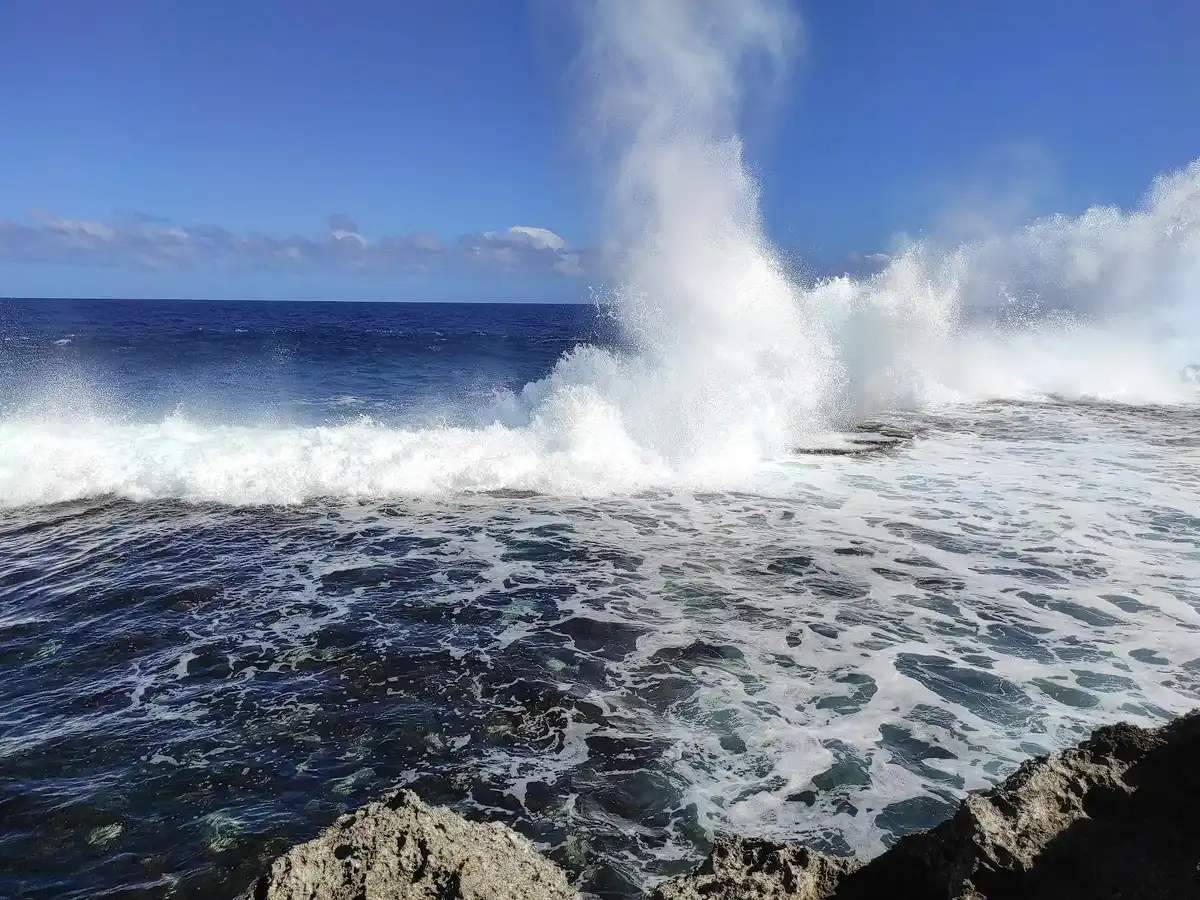
Everyone shows up to Tonga Blowholes chasing that one perfect geyser shot for Instagram, but the truth is the single “money shot” isn’t the point here at all. What actually matters is the raw, repetitive power of the ocean hammering hundreds of blowholes at once, a whole coastline breathing under your feet. You’ll find it on the southwest coast of Tongatapu, an easy day trip from Nuku’alofa, which makes it one of Tonga’s most accessible natural spectacles for backpackers. The wow-factor is real: walls of spray, thunder in your chest, salt on your face, and almost no safety rails between you and the Pacific. It’s cheap to visit, usually light on crowds outside cruise days, and the photos can be wild if the swell is up. But there’s minimal cultural context on-site, no real facilities, and in calm seas it can feel underwhelming if you came expecting a theme-park fountain show.

Discover everything you want to know in the 📖 Tonga Travel Guide.


Get your Tonga guide
34 ranked highlights, routes & tips, works offline (153 pages)
Loading the map 🌍
CLICK TO FILTER
towns
villages
landmarks
national parks
hikes
beaches
attractions
festivals
regions
SHOW COUNTRY’S BESTSHOW ALL

✨ Why go?
Ranked #2 unique site in Tonga
Why Tonga Blowholes should be on your travel list

The Tonga Blowholes are not just another Instagram backdrop; they’re a raw display of nature’s power. Sure, you’ll find crowds, especially during peak tourist season, but don’t let that deter you. The effort-to-reward ratio here is solid. A short drive from Nuku’alofa leads you to a rugged coastline where the ocean hurls itself against the rocks, creating spectacular geysers that shoot water high into the air.

What makes this spot truly unique is the sound—a thunderous roar that echoes through the cliffs, reminding you of nature’s might. It’s a visceral experience, not just a photo op. Plus, it’s low-cost; you can enjoy this wonder without breaking the bank.

Incorporate the blowholes into a broader route exploring Tonga’s stunning landscapes. Pair it with a visit to nearby Tongan villagesread more 👉
The Tonga Blowholes are not just another Instagram backdrop; they’re a raw display of nature’s power. Sure, you’ll find crowds, especially during peak tourist season, but don’t let that deter you. The effort-to-reward ratio here is solid. A short drive from Nuku’alofa leads you to a rugged coastline where the ocean hurls itself against the rocks, creating spectacular geysers that shoot water high into the air.

What makes this spot truly unique is the sound—a thunderous roar that echoes through the cliffs, reminding you of nature’s might. It’s a visceral experience, not just a photo op. Plus, it’s low-cost; you can enjoy this wonder without breaking the bank.

Incorporate the blowholes into a broader route exploring Tonga’s stunning landscapes. Pair it with a visit to nearby Tongan villages or a dip in the crystal-clear lagoons. This isn’t just a stop; it’s part of a journey that immerses you in the local culture and breathtaking scenery. The blowholes are a must-see, but they’re even better when woven into the rich tapestry of Tonga’s natural beauty and community spirit.
Want to include Tonga Blowholes in your Tonga route?
Create a personalized Tonga itinerary that includes Tonga Blowholes and the places that fit your trip — based on your travel style, budget, and available time. Get your route in seconds.

Generate my trip

💡 HighlightsPlaces and moments you shouldn't skip

  • Thundering water jets (the blowholes themselves) — The main show: waves forced through sea caves explode up through vertical vents, sending columns of spray and thunder-like noise into the air. Timing matters — high tide and rougher seas make the jets bigger and louder, so plan your visit around tide charts if you want the full drama.
  • Layered volcanic/reef rock platform — The flat, sculpted rock ledges around the blowholes are a photo-friendly natural stage: grooves, holes and channels carved by years of pounding surf. It’s a neat example of how Tongatapu’s coral-limestone coast and wave action combine to create dramatic coastal features.
  • Rainbows, mist and sunset light — Late afternoon brings softer light and frequent little rainbows in the spray; the silhouette of the cliff against the
read more 👉
  • Thundering water jets (the blowholes themselves) — The main show: waves forced through sea caves explode up through vertical vents, sending columns of spray and thunder-like noise into the air. Timing matters — high tide and rougher seas make the jets bigger and louder, so plan your visit around tide charts if you want the full drama.
  • Layered volcanic/reef rock platform — The flat, sculpted rock ledges around the blowholes are a photo-friendly natural stage: grooves, holes and channels carved by years of pounding surf. It’s a neat example of how Tongatapu’s coral-limestone coast and wave action combine to create dramatic coastal features.
  • Rainbows, mist and sunset light — Late afternoon brings softer light and frequent little rainbows in the spray; the silhouette of the cliff against the golden sky makes for postcard-perfect shots. If you like moody coastal scenes, linger until the sun drops.
  • Local stories and village access — The site is close to Houma village and tied into local custodianship; villagers often maintain paths and may ask a small fee to visit. Ask about the blowholes’ stories — hearing the site’s cultural meanings from locals is part of the experience.
  • Birdlife, tide pools and coastal critters — Beyond the spray you’ll find seabirds, crabs and small tide-pool creatures on the rock flats. It’s a good little nature-spot to poke around while waiting for the next big eruption.
  • Photography and film opportunities — From fast shutters that freeze the spray to slow long exposures that blur it into ghostly veils, the site is a versatile playground for shooters. Keep a safe distance, bring a windproof cover for gear, and expect salty spray.
  • Combine with nearby coastal walks and beaches — The blowholes are an easy stop on a half-day loop around the eastern coast of Tongatapu: short walks, swimming beaches and village visits make for a full, low-cost outing from Nukuʻalofa.
Spotted a mistake or missing something? Contact us.
🌤️ When to go?Best time to visit Tonga Blowholes


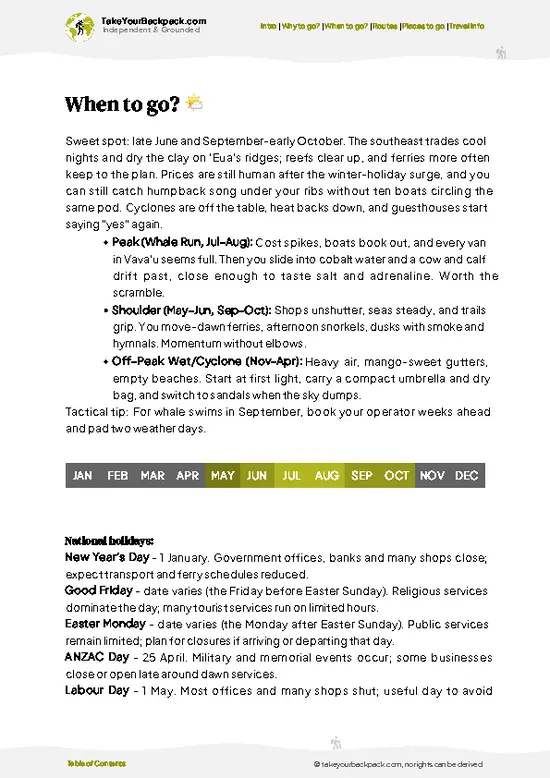
  • Weather: Tonga’s tropical climate means it’s hot and humid most of the year, but the blowholes are at their most dramatic during the wet season (November to April) when ocean swells are bigger. Just be ready for sudden downpours and sticky air.

  • Temperature: Expect highs around 28-31°C (82-88°F) year-round. Nights cool to about 22-24°C (72-75°F), so pack light layers but nothing heavy.

  • Daylight Hours: Roughly 11 to 12 hours of daylight year-round, with sunrise around 6 am and sunset near 6 pm. This gives you plenty of time to catch the blowholes at different tides.

  • Crowds: Tonga isn’t a tourist hotspot, but the blowholes draw local visitors and day-trippers on weekends and holidays. For a quieter experience, aim for weekdays or early mornings.

  • Seasonal Activities: Whale watching
read more 👉

  • Weather: Tonga’s tropical climate means it’s hot and humid most of the year, but the blowholes are at their most dramatic during the wet season (November to April) when ocean swells are bigger. Just be ready for sudden downpours and sticky air.

  • Temperature: Expect highs around 28-31°C (82-88°F) year-round. Nights cool to about 22-24°C (72-75°F), so pack light layers but nothing heavy.

  • Daylight Hours: Roughly 11 to 12 hours of daylight year-round, with sunrise around 6 am and sunset near 6 pm. This gives you plenty of time to catch the blowholes at different tides.

  • Crowds: Tonga isn’t a tourist hotspot, but the blowholes draw local visitors and day-trippers on weekends and holidays. For a quieter experience, aim for weekdays or early mornings.

  • Seasonal Activities: Whale watching peaks from July to October, so if you want to combine blowholes with humpback sightings, plan for that window. Otherwise, the blowholes themselves don’t have a strict season.

  • Price Fluctuations: Tonga’s prices stay fairly steady, but flights and accommodation can spike during whale season and local festivals. Blowholes access is free, so your main cost is getting there.


Pro-tip: Visit just after a stormy day during the wet season for the blowholes at full roar—just don’t expect solitude or perfect weather.


source: climatestotravel.comJANJanuary: highly recommended for travelingFEBFebruary: highly recommended for travelingMARMarch: highly recommended for travelingAPRApril: highly recommended for travelingMAYMay: good for travelingJUNJune: good for travelingJULJuly: excellent for travelingAUGAugust: excellent for travelingSEPSeptember: excellent for travelingOCTOctober: excellent for travelingNOVNovember: highly recommended for travelingDECDecember: highly recommended for traveling
tonga-unique-site-tonga-blowholes
© Google | Mark

✈️ The backpacker research shortcutTonga Travel Guide

An offline-friendly backpacking guide with optimized travel routes, ranked highlights, transport advice, and the best areas to stay.
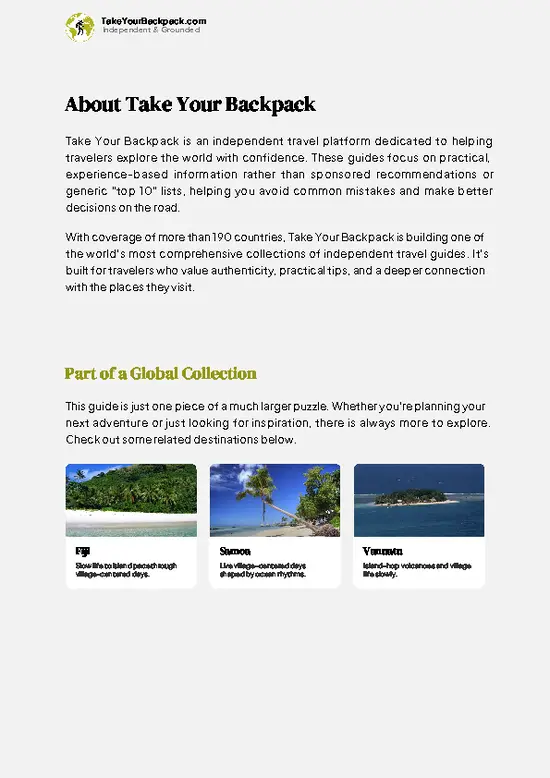
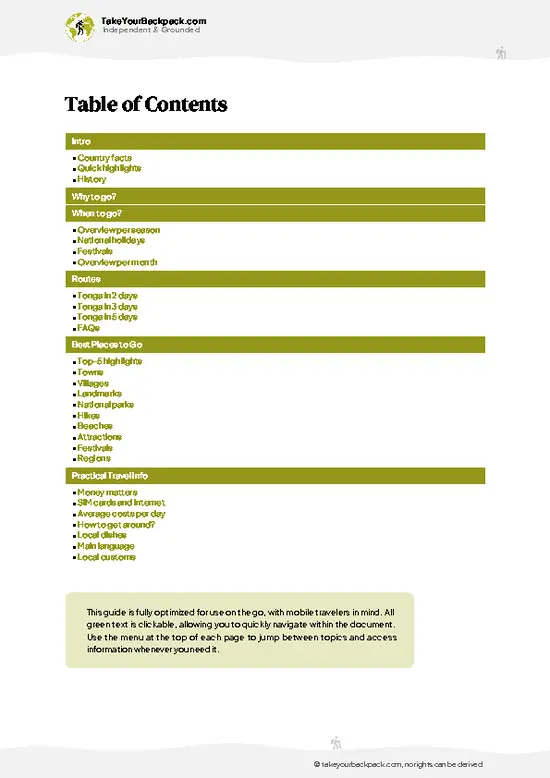
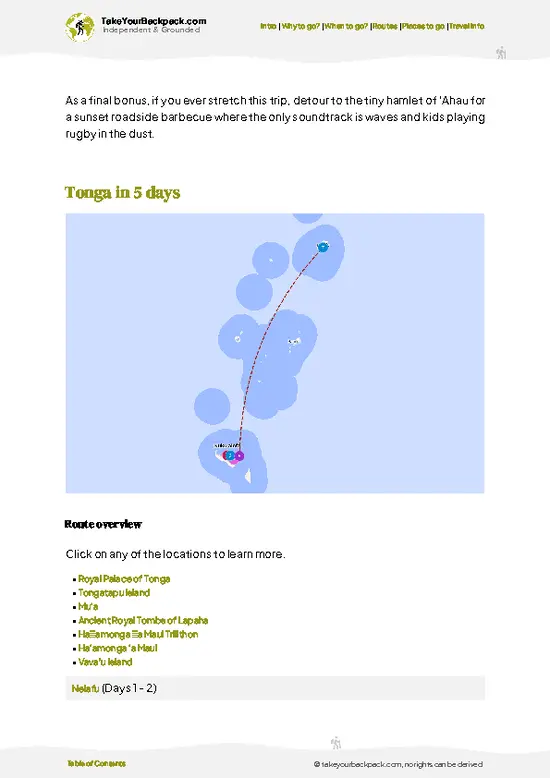
example page 0 from our offline Travel Guide for Tonga
example page 1 from our offline Travel Guide for Tonga
example page 2 from our offline Travel Guide for Tonga
example page 3 from our offline Travel Guide for Tonga
example page 4 from our offline Travel Guide for Tonga
example page 5 from our offline Travel Guide for Tonga
example page 6 from our offline Travel Guide for Tonga
example page 7 from our offline Travel Guide for Tonga
The digital guide (153 pages) contains:
34 highlights, ranked by travel appeal
Optimized 2, 3 & 5-day travel routes
Cities, national parks, landmarks, beaches
How to get around
Offline-friendly for travel without Wi-Fi
👉 Click to see all 30+ guide features

📅 Plan smarter in minutes, not weeks
Month by month travel advice
Festivals & national holidays
Budget expectations

🗺️ Go to the right places, skip the overrated ones
Honest pros & cons of destinations
Top hikes, parks & viewpoints
Lesser-known places most travelers miss
Clear “worth it vs skip it” guidance

🛏️ Travel smoothly without rookie mistakes
Best areas to stay
Transport systems explained simply
Common scams & safety advice
SIM cards, money & practical tips

🌍 Understand the country, not just visit it
Culture & traditions
52 Essential phrases & customs
Festivals worth planning around
Traveler-friendly historical context
Insights that make places more meaningful

📱 Built for real travel conditions
Fully downloadable PDF
Works completely offline
Optimized for phone use
Useful in remote areas & buses
Everything in one place
Save weeks of stressful planning
Get instant access to your full guide. 30‑day money-back guarantee.
+ Add another guide for just US$7.80

By proceeding you agree to our terms.
Sent to your inbox immediately after payment • 100% Secure Checkout
Best Backpacking Travel Advisor 2025 tourism awardBest Backpacking
Travel Advisor
2025
What others say about Take Your Backpack Guides:
⭐⭐⭐⭐⭐
Fantastic, amazing amount of information!
⭐⭐⭐⭐⭐
My goodness this is amazing, it's what I've been looking for hats off too you!
⭐⭐⭐⭐⭐
I think this is absolutely BRILLIANT
⭐⭐⭐⭐
Very complete and informative. It's still missing places, but I gotta to commend you
⭐⭐⭐⭐⭐
This is truly amazing, thank you, can't wait to explore it with my kids!
⭐⭐⭐⭐⭐
Awesome resource, thank you!
⭐⭐⭐⭐⭐
This is amazing! Can't wait to explore the ones I haven't seen
⭐⭐⭐⭐
I love this! Well done, great idea.
⭐⭐⭐⭐⭐
Thanks for taking the time to make this gem!
⭐⭐⭐⭐⭐
This might be the best website I've ever seen.
⭐⭐⭐⭐⭐
Congratulations, and thank you so much for your work; it's incredibly valuable.
⭐⭐⭐⭐
In all seriousness I think you did a great job pointing out the important spots
⭐⭐⭐⭐⭐
10/10 very good
⭐⭐⭐⭐⭐
As someone who's only just starting to visit regularly this is awesome, thank you.
⭐⭐⭐⭐
Thank you very much! I'm going to visit my dad, it's going to be very useful!
⭐⭐⭐⭐⭐
This is really cool! We'll be travelling for the first time and this definitely come in handy.
⭐⭐⭐⭐⭐
You are now our minister of culture, congratulations 👨‍💼
⭐⭐⭐⭐⭐
Just wanted to tell you that this is a pearl! Going to follow your recommendations.
⭐⭐⭐⭐⭐
This is so cool. I'll definitely be using the resource for my travels soon.
⭐⭐⭐⭐⭐
This is very impressive! Good work.
⭐⭐⭐⭐⭐
This is an amazing and informative site. Very well done!

🛏️ Where to stay?Best areas to stay in Tonga

Staying near the Tonga Blowholes is about finding that sweet spot where adventure meets community. First off, head to the village of Nuku’alofa. It’s the capital, so you’ll find a mix of locals and travelers. The vibe is laid-back, and you can easily connect with fellow backpackers over a shared meal or a cold drink.

Next, consider Hihifo. This area is closer to the blowholes and has a more authentic feel. You’ll find guesthouses and homestays that offer a glimpse into Tongan life. It’s quieter, which means you can enjoy the natural beauty without the tourist frenzy. Plus, the locals are welcoming … read more 👉
Staying near the Tonga Blowholes is about finding that sweet spot where adventure meets community. First off, head to the village of Nuku’alofa. It’s the capital, so you’ll find a mix of locals and travelers. The vibe is laid-back, and you can easily connect with fellow backpackers over a shared meal or a cold drink.

Next, consider Hihifo. This area is closer to the blowholes and has a more authentic feel. You’ll find guesthouses and homestays that offer a glimpse into Tongan life. It’s quieter, which means you can enjoy the natural beauty without the tourist frenzy. Plus, the locals are welcoming and often eager to share stories or tips about the area.

Don’t overlook Tongatapu. While it’s a bit further from the blowholes, it’s a hub for budget travelers. The social scene is vibrant, with plenty of communal spaces to meet others. You’ll find markets, local eateries, and a sense of camaraderie among backpackers.

In all these spots, safety is generally good, but always trust your instincts. The real magic lies in the connections you make and the stories you gather along the way.

👛 Costs (as of 4 September 2026)Typical daily expenses

Visiting the Tonga Blowholes isn’t just about snapping a photo; it’s about experiencing nature’s raw power. Here’s what you need to know about the costs involved.
  • Entrance Fees: There’s no official entrance fee to the blowholes themselves. However, if you’re visiting from a resort or tour, expect to pay around $10 to $30 USD for transportation or guided tours. It’s worth it for the insights and local stories.
  • Transportation: Renting a car is a popular option. Daily rates range from $40 to $70 USD. If you opt for a taxi, budget about $20 to $50 USD each way, depending on your starting point. Public transport is cheaper but less reliable.
  • Food and Drink: Local eateries offer meals for about $5 to $15 USD. If you’re looking for something more upscale, expect to pay $20 to $40 USD per person. Stock
read more 👉
Visiting the Tonga Blowholes isn’t just about snapping a photo; it’s about experiencing nature’s raw power. Here’s what you need to know about the costs involved.
  • Entrance Fees: There’s no official entrance fee to the blowholes themselves. However, if you’re visiting from a resort or tour, expect to pay around $10 to $30 USD for transportation or guided tours. It’s worth it for the insights and local stories.
  • Transportation: Renting a car is a popular option. Daily rates range from $40 to $70 USD. If you opt for a taxi, budget about $20 to $50 USD each way, depending on your starting point. Public transport is cheaper but less reliable.
  • Food and Drink: Local eateries offer meals for about $5 to $15 USD. If you’re looking for something more upscale, expect to pay $20 to $40 USD per person. Stock up on snacks and water; prices can spike at tourist spots.
  • Accommodation: Options vary widely. Budget travelers can find dorms or basic guesthouses for $15 to $30 USD per night. Mid-range hotels typically charge $50 to $100 USD. Luxury resorts can go beyond $200 USD, but they often come with stunning views and amenities.
  • Activities: Beyond the blowholes, consider snorkeling or diving. Prices for these activities range from $50 to $150 USD, depending on the package. Always check what’s included—gear rental can add up.

The Tonga Blowholes are a natural spectacle that deserves your attention. Just be prepared for the costs that come with the adventure.


source: tongaholiday.com
⚠️ Prices can change and everyone travels differently, so take this as a rough guide. Hope it helps you plan your adventure!

FAQCommon questions from travelers

Tonga Blowholes are natural sea blowholes located on the island of Tongatapu, where ocean water is forced through lava tubes creating powerful spouts of water. They are a popular natural attraction for visitors interested in geology and coastal scenery.
Visiting Tonga Blowholes typically requires about 1 to 2 hours, enough time to walk around the area, watch the blowholes in action, and take photos. It is best to visit during high tide for the most impressive water spouts.
To get to Tonga Blowholes, travel to Tongatapu island, then take a local taxi or rental vehicle from Nuku'alofa, the capital, which is about 30 kilometers away. The site is accessible by a short walk from the parking area near the coast.
⚠️ Things can change over time, so always validate details locally before you go.

Other Tongan landmarks near Tonga Blowholes

Explore more nearby:


💡 Not sure where to go next?
Create a personalized itinerary for Tonga including Tonga Blowholes and the places that fit your trip.

Generate my itinerary

👉 Discover all landmarks

Or checkout all Tonga has to offer (think cities, towns, villages, national parks, hikes, beaches, festivals)
Country photo of Tonga

We 💚 feedbackFinal thoughts on visiting Tonga Blowholes

The Tonga Blowholes are a wild spectacle, but don’t expect solitude. Crowds can swarm, especially during peak hours. The real magic? The raw power of the ocean crashing against the rocks, sending plumes of water sky-high. It’s mesmerizing. Bring a picnic and stake out a spot; the vibe shifts from touristy to tranquil as the sun dips. Just watch your footing—those rocks are slippery. If you can catch it at sunrise or sunset, you’ll see a side of Tonga that Instagram doesn’t capture.

✍️ Help improve this page!
The information on this page is based on in-depth research, insights shared by experienced travelers, and feedback from the local travel community in Tonga. While every effort is made to keep the information accurate and current, conditions can change — so if you spot anything incorrect or outdated, please get in touch.


🙋‍♂️ Give feedback

👋 Meet the founderWho’s Behind Take Your Backpack?

Johan, backpacker and founder of TakeYourBackpackHi, I’m Johan (Netherlands 🇳🇱), the creator of TakeYourBackpack. Over the past decade, I’ve backpacked through 80+ countries across six continents, gaining extensive experience with independent travel, long-term trips, and overland routes.

This site is built on a combination of firsthand travel experience and carefully curated insights from other backpackers. Many guides are based on places I’ve personally visited, while others bring together tips, observations, and practical advice shared by trusted travelers I’ve met along the way.

The goal is to provide realistic, experience-driven guidance — not generic itineraries — so you can explore destinations with better context, clearer expectations, and more confidence.

Get full Tonga guide •
Instant download • 34 highlights • Full Offline guide