×

Tunisia🇹🇳 | regionsCap BonMediterranean coastline, citrus groves, Roman ruins, fishing villages | things to do and best time to go

Explore Zembra and Zembretta National ParkExplore Carthage

Backpacking in Cap Bon
🏆 Top pickregion ranked #1
By Johan Kruseman 🇳🇱 | Updated September 3, 2026

Here’s what most travelers only realize after they’ve left: Cap Bon is where Tunisians themselves go to escape the crowds, especially in late spring and early fall, when the Mediterranean is still warm but the package-tour buses have vanished. You’ll find Cap Bon jutting northeast from Tunis, a peninsula that feels like a secret shortcut to the good stuff—think cliffside Berber ruins, citrus groves, and beaches where you might share the sand with a fisherman, not a selfie stick. Backpackers get a rare mix here: Hammamet’s old medina and nightlife if you want it, Korbous’s hot springs if your feet need a break, and the Roman ruins at Kerkouane if you want to geek out without elbowing through crowds. It’s cheaper than Sousse or the southern resorts, but public transport is patchy and slow, so you trade time for authenticity. Cap Bon isn’t polished, but that’s the point—it’s Tunisia with the volume turned down, and the flavors turned way up.

Discover everything you want to know in the 📖 Tunisia Travel Guide.


Get your Tunisia guide
98 ranked highlights, routes & tips, works offline (371 pages)
Loading the map 🌍
CLICK TO FILTER
cities
towns
villages
landmarks
national parks
hikes
beaches
attractions
festivals
regions
SHOW COUNTRY’S BESTSHOW ALL

✨ Why go?
Ranked #1 region in Tunisia
What makes it a must-see region

Cap Bon is a backpacker’s playground, and here’s why you should dive in. First off, the variety of landscapes is mind-blowing. You’ve got stunning beaches, rolling hills, and even some rugged mountains. It’s like a buffet of nature, all within a short distance.

You won’t be constantly relocating, which is a game-changer. Instead of wasting time on transport, you can soak in the local vibe. This region is compact, so you can explore multiple experiences without the hassle of packing and unpacking every few days.

Speaking of transport, the flexibility here is a dream. Buses and shared taxis are plentiful and affordable, making it easy to hop from one spot to another without breaking the bank.

And let’s not forget the magic of slow travel. You can mix nature and culture seamlessly. Spend … read more 👉
Cap Bon is a backpacker’s playground, and here’s why you should dive in. First off, the variety of landscapes is mind-blowing. You’ve got stunning beaches, rolling hills, and even some rugged mountains. It’s like a buffet of nature, all within a short distance.

You won’t be constantly relocating, which is a game-changer. Instead of wasting time on transport, you can soak in the local vibe. This region is compact, so you can explore multiple experiences without the hassle of packing and unpacking every few days.

Speaking of transport, the flexibility here is a dream. Buses and shared taxis are plentiful and affordable, making it easy to hop from one spot to another without breaking the bank.

And let’s not forget the magic of slow travel. You can mix nature and culture seamlessly. Spend a morning hiking in the hills, then head to a local market in the afternoon. This blend of experiences allows you to connect deeply with the place and its people.

In Cap Bon, you’re not just a tourist; you’re part of the scene. Embrace it.
Want to include Cap Bon in your Tunisia route?
Create a personalized Tunisia itinerary that includes Cap Bon and the places that fit your trip — based on your travel style, budget, and available time. Get your route in seconds.

Generate my trip

💡 HighlightsMust-see experiences and standout moments

  • Kerkouane Archaeological Site — The best-preserved Punic town on Tunisian soil: walk the remains of houses and mosaics where the Carthaginian world met the sea. It’s a rare, uncrowded ancient site whose layout and pottery feel very specific to Cap Bon’s pre-Roman story.
  • Qal’at Kelibia (Kelibia Fortress) — A white-stone fortress perched over the port with jaw-dropping views across the Mediterranean and out to the rocky islets. Great for sunset photos, a quick climb, and watching the fishing boats come and go—you’ll feel the place’s strategic history under your feet.
  • Kelibia fishing port and Ras Kaboudia beaches — Fresh-tuna docks, small fish stalls and long rocky-and-sand beaches where locals swim and snorkel; the coastline here has excellent visibility for diving. Combine a morning at
read more 👉
  • Kerkouane Archaeological Site — The best-preserved Punic town on Tunisian soil: walk the remains of houses and mosaics where the Carthaginian world met the sea. It’s a rare, uncrowded ancient site whose layout and pottery feel very specific to Cap Bon’s pre-Roman story.
  • Qal’at Kelibia (Kelibia Fortress) — A white-stone fortress perched over the port with jaw-dropping views across the Mediterranean and out to the rocky islets. Great for sunset photos, a quick climb, and watching the fishing boats come and go—you’ll feel the place’s strategic history under your feet.
  • Kelibia fishing port and Ras Kaboudia beaches — Fresh-tuna docks, small fish stalls and long rocky-and-sand beaches where locals swim and snorkel; the coastline here has excellent visibility for diving. Combine a morning at the fish market with an afternoon on the beach for a true Cap Bon coastal day.
  • El Haouaria cliffs and sea caves — Rugged, wind-carved cliffs on the peninsula’s northern edge with dramatic sea caves and jump spots. It’s a hotspot for local cliff-jumpers, seasonal bird migration and anyone who likes raw coastal scenery without big tourist infrastructure.
  • Korbous thermal springs and pine valley — A narrow, fragrant valley dropping to a small seaside spa town where natural hot springs meet Mediterranean pines. The baths have a long local tradition; hike the surrounding ridges for views and soak afterward—very Cap Bon in atmosphere.
  • Nabeul medina and pottery quarter — Nabeul is Tunisia’s pottery capital: wandering the medina you’ll find colorful plates, urns and kilns, plus a lively market where you can watch artisans at work. The shape, glazes and motifs here feel rooted to the peninsula in a way mass-produced souks don’t replicate.
  • Hammamet medina and the kasbah — Narrow streets, old ramparts and whitewashed architecture that reflect Andalusian and Mediterranean influences. It’s busier than some Cap Bon spots, but the kasbah, old hammams and local cafés still give a strong sense of place—especially in the morning or late afternoon when day-trippers thin out.
  • Sidi Rais coastline (hidden gem) — A tiny fishing village with sheltered inlets, rock pools and a handful of family-run cafés right on the water. Most guidebooks skip it, but locals come here for calm swimming and honest seafood; perfect if you want a slow seaside stop with far fewer tourists.
  • Dar Allouch harbor and inlet (hidden gem) — A small, working harbor framed by fishermen’s boats and low-slung houses; walk the quays, eat at a waterfront shack, and watch the nets get mended. It’s a quiet slice of everyday Cap Bon coast life that’s easy to miss but rewarding if you like authenticity.
  • Beni Khalled citrus orchards and cooperatives (hidden gem) — Drive through the orange, lemon and olive groves and drop into a village cooperative or roadside stall for seasonal fruit and freshly pressed olive oil. Cap Bon’s microclimate makes the citrus here uniquely aromatic—an agricultural side of the peninsula most visitors don’t see.
Spotted a mistake or missing something? Contact us.

Things to do near Cap Bon

Ratings based on Tripadvisor reviews. When you book through this link, you support our work at no extra cost to you.

⌛️ 5 daysHow to make the most of Cap Bon

Day 1: Tunis
Start your journey in Tunis, the capital. This city is your gateway to Cap Bon, and it’s where the transport options are plentiful. You’ll find trains and buses that connect you to the coast. Spend the morning exploring the Medina, where the labyrinth of alleys is alive with local artisans. Grab a quick lunch at a street vendor—trust me, the brik is a must. In the afternoon, hop on a train to Nabeul. It’s a smooth ride, and you’ll get a feel for the local pace.

Day 2: Nabeul
Nabeul is famous for its pottery and vibrant markets. Spend your day wandering through the souks, where you can haggle for unique ceramics. The town is small enough to explore on foot, making it a comfortable day. In the evening, enjoy a sunset stroll along the beach. The local vibe is relaxed, and you’ll … read more 👉
Day 1: Tunis
Start your journey in Tunis, the capital. This city is your gateway to Cap Bon, and it’s where the transport options are plentiful. You’ll find trains and buses that connect you to the coast. Spend the morning exploring the Medina, where the labyrinth of alleys is alive with local artisans. Grab a quick lunch at a street vendor—trust me, the brik is a must. In the afternoon, hop on a train to Nabeul. It’s a smooth ride, and you’ll get a feel for the local pace.

Day 2: Nabeul
Nabeul is famous for its pottery and vibrant markets. Spend your day wandering through the souks, where you can haggle for unique ceramics. The town is small enough to explore on foot, making it a comfortable day. In the evening, enjoy a sunset stroll along the beach. The local vibe is relaxed, and you’ll want to soak it all in before moving on.

Day 3: Hammamet
A short bus ride from Nabeul, Hammamet is a tourist hotspot, but don’t let that deter you. The medina here is charming, and the beaches are stunning. Spend your day lounging by the sea or exploring the historic sites. The nightlife is lively, so consider dining at a seaside restaurant. The seafood is fresh, and the atmosphere is electric.

Day 4: Off-Path Reward - Korbous
Take a detour to Korbous, a lesser-known thermal spa town. It’s a bit off the main route, but the natural hot springs are worth it. You’ll feel rejuvenated after a soak. The views of the Mediterranean from the cliffs are breathtaking. Spend the night here to enjoy the tranquility.

Day 5: Bizerte
Finish your trip in Bizerte, a coastal town with a rich history. The transport options are less frequent, so plan accordingly. Explore the old port and grab a coffee at a local café. The laid-back atmosphere is a perfect way to wrap up your adventure.

The must-do day? Day 4 in Korbous. It’s a unique experience that adds depth to your trip, making you feel like a true insider in Tunisia.
Turn your Cap Bon visit into an Tunisia adventure
Build a complete Tunisia route with Cap Bon, hidden gems, must-see destinations, and realistic travel times included.

Generate my trip

🌤️ When to go?When to go for the best experience


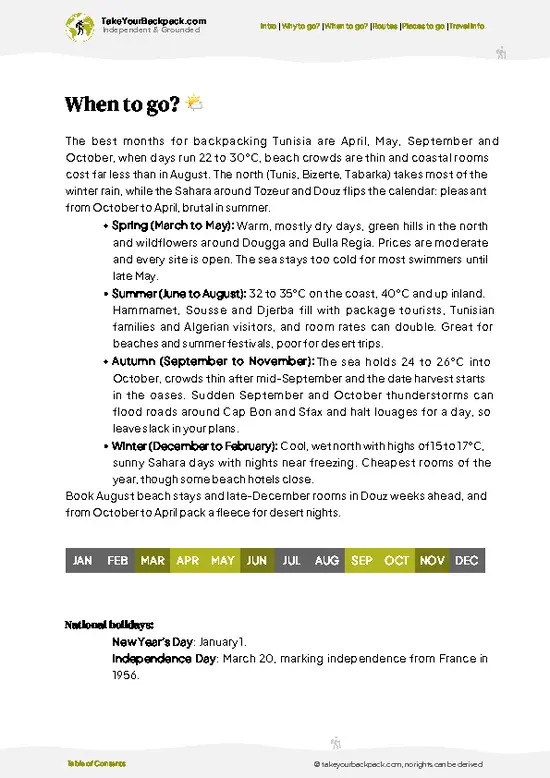
  • Weather: Spring (March to May) and autumn (September to November) are your sweet spots. The heat isn’t brutal—think 20-25°C (68-77°F)—and the skies stay mostly clear. Summer can scorch you with highs hitting 35°C (95°F) or more, which is a sweat-fest if you’re hiking or exploring.

  • Temperature: Winters are mild but can dip to 10°C (50°F) at night, so pack layers if you’re camping. Daytime temps hover around 15°C (59°F), which is cool but manageable for trekking.

  • Daylight Hours: Longer days in spring and early autumn give you 11-13 hours of light—perfect for squeezing in those extra beach strolls or mountain hikes without rushing.

  • Crowds: Peak summer draws local tourists and some Europeans, especially in coastal towns. Spring and autumn see fewer visitors, so you get that relaxed vibe
read more 👉

  • Weather: Spring (March to May) and autumn (September to November) are your sweet spots. The heat isn’t brutal—think 20-25°C (68-77°F)—and the skies stay mostly clear. Summer can scorch you with highs hitting 35°C (95°F) or more, which is a sweat-fest if you’re hiking or exploring.

  • Temperature: Winters are mild but can dip to 10°C (50°F) at night, so pack layers if you’re camping. Daytime temps hover around 15°C (59°F), which is cool but manageable for trekking.

  • Daylight Hours: Longer days in spring and early autumn give you 11-13 hours of light—perfect for squeezing in those extra beach strolls or mountain hikes without rushing.

  • Crowds: Peak summer draws local tourists and some Europeans, especially in coastal towns. Spring and autumn see fewer visitors, so you get that relaxed vibe and better chances to chat with locals without the tourist bubble.

  • Seasonal Activities: Spring is when Cap Bon blooms—literally. Olive and orange groves are lush, and local markets brim with fresh produce. Autumn brings harvest festivals and a chance to taste fresh olive oil straight from the press.

  • Price Fluctuations: Summer prices spike, especially in beachside accommodations. Off-season (winter) offers the best deals but sacrifices some warmth and daylight. Shoulder seasons balance cost and comfort smartly.


Pro-tip: Arrive late April or early October to dodge crowds, enjoy mild weather, and snag the best local flavors before the tourist rush kicks in.


source: climatestotravel.comJANJanuary: good for travelingFEBFebruary: good for travelingMARMarch: highly recommended for travelingAPRApril: excellent for travelingMAYMay: excellent for travelingJUNJune: good for travelingJULJuly: fair for travelingAUGAugust: fair for travelingSEPSeptember: excellent for travelingOCTOctober: excellent for travelingNOVNovember: highly recommended for travelingDECDecember: good for traveling
when-to-go

✈️ The backpacker research shortcutTunisia Travel Guide

An offline-friendly backpacking guide with optimized travel routes, ranked highlights, transport advice, and the best areas to stay.
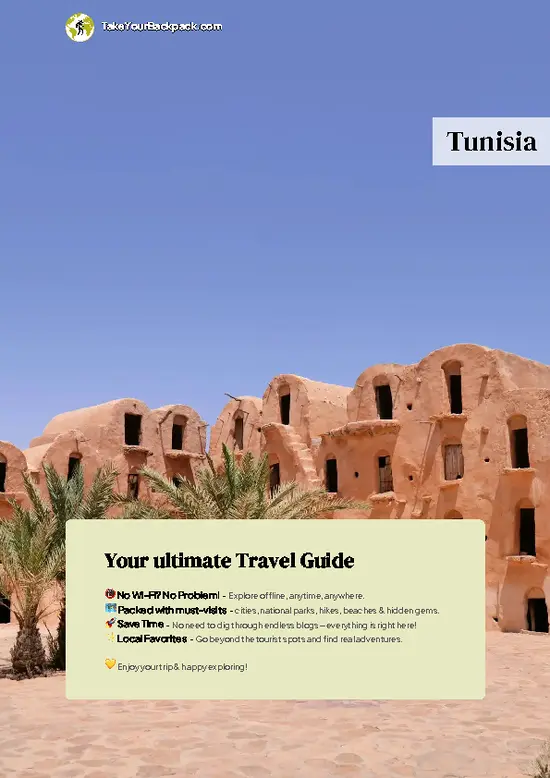
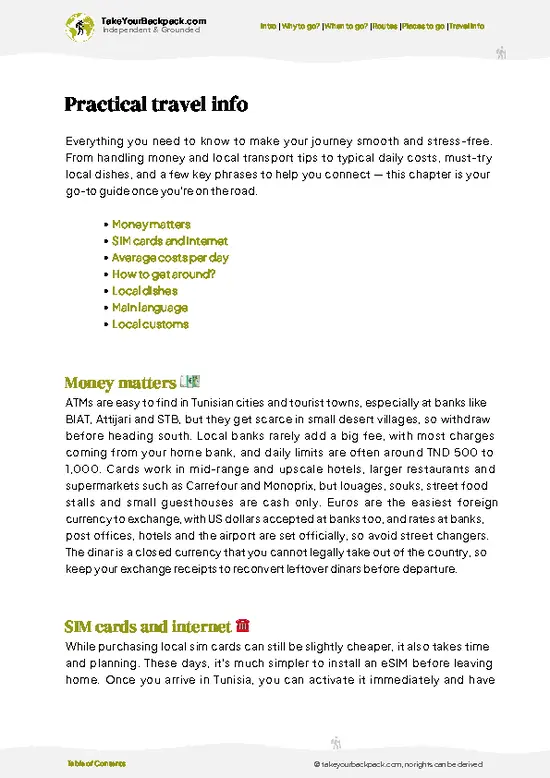
example page 0 from our offline Travel Guide for Tunisia
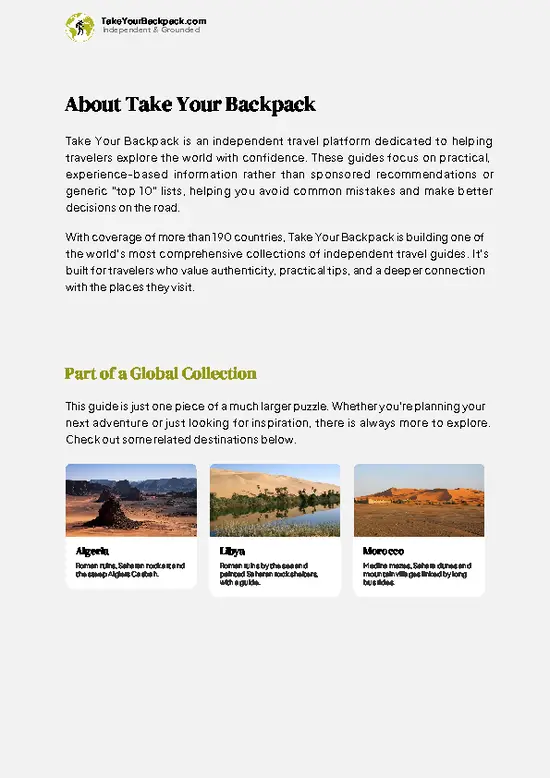
example page 1 from our offline Travel Guide for Tunisia
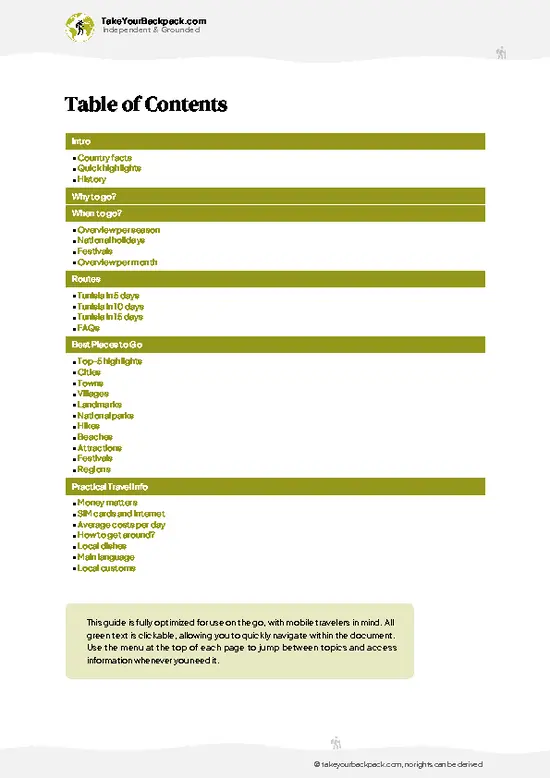
example page 2 from our offline Travel Guide for Tunisia
example page 3 from our offline Travel Guide for Tunisia
example page 4 from our offline Travel Guide for Tunisia
example page 5 from our offline Travel Guide for Tunisia
example page 6 from our offline Travel Guide for Tunisia
example page 7 from our offline Travel Guide for Tunisia
The digital guide (371 pages) contains:
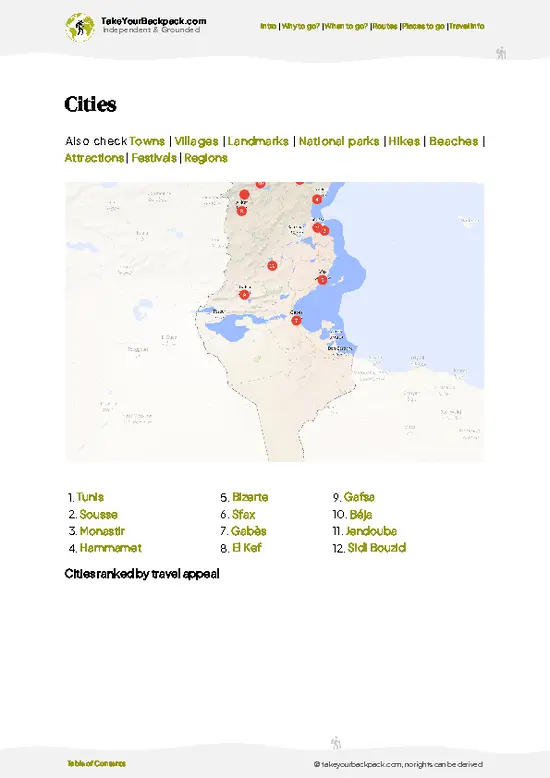
98 highlights, ranked by travel appeal
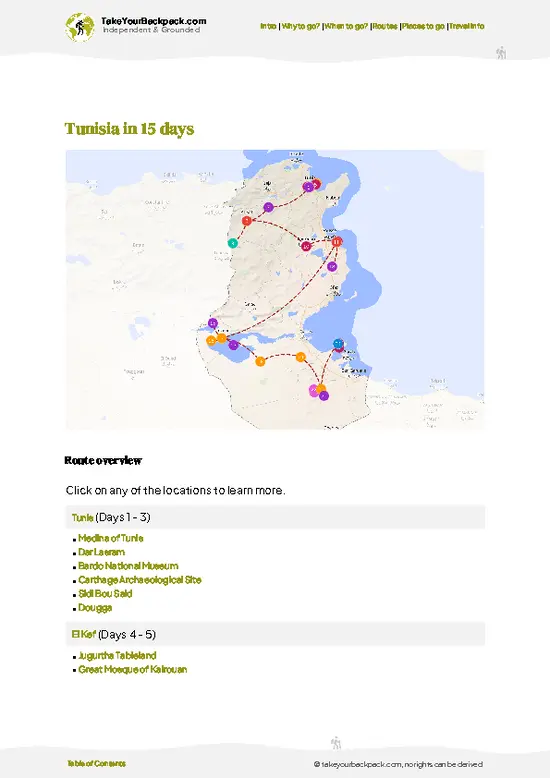
Optimized 5, 10 & 15-day travel routes
Cities, national parks, landmarks, beaches
How to get around
Offline-friendly for travel without Wi-Fi
👉 Click to see all 30+ guide features

📅 Plan smarter in minutes, not weeks
Month by month travel advice
Festivals & national holidays
Budget expectations

🗺️ Go to the right places, skip the overrated ones
Honest pros & cons of destinations
Top hikes, parks & viewpoints
Lesser-known places most travelers miss
Clear “worth it vs skip it” guidance

🛏️ Travel smoothly without rookie mistakes
Best areas to stay
Transport systems explained simply
Common scams & safety advice
SIM cards, money & practical tips

🌍 Understand the country, not just visit it
Culture & traditions
52 Essential phrases & customs
Festivals worth planning around
Traveler-friendly historical context
Insights that make places more meaningful

📱 Built for real travel conditions
Fully downloadable PDF
Works completely offline
Optimized for phone use
Useful in remote areas & buses
Everything in one place
Save weeks of stressful planning
Get instant access to your full guide. 30‑day money-back guarantee.
+ Add another guide for just US$7.80

By proceeding you agree to our terms.
Sent to your inbox immediately after payment • 100% Secure Checkout
Best Backpacking Travel Advisor 2025 tourism awardBest Backpacking
Travel Advisor
2025
What others say about Take Your Backpack Guides:
⭐⭐⭐⭐⭐
Fantastic, amazing amount of information!
⭐⭐⭐⭐⭐
My goodness this is amazing, it's what I've been looking for hats off too you!
⭐⭐⭐⭐⭐
I think this is absolutely BRILLIANT
⭐⭐⭐⭐
Very complete and informative. It's still missing places, but I gotta to commend you
⭐⭐⭐⭐⭐
This is truly amazing, thank you, can't wait to explore it with my kids!
⭐⭐⭐⭐⭐
Awesome resource, thank you!
⭐⭐⭐⭐⭐
This is amazing! Can't wait to explore the ones I haven't seen
⭐⭐⭐⭐
I love this! Well done, great idea.
⭐⭐⭐⭐⭐
Thanks for taking the time to make this gem!
⭐⭐⭐⭐⭐
This might be the best website I've ever seen.
⭐⭐⭐⭐⭐
Congratulations, and thank you so much for your work; it's incredibly valuable.
⭐⭐⭐⭐
In all seriousness I think you did a great job pointing out the important spots
⭐⭐⭐⭐⭐
10/10 very good
⭐⭐⭐⭐⭐
As someone who's only just starting to visit regularly this is awesome, thank you.
⭐⭐⭐⭐
Thank you very much! I'm going to visit my dad, it's going to be very useful!
⭐⭐⭐⭐⭐
This is really cool! We'll be travelling for the first time and this definitely come in handy.
⭐⭐⭐⭐⭐
You are now our minister of culture, congratulations 👨‍💼
⭐⭐⭐⭐⭐
Just wanted to tell you that this is a pearl! Going to follow your recommendations.
⭐⭐⭐⭐⭐
This is so cool. I'll definitely be using the resource for my travels soon.
⭐⭐⭐⭐⭐
This is very impressive! Good work.
⭐⭐⭐⭐⭐
This is an amazing and informative site. Very well done!

🛏️ Where to stay?Where staying makes the most sense

In the Cap Bon region of Tunisia, you’ve got some stellar options that cater to budget travelers and solo backpackers.

Start with Hammamet. This coastal town is a classic choice. The vibe is lively, especially around the medina and the beach. You’ll find plenty of cafes where you can sip mint tea and chat with locals. The nightlife? It’s buzzing, making it easy to meet fellow travelers.

Next up, Nabeul. Known for its pottery and vibrant markets, this town offers a more authentic experience. The Friday market is a must-see. You can haggle for fresh produce or handmade crafts. It’s a great spot … read more 👉
In the Cap Bon region of Tunisia, you’ve got some stellar options that cater to budget travelers and solo backpackers.

Start with Hammamet. This coastal town is a classic choice. The vibe is lively, especially around the medina and the beach. You’ll find plenty of cafes where you can sip mint tea and chat with locals. The nightlife? It’s buzzing, making it easy to meet fellow travelers.

Next up, Nabeul. Known for its pottery and vibrant markets, this town offers a more authentic experience. The Friday market is a must-see. You can haggle for fresh produce or handmade crafts. It’s a great spot to soak in local culture without breaking the bank.

Then there’s Kelibia. This charming fishing village boasts stunning beaches and a laid-back atmosphere. The fortress overlooking the sea is worth the hike. You’ll find fewer tourists here, which means more genuine interactions with locals.

Finally, consider Korba. It’s quieter but has a friendly backpacker scene. The beaches are pristine, and you can easily connect with others over shared meals or beach bonfires.

Each of these spots offers a unique slice of Cap Bon, balancing safety, social opportunities, and affordability. Choose wisely, and you’ll create memories that last long after the trip ends.

🚌 Getting aroundTransportation options and practical tips

Cap Bon is a whirlwind of energy and spontaneity, where the rhythm of life flows like the Mediterranean waves crashing against its shores. Forget rigid schedules; here, it’s all about intuition and the thrill of the unexpected. You’ll find locals weaving through bustling markets, the scent of spices mingling with the salty air, and the occasional goat casually blocking your path. This region thrives on a blend of chaos and charm, making every journey feel like an adventure. Whether you’re hopping between coastal towns or exploring ancient ruins, the transport options are your ticket to diving deep into the heart of Cap Bon.


  • Louage (Shared Taxi): These are your go-to for budget travel. They run frequently, often departing when full, so you might wait a bit, but it’s part of the experience.
read more 👉
Cap Bon is a whirlwind of energy and spontaneity, where the rhythm of life flows like the Mediterranean waves crashing against its shores. Forget rigid schedules; here, it’s all about intuition and the thrill of the unexpected. You’ll find locals weaving through bustling markets, the scent of spices mingling with the salty air, and the occasional goat casually blocking your path. This region thrives on a blend of chaos and charm, making every journey feel like an adventure. Whether you’re hopping between coastal towns or exploring ancient ruins, the transport options are your ticket to diving deep into the heart of Cap Bon.


  • Louage (Shared Taxi): These are your go-to for budget travel. They run frequently, often departing when full, so you might wait a bit, but it’s part of the experience. Fares are around 5-10 TND, depending on the distance, and they’re relatively comfortable for short to medium trips.


  • Bus: The local buses are a mixed bag of comfort and chaos. They’re the cheapest option, with fares typically under 5 TND. Just be prepared for a slower pace; they can take longer than expected due to frequent stops. First buses usually start around 6 AM, with the last ones leaving by 7 PM.


  • Rental Car: If you crave freedom, renting a car is the way to go. Prices start around 70 TND per day, and you can explore at your own pace. Just keep in mind that driving styles can be adventurous, so stay alert. Plus, you’ll have the flexibility to chase sunsets along the coast.


  • Bicycle Rentals: For the eco-conscious traveler, renting a bike is a fantastic way to soak in the scenery. Prices hover around 15 TND for a day. You can pedal through charming villages and along the coast, but be ready for some hills. It’s a workout, but the views are worth it.


  • Private Taxi: If you’re in a pinch or want a more direct route, private taxis are available. Fares vary, but expect to pay around 20-30 TND for short distances. They’re convenient, especially late at night when other options dwindle.


Here’s a tactical tip: download a local map app before you arrive. It’ll help you navigate the often confusing bus and louage stops. Knowing where you’re headed can save you time and keep you from feeling like a lost tourist. Embrace the flow of Cap Bon, and let the journey unfold!

🍲 FoodEating & Drinking in Cap Bon

In Cap Bon, food is a celebration, and every bite tells a story. Dive into the briny goodness of seafood, especially the grilled sardines, fresh from the Mediterranean. Pair them with harissa, a fiery chili paste that adds a kick to any dish. Don’t miss out on couscous, often served with tender lamb or vegetables, a staple that warms the soul.

For drinks, seek out local wines—Tunisian vineyards are underrated. A glass of Moscato or a robust red can elevate your meal. And if you’re feeling adventurous, try bouza, a fermented drink made from barley, which has a unique, tangy flavor that’s a rite of passage for any traveler.

Hit the markets for an authentic experience. The bustling stalls are alive with the scent of spices and fresh produce. Grab a sandwich from a street vendor—think crispy … read more 👉
In Cap Bon, food is a celebration, and every bite tells a story. Dive into the briny goodness of seafood, especially the grilled sardines, fresh from the Mediterranean. Pair them with harissa, a fiery chili paste that adds a kick to any dish. Don’t miss out on couscous, often served with tender lamb or vegetables, a staple that warms the soul.

For drinks, seek out local wines—Tunisian vineyards are underrated. A glass of Moscato or a robust red can elevate your meal. And if you’re feeling adventurous, try bouza, a fermented drink made from barley, which has a unique, tangy flavor that’s a rite of passage for any traveler.

Hit the markets for an authentic experience. The bustling stalls are alive with the scent of spices and fresh produce. Grab a sandwich from a street vendor—think crispy bread stuffed with spicy tuna or grilled vegetables. Cafés are perfect for people-watching; sip on mint tea while soaking in the local vibe.

Dining here is communal. Expect to share dishes and engage in lively conversation. Don’t rush; meals are meant to be savored. Embrace the slow pace, and you’ll find that every meal is a chance to connect with the heart of Cap Bon.

FAQFrequently asked questions about Cap Bon

3 to 4 days are sufficient to explore Cap Bon thoroughly. This allows time to visit key sites like Hammamet, Nabeul, and Kelibia, plus some beach time. The region's compact size means you can cover major attractions without rushing.
You can get around Cap Bon using local buses and shared taxis called 'louages.' Buses connect main towns like Hammamet and Nabeul, with fares typically under 5 Tunisian dinars. Louages offer flexible routes and are a common, affordable option for travelers without a car.
Cap Bon is known for its beautiful Mediterranean beaches, historic sites, and vibrant pottery markets. It is also famous for its citrus orchards and olive groves, contributing to Tunisia's agricultural output. The region's mix of natural beauty and cultural heritage attracts many visitors.
⚠️ Things can change over time, so always validate details locally before you go.

Expanding your trip beyond this stop

Cap Bon isn’t the only highlight in Tunisia. Explore all what Tunisia has to offer.
Country photo of Tunisia

We 💚 feedbackSumming up the experience

Cap Bon is a slice of Tunisia that feels like a well-kept secret. The coastal towns buzz with life, but it’s the local markets that’ll surprise you. Dive into the souks early for the freshest produce and a chance to chat with vendors. Just a heads-up: the midday sun can be relentless, so plan your strolls for the cooler hours. Embrace the laid-back vibe, savor the seafood, and don’t rush. This is where you find the heart of Tunisia, away from the tourist traps.

✍️ Help improve this page!
The information on this page is based on in-depth research, insights shared by experienced travelers, and feedback from the local travel community in Tunisia. While every effort is made to keep the information accurate and current, conditions can change — so if you spot anything incorrect or outdated, please get in touch.


🙋‍♂️ Give feedback

👋 Meet the founderWho’s Behind Take Your Backpack?

Johan, backpacker and founder of TakeYourBackpackHi, I’m Johan (Netherlands 🇳🇱), the creator of TakeYourBackpack. Over the past decade, I’ve backpacked through 80+ countries across six continents, gaining extensive experience with independent travel, long-term trips, and overland routes.

This site is built on a combination of firsthand travel experience and carefully curated insights from other backpackers. Many guides are based on places I’ve personally visited, while others bring together tips, observations, and practical advice shared by trusted travelers I’ve met along the way.

The goal is to provide realistic, experience-driven guidance — not generic itineraries — so you can explore destinations with better context, clearer expectations, and more confidence.

Get full Tunisia guide •
Instant download • 98 highlights • Full Offline guide