×

Tunisia🇹🇳 | best regionsDiscover the Best regions Across Tunisia

Tunisia is a land of contrasts, where climate, landscapes, and cultural character shift dramatically from the Mediterranean coast to the Sahara’s vastness. Each region offers a unique flavor that can make or break your backpacking experience. The coastal areas are bustling with tourists, especially in summer, while the interior reveals a quieter, more authentic side of Tunisian life.

Choosing the right region impacts your vibe, budget, and even safety. For instance, the north boasts lush greenery and historical sites, while the south invites you to explore ancient oases and desert adventures. Understanding these nuances is key to navigating Tunisia’s diverse attractions and ensuring your independent travel is rich and rewarding.

By Johan Kruseman 🇳🇱 | Updated June 11, 2026
Explore the best cities in Tunisia

Why go?What Makes Them Special

In Tunisia, the climatic diversity is a game changer. From the Mediterranean coast to the Sahara’s vastness, each region offers a distinct experience. This variety means travelers can enjoy everything from sun-soaked beaches to rugged desert landscapes, but it also introduces a trade-off: the farther you venture from the coast, the more time you’ll spend traveling.

Culturally, Tunisia is a melting pot. Its historical layers—from Roman ruins to Islamic architecture—are rich and varied. However, this depth can sometimes feel overwhelming. The challenge lies in balancing the desire to see it all with the reality of travel logistics. Distances can be deceptive; what looks close on a map might require hours on winding roads.

Infrastructure is improving, but it’s not always seamless. Expect … read more 👉
In Tunisia, the climatic diversity is a game changer. From the Mediterranean coast to the Sahara’s vastness, each region offers a distinct experience. This variety means travelers can enjoy everything from sun-soaked beaches to rugged desert landscapes, but it also introduces a trade-off: the farther you venture from the coast, the more time you’ll spend traveling.

Culturally, Tunisia is a melting pot. Its historical layers—from Roman ruins to Islamic architecture—are rich and varied. However, this depth can sometimes feel overwhelming. The challenge lies in balancing the desire to see it all with the reality of travel logistics. Distances can be deceptive; what looks close on a map might require hours on winding roads.

Infrastructure is improving, but it’s not always seamless. Expect some bumps along the way, especially in rural areas. This can lead to immersive experiences, as travelers often find themselves in less-touristed spots, but it also means planning ahead is crucial.

Ultimately, Tunisia’s unique blend of landscapes, cultures, and climates offers a rewarding journey, but it demands patience and flexibility. Embrace the grind; the gold is in the journey itself, not just the destination.
Behind the Scenes of Selection
The list of best regions in Tunisia is created based on landscapes, local culture, attractions, vibes, and overall appeal. If you feel a region is missing in this list, please let us know.

When to go?Timing Your Visit for the Best Experience

Climate Variation

Tunisia’s climate is a mixed bag, with coastal areas enjoying a Mediterranean vibe while the interior leans toward a desert climate. Summers can be sweltering, especially in the south, where temperatures soar. Expect mild winters along the coast, but the interior can get surprisingly chilly.

Optimal Months

The sweet spot for visiting is typically spring and fall. During these shoulder seasons, the weather is pleasant, and the crowds are manageable. Late spring brings blooming landscapes, while fall offers a harvest vibe.

Crowd Levels and Costs

Summer is peak season, drawing tourists like moths to a flame. This means higher prices and packed attractions. If you can handle a bit of heat, late summer can be quieter, but be prepared for some serious sun.

Seasonal Constraints

read more 👉

Climate Variation

Tunisia’s climate is a mixed bag, with coastal areas enjoying a Mediterranean vibe while the interior leans toward a desert climate. Summers can be sweltering, especially in the south, where temperatures soar. Expect mild winters along the coast, but the interior can get surprisingly chilly.

Optimal Months

The sweet spot for visiting is typically spring and fall. During these shoulder seasons, the weather is pleasant, and the crowds are manageable. Late spring brings blooming landscapes, while fall offers a harvest vibe.

Crowd Levels and Costs

Summer is peak season, drawing tourists like moths to a flame. This means higher prices and packed attractions. If you can handle a bit of heat, late summer can be quieter, but be prepared for some serious sun.

Seasonal Constraints

Winter can limit outdoor activities, especially in the desert, where some areas may be less accessible. However, this season offers a unique glimpse into local life, minus the tourist hustle.

Trade-offs

Choosing when to visit involves balancing comfort with experience. Off-peak travel can save money and provide a more authentic feel, but it may come with unpredictable weather. Plan wisely to maximize enjoyment while minimizing the grind.

region hoppingSuggested Travel Strategies

General Routing Logic

Tunis is the logical starting point, with its bustling medina and the ruins of Carthage. From there, head south toward the Sahara, stopping in towns like Douz and Ksar Ouled Soltane. This route offers a mix of history, culture, and stunning landscapes.

Typical Time Needed

Plan for at least two days in Tunis, then a day or two in each southern stop. This pacing allows for exploration without feeling rushed. A common mistake is trying to cram too much into a short timeframe, leading to a blur of experiences rather than meaningful connections.

Trade-offs and Constraints

Speed versus depth is a constant struggle. While it’s tempting to hit every highlight, savoring fewer locations often yields richer experiences. Budget travelers might find that public transport is … read more 👉

General Routing Logic

Tunis is the logical starting point, with its bustling medina and the ruins of Carthage. From there, head south toward the Sahara, stopping in towns like Douz and Ksar Ouled Soltane. This route offers a mix of history, culture, and stunning landscapes.

Typical Time Needed

Plan for at least two days in Tunis, then a day or two in each southern stop. This pacing allows for exploration without feeling rushed. A common mistake is trying to cram too much into a short timeframe, leading to a blur of experiences rather than meaningful connections.

Trade-offs and Constraints

Speed versus depth is a constant struggle. While it’s tempting to hit every highlight, savoring fewer locations often yields richer experiences. Budget travelers might find that public transport is cheaper but slower. Renting a car offers flexibility but can be a headache with navigation and parking.

Flexibility and Strategic Planning

Be ready to adjust plans. Weather can shift quickly, especially in the desert. Embrace the unexpected; sometimes the best moments come from unplanned detours. Prioritize what matters most, whether it’s a local festival or a quiet sunset over the dunes.

The ListTop regions of Tunisia

1 Cap Bon

Mediterranean coastline, citrus groves, Roman ruins, fishing villages

Follow winding roads past ancient sites and orchards, then pause in quiet harbors where daily life centers on the sea and land.

Loading the map 🌍

Expert viewInsights from Locals and Experts

Regions

Tunisia is a patchwork of regions, each with its own flavor and quirks. You’ll want to hit at least three or four to get a taste of the country’s diversity. The coastal areas are a stark contrast to the arid interior, and each region has its own cultural nuances. The Mediterranean coast is all about sun-soaked beaches and seafood, while the south offers a glimpse into the Sahara’s vastness and Berber culture.

But here’s the kicker: the distances can be deceptive. Tunisia isn’t huge, but the infrastructure can feel like it’s stuck in a time warp. Expect some travel time between regions, especially if you’re relying on public transport. Buses are your best bet, but they can be slow and crowded. If you’re in a hurry, consider renting a car, but be prepared for some interesting driving … read more 👉
Regions

Tunisia is a patchwork of regions, each with its own flavor and quirks. You’ll want to hit at least three or four to get a taste of the country’s diversity. The coastal areas are a stark contrast to the arid interior, and each region has its own cultural nuances. The Mediterranean coast is all about sun-soaked beaches and seafood, while the south offers a glimpse into the Sahara’s vastness and Berber culture.

But here’s the kicker: the distances can be deceptive. Tunisia isn’t huge, but the infrastructure can feel like it’s stuck in a time warp. Expect some travel time between regions, especially if you’re relying on public transport. Buses are your best bet, but they can be slow and crowded. If you’re in a hurry, consider renting a car, but be prepared for some interesting driving experiences.

Transport

Getting around Tunisia is a bit of a mixed bag. The train system is decent along the coast, but it peters out in the interior. Buses are frequent, but they often leave when they feel like it, not when the schedule says. You might find yourself waiting longer than expected, which can be a test of patience.

If you’re planning to hop between regions, factor in travel time. A trip that looks short on the map can take a few hours, especially if you’re navigating the winding roads of the north or the sandy paths of the south. It’s all part of the adventure, but don’t underestimate the time it takes to get from A to B.

Cultural Variation

Culturally, Tunisia is a delightful mosaic. The coastal cities are more cosmopolitan, with a blend of Arab, French, and Mediterranean influences. As you move inland, the culture shifts dramatically. The south is steeped in Berber traditions, and you’ll notice a different pace of life.

This cultural variation is a double-edged sword. On one hand, it’s enriching; on the other, it can be jarring. Be prepared for different customs and social norms. In more traditional areas, dress modestly and be respectful of local customs. A little cultural sensitivity goes a long way in making connections and avoiding awkward situations.

Pacing Trade-offs

When planning your itinerary, think about pacing. You could rush through several regions, but you’d miss the nuances that make each one special. Alternatively, you could linger in one area, soaking in the local vibe, but then you risk missing out on the broader tapestry of Tunisia.

A good compromise is to focus on two or three regions, allowing for a deeper dive into each. Spend a few days in each, balancing exploration with downtime. This way, you can savor the local cuisine, chat with residents, and maybe even pick up a few phrases in Arabic or French.

Safety & Considerations

Safety is generally not a major concern, but like anywhere, stay aware of your surroundings. Tourist areas are usually well-patrolled, but venturing into less-traveled regions requires a bit more caution. Trust your instincts and don’t hesitate to ask locals for advice.

Culturally, be prepared for a mix of hospitality and curiosity. Tunisians are generally warm and welcoming, but they might be surprised by your presence in more remote areas. A friendly smile and a few words in Arabic can break the ice and lead to memorable interactions.

In summary, Tunisia is a land of contrasts, and the journey between regions is as much a part of the experience as the destinations themselves. Embrace the quirks of travel, and you’ll find the real magic waiting just beyond the crowds.

✈️ The backpacker research shortcutTunisia Travel Guide

An offline-friendly backpacking guide with optimized travel routes, ranked highlights, transport advice, and the best areas to stay.
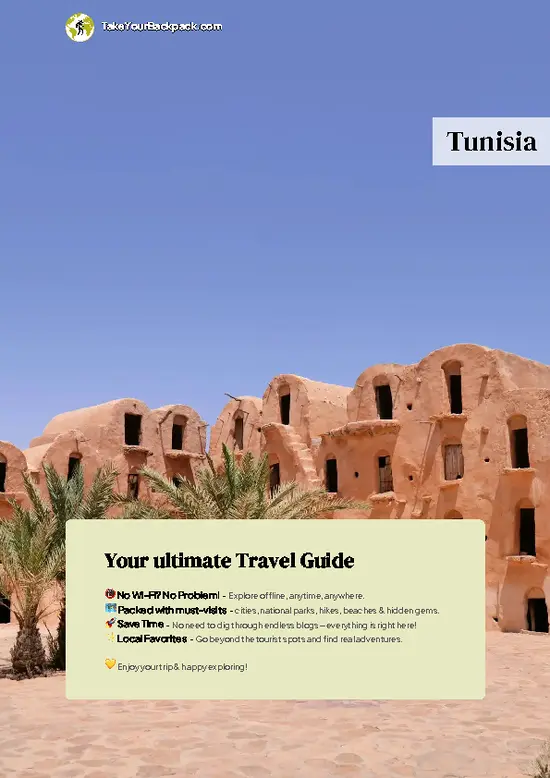
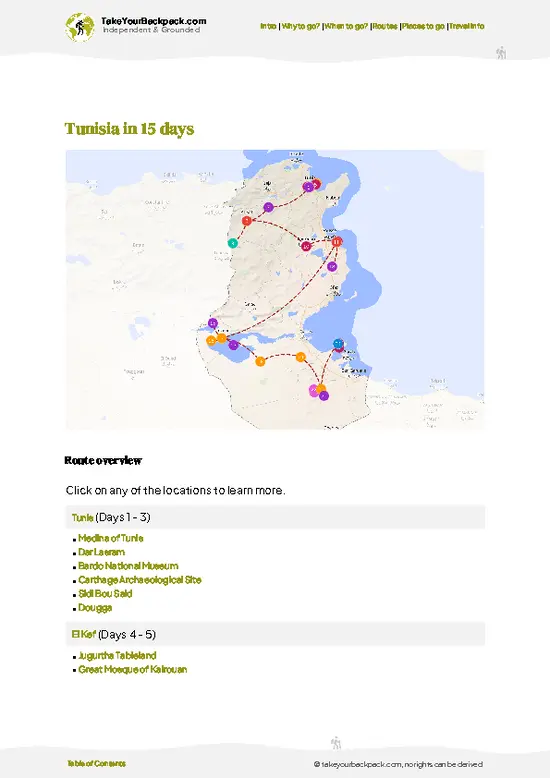
example page 0 from our offline Travel Guide for Tunisia
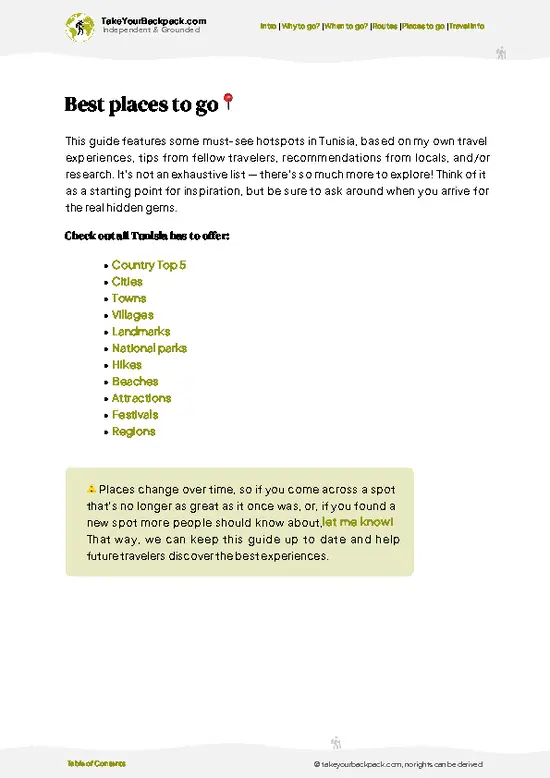
example page 1 from our offline Travel Guide for Tunisia
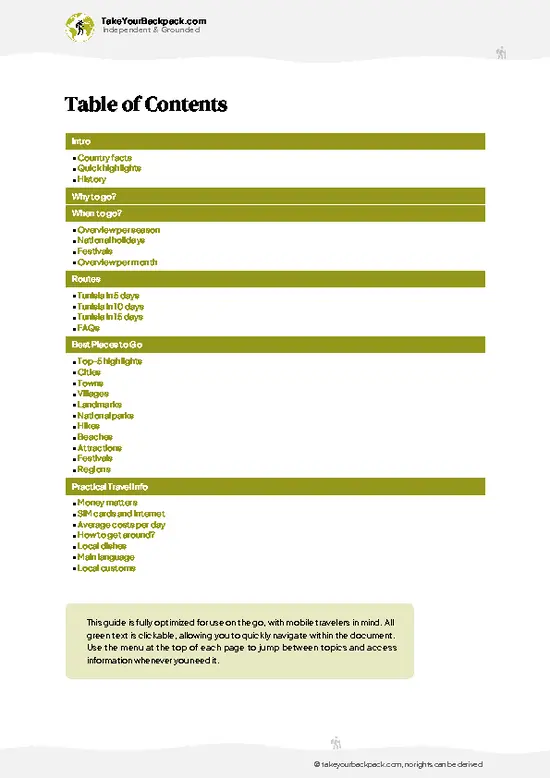
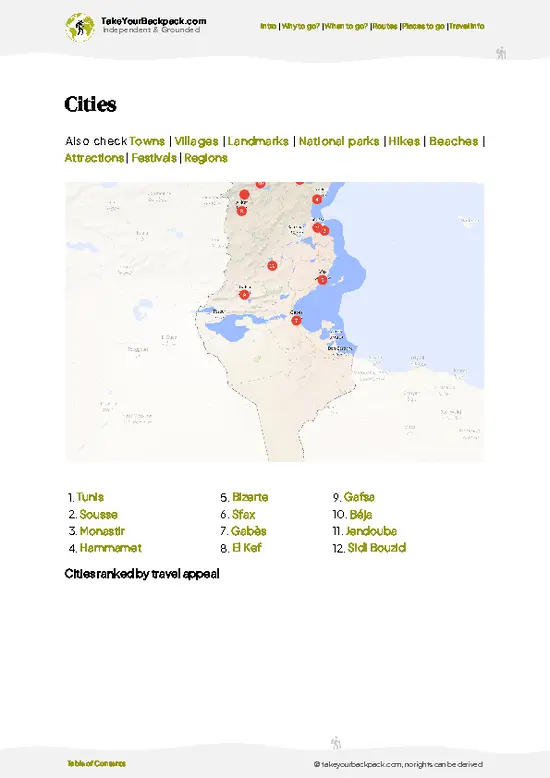
example page 2 from our offline Travel Guide for Tunisia
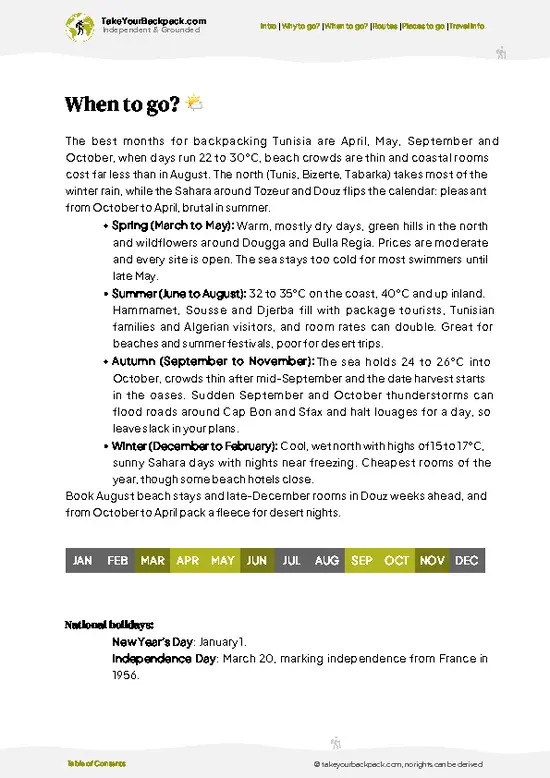
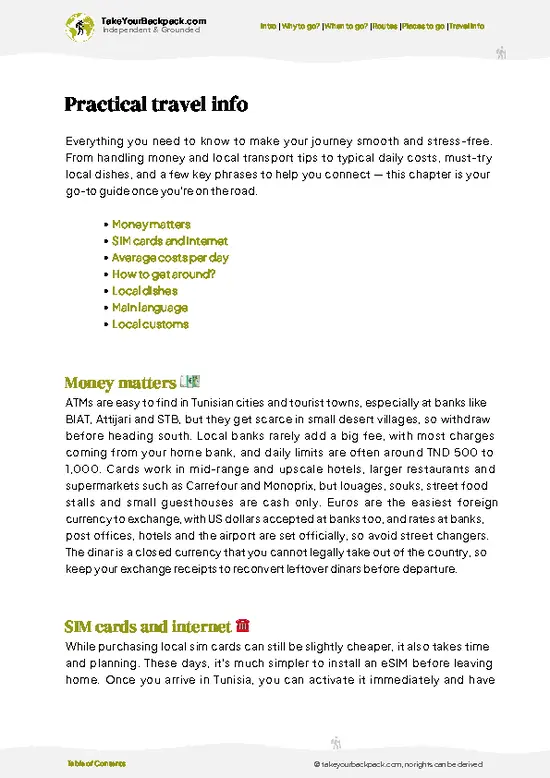
example page 3 from our offline Travel Guide for Tunisia
example page 4 from our offline Travel Guide for Tunisia
example page 5 from our offline Travel Guide for Tunisia
example page 6 from our offline Travel Guide for Tunisia
example page 7 from our offline Travel Guide for Tunisia
The digital guide (372 pages) contains:
97 highlights, ranked by travel appeal
Optimized 5, 10 & 15-day travel routes
Cities, national parks, landmarks, beaches
How to get around
Offline-friendly for travel without Wi-Fi
👉 Click to see all 30+ guide features

📅 Plan smarter in minutes, not weeks
Month by month travel advice
Festivals & national holidays
Budget expectations

🗺️ Go to the right places, skip the overrated ones
Honest pros & cons of destinations
Top hikes, parks & viewpoints
Lesser-known places most travelers miss
Clear “worth it vs skip it” guidance

🛏️ Travel smoothly without rookie mistakes
Best areas to stay
Transport systems explained simply
Common scams & safety advice
SIM cards, money & practical tips

🌍 Understand the country, not just visit it
Culture & traditions
52 Essential phrases & customs
Festivals worth planning around
Traveler-friendly historical context
Insights that make places more meaningful

📱 Built for real travel conditions
Fully downloadable PDF
Works completely offline
Optimized for phone use
Useful in remote areas & buses
Everything in one place
Save weeks of stressful planning
Get instant access to your full guide. 30‑day money-back guarantee.


By proceeding you agree to our terms.
Sent to your inbox immediately after payment • 100% Secure Checkout
Best Backpacking Travel Advisor 2025 tourism awardBest Backpacking
Travel Advisor
2025
What others say about Take Your Backpack Guides:
⭐⭐⭐⭐⭐
Fantastic, amazing amount of information!
⭐⭐⭐⭐⭐
My goodness this is amazing, it's what I've been looking for hats off too you!
⭐⭐⭐⭐⭐
I think this is absolutely BRILLIANT
⭐⭐⭐⭐
Very complete and informative. It's still missing places, but I gotta to commend you
⭐⭐⭐⭐⭐
This is truly amazing, thank you, can't wait to explore it with my kids!
⭐⭐⭐⭐⭐
Awesome resource, thank you!
⭐⭐⭐⭐⭐
This is amazing! Can't wait to explore the ones I haven't seen
⭐⭐⭐⭐
I love this! Well done, great idea.
⭐⭐⭐⭐⭐
Thanks for taking the time to make this gem!
⭐⭐⭐⭐⭐
This might be the best website I've ever seen.
⭐⭐⭐⭐⭐
Congratulations, and thank you so much for your work; it's incredibly valuable.
⭐⭐⭐⭐
In all seriousness I think you did a great job pointing out the important spots
⭐⭐⭐⭐⭐
10/10 very good
⭐⭐⭐⭐⭐
As someone who's only just starting to visit regularly this is awesome, thank you.
⭐⭐⭐⭐
Thank you very much! I'm going to visit my dad, it's going to be very useful!
⭐⭐⭐⭐⭐
This is really cool! We'll be travelling for the first time and this definitely come in handy.
⭐⭐⭐⭐⭐
You are now our minister of culture, congratulations 👨‍💼
⭐⭐⭐⭐⭐
Just wanted to tell you that this is a pearl! Going to follow your recommendations.
⭐⭐⭐⭐⭐
This is so cool. I'll definitely be using the resource for my travels soon.
⭐⭐⭐⭐⭐
This is very impressive! Good work.
⭐⭐⭐⭐⭐
This is an amazing and informative site. Very well done!

🛏️ Where to stay?Where to Stay in Tunisia

Yes — hostels and budget accommodation are widely available in Tunisia, concentrated in Tunis (Medina and Ville Nouvelle), Sousse (Medina and waterfront), Hammamet, Djerba, with smaller backpacker options in Tozeur and Kairouan.
Medina areas put you within historic highlights and cheap local food but expect narrow streets, basic rooms and limited nightlife; Ville Nouvelle and Sousse waterfront offer easier transport, more social hostels and livelier evenings at slightly higher rates; Hammamet and Djerba are quieter beach bases with seasonal service drops and fewer cheap beds outside high season.
Budget places usually mean communal bathrooms, simple cleaning standards and crowded summer months, … read more 👉
Yes — hostels and budget accommodation are widely available in Tunisia, concentrated in Tunis (Medina and Ville Nouvelle), Sousse (Medina and waterfront), Hammamet, Djerba, with smaller backpacker options in Tozeur and Kairouan.
Medina areas put you within historic highlights and cheap local food but expect narrow streets, basic rooms and limited nightlife; Ville Nouvelle and Sousse waterfront offer easier transport, more social hostels and livelier evenings at slightly higher rates; Hammamet and Djerba are quieter beach bases with seasonal service drops and fewer cheap beds outside high season.
Budget places usually mean communal bathrooms, simple cleaning standards and crowded summer months, so book early in peak season, carry cash, and bring a light sleeping liner and mosquito protection to avoid common small-trip mistakes.

If you enjoy meeting fellow travelers, consider choosing hostels with high ratings for atmosphere. On the other hand, if you prefer having your own space, a hotel might be a better option.

TunisiaMore of Tunisia

👋 Meet the founderWho’s Behind Take Your Backpack?

Johan, backpacker and founder of TakeYourBackpackHi, I’m Johan (Netherlands 🇳🇱), the creator of TakeYourBackpack. Over the past decade, I’ve backpacked through 80+ countries across six continents, gaining extensive experience with independent travel, long-term trips, and overland routes.

This site is built on a combination of firsthand travel experience and carefully curated insights from other backpackers. Many guides are based on places I’ve personally visited, while others bring together tips, observations, and practical advice shared by trusted travelers I’ve met along the way.

The goal is to provide realistic, experience-driven guidance — not generic itineraries — so you can explore destinations with better context, clearer expectations, and more confidence.

Get full Tunisia guide •
Instant download • 97 highlights • Full Offline guide