v2.webp)
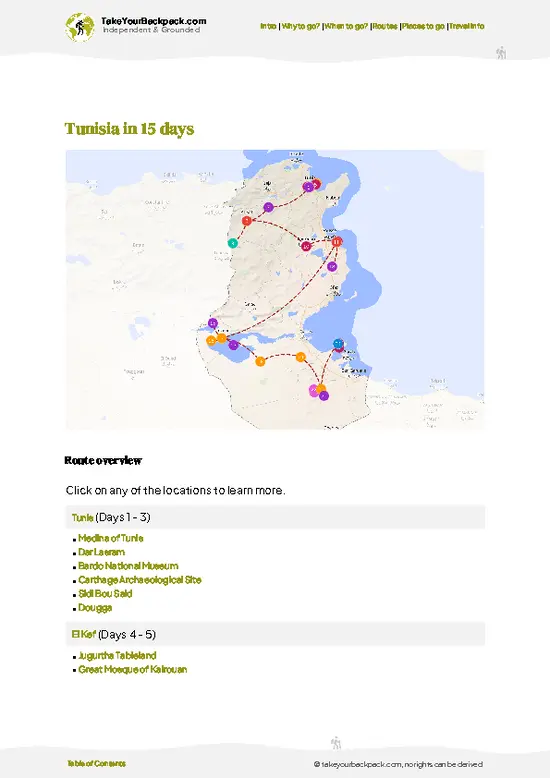
- The Courtyard and Galleries: The part visitors can enter, with arched arcades on three sides and a calm, shaded floor. It is the best spot to take in the proportions of the building.
- The Minaret: Square and tall, built in the 19th century in an Ottoman-influenced Tunisian style. You can see it from several rooftops and from the lanes around the mosque.
- The Prayer Hall Columns: Glimpsed from the entrance, the dense rows of pillars and capitals, many taken from ancient Carthage, create a hall that looks endless.
- The Main Gate and Facade: The approach from the souks has carved details and a worn stone threshold that tell you this is a working place of worship.
- Souk des Libraires: The old booksellers’ lane beside the mosque recalls its days as a center of learning, and today it is mostly souvenirs
- The Courtyard and Galleries: The part visitors can enter, with arched arcades on three sides and a calm, shaded floor. It is the best spot to take in the proportions of the building.
- The Minaret: Square and tall, built in the 19th century in an Ottoman-influenced Tunisian style. You can see it from several rooftops and from the lanes around the mosque.
- The Prayer Hall Columns: Glimpsed from the entrance, the dense rows of pillars and capitals, many taken from ancient Carthage, create a hall that looks endless.
- The Main Gate and Facade: The approach from the souks has carved details and a worn stone threshold that tell you this is a working place of worship.
- Souk des Libraires: The old booksellers’ lane beside the mosque recalls its days as a center of learning, and today it is mostly souvenirs with a few book stalls.
- Souk el Attarine: The perfumers’ market just by the mosque, where you can smell jasmine, rose and musk oils and watch sellers weigh small bottles.
- Rooftop Views from Nearby Cafes: Several terraces around the souk give a clear view of the minaret and domes against the white rooftops of the Medina.
Spotted a mistake or missing something? Contact us.

Private tour: Medina,Carthage ,Sidi Bou Said, Bardo Museum+lunch

Walking Tour through the Medina of Tunis(Pay what you want)

Carthage, Bardo Museum, Sidi Bou Said and Medina Private Day Tour

07 -Guided day Tour Tunisia Monumental

Private Day Tour Tunis Medina Carthage Sidi Bou Said Bardo Museum

Tour of Tunis Carthage and Sidi Boussaid with local lunch

Tunis: Carthage, Bardo Museum, Sidi Bou Said & Medina Group Tour

Private Tour SidiBouSaid Medina Carthage&bardo Museum

Picturesque Village Of Sidi Bou Said + Tunis Old Medina


 Best Backpacking
.jpg) Hi, I’m Johan (Netherlands 🇳🇱), the creator of TakeYourBackpack. Over the past 3 decades, I’ve backpacked through 90+ countries across six continents, gaining extensive experience with independent travel, long-term trips, and overland routes.
Hi, I’m Johan (Netherlands 🇳🇱), the creator of TakeYourBackpack. Over the past 3 decades, I’ve backpacked through 90+ countries across six continents, gaining extensive experience with independent travel, long-term trips, and overland routes.