×

Tunisia🇹🇳 | attractionsRibat of MonastirNador tower, arcaded courtyard, pilgrim cells, Bourguiba mausoleum | things to do and best time to go

Explore Kasbah of HammametExplore Dar Lasram

Backpacking in Ribat of Monastir
🌟 Highlightattraction ranked #5
By Johan Kruseman 🇳🇱 | Updated October 22, 2026

You climb the watchtower's narrow stairs, knees complaining, and emerge into a wind that smells of salt and warm limestone, with a school group already photographing your elbow. The Ribat of Monastir sits on the Mediterranean waterfront in the Sahel region of eastern Tunisia, a short ride south of Sousse. It is a compact, honey-colored fortress, so you will not need a packed lunch, and the entry fee is small. Crowds thin out fast outside tour-bus hours, though the courtyard can feel like a film set when a group arrives, because it has been one. Monty Python's Life of Brian was shot here. The reward is the sea-view roof, the plain prayer cells and the sense of a working military monastery. Unlike the larger ribat in Sousse, this one is easier to wander and has the Bourguiba mausoleum next door.

Discover everything you want to know in the 📖 Tunisia Travel Guide.


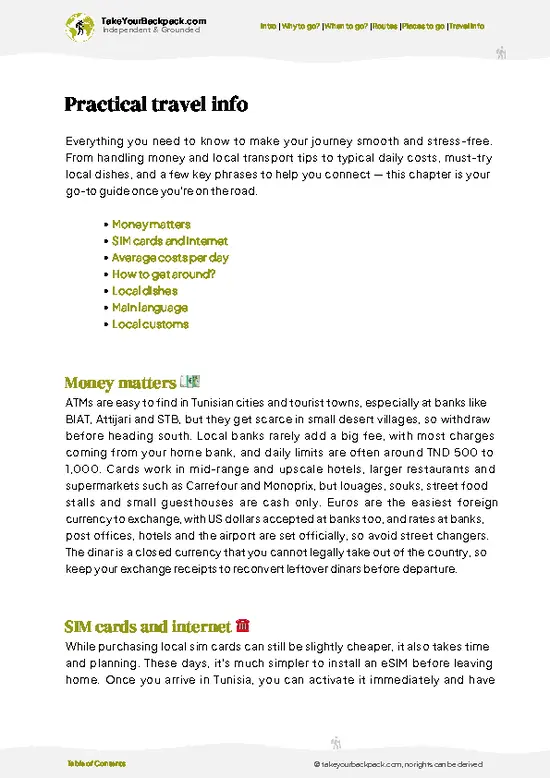
example page 0 from our offline Travel Guide for Tunisia
example page 1 from our offline Travel Guide for Tunisia
example page 2 from our offline Travel Guide for Tunisia
example page 3 from our offline Travel Guide for Tunisia
example page 4 from our offline Travel Guide for Tunisia
example page 5 from our offline Travel Guide for Tunisia
example page 6 from our offline Travel Guide for Tunisia
example page 7 from our offline Travel Guide for Tunisia
Loading the map 🌍
CLICK TO FILTER
cities
towns
villages
landmarks
national parks
hikes
beaches
attractions
festivals
regions
SHOW COUNTRY’S BESTSHOW ALL

✨ Why go?
Ranked #5 attraction in Tunisia
Why Ribat of Monastir should be on your travel list

Ribat of Monastir is one of the oldest surviving Islamic coastal fortresses in North Africa, and walking its stone corridors shows you how early frontier life worked. It is built around a square courtyard with a ring of tiny prayer and sleeping cells, still bare enough to picture the fighter-monks who lived in them. Climb the Nador watchtower and you can see the whole bay, the old medina and the white tombs along the shore, which explains the placement better than any plaque.

It also rewards the film-minded. The fortress doubled as Jerusalem and Nazareth in Life of Brian, and stepping into the courtyard makes the scenes click. For a backpacker working down the Sahel coast, it is an easy, cheap stop that adds real depth between beach days, and the museum of Islamic art inside gives context without eating your afternoon.

💡 HighlightsThe experiences that define the visit

  1. The Nador Watchtower: the signature climb, a narrow stair to a roof platform with views over the sea, the medina and the cemetery.
  2. The Main Courtyard: a square arcaded space with thick stone arches, where Life of Brian scenes were filmed. Go when it is quiet and the shadows are sharp.
  3. The Prayer and Sleeping Cells: small, bare rooms on two levels where the ribat's residents lived and prayed, showing how plain the daily routine was.
  4. The Museum of Islamic Art: displays of manuscripts, ceramics, glass and coins in the fortress, a useful introduction to the region's history.
  5. The Old Mosque Space: the early prayer hall inside the walls, simple and cool, its architecture showing the original function of the building.
  6. The Ramparts Walk: the thick outer walls and corners, good for photographing the sea
… read more 👉
  1. The Nador Watchtower: the signature climb, a narrow stair to a roof platform with views over the sea, the medina and the cemetery.
  2. The Main Courtyard: a square arcaded space with thick stone arches, where Life of Brian scenes were filmed. Go when it is quiet and the shadows are sharp.
  3. The Prayer and Sleeping Cells: small, bare rooms on two levels where the ribat's residents lived and prayed, showing how plain the daily routine was.
  4. The Museum of Islamic Art: displays of manuscripts, ceramics, glass and coins in the fortress, a useful introduction to the region's history.
  5. The Old Mosque Space: the early prayer hall inside the walls, simple and cool, its architecture showing the original function of the building.
  6. The Ramparts Walk: the thick outer walls and corners, good for photographing the sea against pale stone.
  7. The Bourguiba Mausoleum: a short walk away, a grand golden-domed tomb of Tunisia's first president, with tall minarets and an avenue of palms.
The Bourguiba Mausoleum exterior costs nothing to admire, while the ribat itself charges a small fee.
Spotted a mistake or missing something? Contact us.

Things to do around Ribat of Monastir

Ratings based on Tripadvisor reviews. When you book through this link, you support our work at no extra cost to you.

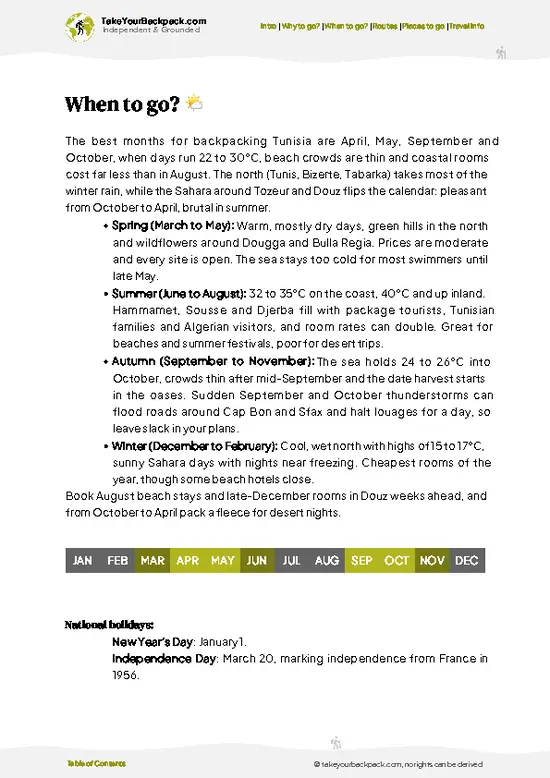
🌤️ When to go?Seasonal considerations and timing

  • Spring (April to May): Days reach 20 to 26°C (68 to 79°F), the sea is still cold, and tour groups thin out. Light stays on the ramparts until well into the evening, which suits photography.
  • Summer (June to August): Highs of 30 to 34°C (86 to 93°F) with strong humidity. Beaches fill with Tunisian families, and beds cost the most. The courtyard and the tower climb are best done early.
  • Autumn (September to October): Highs of 24 to 30°C (75 to 86°F) and sea water warm enough to swim. Crowds ease after mid-September and prices drop.
  • Winter (November to March): Highs of 14 to 18°C (57 to 64°F), rain on some days, short daylight, and few other visitors. Rooms are cheapest.
Ribat of Monastir is easiest in May or late September, and the interior is cooler than the sun-baked parapet in any season.

source: climatestotravel.comJANJanuary: good for travelingFEBFebruary: good for travelingMARMarch: good for travelingAPRApril: excellent for travelingMAYMay: excellent for travelingJUNJune: good for travelingJULJuly: fair for travelingAUGAugust: fair for travelingSEPSeptember: excellent for travelingOCTOctober: excellent for travelingNOVNovember: good for travelingDECDecember: good for traveling
when-to-go

✈️ The backpacker research shortcutTunisia Travel Guide

An offline-friendly backpacking guide with optimized travel routes, ranked highlights, transport advice, and the best areas to stay.
example page 0 from our offline Travel Guide for Tunisia
example page 1 from our offline Travel Guide for Tunisia
example page 2 from our offline Travel Guide for Tunisia
example page 3 from our offline Travel Guide for Tunisia
example page 4 from our offline Travel Guide for Tunisia
example page 5 from our offline Travel Guide for Tunisia
example page 6 from our offline Travel Guide for Tunisia
example page 7 from our offline Travel Guide for Tunisia
The digital guide (355 pages) contains:
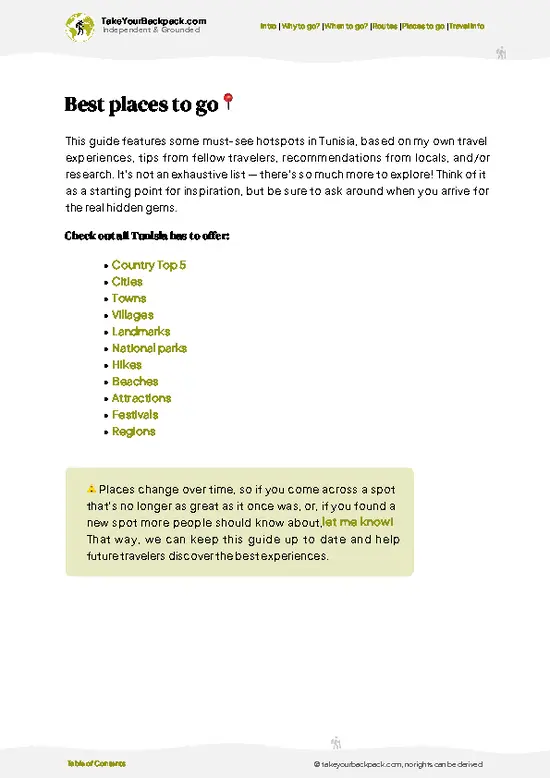
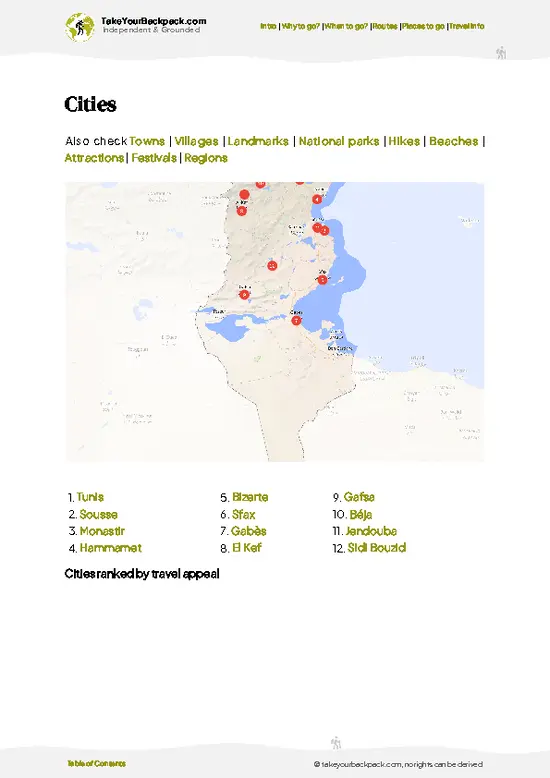
✅ 90 highlights, ranked by travel appeal
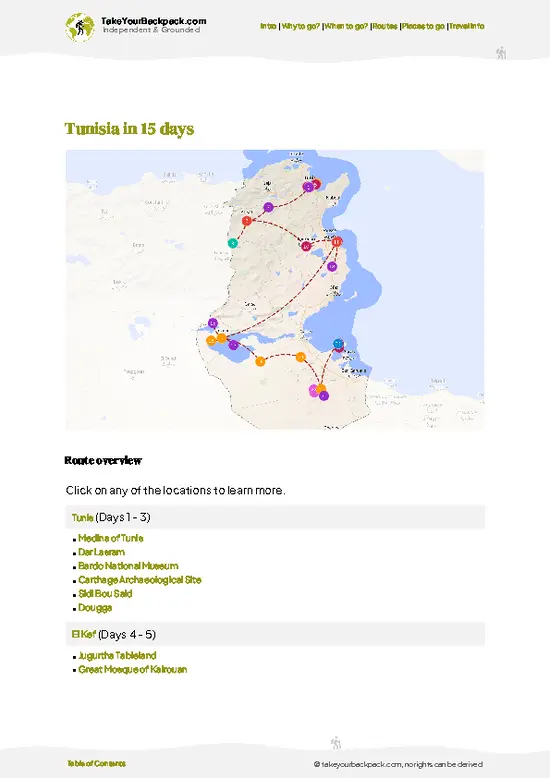
✅ Optimized 5, 10 & 15-day travel routes
✅ Cities, national parks, landmarks, beaches
✅ How to get around
✅ Offline-friendly for travel without Wi-Fi
👉 Click to see all 30+ guide features

📅 Plan smarter in minutes, not weeks
✅ Month by month travel advice
✅ Festivals & national holidays
✅ Budget expectations

🗺️ Go to the right places, skip the overrated ones
✅ Honest pros & cons of destinations
✅ Top hikes, parks & viewpoints
✅ Lesser-known places most travelers miss
✅ Clear “worth it vs skip it” guidance

🛏️ Travel smoothly without rookie mistakes
✅ Best areas to stay
✅ Transport systems explained simply
✅ Common scams & safety advice
✅ SIM cards, money & practical tips

🌍 Understand the country, not just visit it
✅ Culture & traditions
✅ 52 Essential phrases & customs
✅ Festivals worth planning around
✅ Traveler-friendly historical context
✅ Insights that make places more meaningful

📱 Built for real travel conditions
✅ Fully downloadable PDF
✅ Works completely offline
✅ Optimized for phone use
✅ Useful in remote areas & buses
✅ Everything in one place
Stop searching, start planning
Get instant access to your full guide. 30‑day money-back guarantee.
+ Add another guide for just

By proceeding you agree to our terms.
Sent to your inbox immediately after payment • 100% Secure Checkout
Best Backpacking Travel Advisor 2025 tourism awardBest Backpacking
Travel Advisor
2025
What others say about Take Your Backpack Guides:
⭐⭐⭐⭐⭐
Fantastic, amazing amount of information!
⭐⭐⭐⭐⭐
My goodness this is amazing, it's what I've been looking for hats off too you!
⭐⭐⭐⭐⭐
I think this is absolutely BRILLIANT
⭐⭐⭐⭐
Very complete and informative. It's still missing places, but I gotta to commend you
⭐⭐⭐⭐⭐
This is truly amazing, thank you, can't wait to explore it with my kids!
⭐⭐⭐⭐⭐
Awesome resource, thank you!
⭐⭐⭐⭐⭐
This is amazing! Can't wait to explore the ones I haven't seen
⭐⭐⭐⭐
I love this! Well done, great idea.
⭐⭐⭐⭐⭐
Thanks for taking the time to make this gem!
⭐⭐⭐⭐⭐
This might be the best website I've ever seen.
⭐⭐⭐⭐⭐
Congratulations, and thank you so much for your work; it's incredibly valuable.
⭐⭐⭐⭐
In all seriousness I think you did a great job pointing out the important spots
⭐⭐⭐⭐⭐
10/10 very good
⭐⭐⭐⭐⭐
As someone who's only just starting to visit regularly this is awesome, thank you.
⭐⭐⭐⭐
Thank you very much! I'm going to visit my dad, it's going to be very useful!
⭐⭐⭐⭐⭐
This is really cool! We'll be travelling for the first time and this definitely come in handy.
⭐⭐⭐⭐⭐
You are now our minister of culture, congratulations 👨‍💼
⭐⭐⭐⭐⭐
Just wanted to tell you that this is a pearl! Going to follow your recommendations.
⭐⭐⭐⭐⭐
This is so cool. I'll definitely be using the resource for my travels soon.
⭐⭐⭐⭐⭐
This is very impressive! Good work.
⭐⭐⭐⭐⭐
This is an amazing and informative site. Very well done!

🛏️ Where to stay?Choosing the right base

The medina and the streets around the Habib Bourguiba mausoleum put you within a ten-minute walk of the Ribat of Monastir, and that is where I would stay. The old town is compact, flat, and lit at night, with cafes along the Avenue de l’Indépendance and cheap grilled-fish and sandwich counters that stay open late. Guesthouses here are small, family-run, and attract solo travelers, so you will meet people at breakfast tables rather than in big dorms.
The waterfront near the marina, east of the Ribat, is the second option. It is calmer, with sea views and a promenade for evening walks, and better … read more 👉
The medina and the streets around the Habib Bourguiba mausoleum put you within a ten-minute walk of the Ribat of Monastir, and that is where I would stay. The old town is compact, flat, and lit at night, with cafes along the Avenue de l’Indépendance and cheap grilled-fish and sandwich counters that stay open late. Guesthouses here are small, family-run, and attract solo travelers, so you will meet people at breakfast tables rather than in big dorms.
The waterfront near the marina, east of the Ribat, is the second option. It is calmer, with sea views and a promenade for evening walks, and better for couples or anyone who wants a quiet room. Prices are a notch higher in summer.
The Skanes tourist zone, a few kilometers north, holds large resort hotels and a long beach. It suits those who want sand and pools, but the area is sleepy outside the season and lacks hostel-style company. Taxis or the Metro du Sahel train into town are easy, though. For budget travelers, the medina wins on price, safety after dark, and the chance to wander to the Ribat at opening time.

👛 Costs (as of 22 October 2026)What things cost and how to budget

Ribat of Monastir costs roughly US$35 to 55 a day for a budget traveler, with the entry ticket itself under US$5. Everything is paid in Tunisian dinars, and cash is the norm at small guesthouses and food counters.
CategoryBudget RangeLocal Reality
Ribat entry ticketUS$3 to 4A small extra fee applies if you want to use a camera inside.
Accommodation (high season)US$20 to 30Private rooms in medina guesthouses; low season runs about US$12 to 20.
FoodUS$8 to 12Sandwiches, grilled fish plates, and tea at local cafes; a sit-down seafood meal costs more.
Local transportUS$1 to 3The Metro du Sahel train and short taxi hops across town.
Nearby extrasUS$3 to 6Entry to the Bourguiba mausoleum is free, while the Museum of Islamic Art in the Ribat is covered by the same ticket.
Total Daily BudgetUS$35 to 55Based
… read more 👉
Ribat of Monastir costs roughly US$35 to 55 a day for a budget traveler, with the entry ticket itself under US$5. Everything is paid in Tunisian dinars, and cash is the norm at small guesthouses and food counters.
CategoryBudget RangeLocal Reality
Ribat entry ticketUS$3 to 4A small extra fee applies if you want to use a camera inside.
Accommodation (high season)US$20 to 30Private rooms in medina guesthouses; low season runs about US$12 to 20.
FoodUS$8 to 12Sandwiches, grilled fish plates, and tea at local cafes; a sit-down seafood meal costs more.
Local transportUS$1 to 3The Metro du Sahel train and short taxi hops across town.
Nearby extrasUS$3 to 6Entry to the Bourguiba mausoleum is free, while the Museum of Islamic Art in the Ribat is covered by the same ticket.
Total Daily BudgetUS$35 to 55Based on a mid-range hostel or guesthouse bed and local meals.
⚠️ Prices can change and everyone travels differently, so take this as a rough guide. Hope it helps you plan your adventure!

FAQCommon questions from travelers

Ribat of Monastir needs about one to two hours, including the climb up the watchtower and a walk through the museum rooms. Add another hour for the nearby Bourguiba mausoleum and the old medina streets. Most travelers fit everything into a half-day, then continue to Sousse or El Jem.
Ribat of Monastir is worth the fee, which is only about US$3 to 4. You get a rooftop climb with views over the sea and the town, plus an Islamic art collection inside the fortress. It also appears in film scenes, which adds a bit of fun.
Ribat of Monastir is reached by the Metro du Sahel train from Sousse, a ride of roughly 30 to 40 minutes for about US$1. From Monastir station, the Ribat is a 15-minute walk or a short taxi ride. Louages (shared taxis) and buses from Sousse and Mahdia also stop in town, and Monastir airport lies a few kilometers away.
⚠️ Things can change over time, so always validate details locally before you go.

Other Tunisian attractions near Ribat of Monastir

Explore more nearby:


💡 Not sure where to go next?
Create a personalized itinerary for Tunisia including Ribat of Monastir and the places that fit your trip.

Generate my itinerary

👉 Discover all attractions

Or checkout all Tunisia has to offer (think cities, towns, villages, national parks, hikes, beaches, festivals)
Country photo of Tunisia

We 💚 feedbackParting advice and final tips

Ribat of Monastir looks best in the soft light of a spring or autumn morning, before tour groups arrive and when the stone is still cool. I would climb the watchtower first, then walk the courtyard once it empties. Bring a hat and water, because the rooftop has almost no shade.

✍️ Help improve this page!
The information on this page is based on in-depth research, insights shared by experienced travelers, and feedback from the local travel community in Tunisia. While every effort is made to keep the information accurate and current, conditions can change — so if you spot anything incorrect or outdated, please get in touch.


🙋‍♂️ Give feedback

👋 Meet the founderWho’s Behind Take Your Backpack?

Johan, backpacker and founder of TakeYourBackpackHi, I’m Johan (Netherlands 🇳🇱), the creator of TakeYourBackpack. Over the past 3 decades, I’ve backpacked through 90+ countries across six continents, gaining extensive experience with independent travel, long-term trips, and overland routes.

This site is built on a combination of firsthand travel experience and carefully curated insights from other backpackers. Many guides are based on places I’ve personally visited, while others bring together tips, observations, and practical advice shared by trusted travelers I’ve met along the way.

The goal is to provide realistic, experience-driven guidance — not generic itineraries — so you can explore destinations with better context, clearer expectations, and more confidence.