×

Tunisia🇹🇳 | best attractionsDiscover the 10 Best attractions Across Tunisia

Tunisia’s attractions don’t just sit prettily for your camera—they’re shaped by a mix of Mediterranean coastlines, Saharan sands, and centuries of layered history that demand more than a quick glance. For backpackers, the choice between bustling medinas in Tunis, the quiet ruins of Dougga, or the vast desert landscapes near Douz isn’t just about scenery; it’s about how each spot tests your budget, patience, and sense of adventure. Seasonal shifts matter here—summer’s heat can turn a hike into a trial, while winter invites a more comfortable exploration but with fewer crowds and different local rhythms. Picking the right attraction in Tunisia means balancing your desire for cultural immersion with practical concerns like transport reliability and safety, ensuring your independent travel feels like a genuine discovery, not a checklist chore.

By Johan Kruseman 🇳🇱 | Updated June 10, 2026
Explore the best festivals in Tunisia

Why go?What Makes Them Special

Why These Attractions Matter

Tunisia’s attractions stand apart because they are a crossroads where Mediterranean history tangles with Saharan vastness, creating a blend you won’t find elsewhere. Unlike countries that lean heavily on either ancient ruins or natural landscapes, Tunisia offers both in a compact, accessible package. This means you can trade long-haul travel for deeper exploration within a relatively small footprint. However, that convenience comes with its quirks. The country’s infrastructure is a patchwork—some roads and transport options are modern and efficient, while others remind you that you’re still on the edge of the desert. This uneven accessibility means that reaching some of the most immersive experiences requires patience and a willingness to embrace a slower pace.

Climatically, … read more 👉
Why These Attractions Matter

Tunisia’s attractions stand apart because they are a crossroads where Mediterranean history tangles with Saharan vastness, creating a blend you won’t find elsewhere. Unlike countries that lean heavily on either ancient ruins or natural landscapes, Tunisia offers both in a compact, accessible package. This means you can trade long-haul travel for deeper exploration within a relatively small footprint. However, that convenience comes with its quirks. The country’s infrastructure is a patchwork—some roads and transport options are modern and efficient, while others remind you that you’re still on the edge of the desert. This uneven accessibility means that reaching some of the most immersive experiences requires patience and a willingness to embrace a slower pace.

Climatically, Tunisia’s Mediterranean coast offers mild, pleasant conditions, but venture inland and the heat and aridity demand respect and preparation. This contrast shapes the kind of travel possible: coastal sites invite relaxed exploration, while desert excursions require more planning and stamina. The cultural fabric here is dense, woven from Berber, Arab, Roman, and French threads, which gives each attraction layers of meaning beyond surface beauty. Yet, this richness also means that some sites can feel overwhelmed by tourism, diluting the authenticity unless you’re ready to look beyond the obvious.

In short, Tunisia’s attractions reward those willing to navigate its logistical quirks and climatic extremes, offering a travel experience that balances accessibility with genuine depth.
Our Approach to Ranking
The list of best attractions in Tunisia is created based on cultural significance or entertainment value. If you feel a attraction is missing in this list, please let us know.

When to go?Timing Your Visit for the Best Experience

When to Visit Tunisia for visiting attractions


Tunisia’s climate is a classic Mediterranean tease: hot, dry summers and mild, wet winters. If you’re chasing comfortable days for wandering ruins or exploring markets without melting into a puddle, aim for the shoulder seasons. Spring and autumn offer a sweet spot—temperatures are warm but not oven-hot, and the crowds thin out compared to the peak summer crush. Expect fewer tourists and more reasonable prices, though occasional spring showers can surprise you.

Summer is when Tunisia turns up the heat—literally. Temperatures often soar well above what most humans find pleasant, especially inland. This means outdoor attractions can feel more like a test of endurance than a leisurely stroll. Plus, the coastal spots fill up with holidaymakers, … read more 👉

When to Visit Tunisia for visiting attractions


Tunisia’s climate is a classic Mediterranean tease: hot, dry summers and mild, wet winters. If you’re chasing comfortable days for wandering ruins or exploring markets without melting into a puddle, aim for the shoulder seasons. Spring and autumn offer a sweet spot—temperatures are warm but not oven-hot, and the crowds thin out compared to the peak summer crush. Expect fewer tourists and more reasonable prices, though occasional spring showers can surprise you.

Summer is when Tunisia turns up the heat—literally. Temperatures often soar well above what most humans find pleasant, especially inland. This means outdoor attractions can feel more like a test of endurance than a leisurely stroll. Plus, the coastal spots fill up with holidaymakers, driving up costs and crowd levels. If you thrive on bustling energy and don’t mind the sweat, summer’s your season, but plan for early mornings and late afternoons to avoid the worst of it.

Winter brings cooler temperatures and more rain, which can dampen plans for outdoor adventures. Some attractions might have reduced hours or limited access. However, if you’re after quiet and don’t mind layering up, winter offers a different, less polished side of Tunisia that’s worth experiencing.

In short, the best time balances weather, crowds, and cost—spring and autumn hit that sweet spot, while summer and winter each come with their own trade-offs that can either enhance or complicate your visit.

attraction hoppingSuggested Travel Strategies

How to Combine the best attractions of Tunisia Into One Trip


Tunisia’s charm lies in its diversity, but that diversity demands a bit of logistical finesse. The country naturally divides into clusters: the Mediterranean coast, the Sahara interior, and the historic inland towns. Tackling these regions in a logical loop—starting from the capital or a coastal hub and moving inward—saves you from backtracking through endless highways that feel longer than they look on a map.

Expect to spend at least a full day in major cities or archaeological sites to avoid the “drive-by sightseeing” trap, which turns rich history into a blur of missed details. Desert excursions, on the other hand, require more time—think two to three days—to soak in the vastness without feeling rushed. Trying to cram everything … read more 👉

How to Combine the best attractions of Tunisia Into One Trip


Tunisia’s charm lies in its diversity, but that diversity demands a bit of logistical finesse. The country naturally divides into clusters: the Mediterranean coast, the Sahara interior, and the historic inland towns. Tackling these regions in a logical loop—starting from the capital or a coastal hub and moving inward—saves you from backtracking through endless highways that feel longer than they look on a map.

Expect to spend at least a full day in major cities or archaeological sites to avoid the “drive-by sightseeing” trap, which turns rich history into a blur of missed details. Desert excursions, on the other hand, require more time—think two to three days—to soak in the vastness without feeling rushed. Trying to cram everything into a week often leads to a frantic pace, where you’re either stuck in transit or skimming surfaces.

Budget and comfort also play tug-of-war here. Opting for faster transport cuts down travel time but can drain your wallet and energy, while slower, local options offer immersion at the cost of patience. Flexibility is your best friend; rigid schedules rarely survive Tunisian road conditions or unexpected detours. The real payoff comes from balancing effort and reward—spending enough time to appreciate the contrasts between Roman ruins, bustling medinas, and desert silence without turning your trip into a checklist marathon.

The ListTop attractions of Tunisia

1 Bardo National Museum

Roman mosaics, Ottoman palace, archaeological collections

View extensive mosaic galleries and artifacts inside a former palace, tracing the region’s layered history from antiquity to modern times.

2 Dougga Archaeological Site

Capitoline temple, hillside theater, Roman cityscape

Roam a well-preserved Roman settlement, encountering temples, public spaces, and rural landscapes that evoke North Africa’s classical era.

3 Carthage Archaeological Site

Punic ruins, Roman baths, ancient harbors

Walk among remnants of Carthage’s empire, observing monumental structures and waterfront relics that reveal centuries of Mediterranean influence.

4 Kairouan Great Mosque and Medina Monuments

Massive prayer hall, ancient cisterns, labyrinthine streets

Visit a foundational Islamic site and explore nearby monuments, discovering architectural innovations and religious traditions in a compact medina.

5 Ribat of Monastir

Fortified monastery, watchtowers, stone corridors

Ascend ancient towers and explore defensive passageways in a coastal ribat that served both religious and military functions.

6 Sousse Archaeological Museum

Byzantine mosaics, underground crypts, kasbah setting

Examine intricate mosaics and funerary art housed within a fortress, offering insight into Sousse’s Roman and early Christian past.

7 El Ghriba Synagogue

Pilgrimage site, blue-and-white tiles, Jewish heritage

Experience a centuries-old synagogue central to Tunisian Jewish life, known for its annual pilgrimage and distinctive interior design.

8 Carthage National Museum

Phoenician artifacts, hilltop views, statuary

Survey artifacts and sculptures that illustrate Carthage’s rise and fall, with panoramic vistas over the ancient city and coastline.

9 Dar Ben Abdallah Museum of Traditional Arts and Traditions

Medina townhouse, folk costumes, crafts displays

Step into a preserved residence to examine textiles, jewelry, and daily objects reflecting Tunisian urban life and artisanal heritage.

10 Guellala Museum (Traditional Pottery and Berber Culture

Pottery workshops, Berber artifacts, domed halls

Observe pottery-making techniques and displays of Berber tools, clothing, and domestic life in a museum built into the island’s hillside.

11 Kasbah of Hammamet

Seaside fortress, rampart views, whitewashed walls

Climb fortified walls overlooking the Mediterranean and wander through a historic stronghold that once guarded the coastal settlement.

12 Dar Lasram

Aristocratic mansion, stucco ceilings, medina architecture

Tour an ornate family home featuring decorative interiors and architectural details that illustrate the lifestyle of historic Tunisian elites.

13 National Theatre of Tunis

Art deco façade, performance venue, city center landmark

Attend a cultural event or admire the building’s design, which anchors the city’s performing arts scene and architectural heritage.

Think you know Tunisia?

Prove you’re a true local — uncover 3 lesser-known attractions in Tunisia that locals tend to keep to themselves.
Loading the map 🌍

Expert viewInsights from Locals and Experts

Expert Commentary


Visiting Tunisia’s top attractions is a bit like assembling a mixtape—you want enough tracks to get the full vibe, but not so many that you lose the groove. Aim for around five to seven key spots to really soak in the country’s layers without turning your trip into a frantic checklist. Trying to cram more than that usually means you’re spending more time in transit or in line than actually experiencing anything worthwhile.

Budget-wise, Tunisia is generally kind to your wallet, but don’t expect every attraction to be a bargain. Entrance fees can vary widely, and some of the more famous sites have a tourist surcharge that feels like a small tax on your patience. Factor in the cost of local transport, which can be a mixed bag—shared taxis and minibuses are cheap but unpredictable, … read more 👉

Expert Commentary


Visiting Tunisia’s top attractions is a bit like assembling a mixtape—you want enough tracks to get the full vibe, but not so many that you lose the groove. Aim for around five to seven key spots to really soak in the country’s layers without turning your trip into a frantic checklist. Trying to cram more than that usually means you’re spending more time in transit or in line than actually experiencing anything worthwhile.

Budget-wise, Tunisia is generally kind to your wallet, but don’t expect every attraction to be a bargain. Entrance fees can vary widely, and some of the more famous sites have a tourist surcharge that feels like a small tax on your patience. Factor in the cost of local transport, which can be a mixed bag—shared taxis and minibuses are cheap but unpredictable, while private hires offer comfort at a price. If you’re on a tight budget, prioritize fewer attractions and spend more time at each; rushing through multiple sites just to tick boxes often means missing the subtle details that make Tunisia unique.

Time is another tricky beast. The distances between major attractions can be deceptively long, especially if you’re relying on public transport or driving on roads that don’t exactly scream efficiency. What looks like a quick hop on the map can turn into a half-day affair. Factor in some buffer time for unexpected delays—roadworks, local festivals, or the occasional camel crossing. The real magic happens when you slow down enough to notice the small things: the way the light hits ancient stone, the scent of spices wafting from a market stall, or the quiet moments before the crowds arrive.

Speaking of crowds, the Instagram version of Tunisia often glosses over the fact that some sites can feel like a theme park on a busy day. Peak season means sharing your photo op with a dozen other tourists wielding selfie sticks. If you want to dodge the crush, plan your visits early in the morning or late afternoon, or better yet, visit during the shoulder seasons when the weather is still pleasant but the hordes have thinned out. This isn’t just about comfort—it’s about reclaiming a sense of place and connection that gets lost when you’re elbow-to-elbow with other visitors.

Safety and cultural respect are non-negotiable here. Tunisia is generally safe for travelers, but like anywhere, common sense goes a long way. Dress modestly, especially outside tourist hubs, and be mindful of local customs. The country’s rich history is intertwined with a living culture that values hospitality but also expects respect. A little effort to learn basic greetings or to understand social norms can open doors that no guidebook ever will.

Infrastructure varies dramatically across the country. In some regions, you’ll find well-maintained roads and clear signage; in others, expect a more rugged experience. This patchiness means you should always have a backup plan and a flexible attitude. Sometimes the best moments come from the unexpected detours—a roadside café with the best mint tea you didn’t plan on, or a local artisan willing to share stories that no museum plaque could capture.

Ultimately, the real draw of Tunisia isn’t just the headline attractions but the texture beneath them—the way history, culture, and landscape collide in ways that defy easy categorization. The trade-off is that you’ll need patience and a willingness to embrace the imperfect. If you’re chasing a polished, crowd-free experience, you might come away frustrated. But if you’re after something that feels lived-in and layered, with moments of quiet discovery amid the chaos, Tunisia rewards those who dig a little deeper.

So, pack your curiosity, your patience, and a sense of humor. Tunisia’s best attractions are worth the effort, but only if you’re ready to meet them on their own terms—not just the ones filtered through a tourist’s lens.

✈️ The backpacker research shortcutTunisia Travel Guide

An offline-friendly backpacking guide with optimized travel routes, ranked highlights, transport advice, and the best areas to stay.
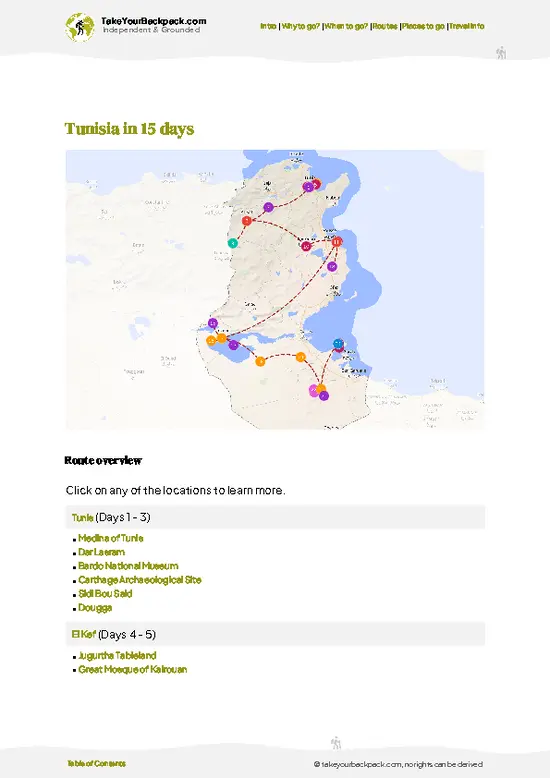
example page 0 from our offline Travel Guide for Tunisia
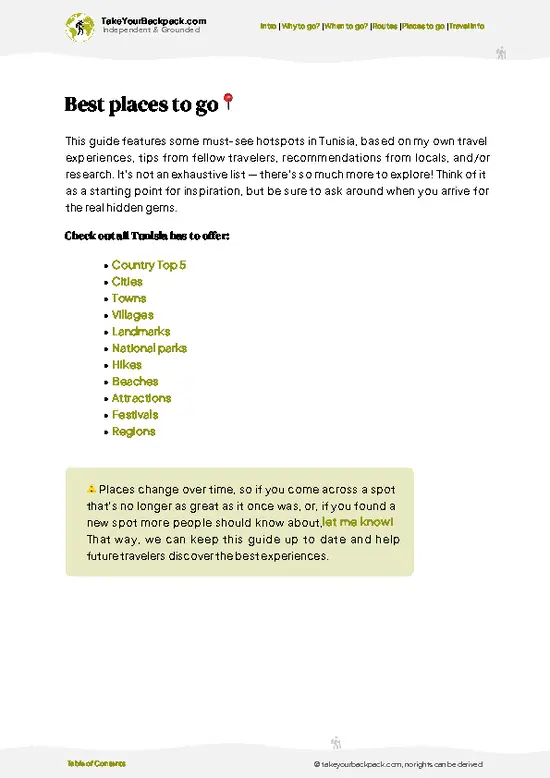
example page 1 from our offline Travel Guide for Tunisia
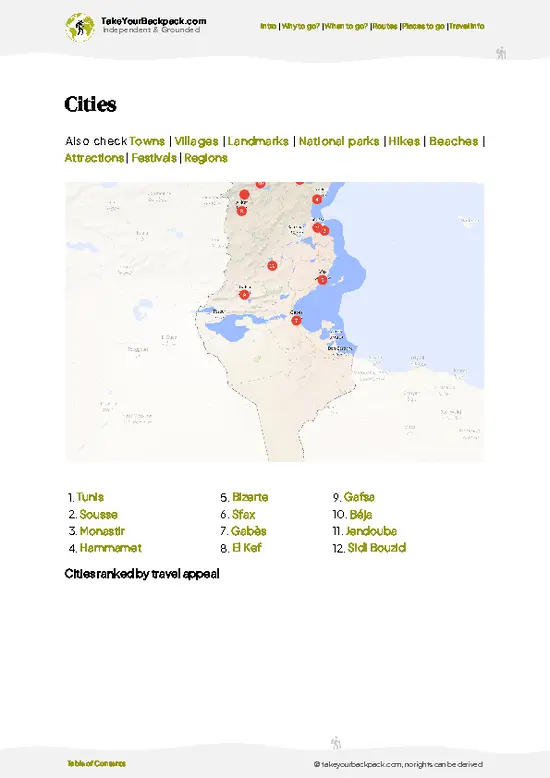
example page 2 from our offline Travel Guide for Tunisia
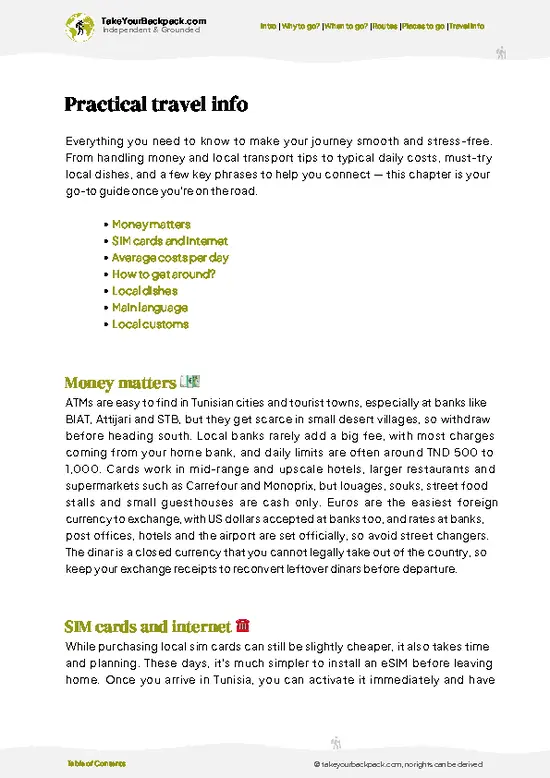
example page 3 from our offline Travel Guide for Tunisia
example page 4 from our offline Travel Guide for Tunisia
example page 5 from our offline Travel Guide for Tunisia
example page 6 from our offline Travel Guide for Tunisia
example page 7 from our offline Travel Guide for Tunisia
The digital guide (372 pages) contains:
97 highlights, ranked by travel appeal
Optimized 5, 10 & 15-day travel routes
Cities, national parks, landmarks, beaches
How to get around
Offline-friendly for travel without Wi-Fi
👉 Click to see all 30+ guide features

📅 Plan smarter in minutes, not weeks
Month by month travel advice
Festivals & national holidays
Budget expectations

🗺️ Go to the right places, skip the overrated ones
Honest pros & cons of destinations
Top hikes, parks & viewpoints
Lesser-known places most travelers miss
Clear “worth it vs skip it” guidance

🛏️ Travel smoothly without rookie mistakes
Best areas to stay
Transport systems explained simply
Common scams & safety advice
SIM cards, money & practical tips

🌍 Understand the country, not just visit it
Culture & traditions
52 Essential phrases & customs
Festivals worth planning around
Traveler-friendly historical context
Insights that make places more meaningful

📱 Built for real travel conditions
Fully downloadable PDF
Works completely offline
Optimized for phone use
Useful in remote areas & buses
Everything in one place
Save weeks of stressful planning
Get instant access to your full guide. 30‑day money-back guarantee.


By proceeding you agree to our terms.
Sent to your inbox immediately after payment • 100% Secure Checkout
Best Backpacking Travel Advisor 2025 tourism awardBest Backpacking
Travel Advisor
2025
What others say about Take Your Backpack Guides:
⭐⭐⭐⭐⭐
Fantastic, amazing amount of information!
⭐⭐⭐⭐⭐
My goodness this is amazing, it's what I've been looking for hats off too you!
⭐⭐⭐⭐⭐
I think this is absolutely BRILLIANT
⭐⭐⭐⭐
Very complete and informative. It's still missing places, but I gotta to commend you
⭐⭐⭐⭐⭐
This is truly amazing, thank you, can't wait to explore it with my kids!
⭐⭐⭐⭐⭐
Awesome resource, thank you!
⭐⭐⭐⭐⭐
This is amazing! Can't wait to explore the ones I haven't seen
⭐⭐⭐⭐
I love this! Well done, great idea.
⭐⭐⭐⭐⭐
Thanks for taking the time to make this gem!
⭐⭐⭐⭐⭐
This might be the best website I've ever seen.
⭐⭐⭐⭐⭐
Congratulations, and thank you so much for your work; it's incredibly valuable.
⭐⭐⭐⭐
In all seriousness I think you did a great job pointing out the important spots
⭐⭐⭐⭐⭐
10/10 very good
⭐⭐⭐⭐⭐
As someone who's only just starting to visit regularly this is awesome, thank you.
⭐⭐⭐⭐
Thank you very much! I'm going to visit my dad, it's going to be very useful!
⭐⭐⭐⭐⭐
This is really cool! We'll be travelling for the first time and this definitely come in handy.
⭐⭐⭐⭐⭐
You are now our minister of culture, congratulations 👨‍💼
⭐⭐⭐⭐⭐
Just wanted to tell you that this is a pearl! Going to follow your recommendations.
⭐⭐⭐⭐⭐
This is so cool. I'll definitely be using the resource for my travels soon.
⭐⭐⭐⭐⭐
This is very impressive! Good work.
⭐⭐⭐⭐⭐
This is an amazing and informative site. Very well done!

🛏️ Where to stay?Top Places to Consider Staying

Yes — hostels and budget accommodation are widely available in Tunisia, concentrated in Tunis (Medina and Ville Nouvelle), Sousse (Medina and waterfront), Hammamet, Djerba, with smaller backpacker options in Tozeur and Kairouan.
Medina areas put you within historic highlights and cheap local food but expect narrow streets, basic rooms and limited nightlife; Ville Nouvelle and Sousse waterfront offer easier transport, more social hostels and livelier evenings at slightly higher rates; Hammamet and Djerba are quieter beach bases with seasonal service drops and fewer cheap beds outside high season.
Budget places usually mean communal bathrooms, simple cleaning standards and crowded summer months, … read more 👉
Yes — hostels and budget accommodation are widely available in Tunisia, concentrated in Tunis (Medina and Ville Nouvelle), Sousse (Medina and waterfront), Hammamet, Djerba, with smaller backpacker options in Tozeur and Kairouan.
Medina areas put you within historic highlights and cheap local food but expect narrow streets, basic rooms and limited nightlife; Ville Nouvelle and Sousse waterfront offer easier transport, more social hostels and livelier evenings at slightly higher rates; Hammamet and Djerba are quieter beach bases with seasonal service drops and fewer cheap beds outside high season.
Budget places usually mean communal bathrooms, simple cleaning standards and crowded summer months, so book early in peak season, carry cash, and bring a light sleeping liner and mosquito protection to avoid common small-trip mistakes.

If you enjoy meeting fellow travelers, consider choosing hostels with high ratings for atmosphere. On the other hand, if you prefer having your own space, a hotel might be a better option.

TunisiaMore Places Across Tunisia

👋 Meet the founderWho’s Behind Take Your Backpack?

Johan, backpacker and founder of TakeYourBackpackHi, I’m Johan (Netherlands 🇳🇱), the creator of TakeYourBackpack. Over the past decade, I’ve backpacked through 80+ countries across six continents, gaining extensive experience with independent travel, long-term trips, and overland routes.

This site is built on a combination of firsthand travel experience and carefully curated insights from other backpackers. Many guides are based on places I’ve personally visited, while others bring together tips, observations, and practical advice shared by trusted travelers I’ve met along the way.

The goal is to provide realistic, experience-driven guidance — not generic itineraries — so you can explore destinations with better context, clearer expectations, and more confidence.

Get full Tunisia guide •
Instant download • 97 highlights • Full Offline guide