×

Türkiye🇹🇷 | landmarksAni Archaeological Sitemedieval ruins, border plateau, ancient churches | things to do and best time to go

Explore AkçakocaExplore Aphrodisias

Backpacking in Ani Archaeological Site
👍 Recommendedunique site ranked #7
By Johan Kruseman 🇳🇱 | Updated May 26, 2026

Everyone arrives at Ani expecting some kind of Armenian Machu Picchu with tour buses and smoothie stands. It’s not that. Ani Archaeological Site sits in Türkiye’s far east, right on the edge of the Arpaçay River gorge across from modern Armenia, a long haul from pretty much anywhere. As a backpacker destination, it’s raw and eerie in the best way: half-ruined cathedrals in open steppe, wind howling through broken arches, almost no crowds to break the spell. The wow-factor is quiet, not flashy; it hits you slowly as you realize this was once a capital city. Getting there takes time and extra transport money, and services around the site are minimal, so you need snacks, water, and layers. But for history nerds and photographers, Ani feels like you’ve slipped through a crack in time.

Discover everything you want to know in the 📖 Türkiye Travel Guide.
Loading the map 🌍
CLICK TO FILTER
cities
towns
villages
landmarks
national parks
hikes
beaches
attractions
festivals
regions
SHOW COUNTRY’S BESTSHOW ALL

✨ Why go?
Ranked #7 unique site in Türkiye
Reasons people choose to visit here

The Ani Archaeological Site in Türkiye is a must-see for backpackers who crave authenticity over Instagram filters. Sure, it’s not the easiest place to get to, but that’s part of the charm. You’ll dodge the crowds that swarm more popular spots, allowing you to soak in the stunning ruins of this once-thriving medieval city.

The cost? Minimal. Entrance fees are low, and you can easily spend a day wandering through the remnants of churches, fortifications, and the haunting beauty of the landscape. It’s a unique experience that feels untouched by commercialization.

Incorporate Ani into your route through Eastern Türkiye, perhaps while exploring the nearby Kars or even en route to Mount Ararat. This isn’t just a stop; it’s a chance to connect with history and nature in a way that feels genuine. … read more 👉
The Ani Archaeological Site in Türkiye is a must-see for backpackers who crave authenticity over Instagram filters. Sure, it’s not the easiest place to get to, but that’s part of the charm. You’ll dodge the crowds that swarm more popular spots, allowing you to soak in the stunning ruins of this once-thriving medieval city.

The cost? Minimal. Entrance fees are low, and you can easily spend a day wandering through the remnants of churches, fortifications, and the haunting beauty of the landscape. It’s a unique experience that feels untouched by commercialization.

Incorporate Ani into your route through Eastern Türkiye, perhaps while exploring the nearby Kars or even en route to Mount Ararat. This isn’t just a stop; it’s a chance to connect with history and nature in a way that feels genuine.

The effort-to-reward ratio is off the charts. You’ll leave with stories and memories that far outweigh the hassle of getting there. Ani isn’t just a site; it’s a piece of the past that resonates deeply.
Want to include Ani Archaeological Site in your Türkiye route?
Create a personalized Türkiye itinerary that includes Ani Archaeological Site and the places that fit your trip — based on your travel style, budget, and available time. Get your route in seconds.

Generate my trip

💡 HighlightsThe experiences that define the visit

  1. Cathedral of Ani — The hulking 10th-11th century Bagratid cathedral is the site’s signature silhouette: the massive stone ruins, surviving arches and the ghost of a dome offer a pure snapshot of medieval Armenian architecture and engineering. It’s where you feel the scale of the old city most clearly.
  2. Church of St. Gregory of Tigran Honents — One of the best-preserved interiors at Ani, with vivid fresco fragments still clinging to the walls. Seeing narrative biblical scenes in situ gives a rare, intimate window into medieval devotional life and painting techniques.
  3. City walls, gates and defensive towers — Ani’s double fortifications and tower remains show why this was a fortress-city on a frontier: smart defensive lines clinging to the cliffs, watchpoints and a monumental gate. Great for
read more 👉
  1. Cathedral of Ani — The hulking 10th-11th century Bagratid cathedral is the site’s signature silhouette: the massive stone ruins, surviving arches and the ghost of a dome offer a pure snapshot of medieval Armenian architecture and engineering. It’s where you feel the scale of the old city most clearly.
  2. Church of St. Gregory of Tigran Honents — One of the best-preserved interiors at Ani, with vivid fresco fragments still clinging to the walls. Seeing narrative biblical scenes in situ gives a rare, intimate window into medieval devotional life and painting techniques.
  3. City walls, gates and defensive towers — Ani’s double fortifications and tower remains show why this was a fortress-city on a frontier: smart defensive lines clinging to the cliffs, watchpoints and a monumental gate. Great for imagining sieges and strategic planning of the past.
  4. Palace ruins, baths and the urban grid — Scattered foundations, column fragments and paved street traces reveal Ani wasn’t just churches — it was a bustling medieval capital with palaces, baths and market quarters tied to medieval trade routes. The layout helps you picture everyday urban life centuries ago.
  5. Necropolis, khachkars and inscriptions — Thoughtful stone-carved crosses (khachkars), tombstones and Armenian inscriptions are concentrated here. They’re small, personal pieces of history that tell you about identity, art and epigraphy more quietly than the big monuments.
  6. Arpaçay (Akhuryan) gorge viewpoint and Mount Ararat vistas — Perched on cliffs above the river, Ani offers jaw-dropping panoramas across the gorge to distant peaks. Light at sunrise or sunset turns the ruins golden and the view toward Mount Ararat is unforgettable. (Personal favorite — best place to sit, be quiet, and let the place soak in.)
  7. The atmosphere and light — The real draw isn’t a single building but the whole feel: wide-open skies, echoing stone, surprising silence and shifting light that makes the ruins alternately stark and luminous. It’s a photographer’s dream and a place that rewards slow wandering and daydreaming about a cosmopolitan medieval crossroads.
Spotted a mistake or missing something? Contact us.

Things to do near Ani Archaeological Site

Ratings based on Tripadvisor reviews. When you book through this link, you support our work at no extra cost to you.

🌤️ When to go?Weather, crowds, and seasonal trade-offs


  • Weather: The best window is late spring through early fall. Winters are brutal here, with snow and biting winds that turn ruins into a frozen ghost town. Summer days can scorch, pushing temperatures above 30°C (86°F), but the dry air keeps it bearable.

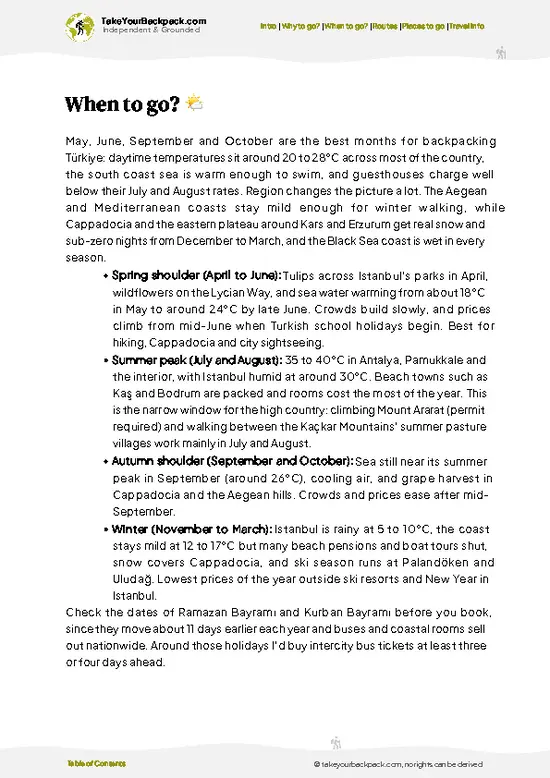
  • Temperature: May to September offers highs between 20-30°C (68-86°F), perfect for long walks without overheating. Nights dip to a cool 10-15°C (50-59°F), so pack layers. Avoid winter unless you’re into frostbite and solitude.

  • Daylight Hours: Summer provides up to 14-15 hours of daylight, giving you plenty of time to explore the sprawling ruins without rushing. Shorter days in spring and fall mean tighter schedules but fewer crowds.

  • Crowds: Peak season (June-August) brings busloads of tourists, especially midday. Early mornings or late
read more 👉

  • Weather: The best window is late spring through early fall. Winters are brutal here, with snow and biting winds that turn ruins into a frozen ghost town. Summer days can scorch, pushing temperatures above 30°C (86°F), but the dry air keeps it bearable.

  • Temperature: May to September offers highs between 20-30°C (68-86°F), perfect for long walks without overheating. Nights dip to a cool 10-15°C (50-59°F), so pack layers. Avoid winter unless you’re into frostbite and solitude.

  • Daylight Hours: Summer provides up to 14-15 hours of daylight, giving you plenty of time to explore the sprawling ruins without rushing. Shorter days in spring and fall mean tighter schedules but fewer crowds.

  • Crowds: Peak season (June-August) brings busloads of tourists, especially midday. Early mornings or late afternoons in shoulder seasons offer a quieter, more reflective experience.

  • Seasonal Activities: Spring and fall bring wildflowers and migrating birds, adding layers to the site’s stark beauty. Summer’s heat can drain energy, but clear skies make for epic photography.

  • Price Fluctuations: Entrance fees stay steady year-round, but local accommodation and transport costs spike in summer. Booking in shoulder seasons can save you a chunk without sacrificing the experience.


Pro-tip: Hit Ani at dawn in late spring or early fall—cool temps, soft light, and almost no one around. It’s when the ruins whisper their real stories, not just the Instagram highlight reel.


source: climatestotravel.comJANJanuary: below average for travelingFEBFebruary: below average for travelingMARMarch: fair for travelingAPRApril: highly recommended for travelingMAYMay: excellent for travelingJUNJune: excellent for travelingJULJuly: highly recommended for travelingAUGAugust: highly recommended for travelingSEPSeptember: excellent for travelingOCTOctober: highly recommended for travelingNOVNovember: fair for travelingDECDecember: below average for traveling
when-to-go

✈️ The backpacker research shortcutTürkiye Travel Guide

An offline-friendly backpacking guide with optimized travel routes, ranked highlights, transport advice, and the best areas to stay.
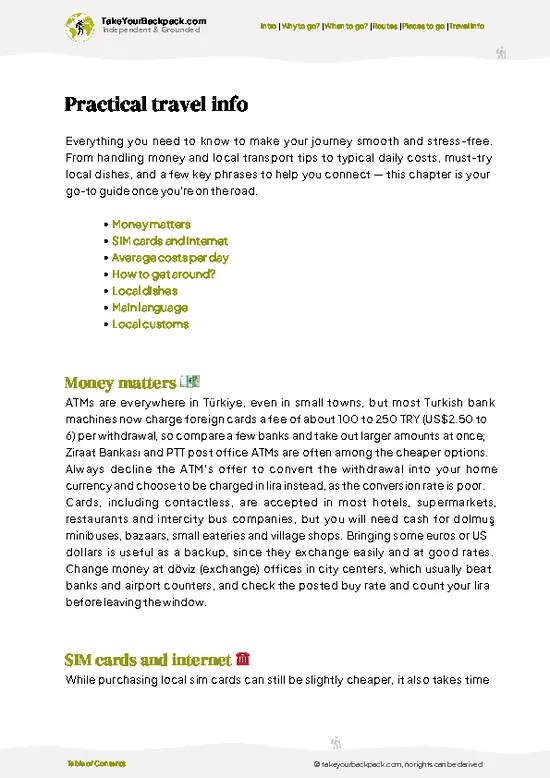
example page 0 from our offline Travel Guide for Türkiye
example page 1 from our offline Travel Guide for Türkiye
example page 2 from our offline Travel Guide for Türkiye
example page 3 from our offline Travel Guide for Türkiye
example page 4 from our offline Travel Guide for Türkiye
example page 5 from our offline Travel Guide for Türkiye
example page 6 from our offline Travel Guide for Türkiye
example page 7 from our offline Travel Guide for Türkiye
The digital guide (483 pages) contains:
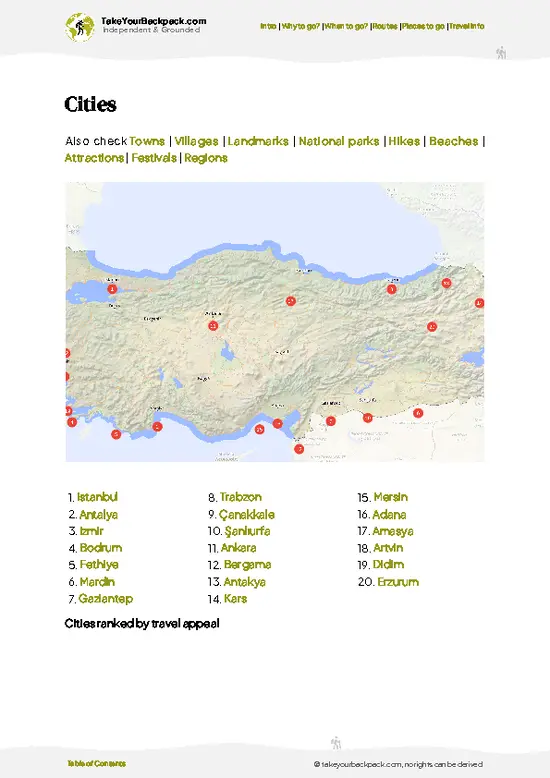
142 highlights, ranked by travel appeal
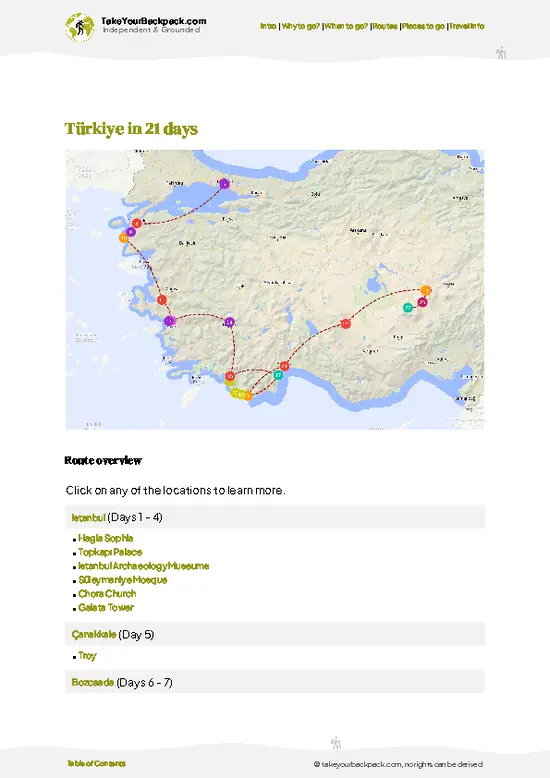
Optimized 7, 14 & 21-day travel routes
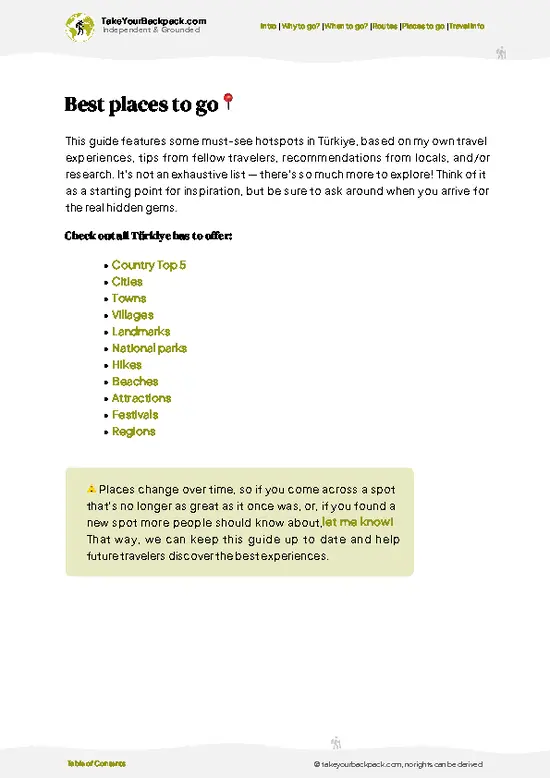
Cities, national parks, landmarks, beaches
How to get around
Offline-friendly for travel without Wi-Fi
👉 Click to see all 30+ guide features

📅 Plan smarter in minutes, not weeks
Month by month travel advice
Festivals & national holidays
Budget expectations

🗺️ Go to the right places, skip the overrated ones
Honest pros & cons of destinations
Top hikes, parks & viewpoints
Lesser-known places most travelers miss
Clear “worth it vs skip it” guidance

🛏️ Travel smoothly without rookie mistakes
Best areas to stay
Transport systems explained simply
Common scams & safety advice
SIM cards, money & practical tips

🌍 Understand the country, not just visit it
Culture & traditions
52 Essential phrases & customs
Festivals worth planning around
Traveler-friendly historical context
Insights that make places more meaningful

📱 Built for real travel conditions
Fully downloadable PDF
Works completely offline
Optimized for phone use
Useful in remote areas & buses
Everything in one place
Save weeks of stressful planning
Get instant access to your full guide. 30‑day money-back guarantee.


By proceeding you agree to our terms.
Sent to your inbox immediately after payment • 100% Secure Checkout
Best Backpacking Travel Advisor 2025 tourism awardBest Backpacking
Travel Advisor
2025
What others say about Take Your Backpack Guides:
⭐⭐⭐⭐⭐
Fantastic, amazing amount of information!
⭐⭐⭐⭐⭐
My goodness this is amazing, it's what I've been looking for hats off too you!
⭐⭐⭐⭐⭐
I think this is absolutely BRILLIANT
⭐⭐⭐⭐
Very complete and informative. It's still missing places, but I gotta to commend you
⭐⭐⭐⭐⭐
This is truly amazing, thank you, can't wait to explore it with my kids!
⭐⭐⭐⭐⭐
Awesome resource, thank you!
⭐⭐⭐⭐⭐
This is amazing! Can't wait to explore the ones I haven't seen
⭐⭐⭐⭐
I love this! Well done, great idea.
⭐⭐⭐⭐⭐
Thanks for taking the time to make this gem!
⭐⭐⭐⭐⭐
This might be the best website I've ever seen.
⭐⭐⭐⭐⭐
Congratulations, and thank you so much for your work; it's incredibly valuable.
⭐⭐⭐⭐
In all seriousness I think you did a great job pointing out the important spots
⭐⭐⭐⭐⭐
10/10 very good
⭐⭐⭐⭐⭐
As someone who's only just starting to visit regularly this is awesome, thank you.
⭐⭐⭐⭐
Thank you very much! I'm going to visit my dad, it's going to be very useful!
⭐⭐⭐⭐⭐
This is really cool! We'll be travelling for the first time and this definitely come in handy.
⭐⭐⭐⭐⭐
You are now our minister of culture, congratulations 👨‍💼
⭐⭐⭐⭐⭐
Just wanted to tell you that this is a pearl! Going to follow your recommendations.
⭐⭐⭐⭐⭐
This is so cool. I'll definitely be using the resource for my travels soon.
⭐⭐⭐⭐⭐
This is very impressive! Good work.
⭐⭐⭐⭐⭐
This is an amazing and informative site. Very well done!

🛏️ Where to stay?Choosing the right base

Staying near the Ani Archaeological Site in Türkiye is all about balancing comfort with authenticity. The area around the site is relatively remote, but that’s part of its charm. You’ll find a few small guesthouses and hostels in the nearby town of Kars, which is your best bet for a social atmosphere.

Kars has a vibrant local scene. You can grab a cup of çay and chat with locals who are more than happy to share stories about the region. The prices are reasonable, and the hospitality is genuine. Plus, you’ll be close enough to Ani to make early morning visits before the crowds roll in.

Another … read more 👉
Staying near the Ani Archaeological Site in Türkiye is all about balancing comfort with authenticity. The area around the site is relatively remote, but that’s part of its charm. You’ll find a few small guesthouses and hostels in the nearby town of Kars, which is your best bet for a social atmosphere.

Kars has a vibrant local scene. You can grab a cup of çay and chat with locals who are more than happy to share stories about the region. The prices are reasonable, and the hospitality is genuine. Plus, you’ll be close enough to Ani to make early morning visits before the crowds roll in.

Another option is to look for accommodations in the village of Ani itself. While options are limited, staying here puts you right at the heart of the ruins. Imagine waking up to the sound of history whispering through the stones.

Safety isn’t a concern in these areas, but be mindful of your belongings, as you would anywhere. The real magic lies in the experience of connecting with the landscape and the people. Embrace the simplicity, and you’ll find that the journey is just as rewarding as the destination.

👛 Costs (as of 15 February 2026)How expensive it really is

Visiting the Ani Archaeological Site in Türkiye is a journey into history, but it comes with its own set of costs. Here’s a breakdown of what you can expect:
  • Entrance Fee: The entrance fee is around €5 to €10. This small price grants you access to the ruins of this ancient city, which once thrived as a cultural hub. It’s a steal for the history you’ll soak in.
  • Transportation: Getting there can vary. If you’re coming from Kars, expect to pay about €10 to €20 for a taxi or a shared ride. Public transport is cheaper, around €2 to €5, but it may take longer and require some planning.
  • Food and Drink: There are limited options near the site. A simple meal can cost you between €5 and €15. Bring snacks and water to save money and enjoy a picnic with a view of the ruins.
  • Guided Tours: If you want a deeper
read more 👉
Visiting the Ani Archaeological Site in Türkiye is a journey into history, but it comes with its own set of costs. Here’s a breakdown of what you can expect:
  • Entrance Fee: The entrance fee is around €5 to €10. This small price grants you access to the ruins of this ancient city, which once thrived as a cultural hub. It’s a steal for the history you’ll soak in.
  • Transportation: Getting there can vary. If you’re coming from Kars, expect to pay about €10 to €20 for a taxi or a shared ride. Public transport is cheaper, around €2 to €5, but it may take longer and require some planning.
  • Food and Drink: There are limited options near the site. A simple meal can cost you between €5 and €15. Bring snacks and water to save money and enjoy a picnic with a view of the ruins.
  • Guided Tours: If you want a deeper dive into the history, consider a guided tour. Prices range from €20 to €50, depending on the length and inclusivity. It’s worth it for the insights you’ll gain.
  • Accommodation: Staying in Kars is your best bet. Budget hotels start around €20 per night, while mid-range options can go up to €50. Book ahead during peak season to secure a spot.

The costs are reasonable, especially considering the rich history and breathtaking views. Just be prepared for the crowds, especially in peak tourist season. The real magic lies in the stories these stones tell, not just the selfies you snap.


source: goturkiye.com
⚠️ Prices can change and everyone travels differently, so take this as a rough guide. Hope it helps you plan your adventure!

Other Turkish landmarks near Ani Archaeological Site

Explore more nearby:


💡 Not sure where to go next?
Create a personalized itinerary for Türkiye including Ani Archaeological Site and the places that fit your trip.

Generate my itinerary

👉 Discover all landmarks

Or checkout all Türkiye has to offer (think cities, towns, villages, national parks, hikes, beaches, festivals)
Country photo of Türkiye

We 💚 feedbackFinal thoughts on visiting Ani Archaeological Site

Ani Archaeological Site is a hauntingly beautiful slice of history. The crumbling churches and ancient walls whisper stories of a once-thriving city. But let’s be real: it’s remote, and getting there can feel like a trek in itself. You’ll face crowds during peak season, but if you can embrace the solitude and the chill in the air, the magic of Ani will wrap around you like a warm cloak. It’s worth every step.

✈️ When did I visit Türkiye?
In May 2017 I was backpacking through Turkey from the South, making it up north along the coast, ending in Istanbul.

✍️ Help improve this page!
The information on this page is based on my own backpacking experience in Türkiye, supplemented with up-to-date research and feedback from other travelers. Travel details can change, so if you notice anything outdated or incomplete, feel free to let me know.


🙋‍♂️ Give feedback

👋 Meet the founderWho’s Behind Take Your Backpack?

Johan, backpacker and founder of TakeYourBackpackHi, I’m Johan (Netherlands 🇳🇱), the creator of TakeYourBackpack. Over the past decade, I’ve backpacked through 80+ countries across six continents, gaining extensive experience with independent travel, long-term trips, and overland routes.

This site is built on a combination of firsthand travel experience and carefully curated insights from other backpackers. Many guides are based on places I’ve personally visited, while others bring together tips, observations, and practical advice shared by trusted travelers I’ve met along the way.

The goal is to provide realistic, experience-driven guidance — not generic itineraries — so you can explore destinations with better context, clearer expectations, and more confidence.

Get full Türkiye guide •
Instant download • 142 highlights • Full Offline guide