v2.webp)
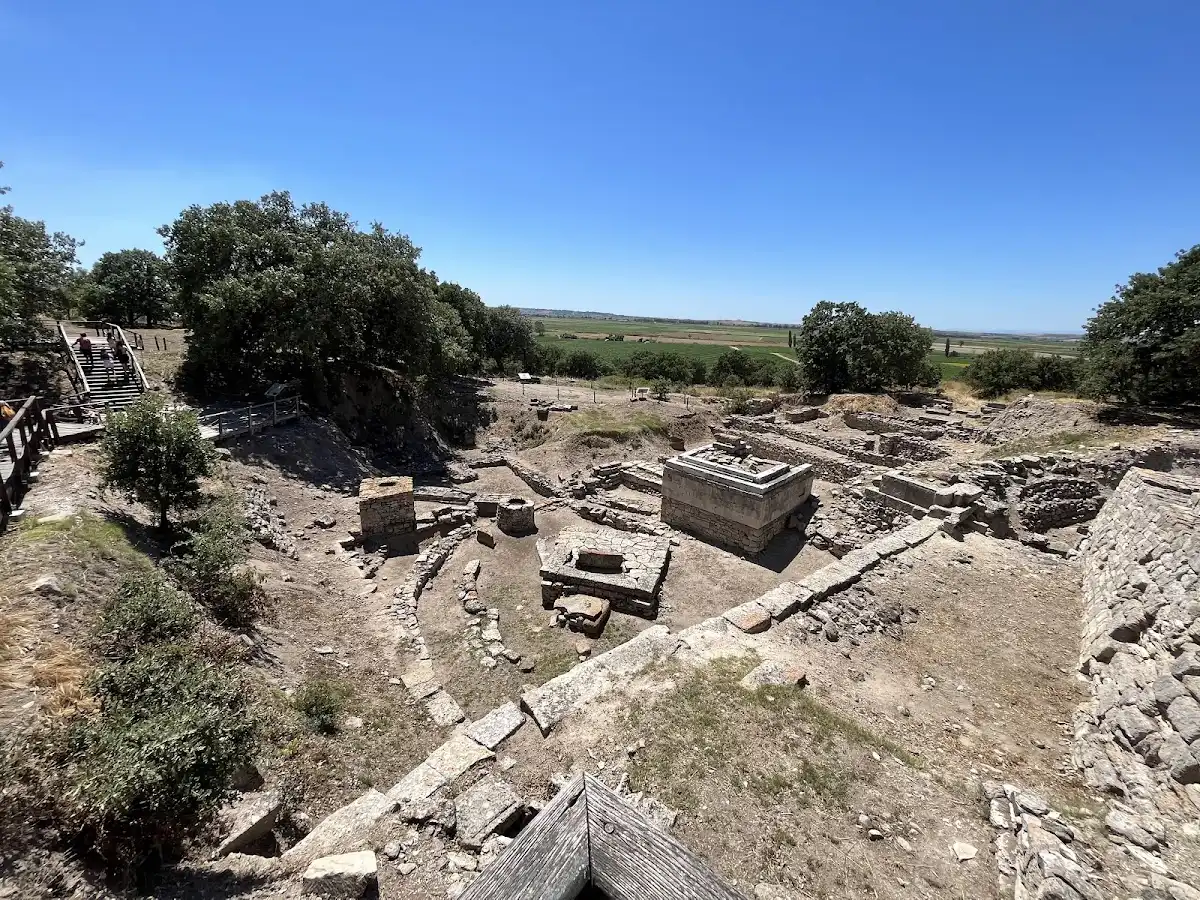
- The tumulus (the visible mound of Troy I-IX) — The thing that makes Troy truly special: it’s a layered city you can walk over. Centuries of occupation are stacked one on top of another (Troy I through IX), so you literally see millennia of human life in profile. Personal favorite — standing on the mound and watching how each layer tells a different story is oddly humbling and surprisingly cinematic.
- Bronze Age walls and citadel (Troy VI-VII) — Massive defensive walls, towers and gate structures from the Late Bronze Age that give you a real sense of how fortified the city was. These are the architectural remains most often tied to the possible historical kernel behind the Homeric tales.
- Schliemann’s trench and the “Priam’s Treasure” saga — The dramatic 19th-century excavation that put Troy
- The tumulus (the visible mound of Troy I-IX) — The thing that makes Troy truly special: it’s a layered city you can walk over. Centuries of occupation are stacked one on top of another (Troy I through IX), so you literally see millennia of human life in profile. Personal favorite — standing on the mound and watching how each layer tells a different story is oddly humbling and surprisingly cinematic.
- Bronze Age walls and citadel (Troy VI-VII) — Massive defensive walls, towers and gate structures from the Late Bronze Age that give you a real sense of how fortified the city was. These are the architectural remains most often tied to the possible historical kernel behind the Homeric tales.
- Schliemann’s trench and the “Priam’s Treasure” saga — The dramatic 19th-century excavation that put Troy on the modern map, complete with archaeological controversy and a messy provenance story. It’s archaeology’s cliff-hanger: important finds, but also bad methods and moral lessons about excavation ethics.
- Roman-era street, houses and baths — Later layers show a very different, more urbanized Troy: colonnaded streets, domestic remains and public structures that reflect Roman town planning. It’s a neat contrast to the mudbrick and fortifications of the Bronze Age levels.
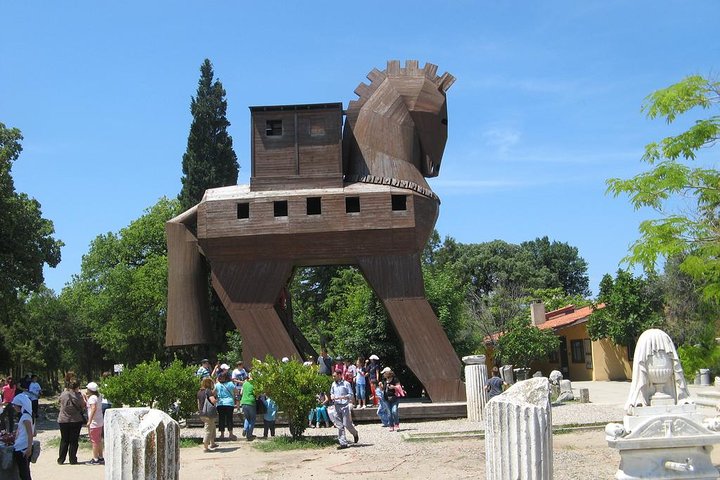
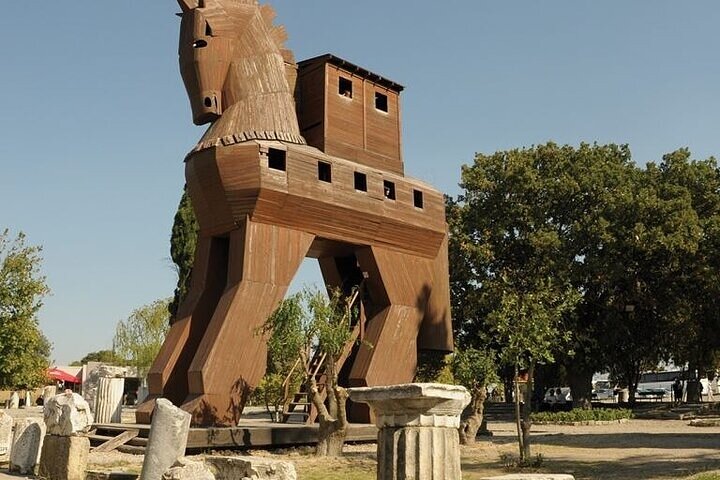
- The reconstructed Wooden Horse — A modern, oversized icon placed near the site entrance. Totally touristy, but it’s a useful visual shorthand for the Homeric connection and makes for the classic photo op (just remember it’s not an archaeological find).
- Panoramic views across the Troad plain toward the Dardanelles — The landscape is part of the story: strategic position, sea routes, and farmland that supported generations of cities. Come at golden hour if you want great photos or to imagine ancient ships on the horizon.
- On-site displays and the nearby Troy Museum (Çanakkale) — Small information panels on the tell are handy, but the nearby museum brings the artifacts and context together: pottery, tools, and inscriptions that turn ruins into everyday lives. Combine both visits for a fuller picture.
- Ongoing trenches and the feel of “real” archaeology — You can often see active or recent excavation areas and study cuts (and the scars of earlier digs). That messy, in-progress vibe is rare at big tourist ruins and answers the question: “How do we even know this?”
Spotted a mistake or missing something? Contact us.

Full Day Troy & Gallipoli Tour ( From Canakkale )
✓ Free cancellation

2 Days 1 Night Gallipoli & Troy Tour from ıstanbul (New Museum of Troy Included)
✓ Free cancellation

Troy and Gallipoli Day Trip from Canakkale

Combined Troy and Gallipoli Tour from Canakkale with onwards transfer to Istanbul
✓ Free cancellation
Private Troy Tour from Canakkale Port

Full-Day Private Tour of Troy and Assos with Lunch
✓ Free cancellation

Private Troy & Gallipoli Tour from Canakkale
✓ Free cancellation
 Best Backpacking
.jpg) Hi, I’m Johan (Netherlands 🇳🇱), the creator of TakeYourBackpack. Over the past decade, I’ve backpacked through 80+ countries across six continents, gaining extensive experience with independent travel, long-term trips, and overland routes.
Hi, I’m Johan (Netherlands 🇳🇱), the creator of TakeYourBackpack. Over the past decade, I’ve backpacked through 80+ countries across six continents, gaining extensive experience with independent travel, long-term trips, and overland routes.