v2.webp)
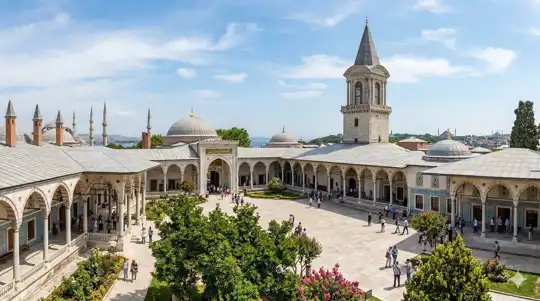
The Imperial Harem
Forget the sanitized, Hollywood version. The Harem is a labyrinth of intrigue, power plays, and real human drama. This was the nerve center of Ottoman court life, where sultans’ mothers wielded more power than most kings, and alliances were forged over coffee and whispered secrets. The tilework is hypnotic, but it’s the sense of layered history—love, betrayal, ambition—that gives these rooms their charge. You’ll feel the weight of centuries in the air. If you only have time for one section, make it this one. (Personal favorite—because nowhere else in Istanbul feels so alive with ghosts.)
The Treasury
This is not your average display of dusty crowns. The Treasury is a jaw-dropper: emeralds the size of eggs, daggers encrusted with diamonds, and the infamous Topkapi Dagger … read more 👉
Forget the sanitized, Hollywood version. The Harem is a labyrinth of intrigue, power plays, and real human drama. This was the nerve center of Ottoman court life, where sultans’ mothers wielded more power than most kings, and alliances were forged over coffee and whispered secrets. The tilework is hypnotic, but it’s the sense of layered history—love, betrayal, ambition—that gives these rooms their charge. You’ll feel the weight of centuries in the air. If you only have time for one section, make it this one. (Personal favorite—because nowhere else in Istanbul feels so alive with ghosts.)
The Treasury
This is not your average display of dusty crowns. The Treasury is a jaw-dropper: emeralds the size of eggs, daggers encrusted with diamonds, and the infamous Topkapi Dagger … read more 👉
The Imperial Harem
Forget the sanitized, Hollywood version. The Harem is a labyrinth of intrigue, power plays, and real human drama. This was the nerve center of Ottoman court life, where sultans’ mothers wielded more power than most kings, and alliances were forged over coffee and whispered secrets. The tilework is hypnotic, but it’s the sense of layered history—love, betrayal, ambition—that gives these rooms their charge. You’ll feel the weight of centuries in the air. If you only have time for one section, make it this one. (Personal favorite—because nowhere else in Istanbul feels so alive with ghosts.)
The Treasury
This is not your average display of dusty crowns. The Treasury is a jaw-dropper: emeralds the size of eggs, daggers encrusted with diamonds, and the infamous Topkapi Dagger itself, which looks like something a Bond villain would commission. The Spoonmaker’s Diamond is the showstopper, but the real thrill is seeing the sheer audacity of Ottoman wealth. It’s a crash course in imperial bling, and it’s impossible not to gawk.
The Sacred Relics
This is where Topkapi gets weird—in the best way. You’ll see the Prophet Muhammad’s cloak and sword, Moses’ staff, and even what’s claimed to be John the Baptist’s skull. Whether you’re religious or not, the atmosphere is electric: guards stand ramrod straight, and visitors shuffle in reverent silence. It’s a surreal, almost cinematic experience, and the sense of history is overwhelming. No Instagram filter can capture the gravity of this room.
The Imperial Council Chamber (Divan)
This is where the empire’s fate was decided—sometimes over sherbet, sometimes with a death sentence. The room itself is a study in Ottoman design, with stained glass and intricate tiles, but the real entertainment is imagining the high-stakes debates and backroom deals that played out here. If you like your history with a side of political drama, this is your spot.
The Palace Kitchens
Skip the gift shop and head to the kitchens. These cavernous halls once fed 4,000 people daily, and the scale is mind-boggling. The displays of Ottoman cookware and porcelain are fascinating, but the real treat is picturing the chaos: fires roaring, spices from three continents, and chefs competing for the sultan’s favor. It’s a reminder that empires run on their stomachs.
The Courtyards and Bosphorus Views
Yes, the crowds are real, and yes, you’ll have to elbow your way to the railings. But the views across the Bosphorus are worth every jostle. The courtyards themselves are a masterclass in Ottoman landscaping—rose gardens, fountains, and the kind of shade that makes you want to linger. This is where the palace breathes, and where you’ll finally get a sense of its scale and serenity, if only for a moment.
Forget the sanitized, Hollywood version. The Harem is a labyrinth of intrigue, power plays, and real human drama. This was the nerve center of Ottoman court life, where sultans’ mothers wielded more power than most kings, and alliances were forged over coffee and whispered secrets. The tilework is hypnotic, but it’s the sense of layered history—love, betrayal, ambition—that gives these rooms their charge. You’ll feel the weight of centuries in the air. If you only have time for one section, make it this one. (Personal favorite—because nowhere else in Istanbul feels so alive with ghosts.)
The Treasury
This is not your average display of dusty crowns. The Treasury is a jaw-dropper: emeralds the size of eggs, daggers encrusted with diamonds, and the infamous Topkapi Dagger itself, which looks like something a Bond villain would commission. The Spoonmaker’s Diamond is the showstopper, but the real thrill is seeing the sheer audacity of Ottoman wealth. It’s a crash course in imperial bling, and it’s impossible not to gawk.
The Sacred Relics
This is where Topkapi gets weird—in the best way. You’ll see the Prophet Muhammad’s cloak and sword, Moses’ staff, and even what’s claimed to be John the Baptist’s skull. Whether you’re religious or not, the atmosphere is electric: guards stand ramrod straight, and visitors shuffle in reverent silence. It’s a surreal, almost cinematic experience, and the sense of history is overwhelming. No Instagram filter can capture the gravity of this room.
The Imperial Council Chamber (Divan)
This is where the empire’s fate was decided—sometimes over sherbet, sometimes with a death sentence. The room itself is a study in Ottoman design, with stained glass and intricate tiles, but the real entertainment is imagining the high-stakes debates and backroom deals that played out here. If you like your history with a side of political drama, this is your spot.
The Palace Kitchens
Skip the gift shop and head to the kitchens. These cavernous halls once fed 4,000 people daily, and the scale is mind-boggling. The displays of Ottoman cookware and porcelain are fascinating, but the real treat is picturing the chaos: fires roaring, spices from three continents, and chefs competing for the sultan’s favor. It’s a reminder that empires run on their stomachs.
The Courtyards and Bosphorus Views
Yes, the crowds are real, and yes, you’ll have to elbow your way to the railings. But the views across the Bosphorus are worth every jostle. The courtyards themselves are a masterclass in Ottoman landscaping—rose gardens, fountains, and the kind of shade that makes you want to linger. This is where the palace breathes, and where you’ll finally get a sense of its scale and serenity, if only for a moment.
Spotted a mistake or missing something? Contact us.
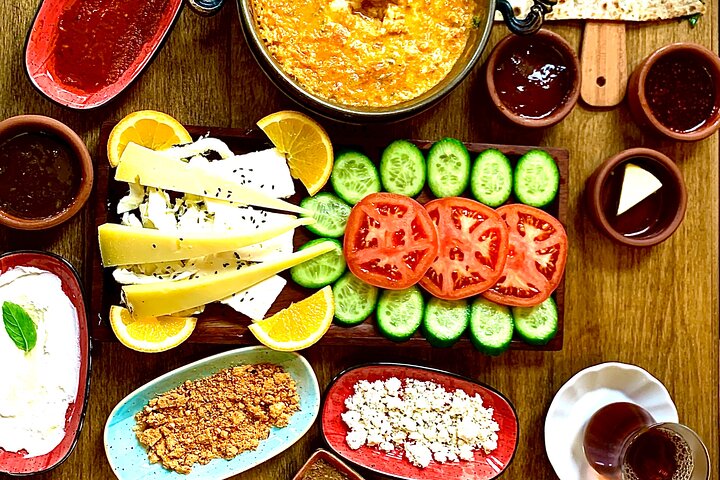
Private and Guided Istanbul Food Tour: Taste of Istanbul

Istanbul Photoshoot at ALL Top Sightseeings
✓ Free cancellation

Private Old City Guided Tour
✓ Free cancellation

Daily Ertugrul Tour from Istanbul

Hidden Beyoğlu Tour
✓ Free cancellation

Turkish Carpet Rug Weaving Workshop (Halı Kilim Dokuma Atölyesi)
✓ Free cancellation

Istanbul Photoshoot tour with Local Photographer
✓ Free cancellation

Traditional Home Cooking with a Local in İstanbul City Center
✓ Free cancellation

Basilica Cistern (Private Guide & No waiting) Ticket not included
✓ Free cancellation

Hagia Sophia Skip-the-Line Private Tour - Best Highlights
✓ Free cancellation
 Best Backpacking
.jpg) Hi, I’m Johan (Netherlands 🇳🇱), the creator of TakeYourBackpack. Over the past decade, I’ve backpacked through 80+ countries across six continents, gaining extensive experience with independent travel, long-term trips, and overland routes.
Hi, I’m Johan (Netherlands 🇳🇱), the creator of TakeYourBackpack. Over the past decade, I’ve backpacked through 80+ countries across six continents, gaining extensive experience with independent travel, long-term trips, and overland routes.