×

Türkiye🇹🇷 | landmarksTroylayered citadels, legendary walls, windswept plain | things to do and best time to go

Explore AphrodisiasExplore Blue Mosque

Backpacking in Troy
UNESCO World Heritage site
🌟 Highlightunique site ranked #4
By Johan Kruseman 🇳🇱 | Updated October 15, 2026

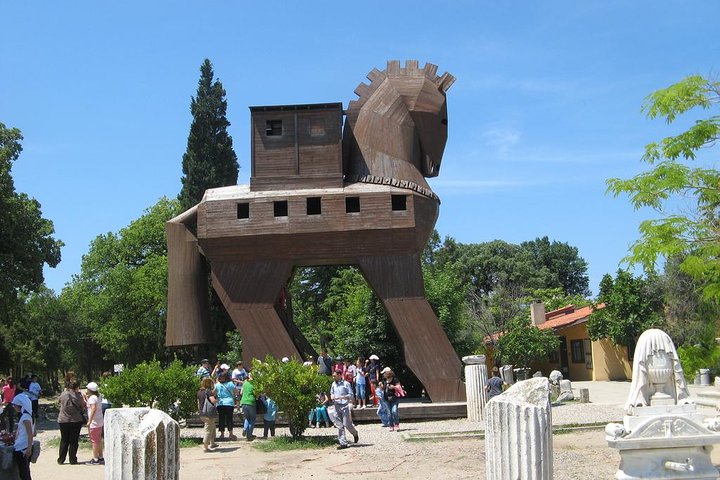
Your boots crunch on dry, sun-baked stones while a tour guide’s voice in German bleeds into a Korean group’s selfie countdown. The wind off the Dardanelles smells faintly of salt and wild thyme, and somewhere behind you a kid is climbing the big wooden horse, squeaking metal steps breaking whatever “epic ancient vibe” you hoped for. This is Troy, out on the Gallipoli peninsula near Çanakkale in western Türkiye, and it is not the cinematic marble city your brain pulled from school textbooks. It’s ruins, layers of them, and a lot of imagination work.

For backpackers, Troy is less jaw-drop, more slow-burn respect. It’s cheap to reach from Çanakkale, the entry fee is reasonable, and the history is absurdly dense, but the site itself is fragmented and the photo payoff is modest unless you’re a history nerd. Crowds ebb with tour buses; catch a quiet hour and it finally feels mythic.

Discover everything you want to know in the 📖 Türkiye Travel Guide.


example page 0 from our offline Travel Guide for Türkiye
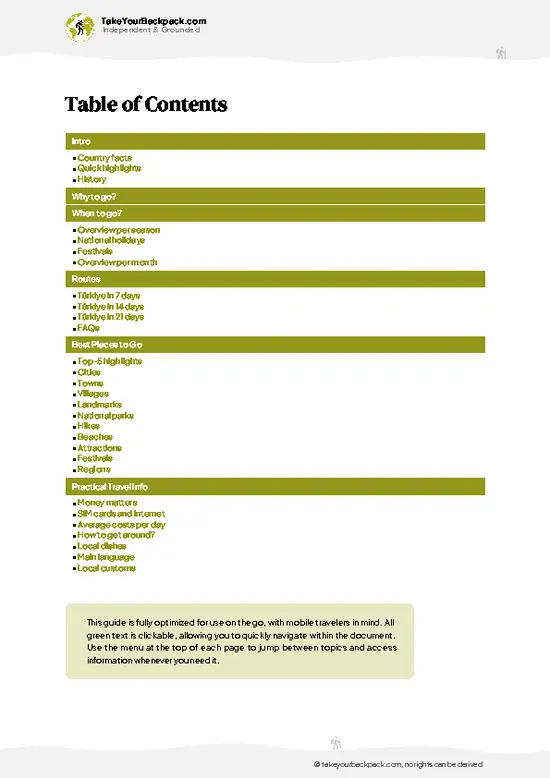
example page 1 from our offline Travel Guide for Türkiye
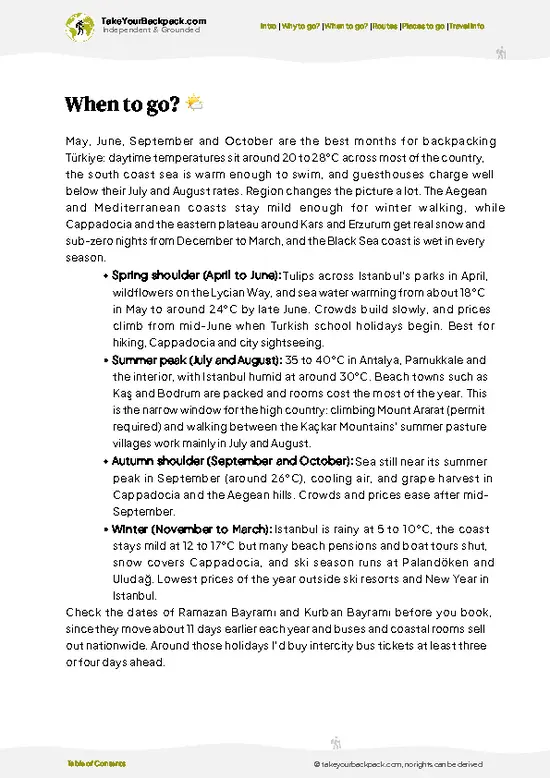
example page 2 from our offline Travel Guide for Türkiye
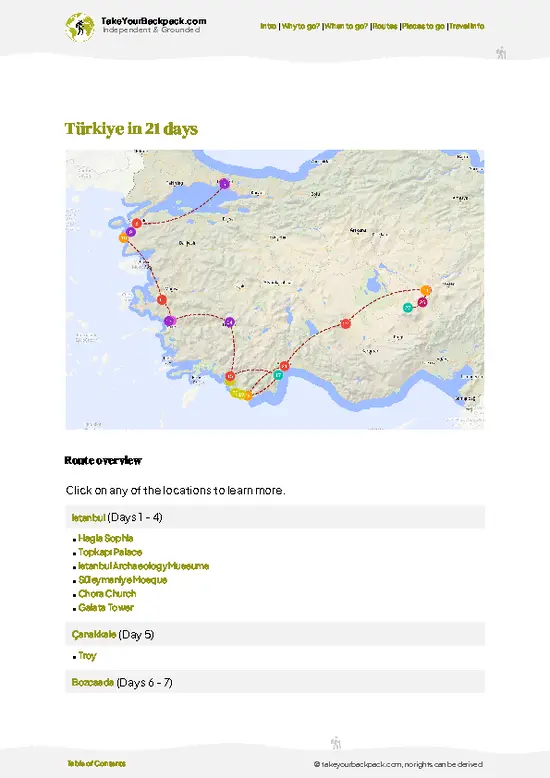
example page 3 from our offline Travel Guide for Türkiye
example page 4 from our offline Travel Guide for Türkiye
example page 5 from our offline Travel Guide for Türkiye
example page 6 from our offline Travel Guide for Türkiye
example page 7 from our offline Travel Guide for Türkiye
Loading the map 🌍
CLICK TO FILTER
cities
towns
villages
landmarks
national parks
hikes
beaches
attractions
festivals
regions
SHOW COUNTRY’S BESTSHOW ALL

✨ Why go?
Ranked #4 unique site in Türkiye
What sets this place apart

The Troy in Türkiye is often overshadowed by its Instagram hype. Yes, it gets crowded, especially in peak season, but don’t let that deter you. The effort-to-reward ratio here is solid. You’re not just visiting a site; you’re stepping into a story that’s been told for millennia.

The cost is low—entry fees are reasonable, and you can easily spend a few hours wandering through the ruins without breaking the bank. What makes it truly unique is the layered history. You’re not just looking at one civilization; you’re witnessing the remnants of multiple eras, each adding depth to the narrative of Troy.

Plus, it fits seamlessly into a broader travel route. If you’re exploring the Aegean coast, it’s a natural stop between Çanakkale and Ephesus. You can soak in the local culture, grab a bite of … read more 👉
The Troy in Türkiye is often overshadowed by its Instagram hype. Yes, it gets crowded, especially in peak season, but don’t let that deter you. The effort-to-reward ratio here is solid. You’re not just visiting a site; you’re stepping into a story that’s been told for millennia.

The cost is low—entry fees are reasonable, and you can easily spend a few hours wandering through the ruins without breaking the bank. What makes it truly unique is the layered history. You’re not just looking at one civilization; you’re witnessing the remnants of multiple eras, each adding depth to the narrative of Troy.

Plus, it fits seamlessly into a broader travel route. If you’re exploring the Aegean coast, it’s a natural stop between Çanakkale and Ephesus. You can soak in the local culture, grab a bite of authentic Turkish cuisine, and even take a dip in the nearby waters.

So, while the crowds might be a buzzkill, the authenticity and rich history make it worth your time. Don’t just scroll past; experience the real magic of Troy.

💡 HighlightsWhat this place is best known for

  • The tumulus (the visible mound of Troy I-IX) — The thing that makes Troy truly special: it’s a layered city you can walk over. Centuries of occupation are stacked one on top of another (Troy I through IX), so you literally see millennia of human life in profile. Personal favorite — standing on the mound and watching how each layer tells a different story is oddly humbling and surprisingly cinematic.
  • Bronze Age walls and citadel (Troy VI-VII) — Massive defensive walls, towers and gate structures from the Late Bronze Age that give you a real sense of how fortified the city was. These are the architectural remains most often tied to the possible historical kernel behind the Homeric tales.
  • Schliemann’s trench and the “Priam’s Treasure” saga — The dramatic 19th-century excavation that put Troy
… read more 👉
  • The tumulus (the visible mound of Troy I-IX) — The thing that makes Troy truly special: it’s a layered city you can walk over. Centuries of occupation are stacked one on top of another (Troy I through IX), so you literally see millennia of human life in profile. Personal favorite — standing on the mound and watching how each layer tells a different story is oddly humbling and surprisingly cinematic.
  • Bronze Age walls and citadel (Troy VI-VII) — Massive defensive walls, towers and gate structures from the Late Bronze Age that give you a real sense of how fortified the city was. These are the architectural remains most often tied to the possible historical kernel behind the Homeric tales.
  • Schliemann’s trench and the “Priam’s Treasure” saga — The dramatic 19th-century excavation that put Troy on the modern map, complete with archaeological controversy and a messy provenance story. It’s archaeology’s cliff-hanger: important finds, but also bad methods and moral lessons about excavation ethics.
  • Roman-era street, houses and baths — Later layers show a very different, more urbanized Troy: colonnaded streets, domestic remains and public structures that reflect Roman town planning. It’s a neat contrast to the mudbrick and fortifications of the Bronze Age levels.
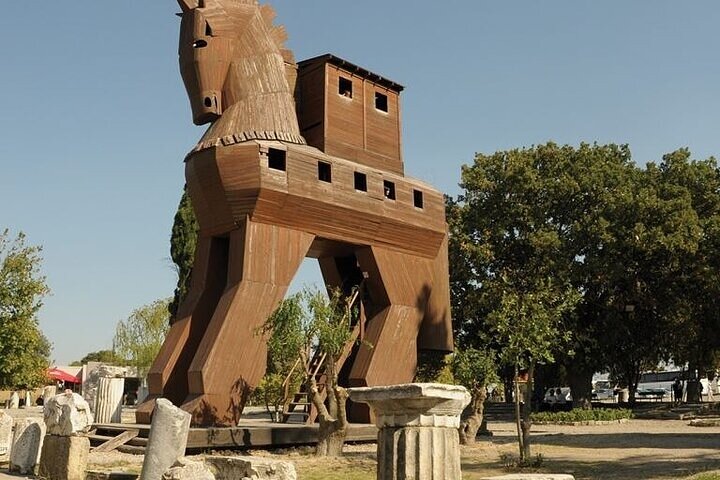
  • The reconstructed Wooden Horse — A modern, oversized icon placed near the site entrance. Totally touristy, but it’s a useful visual shorthand for the Homeric connection and makes for the classic photo op (just remember it’s not an archaeological find).
  • Panoramic views across the Troad plain toward the Dardanelles — The landscape is part of the story: strategic position, sea routes, and farmland that supported generations of cities. Come at golden hour if you want great photos or to imagine ancient ships on the horizon.
  • On-site displays and the nearby Troy Museum (Çanakkale) — Small information panels on the tell are handy, but the nearby museum brings the artifacts and context together: pottery, tools, and inscriptions that turn ruins into everyday lives. Combine both visits for a fuller picture.
  • Ongoing trenches and the feel of “real” archaeology — You can often see active or recent excavation areas and study cuts (and the scars of earlier digs). That messy, in-progress vibe is rare at big tourist ruins and answers the question: “How do we even know this?”
Spotted a mistake or missing something? Contact us.

Things to do around Troy

Ratings based on Tripadvisor reviews. When you book through this link, you support our work at no extra cost to you.

🌤️ When to go?When to go for the best experience

  • Weather: Summers in Troy scorch with highs hitting 30-35°C (86-95°F), making midday exploration a sweat-fest. Spring and autumn offer mild, pleasant days around 18-22°C (64-72°F), perfect for wandering without frying or freezing.
  • Temperature: Winters dip to 5-10°C (41-50°F), often chilly and damp, which can kill the vibe. If you’re tough, it’s quiet, but expect mud and fewer open facilities.
  • Daylight Hours: Peak season grants long days—up to 14 hours of light in summer—letting you stretch your visit. Off-season, daylight shrinks to about 9-10 hours, so plan accordingly.
  • Crowds: June to August is tourist central—expect packed paths and selfie sticks galore. Shoulder seasons (April-May, September-October) balance decent weather with fewer people, giving you room to breathe and imagine the
… read more 👉
  • Weather: Summers in Troy scorch with highs hitting 30-35°C (86-95°F), making midday exploration a sweat-fest. Spring and autumn offer mild, pleasant days around 18-22°C (64-72°F), perfect for wandering without frying or freezing.
  • Temperature: Winters dip to 5-10°C (41-50°F), often chilly and damp, which can kill the vibe. If you’re tough, it’s quiet, but expect mud and fewer open facilities.
  • Daylight Hours: Peak season grants long days—up to 14 hours of light in summer—letting you stretch your visit. Off-season, daylight shrinks to about 9-10 hours, so plan accordingly.
  • Crowds: June to August is tourist central—expect packed paths and selfie sticks galore. Shoulder seasons (April-May, September-October) balance decent weather with fewer people, giving you room to breathe and imagine the ancient battles.
  • Seasonal Activities: Spring and autumn sometimes host local cultural events or guided tours that dive deeper into Troy’s layered history, adding value beyond the ruins themselves.
  • Price Fluctuations: Entrance fees stay stable year-round, but accommodation and transport prices spike in summer. Booking off-peak slashes costs and stress.
Pro-tip: Hit Troy in late April or early October—cool temps, manageable crowds, and a chance to soak in the site’s raw atmosphere without the tourist circus.


source: climatestotravel.comJANJanuary: fair for travelingFEBFebruary: fair for travelingMARMarch: good for travelingAPRApril: highly recommended for travelingMAYMay: highly recommended for travelingJUNJune: good for travelingJULJuly: fair for travelingAUGAugust: fair for travelingSEPSeptember: highly recommended for travelingOCTOctober: highly recommended for travelingNOVNovember: good for travelingDECDecember: fair for traveling
turkiye-unique-site-troy
© Google |

✈️ The backpacker research shortcutTürkiye Travel Guide

An offline-friendly backpacking guide with optimized travel routes, ranked highlights, transport advice, and the best areas to stay.
example page 0 from our offline Travel Guide for Türkiye
example page 1 from our offline Travel Guide for Türkiye
example page 2 from our offline Travel Guide for Türkiye
example page 3 from our offline Travel Guide for Türkiye
example page 4 from our offline Travel Guide for Türkiye
example page 5 from our offline Travel Guide for Türkiye
example page 6 from our offline Travel Guide for Türkiye
example page 7 from our offline Travel Guide for Türkiye
The digital guide (445 pages) contains:
✅ 130 highlights, ranked by travel appeal
✅ Optimized 7, 14 & 21-day travel routes
✅ Cities, national parks, landmarks, beaches
✅ How to get around
✅ Offline-friendly for travel without Wi-Fi
👉 Click to see all 30+ guide features

📅 Plan smarter in minutes, not weeks
✅ Month by month travel advice
✅ Festivals & national holidays
✅ Budget expectations

🗺️ Go to the right places, skip the overrated ones
✅ Honest pros & cons of destinations
✅ Top hikes, parks & viewpoints
✅ Lesser-known places most travelers miss
✅ Clear “worth it vs skip it” guidance

🛏️ Travel smoothly without rookie mistakes
✅ Best areas to stay
✅ Transport systems explained simply
✅ Common scams & safety advice
✅ SIM cards, money & practical tips

🌍 Understand the country, not just visit it
✅ Culture & traditions
✅ 52 Essential phrases & customs
✅ Festivals worth planning around
✅ Traveler-friendly historical context
✅ Insights that make places more meaningful

📱 Built for real travel conditions
✅ Fully downloadable PDF
✅ Works completely offline
✅ Optimized for phone use
✅ Useful in remote areas & buses
✅ Everything in one place
Stop searching, start planning
Get instant access to your full guide. 30‑day money-back guarantee.
+ Add another guide for just

By proceeding you agree to our terms.
Sent to your inbox immediately after payment • 100% Secure Checkout
Best Backpacking Travel Advisor 2025 tourism awardBest Backpacking
Travel Advisor
2025
What others say about Take Your Backpack Guides:
⭐⭐⭐⭐⭐
Fantastic, amazing amount of information!
⭐⭐⭐⭐⭐
My goodness this is amazing, it's what I've been looking for hats off too you!
⭐⭐⭐⭐⭐
I think this is absolutely BRILLIANT
⭐⭐⭐⭐
Very complete and informative. It's still missing places, but I gotta to commend you
⭐⭐⭐⭐⭐
This is truly amazing, thank you, can't wait to explore it with my kids!
⭐⭐⭐⭐⭐
Awesome resource, thank you!
⭐⭐⭐⭐⭐
This is amazing! Can't wait to explore the ones I haven't seen
⭐⭐⭐⭐
I love this! Well done, great idea.
⭐⭐⭐⭐⭐
Thanks for taking the time to make this gem!
⭐⭐⭐⭐⭐
This might be the best website I've ever seen.
⭐⭐⭐⭐⭐
Congratulations, and thank you so much for your work; it's incredibly valuable.
⭐⭐⭐⭐
In all seriousness I think you did a great job pointing out the important spots
⭐⭐⭐⭐⭐
10/10 very good
⭐⭐⭐⭐⭐
As someone who's only just starting to visit regularly this is awesome, thank you.
⭐⭐⭐⭐
Thank you very much! I'm going to visit my dad, it's going to be very useful!
⭐⭐⭐⭐⭐
This is really cool! We'll be travelling for the first time and this definitely come in handy.
⭐⭐⭐⭐⭐
You are now our minister of culture, congratulations 👨‍💼
⭐⭐⭐⭐⭐
Just wanted to tell you that this is a pearl! Going to follow your recommendations.
⭐⭐⭐⭐⭐
This is so cool. I'll definitely be using the resource for my travels soon.
⭐⭐⭐⭐⭐
This is very impressive! Good work.
⭐⭐⭐⭐⭐
This is an amazing and informative site. Very well done!

🛏️ Where to stay?Choosing the right base

Staying near the Troy is all about finding that sweet spot between history and community. First off, head to the town of Çanakkale. It’s the gateway to Troy and has a lively backpacker vibe. You’ll find plenty of budget-friendly accommodations here, from hostels to guesthouses, all buzzing with fellow travelers. The atmosphere is social, making it easy to swap stories and tips over a cup of Turkish tea.

Another option is to look for places in the nearby village of Truva. It’s quieter and offers a more local experience. You might not find as many backpackers, but the charm is undeniable. Staying … read more 👉
Staying near the Troy is all about finding that sweet spot between history and community. First off, head to the town of Çanakkale. It’s the gateway to Troy and has a lively backpacker vibe. You’ll find plenty of budget-friendly accommodations here, from hostels to guesthouses, all buzzing with fellow travelers. The atmosphere is social, making it easy to swap stories and tips over a cup of Turkish tea.

Another option is to look for places in the nearby village of Truva. It’s quieter and offers a more local experience. You might not find as many backpackers, but the charm is undeniable. Staying here gives you a chance to connect with locals and enjoy authentic Turkish hospitality.

Both areas are safe, with a friendly feel that makes solo travelers feel at home. Plus, they’re just a short bus or bike ride from the ruins.

Don’t get caught up in the Instagram hype; the real magic lies in the conversations you have and the stories you share. Embrace the history, but also soak in the everyday life around you. That’s where the true adventure begins.

👛 Costs (as of 15 October 2026)Typical daily expenses

Visiting the Troy is a journey into history, but it comes with its own set of costs. Here’s the real deal on what you can expect to spend.
  • Entrance Fee: The ticket price is around €10 to €15. This gives you access to the site and its museum. It’s a small price for a peek into a legendary past, but be prepared for the crowds, especially in peak season.
  • Transportation: Getting to Troy can vary. If you’re coming from Istanbul, a bus ticket will set you back about €10 to €15. A private transfer can cost upwards of €100. Factor in your comfort level and time constraints when deciding.
  • Guided Tours: If you want to dive deeper, guided tours range from €30 to €60. This often includes transportation and a knowledgeable guide who can bring the ruins to life. Worth it if you want context beyond the stones.
… read more 👉
Visiting the Troy is a journey into history, but it comes with its own set of costs. Here’s the real deal on what you can expect to spend.
  • Entrance Fee: The ticket price is around €10 to €15. This gives you access to the site and its museum. It’s a small price for a peek into a legendary past, but be prepared for the crowds, especially in peak season.
  • Transportation: Getting to Troy can vary. If you’re coming from Istanbul, a bus ticket will set you back about €10 to €15. A private transfer can cost upwards of €100. Factor in your comfort level and time constraints when deciding.
  • Guided Tours: If you want to dive deeper, guided tours range from €30 to €60. This often includes transportation and a knowledgeable guide who can bring the ruins to life. Worth it if you want context beyond the stones.
  • Food and Drink: Expect to spend around €5 to €15 for a meal nearby. There are local eateries that serve up hearty Turkish dishes. Just don’t expect Michelin-star dining; it’s more about the experience than the cuisine.
  • Souvenirs: If you’re looking to take a piece of Troy home, budget around €5 to €20 for trinkets. Just remember, these are often mass-produced. Authenticity is in the experience, not the fridge magnet.

Troy is a must-see, but don’t let the glossy travel photos fool you. The real magic lies in the stories and the atmosphere, not just the price tag.


source: goturkiye.com
⚠️ Prices can change and everyone travels differently, so take this as a rough guide. Hope it helps you plan your adventure!

FAQTraveler FAQ

The Troy is an ancient city located in northwestern Turkey, famous for its role in Homer's Iliad and its layers of ruins dating back over 4,000 years. It is a UNESCO World Heritage site showcasing multiple historical periods from the Bronze Age to the Roman era.
Visiting the Troy typically requires 2 to 3 hours to explore the ruins and the on-site museum thoroughly. This allows enough time to see the key excavation areas, the reconstructed walls, and learn about the site's history.
To get to the Troy, travel to the town of Çanakkale in Turkey, then take a local bus or taxi about 30 kilometers southwest to the site. The site is accessible by road and well-signposted from Çanakkale, which is connected by ferry and bus services from major cities like Istanbul.
⚠️ Things can change over time, so always validate details locally before you go.

Other Turkish landmarks near Troy

Explore more nearby:

  • Pergamon—hilltop acropolis, steep theater, ancient library| 122 km away
  • Selimiye Mosque—soaring minarets, central dome, Ottoman architecture| 193 km away
  • Ephesus—marble streets, Library of Celsus, Roman theater| 244 km away

💡 Not sure where to go next?
Create a personalized itinerary for Türkiye including Troy and the places that fit your trip.

Generate my itinerary

👉 Discover all landmarks

Or checkout all Türkiye has to offer (think cities, towns, villages, national parks, hikes, beaches, festivals)
Country photo of Türkiye

We 💚 feedbackWhat to keep in mind

Visiting the Troy is like stepping into a living storybook. The layers of history here are palpable; you can almost hear the whispers of ancient warriors. But let’s be real: the crowds can be overwhelming, especially in peak season. If you can handle that, the chance to walk where legends tread is worth every moment. Just go early or late in the day to soak in the magic without the masses.

✈️ When did I visit Türkiye?
In May 2017 I was backpacking through Turkey from the South, making it up north along the coast, ending in Istanbul.

✍️ Help improve this page!
The information on this page is based on my own backpacking experience in Türkiye, supplemented with up-to-date research and feedback from other travelers. Travel details can change, so if you notice anything outdated or incomplete, feel free to let me know.


🙋‍♂️ Give feedback

👋 Meet the founderWho’s Behind Take Your Backpack?

Johan, backpacker and founder of TakeYourBackpackHi, I’m Johan (Netherlands 🇳🇱), the creator of TakeYourBackpack. Over the past 3 decades, I’ve backpacked through 90+ countries across six continents, gaining extensive experience with independent travel, long-term trips, and overland routes.

This site is built on a combination of firsthand travel experience and carefully curated insights from other backpackers. Many guides are based on places I’ve personally visited, while others bring together tips, observations, and practical advice shared by trusted travelers I’ve met along the way.

The goal is to provide realistic, experience-driven guidance — not generic itineraries — so you can explore destinations with better context, clearer expectations, and more confidence.