
×

Tuvalu🇹🇻 | townsFunafutiairstrip, government buildings, market stalls, atoll views | things to do and best time to go

Explore NukufetauExplore Lofeagai

Backpacking in Funafuti
🏆 Top picktown ranked #1
By Johan Kruseman 🇳🇱 | Updated July 25, 2026

You’re standing on the causeway at dusk, flip-flops dusted with coral sand, while a prop plane claws into the sky just meters away, its roar mixing with kids’ laughter and the slap of waves on both sides of the runway. The air smells like salt, petrol, and fried fish. This is Funafuti, the narrow, lived‑in capital atoll of Tuvalu, stretched like a thread in the middle of the Pacific.

For backpackers, Funafuti is less “city break” and more necessary gateway. You come here to sort permits, boats, and homestays, then use it as a base for boat trips to outer islets, snorkeling over WWII wrecks, and lazy swims off sandy motu. It’s walkable end to end, with a few trucks and scooters doubling as informal taxis, and almost no real nightlife beyond kava, card games, and slow conversations under fluorescent lights. It’s safe, basic, and not cheap for what you get, because almost everything is shipped in. Compared with quieter outer islands, Funafuti feels busier and more practical than scenic, but it’s where you plug into local life and figure out the rest of your Tuvalu route.

Discover everything you want to know in the 📖 Tuvalu Travel Guide.


Get your Tuvalu guide
21 ranked highlights, routes & tips, works offline (109 pages)
Loading the map 🌍
CLICK TO FILTER
towns
villages
landmarks
beaches
attractions
festivals
regions
SHOW COUNTRY’S BESTSHOW ALL

✨ Why go?
Ranked #1 town in Tuvalu
Reasons people choose to visit here

Backpackers flock to Funafuti for its unique blend of convenience and authenticity. This small town serves as a gateway to nearby hikes and pristine beaches, making it an ideal base for those eager to explore Tuvalu’s natural beauty. The walkable streets invite you to wander, with small-scale hostels and guesthouses offering cozy, budget-friendly accommodations that foster a sense of community. You’ll find yourself sharing stories over a plate of local food, where the scent of grilled fish mingles with the salty sea air.

Travelers often linger here for a few days, soaking in the friendly social atmosphere that encourages connections among solo travelers and small groups alike. It’s not a party scene; instead, it’s a place for slow travelers who appreciate the rhythm of island life. The laid-back … read more 👉
Backpackers flock to Funafuti for its unique blend of convenience and authenticity. This small town serves as a gateway to nearby hikes and pristine beaches, making it an ideal base for those eager to explore Tuvalu’s natural beauty. The walkable streets invite you to wander, with small-scale hostels and guesthouses offering cozy, budget-friendly accommodations that foster a sense of community. You’ll find yourself sharing stories over a plate of local food, where the scent of grilled fish mingles with the salty sea air.

Travelers often linger here for a few days, soaking in the friendly social atmosphere that encourages connections among solo travelers and small groups alike. It’s not a party scene; instead, it’s a place for slow travelers who appreciate the rhythm of island life. The laid-back vibe allows you to recharge while enjoying the simple pleasures of the island.

Whether you’re diving into the cultural sites or just relaxing on the beach, Funafuti offers a meaningful prelude to the rest of your journey. It’s a stop that feels earned, where every moment spent adds depth to your adventure.
Want to include Funafuti in your Tuvalu route?
Create a personalized Tuvalu itinerary that includes Funafuti and the places that fit your trip — based on your travel style, budget, and available time. Get your route in seconds.

Generate my trip

💡 HighlightsTop highlights of Funafuti

  • Vaiaku Maneapa (the village meeting hall) — The social heart of Funafuti: weddings, matai meetings and community events happen here. Visiting the maneapa gives a real sense of how Tuvaluan communal life is organized and how formalities are done in a small island town.
  • Vaiaku Market — A tiny, lively fish-and-produce market where local fishermen sell the day’s catch and women hawk pandanus mats or snacks. Great for fresh food, friendly chat and seeing everyday island life up close.
  • Tuvalu Philatelic Bureau — Small but oddly fascinating: Tuvalu’s stamps are a global collectible and the bureau sells current issues and souvenirs. It’s one of those places where you buy a stamp and a story to take home.
  • Vaiaku Lagi Hotel compound and seafront — The hotel’s grounds and nearby shoreline form the
read more 👉
  • Vaiaku Maneapa (the village meeting hall) — The social heart of Funafuti: weddings, matai meetings and community events happen here. Visiting the maneapa gives a real sense of how Tuvaluan communal life is organized and how formalities are done in a small island town.
  • Vaiaku Market — A tiny, lively fish-and-produce market where local fishermen sell the day’s catch and women hawk pandanus mats or snacks. Great for fresh food, friendly chat and seeing everyday island life up close.
  • Tuvalu Philatelic Bureau — Small but oddly fascinating: Tuvalu’s stamps are a global collectible and the bureau sells current issues and souvenirs. It’s one of those places where you buy a stamp and a story to take home.
  • Vaiaku Lagi Hotel compound and seafront — The hotel’s grounds and nearby shoreline form the town’s unwritten social center: booking trips, chatting with other travelers, and excellent sunset watching over the lagoon. Low-key but useful for logistics and people-watching.
  • World War II relics on Fongafale — Scattered pillboxes, concrete bunkers and rusting remnants from the wartime runway era are easy to walk to and evocative. They’re tangible traces of Funafuti’s strategic role in the Pacific and make for a quietly sobering visit.
  • Funafuti International Airport strip — Not just transport: the long runway cutting the islet is oddly dramatic to stroll beside (when safe) and to watch small planes arrive from Fiji or Kiribati. It’s a glimpse of how remote islands stay connected.
  • Main Vaiaku church (Church of Tuvalu) — Attending a Sunday service is one of the most authentic cultural experiences in town: music, community warmth, and traditional forms of worship that play a big role in everyday life here.
  • Tuvalu National Library & Archives — Small but important: local photos, government documents and historical material that explain Tuvalu’s stories better than any guidebook. A good stop if you want context for what you’re seeing in town.
  • Vaiaku shoreline walk & sunset viewpoint — A short, pleasant walk along the ocean edge where locals fish, kids play, and the sunsets are reliably spectacular. Simple, free, and utterly Tuvaluan in atmosphere.
  • Community craft stalls and weaving spots — Find pandanus weaving, shell necklaces and small handicraft workshops where artisans are happy to demonstrate techniques or sell directly. Buying here supports families and gives you something made on the spot.
A few real, visitable highlights just outside town you can hit on day trips include the Funafuti Marine Conservation Area for snorkeling, the nearby islet of Funafala for beaches and village visits, and Tepuka/Fuafatu islets for quiet sand, birdlife and reef walks.
Spotted a mistake or missing something? Contact us.

🏘️ NeighborhoodsHow different areas shape the experience

Funafuti, the capital of Tuvalu, is a small yet vibrant hub that offers a unique blend of local culture and stunning ocean views. Here’s how to navigate its neighborhoods for the best backpacking experience.

Vaiaku
This is the heart of Funafuti. The vibe is laid-back, with a mix of local eateries and small shops. It’s walkable, making it easy to explore on foot. Budget travelers will appreciate the affordable guesthouses. Nightlife is minimal, but you can find a few bars where locals gather. Perfect for short stays, as you can soak in the local atmosphere without needing extensive transport.

Tafua
A bit quieter, Tafua is ideal for those seeking a more relaxed experience. Here, you’ll find beautiful beaches and fewer tourists. It’s less walkable, so renting a bike is a good option. Costs … read more 👉
Funafuti, the capital of Tuvalu, is a small yet vibrant hub that offers a unique blend of local culture and stunning ocean views. Here’s how to navigate its neighborhoods for the best backpacking experience.

Vaiaku
This is the heart of Funafuti. The vibe is laid-back, with a mix of local eateries and small shops. It’s walkable, making it easy to explore on foot. Budget travelers will appreciate the affordable guesthouses. Nightlife is minimal, but you can find a few bars where locals gather. Perfect for short stays, as you can soak in the local atmosphere without needing extensive transport.

Tafua
A bit quieter, Tafua is ideal for those seeking a more relaxed experience. Here, you’ll find beautiful beaches and fewer tourists. It’s less walkable, so renting a bike is a good option. Costs are slightly higher due to the serene setting, but the tranquility is worth it. Great for longer stays if you want to unwind and immerse yourself in island life.

Nukufetau
This area is a bit off the beaten path but offers a glimpse into traditional Tuvaluan life. The vibe is rustic and authentic, with local markets and community events. It’s not as accessible, requiring a bit of planning to get there. Costs can vary, but you’ll find some budget-friendly options. Best suited for longer stays to truly connect with the culture.

Funafuti Lagoon
While not a neighborhood per se, the lagoon is a must-see. The stunning views and opportunities for snorkeling are unparalleled. Access is easy from anywhere in Funafuti, and it’s a great day trip. Costs are minimal if you bring your own gear. Ideal for short visits, but you’ll want to linger longer to fully appreciate the beauty.

⌛️ 1 dayHow to make the most of one day

Funafuti, the capital of Tuvalu, is a slice of paradise where the ocean meets vibrant local culture. The air is thick with the scent of salt and frangipani, and the gentle hum of island life sets a relaxed pace. Here, you can experience the beauty of simplicity, where every moment feels like a small victory against the backdrop of the vast Pacific.

Start your morning with a stroll along the Funafuti Lagoon. The sun rises slowly, casting a golden hue over the water, and the soft lapping of waves invites you to breathe deeply. Grab a breakfast of fresh coconut and local pastries from a nearby market. The flavors are uncomplicated but rich, a perfect fuel for the day ahead.

After breakfast, head to the Funafuti Conservation Area. This spot is often overlooked by tourists, but it’s a treasure … read more 👉
Funafuti, the capital of Tuvalu, is a slice of paradise where the ocean meets vibrant local culture. The air is thick with the scent of salt and frangipani, and the gentle hum of island life sets a relaxed pace. Here, you can experience the beauty of simplicity, where every moment feels like a small victory against the backdrop of the vast Pacific.

Start your morning with a stroll along the Funafuti Lagoon. The sun rises slowly, casting a golden hue over the water, and the soft lapping of waves invites you to breathe deeply. Grab a breakfast of fresh coconut and local pastries from a nearby market. The flavors are uncomplicated but rich, a perfect fuel for the day ahead.

After breakfast, head to the Funafuti Conservation Area. This spot is often overlooked by tourists, but it’s a treasure trove of biodiversity. The vibrant coral reefs are teeming with life, and you can snorkel among schools of colorful fish. The water is warm, and the thrill of discovering this underwater world is palpable. Bring your own gear if you can; it’s a small investment for an unforgettable experience.

In the afternoon, explore the village of Vaiaku. The local community is warm and welcoming, and you can visit the Tuvalu Maritime Training Institute. Here, you’ll see how the islanders are preparing for a future that balances tradition and modernity. The atmosphere is filled with laughter and the sounds of children playing, a reminder of the island’s close-knit culture.

As evening approaches, find a spot along the beach to watch the sunset. The sky transforms into a canvas of oranges and pinks, and the tranquility of the moment is a perfect way to reflect on your day. For dinner, try a local eatery serving up fresh fish and taro. The flavors are simple yet satisfying, a fitting end to a day spent immersing yourself in the heart of Funafuti.
Turn your Funafuti visit into an Tuvalu adventure
Build a complete Tuvalu route with Funafuti, hidden gems, must-see destinations, and realistic travel times included.

Generate my trip

🌤️ When to go?Best time to visit Funafuti


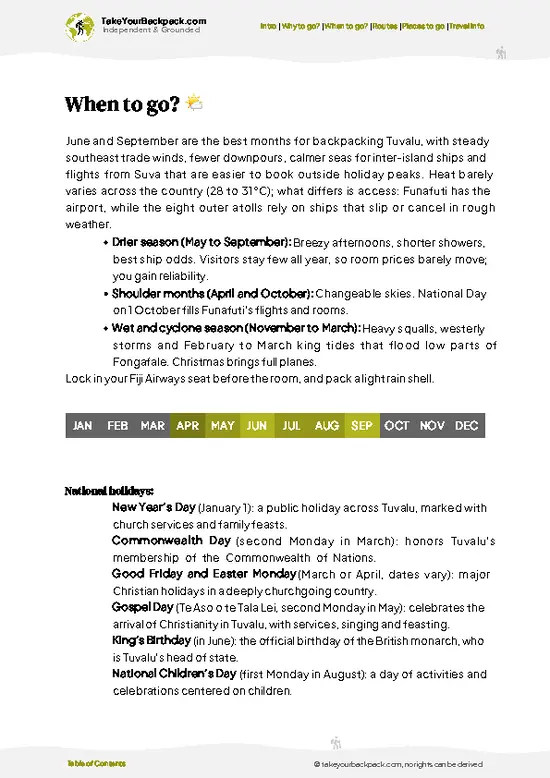
  • Weather: Funafuti’s tropical climate means it’s warm year-round, but the dry season from May to October offers clearer skies and less humidity. The wet season, November to April, brings heavy rains and occasional cyclones, which can dampen outdoor plans and make travel unpredictable.

  • Temperature: Expect highs around 29–31°C (84–88°F) year-round, with nights cooling slightly to 24–26°C (75–79°F). The temperature difference is subtle, so your timing won’t hinge on heat but on humidity and rain.

  • Daylight Hours: Near the equator, daylight stays steady at about 12 hours daily. Sunrise and sunset times shift only slightly, so you won’t lose precious daylight for exploring no matter when you visit.

  • Crowds: Tuvalu is off the beaten path, so crowds are minimal year-round. However, the dry
read more 👉

  • Weather: Funafuti’s tropical climate means it’s warm year-round, but the dry season from May to October offers clearer skies and less humidity. The wet season, November to April, brings heavy rains and occasional cyclones, which can dampen outdoor plans and make travel unpredictable.

  • Temperature: Expect highs around 29–31°C (84–88°F) year-round, with nights cooling slightly to 24–26°C (75–79°F). The temperature difference is subtle, so your timing won’t hinge on heat but on humidity and rain.

  • Daylight Hours: Near the equator, daylight stays steady at about 12 hours daily. Sunrise and sunset times shift only slightly, so you won’t lose precious daylight for exploring no matter when you visit.

  • Crowds: Tuvalu is off the beaten path, so crowds are minimal year-round. However, the dry season sees a slight uptick in visitors, especially from June to August, when Pacific island travelers seek drier weather.

  • Seasonal Activities: The dry season is best for snorkeling and fishing, with clearer waters and calmer seas. The wet season’s rougher waters limit these activities but bring lush greenery and fewer tourists.

  • Price Fluctuations: Accommodation and flights tend to be pricier during the dry season, especially mid-year. Booking early can lock in better rates, while the wet season offers lower prices but with weather trade-offs.


Pro-tip: Aim for late May or early October to catch the tail ends of the dry season—less rain, manageable crowds, and better deals—so you get the best of Funafuti’s natural charm without the weather headaches.


source: climatestotravel.comJANJanuary: fair for travelingFEBFebruary: fair for travelingMARMarch: fair for travelingAPRApril: fair for travelingMAYMay: highly recommended for travelingJUNJune: excellent for travelingJULJuly: excellent for travelingAUGAugust: excellent for travelingSEPSeptember: highly recommended for travelingOCTOctober: highly recommended for travelingNOVNovember: fair for travelingDECDecember: fair for traveling
when-to-go

✈️ The backpacker research shortcutTuvalu Travel Guide

An offline-friendly backpacking guide with optimized travel routes, ranked highlights, transport advice, and the best areas to stay.
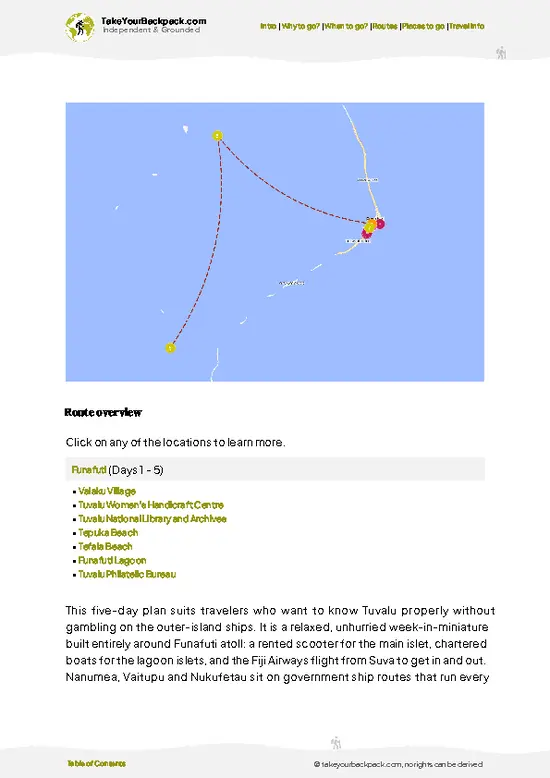
example page 0 from our offline Travel Guide for Tuvalu
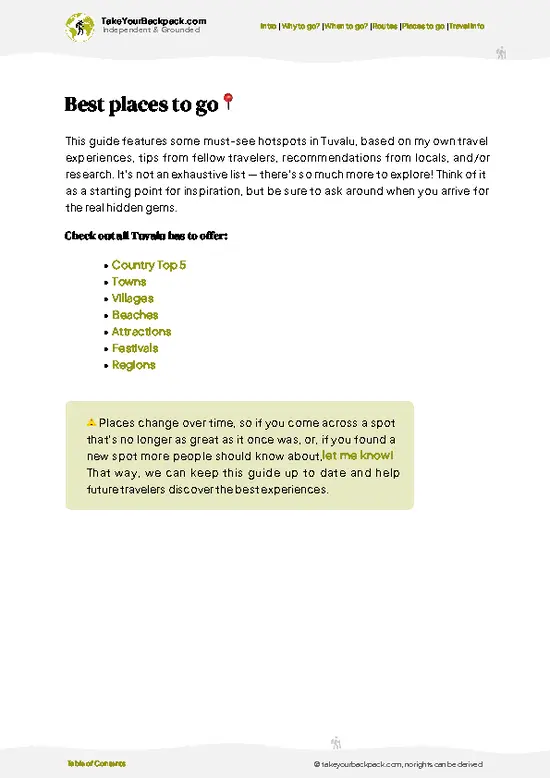
example page 1 from our offline Travel Guide for Tuvalu
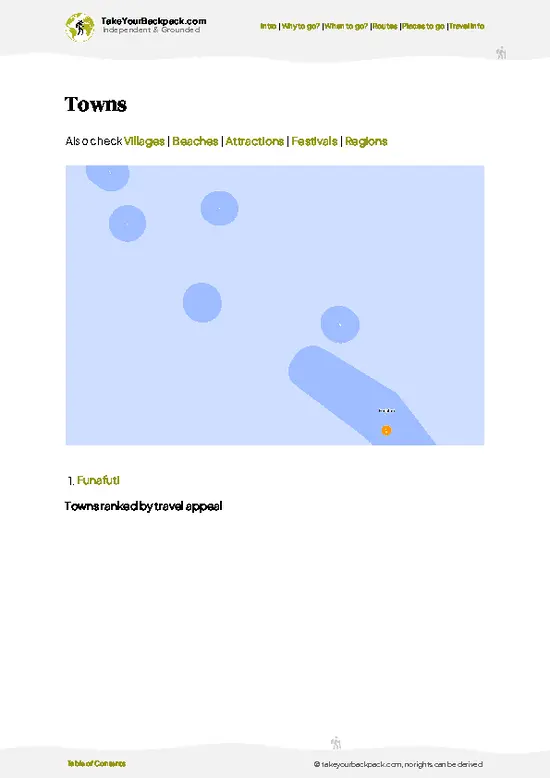
example page 2 from our offline Travel Guide for Tuvalu
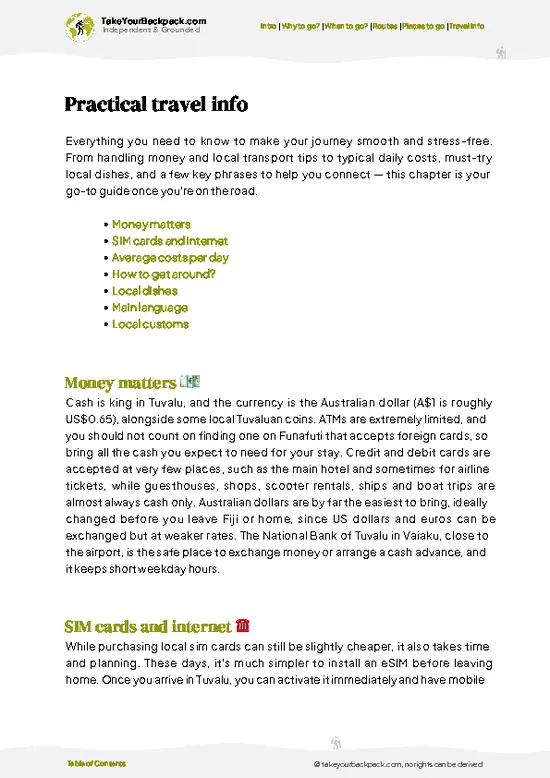
example page 3 from our offline Travel Guide for Tuvalu
example page 4 from our offline Travel Guide for Tuvalu
example page 5 from our offline Travel Guide for Tuvalu
example page 6 from our offline Travel Guide for Tuvalu
example page 7 from our offline Travel Guide for Tuvalu
The digital guide (109 pages) contains:
21 highlights, ranked by travel appeal
Optimized 2, 3 & 5-day travel routes
Cities, national parks, landmarks, beaches
How to get around
Offline-friendly for travel without Wi-Fi
👉 Click to see all 30+ guide features

📅 Plan smarter in minutes, not weeks
Month by month travel advice
Festivals & national holidays
Budget expectations

🗺️ Go to the right places, skip the overrated ones
Honest pros & cons of destinations
Top hikes, parks & viewpoints
Lesser-known places most travelers miss
Clear “worth it vs skip it” guidance

🛏️ Travel smoothly without rookie mistakes
Best areas to stay
Transport systems explained simply
Common scams & safety advice
SIM cards, money & practical tips

🌍 Understand the country, not just visit it
Culture & traditions
52 Essential phrases & customs
Festivals worth planning around
Traveler-friendly historical context
Insights that make places more meaningful

📱 Built for real travel conditions
Fully downloadable PDF
Works completely offline
Optimized for phone use
Useful in remote areas & buses
Everything in one place
Save weeks of stressful planning
Get instant access to your full guide. 30‑day money-back guarantee.


By proceeding you agree to our terms.
Sent to your inbox immediately after payment • 100% Secure Checkout
Best Backpacking Travel Advisor 2025 tourism awardBest Backpacking
Travel Advisor
2025
What others say about Take Your Backpack Guides:
⭐⭐⭐⭐⭐
Fantastic, amazing amount of information!
⭐⭐⭐⭐⭐
My goodness this is amazing, it's what I've been looking for hats off too you!
⭐⭐⭐⭐⭐
I think this is absolutely BRILLIANT
⭐⭐⭐⭐
Very complete and informative. It's still missing places, but I gotta to commend you
⭐⭐⭐⭐⭐
This is truly amazing, thank you, can't wait to explore it with my kids!
⭐⭐⭐⭐⭐
Awesome resource, thank you!
⭐⭐⭐⭐⭐
This is amazing! Can't wait to explore the ones I haven't seen
⭐⭐⭐⭐
I love this! Well done, great idea.
⭐⭐⭐⭐⭐
Thanks for taking the time to make this gem!
⭐⭐⭐⭐⭐
This might be the best website I've ever seen.
⭐⭐⭐⭐⭐
Congratulations, and thank you so much for your work; it's incredibly valuable.
⭐⭐⭐⭐
In all seriousness I think you did a great job pointing out the important spots
⭐⭐⭐⭐⭐
10/10 very good
⭐⭐⭐⭐⭐
As someone who's only just starting to visit regularly this is awesome, thank you.
⭐⭐⭐⭐
Thank you very much! I'm going to visit my dad, it's going to be very useful!
⭐⭐⭐⭐⭐
This is really cool! We'll be travelling for the first time and this definitely come in handy.
⭐⭐⭐⭐⭐
You are now our minister of culture, congratulations 👨‍💼
⭐⭐⭐⭐⭐
Just wanted to tell you that this is a pearl! Going to follow your recommendations.
⭐⭐⭐⭐⭐
This is so cool. I'll definitely be using the resource for my travels soon.
⭐⭐⭐⭐⭐
This is very impressive! Good work.
⭐⭐⭐⭐⭐
This is an amazing and informative site. Very well done!

🛏️ Where to stay?Best areas to stay in Tuvalu

Funafuti is compact, but where you drop your pack makes all the difference. The heart of backpacker life pulses around the main village area near the wharf. This spot is your launchpad—safe, lively, and where you’ll find the few budget guesthouses and informal hostels that cater to solo travelers and small groups. It’s not a sprawling city, so the vibe here is intimate, with locals and visitors mingling easily under the shade of coconut palms, the salty breeze carrying the faint hum of boats and chatter.

Why this area? Because it’s where the island’s social rhythm happens. You’ll catch the scent … read more 👉
Funafuti is compact, but where you drop your pack makes all the difference. The heart of backpacker life pulses around the main village area near the wharf. This spot is your launchpad—safe, lively, and where you’ll find the few budget guesthouses and informal hostels that cater to solo travelers and small groups. It’s not a sprawling city, so the vibe here is intimate, with locals and visitors mingling easily under the shade of coconut palms, the salty breeze carrying the faint hum of boats and chatter.

Why this area? Because it’s where the island’s social rhythm happens. You’ll catch the scent of fresh fish grilling nearby and hear the laughter spilling out from small communal spaces. Staying here means you’re steps from the market and the ferry, so logistics are simple—no need for taxis or complicated routes. The light here is soft and forgiving, especially at dawn and dusk, perfect for those early morning swims or evening strolls along the lagoon’s edge.

Other parts of Funafuti feel quieter, more residential, and less geared toward travelers. They lack the social pulse and easy access to essentials that make the main village area a natural hub. For backpackers, choosing this neighborhood isn’t just about convenience—it’s about plugging into the island’s modest but genuine energy, turning a simple stay into a shared experience.

🚌 Getting aroundGetting around like a local

Funafuti moves at its own rhythm—less a strict timetable and more a pulse you feel in the salty air and the slow sway of coconut palms. The town’s pace is deliberate, shaped by the ocean’s tides and the sun’s arc rather than clocks. You won’t find a frenzy of honking cars or packed subway cars here; instead, the flow is about timing your steps with the ferry’s arrival or the market’s opening, soaking in the scent of seaweed and grilled fish wafting through the air. This isn’t a place to rush—it’s a place to sync up with the natural cadence of island life, where patience unlocks the best experiences.


  • Walking: The heart of Funafuti is compact enough to explore on foot, with most guesthouses, shops, and the market within a 20-minute stroll. Walking lets you catch the subtle shifts in light
read more 👉
Funafuti moves at its own rhythm—less a strict timetable and more a pulse you feel in the salty air and the slow sway of coconut palms. The town’s pace is deliberate, shaped by the ocean’s tides and the sun’s arc rather than clocks. You won’t find a frenzy of honking cars or packed subway cars here; instead, the flow is about timing your steps with the ferry’s arrival or the market’s opening, soaking in the scent of seaweed and grilled fish wafting through the air. This isn’t a place to rush—it’s a place to sync up with the natural cadence of island life, where patience unlocks the best experiences.


  • Walking: The heart of Funafuti is compact enough to explore on foot, with most guesthouses, shops, and the market within a 20-minute stroll. Walking lets you catch the subtle shifts in light on the lagoon’s surface and the quiet chatter of locals, making it the most immersive and cost-free way to get around.


  • Public Minibus: These shared vans run irregularly but are the backbone of local transit, connecting the main village to outer islets and the airport. Expect to pay around AUD 2–3 per ride. They don’t follow a strict schedule—more a “when full, we go” system—so flexibility is key. The ride is bumpy but offers a genuine slice of daily life, with locals chatting and the occasional stop for roadside fruit.


  • Bicycle Rental: Renting a bike is a smart move for budget travelers wanting speed without losing the island’s intimacy. Rentals run about AUD 10 per day. The roads are narrow and often shaded by palm fronds, making for a pleasant, breezy ride. Just watch for the occasional pothole and the unpredictable local dogs.


  • Boat Taxi: For hopping between islets or reaching remote snorkeling spots, boat taxis are essential. Prices vary but expect around AUD 15–30 depending on distance. They don’t run on a fixed schedule—booking ahead through your guesthouse or local operator is best. The ride offers a sensory feast: salt spray, the sun’s glare on the water, and the distant call of seabirds.


  • Airport Shuttle: If you’re arriving or departing, the airport shuttle is a reliable option, usually coordinated by guesthouses. It runs on flight times rather than a daily schedule, so you’ll want to confirm your pickup in advance. The ride is short but gives you a last look at the island’s coral reefs shimmering beneath the plane’s descent.

👛 Costs (as of 15 April 2026)Typical daily expenses

Backpacking in Funafuti, Tuvalu, comes with a unique price tag shaped by its remote location and limited infrastructure. Here’s what you can expect to spend day-to-day as an independent traveler.
  • Dorm Accommodation: Options are scarce and basic, often in guesthouses rather than hostels. Expect to pay around $20 to $40 USD per night. The rooms are simple, with minimal amenities, but clean and close to the lagoon’s edge.
  • Meals: Food costs lean toward the higher side due to import reliance. A local meal at a small café or market stall runs about $5 to $10 USD. If you stick to fresh fish, coconut, and root vegetables, you’ll keep costs down. Western-style meals or dining at resorts can push prices much higher.
  • Local Transport: Funafuti is small—just a narrow strip of land—so transport costs
read more 👉
Backpacking in Funafuti, Tuvalu, comes with a unique price tag shaped by its remote location and limited infrastructure. Here’s what you can expect to spend day-to-day as an independent traveler.
  • Dorm Accommodation: Options are scarce and basic, often in guesthouses rather than hostels. Expect to pay around $20 to $40 USD per night. The rooms are simple, with minimal amenities, but clean and close to the lagoon’s edge.
  • Meals: Food costs lean toward the higher side due to import reliance. A local meal at a small café or market stall runs about $5 to $10 USD. If you stick to fresh fish, coconut, and root vegetables, you’ll keep costs down. Western-style meals or dining at resorts can push prices much higher.
  • Local Transport: Funafuti is small—just a narrow strip of land—so transport costs are minimal. Walking is the norm, but if you need a ride, expect to pay around $2 to $5 USD for a short taxi trip. Bicycle rentals, if available, hover near $10 USD per day.
  • Basic Activities/Entry Fees: Most activities revolve around the lagoon and natural surroundings. Snorkeling gear rental or guided tours typically cost between $15 and $30 USD. Entry fees to any cultural sites or conservation areas are minimal or included in tour prices.
  • Miscellaneous Expenses: Internet access is patchy and expensive, around $5 to $10 USD for limited data. Bottled water and sundries add another $3 to $7 USD daily. Budget a bit extra for occasional souvenirs or unexpected needs.

All told, a realistic daily budget for backpacking in Funafuti falls between $50 and $90 USD. It’s not a bargain basement destination, but the price reflects the island’s isolation and the effort it takes to keep things running smoothly. The payoff is in the clear lagoon light, the scent of salt and coconut, and a pace of life that feels far removed from the usual tourist grind.
⚠️ Prices can change and everyone travels differently, so take this as a rough guide. Hope it helps you plan your adventure!

🚌 Day tripsShort trips worth adding

Using Funafuti as your base opens up a world of exploration in Tuvalu, where the pace is slow, but the experiences are rich. Here are some day trips that will make your backpacking adventure truly rewarding.

1. Funafuti Conservation Area
Just a short boat ride from the main island, this marine reserve is a paradise for snorkelers. Picture yourself gliding through crystal-clear waters, surrounded by vibrant coral reefs and schools of tropical fish. The trip takes about 30 minutes, and you can rent gear for around $10. Best visited during the dry season from May to October, this area is a reminder of the delicate beauty of Tuvalu’s ecosystem. Many first-timers underestimate the importance of reef etiquette; avoid touching the coral to preserve this underwater wonderland.


2. Nanumea Islandread more 👉
Using Funafuti as your base opens up a world of exploration in Tuvalu, where the pace is slow, but the experiences are rich. Here are some day trips that will make your backpacking adventure truly rewarding.

1. Funafuti Conservation Area
Just a short boat ride from the main island, this marine reserve is a paradise for snorkelers. Picture yourself gliding through crystal-clear waters, surrounded by vibrant coral reefs and schools of tropical fish. The trip takes about 30 minutes, and you can rent gear for around $10. Best visited during the dry season from May to October, this area is a reminder of the delicate beauty of Tuvalu’s ecosystem. Many first-timers underestimate the importance of reef etiquette; avoid touching the coral to preserve this underwater wonderland.


2. Nanumea Island
A day trip to Nanumea offers a glimpse into traditional Tuvaluan life. The boat ride takes about an hour, and you’ll be greeted by friendly locals eager to share their culture. Expect to spend around $20 for the round trip. Bring a packed lunch and enjoy it on the beach, where the sand feels like powdered sugar beneath your feet. The best time to visit is during the dry season when the weather is perfect for exploring. A common mistake is to rush through; take your time to soak in the atmosphere and chat with the locals.


3. Funafuti Lagoon
Exploring the lagoon is a must. Rent a kayak for about $15 and paddle through the calm waters, where the sun glints off the surface like diamonds. This trip can be done in a few hours, making it perfect for a lazy afternoon. The lagoon is best experienced in the early morning when the light is soft, and the world feels still. Many backpackers miss the chance to simply float and take in the surroundings; don’t forget to stop and appreciate the tranquility.
👉 Explore Funafuti Lagoon

4. Tepuka Island
A short boat ride of about 20 minutes will take you to Tepuka, an uninhabited island that feels like your own slice of paradise. Bring your snorkeling gear and a picnic, as this is the perfect spot to unwind. The cost is minimal, around $15 for the boat. The best time to go is during the dry season, when the visibility underwater is at its peak. A common mistake is to underestimate the sun; pack plenty of sunscreen and a hat to avoid a painful burn.


5. Vaiaku Village
Immerse yourself in local life with a visit to Vaiaku Village. It’s a short walk from Funafuti, and you can explore the vibrant community and its markets. Expect to spend a few hours here, and bring around $10 for snacks or souvenirs. The best time to visit is in the late afternoon when the village is bustling. Many travelers overlook the chance to engage with locals; don’t be shy—ask questions and learn about their way of life.
👉 Explore Vaiaku Village
Want to know what more Tuvalu offers?
The Tuvalu Travel Guide describes 21 highlights, from cities to national parks, from beaches to hikes

Get the Travel Guide -

🛡️ SafetyScams, Hazards, and Annoyances

In Funafuti, safety is generally a non-issue, but a few practical tips can enhance your experience. The atmosphere is laid-back, yet it’s wise to stay aware, especially in busier areas like the market. Here, the vibrant chatter mixes with the scent of fresh fish and tropical fruits, but keep your belongings close.

Solo travelers should feel comfortable, but avoid wandering too far after dark. The streets are quiet, and while locals are friendly, it’s best to stick to well-lit areas.

Scams are rare, but be cautious of overly eager vendors who might push for sales. A polite but firm “no, thank you” usually suffices. Everyday annoyances can include slow service in cafes; patience is key. Embrace the slower pace as part of the local charm.

Overall, carry yourself with confidence, engage … read more 👉
In Funafuti, safety is generally a non-issue, but a few practical tips can enhance your experience. The atmosphere is laid-back, yet it’s wise to stay aware, especially in busier areas like the market. Here, the vibrant chatter mixes with the scent of fresh fish and tropical fruits, but keep your belongings close.

Solo travelers should feel comfortable, but avoid wandering too far after dark. The streets are quiet, and while locals are friendly, it’s best to stick to well-lit areas.

Scams are rare, but be cautious of overly eager vendors who might push for sales. A polite but firm “no, thank you” usually suffices. Everyday annoyances can include slow service in cafes; patience is key. Embrace the slower pace as part of the local charm.

Overall, carry yourself with confidence, engage with the locals, and you’ll find that the small challenges only add to the richness of your journey.

More places to explore across Tuvalu

Funafuti isn’t the only highlight in Tuvalu. Explore all what Tuvalu has to offer.
Country photo of Tuvalu

We 💚 feedbackParting advice and final tips

Funafuti is a slice of paradise that feels untouched. The air is thick with the scent of salt and coconut, and the sunsets? They’re a painter’s dream, splashing colors across the horizon. Don’t miss the local markets; the fresh fish and vibrant fruits are a delightful surprise. Just a heads-up: the pace here is slow, which can feel frustrating if you’re used to a faster rhythm. Embrace it. Let the island’s charm wash over you, and you’ll find a deeper connection to this serene escape.

✍️ Help improve this page!
The information on this page is based on in-depth research, insights shared by experienced travelers, and feedback from the local travel community in Tuvalu. While every effort is made to keep the information accurate and current, conditions can change — so if you spot anything incorrect or outdated, please get in touch.


🙋‍♂️ Give feedback

👋 Meet the founderWho’s Behind Take Your Backpack?

Johan, backpacker and founder of TakeYourBackpackHi, I’m Johan (Netherlands 🇳🇱), the creator of TakeYourBackpack. Over the past decade, I’ve backpacked through 80+ countries across six continents, gaining extensive experience with independent travel, long-term trips, and overland routes.

This site is built on a combination of firsthand travel experience and carefully curated insights from other backpackers. Many guides are based on places I’ve personally visited, while others bring together tips, observations, and practical advice shared by trusted travelers I’ve met along the way.

The goal is to provide realistic, experience-driven guidance — not generic itineraries — so you can explore destinations with better context, clearer expectations, and more confidence.

Get full Tuvalu guide •
Instant download • 21 highlights • Full Offline guide