v2.webp)
- Motulalo wartime airstrip: The US built a bomber base here in 1943, and the cleared strip, with bits of rusting equipment in the undergrowth, is the atoll’s best-known historical site.
- Savave village: The main settlement, with a Congregational church, a large maneapa and lanes of neat houses facing the lagoon. Evening is when everyone is out.
- Fale village: Smaller and quieter, a good place to see daily routines such as net mending and cooking in earth ovens without any visitor attention.
- The central lagoon: Calm, shallow and ringed by reef, it is ideal for snorkeling over coral heads and for watching schools of small fish near the passes.
- Sunset at the village maneapa: The meeting hall is where news is shared and, on some evenings, songs and dances are practiced. Sit, listen and wait to be invited.
- Motulalo wartime airstrip: The US built a bomber base here in 1943, and the cleared strip, with bits of rusting equipment in the undergrowth, is the atoll’s best-known historical site.
- Savave village: The main settlement, with a Congregational church, a large maneapa and lanes of neat houses facing the lagoon. Evening is when everyone is out.
- Fale village: Smaller and quieter, a good place to see daily routines such as net mending and cooking in earth ovens without any visitor attention.
- The central lagoon: Calm, shallow and ringed by reef, it is ideal for snorkeling over coral heads and for watching schools of small fish near the passes.
- Sunset at the village maneapa: The meeting hall is where news is shared and, on some evenings, songs and dances are practiced. Sit, listen and wait to be invited.
- Kaleve toddy tapping: Men climb coconut palms at dawn and dusk to collect sap. Watching the process is a quiet, local experience most visitors miss.
- Ocean-side reef walk: On the outer shore of an islet at low tide, you can walk the rough reef flat with the open Pacific breaking beyond it. Go with a local who reads the swell.
- Line fishing from a canoe: Join a host for a morning outing on the lagoon. It is the most direct way to understand how the atoll feeds itself.
Spotted a mistake or missing something? Contact us.

 Best Backpacking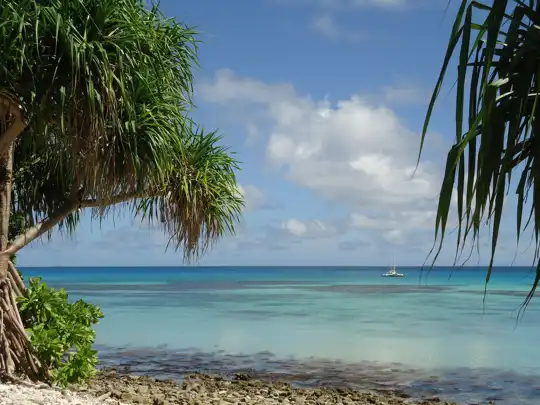
.jpg) Hi, I’m Johan (Netherlands 🇳🇱), the creator of TakeYourBackpack. Over the past 3 decades, I’ve backpacked through 90+ countries across six continents, gaining extensive experience with independent travel, long-term trips, and overland routes.
Hi, I’m Johan (Netherlands 🇳🇱), the creator of TakeYourBackpack. Over the past 3 decades, I’ve backpacked through 90+ countries across six continents, gaining extensive experience with independent travel, long-term trips, and overland routes.